























































Real selenite vs satin spar, the difference that matters
Almost every "selenite wand" sold today is technically satin spar. Same mineral, different crystal form. Here is what is going on.
If you have ever wondered why some "selenite" pieces are silky and opaque while others look like clear glass, the answer is in the way the gypsum crystallized underground. One name has been doing the work of two.
Selenite and satin spar are both gypsum. Same mineral, two different crystal forms. Transparent selenite is the strict-definition mineral. The silky, fibrous "selenite wands" sold in most shops are technically satin spar. Energy and cleansing associations apply to both. The honest retail question is which mine sourced the piece, not which name is on the label.
One mineral, two forms
Both selenite and satin spar are calcium sulfate dihydrate, CaSO4 · 2H2O. That is the chemistry of gypsum. The difference is not what they are made of, it is how they grew.
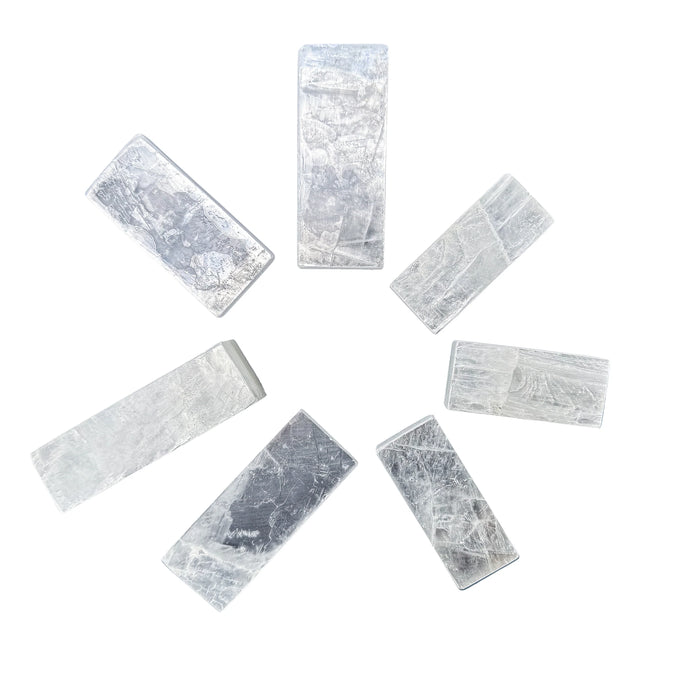
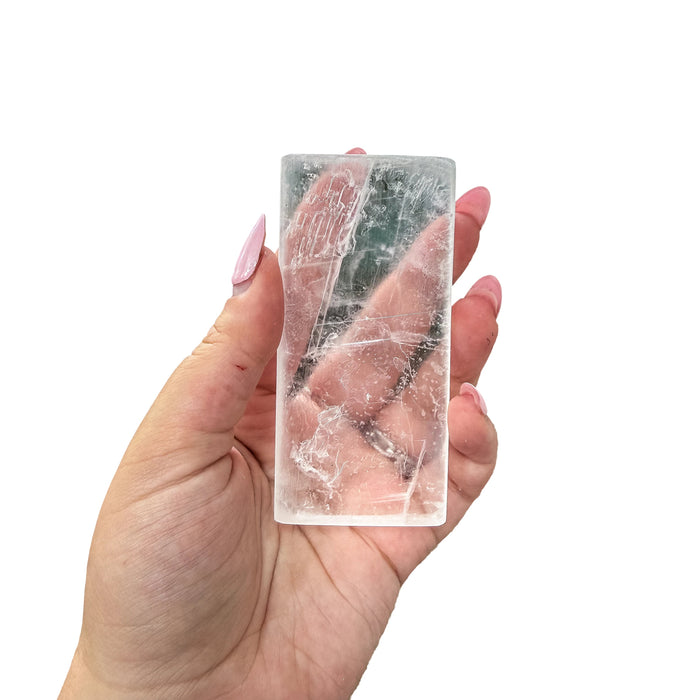
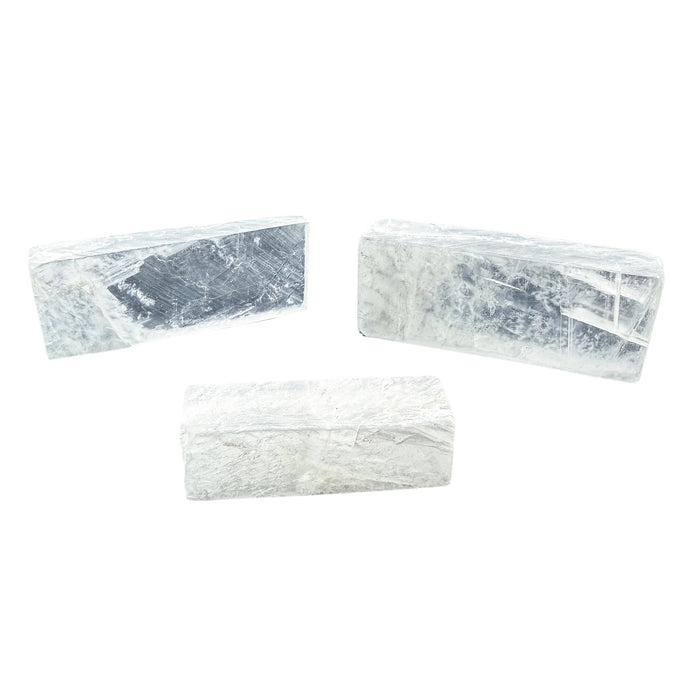
True selenite grew in open space, slowly, and formed transparent or slightly milky crystal faces. You can sometimes see through it. Light passes cleanly. Some specimens look almost like glass.
Satin spar grew in tight fibrous bundles, with each crystal a long thin needle locked in parallel with its neighbors. The result is a silky, almost pearlescent sheen along one axis and an opaque, fibrous look from any other angle.
If you point a flashlight along the length of a satin spar wand, the fiber-optic shimmer lights up the whole piece. That same trick does not work on transparent selenite because the structure is not fibrous.
How to tell which is which
In strict mineralogy, "selenite" refers to the transparent variety only. In the crystal trade, the word has been used for both forms for decades. Neither use is wrong as long as the seller can tell you which form you are actually holding. That is the line.
Source matters more than name
The form is not the ethics question. The mine is. Moroccan satin spar comes from large industrial gypsum operations with varied labor records. The sheer volume of material that moves through that supply chain makes traceability harder than most retailers admit.
Our New Mexico selenite is the transparent crystalline form, sourced from a small US operation with direct relationships in place. A piece of that material was the top-selling product in our catalog last week. The traceability is the differentiator, not the name on the chip.
If you are choosing between a polished tower at one shop and a polished tower at another, the question worth asking is not "is this selenite or satin spar." It is "where was this piece mined, and how do you know."
New Mexico selenite slabs and towers, alongside Moroccan satin spar wands and charging plates. Form and origin named on each product page.
See the collectionThe full picture of how we source, what we ask of partners, and what we will not carry.
Read the standardFrequently asked
Is selenite the same as satin spar?
Same chemistry, same mineral family. Selenite is the transparent crystalline form. Satin spar is the fibrous, silky form most commonly sold as "selenite wands." Different appearance, different growth conditions, identical mineral.
Which one is the "real" selenite?
In strict mineralogy, only the transparent variety is selenite. The fibrous satin spar form is technically a different crystal habit of the same mineral. In retail use, both have been called selenite for decades.
Does the difference matter for cleansing or energy work?
Traditional associations apply to both forms in most practices. The mineral is identical. The choice between them is aesthetic and practical, not metaphysical.
How can I tell which form I have?
Transparent selenite shows clear or slightly milky crystal faces. Satin spar shows a silky, fibrous sheen along one axis and lights up like a fiber-optic strand when a flashlight is held end-on.
Where does most "selenite" come from?
The fibrous satin spar form is mined heavily in Morocco. True crystalline selenite comes from a smaller set of deposits including New Mexico, Mexico, and Madagascar.
Is one form more ethically sourced than the other?
Source country and the specific mine matter more than the form. Our New Mexico selenite is sourced through a direct relationship with a small US operation.
Can selenite get wet?
No, neither form. Gypsum dissolves slowly in water and will pit, cloud, or break down with repeated exposure. Wipe with a dry cloth only.