























































The Library
Longer-form guides on the questions worth asking before you bring a stone home.
This is where the deeper material lives. How stones form, what treatment really means, where they come from, how to tell look-alikes apart, and how to keep what you own. Each guide is written at the depth a quick blog post cannot hold, and the version we would walk you through in person.
For the A-Z stone reference, see the Crystal Guide. For grade definitions, the Crystal Grading Guide. For shorter reads, the Journal.
65 guides across 7 topics, and growing
When the stone in your hand is not quite what the label says
Heat, dye, irradiation, coating, lab growth, and naming sleight-of-hand are everywhere in the trade. These guides walk through the most common ones and how to spot them.
Most commercial citrine is heat-treated amethyst. The chemistry, the visual cues, and why disclosure is the real question.
Read the guideThe stones routinely heated to deepen color, why it is usually accepted, and when it should be disclosed.
Read the guideAura stones are real quartz with a vapor-deposited metal coating. What that is, and what it means for value.
Read the guideOiling, glass filling, and fracture dyeing. The quiet treatments that often go unmentioned at the counter.
Read the guideColor pooling in cracks, hues that are too uniform, and the other tells that a stone got its color from a bottle.
Read the guideWhen smoky quartz forms in the ground, when it comes out of a lab, and what the name morion really means.
Read the guideHydrothermal quartz and synthetic gems. The tells that separate a grown crystal from a mined one.
Read the guideThree pretty stones that are actually glass. Fine when it is disclosed, a problem when it is not.
Read the guideThe two real jades, the dyed quartz and glass sold as jade, and what the Type A, B, and C labels mean.
Read the guideTelling true amber from young copal and plastic, with the salt-water, UV, and hot-point tests.
Read the guideStabilized, reconstituted, and block. How to tell genuine turquoise from the dyed and imitation stand-ins.
Read the guideLemurian, Super Seven, and friends. Which names are real geology and which are marketing stickers.
Read the guideReal labradorescence comes from inside the feldspar and moves as you tilt it. How to tell true flash from coatings, foils, and man-made glass.
Read the guideSix physical tests in order: color, luster, streak, hardness, habit, and heft. Two or three usually settle it, no app required.
Read the guideSome invented names hide an ordinary mineral under a nickname. Others hide a piece of glass. How to tell which before you pay a premium.
Read the guideMost fake clusters are glass, resin, or lab-grown quartz sold as natural. Five tells to check before you buy.
Read the articleMisleading by name: it is dyed jasper, not turquoise, fine and durable as a bead stone if you know what you're buying.
Read the guideThe product itself is glass; the deception is the premium price and origin story, not the material.
Read the guideIt is a treatment by definition; sellers calling it a natural rainbow crystal are misrepresenting it.
Read the guideIt is a treatment by definition; the issue is sellers presenting it as naturally blue crystal.
Read the guideThis IS the fake: sold as rare 'blue obsidian from volcanic lakes' and similar stories.
Read the guideSold as 'diamond', 'white sapphire', or 'clear quartz points' (faceted), weight is the quick tell.
Read the guideThis IS the treatment: vivid slices, 'galaxy' geodes, and rainbow druzy are dyed; honest sellers disclose it.
Read the guideThis IS the treatment: assume vivid cheap red coral is dyed bamboo coral; undisclosed dye is the norm, and genuine precious coral carries ethical and legal restrictions.
Read the guideThis IS the treatment: neon tumbled 'quartz' with spider-web color is quench-crackled dye work, full stop.
Read the guideThis IS the simulant: 'cat's eye' beads in pink, blue, or green are fiber-optic glass essentially every time.
Read the guideThe premium lab product most often passed off as natural ruby, also watch for flux-grown crystal clusters glued onto matrix and sold at gem shows as mined specimens.
Read the guideThis IS the trick: closed-back settings hiding foil or paint turn glass into 'ruby' and pale stones into 'sapphire', never buy a sealed-back gem as fine jewelry without lab verification.
Read the guideHonest under its own name; occasionally sold as 'rare agate' to the unwary, weight settles it instantly.
Read the guideThis IS the fake: 'natural glow-in-the-dark opal/moonstone' does not exist, hours-long afterglow means man-made phosphor every time.
Read the guideThis IS the treatment: the vast majority of retail 'citrine' clusters and points are baked amethyst, usually undisclosed.
Read the guideSold as natural emerald constantly, including 'raw crystal clusters' on matrix, certification matters at emerald prices.
Read the guideThis IS the fake: lightweight, warm-touch, perfectly striped 'malachite' beads and carvings are resin or glass, genuine stone is heavy, cool, and irregular.
Read the guideThis IS the treatment: undisclosed irradiation defines commercial blue topaz; 'natural deep blue topaz' claims deserve hard skepticism.
Read the guideBroken boule chunks are widely sold as 'raw ruby/sapphire'; glass-filled composite rubies are common in bead strands.
Read the guideVivid blue/green 'quartz' gems and ultra-clean amethyst points are routinely lab-grown and sold as natural.
Read the guideThe issue is labeling: it impersonates aquamarine, sapphire, zircon, and more in budget jewelry.
Read the guideThis IS the impostor: most magnetic 'hematite' jewelry contains zero hematite.
Read the guideSold as diamond by the unscrupulous because it defeats basic testers, the loupe doubling check is your defense.
Read the guideA treatment by definition: harmless when disclosed, but the coating is permanent-looking yet fragile, repolishing or rough wear strips it to plain colorless topaz.
Read the guideThe included 'crystals' are real but often lowest-grade chips; EMF claims are unsupported, buy it as art if you like it.
Read the guideRoutinely sold as natural whole amber, especially in large cheap beads, flow lines and squashed bubbles are the tells.
Read the guideThis IS the fake: oversized insect inclusions, bargain prices on big flawless beads, and chemical hot-needle smell all scream resin, the saltwater float test settles it in a minute.
Read the guideHonest as a found object, but tumbled 'craft sea glass' floods the jewelry market, uniform frosting without crescent pits means a machine, not the sea.
Read the guideHonest found object; 'tumbler-aged' craft shards exist for jewelry, uniform matte all over without genuine surf-softened glaze gloss.
Read the guideFrequently sold as obsidian, andara crystals, or rare gems; bubbles and swirls reveal furnace origins.
Read the guideThis IS the fake: huge flawless 'quartz' or 'citrine' towers at bargain prices are the give-away combination.
Read the guideThis IS the fake: flawless golden towers and spheres with interior bubbles are tinted glass, cross-check Smelted Quartz and Heat-Treated Citrine for the full citrine deception map.
Read the guideAn honest, near-universal treatment rather than a fake, the sins are non-disclosure and the next steps down: dyed material, reconstituted chips, and pure block imitation.
Read the guideThis IS the simulant: routinely sold as Australian or Ethiopian opal, especially in inlay jewelry and bead strands; 'monarch' and 'aurora' opal with too-perfect webbing are lab products.
Read the guideThis IS the fake: most sub-$1-per-bead 'turquoise' is block resin or magnesite composite; painted-on uniform black webbing is the classic tell.
Read the guideA treatment by definition; sold under many fanciful names ('flame aura', 'mystic'), same vapor-coated quartz.
Read the guideA treatment by definition: fine when sold as 'titanium druzy', misleading when labeled rare 'rainbow crystal', the metallic rainbow never grew that way.
Read the guideDyed shell and printed plastic imitations circulate in cheap jewelry; natural nacre shows depth and varied color travel.
Read the guideComposite 'dino bone' made of crushed fragments in resin exists, real gembone is cold, hard, and shows continuous cell webbing.
Read the guideNearly all jewelry ammolite is a stabilized doublet or triplet, standard practice, but 'solid natural' claims deserve a side-view; dyed abalone occasionally poses as it.
Read the guideCheap 'ammonites' can be resin casts; Moroccan ones sometimes have carved-in or painted detail.
Read the guideDoublets and resin-backed pieces are sold as boulder opal, inspect the opal-matrix junction from the side.
Read the guideThe big issue is direction: copal with embedded modern insects is endlessly sold as 'amber with fossil inclusions', the alcohol test answers in seconds.
Read the guideThe trade's open secret: most polished rainbow 'dinosaur coprolite' is plain agatized rock with a fun story, genuine identifiable coprolites usually look like, well, what they are.
Read the guideRed coral is widely dyed or imitated, and harvest is restricted, fossil/agatized coral is the ethical, common form in shops.
Read the guideHonest and abundant; complete flower-like crowns are sometimes composited from parts, loupe the matrix joins on expensive plates.
Read the guideLess faked than moldavite but green bottle glass appears under the name, frothy ropy texture and Tasmanian sourcing matter.
Read the guideOrange glass and resin sell as fire opal online; genuine stone may also craze over years, ask sellers about stability.
Read the guideMostly honest; the perennial mix-up is dendrites sold (or bought) as 'fern fossils', anatomy under a loupe settles it in seconds.
Read the guideCommon honest fossils, but inpainting and 'improvement' are routine on cheap decor plates, buy specimen-grade from quarries or dealers who disclose restoration.
Read the guideCheap and abundant, so rarely faked, though Moroccan Otodus teeth are often re-glued onto invented custom matrix and 'restored' at the tips.
Read the guideThe mislabel IS the issue: 'green moonstone' is garnierite nearly every time, no glow, no moonstone.
Read the guideVictorian-era 'French jet' (black glass) and modern resin imitations abound, weight and streak settle it.
Read the guideHeavily faked with yellow glass as supply tightens, real LDG shows frosted skin, flow swirls, and cristobalite puffs, and is never bargain-cheap.
Read the guideThe catch-all rust: earthy yellow-brown iron crusts and masses with an ochre streak, nature's most common brown stain given a name.
Read the guideNot faked; supply is limited since the source is an old iron-mining district, similar stromatolites from elsewhere are sold under other names.
Read the guideBig money breeds restoration: composite teeth, rebuilt serrations, and painted repairs abound, ask for unretouched photos and UV-check glossy 'flawless' giants.
Read the guideComposite plates with carved-in 'extra fossils' exist, chambers should align naturally, not look chiseled.
Read the guideNearly all pearls today are cultured (genuine); the fakes to dodge are coated glass and plastic, the tooth test rules quickly.
Read the guideResin replicas exist in tourist shops, real stones are cold, fizz in vinegar, and no two patterns repeat.
Read the guideIndonesian palmwood is sometimes dyed for color pop; the dot/rod structure itself is nearly impossible to fake.
Read the guideHonest material is abundant; ordinary banded jasper is sometimes upsold as 'stromatolite', look for domes and columns, not just stripes.
Read the guideMolded glass 'tektites' are common in tourist markets; the matte pitted skin is the authenticity signature.
Read the guideMorocco's fake-trilobite industry is legendary: resin casts, composites of real parts on carved matrix, and 'enhanced' carving, spectacular cheap specimens of rare species deserve hard.
Read the guideSoft and water-sensitive, damage on cheap carvings is wear, not fakery; the name is also loosely applied to harder calcite.
Read the guideSome 'lava beads' are dyed or are man-made ceramic; natural pores are irregular.
Read the guideRock made of visibly ANGULAR broken fragments cemented together, nature's rubble recompacted into stone.
Read the guideNot faked; sold under many names (Miriam, elephant skin, cobra), all the same fossil hash stone.
Read the guideDull waxy rock that breaks in clean curved shells with knife-sharp edges and scratches glass, the all-purpose toolstone of prehistory.
Read the guideMost 'meteorites' brought to experts are slag or magnetite, fusion crust, metal flecks, magnetism, and density together make the case; buy classified, documented stones.
Read the guideRoutinely enhanced: carving down the matrix to raise flowers is standard, fully painted fakes exist, inspect petals under magnification.
Read the guideSold online as 'dinosaur eggs' depressingly often, shell pores and bone texture are absent in concretions.
Read the guideDark waxy nodules wearing a white chalky rind, breaking in glassy curved shells sharp enough to shave, the legendary firestarter and toolstone.
Read the guideArtificial fulgurites made with welders or downed power lines circulate widely, perfect long tubes at low prices warrant skepticism.
Read the guideVividly dyed Moroccan and Mexican geodes flood tourist markets; 'galaxy' and neon interiors are paint and dye jobs.
Read the guideSpeckled coarse rock of interlocking visible crystals, glassy gray quartz, blocky pink-white feldspar, and dark mica.
Read the guideMachine-drilled pebbles are sold as hag stones online, folklore purists insist the hole (and the finding) must be nature's work.
Read the guideDon't confuse with 'merlinite' (dendritic opal), two unrelated materials share the wizard branding.
Read the guide'Kimberlite with diamond' tourist pieces often carry glued-in CZ or quartz, real in-matrix diamonds are museum material.
Read the guidePale kiwi-green stone speckled black and white like sesame seeds, actually a granitic rock of quartz, green amazonite, and black tourmaline, not a true jasper.
Read the guideSoft gray-to-cream sedimentary stone that fizzes enthusiastically in vinegar and often carries visible shell fossils.
Read the guideFrequently sold as 'onyx' when banded, a centuries-old trade habit; vinegar settles it.
Read the guideFaked less than irons but misidentified often, XRF nickel confirmation and dealer classification papers are the standard.
Read the guide'Meteor-wrongs' (slag, magnetite, hematite) dominate amateur finds; for purchases, stick to documented falls with classification.
Read the guideCheck sourcing, national-park collection is illegal; commercial stones come from private land.
Read the guideNot faked; name occasionally misapplied to other red-yellow Australian jaspers.
Read the guideHeavily faked at tourist sites and online, buy documented falls/finds from reputable dealers; slices should come with classification.
Read the guideGranite gone giant, individual feldspar, quartz, and mica crystals measured in centimeters to meters, often hosting gem pockets.
Read the guideHonest stone, dishonest name: it is marble, not jasper, so keep it away from acids and rough wear.
Read the guideBlack-and-white signature stone: rice- to pine-nut-shaped white magnesite grains scattered through dark graphite matrix like grains in pumpernickel.
Read the guideRock foam: pale, full of tiny bubbles, rough as sandpaper, and it floats on water.
Read the guideWatch for dyed quartzite sold as jade, 'strawberry quartz', or 'emerald', color sits in grain boundaries.
Read the guideHonest stone with a misleading trade name: it is rhyolite, not true jasper.
Read the guidePatterned volcanic rock with angular patches, flow bands, or starburst orbs in mossy green-cream-tan palettes.
Read the guide'Blue/gold sandstone' in bead shops is man-made goldstone glass, not sandstone.
Read the guideFine-grained gray rock that splits into flat ringing sheets along perfect parallel planes.
Read the guideMany 'jade' or 'onyx' souvenirs are carved soapstone, the fingernail test answers instantly.
Read the guideUnopened 'guaranteed crystal' eggs are a gamble by nature; some sellers glue polished agate slices onto plain halves, check the seam.
Read the guideTriple-striped stone: golden tiger-eye silk, metallic gray hematite, and brick-red jasper in alternating bands, noticeably heavy.
Read the guideDouble trouble: the name implies turquoise it isn't, and the stone's popularity has spawned resin and dyed-magnesite copies, buy from Southwestern dealers who name the mine.
Read the guideRarely faked; tarnished lead scraps occasionally pose as it, lead is softer still and far less valuable to fake convincingly.
Read the guideGrass-to-bottle-green bladed or needle-like crystals in radiating sprays, with the two diagonal amphibole cleavages.
Read the guideHeavily faked: dyed crackle quartz and glass with green swirls are routinely sold as ajoite, check that color is sealed inside natural crystal.
Read the guideGreen glass and chrome diopside are sold as demantoid; horsetail inclusions are a badge of genuine Ural stones.
Read the guideTin-white brittle metal of serious heft that cleaves into stepped mirror plates rather than denting like true metals.
Read the guideHeavy gray botryoidal masses with onion-skin layers that tarnish nearly black, fresh breaks briefly flash metallic then dull within days.
Read the guideSilver-white wedge-shaped metallic crystals, brighter and whiter than pyrite, striated and notably heavy.
Read the guideBrilliant deep-green slender prisms with an apple-green streak, born of copper meeting salty desert air.
Read the guideFeather-soft pastel blue tufts and lacy sprays lining rusty cavities, so delicate a brush stroke can destroy them.
Read the guideNot faked; the name is a flexible trade label for mottled multicolor jasper.
Read the guideNot faked, the radioactivity is unprofitable to counterfeit; the real risk is buying it unlabeled in old collections.
Read the guideClove-brown crystals shaped like axe heads, flattened razor-edged wedges with strong brown/violet/straw color shifts as they turn.
Read the guideA non-metallic mineral that feels shockingly heavy for its look, bladed or tabular crystals with pearly cleavage flashes.
Read the guideWater-clear to white tabular pegmatite crystals that mimic quartz but cleave in flat mirror sheets quartz never shows.
Read the guideLab-grown red beryl and dyed stones circulate, provenance and certification matter at these prices.
Read the guideSome 'black amethyst' is lab-irradiated quartz, genuine material flashes purple under strong light.
Read the guideMost vivid blue agate on the market is dyed; check for color pooling in cracks and unnaturally even tone.
Read the guideDyed chalcedony floods the bead market; natural sky-blue material is muted and rarely uniform across large lots.
Read the guideRarely faked due to obscurity; beware dyed halite or fluorite cubes offered to beginners as boleite.
Read the guideChartreuse spear-point crystals with glassy faces, a yellow-green no common gem quite matches, softer than the beryls it resembles.
Read the guideBrick-red jasper shattered and naturally re-glued, angular red fragments suspended in webs of gray, white, and black silica.
Read the guideEmerald-green needle sprays and sparkling crusts in copper country, like malachite's glassier, non-fizzing cousin.
Read the guideDyed magnesite tumbles are sold as brucite; real brucite is notably softer and waxier.
Read the guideName gets borrowed for any brown orb jasper; true Bruneau has the porcelain finish and Idaho pedigree.
Read the guideMislabeling as rhodonite (and vice versa) is the main issue; color tone and locality are your guide.
Read the guideHonest as a souvenir; the only sin is the name, faceted Cape May 'diamonds' in boardwalk jewelry are lovely quartz, nothing more.
Read the guideGlossy brown-black crystals with diamond-bright faces and a heft that shocks, tin makes it nearly twice as dense as garnet.
Read the guideTiny glassy 'cubes' (actually slightly skewed rhombohedra) carpeting volcanic rock cavities, a zeolite that fakes being cubic.
Read the guideThis one runs backward: 'natural' labeled showpieces are almost always lab-grown copper sulfate sold at mineral prices.
Read the guideDark lead-gray heavy copper ore, soft enough to carve with a knife, that takes a sooty black tarnish, richest of the common copper sulfides.
Read the guideNot faked; the childrenite-eosphorite series makes exact labels honest guesswork without analysis.
Read the guideBlack metallic-dull heavy ore with a BROWN streak and only weak magnetic response, the chrome-bearing twin of magnetite.
Read the guideSynthetic color-change corundum has impersonated alexandrite for a century; fine cat's eye is also imitated by fiber-optic glass.
Read the guideEpidote's pale low-iron sibling, grooved prismatic crystals in washed-out green, tan, or pink rather than epidote's loud pistachio.
Read the guideSilver-white metallic crystals with a faint rosy blush, in striated cube-like forms, pyrite's shape wearing silver-pink instead of brass.
Read the guideRarely faked; mislabeling among look-alike white borates (ulexite, howlite) is the only common mix-up.
Read the guideBlack heavy tabular crystals from pegmatite country, denser than they look, dark-streaked, non-magnetic to weakly magnetic, the famous 'coltan' of electronics.
Read the guideArgentine nodule agate with unusually saturated multicolor banding, crisp reds and oranges against smoky violets, often with druzy centers.
Read the guideElectroformed/cast copper 'specimens' exist; organic branching and matrix attachment indicate the real thing.
Read the guideWhite quartz and feldspar are sometimes mislabeled cryolite, the water test and softness sort it.
Read the guideDeep garnet-red heavy mineral with near-metallic diamond luster and a shining red-brown streak, usually keeping company with green malachite.
Read the guidePale bottle-glass-green blocky crystals with many small faces, or, in Michigan form, opaque porcelain nodules in sherbet colors with copper flecks.
Read the guideNot faked; mislabeled mottramite is the usual mix-up.
Read the guideSimulants (CZ, moissanite, white sapphire) and lab-grown diamonds saturate the market, lab stones ARE diamond, so certification is the only practical separator.
Read the guidePearly cream-to-pink crystals with curved 'saddle' faces that fizz only weakly unless powdered or in warm acid.
Read the guideGenuine Dryhead is limited and locality-specific; orange dyed Brazilian nodules are sometimes mislabeled with the name.
Read the guideBrass filings and gilded lead pose as natural electrum in scam 'nugget' lots, density and softness expose them quickly.
Read the guideNot faked; eudidymite/epididymite labels are often swapped in good faith.
Read the guideVivid magenta-crimson bladed sprays and crusts blooming on gray ore, the unmistakable pink signal of cobalt below.
Read the guideHigh prices invite mislabeling: Mexican crazy lace and dyed agates get sold as 'Fairburns' online, pattern literacy and seller reputation matter.
Read the guideSoftly mottled jasper mixing sage green, mauve, and ochre in watercolor swirls, the gentle multicolor staple of bead strands.
Read the guideBlocky pale mineral with two flat cleavage faces meeting near 90° that flash like tiny mirrors in the light.
Read the guideNot faked; the weight is essentially impossible to imitate convincingly.
Read the guideBlack octahedral spinel from one famous New Jersey district, its companions give it away when the rock blazes green and red under UV light.
Read the guideDyed magnesite imitates it constantly in beads, weight and warm-acid fizz identify the real thing.
Read the guideDyed look-alikes are rare; mislabeling as smithsonite inflates prices, weight exposes the swap.
Read the guideFrequently confused with opalite glass in shops, the backlight color flip is the instant separator.
Read the guideMachine-polished agates are sold as 'Gobi' online, the satin patina and raised eyes are difficult to counterfeit.
Read the guideIridescent 'rainbow hematite' coatings are usually goethite/turgite films, natural, though often oversold as rare.
Read the guideColorless synthetics and glass stand in for it in budget jewelry; crystal form and hardness are the checks.
Read the guideGreasy soft gray mineral that writes on paper and blackens fingers, diamond's slippery shadow twin, light and metallic-dull.
Read the guideGreen glass and YAG imitate tsavorite; 'African jade' is usually massive grossular, not jade.
Read the guideDyed or man-grown salt crystals exist; humid air alone will slowly dissolve any halite, keep dry.
Read the guideQuartz is occasionally mislabeled hambergite; the doubling test exposes it in seconds.
Read the guideNot faked; neglected specimens 'melt' and get resold as worse grades, check surfaces for dissolution rounding.
Read the guideNot faked; magnetite mislabels are the common error.
Read the guideHeated and irradiated beryls deepen some golden colors; citrine is commonly upsold as heliodor.
Read the guideMuch 'hiddenite' sold is pale treated spodumene or green glass; chromium-green Carolina stones are genuinely rare.
Read the guideBlack metallic tabular mineral, magnetite's non-magnetic-looking twin that only weakly nudges a magnet and streaks darker than chromite.
Read the guideHeated greenish stones get sold as finer 'indicolite'; blue glass impostors lack striations.
Read the guideA plain-looking pale agate slice that detonates into rainbow stripes when light shines THROUGH it, banding fine enough to diffract light itself.
Read the guideThe most treatment-ridden gem on Earth: polymer-impregnated and dyed 'B/C jade' saturates tourist markets, untreated 'Type A' certification is the standard.
Read the guideMustard-ochre crusts and sparkly micro-druses in rusty mine zones, the 'yellow boy' of acid rock drainage, with a pale yellow streak.
Read the guideDyed look-alike slabs from Brazil are common; genuine Laguna color is layered, varied, and never uniformly neon.
Read the guideRarely faked, though ordinary banded Brazilian agate sometimes borrows the famous name, Lakers' iron-red palette and weathered husk are distinctive.
Read the guideWidely imitated with dyed howlite and dyed jasper, and often dye-enhanced even when genuine; brassy pyrite specks and a clean acetone swab are the tells.
Read the guideSharp lazurite crystals command serious prices, beware dyed sodalite or painted marble 'crystals' online.
Read the guideThe name IS the warning: 'lemon chrysoprase' is magnesite; pricing should be magnesite-level, not gem chrysoprase.
Read the guideAzurite sold as linarite (and vice versa) is the classic mix-up; the acid fizz test settles it.
Read the guideWater-clear quartz enclosing miniature multicolored 'gardens', mossy greens, creamy plumes, and rusty clouds layered in 3D scenes.
Read the guideNot faked, but confusion with vivianite is common; vivianite darkens with light exposure while ludlamite keeps its apple green.
Read the guideMan-made ferrite 'lodestones' exist; natural lodestone is rough and irregular, not molded.
Read the guideJewelry labeled marcasite is pyrite (stable, honest trade custom), true marcasite specimens need dry storage.
Read the guideBlack glass and dyed beads ride the name in jewelry; crystal form and heft expose them.
Read the guideNot faked, no one can manufacture needles this fine; mislabeling among natrolite/scolecite sprays is routine and harmless.
Read the guideNot faked; pale beryl mislabels occur in flat lots.
Read the guideGolden needles fine as hair, sprayed in starbursts inside quartz geodes, metallic threads so thin they tremble at a breath.
Read the guideGraphite's heavyweight twin, blue-silver metallic flakes that smear on fingers but weigh twice what graphite does, with a faint violet-blue cast.
Read the guideResinous red-brown heavyweight crystals from pegmatites and black beach sands, the workhorse ore of rare-earth elements, faintly radioactive from thorium.
Read the guideRarely faked; quality is graded on 'scenes', dealers may oil cracks on cheap cabs, check with a loupe.
Read the guideName misuse is common on pretty multicolor jaspers; documented Owyhee provenance matters to the price.
Read the guideOften confused with scolecite and selenite in shops; the fingernail test rules out selenite (natrolite resists).
Read the guideNot faked; repaired crystals reset in natrolite paste exist, inspect contacts.
Read the guideOlive-drab green needle crusts from old copper mines, heavier than malachite, never fizzing, wearing military-green tones.
Read the guideGolden pearly mineral that peels into flexible glittering flakes, arsenic's yellow calling card, usually beside its orange-red partner realgar.
Read the guideGarnets and dark rubies get optimistically labeled 'painite' at gem shows, the price of the real thing makes verification mandatory.
Read the guideDyed quartz 'papagoite phantoms' circulate, sealed-in color and trusted provenance are essential at these prices.
Read the guideDyed marble composites imitate the green-on-white look; dye rubs off in crevices.
Read the guideCavansite sold 'as pentagonite' is the common upsell, stars versus balls settles it.
Read the guideBronze granular ore almost always married to magnetic pyrrhotite, the world's chief nickel mineral, itself stubbornly non-magnetic.
Read the guidePink glass, morganite, and tourmaline get sold as pezzottaite; density and saturation are quick checks, certificates matter for gems.
Read the guideThe hype invites fraud: quartz and topaz are routinely sold as phenakite, density, luster, and habit checks matter at these prices.
Read the guideGilded lead 'nuggets' and brass shavings plague online sales, density testing (or a refusal to test) tells all.
Read the guideNot faked; routinely mislabeled among brown carbonates, curved faces plus heft plus weak fizz is the sorting key.
Read the guideCat's-eye sillimanite is sometimes sold as rarer cat's-eye chrysoberyl, chrysoberyl is notably harder (8.5) and denser.
Read the guideCast 'wire silver' fakes exist, poured silver shaped into curls and glued to matrix; genuine wires show growth striations and emerge from the rock, not epoxy.
Read the guideNot faked; mostly a bead-strand staple sold under loosely applied names.
Read the guideRarely faked; some sellers tumble-polish away the diagnostic skin, ironically destroying the feature that names the stone.
Read the guideIts name comes from Greek for 'treacherous' because miners confused it with lead ore, today the deception runs the other way: gemmy 'golden sphalerite' faceted stones are real but.
Read the guideBright orange 'citrine' spirit quartz is usually heat-treated; electric colors are aura coatings or dye.
Read the guideNot faked; mislabeled acanthite is frequent, the brittleness test separates them.
Read the guideUnmistakable canary-yellow crystals, light, brittle, resinous, with a faint sulfur smell when rubbed.
Read the guideNot faked; tennantite/tetrahedrite labels are interchangeable guesses without analysis, buy by specimen quality.
Read the guideRarely faked; tumbled agate or dyed stones are sometimes mislabeled 'thomsonite', no ringed fiber eyes, no sale.
Read the guideRarely faked, but peridot and green glass get labeled 'sphene', real titanite's fire and doubled back facets are checkable with a loupe.
Read the guideNot faked; the hazard is the opposite, gorgeous green squares sold as 'pretty crystals' without a radioactivity disclosure.
Read the guideNot faked; mislabeled as 'wormhole agate' or confused with fossil coral, the tube linings tell the truth.
Read the guideNot commonly faked; quality varies hugely, top Turkish material with pink ground commands jewelry prices.
Read the guideRarely faked, but colored fiber-optic glass (ulexite's man-made cousin) is sometimes sold as 'rainbow ulexite', real ulexite is white and soft.
Read the guideGreen glass 'druzy' and dyed quartz crusts imitate it, real uvarovite's crystals are sharp dodecahedra with color all the way through.
Read the guideNot faked; occasionally confused with green prehnite or dyed stones, but the radial fans are hard to counterfeit.
Read the guideMislabeled pastel jaspers ride on the name; real Willow Creek nodules come from a small Idaho district and cut with porcelain smoothness.
Read the guideNearly all big glassy 'zincite crystals' sold are smelter-chimney growths from Poland, gorgeous and real ZnO, but industrial accidents, not mined minerals; honest dealers say so.
Read the guideConstantly confused with cubic zirconia by name; nearly all blue zircon is heated (accepted); some zircon is mildly radioactive ('low' zircon), jewelry-grade is safe.
Read the guideSnow-white feldspar with mirror-flash cleavage faces, often as curved fans of thin platy blades (cleavelandite) hosting gem crystals.
Read the guideDense-looking but unremarkable pale massive mineral from steamy altered volcanic ground, identified mostly by its acid-altered rock neighborhood and no fizz.
Read the guideNot faked; mislabeled as garnet or leucite at swap meets, the pale color and featherweight heft sort it out.
Read the guideTiny lab-grown anatase exists from research labs but rarely enters the specimen trade; glued composites are the main thing to check.
Read the guideAssume red or green andesine is copper-diffusion treated unless certificated natural, undisclosed treatment defined this stone's history.
Read the guideDiamond-lustered colorless-to-straw crystals of absurd heft, often growing as a shell around a gray galena heart.
Read the guideDolomite's iron-rich cousin, cream saddle-shaped rhombs that weather to telltale rusty brown and fizz only weakly in cold vinegar.
Read the guideApple-green powdery 'bloom' coating weathered ore, the unmistakable green signal that nickel-arsenic minerals lie beneath.
Read the guideThe calcium-rich end of the plagioclase family, blocky pale crystals with feldspar's right-angle cleavage flash, rarer in collections than its siblings.
Read the guideStubby black blocky prisms with nearly right-angle cleavages and an eight-sided cross-section, the standard dark mineral of basalt country.
Read the guideDark mica that peels into thin flexible glittery sheets with a fingernail.
Read the guideBrown-green stubby pyroxene with two cleavages meeting near 90°, the magnesium end of the family whose iron-rich shimmer form is bronzite.
Read the guideThe everyday black mineral of speckled rocks, glossy stubby prisms with diamond-shaped cross-sections and oblique amphibole cleavage.
Read the guideChalk-white trapezohedral crystals, garnet's 24-faced shape in ghost white, studding dark potassium-rich lavas.
Read the guideThe blocky pink-to-cream feldspar of pegmatite country, right-angle cleavage flashes, often intergrown with quartz in 'graphic granite' runes.
Read the guideSilvery transparent mica peeling into thin flexible sheets that spring back when bent, nature's original window glass.
Read the guideThe 'greasy quartz that isn't', oily-lustered gray mineral filling quartz's role in silica-starved rocks, but softer and clouding in strong acid.
Read the guideGoldstone glass impersonates its sunstone form constantly, uniform glitter means glass.
Read the guideThe bronze-amber mica, peels into flexible coppery sheets, paler and warmer-toned than biotite, at home in marbles and ultramafic rocks.
Read the guideThe volcanic feldspar, glassy water-clear tabular crystals frozen in young lavas, like windowpanes embedded in stone.
Read the guideTwo stones that look alike, side by side
When a quick glance is not enough, these guides line up the look-alikes and give you the physical tells that actually separate them.
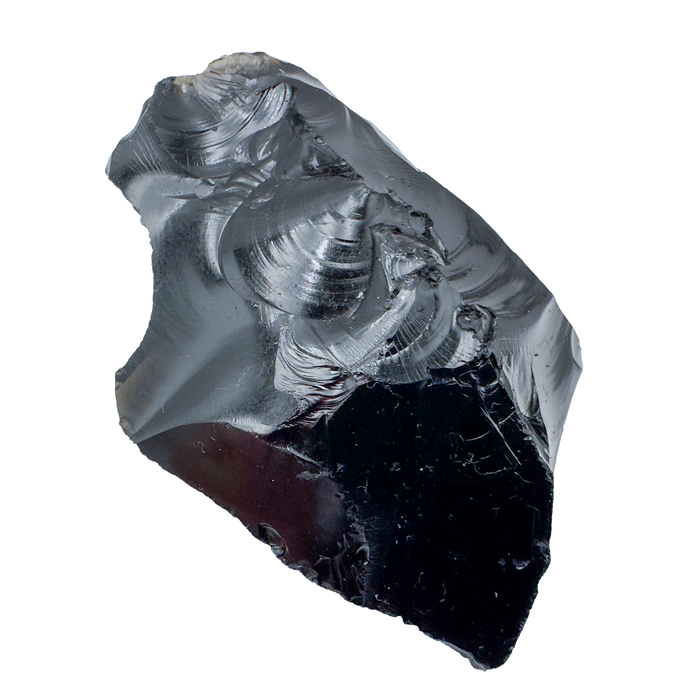
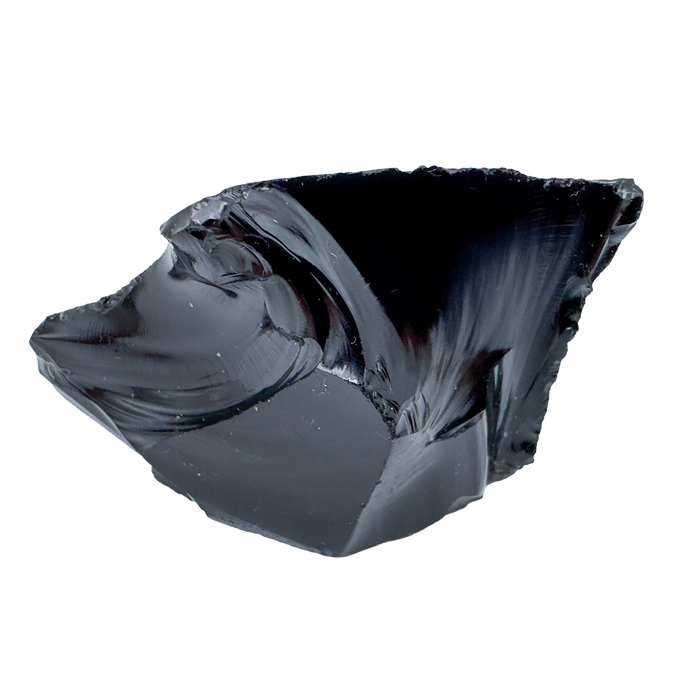
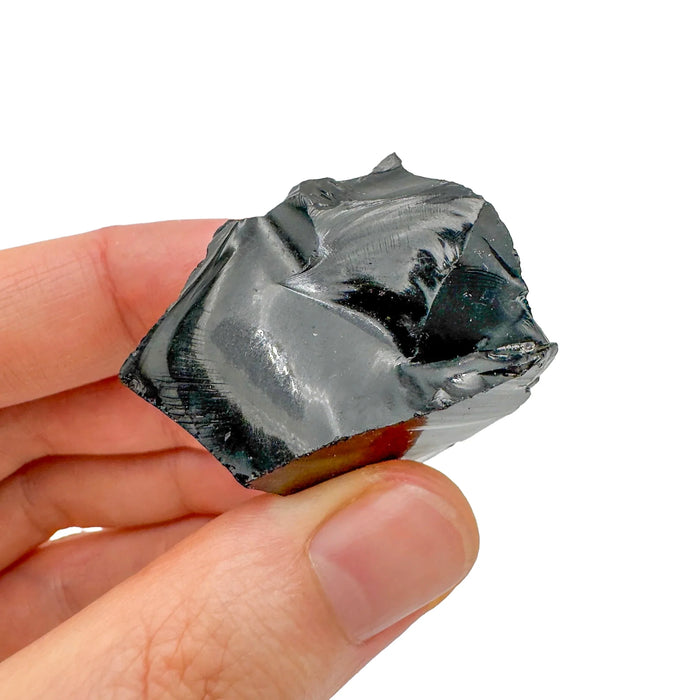
Four black stones, four different materials, and the quick tells of weight, hardness, and surface that sort them.
Read the guideThree pale stones that look alike on a shelf, and a two-minute way to tell which one you are holding.
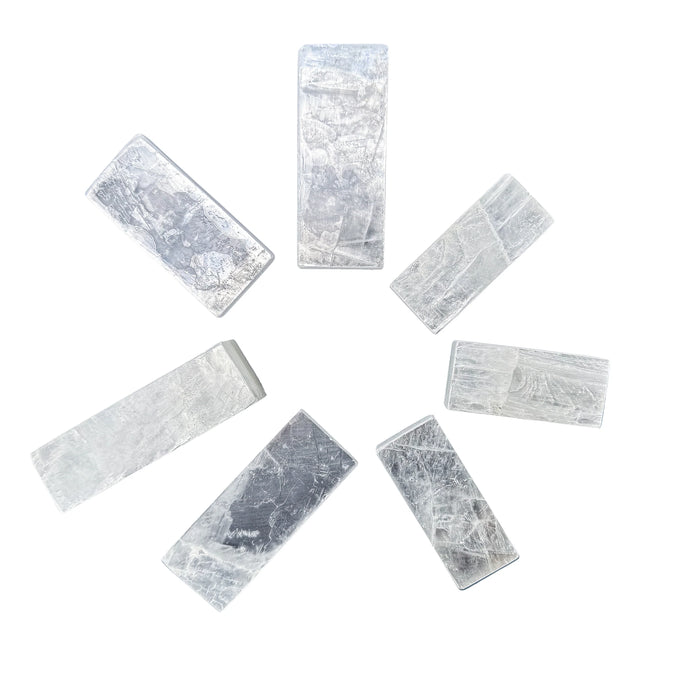
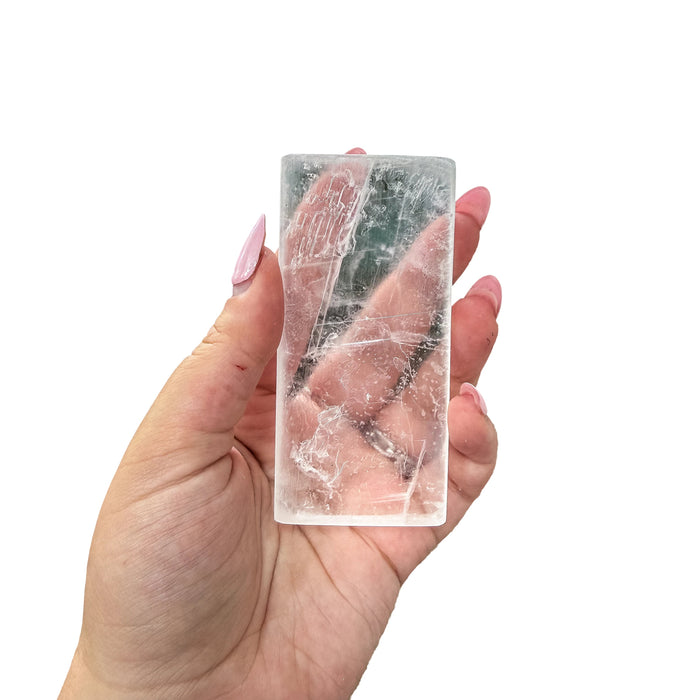
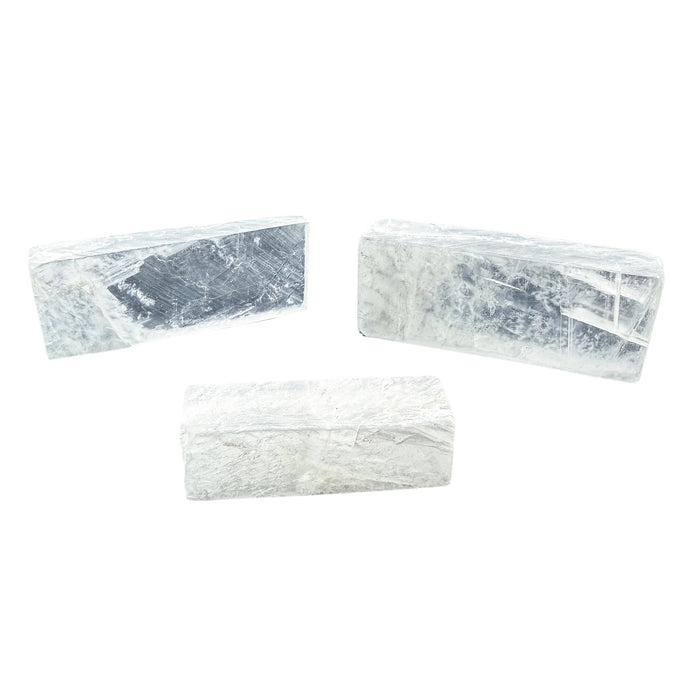
Read the guideAlmost every selenite wand sold is satin spar. Same mineral, different form, and how to tell them apart.
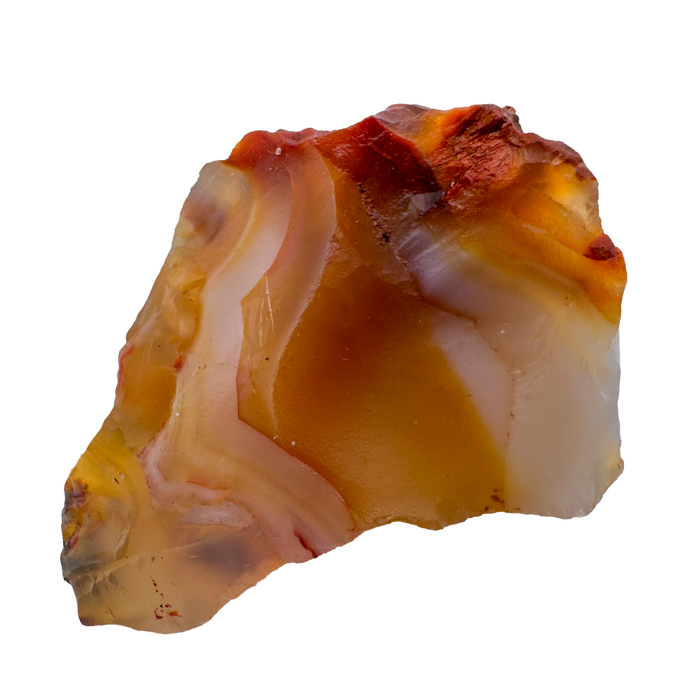
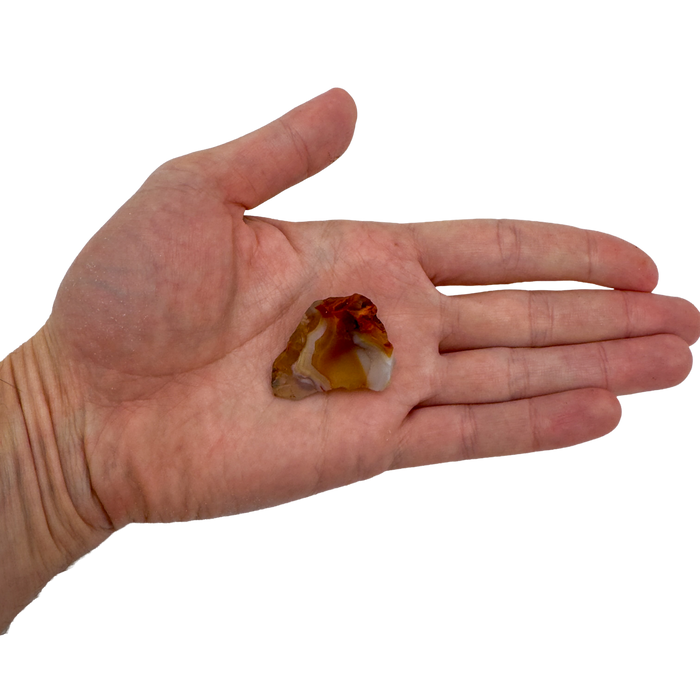
Read the guideMost carnelian is heat-treated agate. Sorting the orange-red stones, dyed and natural, apart.
Read the guideDoes amethyst origin actually matter? The three big sources compared on color, form, and price.
Read the guideFour purple stones people mix up, and the hardness, breakage, and crystal-shape tells that separate them.
Read the guideGold pyrite flecks, white veins, and hardness. The quick physical checks that sort the blue stones.
Read the guideFour popular green stones, four very different materials, and the simple physical tells that pull them apart.
Read the guideA one-minute light test tells most red stones apart. Garnet glows glassy, carnelian glows warm at the edges, jasper stays dark.
Read the guideThree warm orange stones, three completely different minerals. Hardness, a metallic flash, and a drop of vinegar settle it.
Read the guideVery different minerals can wear the same warm color. Hardness, luster, and how each meets light tell your gold-toned stone apart.
Read the guideWeight, streak, and the way light moves across a surface separate almost every gray stone you own.
Read the guideGrowth zoning, banding, and structural color. A two-tone stone is a record of a changing environment, not a defect or a dye job.
Read the guideWhat you are actually paying for
Price, grade, certificates, and rarity claims, translated. How to judge value before you buy, and how to spot a marked-up story.
Size, clarity, origin, treatment, and cut. What sets a stone's price beyond the grade sticker.
Read the guideWhy the same stone is eight dollars on a marketplace and forty in a shop. The cost drivers behind the gap.
Read the guideReal geological scarcity versus manufactured hype, and how to tell which one you are paying for.
Read the guideWhy a printed COA proves almost nothing for most crystals, and what actually backs a claim.
Read the guideCluster, geode, tower, tumble, point. What each form means, and how shape affects the price.
Read the guideNo stated origin, no treatment disclosure, certificates used as proof, and the other signs to read before you trust a seller.
Read the guideA trustworthy listing names the stone precisely, states origin and treatment, and shows the actual piece. The soft words stand in for missing facts.
Read the guideHow to tell a thoughtfully built set from a bag of vague, dyed padding, and when the price reflects real curation.
Read the guideWhy one stone and one photo appear across many shops at very different prices, and how to tell which store actually held it.
Read the guideHow stones come to be, and why it shows
Formation, color, inclusions, and the families stones belong to. The geology that explains what you are looking at.
The two-stage story behind a hollow rock lined with crystals, and why it takes so long.
Read the guideChromophores, structure, and inclusions. What actually makes a crystal its color, and which colors fade.
Read the guideRutile, phantoms, chlorite, and garden quartz. The needles and ghosts caught inside a clear stone.
Read the guideAgate, jasper, amethyst, onyx. How one mineral family covers a huge share of the crystal world.
Read the guideFive words the trade treats as interchangeable, and the real differences behind them.
Read the guideMetallic, glassy, silky, pearly, or dull. The way a crystal hands light back is one of the fastest clues to what it actually is.
Read the guideA stone can lie about its color. The powder line it leaves on unglazed porcelain rarely does.
Read the guideParallel needle-like inclusions reflect a single bright band, or cross into a star. The geology behind the moving light.
Read the guideA handful of minerals genuinely are. Almost nothing on a crystal shelf is one of them.
Read the guideWhere stones come from, and how to ask the right question
Country of origin is the easy answer. The harder one is who mined it, how they were paid, and how a retailer would know. These guides go to the supply chain.
Every hand a stone passes through between the ground and your shelf, and where the chain usually goes dark.
Read the guideWho actually digs the stones, what artisanal miners earn, and what fair sourcing looks like in practice.
Read the guideMadagascar is not a war zone. The honest issues are mining safety and fair payment, and how we verify.
Read the guideThe phrase is mostly unregulated for crystals. What it really covers, and what it quietly leaves out.
Read the guideHow to read a country-of-origin claim, what real traceability looks like, and when to stay skeptical.
Read the guideHow to keep what you own, and not break it
Practical guides for living with stones. Which fade, which dissolve, which need a careful hand, and how often is enough.
Four cleansing methods that work on every stone, and two that will quietly ruin half of them.
Read the guideWhich stones dissolve, rust, or leach in water, gathered into one quick reference before you rinse.
Read the guideWhich stones are genuinely worth caution, which are fine once polished, and no fear-mongering.
Read the guideWhat a hardness number actually tells you about handling, wearing, and cleaning a stone.
Read the guideLight, dust, and humidity. What actually damages a collection over time, and how to store it safely.
Read the guideHardness, toughness, and cleavage decide what scratches, chips, or dissolves. The practical line for daily wear sits near Mohs 7.
Read the guideThe practical kind of cleaning, not the energetic kind. Lifting dust and fingerprints without scratching, clouding, or dissolving a thing.
Read the guideSome stones dissolve and some can shed metal in water. Which are stable, and the indirect method that skips the risk entirely.
Read the guideA sunny windowsill fades some of the most popular crystals for good. The full list of which stones to keep out of the light.
Read the articleHow people actually work with stones
Honest guides to traditional practice. No medical claims, no magic. The methods, the framing, and the safety notes for beginners.
The stones most often recommended for rest, and four rules for using one under a pillow without ruining it.
Read the guideHow people traditionally combine stones, framed as practice and tradition, with no claims attached.
Read the guideWhere people traditionally place stones around a home, honestly framed and free of health claims.
Read the guideStandardized by American jewelers in 1912, built on a much older tradition. Why some months carry more than one stone.
Read the guideLooking for a specific stone?
The Crystal Guide A-Z has a dedicated page for every stone we carry, with origin, geology, traditional associations, and treatment disclosure. Start there if you already know the stone name.
Delicate sea-foam blue-green transparent crystals of glassy perfection, so fragile and cleavable that cut gems are handled like soap bubbles.
Read the guideEpidote's wine-red cousin, cherry-to-violet striated needles and veins through pale quartzite, with a telling reddish streak.
Read the guideSky-blue silky fiber-balls and crusts from copper country, like shattuckite's lighter-blue cousin with a satin spar sheen.
Read the guideSteel-gray metal heavier than gold-colored anything, never tarnishes, dents rather than breaks, and some nuggets tug weakly on a magnet (iron alloying).
Read the guideChalcedony enclosing three-dimensional feathery plumes, billowing smoke- or bouquet-like growths that float at depth inside the stone.
Read the guideOpaque creamy chalcedony peppered with crisp round dots of red, chocolate, and black, like a candy-spotted cookie.
Read the guideNondescript glassy-white pegmatite filler hiding a secret: it is the world's main cesium ore, denser and tougher than the quartz and feldspar it mimics.
Read the guideBrick-red jasper blooming with round multicolor orbs, red-and-yellow 'poppies' scattered like a flower field in stone.
Read the guideUltra-smooth jasper in unusual mauve, plum, and gray-blue swirls with hairline dark squiggle lines, polishing like glazed china.
Read the guideScarlet translucent crystals with diamond-like luster and red streak that slowly darken if displayed in light, the famous 'ruby silver' of old mining camps.
Read the guideNear-black crystals that flash deep crimson on edges and streak purplish red, the antimony-rich 'dark ruby silver' partner to scarlet proustite.
Read the guideSooty black manganese ore that blackens fingers, and the artist behind the fake-fossil 'fern' dendrites on countless rock slabs.
Read the guideGrass-green hexagonal barrels, often hollow-ended, in sparkling clusters of absurd weight, lead's prettiest green disguise.
Read the guideThe bronze sulfide a magnet actually grabs, darker and browner than pyrite, often in stacked hexagonal plates, tarnishing dull fast.
Read the guideBrick-red stone with calcite's waxy glow and softness, hematite-stained carbonate that fizzes in vinegar where every red jasper stays silent.
Read the guideSmall glassy straw-yellow isometric crystals of exceptional hardness (8+), typically perched on Madagascan rubellite or quartz.
Read the guideDenim-blue silky stone with hawk's-eye-style chatoyancy, an asbestiform blue amphibole usually sold polished and sealed.
Read the guideTurquoise-blue fuzzy balls dotting rusty matrix, firmer and bluer than aurichalcite's feathery turquoise tufts, often sugar-dusted with calcite.
Read the guideRed-to-black metallic-brilliant prisms with knee-bend 'elbow' twins, and the golden hair-needles famous inside rutilated quartz.
Read the guideFans, sprays, and sunbursts of needle-like crystals (often pseudomorphed zeolites, rutile, or goethite) frozen inside translucent chalcedony.
Read the guideSapphire-blue granular mineral from extreme high-grade metamorphic rocks; harder than quartz, it looks like sapphire's shy cousin in gneiss.
Read the guideUniform translucent brownish-red chalcedony, darker and browner than carnelian, glowing deep red-brown when backlit.
Read the guideStraight, parallel flat bands alternating warm sard red-brown with white or cream, the classic carving stone where a white layer is cut into relief over a red ground.
Read the guideSquare-sectioned woody-looking prisms that fool feldspar hunters, then betray themselves with strong yellow-orange UV fluorescence.
Read the guideHoney-colored pseudo-octahedral crystals, heavy as ore in the hand, then the party trick: under shortwave UV the whole specimen blazes electric blue-white.
Read the guide