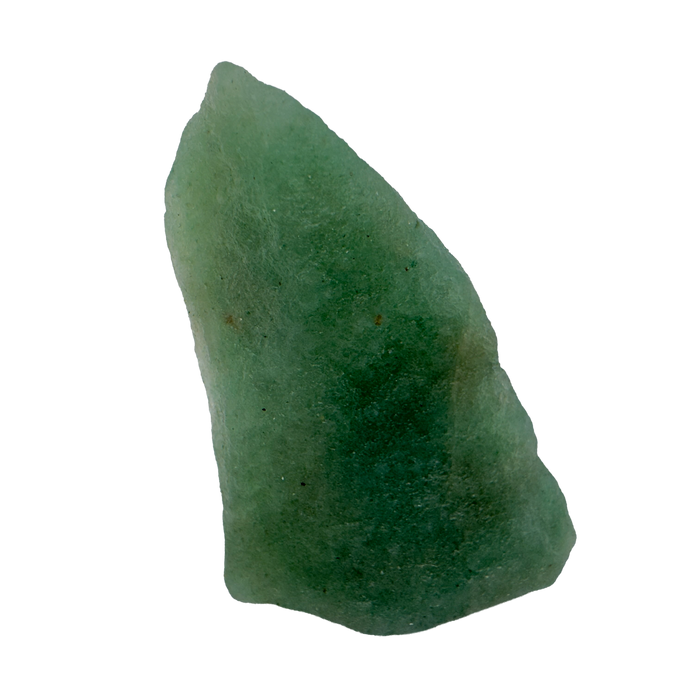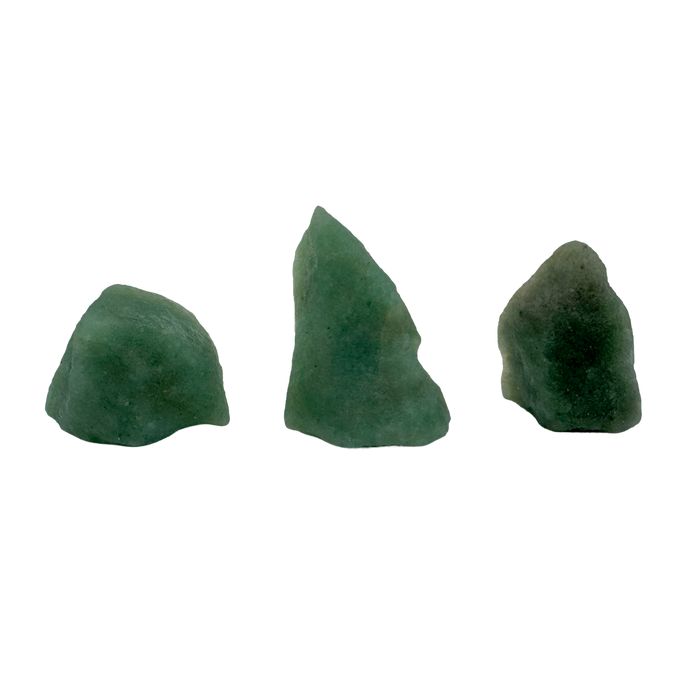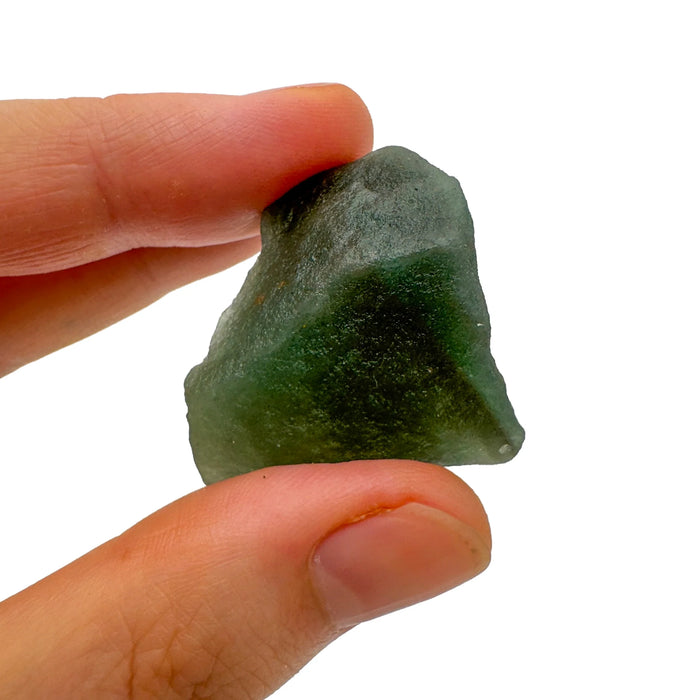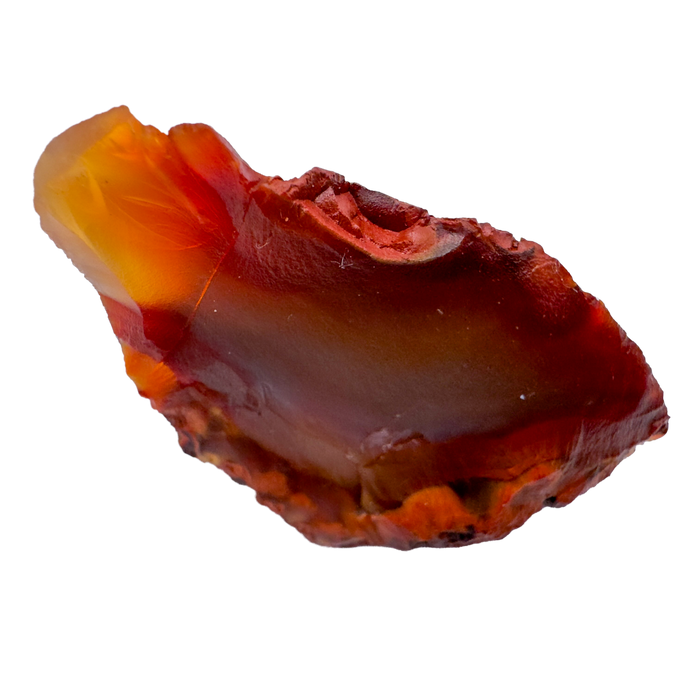








How to Identify an Unknown Crystal
Six simple tests, no app required, that turn a guess into a real identification.
You found a stone, or inherited a box of them, and the label is long gone. A photo match can point you in a direction, but minerals are identified by what they do, not just how they look. These six field tests are the same ones geologists rely on, and you can run most of them at a kitchen table.

To identify an unknown crystal, test six physical properties in order: color, luster, streak, hardness, crystal habit, and heft. Color is the least reliable, so never stop there. It usually takes two or three properties together to name a mineral with confidence. A photo app is a starting point, not proof.
Why a Glance Is Not an Identification
Most people try to name a stone by its color, and most people get it wrong. Color is the easiest property to see and the least dependable to trust, because one mineral can appear in many colors and many minerals share a single color. The stone itself does not care what it looks like to you.
Real identification rests on properties that come straight from a mineral's atomic structure, the things it cannot fake: how hard it is, what color it leaves as a powder, the shape it grew into, and how it breaks. No single test is enough on its own. In most cases it takes two or three of these properties together to separate one mineral from its look-alikes.
properties it usually takes to pin down a mineral
the Mohs hardness scale, soft Talc to hard Diamond
hardness of a porcelain streak plate, harder than most minerals
Color is the first thing you notice and the last thing you should rely on.
The Six-Step Field Method
Work through these in order. Each test narrows the field, and together they turn a vague impression into a short list you can actually check.
Note it, then set it aside. Color is a clue, not an answer, because many minerals come in several colors and several minerals share one color.
How the surface reflects light. Metallic looks like polished steel; non-metallic covers glassy, waxy, pearly, silky, and dull. Metallic versus non-metallic is one of the fastest splits you can make.
Drag the stone across an unglazed porcelain tile. The color of the powder it leaves is often steadier than the stone's outward color, and it separates look-alikes at a stroke.
Try to scratch it with tools of known hardness, like a fingernail, a copper coin, a steel blade, and glass. Where it lands on the Mohs scale narrows the candidates fast.
The shape it naturally grew into: cubes, six-sided prisms, blades, or shapeless masses. How it breaks, in flat planes or curved surfaces, tells you as much as the shape itself.
Pick it up. Some minerals feel surprisingly heavy for their size and others feel light. That sense of density, called specific gravity, becomes a real clue once you have handled a few stones.
Why Color Is the First Thing to Distrust
Color is the most noticeable property and the least dependable. Tiny amounts of impurity or a dose of natural radiation can shift a mineral through a whole range of shades, while unrelated minerals can land on the same hue by coincidence.
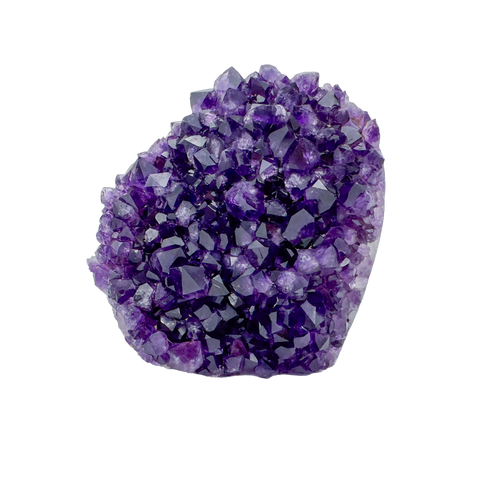
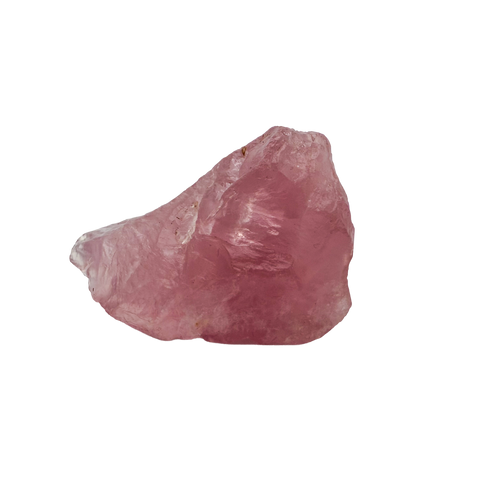
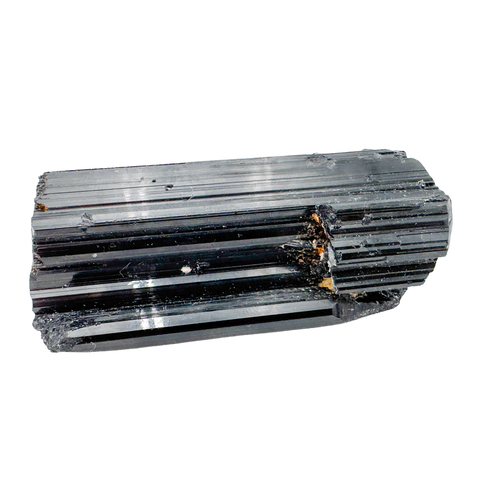
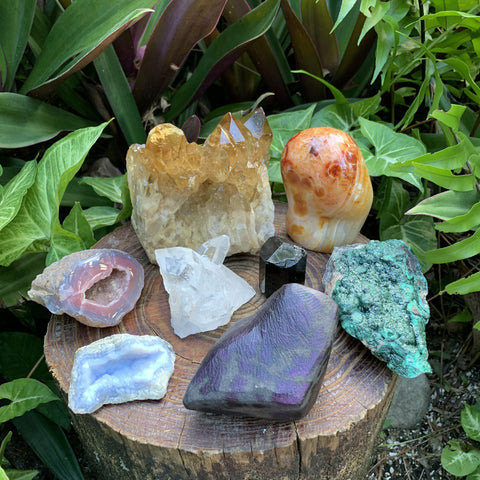
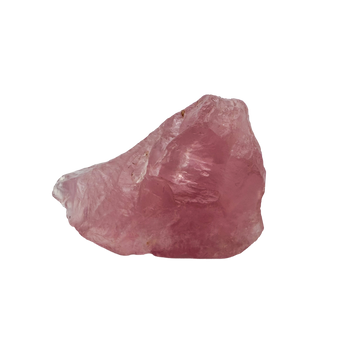
Quartz is the clearest example. Amethyst is purple, Citrine is golden, Smoky Quartz is brown to near black, and Rose Quartz is pink, yet every one of them is the same mineral, quartz, tinted by trace elements or irradiation. Judge a stone by color alone and you will confuse minerals that behave nothing alike.

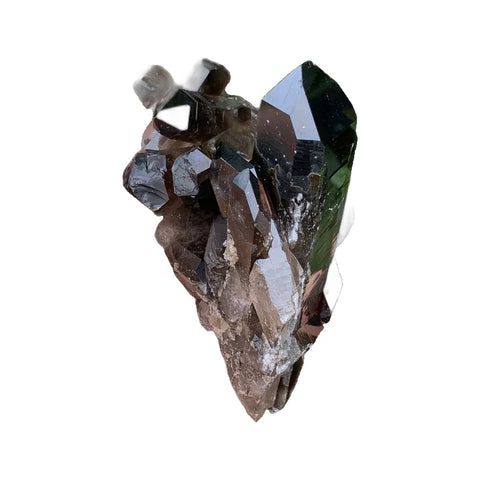
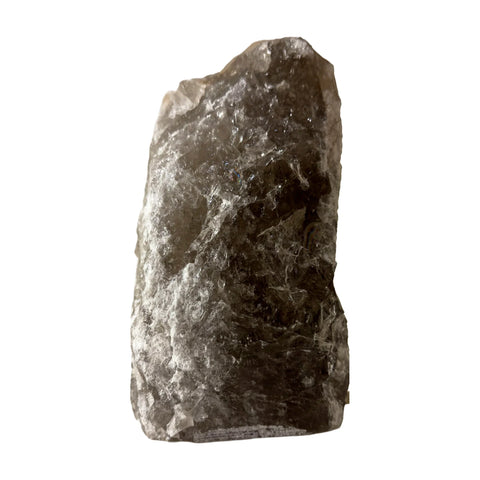
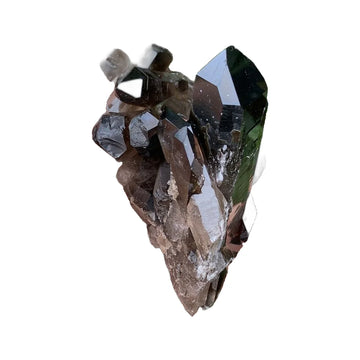
Smoky Quartz, like Amethyst and Rose Quartz, is simply quartz in another color. One mineral, many faces, which is why color alone cannot name a stone.
How to Test Hardness Without a Kit
Hardness is one of the most telling properties, and you can approximate it with things you already own. Working from soft to hard, try to scratch the stone with each tool. The point where it stops being scratched places it on the Mohs scale. Always test on an inconspicuous spot, and wipe the mark to be sure it is a real scratch and not just a smear left behind.
Soft
Up to about 2.5
Medium
About 3 to 5.5
Hard
About 5.5 and up
Hardness is scratch resistance, not toughness. A hard stone can still be brittle and chip under a knock, so test gently, on an out-of-sight spot, and never force a scratch.
Read the Shape, and How It Breaks
A crystal's habit is the geometric form it grows into, set by the way its atoms stack. Quartz builds six-sided prisms, Pyrite forms cubes, and Garnet grows into many-sided rounded crystals. When a stone is well formed, its habit alone can point you straight to a family.
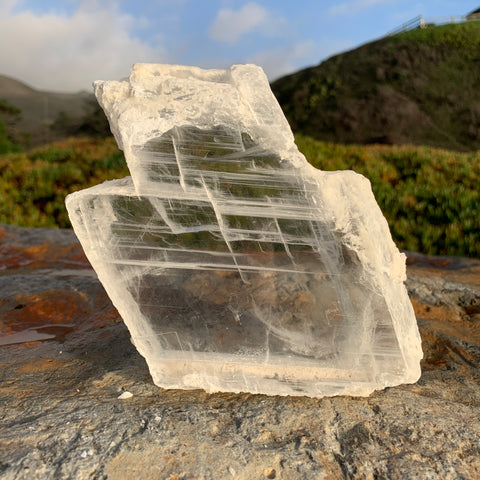
How a mineral breaks matters just as much. Some split along flat, repeating planes, called cleavage, because their bonds are weaker in certain directions. Others break along curved, glassy surfaces, called fracture, with no flat planes at all. Calcite cleaves into tidy rhomb shapes, Mica peels into sheets, and Quartz has no cleavage, so it fractures in smooth curves like a chipped bottle.

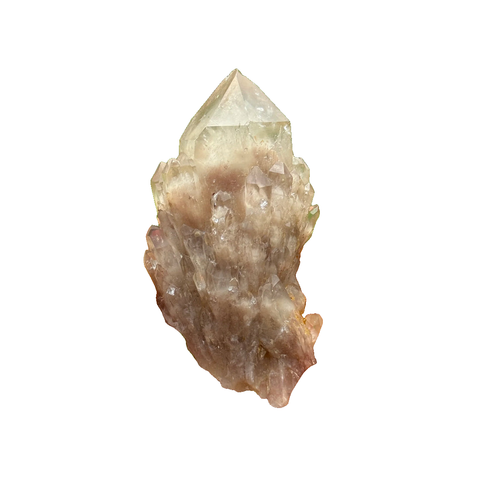
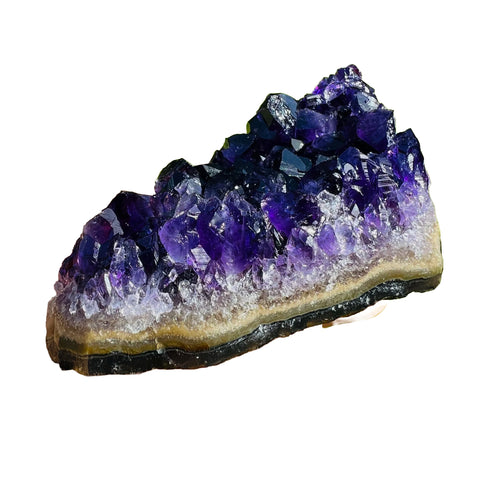
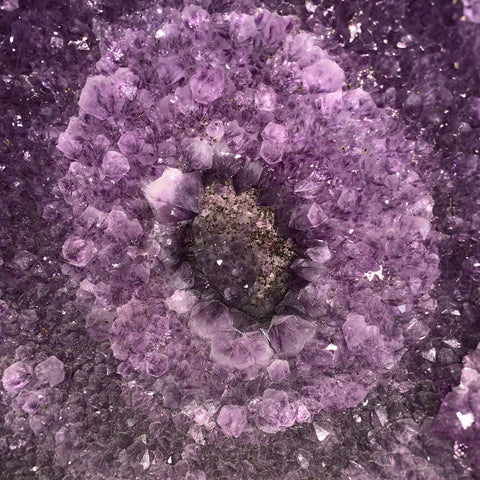
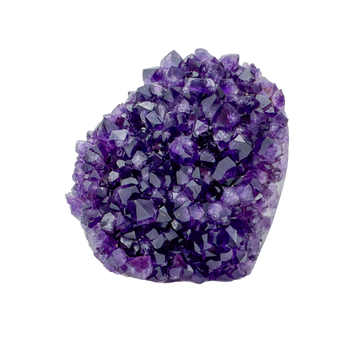
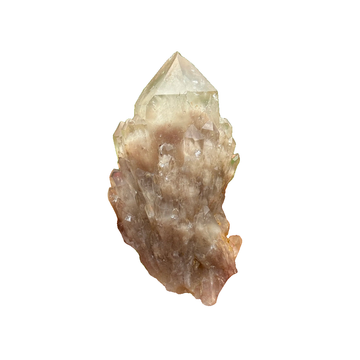
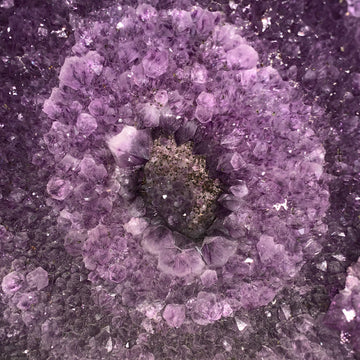
This Amethyst grew into classic six-sided quartz prisms ending in points. A well-formed habit like this is one of the clearest clues a stone can give you.
Where Crystal ID Apps Go Wrong
A photo app can be a useful first guess, especially for common, clean specimens shot in good light. The trouble starts when a single picture becomes the whole answer.
A photo only shows the surface. An app matches what a stone looks like, not how hard it is, what it streaks, or how it breaks, which is exactly where identification lives.
Weathered, polished, dyed, or tiny pieces throw them off, and the look-alikes that fool the human eye fool the camera in the same way.
An app returns a confident name with no test behind it. Treat that name as a hypothesis to confirm, not a verdict to trust.
Let an app narrow the field, then confirm with a streak, a scratch, and a close look at how the stone breaks. A photo match is a guess. The physical tests are what make an identification hold up.
Clear Quartz, Calcite, or Glass?
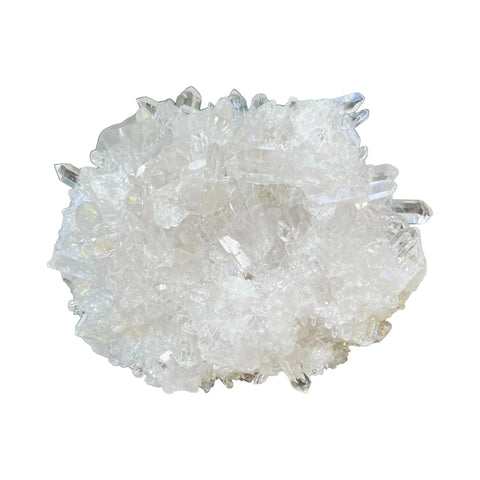
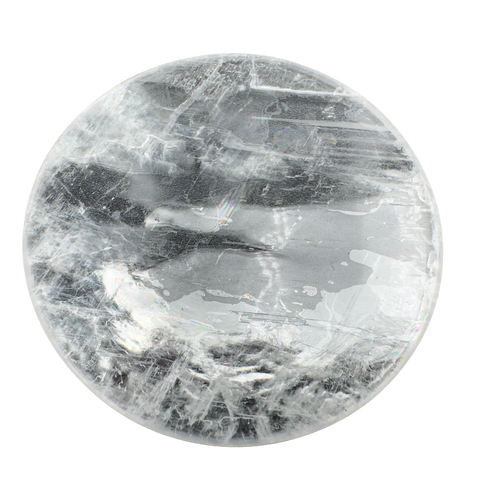
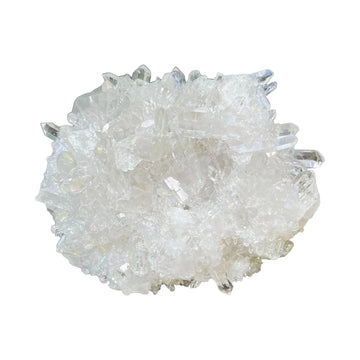
Three clear, colorless things land on the same table all the time: Quartz, Calcite, and a piece of manufactured glass. Color cannot separate them, but three quick tests can.
Quartz
The real crystal
Calcite
The soft impostor
Glass
Not a mineral at all
A stone's color is its first impression. How it scratches, streaks, and breaks is its signature.
Related Guides
A buyer's guide to the scratch scale behind the hardness test, from soft Talc to hard Diamond.
Read the guidePoints, clusters, towers, and tumbles, and what each natural form actually tells you.
Read the guideAmethyst, Citrine, Smoky, Rose, and the rest of quartz's many colors under one mineral.
Meet the familyWhy a single mineral can appear in a dozen shades, and why color is a weak way to identify one.
Read the guideThe veils, phantoms, and threads sealed inside a stone, and what they reveal about it.
Read the guideEvery Beyond Bohemian guide to sourcing, value, identification, and care in one place.
Browse the LibraryCrystal Identification FAQ
How do I identify an unknown crystal?
Work through physical properties in order: color, luster, streak, hardness, crystal habit, and heft. Color is the least reliable, so use it only as a starting point. It usually takes two or three of these tests together to name a mineral, since few stones can be identified by appearance alone.
Are crystal identification apps accurate?
They can help with common, clean stones photographed in good light, but they read only the surface. Apps miss hardness, streak, and how a stone breaks, and they struggle with weathered, dyed, or polished pieces. Treat an app's answer as a first guess to confirm with physical tests, not as proof.
What is a streak test?
A streak test reveals the color of a mineral's powder. You drag the stone firmly across an unglazed porcelain tile, known as a streak plate, and read the color of the line it leaves. That powder color is often more consistent than the stone's outward color, so it helps separate minerals that look alike.
How can I test a crystal's hardness at home?
Try to scratch the stone with tools of known hardness. A fingernail marks stones around 2.5 and under, a copper coin around 3, a steel blade around 5.5, and window glass around 5.5 to 6. Where the scratching stops places the stone on the Mohs scale. Test gently on a hidden spot.
What is crystal habit?
Habit is the natural geometric shape a mineral grows into, set by how its atoms arrange. Quartz forms six-sided prisms, Pyrite forms cubes, and Garnet forms many-sided rounded crystals. When a stone is well formed, its habit is one of the strongest clues to its identity.
Why is color a poor way to identify a crystal?
Because one mineral can come in many colors and many minerals share a color. Quartz alone appears as purple Amethyst, golden Citrine, brown Smoky Quartz, and pink Rose Quartz, all the same mineral. Trace impurities and natural radiation shift color easily, which makes it the least dependable property.
What tools do I need to identify minerals at home?
Very few. A white unglazed tile for streak, a fingernail, a copper coin, a steel blade or nail, and a piece of glass cover most hardness tests. A magnifier helps you read crystal faces and how a stone breaks. Most identification comes from careful looking, not special equipment.
Can I identify a polished or tumbled crystal?
It is harder, because polishing removes the natural habit and the fresh surfaces that show how a stone breaks. You can still use hardness, a streak on an unglazed tile, heft, and any banding or inclusions. With habit gone, expect to lean on two or three other tests together.