

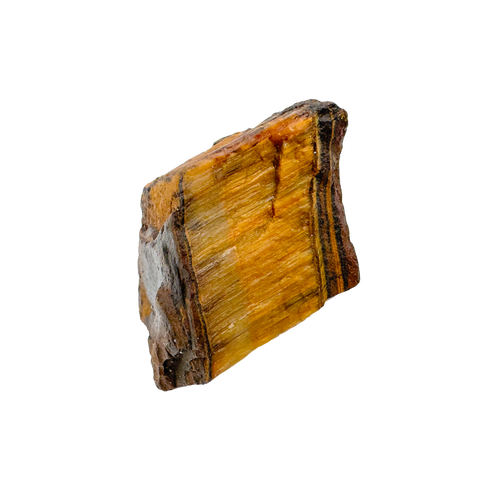
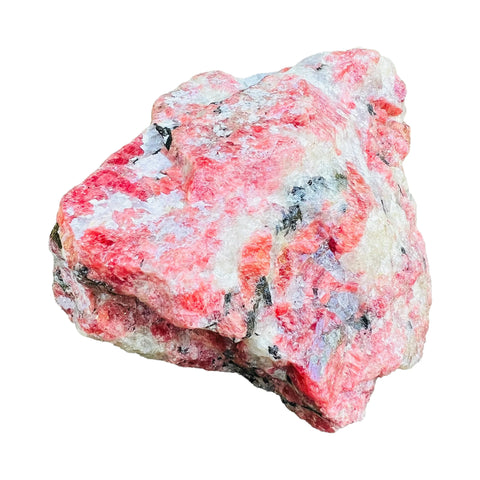
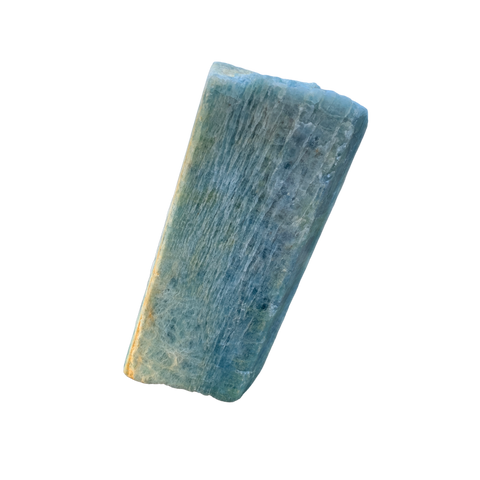
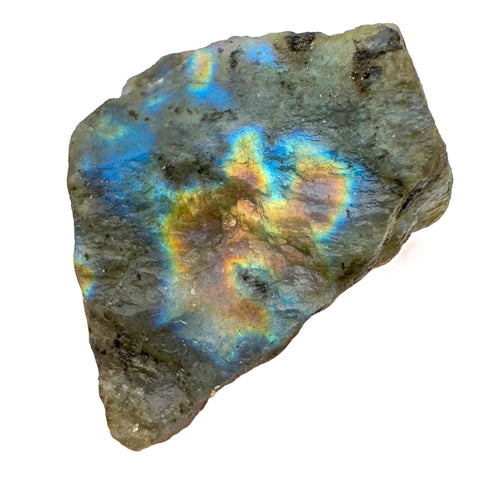








What a hardness number really tells you
The one figure on a crystal listing worth reading, once you know what it measures.
Crystal listings love to quote a Mohs hardness number, yet most buyers are never told what it actually promises. It is a genuinely useful figure, as long as you know the single thing it measures and the three things it does not.

A Mohs number rates only one thing: how well a crystal resists scratching, from talc at 1 to diamond at 10. It does not measure toughness, water safety, or fade resistance. Quartz sits at 7, the practical line above which a stone shrugs off everyday dust and handling.
What a Mohs number measures
A Mohs hardness number answers one narrow question: how well does this stone resist being scratched? The scale runs from 1 to 10, and the rule behind it is simple. A harder mineral can scratch a softer one, but never the reverse. Talc sits at 1, and a fingernail marks it. Diamond sits at 10, and nothing else touches it.
The mineralogist Friedrich Mohs set out the scale in 1812 using ten reference minerals: talc, gypsum, calcite, fluorite, apatite, feldspar, quartz, topaz, corundum, and diamond. Each one scratches everything below it. More than two centuries later, those same ten stones are still the standard quick test for hardness.
The reference minerals are not exotic. Calcite, at 3, is the same material as common limestone and chalk. Fluorite, at 4, fills mineral shelves in every color. Using everyday stones as yardsticks is what makes the scale so practical: you can place a new piece without any equipment at all.

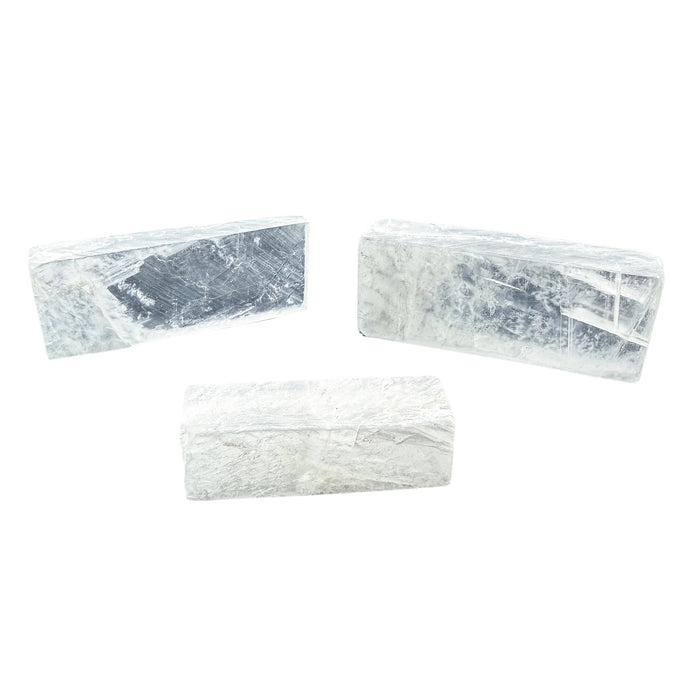
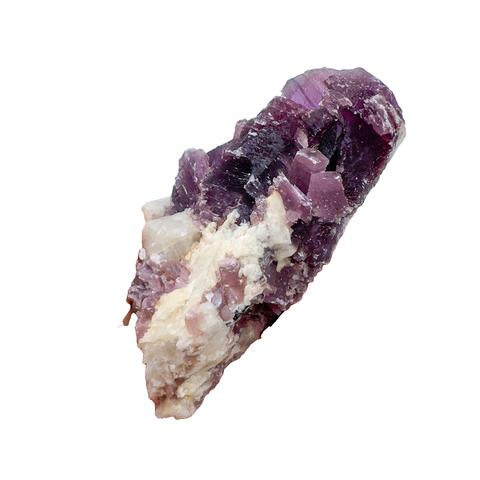
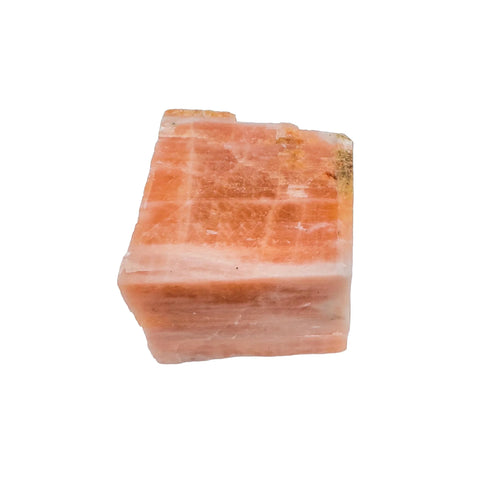
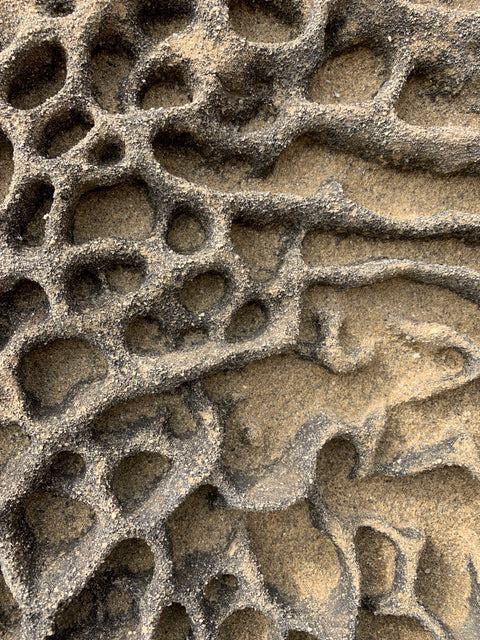
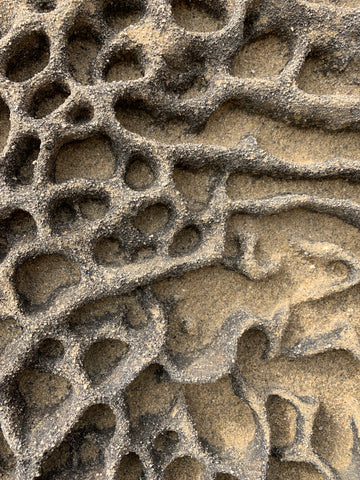
Calcite is the scale's number 3. A copper coin will leave a mark on it, which is exactly how the ranking is built.
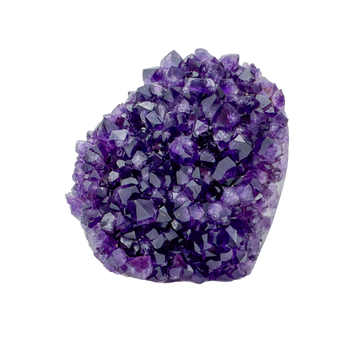
The year Friedrich Mohs set out the scale
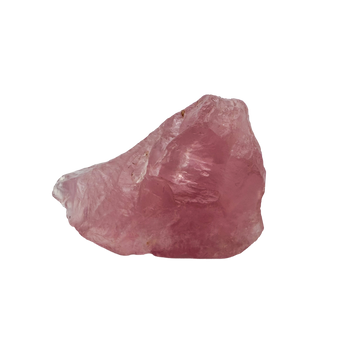
Talc at the soft end, diamond at the hard end
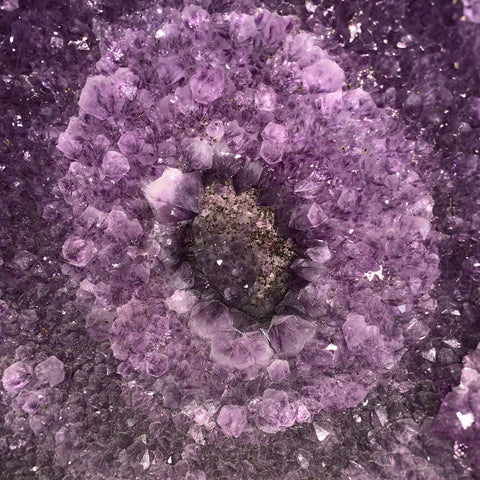
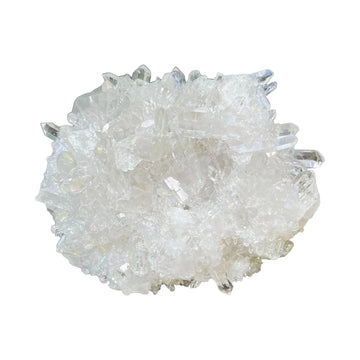
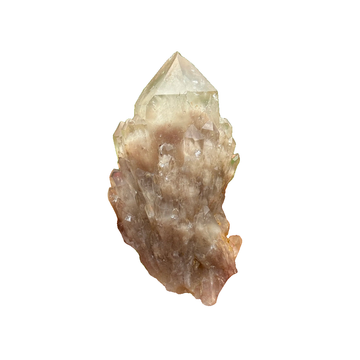
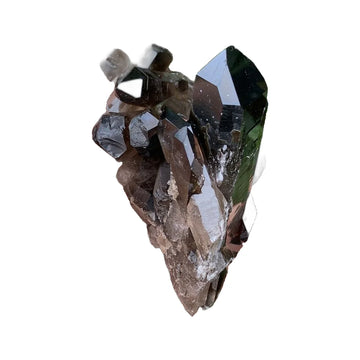
Quartz, the everyday-durability benchmark
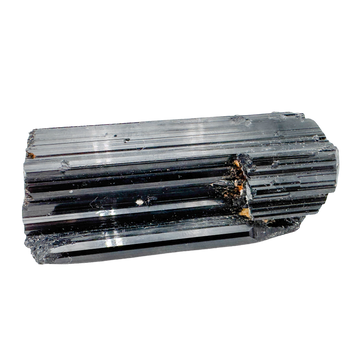
The Mohs scale measures scratch resistance only, and remains the standard quick hardness test today.
A ranking, not a ruler
Here is the part most charts leave out. The Mohs scale is a ranking, not a measurement, and the steps are not evenly spaced. A 4 is not twice as hard as a 2, and a 10 is not just slightly harder than a 9.
Diamond sits one step above corundum, yet in absolute terms it is several times harder, and the gaps widen sharply near the top of the scale. So read the number as an order of scratch resistance, not as a figure you can do arithmetic with. Knowing a stone is "a 7" tells you it resists most everyday scratches. It does not mean it is exactly one unit tougher than a 6.

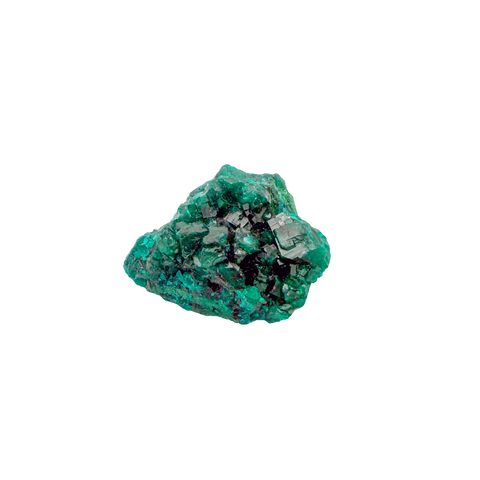
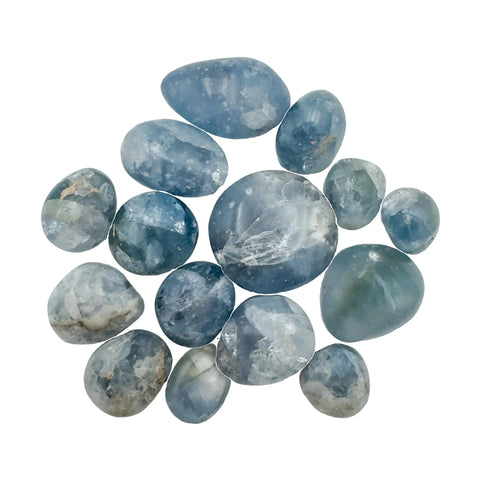
Fluorite is number 4 on the scale, a reference point rather than a hard stone. A steel blade scratches it, and it chips easily.
This is why a lone number can mislead. Fluorite and quartz are only three steps apart on paper, but quartz resists scratching far more than three even steps would suggest. The scale sorts stones into a sensible order. It does not space them out evenly.
Use a Mohs number to compare stones, not to measure them. Higher means harder to scratch, and the jumps between numbers grow larger toward the top of the scale.
Hardness is not toughness, water safety, or color
A high Mohs number is easy to over-read. People assume a hard stone must also be unbreakable, waterproof, and fade-proof. None of that follows. Hardness measures scratch resistance and nothing else. At least three other properties matter just as much, and each is independent.
Toughness is resistance to chipping and breaking, a separate property. Jade rates only about 6 to 6.5 yet is one of the hardest natural materials to break. Diamond is a 10, the hardest there is, but a sharp knock on the wrong angle can still chip it.
A high number does not make a stone safe in water. Some softer stones dissolve or take on moisture, and a few harder ones react over time. Hardness and water tolerance are different questions.
Hardness says nothing about light. Fluorite is harder than Selenite, yet its color fades in sunlight far faster. What fades a stone is its trace-element coloring, not its place on the hardness scale.
"A diamond will scratch jade, yet a sharp knock can break the diamond while the jade holds. Hardness and toughness are not the same thing."
Where your favorite stones fall on the scale
Most of the crystals people buy cluster in a narrow band between about 2 and 7. That range is worth knowing by heart, because it maps directly onto how you should handle each piece.
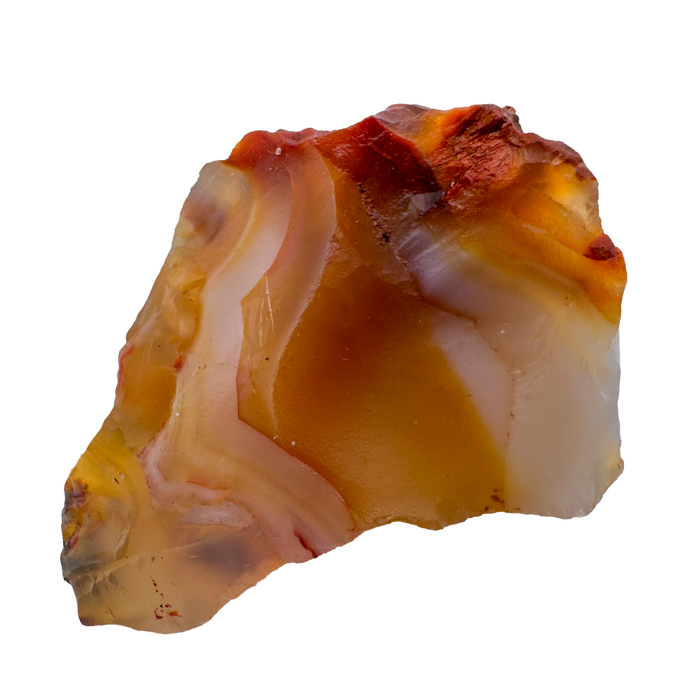
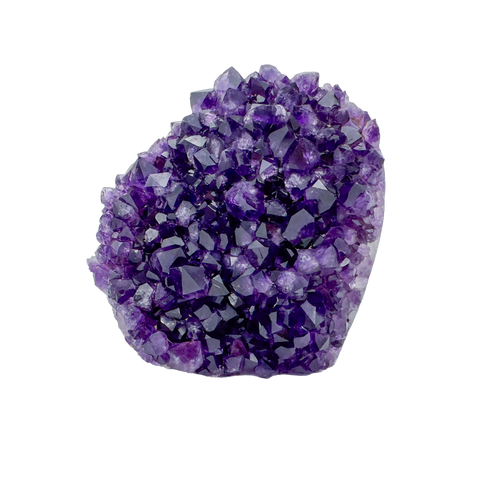
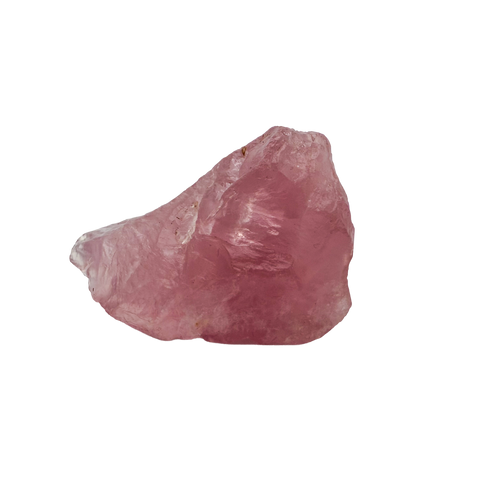
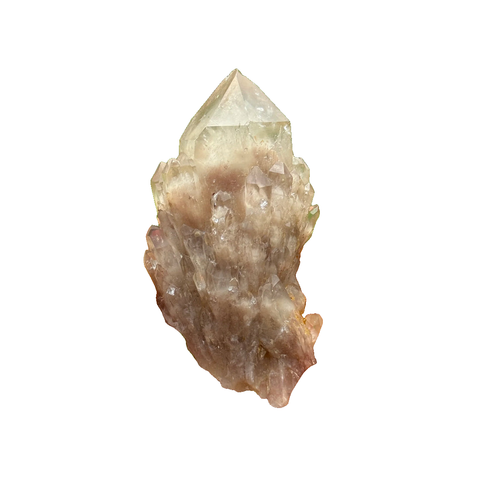
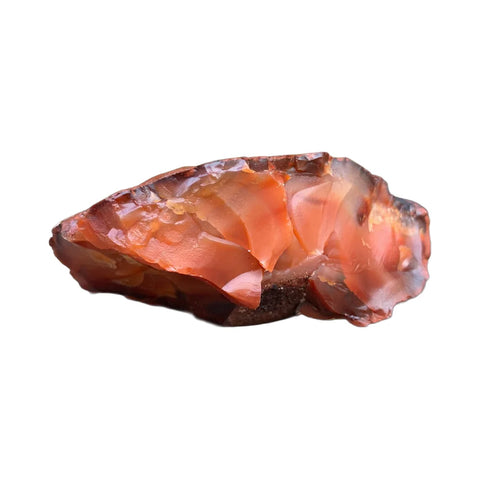
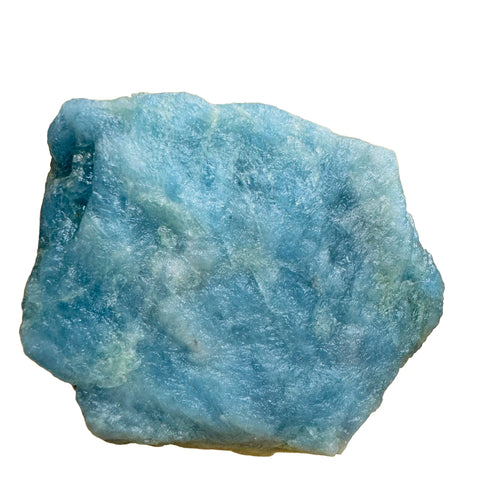
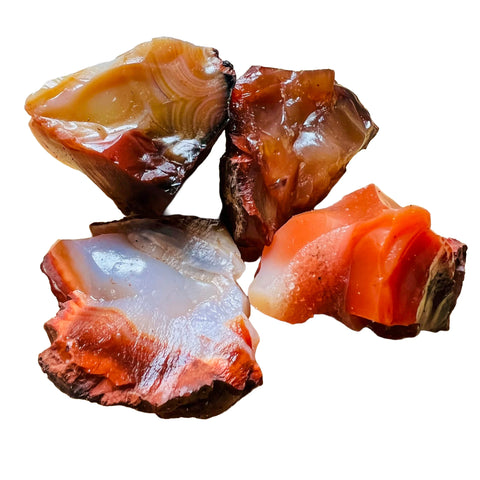
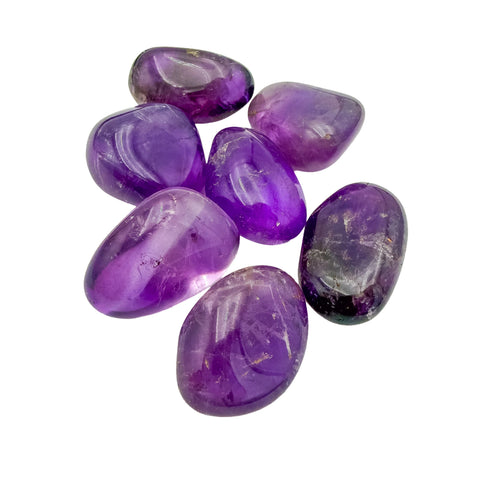
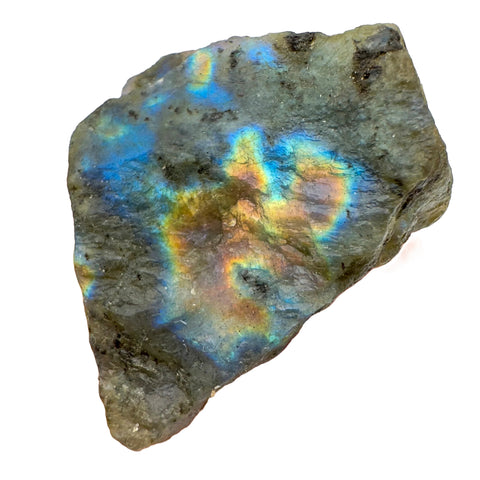
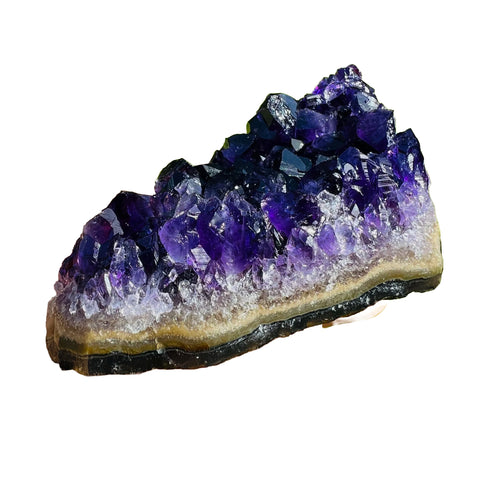
At the soft end, gypsum stones like Selenite sit at 2, soft enough that a fingernail leaves a mark. Calcite is 3, fluorite is 4. The middle holds favorites like Lapis Lazuli, Turquoise, Labradorite, and Moonstone, all softer than they look. The quartz family, which includes Amethyst, Citrine, Agate, and Carnelian, sits at 7 and is the workhorse of daily-wear stones.

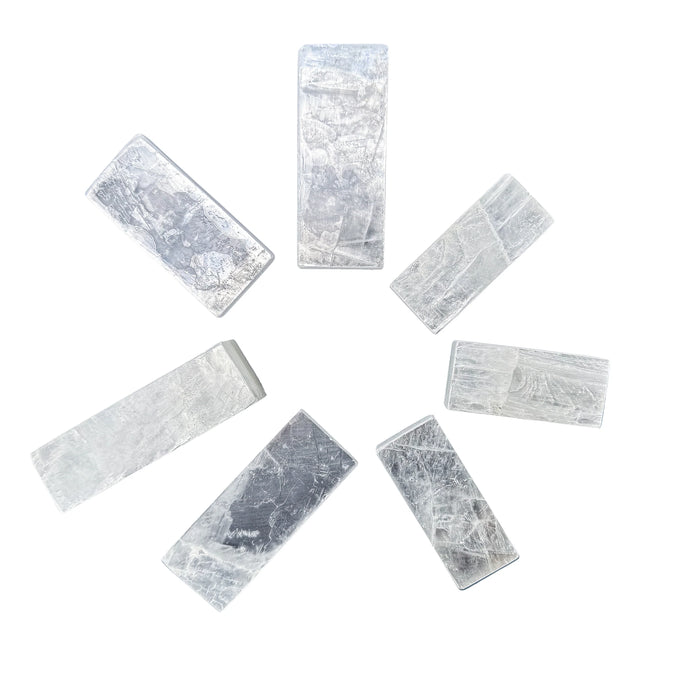
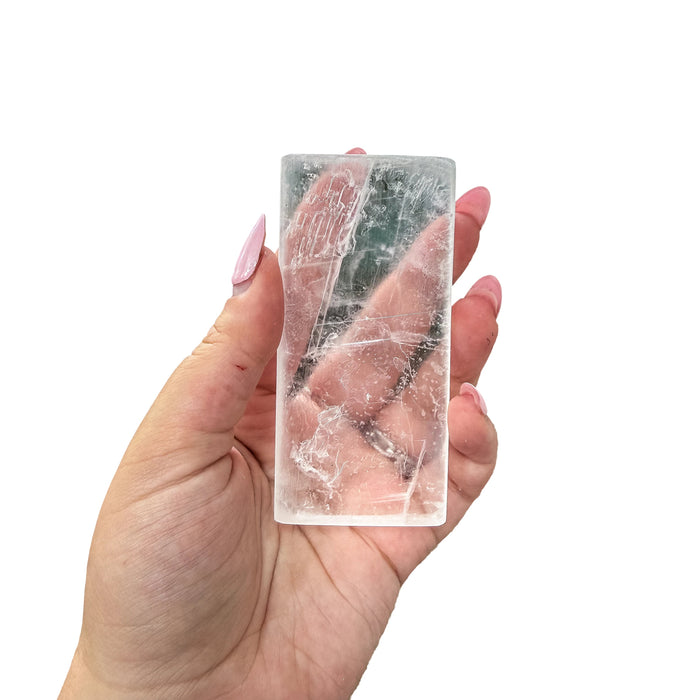
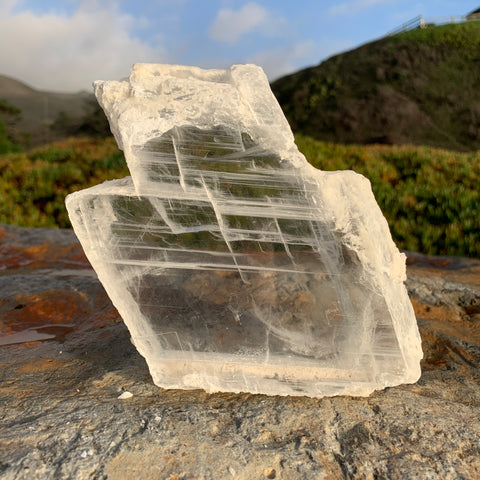
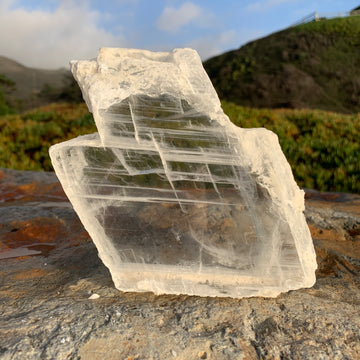
Selenite is gypsum, a soft 2 on the scale. A fingernail can scratch it, so it belongs away from harder stones and rough handling.
Selenite (Gypsum)
Gypsum, the soft end
Calcite
Carbonate, soft
Fluorite
A number-four reference stone
Lapis Lazuli, Turquoise
Mid-scale, around 5 to 6
Labradorite, Moonstone
Feldspar, just below quartz
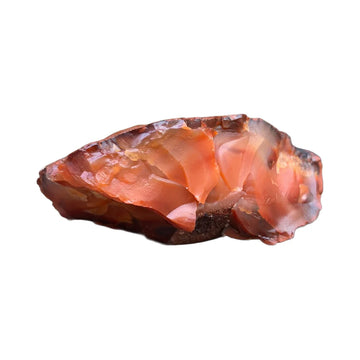
Quartz family (Amethyst, Citrine, Agate, Carnelian)
Quartz, the daily-wear band
Garnet, Topaz
Harder than dust and steel
How hard is hard enough?
For most buyers, the real question behind the number is simple: will this stone hold up to everyday life? The honest threshold is around 7, and the reason is dust.

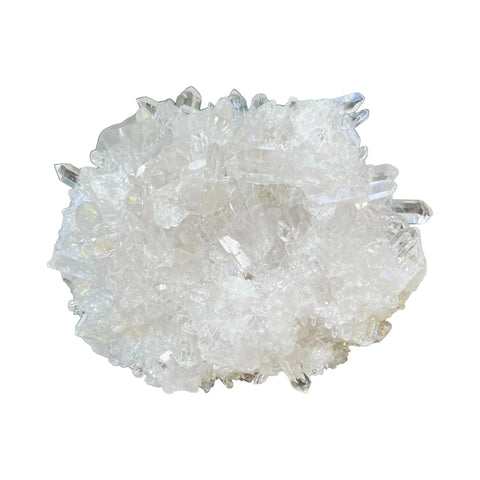
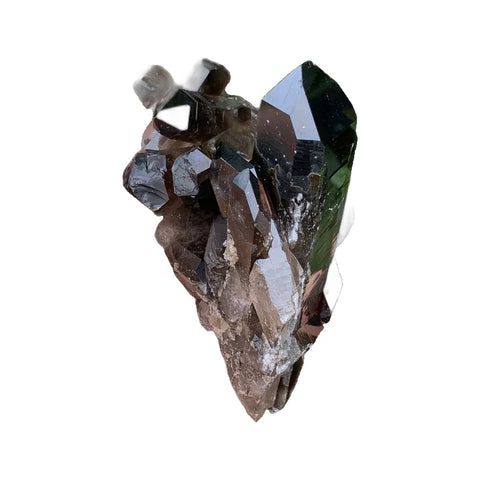
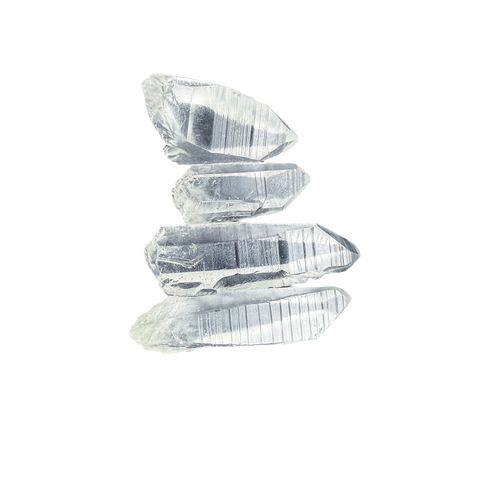
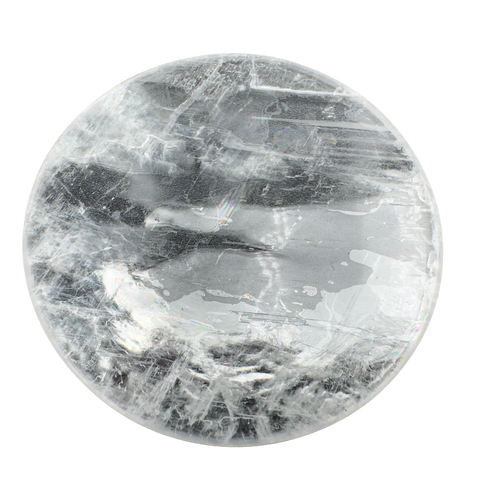
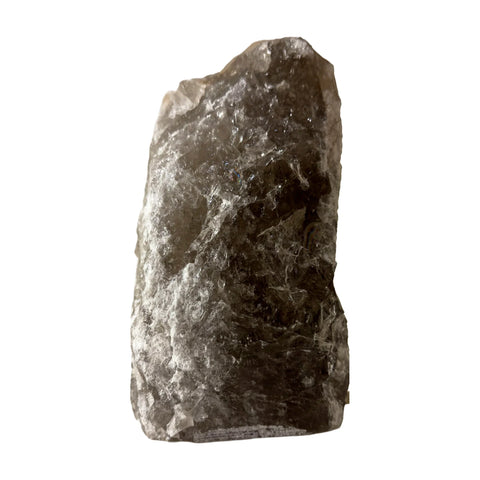
Quartz sits at 7 and scratches glass. It shrugs off everyday dust, which is why the quartz family is the backbone of daily-wear crystals.
Ordinary household dust contains fine quartz particles, which sit at about 7 on the scale. That means everyday dust, and even a dry cloth wiping it away, can leave faint scratches on any stone softer than quartz. Over months and years, softer stones slowly lose their polish while quartz and harder stones keep their shine.
This is the practical line. Stones at 7 and above, like the quartz family, garnet, and topaz, suit daily wear, rings, and pieces you handle often. Softer stones from about 6 and below are happier as display pieces or in protected settings. Soft stones are not lesser. They simply ask for gentler handling.
For something you will wear or handle daily, look for Mohs 7 or higher. For a stone you mainly display or keep in a pouch, softer is perfectly fine. Either way, our crystal durability guide pairs hardness with water tolerance for the full picture.
Checking hardness at home, carefully
You usually do not need to test hardness at all. Once you know the stone, you know its number. But if you have an unlabeled piece and want a rough idea, a few common objects work as references.
If a fingernail leaves a scratch, the stone is very soft, in the Selenite or talc range.
Scratches Calcite and softer stones. Older, purer coins work best, since modern coins vary in metal.
Quartz at 7 will scratch glass. If your stone scratches glass cleanly, it is around 7 or higher.
A real scratch test leaves a permanent groove, so only test an inconspicuous spot or a piece you do not mind marking. A mark that wipes away was just residue, not a scratch. When you clean a tested or soft stone afterward, use a gentle method, as in our guide to cleansing crystals without damage.
Related reading
Hardness, water tolerance, and which stones survive daily handling.
Read the guideWhy the soft end of the scale wants a dry, careful home.
Read the guideA beautiful number-four stone that rewards gentle handling.
Read the guideThe flash, the sourcing, and how to keep a 6 to 6.5 stone safe.
Read the guideHard, pocket-friendly quartz-family stones built for daily handling.
Shop the collectionPlain, honest answers to the questions crystal buyers actually ask.
Browse the LibraryMohs hardness FAQ
What does the Mohs hardness scale measure?
It measures one thing: how well a mineral resists being scratched. The scale runs from 1, talc, to 10, diamond, and a harder stone can scratch any softer one. It does not measure how tough a stone is against breaking, whether it is safe in water, or whether its color will fade.
Is a Mohs hardness of 7 good enough for everyday wear?
Yes. Quartz-family stones at 7, such as Amethyst, Citrine, and Agate, resist the fine quartz particles in household dust, so they keep their polish through daily handling and suit rings and bracelets. Stones below about 6.5 are better as display pieces or in protected settings.
What is the difference between hardness and toughness?
Hardness is resistance to scratching. Toughness is resistance to chipping and breaking. They are independent properties. Jade is only about 6 to 6.5 yet extremely tough, while diamond is a 10 yet can still chip from a sharp blow because it has cleavage planes.
Can I scratch test my own crystal to find its hardness?
You can, but carefully. A scratch test leaves a permanent groove, so use an inconspicuous spot or a piece you do not mind marking. Common references are a fingernail (about 2.5), a copper coin (about 3 to 3.5), and glass (about 5.5). A mark that wipes away was residue, not a true scratch.
Does a high Mohs hardness mean a crystal is safe in water?
No. Hardness and water tolerance are separate. Soft Selenite dissolves in water, and some harder stones can still rust or react over time. Always check a stone's water tolerance on its own, which our durability guide covers stone by stone.
Why is quartz at 7 such an important number?
Because everyday household dust contains fine quartz particles at about 7. Stones softer than quartz slowly pick up micro-scratches from ordinary dust and wiping, while quartz and harder stones keep their shine. That makes 7 the practical line for daily-wear durability.
What household items can I use to estimate a stone's hardness?
A fingernail marks stones up to about 2.5, a copper coin scratches up to about 3 to 3.5, and a steel blade or glass reaches about 5.5. If your stone scratches glass, it is roughly 7 or harder, in the quartz range. These are rough brackets, not exact readings.
Is the Mohs scale linear, so a 10 is twice as hard as a 5?
No. The scale is a ranking, not a measurement, and the steps are uneven. Diamond at 10 is several times harder than corundum at 9 in absolute terms, and the gaps grow wider toward the top. Use the number to compare stones, not to do arithmetic.