












What is Jade?
Jade Crystal Guide: meaning, origin & properties
Learn what Jade is, where ours comes from, traditional associations across cultures, and how to identify a real specimen, in our complete Jade Crystal Guide.


 Agatefor stress relief
 Amazonitefor stress relief
 Aquamarinefor serenity
 Aventurinefor luck
 Bloodstonefor energy
 Blue Kyanitefor confidence
 Blue Lace Agatefor stress relief
 Chrysocollafor emotional healing
 Fluoritefor focus
 Garnetfor energy
 Lepidolitefor stress relief
 Malachitefor emotional healing
 Moonstonefor grounding
 Obsidianfor protection
 Ocean Jasperfor emotional healing
 Red Jasperfor grounding
 Rhodonitefor emotional healing
 Selenitefor cleansing
 Sodalitefor focus
 Tiger Eyefor confidence





Only 1 left in stock
Comes with a printed crystal card.


This is an A-grade Black Jade sphere from Peru. Nephrite's interlocking fibers make it one of the toughest minerals worked into spheres. The exact piece pictured measures 2.81 inches (71.4 mm) across and weighs 530 grams at Mohs 6-6.5, natural and untreated. Hand-cut and hand-polished, finished with no coating or filler.
A one-of-a-kind piece sells once, so it rarely has reviews of its own. These are verified reviews of other Beyond Bohemian orders, not of this piece.
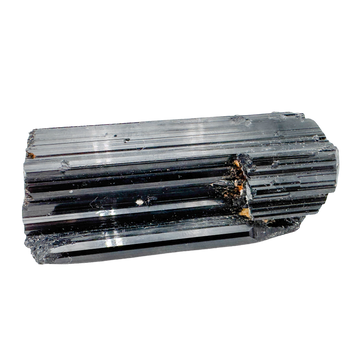
Black jade is nephrite, an amphibole rather than the jadeite most people picture when they hear the word jade. Graphite and amphibole inclusions carry the dark color all the way through the stone. The interlocking fibrous structure is what makes nephrite so difficult to chip.
This sphere was hand-cut and hand-polished from Peruvian nephrite.
Black jade is usually kept for grounding and for a quiet sense of protection, less about warding anything off and more about staying put in yourself. It is traditionally linked to the root chakra. If that resonates, a shelf near the door suits it. Take what is useful and leave the rest.
These are traditional associations drawn from historical practice. This stone is not a substitute for medical or mental health care.
Offered as a starting point for your own practice.
Black Jade sits at 6-6.5 on the Mohs scale, about as hard as glass, so it handles daily use but will scratch against harder stones. Keep chemical cleaners away from it; they can etch the surface.
Natural black jade from Lima, Peru. Untreated. Hand-cut and hand-polished, with no dye, coating, or filler.
Yes. This is one piece, photographed on its own. When it sells, it is gone.
It measures 2.81 Inches | 71.4 Millimeters and weighs 1.17 pounds.
Grades reflect visual quality within a batch. A is standard, with typical inclusions. AA shows stronger color, cleaner surfaces and tighter sizing. AAA is the top 10 to 15 percent of a batch. Every lot is inspected and graded by our team in Rockville, Maryland, not taken on the supplier’s word.
Peru, through a community partnership. It came to us through a community partnership, one of the sourcing models we publish and stand behind.
Every lot is inspected and graded by our expert team before it goes on sale, not taken on the supplier's word. A means good quality with solid visual appeal, a clear step above commercial material. Pieces that miss the mark never reach the shop.
How We GradeSourced through a regional cooperative or community-based workshop. Processing and economic benefit stay local, which means more of the value reaches the people doing the work. We say what we know and where our tracing stops.
Our Sourcing StandardsEverything we sell is natural in origin: never synthetic, never dyed, never coated. Where a stone has been heated, irradiated or stabilized, which is common in the trade for some species, we say so on the product page. If a piece is not as described, return it within 90 days of delivery.
Returns and Guarantee