















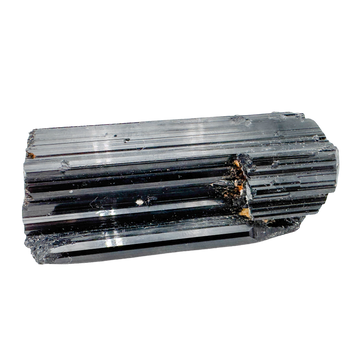
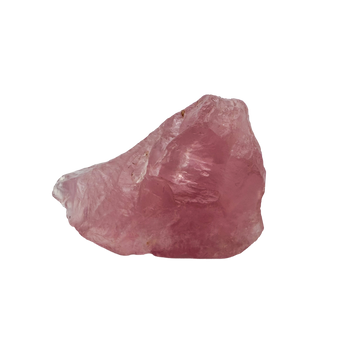
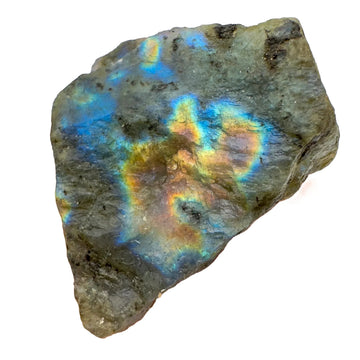
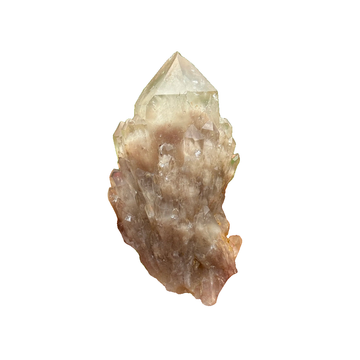





How to Choose an Ethical Crystal Supplier
Most crystal shops will tell you they source ethically. A few can prove it. This guide walks through the seven questions, the eight warning signs, and the pricing math that separate honest sourcing from beautiful claims.
An ethical crystal supplier can tell you where a stone came from and how it reached them. No certification body covers the crystal trade, so no logo verifies the claim. Ask for country and region, the mine or cooperative where it is known, treatment disclosure in writing, and how many hands the stone passed through.
The short answer
The short version is three core questions: where the stone came from, who handled it before you, and whether the seller can show their sourcing standard in writing. The full framework on this page expands those into seven detailed questions covering origin, labor, treatment, walk-aways, pricing, follow-up access, and published standards. Walk away from any seller who can't answer the core three. Use the seven below to tell the difference between a seller doing the work and one using the words.
The crystal trade is global, fragmented, and largely unregulated. There is no universal certification, no government oversight equivalent to organic produce or Fair Trade coffee, and no single standard that defines what "ethically sourced" actually means at the shelf. The result is a market where any seller can put the phrase on a product page and the burden of verification falls entirely on the buyer.
That gap has filled with marketing language. Walk through any major crystal site and you'll see the same three or four words used across catalogs of wildly different sourcing realities. "Ethically sourced." "Consciously sourced." "Responsibly mined." Those phrases mean very different things in practice depending on the seller, and most of the time they're the only sentence on the topic. No country named. No partner identified. No standard linked.
Most sellers will tell you what you want to hear in order to make a sale. The questions on this page are designed to flip that. They ask the seller to name something specific, take a position, or point to a published standard. Marketing language doesn't survive specific questions, because the answers require concrete information that either exists or doesn't.
This page is the second sentence after "ethically sourced." The questions, the patterns to watch for, and the math behind what an honest crystal actually costs to bring to market. The goal here is to make you a more informed buyer, not to push a purchase. Take the framework with you. Apply it to any crystal seller, including us.
"Ethically sourced" with nothing else attached is a label, not a claim. The claim is what the seller will tell you when you ask the next question.
The Seven Questions to Ask Any Crystal Supplier
If a seller can answer all seven with specifics, you're working with someone serious. If they can answer four, you're working with someone honest still figuring it out. If they can answer fewer than three, the language is doing more work than the sourcing.
Where exactly does this stone come from?
The most basic question, and the one most often answered with a shrug. A real ethical sourcing claim names the country at minimum and the region or deposit when possible. "Ethically sourced" with no country attached is the most common pattern in the industry. It's also the one that tells you the most about the seller.
Country alone is the floor. The region (Minas Gerais, Northern Cape, Artigas, the Magaliesberg) and the deposit or cooperative is the ceiling. The further a seller can answer toward the ceiling, the more they actually know about what they're selling. We track origin to the regional or mine level for every active product in our catalog and publish the seven primary origins on our Where Our Crystals Come From page.
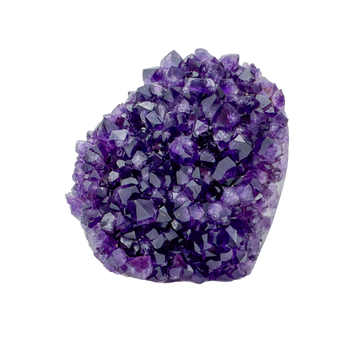
"This Amethyst is from Rio Grande do Sul in southern Brazil, sourced through a cooperative in the Paraná basalt province. We've been working with them since 2019."
"It's ethically sourced from South America." or "Our suppliers are vetted and trustworthy."
Who pulled it from the ground, and were they paid fairly?
The country is the floor. The labor behind it is the substance. Most crystal mining worldwide is done by small-scale and artisanal operations, often family-run, often informal. Whether those miners are paid fairly depends entirely on the channel the stone moved through to reach the seller.
Honest sellers are candid about what they can and cannot share publicly. Naming specific cooperatives, workshops, or mines on a website is harder than it sounds, and most ethical sellers (including us) cannot do it 100 percent of the time. There are real reasons. Worker safety in some regions makes public disclosure unsafe. Competitive pressure can put a small operator's livelihood at risk if larger sellers identify their source and approach them directly. And the small-scale mining sector is genuinely dynamic: a cooperative supplying Tourmaline this season might be replaced by a different group next season because individual mines open and close frequently. We rely heavily on the cooperative model precisely because of this volatility, and we're transparent that this is an ongoing pain point in the industry, not a solved problem.
What you can expect from a serious seller is honesty about the structure of the channel: cooperative versus wholesale aggregator, direct relationship versus middleman chain, a partner paid at the dig site versus a broker that rolls up dozens of sources. Specific names aren't always shareable. The structure of the relationship always is. Our From the Source to You page lays out the five sourcing models we use, why each one exists, and what you can verify at each tier.
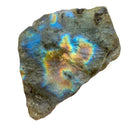
"This Labradorite came through a cooperative partner network in southern Madagascar. We pay at the dig site. We don't always publish the specific cooperative name for safety and competitive reasons, but we can describe the structure and pay model openly."
"All our suppliers are fair trade certified." (by whom, and how would you check?)
Has the stone been treated, dyed, or enhanced?
Treatment is normal in the trade. Heat-treatment, irradiation, dyeing, oiling, and coating are all common and have legitimate uses. The problem is undisclosed treatment. A reputable seller will tell you whether a stone has been enhanced, what the treatment was, and what that means for the buyer.
The most common undisclosed treatment is heat-treated Amethyst sold as Citrine. Most commercial Citrine on the global market is treated. If a seller's Citrine is dramatically darker, more uniform, and cheaper than what natural Citrine actually is, that's the answer to the question they didn't address. Our Citrine is natural and unheated, which is why it costs more and looks more pale-yellow than the deep orange-red of treated material.
"Our Citrine is natural and unheated. Most commercial Citrine is heat-treated Amethyst, which is why our Citrine looks different and costs more."
Silence on treatment, or "All our crystals are 100% natural" with no specifics about which treatments are excluded.
What do you refuse to sell, and why?
This is the question that separates marketing from substance. Most sellers are conditioned to tell buyers what they want to hear. That's how sales close. Asking what they refuse to sell flips the conversation. The seller has to name a category they walked away from, which means they have to admit a market they're not chasing. Marketing language doesn't survive the question, because the answer requires a specific decision, not a brand statement.
Sellers serious about sourcing have a list. It usually includes specific origins, specific stone categories with chronic supply chain problems, and specific suppliers they've stopped working with after they failed verification. We have walked away from material we knew customers wanted. We have dropped suppliers we'd worked with for years after their behavior changed. We have passed on entire categories of stone where the supply chain math couldn't be verified. None of those decisions made us money in the moment. All of them protect the meaning of every other claim on this site.
If you ask this question and the answer is a long list of stones the seller carries, with no walk-aways named, the framework probably isn't operating in the back of the house. The list of yes-es is marketing. The list of no-es is the standard.
A Peruvian supplier who falsified provenance. The lots looked beautiful, the price worked, but verification of origin failed. We dropped the relationship and absorbed the cost.
Madagascar lots that came too cheap. Below the cost of fair pay at the dig site. The math was being absorbed somewhere, and we don't accept lots that price the miners out of the deal.
Tanzanite, Sugilite, and Lapis Lazuli from channels we couldn't verify. These categories have well-documented supply chain issues, and we'd rather not carry them than carry them with a question mark.
A longtime supplier whose behavior changed. We had worked with them for years. They began pushing material we couldn't trace and pressuring us to accept lots without documentation. We ended the relationship.
Wholesale aggregators offering "ethically sourced" mixed lots. When the goods arrive at one warehouse from dozens of sources and get repackaged, origin is lost at the consolidation point. We don't buy at that tier.
A specific list of suppliers, origins, treatments, or stone categories the seller has refused, with at least one example tied to a real decision they made.
"We work with everyone we trust" or "We only carry ethically sourced material" with no walk-aways named.
How does this price compare to honest market rates?
Ethical sourcing is more expensive than unethical sourcing. There is no version of the math where it isn't. Fair pay at the dig site, regional permits, lapidary labor, export documentation, and shipping all stack up. By the time a small-scale mined and traceable stone reaches retail, it costs more per pound than the same stone moving through unregulated channels.
If a seller is consistently below the honest market floor for a given stone, the math is being absorbed somewhere. Usually at the source. We do not run site-wide deep-discount sales because the original prices already reflect what the material cost to source. A 50, 60, or 70 percent off site-wide promotion either means the original prices were inflated or the discount is being absorbed at the dig site. Both answers are bad.
"Our prices are higher than what you'll see on most large marketplaces. The difference is what we pay at the dig site and the volume we walk away from."
50, 60, 70 percent off site-wide sales on "ethically sourced" stones, run on a calendar trigger.
Will you answer follow-up questions about this specific piece?
Sourcing transparency is only useful if you can use it. A good test of a seller's framework is whether they'll respond to a specific question about a specific piece you're considering. The cooperative behind it. The lot it came in. The route it traveled. The treatment, if any.
A seller working close to the source can answer most of these from memory or a short lookup. A seller using ethical sourcing as marketing language usually can't, because the chain of custody isn't tracked at the level the language implies. We invite the question on every product page. Write to us about a piece and we'll share what we have on file at the regional or mine level, with the caveats from Question 02 about which specifics we can publish openly.
A response within a day with the specific deposit, the cooperative or partner, and any treatment history. "Let me check our log" is a fine answer.
Repeating the country tag from the product page, or generic "all our suppliers are vetted" language.
Is your sourcing standard published, or only spoken about?
A real sourcing framework lives somewhere a buyer can audit it. A page on the website, a downloadable document, a printed standard. Sellers who are doing the work usually want it visible because it's how they earn the trust their pricing requires.
Sellers who lean on ethical language for marketing rarely publish a written standard, because publishing it would commit them to it. We published our 12 Non-Negotiable Sourcing Standards in full, with the lived examples behind each one. If you can't find a list of standards, criteria, or sourcing models on a seller's site, the framework probably isn't formal enough to be applied consistently.
A direct link to a published standards page, sourcing criteria document, or supplier code of conduct that names what gets accepted, what gets rejected, and how it's verified.
An About page that mentions "ethical sourcing" in passing with no link to a standard, or a generic sustainability statement with no operational specifics.
How Beyond Bohemian Scores on the Seven Questions
The framework on this page is only useful if you can apply it. We hold ourselves to it. Here's how we answer each question, with links so you can audit our work.
Eight Warning Signs That Should Stop You
None of these prove a seller is unethical on their own. But they're patterns we've watched accumulate across the industry for over a decade, and they're the ones we treat as caution signals before we'd buy from a new supplier or recommend a new shop to anyone.
"Ethically Sourced" as the entire claim
The phrase is on the product page. The country is not. Sometimes the only words attached to sourcing are "ethically sourced," "consciously sourced," or "responsibly mined." Three different phrasings of the same empty claim, applied uniformly across a catalog of wildly different stones.
What it usually signals: material moving through unregulated wholesale, where origin is lost at the consolidation point and the marketing copy was written to satisfy a buyer who wasn't going to ask the next question.
"I personally hand-pick every crystal from mines around the world"
This claim shows up across the trade. The math doesn't survive scrutiny. There are over thirty active source countries in the global crystal trade, with deposits scattered across remote regions of South America, Africa, Asia, and Madagascar. To physically visit each producing mine, hand-pick material, and maintain inventory variety would require a single buyer to be in motion full-time, with travel costs that would push retail well above what the shop actually charges.
What it usually signals: a marketing story rather than an operational reality. The shop is buying through wholesale channels and dressing the language up. No individual buyer can be at every mine. The claim is a story being told to satisfy buyers who haven't done the math.
Catalogs in the thousands marketed as fully ethical
A serious commitment to traceability scales inversely with catalog size. Knowing your supply chain at the cooperative or deposit level for a few hundred stones is achievable. Doing the same for ten thousand stones across hundreds of stone types is not. The arithmetic of verification doesn't allow it.
What it usually signals: a wholesale-aggregator sourcing model dressed in ethical language. Smaller, focused catalogs aren't always more ethical, but they are almost always more verifiable. When a shop offers the entire crystal universe and also claims complete ethical sourcing, one of those claims is doing more work than the other.
50 to 70 percent off site-wide sales
If a seller can sustainably discount their entire catalog by half on a calendar trigger, the original prices were significantly above the cost of the goods. The math is either coming out of margin (so the discount is the real price) or out of supplier compensation (so the original price was the inflated number).
What it usually signals: a wholesale-channel pricing model where the discount is the model, not the exception. Honest sourcing costs cannot be discounted that aggressively without compressing the people upstream.
Stock photos or identical images across product pages
Every natural crystal is one of a kind. Sellers who photograph their actual inventory show variation, inclusions, and natural irregularities. Sellers using catalog photos or stock imagery are typically drop-shipping or selling representative samples from a homogenized supply.
What it usually signals: the seller doesn't physically handle the inventory and can't verify what arrives at the buyer. The chain of custody breaks at the warehouse before the order ever ships.
"Fair Trade" with no certification body
Fair Trade is a specific certification with named verifiers in some categories like coffee, cocoa, and textiles. It is not a recognized certification in the crystal trade. Sellers who use the term without naming the verifier are borrowing the credibility of a system that does not formally apply to their product.
What it usually signals: language designed to satisfy a buyer who wouldn't know to ask which certification body verified what. The phrase carries weight from another industry it doesn't apply to here.
The seller can't name the deposit or cooperative
The country is on the product page. The follow-up question reveals nothing else. Origin tracking at the country level is the bare minimum required for an export tag and tells you almost nothing about labor conditions or chain of custody. A seller working close to the source can name the next layer down.
What it usually signals: material acquired through wholesale rather than direct relationships. The seller isn't intentionally hiding anything. They simply don't know, because they aren't operating at a tier where the information was tracked.
Pricing below the cost of honest extraction
Some stones cannot be ethically sourced for less than a known floor price. Larger Uruguayan Amethyst geodes, US-mined Peridot from the San Carlos Apache Reservation, naturally untreated Citrine, Cactus Quartz from the Magaliesberg, and pieces from any small-volume origin all have minimum costs once fair pay and small-scale mining math is included.
What it usually signals: labor compensation below cost, undisclosed treatment, or material misrepresentation. Stones priced consistently below the known floor for their type are the answer to the question the product page didn't address.
What an Ethically Sourced Crystal Actually Costs to Bring to Market
A simplified breakdown of the cost layers between a crystal at the dig site and a crystal in your hand. The exact percentages vary by stone, origin, and channel, but the structure is consistent.
The miner or cooperative that surfaces the stone. In ethical channels this is paid at or near the dig site rather than absorbed by middlemen along the way. Often the largest single cost in honest small-scale sourcing.
Most producing countries require mining permits, regional fees, and export documentation. These costs exist whether or not the seller absorbs them transparently.
Cutting, polishing, tumbling, or shaping the raw material. Often performed by regional cutters near the deposit. Skilled lapidary labor is a real cost line for any stone that isn't sold raw.
Mineral material is heavy. Air freight, ocean freight, customs brokerage, and import duties are all real costs that scale with weight, especially for larger geodes and clusters.
Inspecting incoming lots, removing pieces that don't meet standards, photographing each item, and absorbing the cost of rejected material. Honest sellers reject more than they accept on most lots.
Storefront or website costs, packaging, payment processing, fulfillment, customer service, and the margin a small business needs to keep operating without compressing supplier compensation.
The takeaway: when a seller's price is significantly below this stack, the missing money is almost always coming out of the first line. Mine labor is the easiest layer to compress, the least visible to the buyer, and the one where the human cost lives.
About Choosing a Crystal Supplier
The questions buyers ask most often when they start paying attention to where their stones come from.
Are crystal sellers regulated?
No. There is no universal certification body for ethical crystal sourcing equivalent to USDA Organic or Fair Trade for coffee. Some specific stones (diamonds, certain conflict-zone gems) have international frameworks, but the broader crystal trade has no shared standard. That's why the seven questions matter. The verification has to come from the seller's own published standards, not from a third-party badge.
Why do "ethical" claims vary so much across crystal shops?
Because the term has no shared definition in this trade. One seller's ethical sourcing might mean a verified cooperative relationship with documented pay structures. Another seller's ethical sourcing might mean their wholesale supplier told them the goods were ethically sourced. Both can use the same phrase. The buyer's job is to ask what the phrase means in practice for that specific seller.
Can a single buyer really hand-pick crystals from mines around the world?
No. The math doesn't work. There are over thirty active source countries in the global crystal trade, deposits scattered across remote regions, and travel costs that compound across every visit. A retailer claiming personal hand-picking from every mine while offering competitive pricing on a large catalog is telling a marketing story rather than describing operations. Real direct sourcing usually means deep relationships with a focused list of cooperatives and partners, not global mine-hopping.
Is a bigger crystal catalog more ethical or less?
Less verifiable, almost always. Knowing the supply chain for a focused catalog of a few hundred stones is achievable. Doing the same for ten thousand stones across hundreds of types is not. The arithmetic of traceability doesn't allow it. Smaller, focused catalogs aren't automatically more ethical, but they're almost always more auditable. When a shop offers the entire crystal universe and also claims complete ethical sourcing, one of those claims is doing more work than the other.
Should I trust online crystal shops over in-person ones?
Neither format is inherently more or less ethical. The framework is the same either way. Many small online shops work directly with cooperatives and publish detailed sourcing standards. Many in-person shops resell wholesale material without knowing the channel. The questions cut through both formats. What matters is whether the seller can answer them, not whether you're standing across a counter or scrolling a website.
How do I know if a stone has been treated?
Ask. A reputable seller will tell you whether the stone has been heat-treated, dyed, irradiated, oiled, or coated. Watch for stones that are unusually uniform in color, dramatically saturated for their type, or significantly cheaper than naturally untreated material from the same origin. Heat-treated Amethyst sold as Citrine is the most common undisclosed treatment in the trade.
What's the cheapest a real ethically-sourced crystal can be?
It depends on the stone and the form. Tumbled stones from large-volume origins (Brazilian Rose Quartz, Madagascar Labradorite) can be honestly sourced at relatively low retail prices because the supply is abundant. Premium specimens from small-volume origins (Uruguayan Amethyst, Cactus Quartz from South Africa, US-mined Peridot) have meaningfully higher floors. The right reference point is comparable material from sellers who publish their sourcing, not the lowest price you can find online.
Why are some "ethical" shops cheaper than others?
Three reasons usually. First, scale. Larger sellers can spread fixed costs over more inventory. Second, channel. Sellers buying from regional wholesalers will have lower input costs than sellers paying at the dig site. Third, margin compression. Some sellers absorb their margin to keep prices accessible, while others price for sustainability. Cheaper isn't automatically less ethical, and more expensive isn't automatically more ethical. The questions still apply.
What if I've already bought crystals from a seller I'm now uncertain about?
The stones in your collection are still beautiful, still useful, and still yours. Ethical sourcing is forward-looking. Apply the framework to your next purchase, ask the questions, and let the answers shape who you buy from going forward. Existing crystals don't need to be discarded or replaced. The point is the next decision, not the last one.
Go Deeper on Our Sourcing
If you've read this far and want to see how our standards work in practice, these pages cover the full system.
Beyond Ethical Sourcing
The anchor page. Twelve sourcing standards, five sourcing models, walk-away examples, and the trust system that holds it together.
Read More →Our 12 Sourcing Standards
The full text of every standard we hold suppliers to, with the lived examples and walk-away moments behind each one.
Read More →Where Our Crystals Come From
Geography and geology of our seven primary origins. Country deep-dives, our sourcing map, and what we source from each region.
Read More →This guide isn't a sales pitch.
We wrote it to make crystal buyers more informed, not to push a purchase. Take the framework with you. Apply it everywhere, including to our own product pages. If you have a specific stone or seller in mind and want a second opinion, write to us. We'll be honest about who passes the questions, including when we don't.
Ask Us a Question