



















Sustainability at Beyond Bohemian
Crystals are a non-renewable material pulled from the earth. Selling them sustainably means doing the work after the mine: how each piece gets handled, packaged, shipped, cleaned, and what happens to the material that doesn't make our catalog.
Is selling crystals sustainably even possible?
Not in the strict definition of the word, since crystals are a non-renewable mineral resource. What is possible is operating the part of the trade we can actually control. The work after the mine: how each piece gets handled, packaged, shipped, cleaned, and what happens to material that doesn't make our catalog. We use cotton bags instead of plastic. We don't use petroleum-based oils to polish our material. We run a Bag Buy-Back Program that returns packaging to circulation. We honor existing collections through resale and rehoming. And we don't claim the parts of the trade we can't actually control.
Crystals are a non-renewable mineral resource. They form over millions of years under geological conditions that no longer exist on most of the earth's surface, and once they're pulled from a deposit, they're gone from that deposit forever. That fact is doing a lot of work in this conversation, and it's the part most sellers leave out when they call themselves "sustainable."
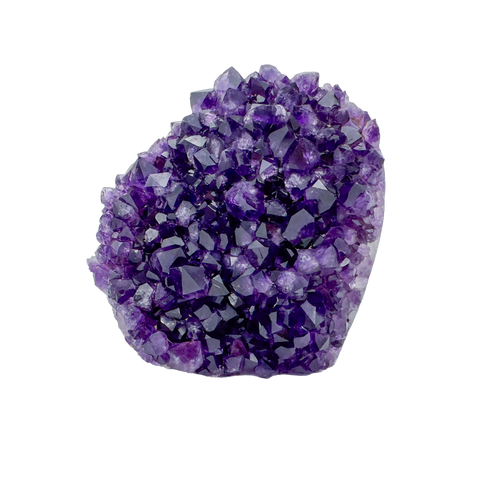
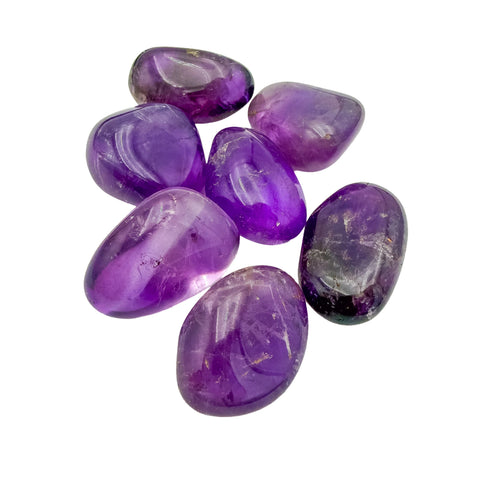
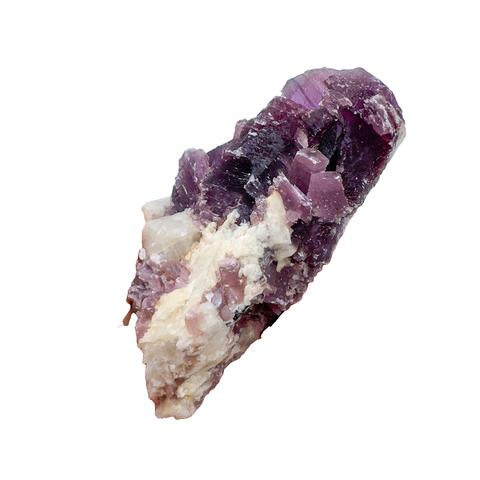
Most sustainability frameworks were built for products that can be recycled, regrown, or replaced. Cotton fields rotate. Trees regrow. Soil regenerates. Crystals don't. We can't reforest an Amethyst geode or replant a Lepidolite vein. What we can do is the work that happens after the mine: how the stone gets handled, packaged, shipped, cleaned, what happens to the material no one ends up wanting, and whether existing collections get a second life instead of being replaced by new extraction.
"Sustainable" has become a marketing word in the crystal industry. Some sellers use it as a self-applied label without operational substance behind it. We've seen claims of "zero waste," "carbon neutral," and "environmental leader" attached to companies that publish no audit trail, no methodology, and no documentation when asked. A sustainability claim that can't be checked is a marketing claim, not a sustainability claim.
The rest of this page covers the operational decisions that follow from treating sustainability as a verb instead of a label. Packaging, polishing, shipping, returns, cleaning, and the closed-loop programs we've built. Lapidaries require energy. Mining moves earth. None of this makes us carbon-zero. The crystal trade has an inherent footprint that we won't pretend doesn't exist. What we can promise is that we'll show our work and be honest about the parts we can't yet solve.
The biggest sustainability decision a crystal seller makes is the one they make after the stone leaves the mine, not the one they put in the marketing copy.
Our Sustainability Pillars
The operational decisions that follow from treating sustainability as a verb. What happens after the stone leaves the mine, before it reaches your hand, and after you decide to part with it.
What Happens After the Mine
Most sustainability claims in this trade focus on the dig site and stop there. The footprint of a crystal continues for the entire route between the mine and your home. Lapidaries cutting and polishing, packaging being made and shipped, the international transit, the receiving warehouse, the box that arrives at your door. Every step has a footprint and every step is something a seller can choose to handle thoughtfully or not.
We treat the post-mine work as the part of sustainability we can directly control. The pillars that follow are how.
No Plastic Bags. No Petroleum Oils.
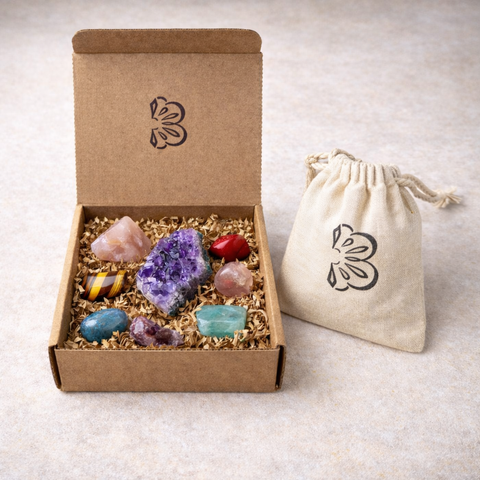
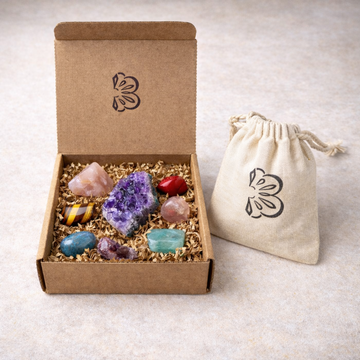
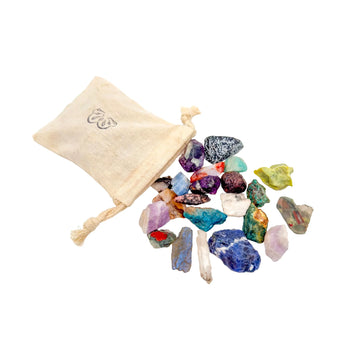
Most crystal shops package each stone in a small plastic bag. We use small-batch cotton bags instead. Cotton is reusable, returnable, and compostable at the end of its life. Plastic is none of those things. The cotton-bag default removes single-use plastic from every order we ship.
We also don't use petroleum-based oils to polish or finish our material. Petroleum oils are common in the wholesale trade because they make raw stones look glossier on a product page. They also leave a residue, age poorly, and rely on a fossil-fuel input chain. We use plant-based alternatives where finishing is needed at all.
Closed-Loop Packaging
The cotton bags we ship with every order are part of a closed-loop program. Send them back when you're done, and we credit your account. We clean and inspect them, then send them back out with future orders. Cotton bags are reused dozens of times before they retire, and most customers accumulate several over time, so the program scales well as you keep ordering.
Recycled cardboard outer boxes, paper void fill instead of plastic peanuts, and biodegradable infill complete the package. Most of what arrives can be recycled curbside in any major US municipality. The rest composts.
Reducing Waste at Every Step
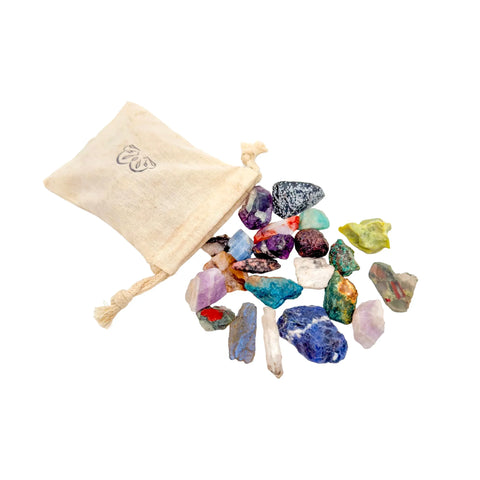
The crystal trade has a quiet waste problem that most sellers don't talk about. Lots arrive with damaged, off-grade, or misidentified pieces. Most retailers throw the rejects out or pass them on at lower tiers. We sort, repurpose, and donate where we can. Off-grade material that doesn't make our catalog gets used for educational sets, samples, demonstrations at the shop, or sent to schools and study collections rather than landfill.
A focused catalog also reduces upstream waste. We don't carry ten thousand stones we'd never sell. Less inventory means fewer rejected lots, fewer unused shipments, and less material that gets pulled from the earth for nothing.
Honoring Existing Collections
The lowest-footprint crystal in the world is one already in someone's collection. New extraction is unnecessary if a piece can change hands instead. We say this openly to customers, recommend the secondhand market when it's the better fit, and buy collections back ourselves through our collection-offer program.
We'd rather a customer find their next piece in someone else's retired collection than fund a new mine trip. Resale is real sustainability. New marketing copy is not.
Toxic-Chemical-Free Cleaning
We clean every crystal that enters our inventory using methods that don't introduce toxic chemicals into the wash water, the air, or the finished piece. No muriatic acid, no oxalic acid, no ultrasonic detergents, no coatings. The full process is published so anyone can replicate it at home.
Most commercial crystal cleaning relies on harsh acids and industrial detergents because they work fast. The trade-off is what those chemicals do to wash water, the lapidary worker, and the eventual buyer. We use distilled water, soft brushes, food-grade cleaning agents, and time.
Greenwashing Patterns in the Crystal Trade
Specific marketing patterns we've watched accumulate across the industry. None of these prove a seller is dishonest on its own. But they're claims we know firsthand can be made without the operations to back them up.
The Sustainability Programs Built Into How We Operate
Two specific programs that turn the pillars into something a customer can interact with. Both are published in full on dedicated pages.
The Bag Buy-Back Program
Every order ships with cotton crystal bags we make in small batches. Send the bags back when you're done with them and we credit your account. We clean, inspect, and put them back into circulation. Cotton bags get used dozens of times before they retire to compost. The program closes the loop on the most-used pieces of packaging in our shop.
Read About The Program →How We Clean Crystals Without Toxic Chemicals
Most commercial crystal cleaning involves muriatic acid, oxalic acid, ultrasonic cleaners with industrial detergents, or coatings that mask flaws. None of that touches our inventory. We use distilled water, soft brushes, food-grade cleaning agents, and time. The full process is published so anyone can replicate it at home.
Read About The Process →Operating Commitments
Concrete day-to-day operating choices that follow from the four pillars. Held against ourselves, auditable from the outside.
Where We Fall Short
No sustainability statement is honest without naming the gaps. These are ours.
The trade has an inherent footprint we cannot eliminate
Mining moves earth. Shipping consumes fuel. Lapidaries require energy. Even the most carefully run small-scale operation has environmental costs that aren't going to zero out. We can minimize them, work with partners who minimize them, and refuse the channels that don't try. We can't make them disappear.
We are not carbon-neutral
We don't claim to be. Carbon-neutral certifications in retail often rely on offset programs of mixed quality, and we'd rather measure and reduce real emissions than buy a label. If carbon neutrality is your priority, the secondhand market is the better answer than any retailer claiming to offset their impact.
Some of our packaging still includes plastic, in narrow circumstances
The most delicate pieces (large geodes, fragile clusters) sometimes arrive at our shop wrapped in bubble wrap or foam, and we reuse that material for outgoing shipments rather than buying new plastic. We also accept donated wrap from community members and other businesses for the same purpose. We don't buy new plastic packaging, but the protective material that does end up on our most fragile shipments is repurposed plastic from elsewhere in the supply chain. It's not a fully solved problem, and we're not claiming it is.
International shipping is part of the model
Most of the world's crystal deposits aren't in the United States. Ethical sourcing usually means sourcing internationally. We consolidate shipments, work with long-term partners to avoid extra trips, and prefer ground shipping where feasible. But the supply chain still crosses oceans.
The crystal market trends toward more, not less
Industry-wide, the trend is toward bigger catalogs, faster turnover, and more aggressive marketing. We're working against that current with a smaller catalog and a slower pace. We won't be the loudest shop on Instagram. We don't intend to be.
About Sustainability and Crystals
The questions readers ask most often when they start thinking about the environmental side of buying crystals.
Can crystals actually be sustainable if they're a non-renewable resource?
Not in the strict definition of the word, no. Crystals are a finite mineral material that doesn't regrow. "Sustainable" applied to crystals can only mean operational practice, not material renewability. The honest framing is: we can extract less, work with channels that minimize impact, and handle every step after the mine with as little waste as possible. We can't claim the trade is sustainable in the way a cotton field or a forest can be. We can claim that we operate ours with the smallest footprint we can manage.
How do I tell if a sustainability claim is real?
Ask for documentation. A real "zero waste" claim has a methodology. A real "carbon neutral" claim has an offset program named, a calculation methodology, and a certifier. Real certifications come from named third parties. If a seller can't produce an audit trail when asked, the claim is marketing language. We've seen this pattern accumulate across the trade. Specifics over titles. Documentation over decoration.
Why don't you use plastic bags?
Plastic crystal bags are the industry default because they're cheap and quick. They're also single-use, non-biodegradable, and an unnecessary input to the lifecycle of a product made from earth material. Our small-batch cotton bags are reusable, returnable through our Bag Buy-Back Program, and compostable at the end of their life. Cotton bags are more expensive per unit. We treat the difference as a real cost of operating a sustainable shop.
What happens to material that doesn't make your catalog?
Sorted, repurposed, or donated. Off-grade or damaged material gets used for educational sets, in-store demonstrations, sample bags, or sent to schools and study collections. We don't list it for sale at our prices because it doesn't meet the standard, but throwing the material out as waste isn't an option either. The least-likely outcome is landfill.
What's the most sustainable way to buy crystals?
Secondhand. The lowest-footprint crystal is one that's already in someone else's collection. We say this openly. After secondhand, the next-best option is sellers who source through small-scale ethical channels, package with recycled and reusable materials, and limit catalog size to what they can actually verify. Avoid sellers running deep-discount sales on huge catalogs of "ethically sourced" stones.
What kind of packaging do you use?
Recycled cardboard for shipping boxes, compostable paper void fill, and small-batch cotton crystal bags that cycle through our Bag Buy-Back Program. The only time we use any plastic is bubble wrap or foam wrap on our most delicate pieces, and even then we use repurposed material acquired from previous shipments or generously donated by individuals and businesses in our community. We don't buy new plastic packaging, and we don't use polystyrene foam, single-use plastic mailers, or non-recyclable filler.
How does the Bag Buy-Back Program work?
Every order ships with cotton bags we make in small batches. When you're done with them, you can return the bags to us for store credit. We clean them, inspect them, and put them back into circulation with future orders. Most customers accumulate several bags over time, so returning them periodically works well. The full details are on the Bag Buy-Back Program page.
Do you offer carbon-neutral shipping?
No. Carbon-neutral retail certifications often rely on offset programs of mixed quality. We'd rather measure and reduce real emissions (ground shipping when feasible, consolidated inbound lots, smaller catalog, smaller orders) than buy a label. If carbon footprint is your highest priority, the secondhand market beats any retailer including us.
What chemicals do you use to clean crystals?
None of the harsh ones. We don't use muriatic acid, oxalic acid, ultrasonic cleaning solutions, or coating sealants. Our process uses distilled water, soft brushes, food-grade cleaning agents, and time. The full process is published on the How We Clean Crystals Without Toxic Chemicals page so you can replicate it at home if you'd like.
Why do you say small catalogs are more sustainable?
Because verification scales inversely with catalog size. A focused catalog of a few hundred well-sourced stones requires less extraction, less shipping, and less rejected stock than a catalog of ten thousand. The shops that market thousands of "ethically sourced" stones are usually buying through aggregators that absorb material from industrial extraction. Less inventory equals less waste. The size of the catalog is itself a sustainability decision.
The Rest of How We Operate
The sustainability practice is part of a larger system. These pages cover the sourcing standards, the framework for buyers, and the full picture.
Beyond Ethical Sourcing
The anchor page. Twelve sourcing standards, five sourcing models, walk-away examples, and the trust system that holds it together.
Read More →Our 12 Sourcing Standards
The full text of every standard we hold suppliers to, with the lived examples and walk-away moments behind each one.
Read More →How to Choose a Supplier
Seven questions, eight warning signs, and the pricing math behind honest sourcing. Take it to any crystal shop, including ours.
Read More →Have a question about how we operate?
If you want more detail on packaging, shipping, sourcing, or anything else on this page, write to us. We'll show our work and be honest about the parts that aren't yet where we want them.
Ask Us a Question