




















































 Raw Stones
179 pieces
Raw Stones
179 pieces
 Tumbled Stones
162 pieces
Tumbled Stones
162 pieces
 Palm Stones
25 pieces
Palm Stones
25 pieces
 Crystal Points
23 pieces
Crystal Points
23 pieces
 Clusters & Geodes
104 pieces
Clusters & Geodes
104 pieces
 Polished & Decor
148 pieces
Polished & Decor
148 pieces
 Mineral Specimens
259 collector pieces
Mineral Specimens
259 collector pieces
 Crystal Chips
21 pieces
Browse everything
Every collection, one page.
View All Collections →
Crystal Chips
21 pieces
Browse everything
Every collection, one page.
View All Collections →


 Aries
Mar 21 – Apr 19
Carnelian
›
Aries
Mar 21 – Apr 19
Carnelian
›
 Taurus
Apr 20 – May 20
Rose Quartz
›
Taurus
Apr 20 – May 20
Rose Quartz
›
 Gemini
May 21 – Jun 20
Agate
›
Gemini
May 21 – Jun 20
Agate
›
 Cancer
Jun 21 – Jul 22
Moonstone
›
Cancer
Jun 21 – Jul 22
Moonstone
›
 Leo
Jul 23 – Aug 22
Citrine
›
Leo
Jul 23 – Aug 22
Citrine
›
 Virgo
Aug 23 – Sep 22
Amazonite
›
Virgo
Aug 23 – Sep 22
Amazonite
›
 Libra
Sep 23 – Oct 22
Blue Lace Agate
›
Libra
Sep 23 – Oct 22
Blue Lace Agate
›
 Scorpio
Oct 23 – Nov 21
Obsidian
›
Scorpio
Oct 23 – Nov 21
Obsidian
›
 Sagittarius
Nov 22 – Dec 21
Sodalite
›
Sagittarius
Nov 22 – Dec 21
Sodalite
›
 Capricorn
Dec 22 – Jan 19
Black Tourmaline
›
Capricorn
Dec 22 – Jan 19
Black Tourmaline
›
 Aquarius
Jan 20 – Feb 18
Amethyst
›
Aquarius
Jan 20 – Feb 18
Amethyst
›
 Pisces
Feb 19 – Mar 20
Aquamarine
›
Gifting?
A birthday stone is the safe bet.
Read the zodiac guide →
Pisces
Feb 19 – Mar 20
Aquamarine
›
Gifting?
A birthday stone is the safe bet.
Read the zodiac guide →











Fossil Shark Tooth
Fossil Shark Tooth is fossilized vertebrate teeth (apatite), Ca5(PO4)3(OH,F), phosphatic enameloid. In the hand, it rates 4 to 5 on the Mohs scale, and it runs jet black and gray. Bulk teeth pocket change; large pristine makos and rarities climb.
The geology.
Fossil Shark Tooth carries the formula Ca5(PO4)3(OH,F), phosphatic enameloid. It belongs to the none (fossil) system. It is classified as fossilized vertebrate teeth (apatite).
It sits at 4 to 5 on the Mohs scale. The surface reads glossy enamel over matte root. Light behavior is opaque. Specific gravity runs 2.7 to 3.0. The streak is white to gray. It breaks with uneven; enamel chips glassy.
Glossy triangular or awl-shaped little blades with a duller two-pronged root, beach and river finds turn black because phosphate minerals slowly replace the tooth in oxygen-poor sediment.
You will most often meet it as small triangular and needle-like teeth, bulk bags, jewelry or matrix plates.
The origins.
Cenozoic coastal deposits worldwide, Venice Beach (Florida) 'shark tooth capital', Calvert Cliffs (Maryland), Moroccan phosphate mines (Otodus by the crate).
On value, the database notes: bulk teeth pocket change; large pristine makos and rarities climb.
Traditional associations.
In energy work traditions, shark teeth are worn for protection and decisive forward motion.
People buy on this language, so it belongs on the page. It belongs under the facts, though, not over them.
Spotting the real thing.
Glossy triangular or awl-shaped little blades with a duller two-pronged root, beach and river finds turn black because phosphate minerals slowly replace the tooth in oxygen-poor sediment.
Cheap and abundant, so rarely faked, though Moroccan Otodus teeth are often re-glued onto invented custom matrix and 'restored' at the tips.
| Looks like | How to tell them apart |
|---|---|
| Black sea glass/chert flakes | No root-and-blade anatomy, no enamel gloss contrast |
| Modern shark teeth | Modern teeth stay white-cream; fossils run black-gray-brown |
| Megalodon tooth | Same anatomy scaled to monstrous, if it fills your palm with serrations, see that entry |
At-home tests.
You can run every one of these at a kitchen table. Good light matters more than gear when you are looking at fossil shark tooth.
| Test | What you should see |
|---|---|
| Anatomy check | shiny crown + textured root = tooth, not pebble |
| By eye | Black color with enamel sheen suggests phosphatic fossilization |
| By eye | Common genera have distinct shapes, sand tiger awls vs mako daggers |
Anything that scratches, burns or dissolves the piece is a lab job. Get it appraised rather than testing it apart.
Care & handling.
At 4 to 5 on the Mohs scale this is a soft material. Keep it as a display piece, store it apart from harder stones, and skip daily-wear settings.
It breaks with uneven; enamel chips glassy, which is worth knowing before you set it or drop it.
Warm water and a soft cloth clean almost everything. Ultrasonic tanks, steamers and household cleaners are where pieces get ruined.
A deeper look.
Extended detail on composition, sourcing, authentication and market value.
The physical record
The formula on record is Ca5(PO4)3(OH,F), phosphatic enameloid. Crystal system: None (fossil). Specific gravity: 2.7 to 3.0. Streak: White to gray. Cleavage and fracture: Uneven; enamel chips glassy.
How it reaches the market
Cenozoic coastal deposits worldwide, Venice Beach (Florida) 'shark tooth capital', Calvert Cliffs (Maryland), Moroccan phosphate mines (Otodus by the crate).
What it gets confused with
Black sea glass/chert flakes: No root-and-blade anatomy, no enamel gloss contrast. Modern shark teeth: Modern teeth stay white-cream; fossils run black-gray-brown. Megalodon tooth: Same anatomy scaled to monstrous, if it fills your palm with serrations, see that entry.
What it is worth
Bulk teeth pocket change; large pristine makos and rarities climb.
Where buyers get caught
Cheap and abundant, so rarely faked, though Moroccan Otodus teeth are often re-glued onto invented custom matrix and 'restored' at the tips.
One more thing
Sharks replace teeth conveyor-belt style, one shark sheds tens of thousands in a lifetime, which is why a kid with a sifter at Venice Beach can fill a jar in an afternoon with 10-million-year-old teeth.
An education-first guide.
No product links here. We do not sell fossil shark tooth, and a guide that only covers our own shelves would not be much of a guide.
Explore the Crystal GuideLove Fossil Shark Tooth? Meet Shungite.
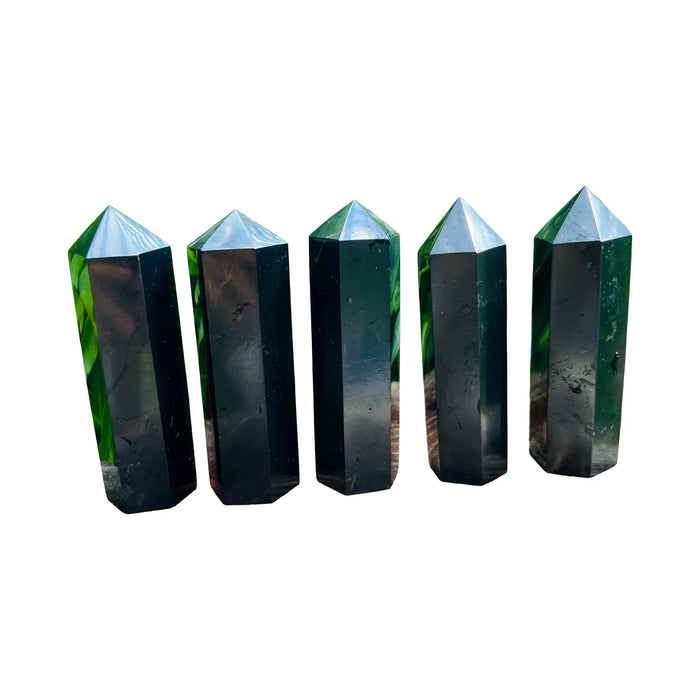
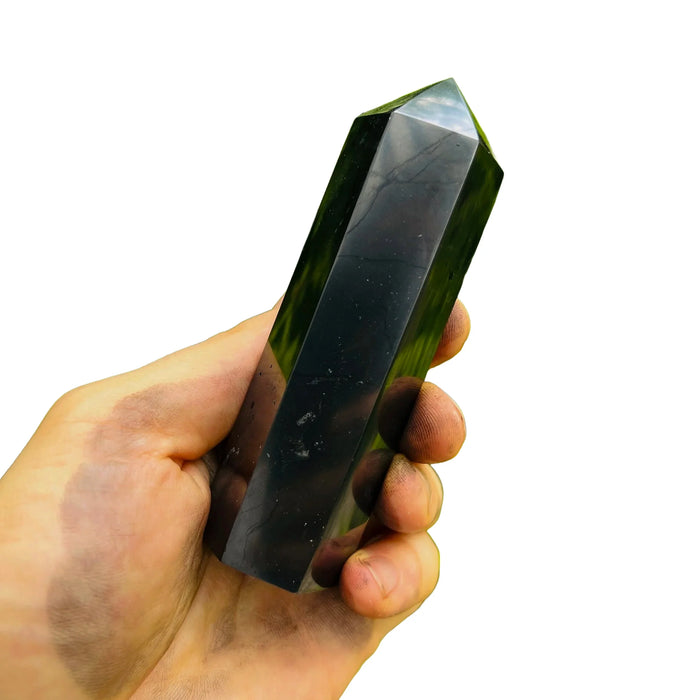
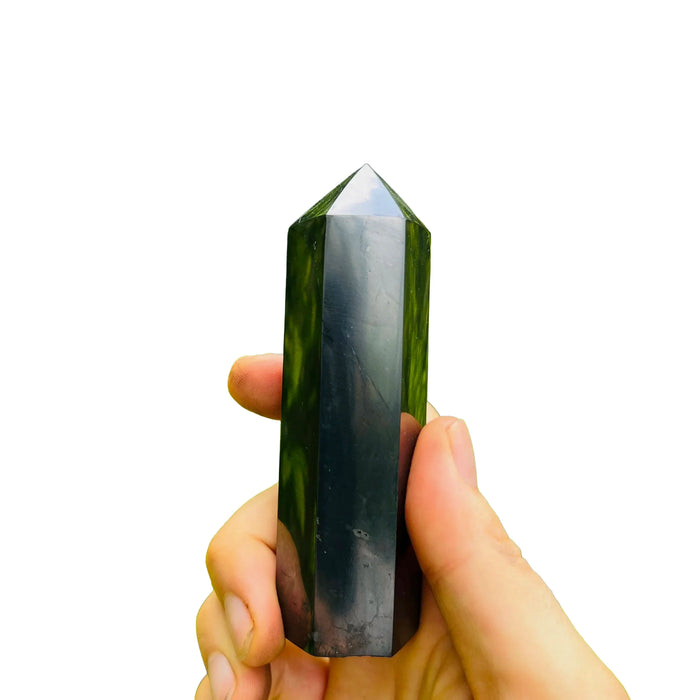
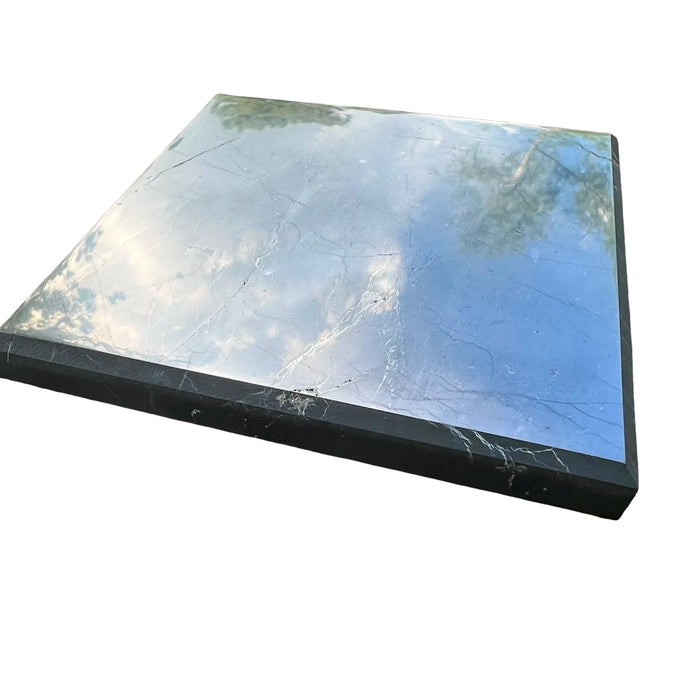
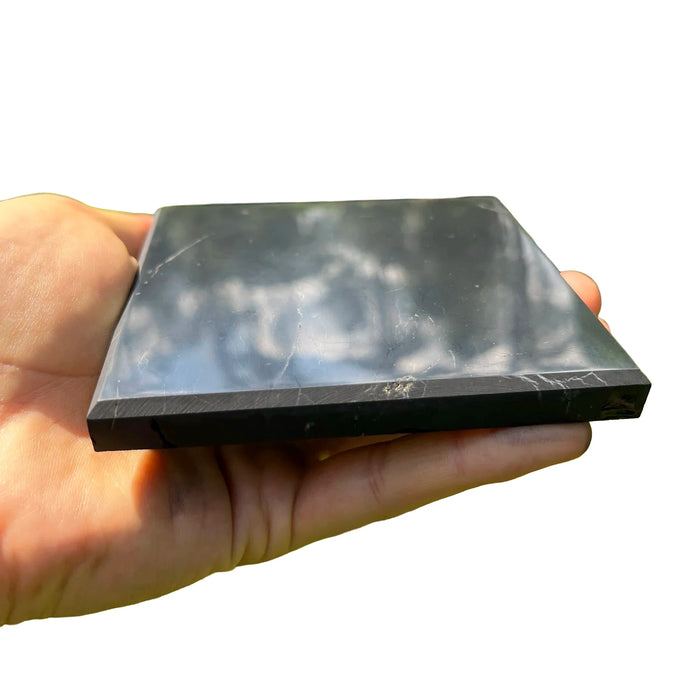
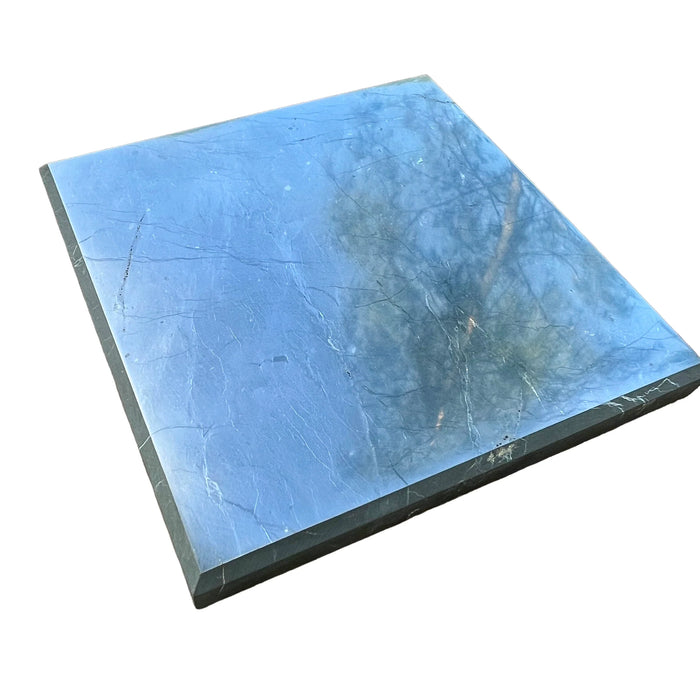
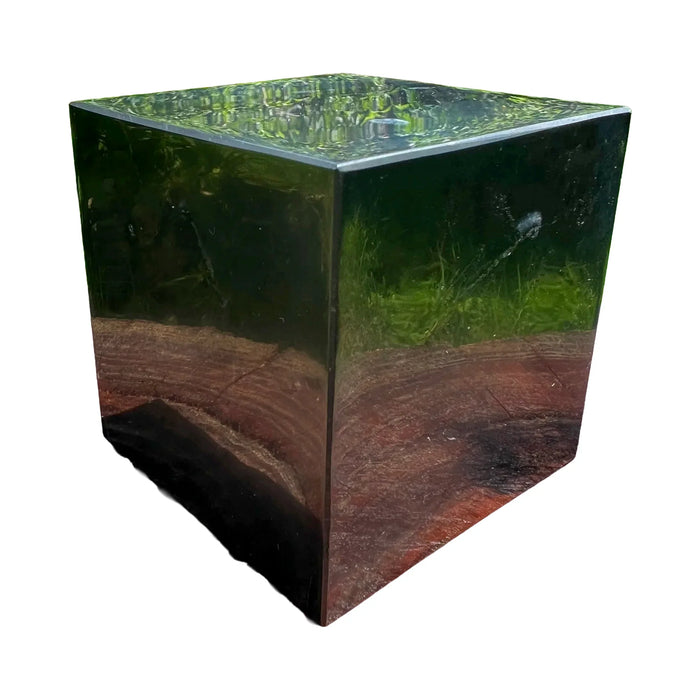
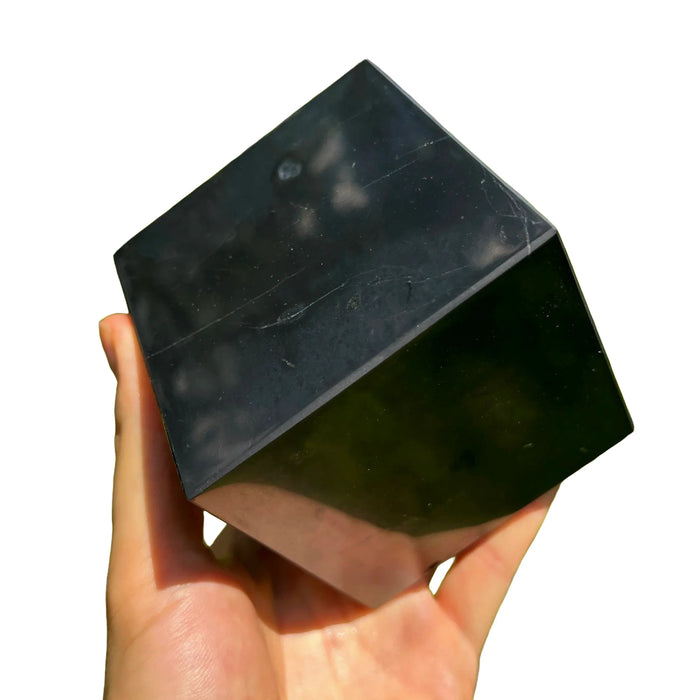
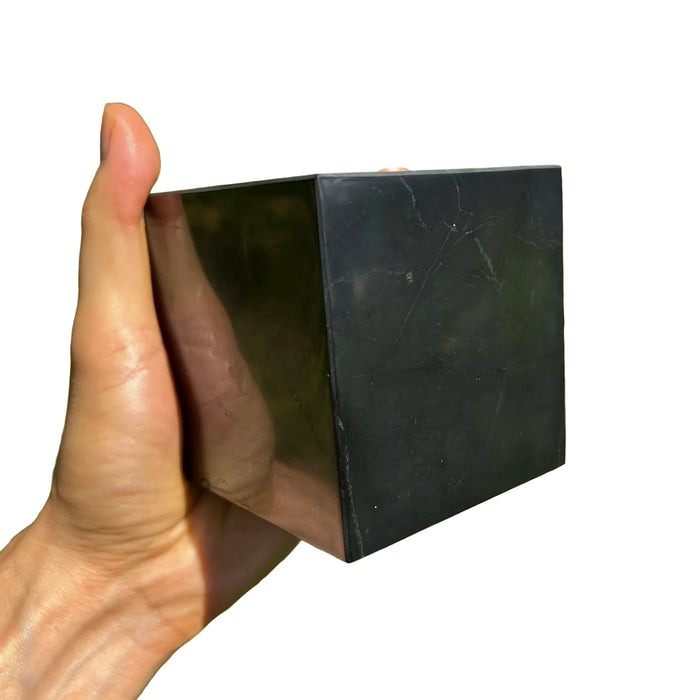
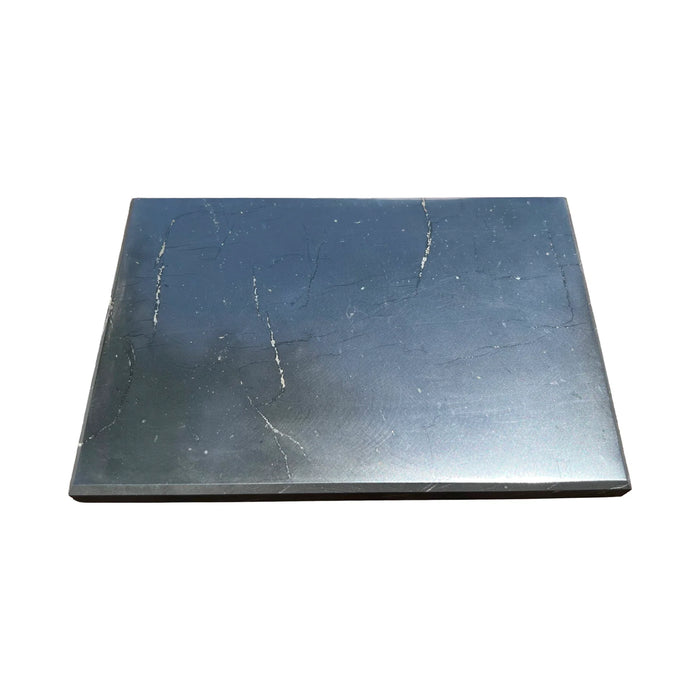
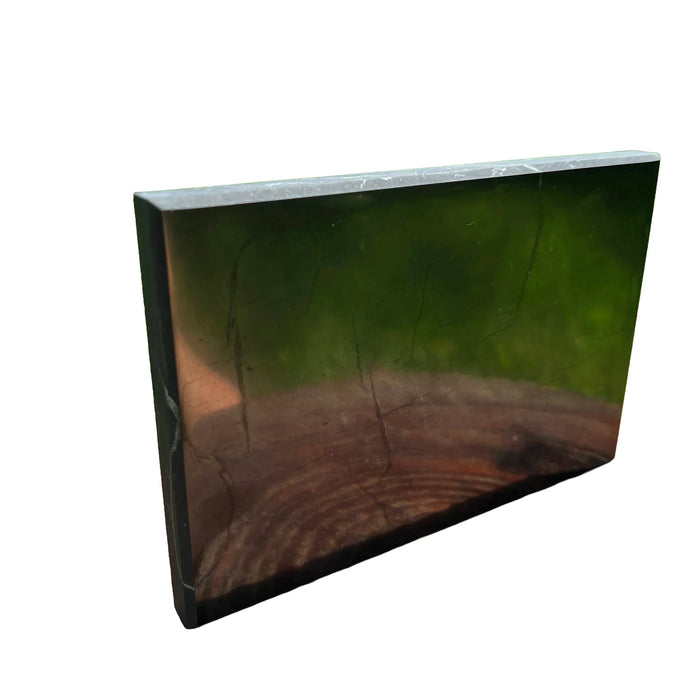
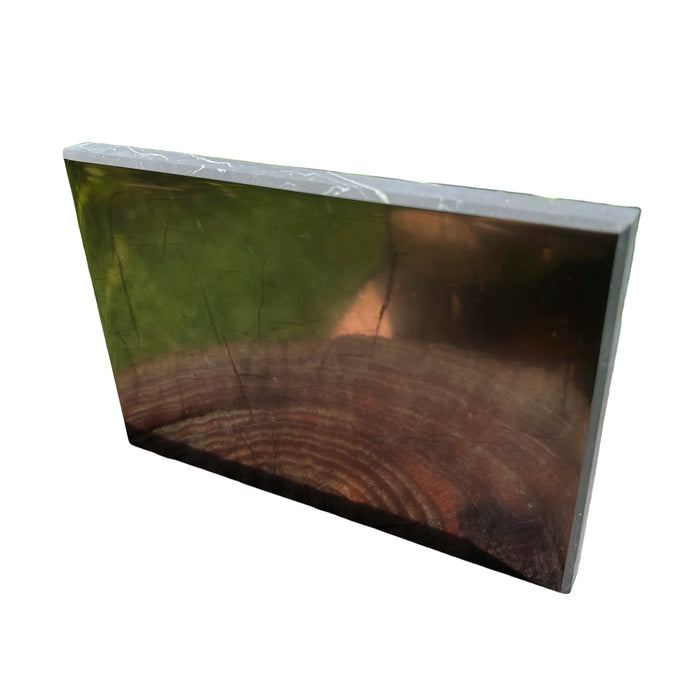
Fossil Shark Tooth is not something we carry. Shungite is the closest match in color, and every piece passes our sourcing standards: origin named, treatments disclosed.
- from 1,000+ reviews
- Ships within 72 hoursMonday to Friday, tracked
- 90 days to return itif you do not love it
- Free US shipping over $99$8.99 flat rate under
The Slow Note
New stones go to the list first.
No forwarding, no selling. Unsubscribe in one click. Privacy