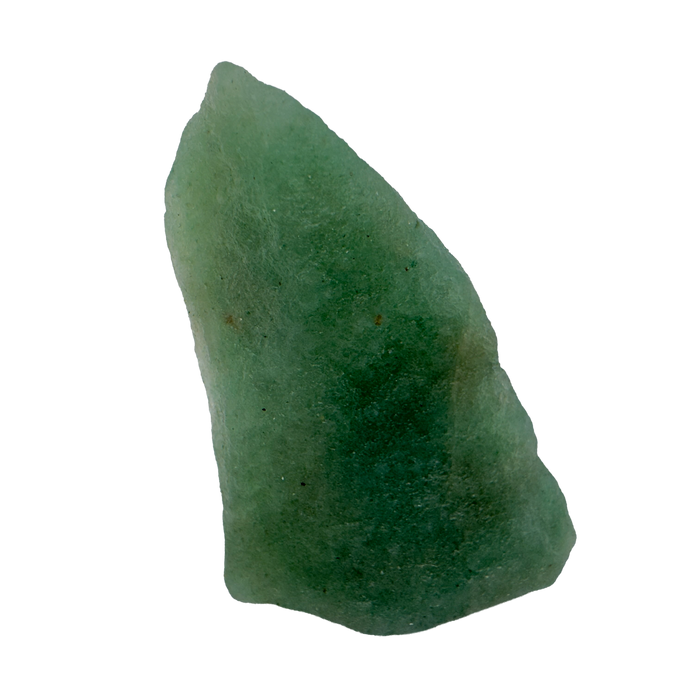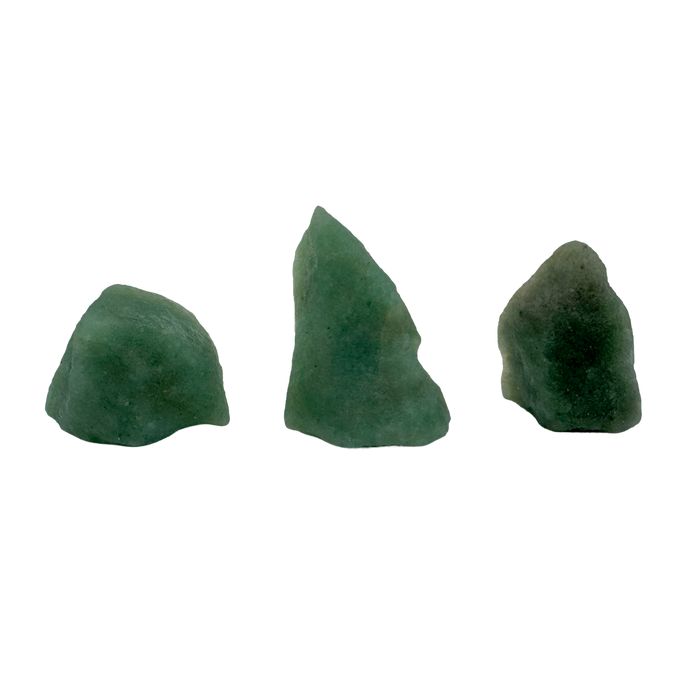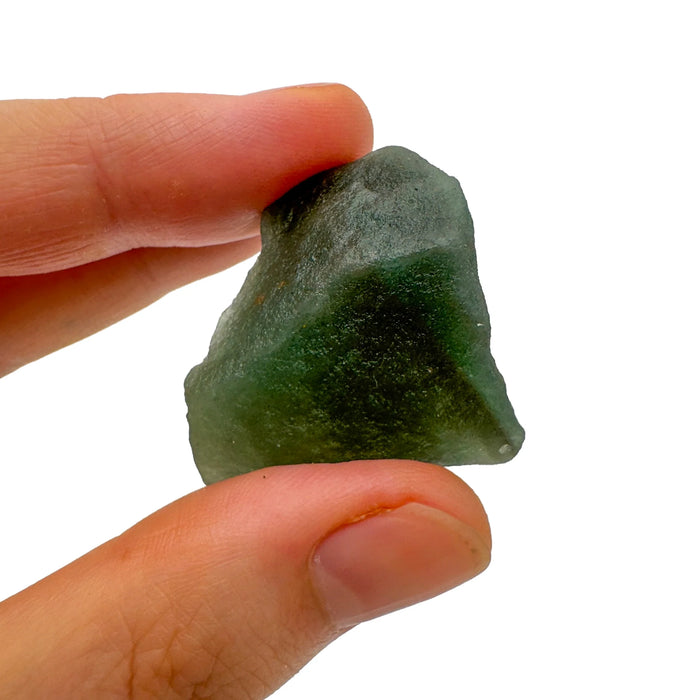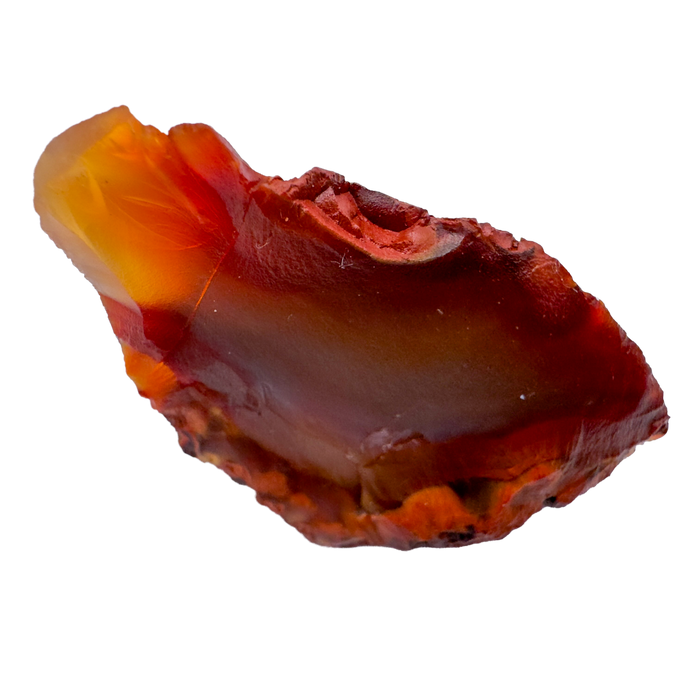








Obsidian, Tourmaline, Onyx, or Shungite? Telling the Black Stones Apart
Four lookalike black stones, four different materials, and the quick physical tells that separate them.
Four of the most popular black stones look almost identical once polished, yet one is volcanic glass, one is a true crystal, one is usually dyed quartz, and one is mostly carbon. Here is how to tell obsidian, black tourmaline, onyx, and shungite apart without a lab.

The quickest tells are weight, hardness, and surface. Shungite is the lightest and softest, and it conducts electricity. Obsidian is glassy and translucent at thin edges. Black tourmaline shows lengthwise grooves. Onyx is a dense, evenly black quartz, usually dyed. Hardness sorts the rest.
Four Black Stones, One Common Mix-Up
Set a polished obsidian sphere, a black tourmaline rod, an onyx tumble, and a shungite palm stone side by side and most people see one thing: black. That is why "is this obsidian or onyx?" is one of the most common questions in any crystal shop. The fix is to stop looking at color and start checking a few physical properties, no lab required.
Begin by picking the stone up, then test hardness on the Mohs scale, where talc is 1 and diamond is 10. These four sit far enough apart that weight and hardness alone narrow the field fast, before you ever look at surface or break.
Mohs hardness of shungite, the softest and lightest of the four
Mohs hardness of obsidian, a natural volcanic glass
Mohs hardness of black tourmaline, the hardest here
Mohs hardness values per standard mineralogical references. Onyx sits between, at about 6.5 to 7.
Color is the least reliable clue, since all four are sold as solid black. Weight, hardness, surface, and how a piece breaks tell you far more than appearance. For what hardness means for daily wear and water, see our crystal durability guide.
Obsidian, Tourmaline, Onyx, and Shungite Compared
Here is the full picture in one view. Each card gathers one stone, so on a phone you read straight down instead of pinching across a wide table.
Obsidian
Volcanic glass, the reflective one
Black Tourmaline
Schorl, the grooved crystal
Onyx
Black chalcedony, usually dyed
Shungite
Carbon rock, the light one
Obsidian and Black Tourmaline Up Close
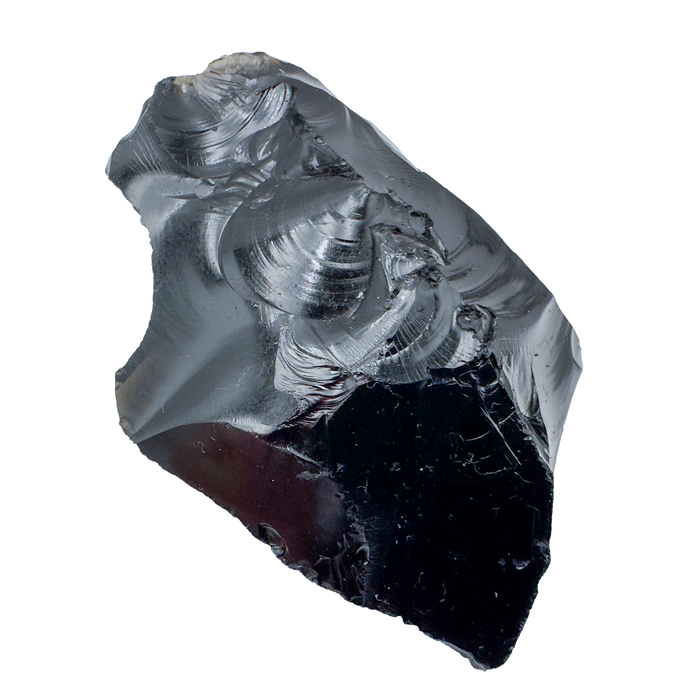
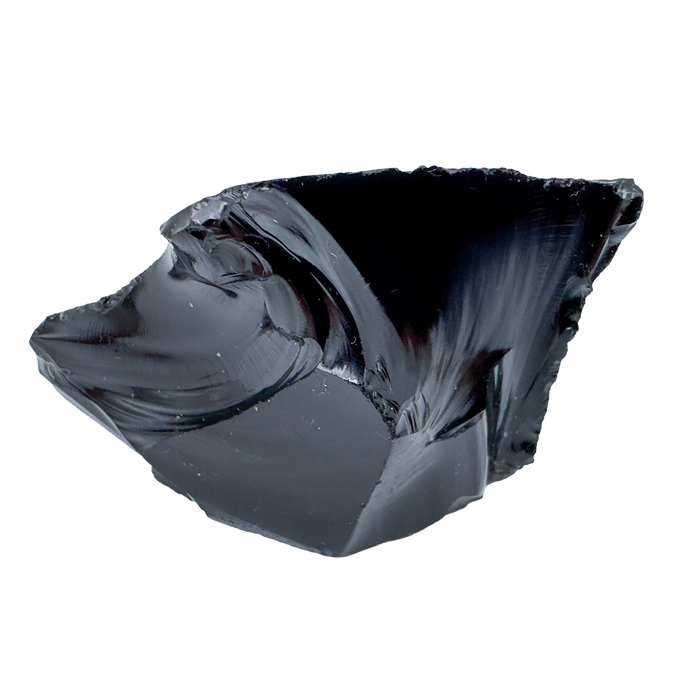
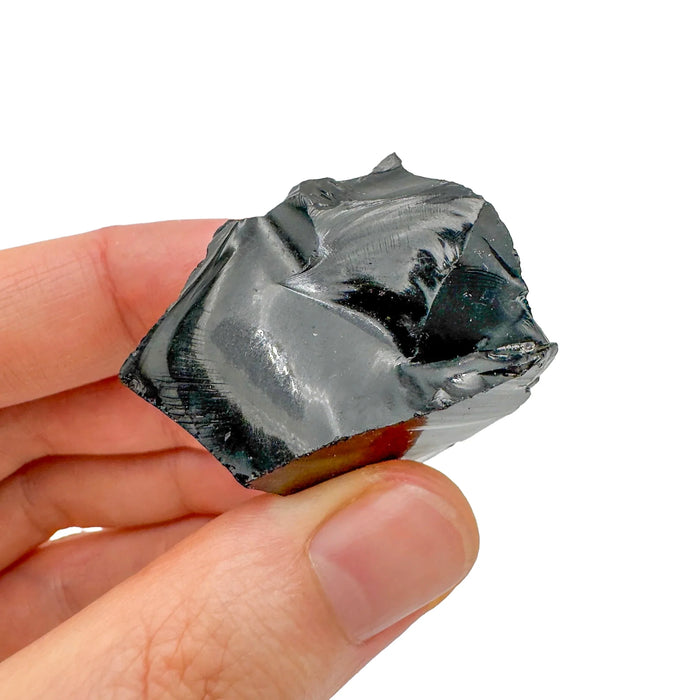
Obsidian is not a mineral at all. It is natural volcanic glass, formed when silica-rich lava cools so fast that no crystals grow. With no crystal structure it has no cleavage, so it chips into smooth, curved, shell-like surfaces, and those edges can be sharper than a blade.
Two tells set it apart: it is glassy and reflective rather than matte, and a thin edge held to light is translucent even in jet-black pieces. Our obsidian crystal guide covers its varieties and care.

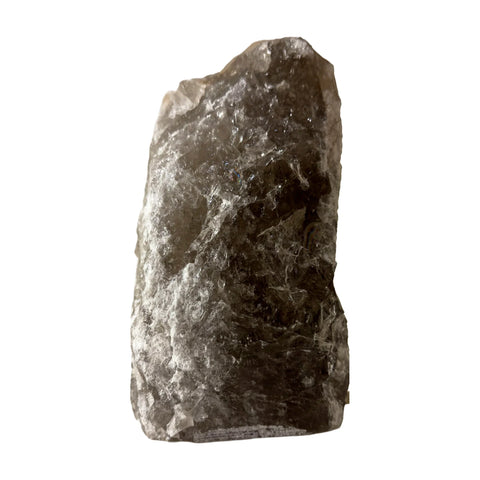
Raw black obsidian. Its glassy luster and curved, shell-like break set it apart from matte shungite and grooved tourmaline.

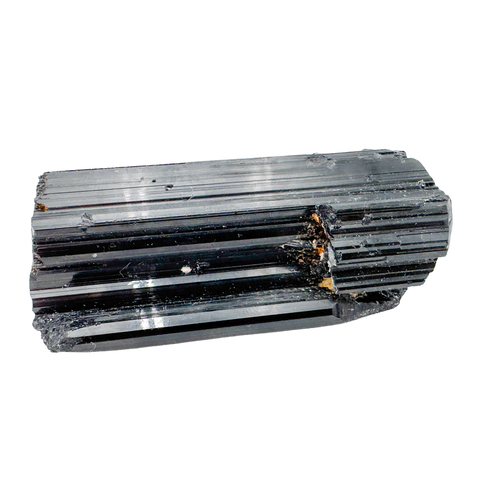
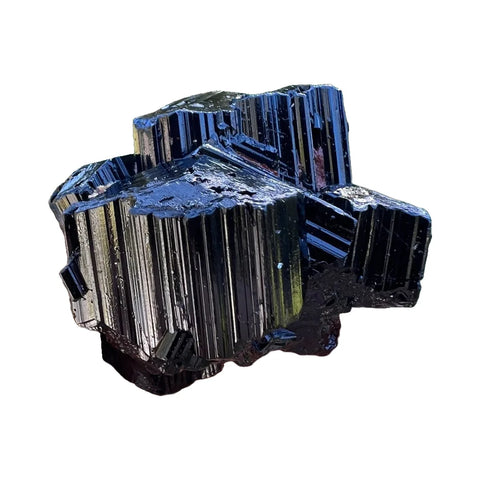
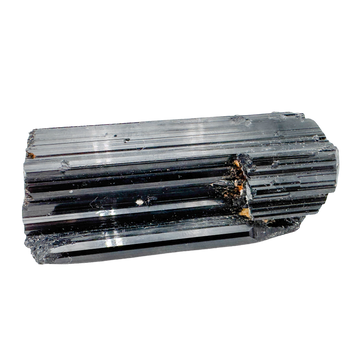
Raw black tourmaline (schorl), Erongo, Namibia. The lengthwise grooves are diagnostic; glass and quartz lack them.
Black tourmaline, or schorl, is the opposite: a true crystal with a defined structure. It grows as long prisms with deep parallel grooves, or striations, running down their length. Those lengthwise lines are the best way to tell it from glassy obsidian or evenly polished onyx.
At 7 to 7.5 on the Mohs scale it is the hardest of the four, though brittle if dropped. See the black tourmaline crystal guide for sourcing and forms.
Onyx and Shungite Up Close
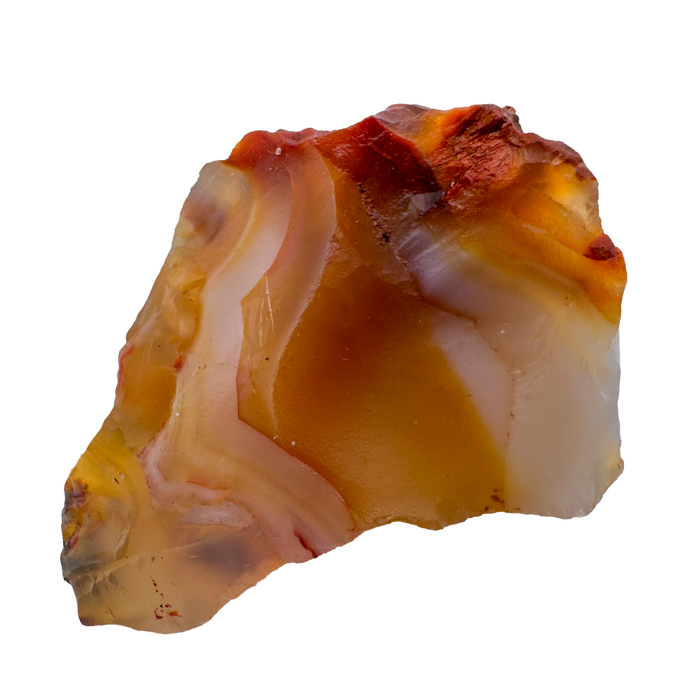
Black onyx is chalcedony, a microcrystalline quartz, so it shares quartz's hardness of 6.5 to 7 and the same curved, glassy break. Strictly, onyx is banded chalcedony, but the trade uses "black onyx" for any solid-black piece.
The honest part: natural solid-black onyx is rare. Most is pale gray agate or chalcedony dyed black, often by an old sugar-and-acid process that carbonizes sugar inside the stone's pores. The treatment is stable, accepted, and centuries old, and the result is still real chalcedony. Our black onyx crystal guide explains it.

Polished black onyx. The dense, even black and glassy polish are typical of dyed chalcedony, the trade standard.

Tumbled shungite. Matte, light in the hand, and electrically conductive, unlike the other three.
Shungite is the outlier. It is not a single mineral but a carbon-rich rock from Karelia, Russia, named for the village of Shunga. Its carbon runs from roughly 30 percent in common grades to over 90 percent in the rare silvery elite type, and at 3.5 to 4 it is the softest and lightest here.
It has one tell nothing else shares: it conducts electricity, so a genuine piece completes a simple battery-and-bulb circuit. It is matte to semi-metallic, never glassy. See the shungite crystal guide for more.
Related Guides
Volcanic glass up close: how obsidian forms, its varieties, and care.
Explore obsidianThe grooved black crystal: schorl's properties, sourcing, and forms.
Explore tourmalineWhy most black onyx is dyed, and what that means for value.
Explore onyxThe carbon stone from Karelia: grades, the elite type, and authenticity.
Explore shungiteWhat Mohs hardness means for handling, cleaning, and water safety.
Check durabilityOur full collection of trust-first crystal guides and comparisons.
Browse the LibraryFrequently Asked
How do I tell black obsidian from black tourmaline?
Look for grooves. Black tourmaline grows as crystals with long parallel striations running down its length, while obsidian is glass and stays smooth. Obsidian is also translucent at a thin edge held to light, and tourmaline is opaque.
Is my black onyx dyed?
Most likely, and that is normal. Natural solid-black onyx is rare, so the great majority of black onyx is gray agate or chalcedony dyed or sugar-acid treated to a permanent, even black. It is still genuine chalcedony, and the treatment is stable and accepted across the trade.
How can I tell if shungite is real?
Test conductivity. Genuine shungite conducts electricity, so it completes a simple battery-and-bulb circuit or reads low resistance on a multimeter. Real shungite is also light and matte to silvery, not glassy. One caution: hematite also conducts but is metallic and much heavier.
Which black stone is the hardest?
Black tourmaline, at 7 to 7.5 on the Mohs scale, just above onyx at 6.5 to 7. Obsidian is softer at 5 to 5.5, and shungite is the softest at about 3.5 to 4. For what that means in daily wear, see our crystal durability guide.
Is obsidian man-made or natural?
Natural obsidian is volcanic glass formed when lava cools too fast to crystallize. Because it is glass, man-made glass and slag are sometimes sold as obsidian. Natural pieces often show subtle flow lines or gas bubbles, and reputable sellers name the origin.
Can these black stones go in water?
Obsidian, onyx, and black tourmaline are hard and tolerate a quick rinse, though obsidian is brittle and tourmaline is easy to chip. Shungite is soft and porous and can shed fine dust. When in doubt, clean dry. See how to cleanse crystals without water.
Is black onyx the same as black agate?
They are the same mineral family, chalcedony. The trade tends to call evenly colored solid pieces onyx and visibly banded pieces agate. Both are quartz at 6.5 to 7, and both are commonly dyed when sold in solid black.