




















































 Raw Stones
179 pieces
Raw Stones
179 pieces
 Tumbled Stones
162 pieces
Tumbled Stones
162 pieces
 Palm Stones
25 pieces
Palm Stones
25 pieces
 Crystal Points
23 pieces
Crystal Points
23 pieces
 Clusters & Geodes
104 pieces
Clusters & Geodes
104 pieces
 Polished & Decor
148 pieces
Polished & Decor
148 pieces
 Mineral Specimens
259 collector pieces
Mineral Specimens
259 collector pieces
 Crystal Chips
21 pieces
Browse everything
Every collection, one page.
View All Collections →
Crystal Chips
21 pieces
Browse everything
Every collection, one page.
View All Collections →


 Aries
Mar 21 – Apr 19
Carnelian
›
Aries
Mar 21 – Apr 19
Carnelian
›
 Taurus
Apr 20 – May 20
Rose Quartz
›
Taurus
Apr 20 – May 20
Rose Quartz
›
 Gemini
May 21 – Jun 20
Agate
›
Gemini
May 21 – Jun 20
Agate
›
 Cancer
Jun 21 – Jul 22
Moonstone
›
Cancer
Jun 21 – Jul 22
Moonstone
›
 Leo
Jul 23 – Aug 22
Citrine
›
Leo
Jul 23 – Aug 22
Citrine
›
 Virgo
Aug 23 – Sep 22
Amazonite
›
Virgo
Aug 23 – Sep 22
Amazonite
›
 Libra
Sep 23 – Oct 22
Blue Lace Agate
›
Libra
Sep 23 – Oct 22
Blue Lace Agate
›
 Scorpio
Oct 23 – Nov 21
Obsidian
›
Scorpio
Oct 23 – Nov 21
Obsidian
›
 Sagittarius
Nov 22 – Dec 21
Sodalite
›
Sagittarius
Nov 22 – Dec 21
Sodalite
›
 Capricorn
Dec 22 – Jan 19
Black Tourmaline
›
Capricorn
Dec 22 – Jan 19
Black Tourmaline
›
 Aquarius
Jan 20 – Feb 18
Amethyst
›
Aquarius
Jan 20 – Feb 18
Amethyst
›
 Pisces
Feb 19 – Mar 20
Aquamarine
›
Gifting?
A birthday stone is the safe bet.
Read the zodiac guide →
Pisces
Feb 19 – Mar 20
Aquamarine
›
Gifting?
A birthday stone is the safe bet.
Read the zodiac guide →

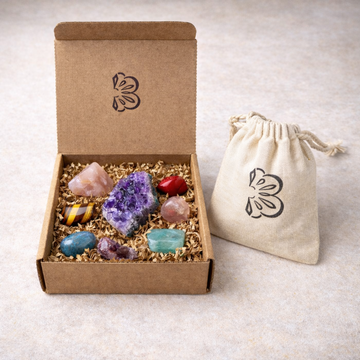
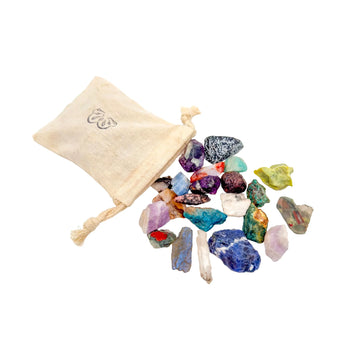










Lab-Grown Corundum (Ruby/Sapphire)
Lab-Grown Corundum (Ruby/Sapphire) is synthetic oxide (flame-fusion/flux), Al₂O₃ (+Cr for ruby, Fe/Ti for blue). In the hand, it rates 9 on the Mohs scale, and it runs red and blue. Flawless vivid ruby or sapphire at suspiciously friendly prices, often with curved growth lines and tiny gas bubbles inside.
The geology.
Lab-Grown Corundum (Ruby/Sapphire) carries the formula Al₂O₃ (+Cr for ruby, Fe/Ti for blue). It belongs to the trigonal system. Its listing category is synthetic oxide (flame-fusion/flux).
It sits at 9 on the Mohs scale. The surface reads vitreous to adamantine. Light behavior is transparent. Specific gravity runs 3.9 to 4.1. The streak is white. It breaks with no cleavage; conchoidal fracture.
Flawless vivid ruby or sapphire at suspiciously friendly prices, often with curved growth lines and tiny gas bubbles inside.
It turns up mostly as faceted gems, boules, 'raw' broken boule chunks or spheres.
The origins.
Factory-grown since 1902 (Verneuil process); 'raw-looking' boule fragments are sold as natural rough.
On value, the database notes: very affordable; natural commands orders of magnitude more.
Traditional associations.
In energy work traditions, sold with ruby/sapphire lore, chemically identical to natural, but made in weeks, not eons.
This is lore, and we label it as lore. The measurable facts are further up the page.
Spotting the real thing.
Flawless vivid ruby or sapphire at suspiciously friendly prices, often with curved growth lines and tiny gas bubbles inside.
Broken boule chunks are widely sold as 'raw ruby/sapphire'; glass-filled composite rubies are common in bead strands.
| Looks like | How to tell them apart |
|---|---|
| Natural ruby/sapphire | Natural stones carry angular zoning and crystal inclusions; flame-fusion shows curved striae and bubbles under magnification |
| Red glass | Glass is soft (5.5); corundum scratches almost everything |
| Glass-filled composite ruby | Composites show blue flash lines and bubbles in fracture fillings |
At-home tests.
A loupe and a window seat settle most questions about lab-grown corundum (ruby/sapphire). No workshop required.
| Test | What you should see |
|---|---|
| Loupe | curved growth lines = lab |
| Scratch check | Real corundum hardness either way (scratches quartz) |
| Under UV | Strong red UV glow is typical of synthetic ruby |
If these checks leave you unsure, that is what appraisers are for. Do not file, heat or soak a piece to find out.
Care & handling.
At 9 on the Mohs scale it stands up to everyday wear. It will still chip on a hard knock, so treat edges and points with respect.
It breaks with no cleavage; conchoidal fracture, which is worth knowing before you set it or drop it.
Most damage happens during cleaning, not wearing. Avoid steamers, ultrasonic tanks and anything from under the sink.
A deeper look.
Extended detail on composition, sourcing, authentication and market value.
The physical record
The formula on record is Al₂O₃ (+Cr for ruby, Fe/Ti for blue). Crystal system: Trigonal. Specific gravity: 3.9 to 4.1. Streak: White. Cleavage and fracture: No cleavage; conchoidal fracture.
How it reaches the market
Factory-grown since 1902 (Verneuil process); 'raw-looking' boule fragments are sold as natural rough.
What it gets confused with
Natural ruby/sapphire: Natural stones carry angular zoning and crystal inclusions; flame-fusion shows curved striae and bubbles under magnification. Red glass: Glass is soft (5.5); corundum scratches almost everything. Glass-filled composite ruby: Composites show blue flash lines and bubbles in fracture fillings.
What it is worth
Very affordable; natural commands orders of magnitude more.
Where buyers get caught
Broken boule chunks are widely sold as 'raw ruby/sapphire'; glass-filled composite rubies are common in bead strands.
One more thing
Your phone's camera lens cover is probably synthetic sapphire, the same material as a lab gem.
An education-first guide.
There is nothing to buy on this page. Lab-Grown Corundum (Ruby/Sapphire) is not part of our catalog, and the guide is here anyway because somebody searching the name deserves a straight answer.
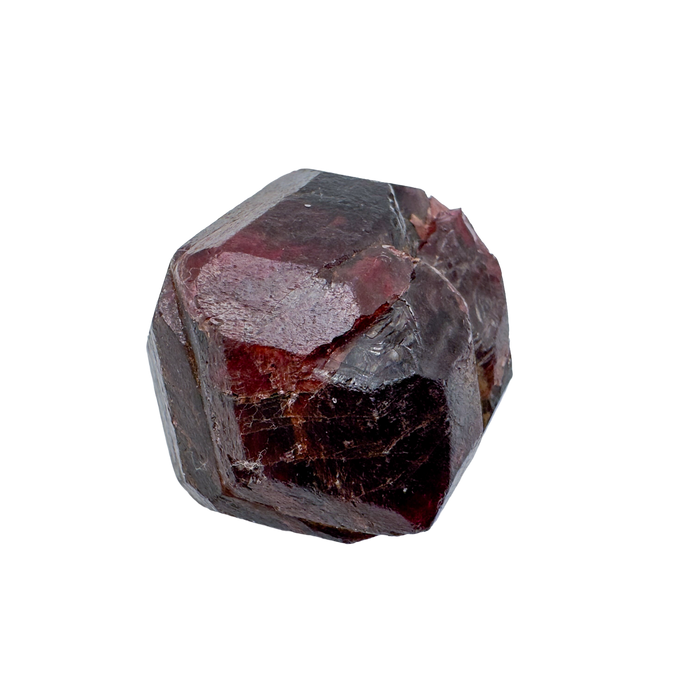
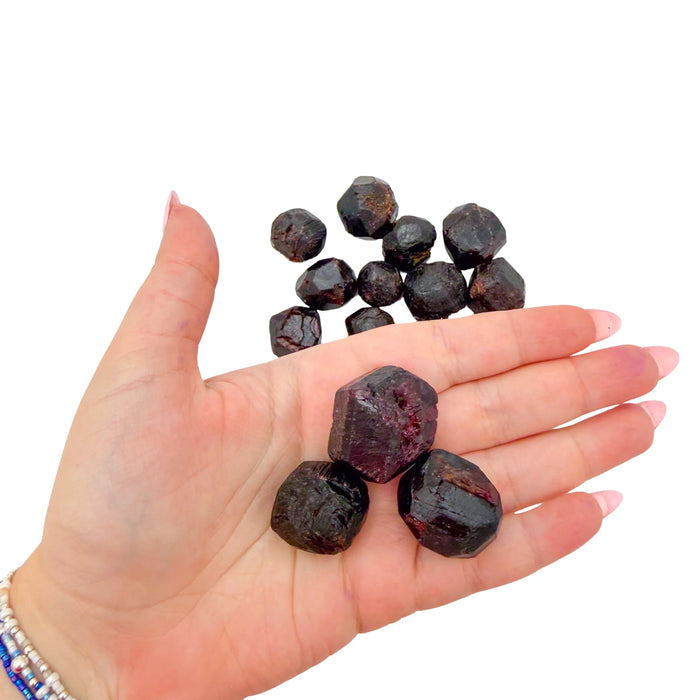
Explore the Crystal GuideLove Lab-Grown Corundum? Meet Garnet.
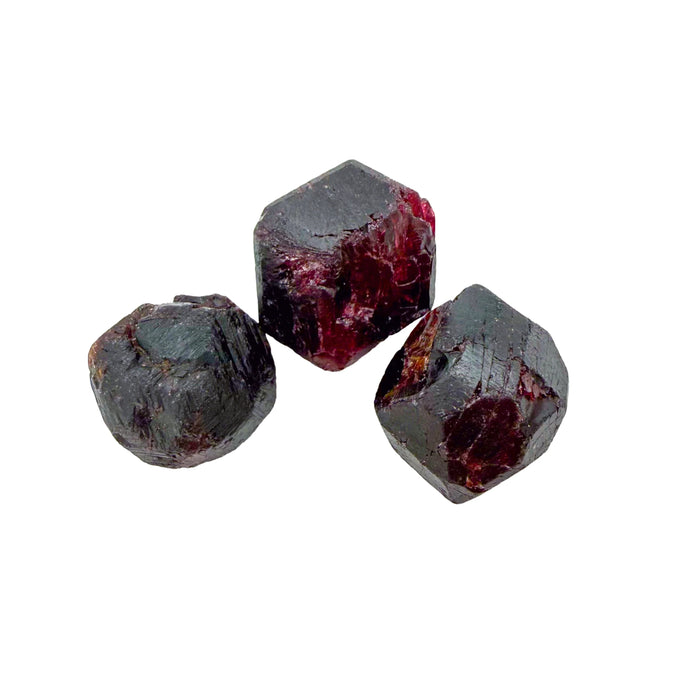
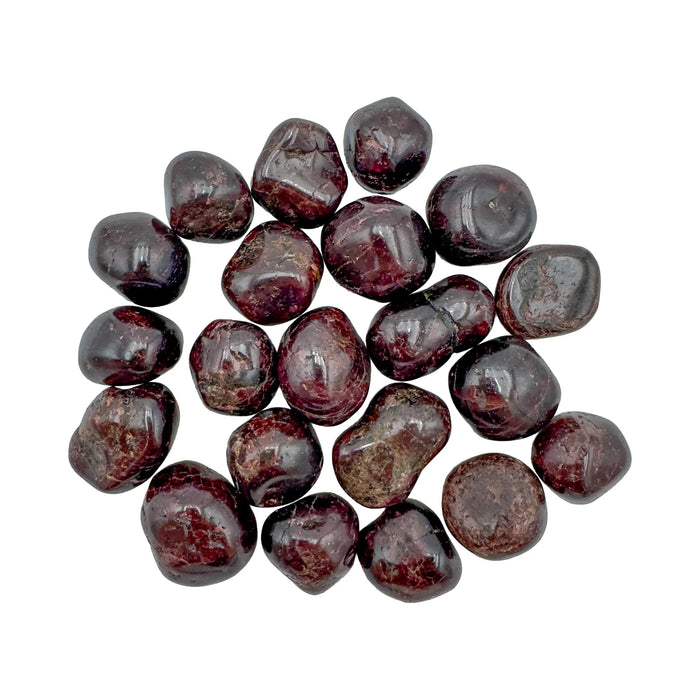
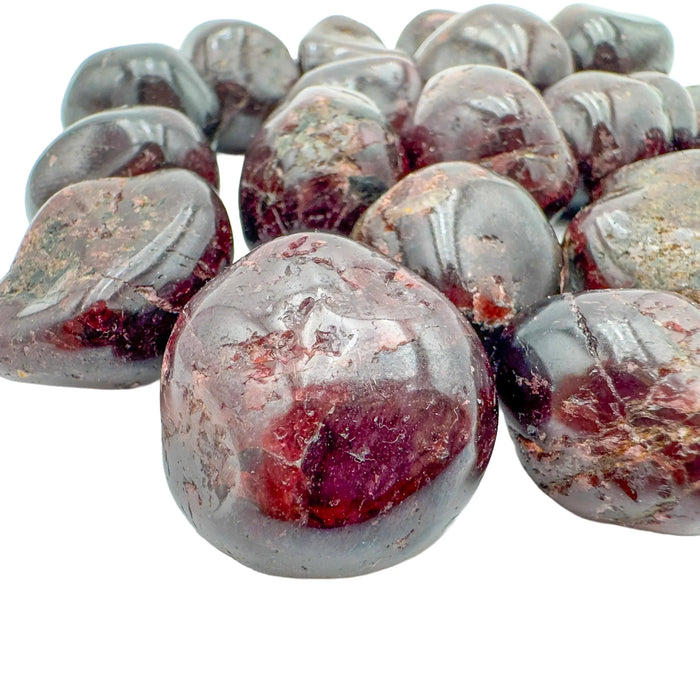
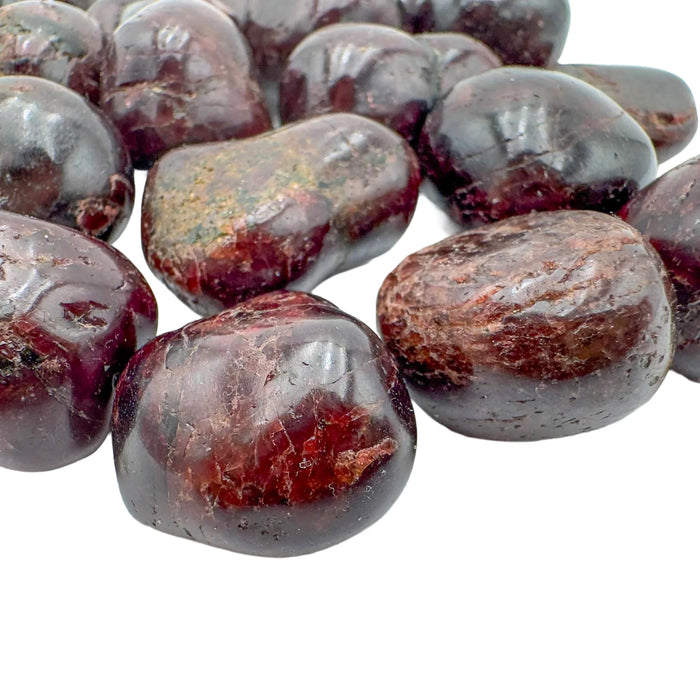
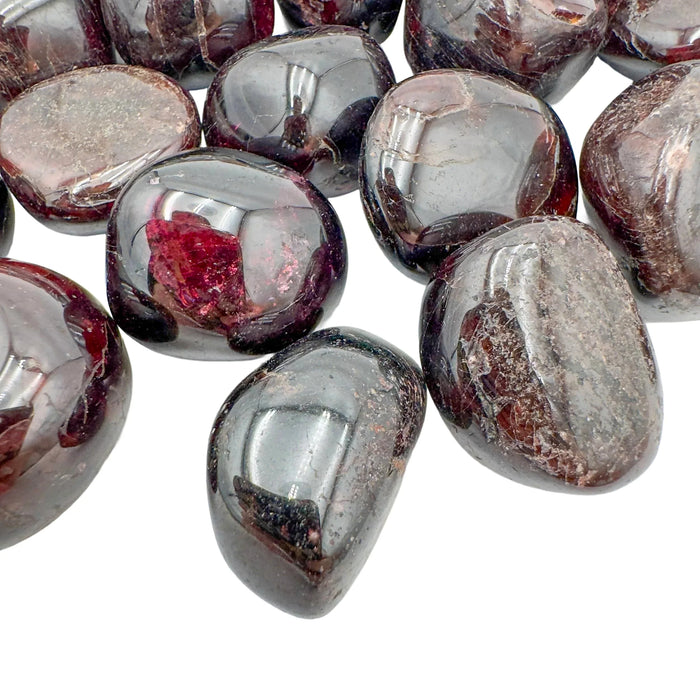
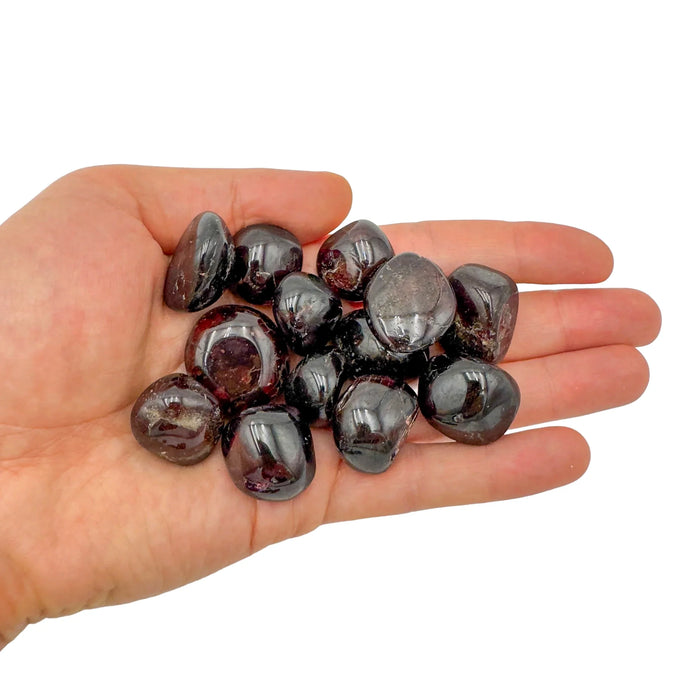
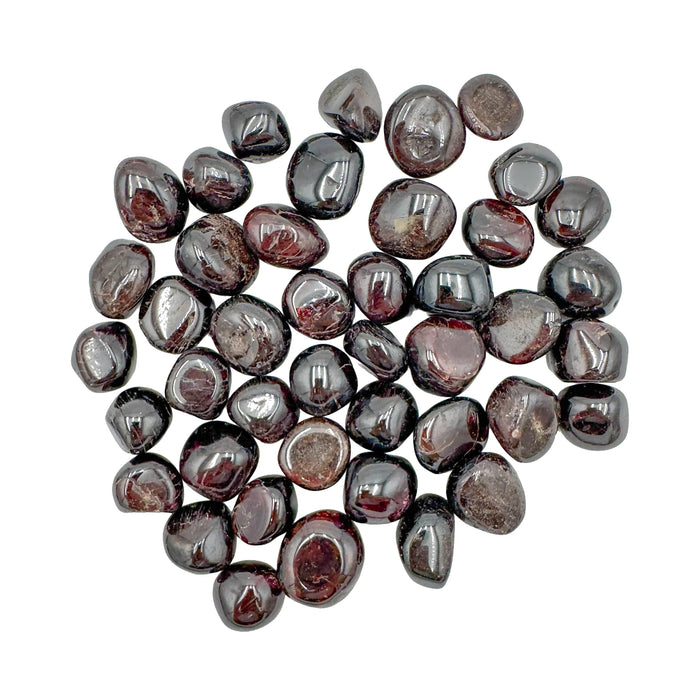
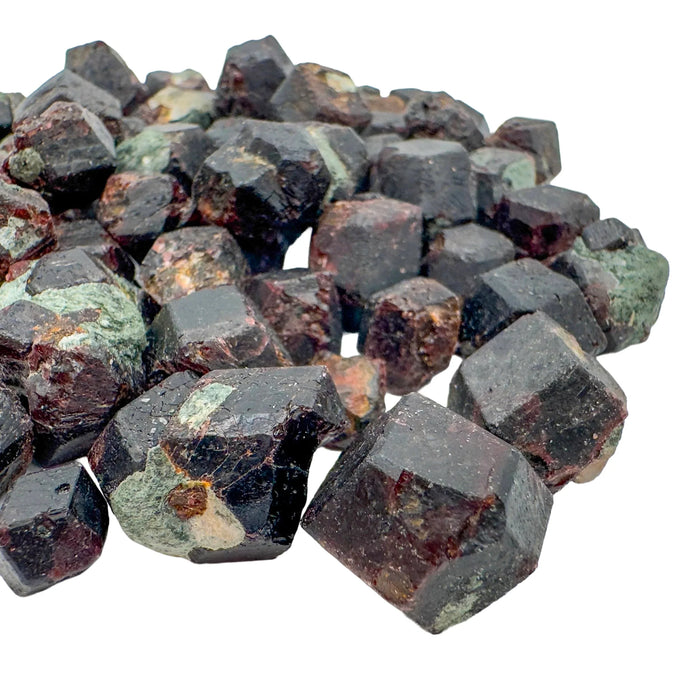
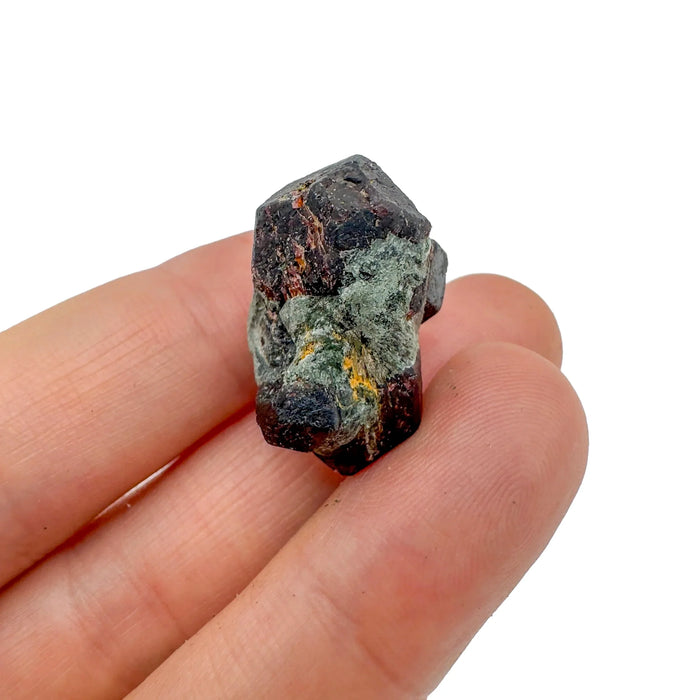
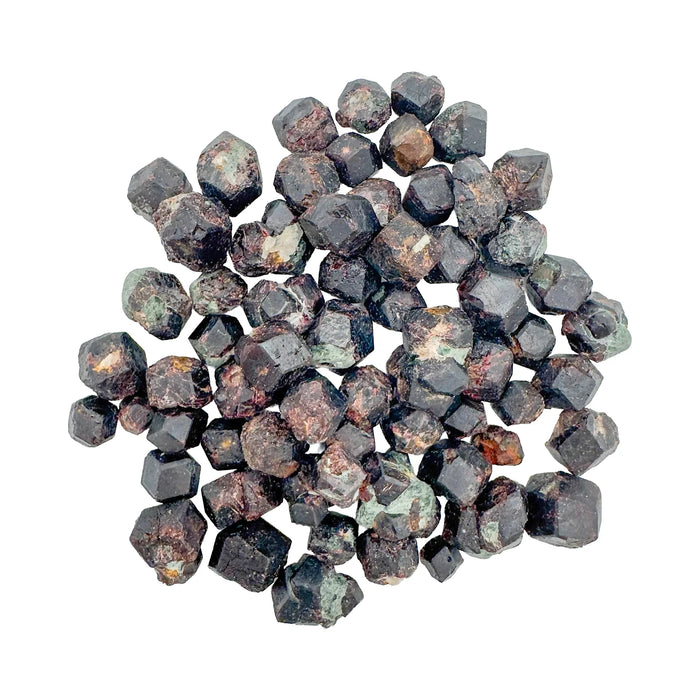
Lab-Grown Corundum is not something we carry. Garnet is the closest match in color, and every piece passes our sourcing standards: origin named, treatments disclosed.
- from 1,000+ reviews
- Ships within 72 hoursMonday to Friday, tracked
- 90 days to return itif you do not love it
- Free US shipping over $99$8.99 flat rate under
The Slow Note
New stones go to the list first.
No forwarding, no selling. Unsubscribe in one click. Privacy