






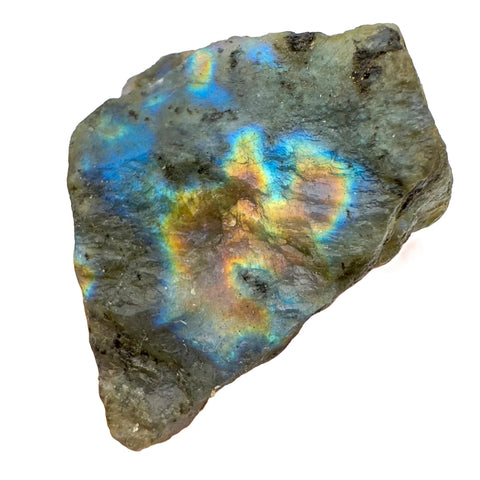



 Agatefor stress relief
 Amazonitefor stress relief
 Aquamarinefor serenity
 Aventurinefor luck
 Bloodstonefor energy
 Blue Kyanitefor confidence
 Blue Lace Agatefor stress relief
 Chrysocollafor emotional healing
 Fluoritefor focus
 Garnetfor energy
 Lepidolitefor stress relief
 Malachitefor emotional healing
 Moonstonefor grounding
 Obsidianfor protection
 Ocean Jasperfor emotional healing
 Red Jasperfor grounding
 Rhodonitefor emotional healing
 Selenitefor cleansing
 Sodalitefor focus
 Tiger Eyefor confidence








































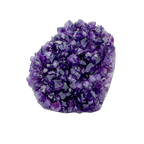 Amethyst
 Clear Quartz
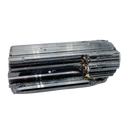 Black Tourmaline
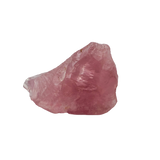 Rose Quartz
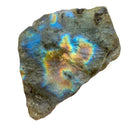 Labradorite
 Natural Citrine
 Carnelian
 Smoky Quartz
 Aventurine
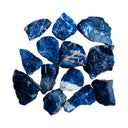 Sodalite
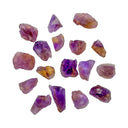 Ametrine
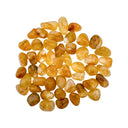 Golden Healer
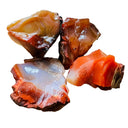 Raw Stones
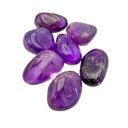 Tumbled Stones
 Palm Stones
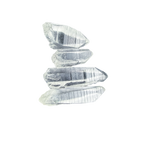 Crystal Points
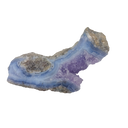 Clusters & Geodes
 Polished & Decor
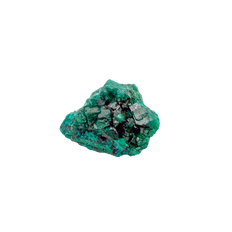 Mineral Specimens
 Crystal Chips




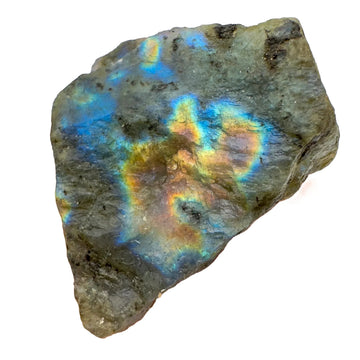



 Raw Stones
179 to choose from
Raw Stones
179 to choose from
 Tumbled Stones
162 to choose from
Tumbled Stones
162 to choose from
 Palm Stones
25 to choose from
Palm Stones
25 to choose from
 Crystal Points
23 to choose from
Crystal Points
23 to choose from
 Clusters & Geodes
103 to choose from
Clusters & Geodes
103 to choose from
 Polished & Decor
148 to choose from
Polished & Decor
148 to choose from
 Mineral Specimens
257 to choose from
Mineral Specimens
257 to choose from
 Crystal Chips
21 to choose from
Crystal Chips
21 to choose from


 AngolaAquamarine
›
AngolaAquamarine
›
 BotswanaCarnelian, Tree Agate
›
BotswanaCarnelian, Tree Agate
›
 DR CongoMalachite, Natural Citrine
›
DR CongoMalachite, Natural Citrine
›
 EswatiniBloodstone
›
EswatiniBloodstone
›
 MadagascarLabradorite, Clear Quartz
›
MadagascarLabradorite, Clear Quartz
›
 MalawiBlue Lace Agate, Garnet
›
MalawiBlue Lace Agate, Garnet
›
 MozambiqueAmazonite
›
MozambiqueAmazonite
›
 NamibiaSodalite, Blue Lace Agate
›
NamibiaSodalite, Blue Lace Agate
›
 Republic of the CongoDioptase
›
Republic of the CongoDioptase
›
 South AfricaTiger Eye, Unakite
›
South AfricaTiger Eye, Unakite
›
 ZambiaChevron Amethyst
›
ZambiaChevron Amethyst
›
 ZimbabweEmerald, Rhodonite
›
ZimbabweEmerald, Rhodonite
›
 ArgentinaBlack Obsidian, Rhodochrosite
›
ArgentinaBlack Obsidian, Rhodochrosite
›
 BoliviaAmetrine
›
BoliviaAmetrine
›
 BrazilAmethyst, Clear Quartz
›
BrazilAmethyst, Clear Quartz
›
 PeruSerpentine, Jade
›
PeruSerpentine, Jade
›
 UruguayAmethyst
›
UruguayAmethyst
›
 Dominican RepublicLarimar
›
Dominican RepublicLarimar
›
 MexicoRainbow Obsidian, Crazy Lace Agate
›
MexicoRainbow Obsidian, Crazy Lace Agate
›
 United StatesSelenite, Peridot
›
United StatesSelenite, Peridot
›
 ChinaFluorite
›
ChinaFluorite
›
 RussiaShungite
›
RussiaShungite
›
 AustraliaMookaite
›
AustraliaMookaite
›
 Where our crystals come from
See where we source →
Where our crystals come from
See where we source →


 Aries
Mar 21 to Apr 19
Carnelian
›
Aries
Mar 21 to Apr 19
Carnelian
›
 Taurus
Apr 20 to May 20
Rose Quartz
›
Taurus
Apr 20 to May 20
Rose Quartz
›
 Gemini
May 21 to Jun 20
Agate
›
Gemini
May 21 to Jun 20
Agate
›
 Cancer
Jun 21 to Jul 22
Moonstone
›
Cancer
Jun 21 to Jul 22
Moonstone
›
 Leo
Jul 23 to Aug 22
Citrine
›
Leo
Jul 23 to Aug 22
Citrine
›
 Virgo
Aug 23 to Sep 22
Amazonite
›
Virgo
Aug 23 to Sep 22
Amazonite
›
 Libra
Sep 23 to Oct 22
Blue Lace Agate
›
Libra
Sep 23 to Oct 22
Blue Lace Agate
›
 Scorpio
Oct 23 to Nov 21
Obsidian
›
Scorpio
Oct 23 to Nov 21
Obsidian
›
 Sagittarius
Nov 22 to Dec 21
Sodalite
›
Sagittarius
Nov 22 to Dec 21
Sodalite
›
 Capricorn
Dec 22 to Jan 19
Black Tourmaline
›
Capricorn
Dec 22 to Jan 19
Black Tourmaline
›
 Aquarius
Jan 20 to Feb 18
Amethyst
›
Aquarius
Jan 20 to Feb 18
Amethyst
›
 Pisces
Feb 19 to Mar 20
Aquamarine
›
Gifting?
A birthday stone is the safe bet.
Read the zodiac guide →
Pisces
Feb 19 to Mar 20
Aquamarine
›
Gifting?
A birthday stone is the safe bet.
Read the zodiac guide →


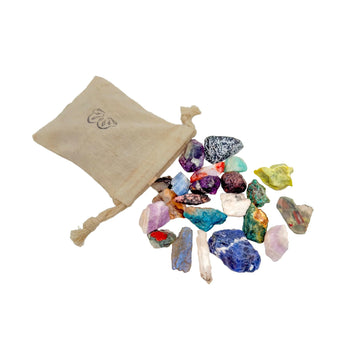










Kyanite
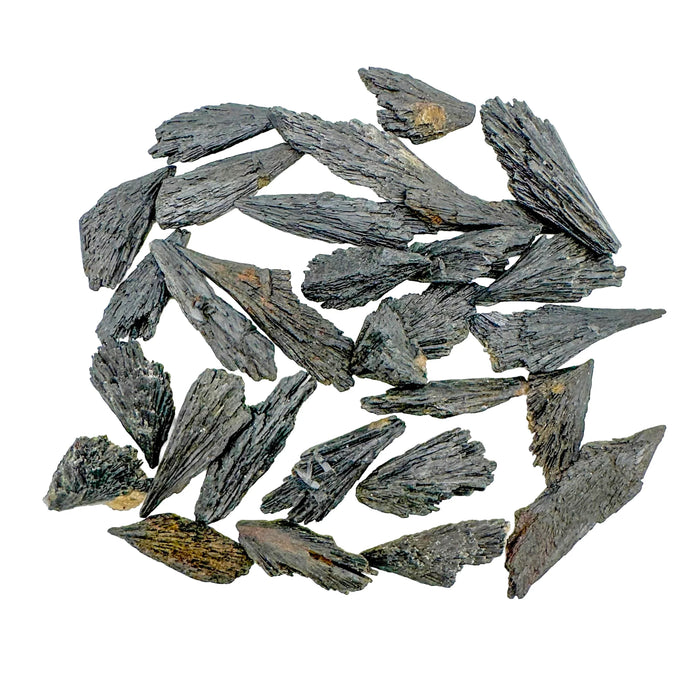
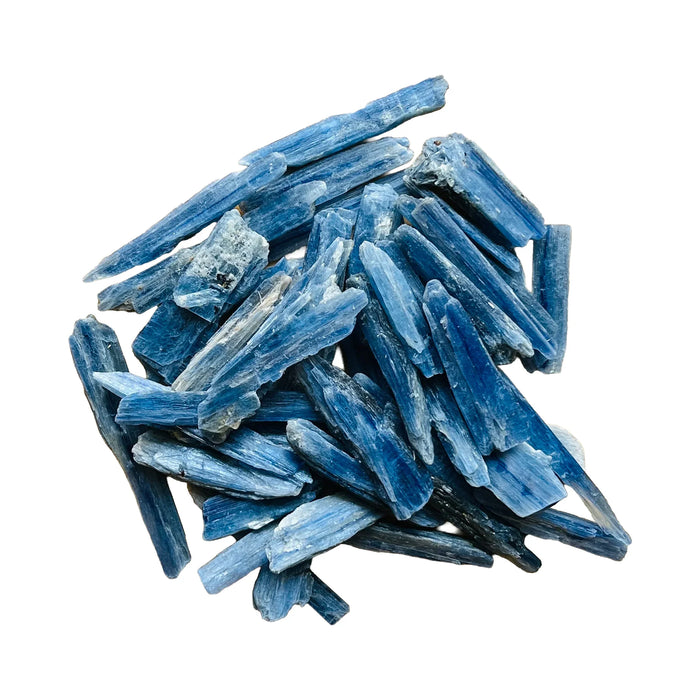
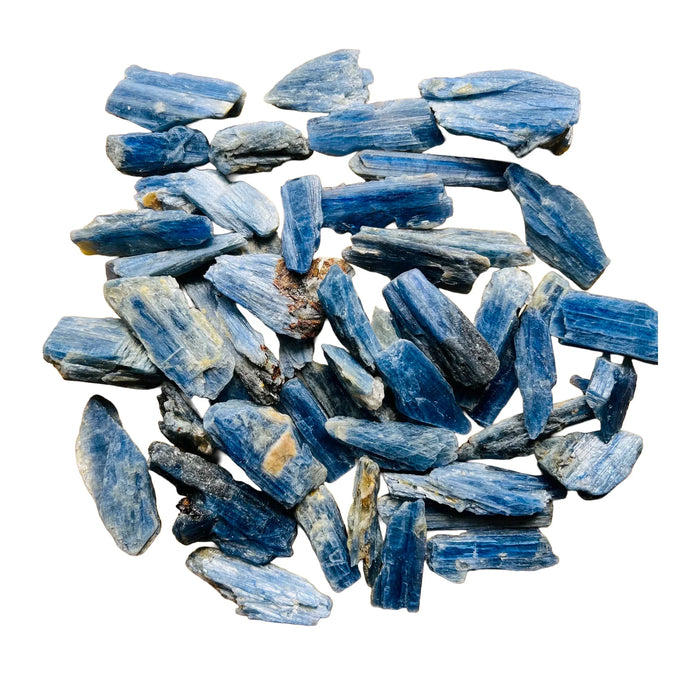
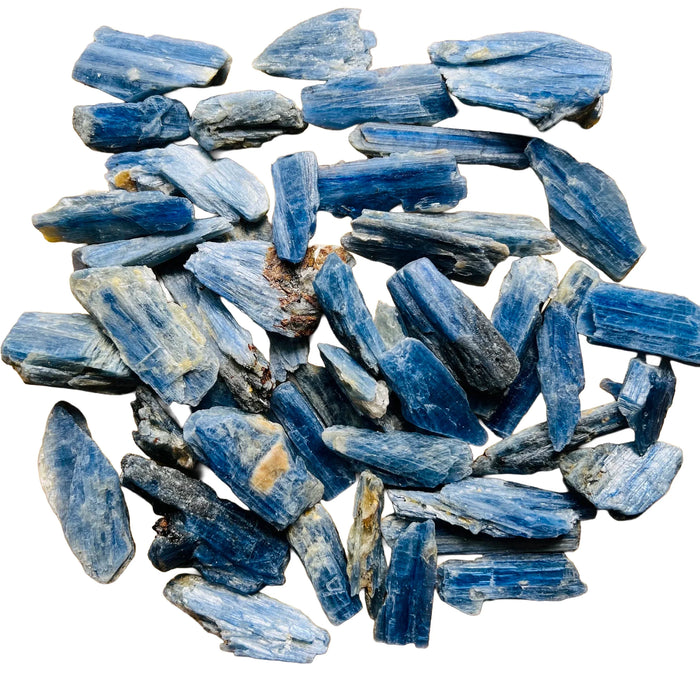
Kyanite is a single mineral species that occurs in multiple colors: blue, black, green, orange, and white. This page covers the kyanite family and points you to our guides for specific colors. The defining feature is its anisotropic hardness. Soft along the blade length, hard across it. A mineral that breaks its own rules, which is why many people work with it for alignment, clarity, and cutting through confusion.
Shop kyaniteKyanite, in stock now.
Our most-loved Kyanite pieces, ready to ship.
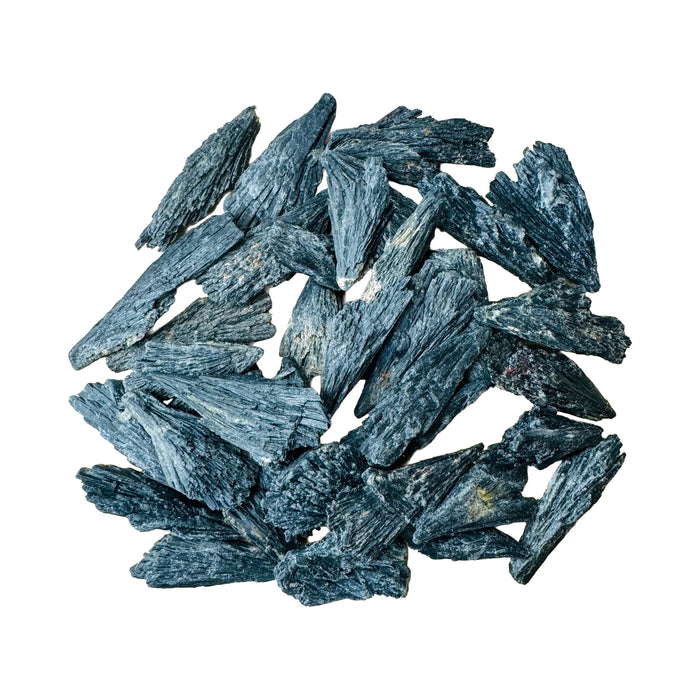

- from 1,000+ reviews
- Ships within 72 hoursMonday to Friday, tracked
- 90 days to return itif you do not love it
- Free US shipping over $99$8.99 flat rate under
The geology.
Kyanite is an aluminum silicate mineral (Al2SiO5), a polymorph alongside andalusite and sillimanite. All three share identical chemistry but form under different pressure and temperature conditions. Kyanite forms in metamorphic rocks, specifically in high-pressure, relatively low-temperature schists and gneisses that have been buried deep in the Earth and exposed by tectonic uplift.
The most striking feature of kyanite is its anisotropic hardness. The mineral is Mohs 4.5 to 5 along the length of the crystal blade, but Mohs 6.5 to 7 across the blade. This two-strength character is why kyanite was once called disthene, from the Greek for "two strengths." The difference arises from the crystal structure itself: atomic bonding is weaker along one axis and stronger perpendicular to it. Colors come from trace elements. Blue kyanite gets its color from iron and titanium. Black kyanite from higher iron and manganese. Orange kyanite (rare, from Tanzania) from manganese. All other colors follow the same pattern of impurity substitution in the crystal lattice. Specific gravity runs 3.5 to 3.7, notably heavier than quartz for its size.
The origins.
Blue kyanite is mined in Zimbabwe (Zambezi region) and Brazil (Minas Gerais), our two primary sources. Black kyanite comes from Brazil, with occasional material from Russia and India. The global kyanite market also includes deposits in the USA (North Carolina, Georgia), Switzerland, Nepal, and Tanzania (orange variety), but our current collection focuses on Zimbabwean and Brazilian material. We work with trusted intermediaries in both countries who document origin per batch.
Zimbabwe's kyanite is hand-extracted from metamorphic deposits, typically in small-to-medium scale operations. The material arrives as raw blades and is finished with minimal processing that preserves the natural crystal form. Brazil's deposits are similarly worked, with operations in the Minas Gerais region supplying consistent supply of both blue and black varieties. The Zimbabwe source is preferred for blue color intensity and consistency. Brazilian blue also carries excellent color but may show slightly more variation within a parcel. If our sourcing practices or suppliers ever shift, we will communicate the change explicitly.
Traditional associations.
Blue kyanite is associated with the Throat and Third Eye chakras. Many people work with it for clear communication, cutting through confusion, meditation, and speaking truth. Black kyanite is associated with the Root chakra and grounding. It is often chosen for protective work, boundary-setting, and energetic cleansing at the foundation level. Some traditions hold that kyanite never needs energetic cleansing because its crystalline structure does not retain incoming energy in the way other stones do. This claim cannot be verified, yet it resonates deeply with people drawn to the stone.
The metaphorical weight is real. A crystal that is soft in one direction and hard in another speaks to duality, directional alignment, and the need to know which way you are oriented. Many people work with kyanite when intention involves clarity of direction, honest communication, and cutting away what no longer serves. The blade shape itself carries meaning for people working with intentions around precision, direction, and clear boundaries.
Spotting the real thing.
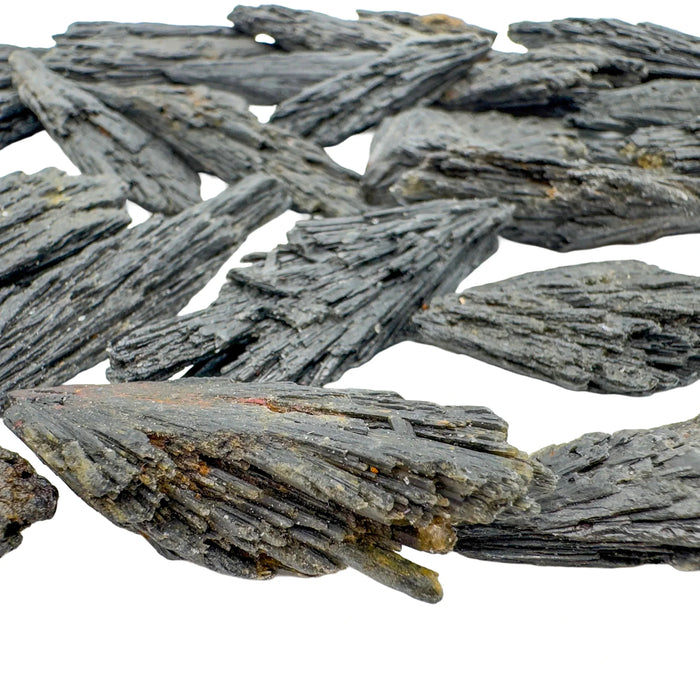
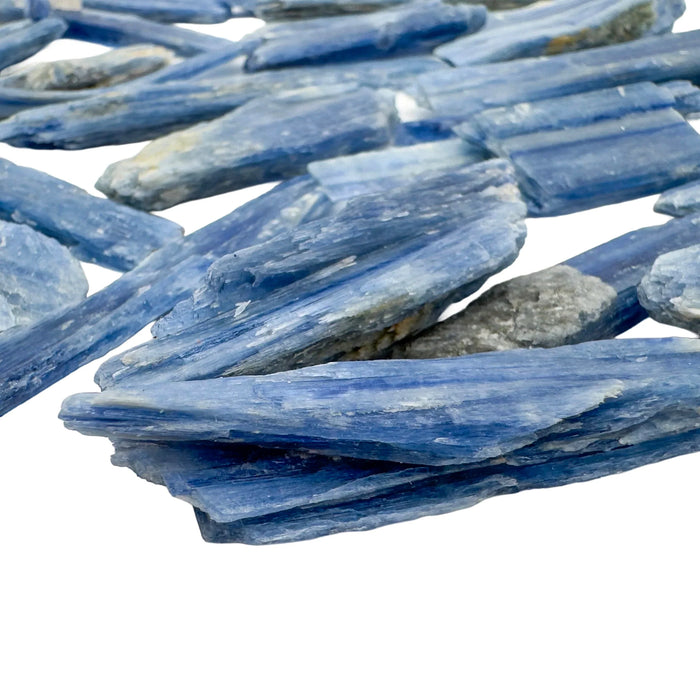
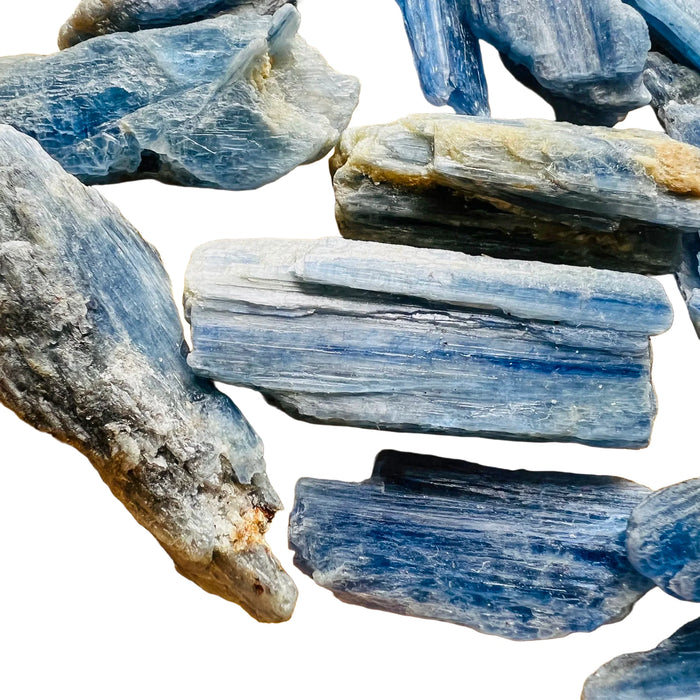
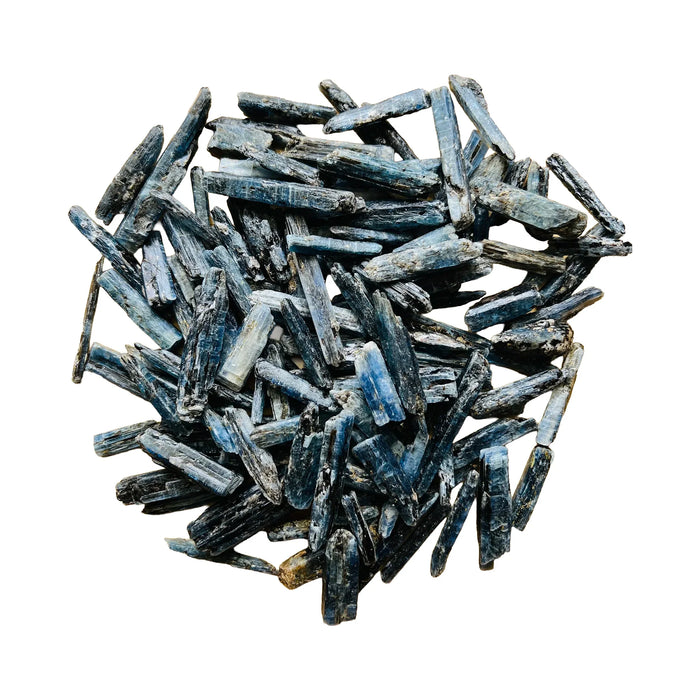
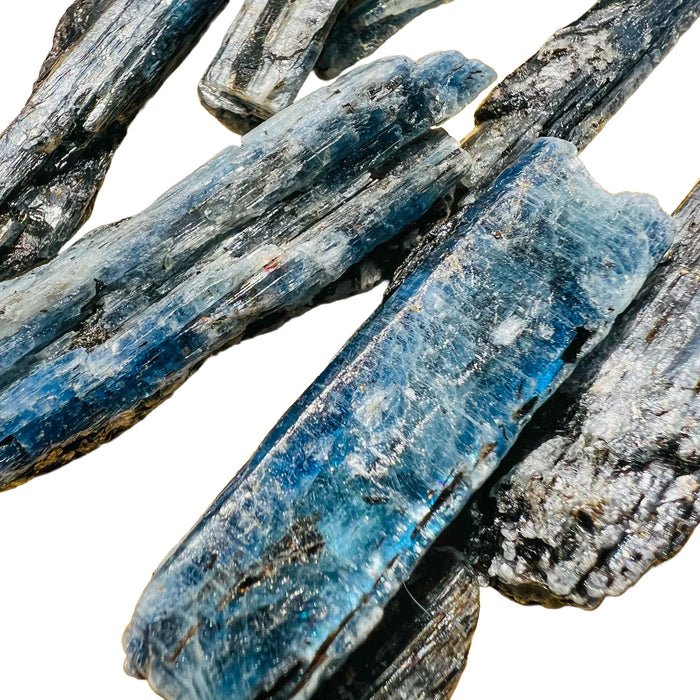
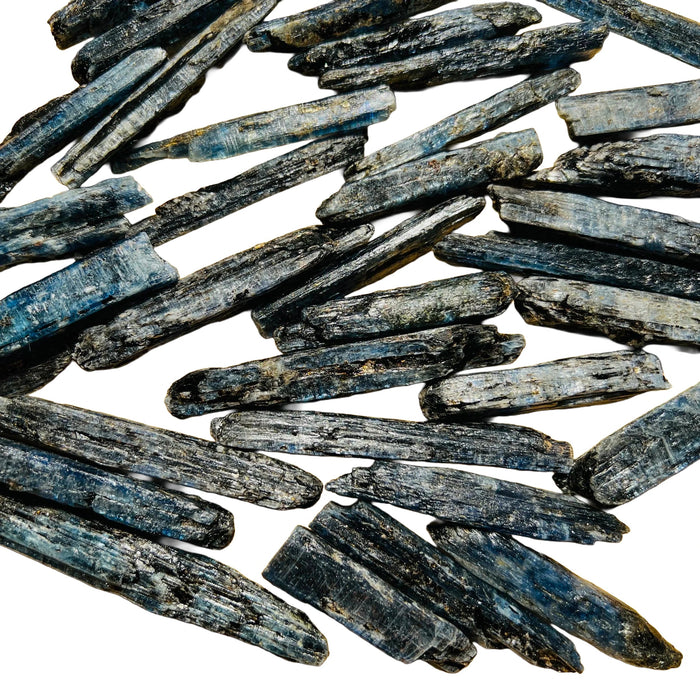
Genuine kyanite displays the characteristic bladed crystal form, often with parallel striations running along the length. Blue kyanite shows pleochroism, a natural color shift along different axes of the blade. A stone may appear deeper blue when viewed along its length and lighter blue when viewed from the side. This is not a flaw; it is a hallmark of genuine kyanite. Black kyanite typically grows in radiating fan clusters where multiple blades originate from a common point.
The anisotropic hardness test is the surest identification. A steel needle should scratch the blade along its length (Mohs 4.5 to 5) but not scratch across the blade (Mohs 6.5 to 7). This dual hardness is unique to kyanite and is your most reliable authentication tool. Specific gravity of 3.5 to 3.7 is noticeably heavier than quartz for equivalent size. Imitations exist, but they are uncommon because kyanite prices do not justify extensive counterfeiting. Blue tourmaline and blue sapphire are occasionally mistaken for kyanite, but both are much harder uniformly across the crystal and lack the bladed form.
Care and handling.
Kyanite requires care because of its blade form and variable hardness. The soft axis along the length of the blade makes the crystal vulnerable to splitting if pressure is applied lengthwise. Store kyanite flat and separate from harder stones that could chip the blades. Do not stack pieces on top of each other without padding. Clean with water and mild soap. Dry thoroughly and immediately after rinsing. Avoid ultrasonic cleaners, which can cause blade fractures along the cleavage direction.
Do not drop kyanite, and do not carry it loose in pockets or bags where it can knock against other minerals. The blade ends chip easily. Handle gently and treat the fragility as part of the stone's character rather than a design flaw. For energetic cleansing, use water rinsing, smoke, sound, or moonlight. Many traditions say kyanite is self-cleansing and does not require formal cleansing practices, but there is no scientific basis for this claim. Your own intuition about care should guide you.
Pairs well with.
Proof, not promises.
We measure our own sourcing across five dimensions. Supply chain, environmental footprint, artisan support, market integrity, and pricing. The number is honest, not perfect. Where we can do better, we say so.
A deeper look.
Extended geology, sourcing, authentication, anisotropic hardness mechanics, color varieties, and pricing reality for when the quick guide isn't quite enough.
Extended geology
Kyanite is an aluminum silicate mineral (Al2SiO5) forming in metamorphic rocks under high pressure and relatively low temperature conditions. It is one of three polymorphs of aluminum silicate. All three have identical chemistry but different crystal structures and form under different pressure/temperature regimes. Kyanite forms at pressures roughly 500 to 1000 MPa and temperatures from 300 to 700 degrees Celsius. Andalusite forms at lower pressures and higher temperatures. Sillimanite forms at high temperatures and variable pressure. When rocks containing these minerals are exposed by tectonic uplift and cooling, the polymorphs are frozen in place in the crystal structure they developed at depth.
The defining mineralogical feature of kyanite is anisotropic hardness. Hardness varies with the direction of the stress applied to the crystal. Along the c-axis (the long axis of the blade), kyanite is Mohs 4.5 to 5, similar to calcite. Perpendicular to this axis, hardness jumps to Mohs 6.5 to 7, similar to quartz. This unusual property arises because the crystal structure itself has weaker bonding along one crystallographic direction and stronger bonding perpendicular to it. The mineral was once called disthene (Greek: "two strengths") in recognition of this property. Today the term kyanite is standard, though disthene appears in older literature.
Color comes from trace element impurities. Blue kyanite contains iron and titanium substituting for aluminum in the crystal lattice. Black kyanite contains higher concentrations of iron and manganese. Green kyanite is rare and results from chromium impurities. Orange kyanite (from Tanzania) comes from manganese. White and colorless kyanite is the result of very low trace-element concentrations. All colors form through the same mechanism: a foreign atom replaces an aluminum atom in the structure, and the electron redistribution creates a color center that absorbs and transmits specific wavelengths of light.
Crystal habit is typically bladed or lath-shaped. Individual crystals can range from millimeter-scale to several centimeters long. Black kyanite commonly forms in radiating fan or star clusters where many blades radiate from a central point. Triclinic crystal system means three unequal crystal axes at non-right angles, which is less common than orthorhombic or isometric systems. Luster ranges from pearly to vitreous depending on the surface. Specific gravity is 3.5 to 3.7, notably heavier than quartz (2.65), which helps distinguish it by feel and density.
Color varieties and sourcing
Blue kyanite is the most commercially important and most widely carried. Zimbabwe produces blue kyanite with consistent color saturation and is favored for jewelry and collection purposes. Brazil also produces high-quality blue kyanite, often slightly more variable in tone within a parcel but equally beautiful. Black kyanite is next in commercial importance. Brazil is a primary source. Russia and India produce black kyanite as well, though in smaller quantities reaching Western markets. Green kyanite is rare and seldom reaches retail markets. Orange kyanite from Tanzania is the rarest and most expensive due to limited availability and vivid color. White and colorless kyanite exists but is least prized commercially.
Mining is predominantly hand-extraction from metamorphic deposits. Zimbabwe's operations in the Zambezi region use small-scale methods with local labor. Extraction and initial sorting happen at the source, with finished material (cleaned, sorted by quality) shipped to intermediaries who serve the global market. Brazilian mining follows a similar pattern in Minas Gerais. The blade form makes heavy mechanical processing impractical; hand-finishing is the standard. This limited processing is environmentally favorable compared to hard-rock mining that requires crushing, grinding, and chemical refining.
Authentication and the hardness test
Genuine kyanite is best identified by the anisotropic hardness test. A steel needle (or a copper coin applied with moderate pressure) should scratch the blade easily along its length but fail to scratch across the blade. This is unique to kyanite and is the surest field test. Color pleochroism in blue kyanite is another authentic marker. When viewed along different crystallographic axes, the same stone appears darker in one direction and lighter in another. This is expected and genuine.
Blue tourmaline and blue sapphire can resemble blue kyanite at a glance, but both are uniformly hard across all crystal directions (tourmaline is Mohs 7 to 7.5, sapphire is Mohs 9) and neither has the bladed crystal form. Tourmaline is often striated lengthwise like kyanite, but tourmaline is trigonal (three-fold symmetry) rather than triclinic, and hardness is uniform. Under a loupe, tourmaline's surface texture differs from kyanite's. Sapphire is far too hard to mistake once you attempt the needle test.
Treated aura kyanite (coated with metallic finishes like titanium) does exist and is sometimes sold without disclosure. These coatings are applied after mining and are not part of the natural stone. Genuine untreated kyanite shows the natural color derived from trace elements, not a metallic sheen. Heat-treated orange kyanite (rare) may be offered in the market. Since our sourcing focuses on Zimbabwe and Brazil for blue and black, heat treatment is not a practical concern for our supply, but it is a market issue worth naming.
Pricing and market reality
Raw blue kyanite blades: $8 to $35 per piece at retail, depending on size, blade clarity, color saturation, and form. Larger specimens can reach $50 to $150. Black kyanite fans and clusters: $6 to $30 per piece for typical sizes. Specialty forms (polished, carved) command higher prices. Grade matters: crystals with visible damage, fractures, or dull color sit at the lower end. Flawless pieces with vivid color command premiums. Zimbabwe blue typically costs more than equivalent Brazilian blue due to color consistency reputation, though both are genuine and high-quality.
Pricing is driven by size, color saturation, form complexity, and rarity of color variety. Orange kyanite, if sourced at all, is 2 to 3 times the price of blue due to rarity. Green and white kyanite rarely reach retail markets in meaningful quantities, so pricing data is limited. Commodity bulk kyanite (rough, mixed quality) may be cheaper per pound, but retail finished pieces reflect hand-selection and finishing costs. Warning signs: extremely low per-piece pricing on substantial sized specimens suggests either mass-produced synthetic material (uncommon) or unvetted origin.
Related minerals and polymorphic series
Kyanite, andalusite, and sillimanite are the three polymorphs of Al2SiO5. All three can occur in the same metamorphic rock if conditions allowed sequential growth or if different areas of the rock formed under different pressure/temperature conditions. Distinguishing them requires hardness testing and detailed crystal form inspection. Kyanite is distinguished by its anisotropic hardness (hard across, soft along). Andalusite is uniformly Mohs 7.5 and often shows a square cross-section with four sides. Sillimanite is uniformly Mohs 6.5 to 7 and typically fibrous rather than bladed.
Historical and modern context
Kyanite was identified as a mineral in the late 18th century in alpine deposits. It was treated as a geological specimen and industrial mineral (ground for abrasives and refractories) rather than as a worked gemstone or collector stone until the late 20th century, when crystal and metaphysical markets expanded. The modern appeal of kyanite grows from its unusual properties: the anisotropic hardness metaphor of duality and directional alignment, and the blade form's association with precision and clarity. Unlike stones with deep historical traditions, kyanite carries a modern narrative shaped by contemporary crystal work and mineral enthusiasts.
Good sourcing is a practice, not a claim.
Nothing we sell is dyed, stabilized, reconstituted, or color-enhanced without full disclosure. We name our origins where we can. We say so when we cannot. We walk away from material that does not meet our standard, even when it costs us sales.
Bring kyanite home.
Raw kyanite blades from Zimbabwe and Brazil. Blue and black kyanite, natural and untreated, hand-selected for color, clarity, and blade integrity. Each piece preserves the characteristic bladed form and the anisotropic hardness that makes kyanite unique. Available by color and size. Start with one piece and see how directional strength shows up in your practice.
Shop the kyanite collectionGrounded Connections
New stones go to the list first.
No forwarding, no selling. Unsubscribe in one click. Privacy