







Hematite, Labradorite, or Howlite? Sorting the Gray Stones
Weight, streak, and the way light moves across a surface will separate almost every gray stone you own.
Gray is the color that hides the most. Two stones can sit side by side on a shelf looking nearly identical, and turn out to be a dense iron oxide and a soft borate mineral. Here is how to tell them apart without a lab.

Most gray stones sort into three. Hematite is metallic, unusually heavy, and leaves a red-brown streak. Labradorite is a feldspar of ordinary weight with a sharp blue or gold flash. Howlite is chalky white to gray with dark veins and is soft enough to scratch with a steel blade. Weight and streak settle nearly every case.
Why Gray Is the Hardest Color to Read
With most stones, color does at least half the identification work. A purple crystal narrows to a short list. A green one narrows to another. Gray narrows to almost nothing, because gray is what a mineral looks like when nothing in it is strongly coloring the light.
That means the usual first question, what color is it, gives you no traction. The stones that end up in the gray bin come from wildly different families: an iron oxide, a feldspar, a borate, a volcanic glass, a lead ore. They share a look and share nothing else.
The good news is that the properties which do separate them are easy to check by hand. Weight, hardness, streak, and the behavior of light on the surface will sort a gray stone in under a minute, and none of it requires equipment you do not already own.

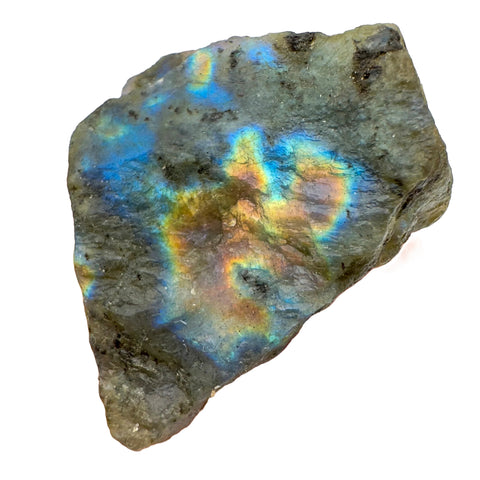
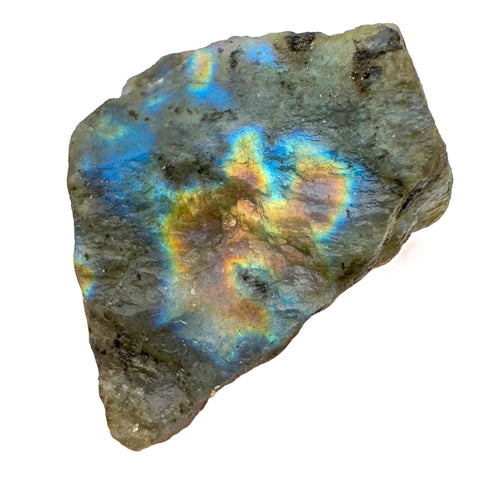
Labradorite reads as plain gray until the light hits it correctly. Then the flash appears, and the identification is settled.
The Gray Stones You Most Likely Have
Three stones account for the large majority of gray pieces in a home collection. They are also, conveniently, about as different from one another as three minerals can be, which makes them easy to separate once you know what to look at.
Read down these three columns and one of them will usually match the stone in your hand on every row at once. If two rows disagree, trust weight and streak over color and shine.
Hematite
Iron oxide, metallic
Labradorite
Feldspar, flashing
Howlite
Borate, chalky
The spread here is unusually wide. Howlite at about Mohs 3.5 is soft enough that a steel blade bites into it, while hematite and labradorite both sit above 5.5 and shrug the same blade off. If you are new to the scale, our Mohs hardness primer explains what those numbers mean in practice.
Weight and Streak Settle It

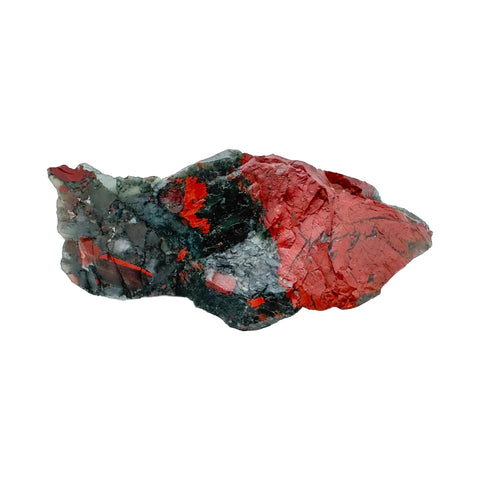
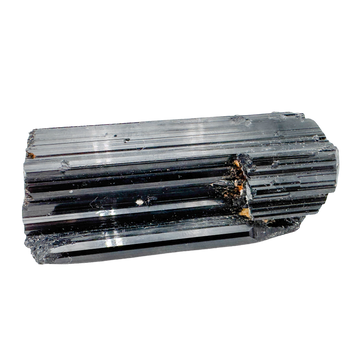
Raw hematite. Even a small piece feels wrong in the hand, in the sense that it is far heavier than its size suggests.
Pick the stone up first. Hematite has a specific gravity of roughly 4.9 to 5.3, meaning it weighs about twice what an equal volume of quartz would. People who handle it for the first time almost always comment on the weight before anything else. Galena is heavier still, at roughly 7.4 to 7.6, and it is unmistakable once you have felt it.
Then check the streak. Drag the stone across a piece of unglazed porcelain, the underside of a tile or a mug will do, and look at the powder line it leaves. This is the single most useful test in gray-stone identification, because it reports what the mineral actually is rather than what its surface looks like.
Hematite leaves a red-brown line every time, even when the polished stone looks bright silver. That rusty streak is why the name comes from the Greek word for blood. Magnetite, which can look identical, leaves black. Labradorite and howlite both leave white.
A streak test takes a barely visible amount of material off the stone, so use an inconspicuous edge and go lightly. Skip it entirely on anything soft, unusually valuable, or lead-bearing. Galena, for instance, is best left alone: it contains lead, and our guide to crystals that are toxic to handle covers why powdering it is a bad idea.
The Other Grays You Will Meet
Beyond the main three, a handful of other stones turn up in the gray drawer. Some are close cousins of hematite, some are entirely unrelated and simply happen to be gray. Each has one giveaway that does most of the work.
| Stone | What it is | Mohs | The giveaway |
|---|---|---|---|
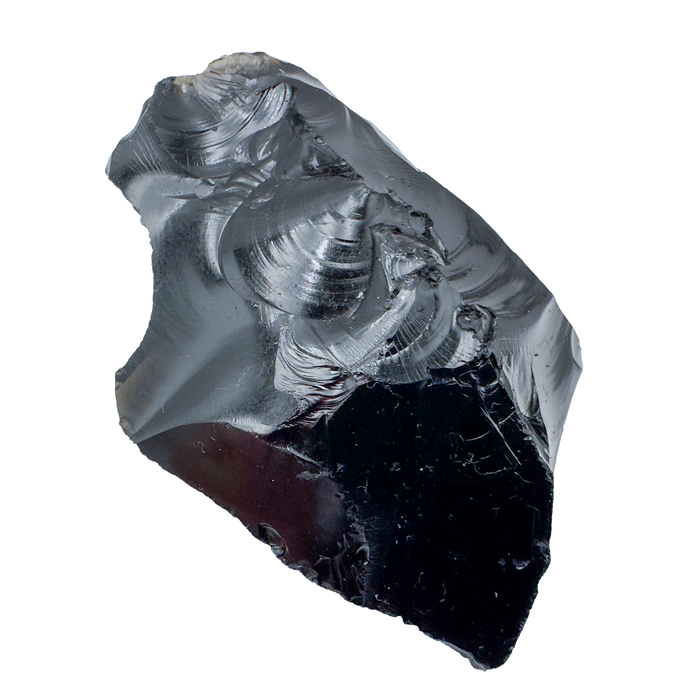
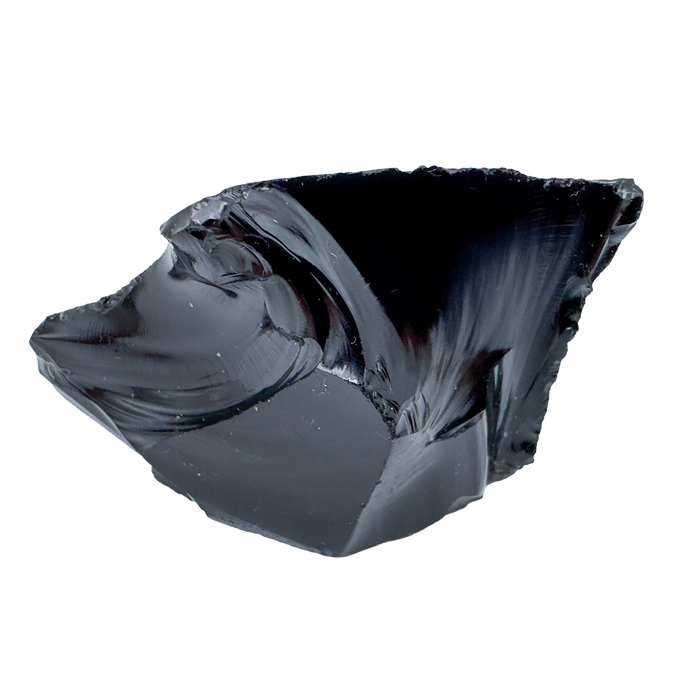
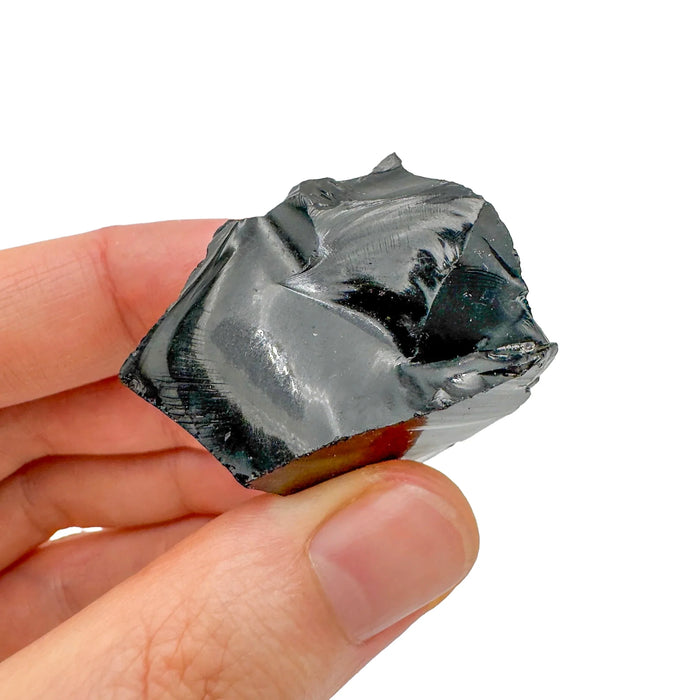
| Silver Sheen Obsidian | Volcanic glass | 5 to 5.5 | A sheen that sweeps across the surface, and a glassy, curved break |
| Gray Moonstone | Feldspar | 6 to 6.5 | A soft milky glow that floats, rather than a sharp flash |
| Gray Banded Agate | Chalcedony, quartz family | 7 | Hard enough to scratch glass, with concentric or parallel banding |
| Pyrite | Iron sulfide, FeS2 | 6 to 6.5 | Brassy rather than gray, greenish-black streak, often cubic |
| Magnetite | Iron oxide, Fe3O4 | 5.5 to 6.5 | Strongly magnetic, with a black streak instead of a red-brown one |
| Galena | Lead sulfide, PbS | 2.5 | Startlingly heavy, mirror-bright cubes, soft, and lead-bearing |
| Shungite | Carbon-rich rock | 3.5 to 4 | Very light for its size, sooty, and it can mark your hands |
Notice how often the giveaway is a physical property rather than an appearance. That is the pattern in gray stones generally. Looks converge, but density, magnetism, hardness, and streak stay stubbornly individual. Why a stone has any color at all, or almost none, is covered in our guide to what gives crystals their color.
Two Gray Stones Sold as Something Else
Two of the gray stones on this page sit at the center of the most common mislabeling in the crystal trade, and in both cases the material itself is not the problem. Natural howlite is a genuine mineral with a quiet, marbled beauty of its own. Ferrite magnet beads are a perfectly ordinary manufactured product.
What goes wrong is the name attached to them. Howlite gets dyed blue and called turquoise. Barium-strontium ferrite ceramic gets polished and called hematite, usually with the word magnetic in front of it, which is precisely the word that proves it is not.
Both are easy to catch once you know the checks, and both are worth catching, because in each case the honest version costs a fraction of what the stone it imitates does.

Natural, undyed howlite: chalky white to pale gray, webbed with dark veins. This is what the stone looks like before anyone tints it.
The strongly magnetic black beads sold as magnetic hematite, hematine, or hemalyke have been analyzed as a manufactured barium-strontium ferrite ceramic. Real hematite is at most weakly magnetic, so two genuine beads will not snap together.
Howlite is porous, so it drinks up dye. Tinted blue and cut into beads, it is the most common turquoise imitation on the market. Hardness gives it away: turquoise sits around Mohs 5 to 6, howlite at 3.5.
Because howlite absorbs dye unevenly and shallowly, color often pools in the veins and cracks and looks thin on the high points. A cotton swab with acetone, tested on a hidden spot, can lift color from a dyed stone and nothing at all from an undyed one.
Natural howlite is a real and lovely mineral, and manufactured magnetic beads are perfectly good beads. The issue is never the material. It is the word turquoise, or the word hematite, on something that is not.
"Color is the easiest thing to imitate and the least useful thing to trust. Weight and streak do not negotiate."
Related Guides
The heaviest gray on the shelf, up close: what hematite is and where ours comes from.
Explore hematiteThe feldspar that flashes: origins, grading, and what makes the color move.
Explore labradoriteThe chalky, veined white stone that is far more often dyed than it is left alone.
Explore howliteWhere added color hides, and the checks that catch it across every stone family.
Learn the tellsObsidian, black tourmaline, onyx, and shungite: the companion guide to this one.
Read the guideOur full collection of trust-first crystal guides and comparisons.
Browse the LibraryFrequently Asked
How do I tell Hematite from Labradorite?
Weight and flash. Hematite is a dense iron oxide with a metallic shine and no color play, and it feels much heavier than it looks. Labradorite is a feldspar of ordinary weight, with a smoky gray body and a sharp blue or gold flash that appears only at certain angles.
Is my gray stone Hematite or Magnetite?
Both are iron oxides and can look almost identical, but two checks separate them. Magnetite is strongly magnetic and leaves a black streak. Hematite is at most weakly magnetic and leaves a red-brown streak, even when the stone itself looks silver.
Why is my Hematite so heavy?
Because it is mostly iron. Hematite is iron oxide, Fe2O3, with a specific gravity of roughly 4.9 to 5.3. A piece weighs close to twice what a same-sized piece of quartz would, and that heft is one of the most reliable ways to recognize it.
Is magnetic hematite real hematite?
No. The strongly magnetic black beads sold as magnetic hematite, hematine, or hemalyke have been analyzed as a manufactured barium-strontium ferrite ceramic, not a natural mineral. Genuine hematite is at most weakly magnetic, so a real hematite bead will not snap onto another bead.
Is white and gray Howlite the same as turquoise?
No. Howlite is a calcium borosilicate that is naturally white to pale gray with dark veins. Because it is porous and soft at about Mohs 3.5, it is often dyed blue and sold as turquoise. Natural turquoise is harder, at roughly Mohs 5 to 6.
What causes the flash in Labradorite?
Nanoscale layers inside the feldspar. As labradorite cools slowly, it separates into alternating sodium-rich and calcium-rich layers. Light interferes and diffracts off those layers, and the result is the blue, green, and gold sheen called labradorescence.
What is the difference between labradorescence and adularescence?
Labradorite flashes and moonstone glows. Labradorescence gives sharp, distinct colors that shift abruptly as you rotate the stone. Adularescence in moonstone is a soft, milky blue sheen that seems to float below the surface without breaking into separate colors.
Can I do a streak test at home?
Yes, on the right stones. Rubbing a stone against unglazed porcelain leaves a fine powder line and removes a barely visible amount of material. Use an inconspicuous edge, and skip it on soft, valuable, or lead-bearing specimens such as galena.