




















































 Raw Stones
179 pieces
Raw Stones
179 pieces
 Tumbled Stones
162 pieces
Tumbled Stones
162 pieces
 Palm Stones
25 pieces
Palm Stones
25 pieces
 Crystal Points
23 pieces
Crystal Points
23 pieces
 Clusters & Geodes
105 pieces
Clusters & Geodes
105 pieces
 Polished & Decor
151 pieces
Polished & Decor
151 pieces
 Mineral Specimens
262 collector pieces
Mineral Specimens
262 collector pieces
 Crystal Chips
21 pieces
Browse everything
Every collection, one page.
View All Collections →
Crystal Chips
21 pieces
Browse everything
Every collection, one page.
View All Collections →


 Aries
Mar 21 – Apr 19
Carnelian
›
Aries
Mar 21 – Apr 19
Carnelian
›
 Taurus
Apr 20 – May 20
Rose Quartz
›
Taurus
Apr 20 – May 20
Rose Quartz
›
 Gemini
May 21 – Jun 20
Agate
›
Gemini
May 21 – Jun 20
Agate
›
 Cancer
Jun 21 – Jul 22
Moonstone
›
Cancer
Jun 21 – Jul 22
Moonstone
›
 Leo
Jul 23 – Aug 22
Citrine
›
Leo
Jul 23 – Aug 22
Citrine
›
 Virgo
Aug 23 – Sep 22
Amazonite
›
Virgo
Aug 23 – Sep 22
Amazonite
›
 Libra
Sep 23 – Oct 22
Blue Lace Agate
›
Libra
Sep 23 – Oct 22
Blue Lace Agate
›
 Scorpio
Oct 23 – Nov 21
Obsidian
›
Scorpio
Oct 23 – Nov 21
Obsidian
›
 Sagittarius
Nov 22 – Dec 21
Sodalite
›
Sagittarius
Nov 22 – Dec 21
Sodalite
›
 Capricorn
Dec 22 – Jan 19
Black Tourmaline
›
Capricorn
Dec 22 – Jan 19
Black Tourmaline
›
 Aquarius
Jan 20 – Feb 18
Amethyst
›
Aquarius
Jan 20 – Feb 18
Amethyst
›
 Pisces
Feb 19 – Mar 20
Aquamarine
›
Gifting?
A birthday stone is the safe bet.
Read the zodiac guide →
Pisces
Feb 19 – Mar 20
Aquamarine
›
Gifting?
A birthday stone is the safe bet.
Read the zodiac guide →

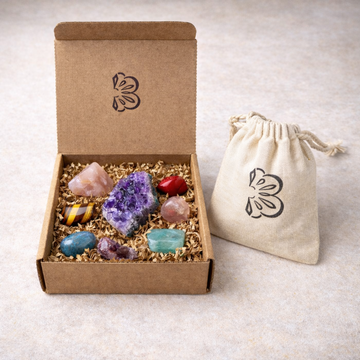
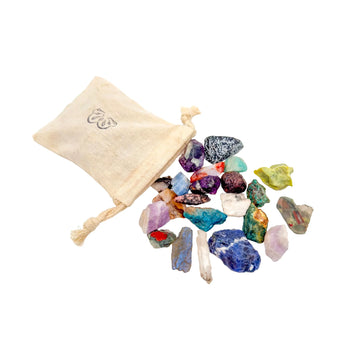










Hematite
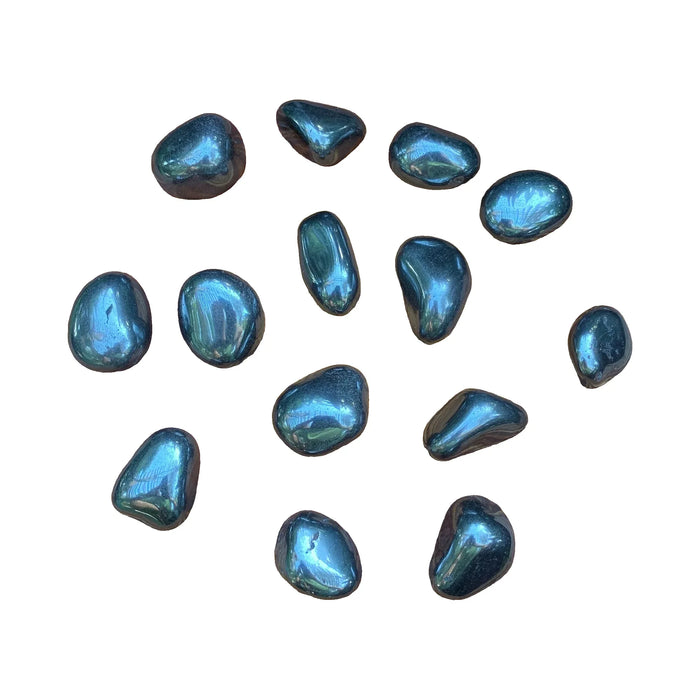
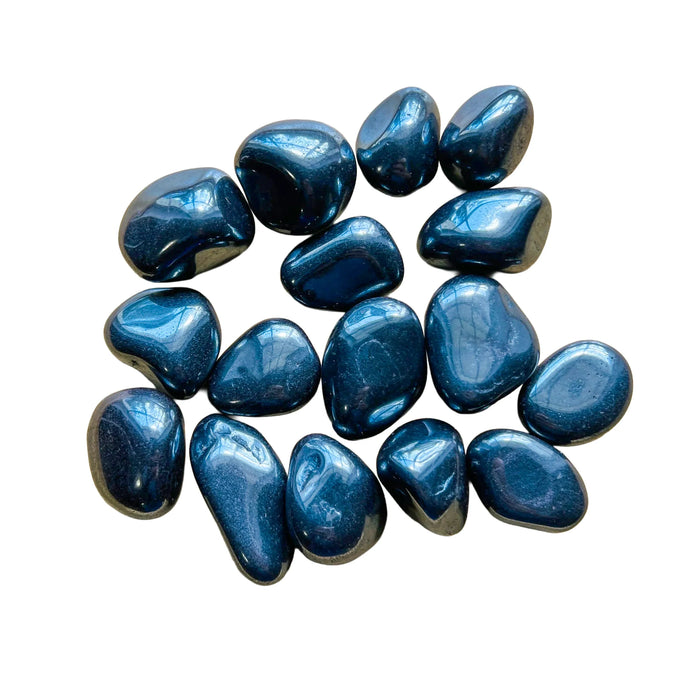
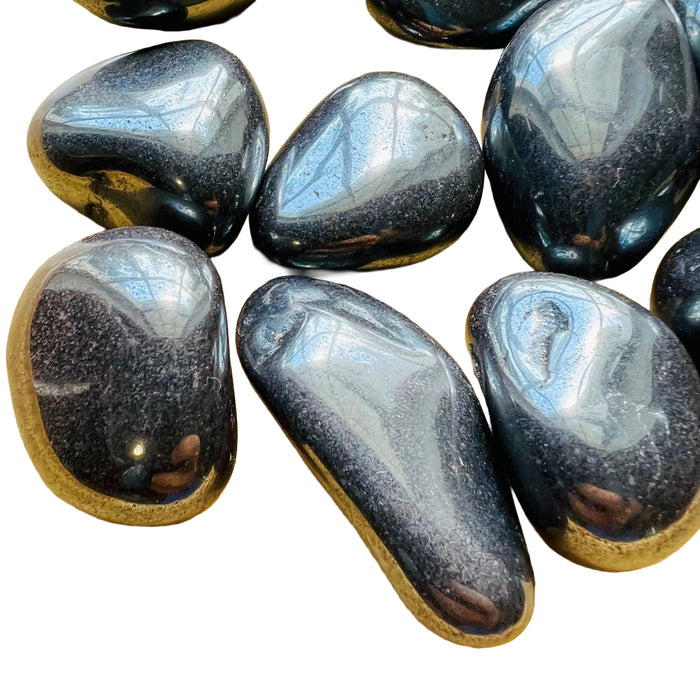
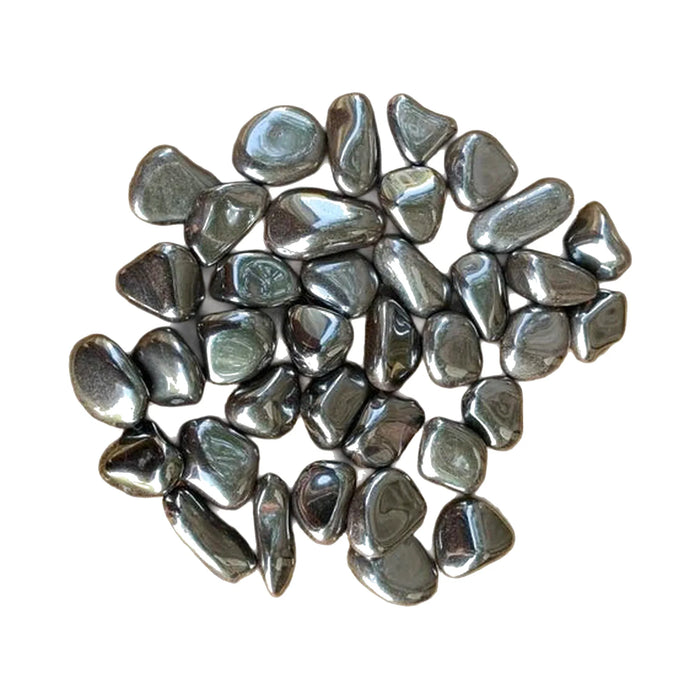
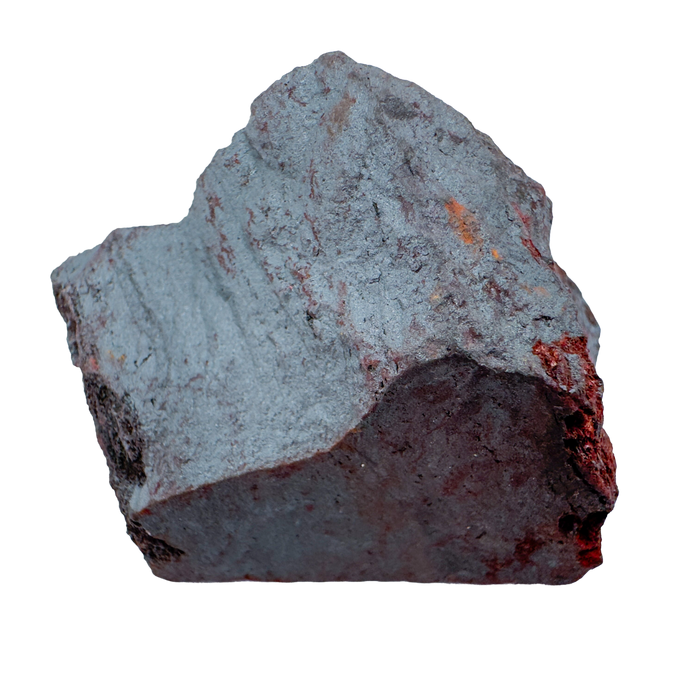
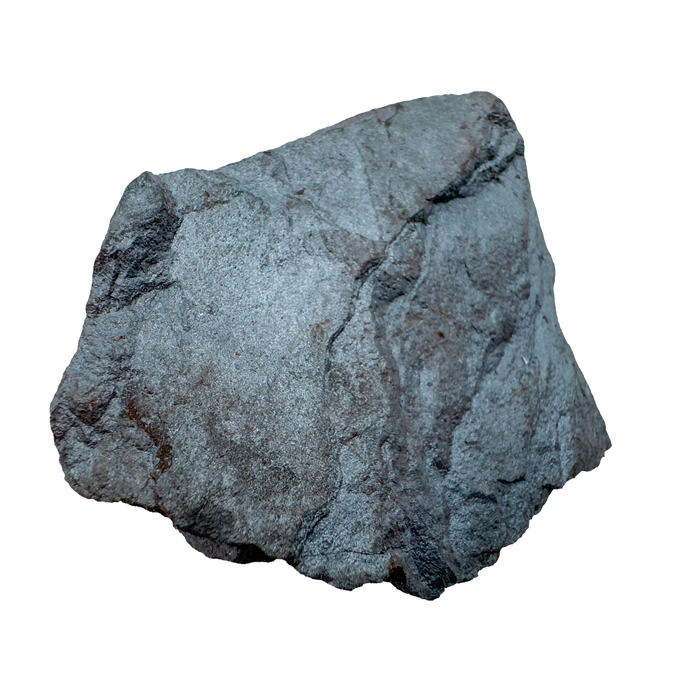
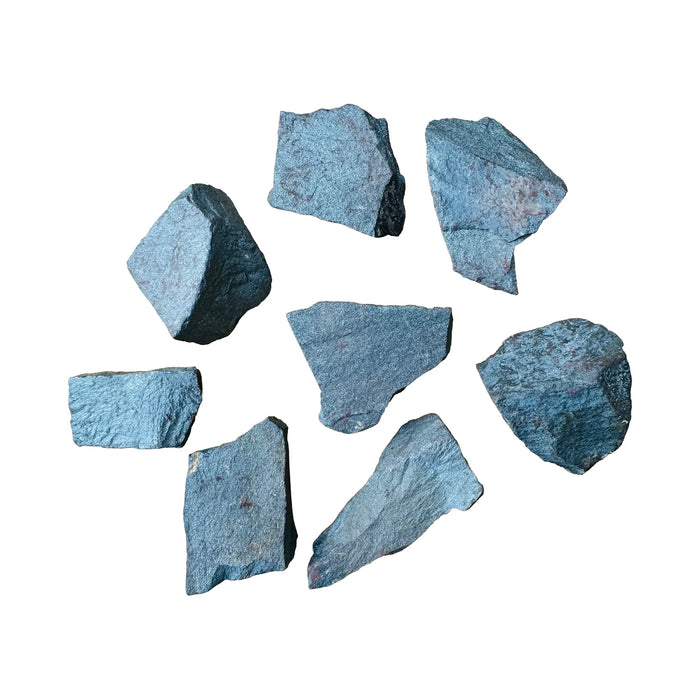
Hematite is iron oxide in its most striking form: dense, heavy, and finished with a metallic sheen that catches light like polished metal. Sourced from iron-rich ore deposits in Brazil and Madagascar, it arrives as raw chunks or hand-tumbled stones. Many people work with it for grounding, for focus when scattered, and for the kind of steadiness that comes from contact with something genuinely heavy and real.
Shop hematiteThe geology.
Hematite is iron oxide, specifically Fe2O3, one of the most important iron minerals on Earth and a major source of industrial iron. The mineral forms in iron-rich ore bodies, hydrothermal veins, and banded iron formations (BIFs), the ancient seafloor deposits that hold much of the world's stored iron. The name comes from the Greek word for blood, haima, because powdered hematite yields a red-brown streak even though the stone itself appears silvery gray or black. This blood-red streak is a reliable way to identify genuine hematite and remains one of the clearest authentication marks.
Specific gravity sits at 5.3, making hematite notably heavy for its size. This density is part of its appeal: a piece of hematite feels substantial and grounded in the hand in a way lighter stones do not. Hardness ranges from 5 to 6 on the Mohs scale (steel scratches it, but it scratches glass easily). The mineral has a trigonal crystal system, metallic luster, and no true cleavage. Most hematite sold in the crystal market arrives as tumbled stones with a smooth, dark gray or black finish, or as raw chunks with a more textured, sometimes striated appearance. Botryoidal ("kidney ore") forms are also collected and polished.
The origins.
The hematite we carry comes from two primary sources. Minas Gerais, Brazil, supplies both raw specimens and hand-tumbled finished pieces from small-scale co-ops and family-run extraction operations that work iron-rich deposits in the region. Madagascar, specifically from artisanal miners in Amoron'i Ania, provides additional material. Both sources supply natural, untreated hematite with no synthetic coating or enhancement. The material is hand-picked and, where tumbled, finished using traditional methods that honor the natural weight and metallic quality of the stone.
Hematite occurs in other major deposits worldwide. South Africa, Australia, Italy (particularly the island of Elba), and the United States (including the ancient banded iron formations around Lake Superior) all produce hematite. These regional sources vary in crystal form and finish quality. We commit to Brazil and Madagascar because the sourcing is transparent, the supply is steady, and we know the miners and intermediaries involved. If our primary sources ever change, we will say so clearly.
Traditional associations.
Hematite has carried symbolic weight across human cultures for millennia. Powdered hematite was used as a pigment in Paleolithic art and was found in Egyptian tombs, suggesting reverence for the mineral long before modern crystal practices. The reddish powder of hematite when ground made it valuable for paint and ritual marking. These early associations connected the stone with grounding, blood, strength, and the earthiness of iron itself.
In modern crystal work, hematite is associated with the Root chakra, the elements Earth and Fire, and the zodiac signs Aries and Aquarius. Many people work with it for grounding when they feel scattered or untethered, for focus during work or study, and for the steadying sensation that comes from holding something genuinely heavy. It is often chosen when the intention involves anchoring, protection, or moving from abstract thought into concrete action. The weight and metallic quality of the stone carry metaphorical meaning for people drawn to materials that feel like they do something, rather than stones that work solely through intention.
Spotting the real thing.
The streak test is the most reliable way to verify genuine hematite. Even though a real hematite stone appears dark gray or black with a metallic sheen, a streak of the stone across unglazed porcelain (the back of a ceramic tile works) will leave a red-brown mark. This reddish streak is practically definitive for hematite and extremely difficult to fake. No other common stone yields this particular color streak paired with a metallic gray or black exterior.
Weight is the secondary tell. Hematite has a specific gravity of 5.3, making it notably heavier than most other common stones of similar size. If a "hematite" feels unusually light or insubstantial for its dimensions, it may be glass or synthetic. Magnetism is also a fast check: if a piece strongly attracts a magnet, it is synthetic ferrite, not natural hematite. Natural hematite is only weakly magnetic or non-magnetic. Hardness (5 to 6 on Mohs) means genuine hematite scratches glass but is scratched by steel, a fact you can test on a steel knife or file if you want to be certain. The metallic luster should be warm and slightly soft, not cold and glassy like glass imitations.
Care & handling.
Hematite is durable and low-maintenance compared to softer stones. However, it can rust or oxidize if left in water or high humidity for extended periods, which can dull the metallic finish and leave spots or discoloration. The best approach is to clean hematite with a dry or barely damp cloth, avoiding prolonged soaking, salt water, and chemical cleaners. If your hematite gets wet, dry it immediately. Store it in a cool, dry location separately from softer stones that it could scratch.
For energetic cleansing, use smoke, sound, breath, or moonlight rather than water. Hematite pairs well with other grounding stones and responds well to intentional handling. The weight and density of the stone are part of its character, and many people find that simply holding hematite and feeling its heaviness serves the purpose without additional ritual. Avoid mechanical shock or pressure that could crack it, though hematite is considerably more resilient than delicate stones like angelite or selenite.
Pairs well with.
Proof, not promises.
We measure our own sourcing across five dimensions. Supply chain, environmental footprint, artisan support, market integrity, and pricing. The number is honest, not perfect. Where we can do better, we say so.
A deeper look.
Extended geology, sourcing, authentication, history, varieties, and pricing, for when the quick guide isn't quite enough.
Extended geology
Hematite is iron oxide, Fe2O3, one of the most abundant iron minerals and the primary ore of iron in many deposits. The mineral forms through multiple pathways. In hydrothermal systems, iron-rich fluids cool and deposit hematite in veins. In banded iron formations (BIFs), alternating layers of iron oxide and silica precipitated from ancient oceans billions of years ago and now constitute some of the world's largest iron deposits. Hematite also forms as an oxidation product of other iron minerals in weathering zones near the Earth's surface, and can form as a primary mineral in igneous rocks. The trigonal crystal system produces plate-like or tabular crystals when visible, but most commercial hematite occurs as massive, granular aggregates.
The red-brown streak (color when powdered or scratched on ceramic) comes from the iron oxide itself and is the defining diagnostic property. This is why hematite is named from the Greek word haima (blood). Specific gravity of 5.3 makes hematite notably heavier than most other minerals of comparable size. For context, quartz has a specific gravity of 2.65, so hematite weighs roughly twice as much volume-for-volume. This density is one reason hematite feels so grounded in the hand and is valued in crystal work for its tangible weight.
Hardness ranges from 5 to 6 on the Mohs scale. Hematite scratches quartz and feldspar (both 7 and above) and can scratch glass (5.5). Steel (approximately 6.5 to 7) can scratch hematite. The mineral has metallic luster when polished and displays no true cleavage, fracturing unevenly instead. In the crystal market, hematite is typically seen as tumbled stones (smooth, rounded, highly polished), raw chunks (angular, more textured), or botryoidal (kidney-shaped cluster) forms. Rainbow hematite has an iridescent oxide coating that creates color shifts in light.
Extended sourcing
Hematite is mined globally as a primary source of iron ore. The crystal market draws from small-scale artisanal and co-op operations in regions where hematite is accessible without large-scale industrial extraction. Brazil, particularly Minas Gerais, is a primary source for gem-quality hematite sold in crystal markets. The region has a long history of iron mining, and smaller-scale operators extract hand-picked specimens from larger mining operations. Madagascar is another significant source, particularly artisanal operations in Amoron'i Ania that supply tumbled and raw material.
Other major deposits exist worldwide. South Africa produces hematite, as does Australia (particularly in Western Australia and Tasmania). Italy, specifically the island of Elba, has produced collector-grade hematite for centuries. The United States has extensive hematite deposits in the Lake Superior region (ancient BIFs) and other areas. However, most non-Brazilian material entering the crystal market is either industrial byproduct or from large-scale operations where origin transparency is weak. We prioritize Brazil and Madagascar because both provide documented sourcing and direct relationships with miners and co-ops. If supply from either source ever becomes unavailable, we will shift sources and disclose the change.
Authentication and market imitations
The streak test is the most reliable and quick authentication method for hematite. Genuine hematite leaves a red-brown streak on unglazed ceramic or porcelain, even though the stone itself is dark gray or black. This is nearly impossible to fake and is considered a definitive test in mineralogy. Glass imitations do not streak red-brown. Synthetic ferrite magnets ("magnetic hematite") do not produce a red-brown streak.
The weight test is secondary. Hematite at 5.3 specific gravity is substantially heavier than most common stones. If a piece feels light for its size, it is likely glass or synthetic. Magnetism testing is also useful: bring a magnet to the stone. Synthetic ferrite strongly attracts the magnet. Natural hematite is only weakly magnetic or non-magnetic. Glass shows no magnetic response. Under magnification, genuine hematite shows a fine, even, opaque texture with metallic luster. Glass shows a smooth, glassy, transparent or translucent appearance. Synthetic ferrite shows a similar glassy texture to glass.
Historical and cultural context
Hematite has been valued by humans for longer than most stones in the crystal market. Paleolithic artists ground hematite to create red-brown ochre pigment used in cave painting and ritual. Ancient Egyptians carried hematite amulets and placed powdered hematite in tombs, suggesting associations with strength, blood, the afterlife, and protective power. Greek and Roman cultures used hematite for seals and carved objects. These associations with blood, iron, and earthiness persist in modern crystal work, though contemporary use is less about literal historical practice and more about the symbolic weight of the material itself.
The modern crystal market's embrace of hematite is relatively recent (late 20th century), paralleling the broader expansion of crystal and New Age practices. However, the stone's reputation for grounding and protection draws from a longer historical lineage than many other popular crystals, which gives it credibility within the crystal community even though modern crystal practice itself is contemporary.
Related minerals and trade distinctions
Magnetite (Fe3O4) is a related iron oxide that is stronger magnetic than hematite and is sometimes confused with it. Magnetite is often called "lodestone" or "natural magnet." True magnetite is attracted strongly to a permanent magnet. Ilmenite (FeTiO3, iron titanium oxide) is another related mineral sometimes encountered in crystal markets as a black metallic stone. Iron-rich minerals like goethite and limonite can appear similar to hematite when polished but have different streak colors and hardness. Rainbow hematite IS hematite (Fe2O3) with an iridescent oxide layer; it is not a different mineral.
Pricing reality
Grade A hematite tumbled pieces: $4 to $10 per piece at retail for small to medium sizes. Palm stones: $10 to $25. Raw specimens and special forms (botryoidal, rainbow-coated): $15 to $60 depending on size and finish. Commodity hematite from unknown origins sells for $1 to $2 per tumbled piece, a price that reflects no sourcing transparency. Material priced below $2 per piece is almost always from large industrial mining operations with no origin documentation.
Value drivers: density and weight consistency, finish quality, lack of rust or oxidation marks, and documented origin. Price variation by origin is moderate because hematite is relatively abundant, but Brazil material commands a slight premium due to color consistency and sourcing reputation. Rainbow hematite typically costs more than standard black hematite because the iridescent coating requires careful preservation during tumbling.
Good sourcing is a practice, not a claim.
Nothing we sell is dyed, stabilized, reconstituted, or color-enhanced without full disclosure. We name our origins where we can. We say so when we cannot. We walk away from material that does not meet our standard, even when it costs us sales.
Bring hematite home.
Tumbled, palm stone, and raw hematite from Minas Gerais, Brazil and Madagascar. Natural, untreated, hand-selected for consistent metallic finish and substantial weight. Each piece finished with care to preserve the natural luster, and chosen for density and authentic iron that makes each one genuinely heavy.
Shop the hematite collectionHematite, in stock now.
Our most-loved Hematite pieces, ready to ship.
- from 1,000+ reviews
- Ships within 72 hoursMonday to Friday, tracked
- 90 days to return itif you do not love it
- Free US shipping over $99$8.99 flat rate under
The Slow Note
New stones go to the list first.
No forwarding, no selling. Unsubscribe in one click. Privacy