


 Agatefor stress relief
 Amazonitefor stress relief
 Aquamarinefor serenity
 Aventurinefor luck
 Bloodstonefor energy
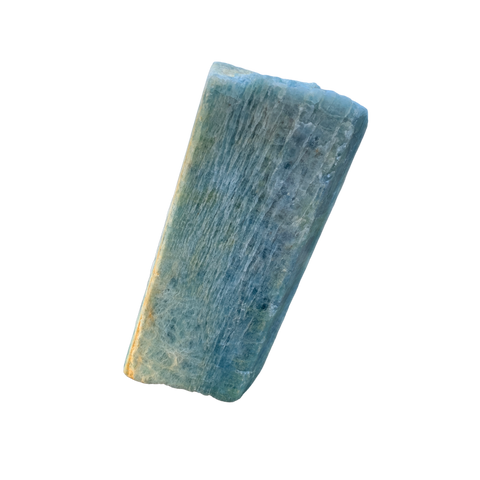
 Blue Kyanitefor confidence
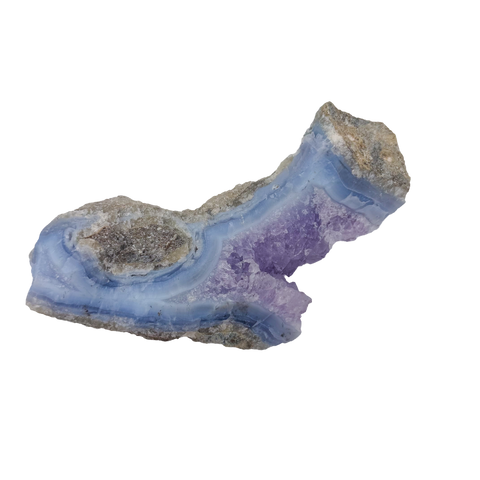
 Blue Lace Agatefor stress relief
 Chrysocollafor emotional healing
 Fluoritefor focus
 Garnetfor energy
 Lepidolitefor stress relief
 Malachitefor emotional healing
 Moonstonefor grounding
 Obsidianfor protection
 Ocean Jasperfor emotional healing
 Red Jasperfor grounding
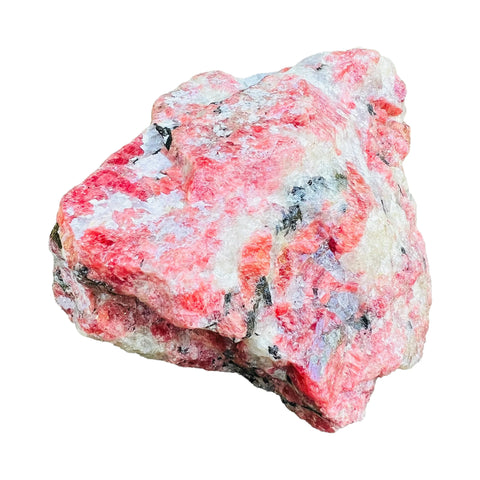
 Rhodonitefor emotional healing
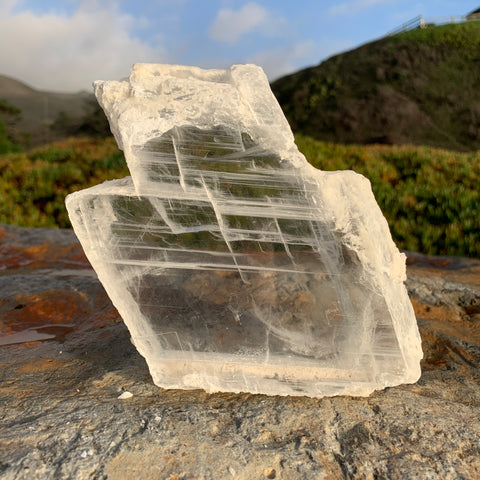
 Selenitefor cleansing
 Sodalitefor focus
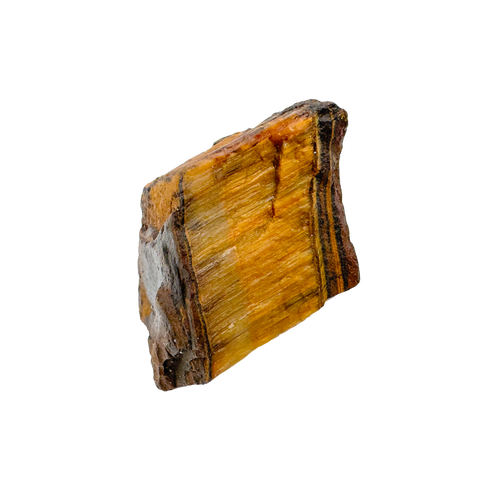
 Tiger Eyefor confidence
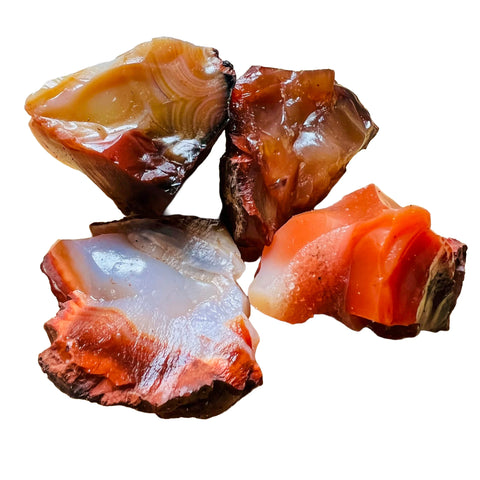
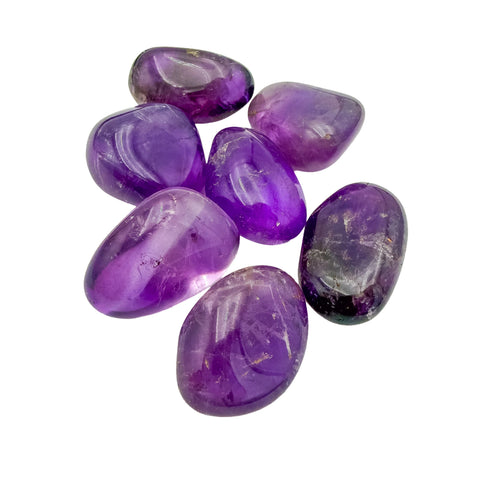


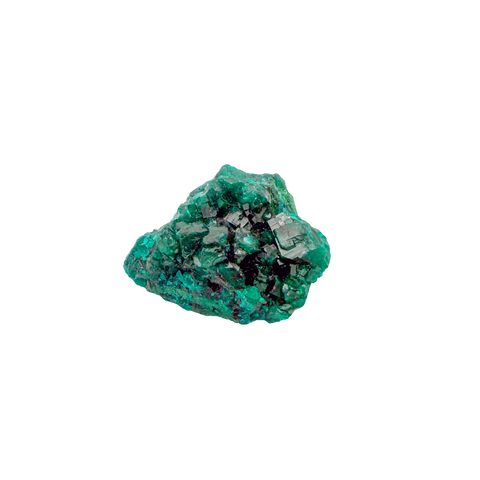
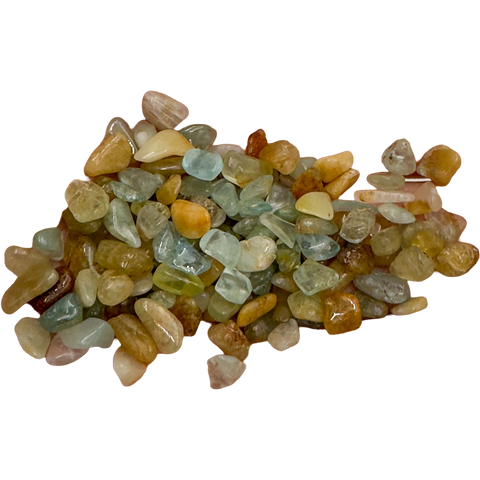
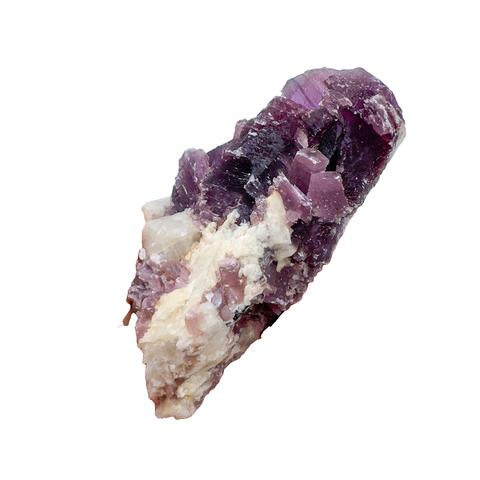
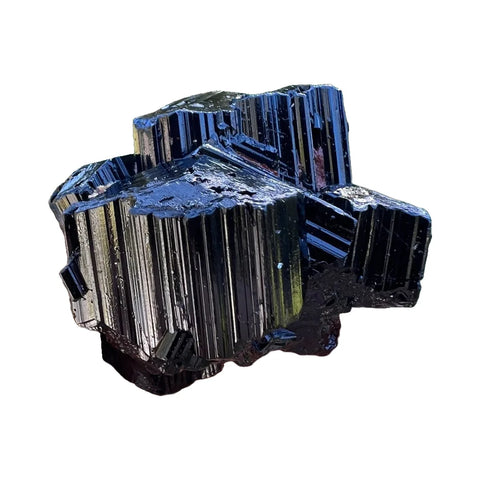
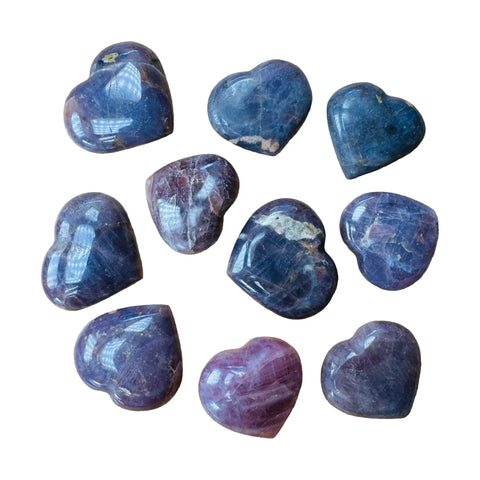
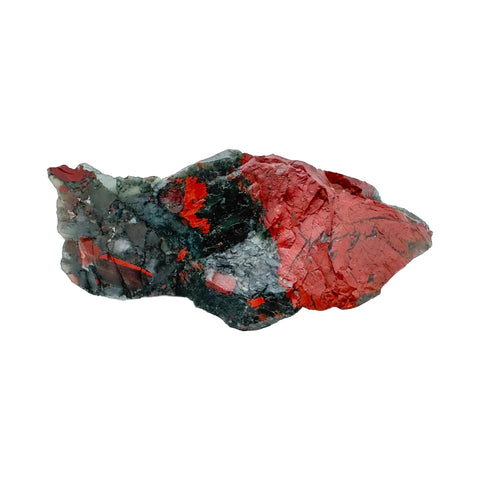
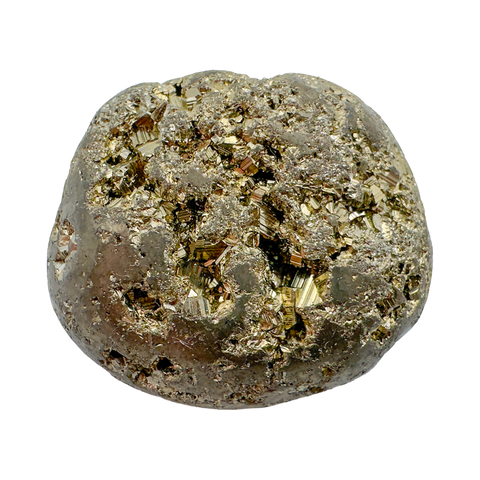
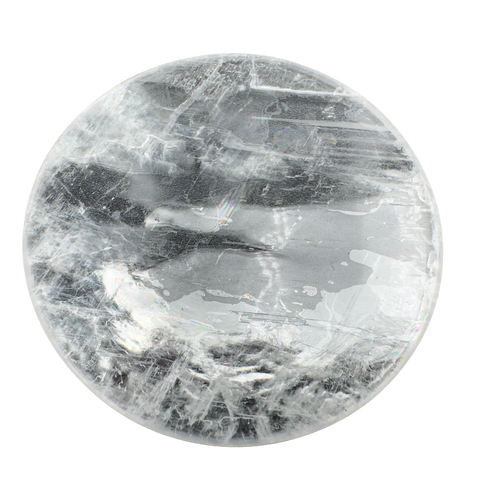


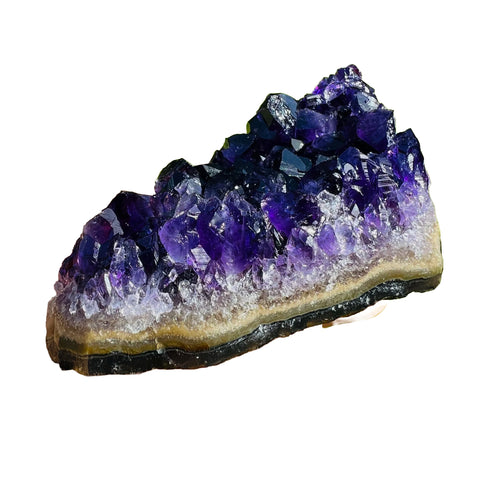





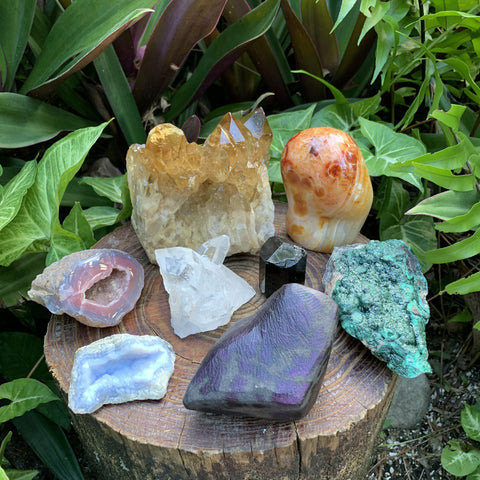
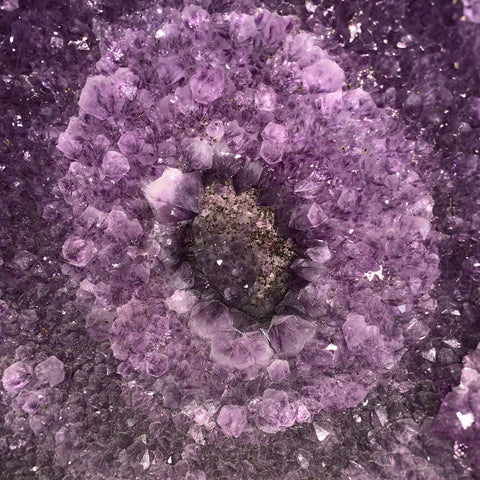

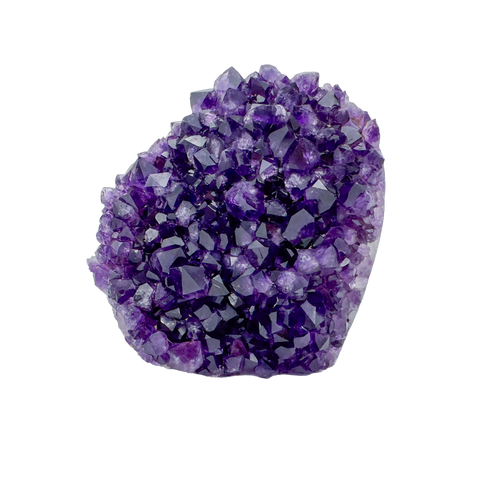
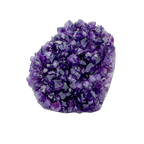 Amethyst
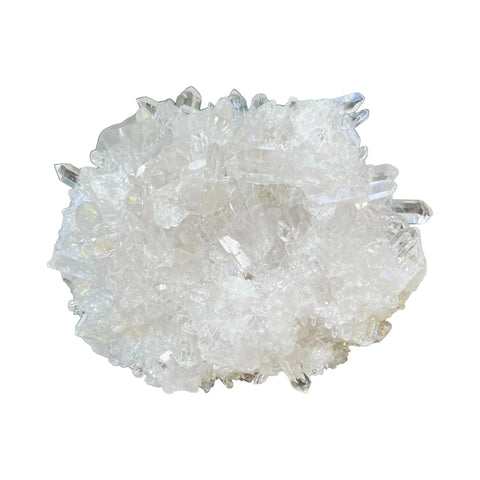
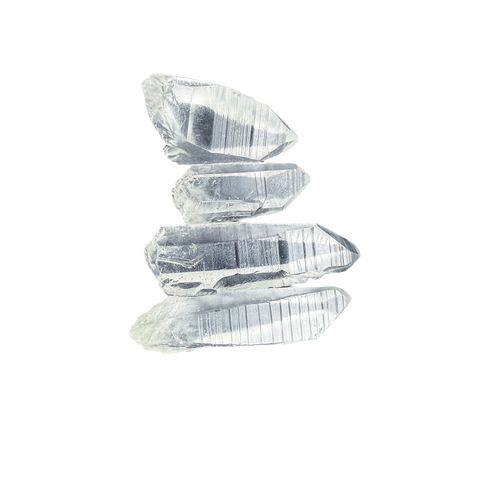
 Clear Quartz
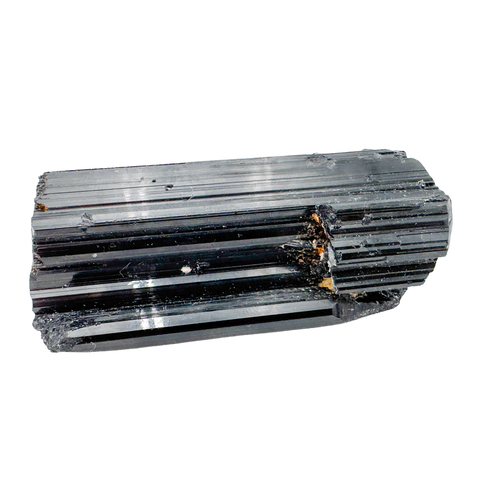
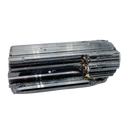 Black Tourmaline
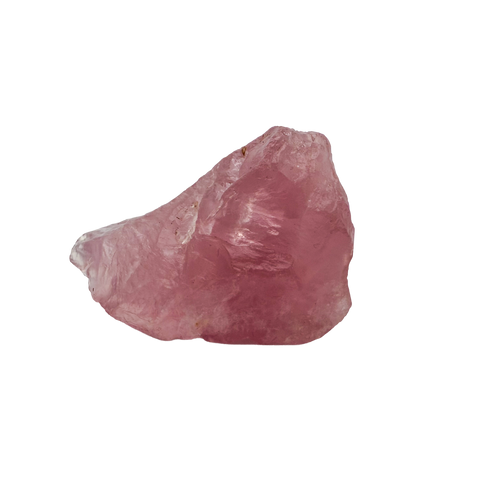
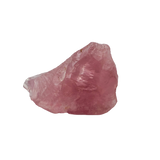 Rose Quartz
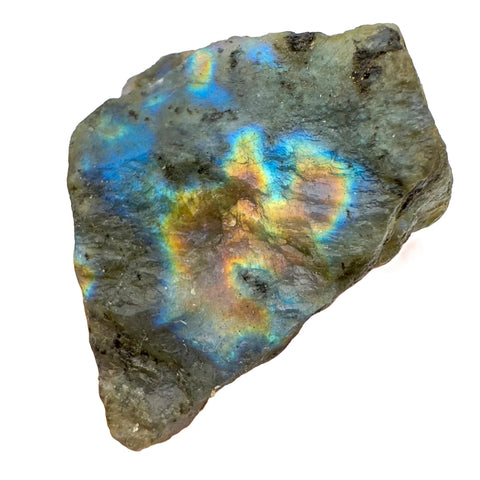
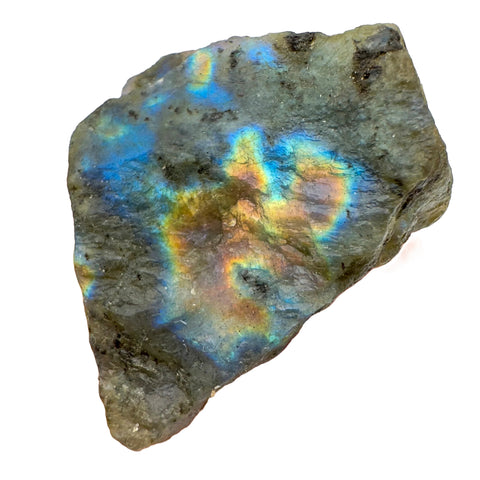
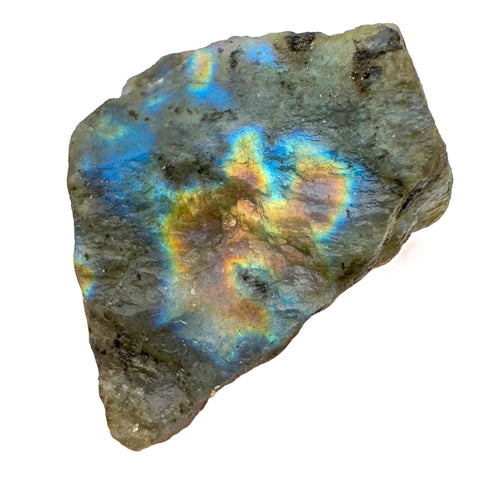
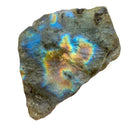 Labradorite
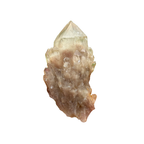 Natural Citrine
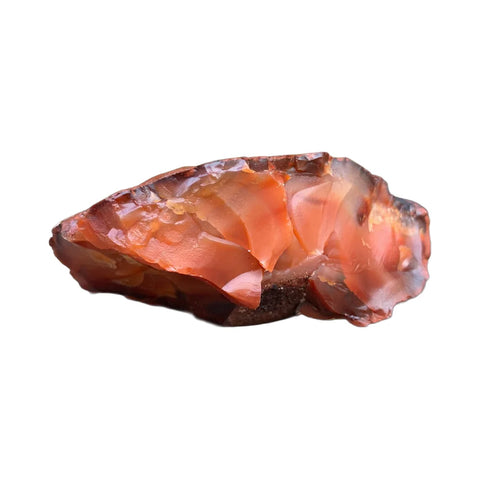
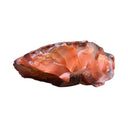 Carnelian
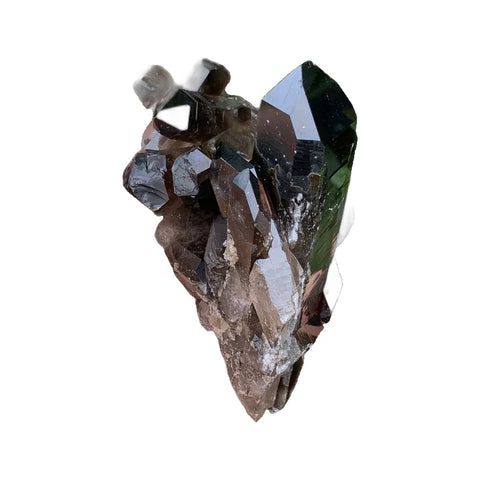
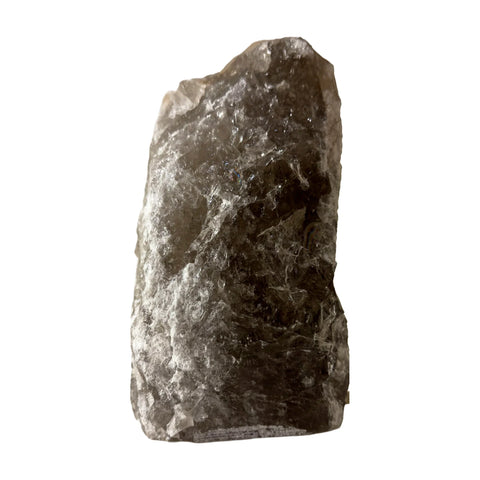
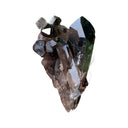 Smoky Quartz
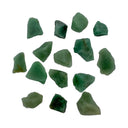 Aventurine
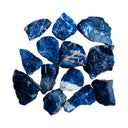 Sodalite
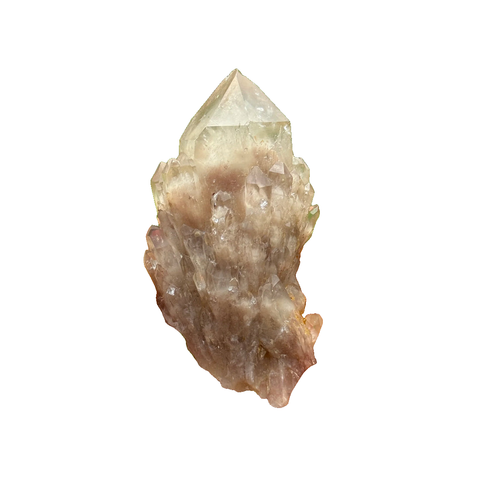
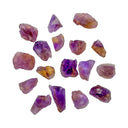 Ametrine
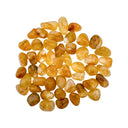 Golden Healer
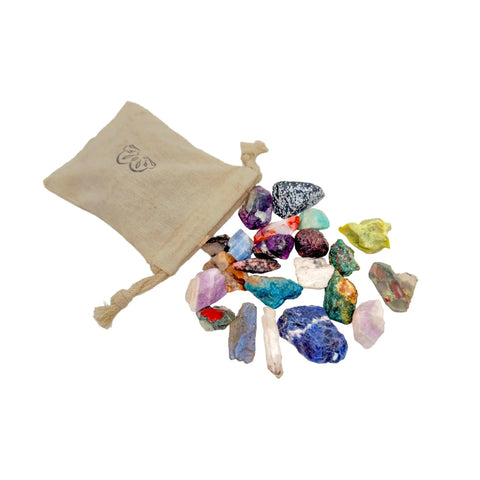
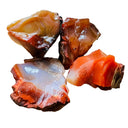 Raw Stones
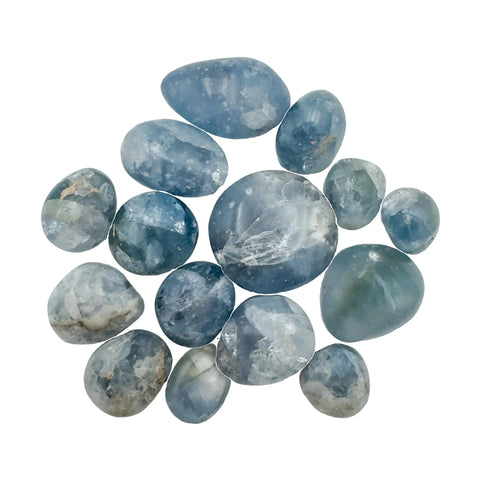
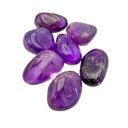 Tumbled Stones
 Palm Stones
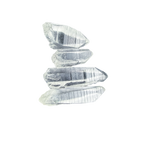 Crystal Points
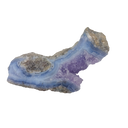 Clusters & Geodes
 Polished & Decor
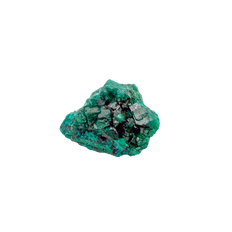 Mineral Specimens
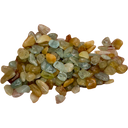 Crystal Chips
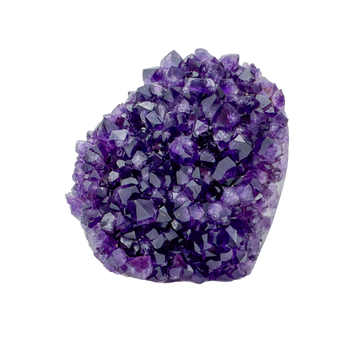
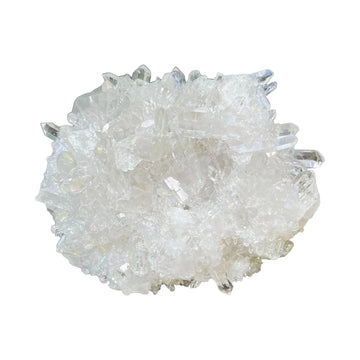
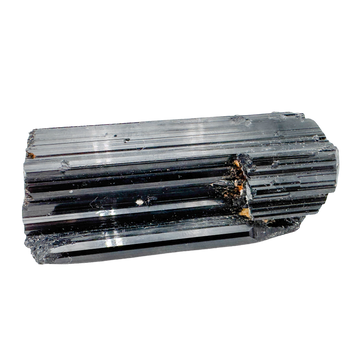
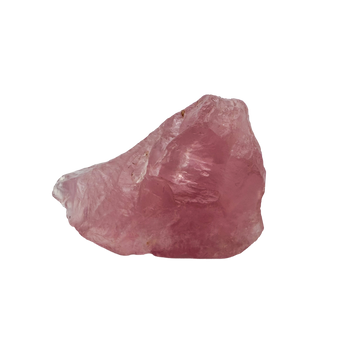
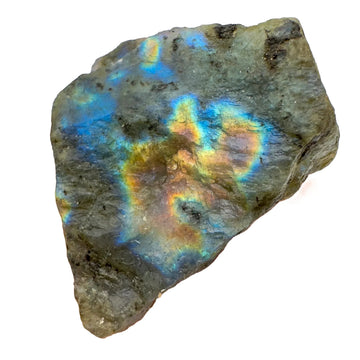
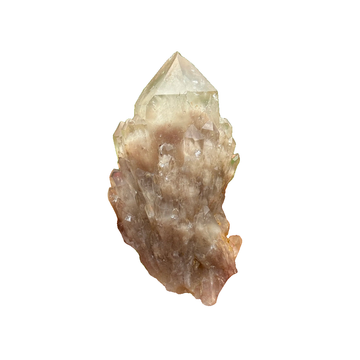
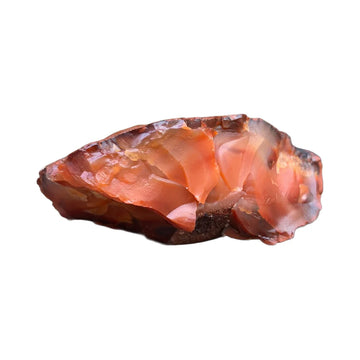
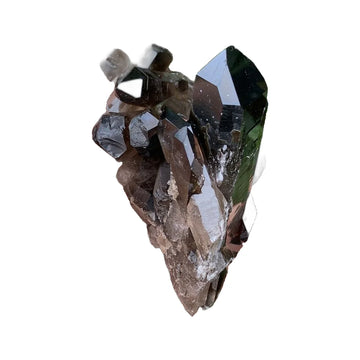
 Raw Stones
179 to choose from
Raw Stones
179 to choose from
 Tumbled Stones
162 to choose from
Tumbled Stones
162 to choose from
 Palm Stones
25 to choose from
Palm Stones
25 to choose from
 Crystal Points
23 to choose from
Crystal Points
23 to choose from
 Clusters & Geodes
103 to choose from
Clusters & Geodes
103 to choose from
 Polished & Decor
148 to choose from
Polished & Decor
148 to choose from
 Mineral Specimens
257 to choose from
Mineral Specimens
257 to choose from
 Crystal Chips
21 to choose from
Crystal Chips
21 to choose from


 AngolaAquamarine
›
AngolaAquamarine
›
 BotswanaCarnelian, Tree Agate
›
BotswanaCarnelian, Tree Agate
›
 DR CongoMalachite, Natural Citrine
›
DR CongoMalachite, Natural Citrine
›
 EswatiniBloodstone
›
EswatiniBloodstone
›
 MadagascarLabradorite, Clear Quartz
›
MadagascarLabradorite, Clear Quartz
›
 MalawiBlue Lace Agate, Garnet
›
MalawiBlue Lace Agate, Garnet
›
 MozambiqueAmazonite
›
MozambiqueAmazonite
›
 NamibiaSodalite, Blue Lace Agate
›
NamibiaSodalite, Blue Lace Agate
›
 Republic of the CongoDioptase
›
Republic of the CongoDioptase
›
 South AfricaTiger Eye, Unakite
›
South AfricaTiger Eye, Unakite
›
 ZambiaChevron Amethyst
›
ZambiaChevron Amethyst
›
 ZimbabweEmerald, Rhodonite
›
ZimbabweEmerald, Rhodonite
›
 ArgentinaBlack Obsidian, Rhodochrosite
›
ArgentinaBlack Obsidian, Rhodochrosite
›
 BoliviaAmetrine
›
BoliviaAmetrine
›
 BrazilAmethyst, Clear Quartz
›
BrazilAmethyst, Clear Quartz
›
 PeruSerpentine, Jade
›
PeruSerpentine, Jade
›
 UruguayAmethyst
›
UruguayAmethyst
›
 Dominican RepublicLarimar
›
Dominican RepublicLarimar
›
 MexicoRainbow Obsidian, Crazy Lace Agate
›
MexicoRainbow Obsidian, Crazy Lace Agate
›
 United StatesSelenite, Peridot
›
United StatesSelenite, Peridot
›
 ChinaFluorite
›
ChinaFluorite
›
 RussiaShungite
›
RussiaShungite
›
 AustraliaMookaite
›
AustraliaMookaite
›
 Where our crystals come from
See where we source →
Where our crystals come from
See where we source →


 Aries
Mar 21 to Apr 19
Carnelian
›
Aries
Mar 21 to Apr 19
Carnelian
›
 Taurus
Apr 20 to May 20
Rose Quartz
›
Taurus
Apr 20 to May 20
Rose Quartz
›
 Gemini
May 21 to Jun 20
Agate
›
Gemini
May 21 to Jun 20
Agate
›
 Cancer
Jun 21 to Jul 22
Moonstone
›
Cancer
Jun 21 to Jul 22
Moonstone
›
 Leo
Jul 23 to Aug 22
Citrine
›
Leo
Jul 23 to Aug 22
Citrine
›
 Virgo
Aug 23 to Sep 22
Amazonite
›
Virgo
Aug 23 to Sep 22
Amazonite
›
 Libra
Sep 23 to Oct 22
Blue Lace Agate
›
Libra
Sep 23 to Oct 22
Blue Lace Agate
›
 Scorpio
Oct 23 to Nov 21
Obsidian
›
Scorpio
Oct 23 to Nov 21
Obsidian
›
 Sagittarius
Nov 22 to Dec 21
Sodalite
›
Sagittarius
Nov 22 to Dec 21
Sodalite
›
 Capricorn
Dec 22 to Jan 19
Black Tourmaline
›
Capricorn
Dec 22 to Jan 19
Black Tourmaline
›
 Aquarius
Jan 20 to Feb 18
Amethyst
›
Aquarius
Jan 20 to Feb 18
Amethyst
›
 Pisces
Feb 19 to Mar 20
Aquamarine
›
Gifting?
A birthday stone is the safe bet.
Read the zodiac guide →
Pisces
Feb 19 to Mar 20
Aquamarine
›
Gifting?
A birthday stone is the safe bet.
Read the zodiac guide →


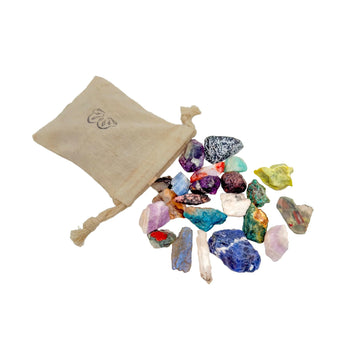
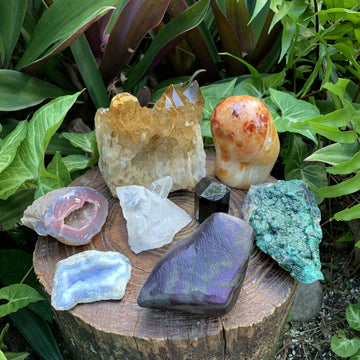

Red Jasper
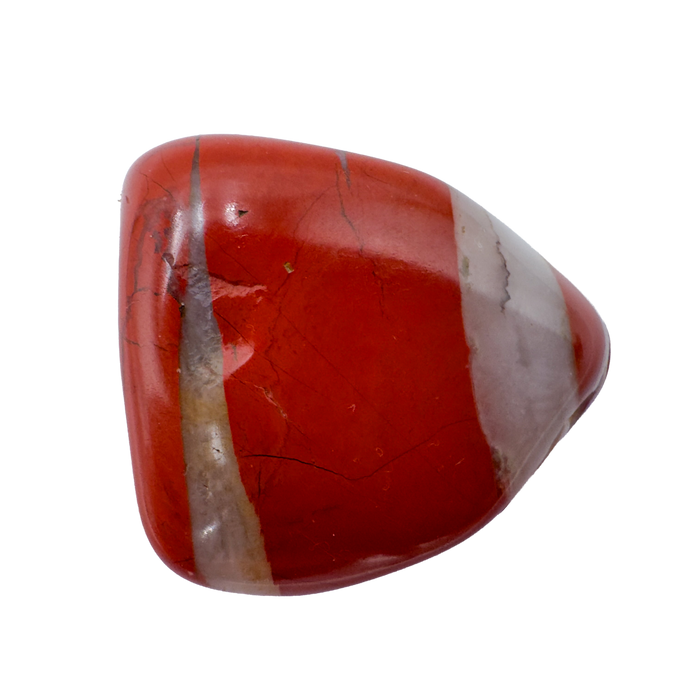
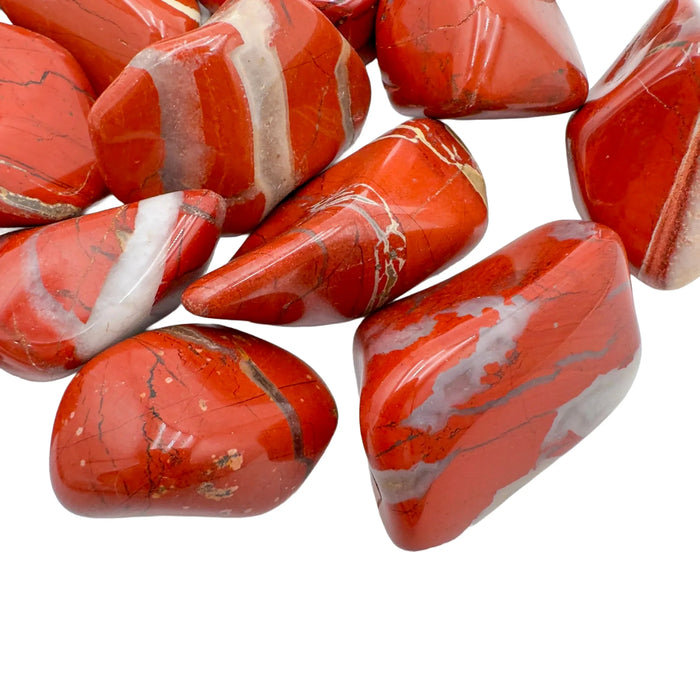
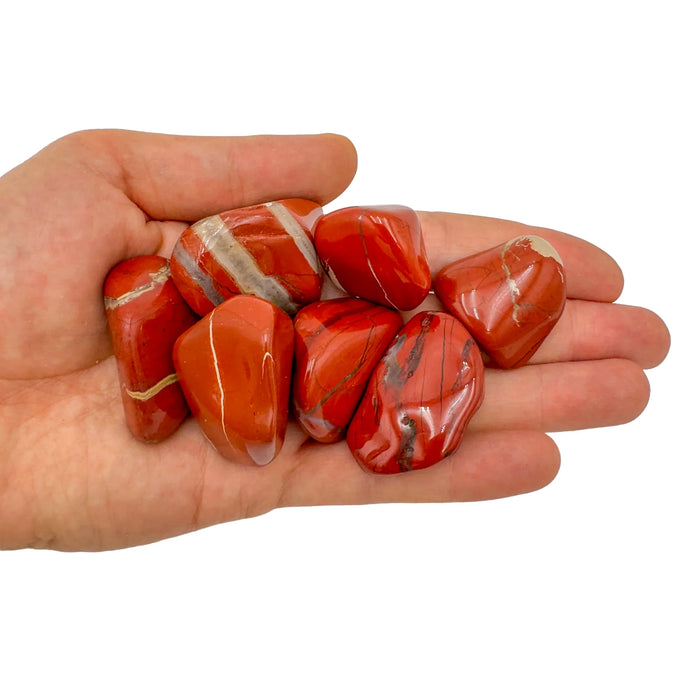
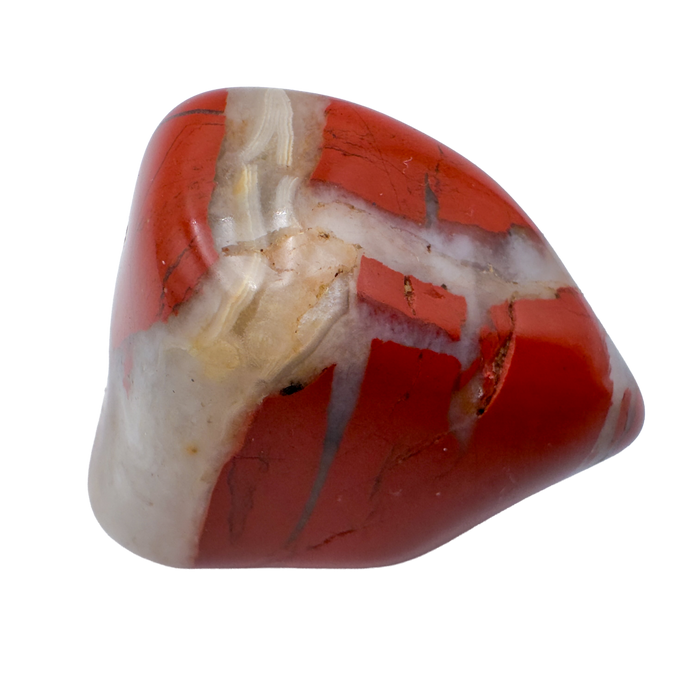
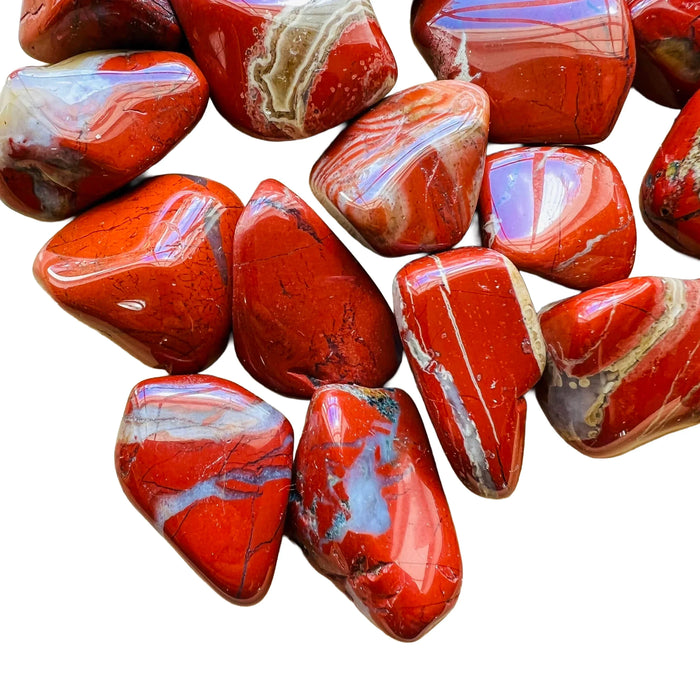
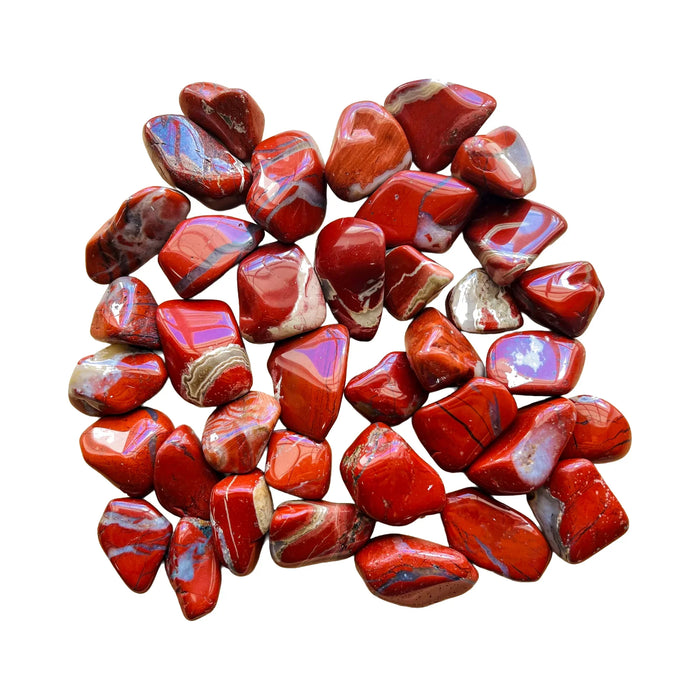
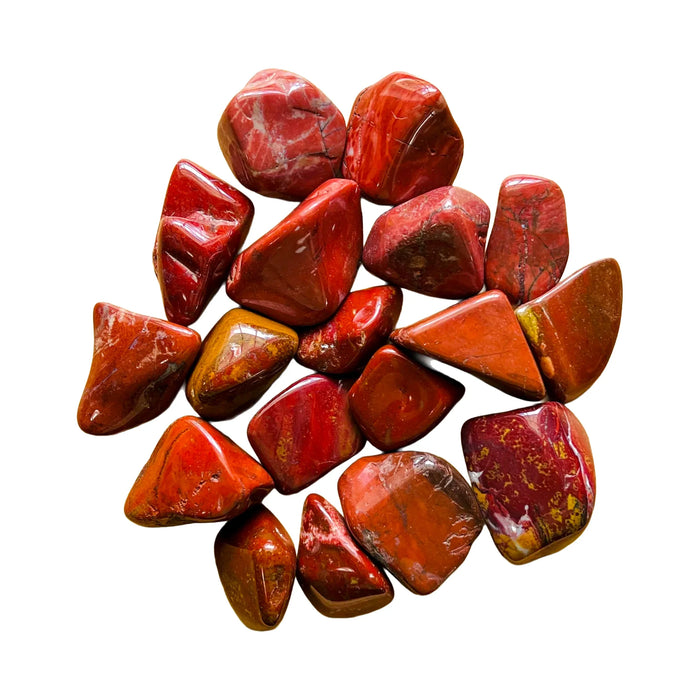
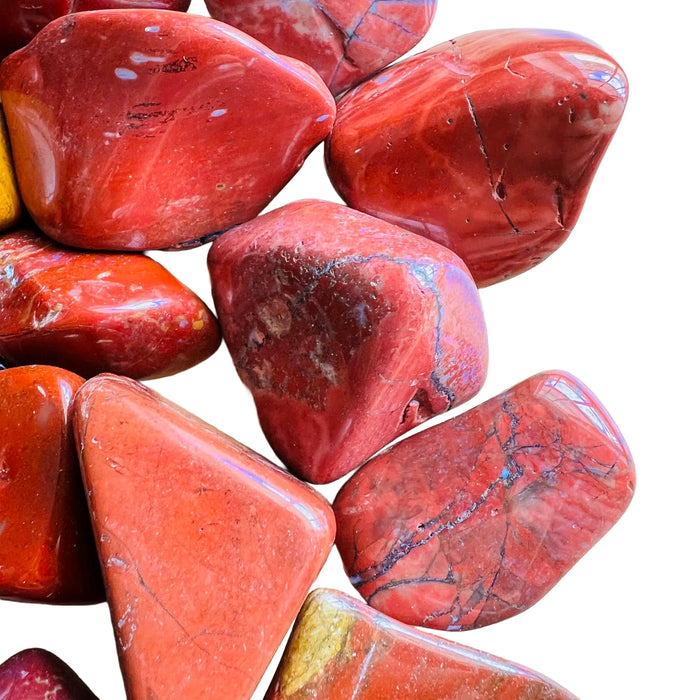
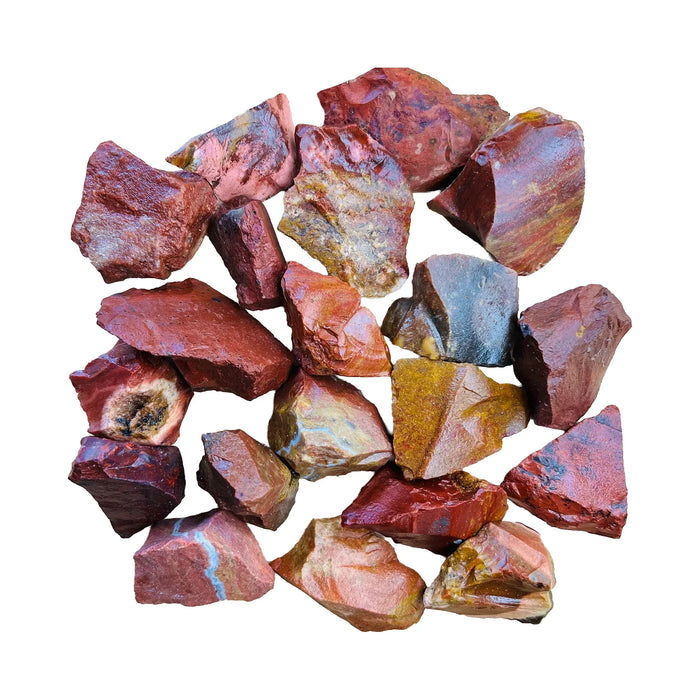
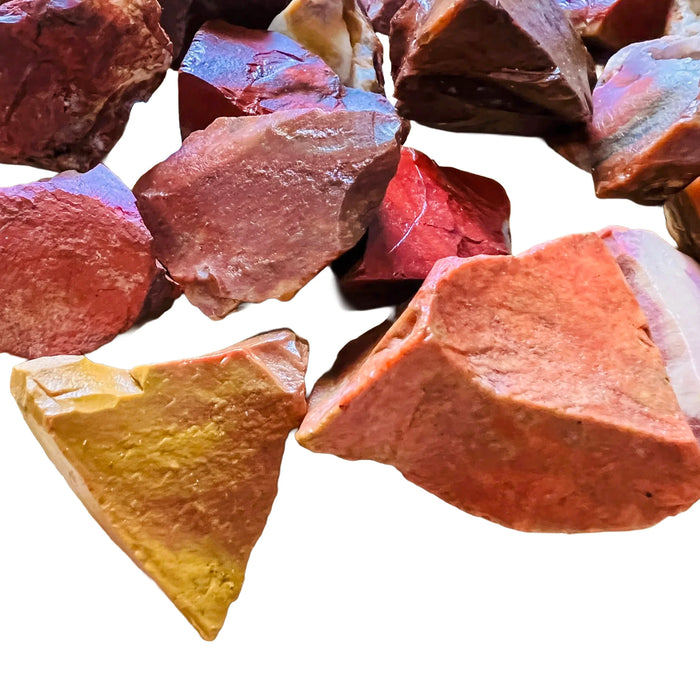
Red Jasper is an opaque variety of microcrystalline quartz colored by iron oxide inclusions, running from soft brick to deep oxblood. Traditionally associated with grounding, endurance, and the patient warmth of the root chakra. One of the oldest worked stones in human history, appearing in Egyptian, Roman, and Viking-era artifacts.
Shop red jasperRed Jasper, in stock now.
Our most-loved Red Jasper pieces, ready to ship.

- from 1,000+ reviews
- Ships within 72 hoursMonday to Friday, tracked
- 90 days to return itif you do not love it
- Free US shipping over $99$8.99 flat rate under
The geology.
Red Jasper is a variety of chalcedony, which is microcrystalline quartz (SiO₂) with grains too fine to resolve without magnification. The red color comes from iron oxide inclusions (primarily hematite) distributed through the silica matrix. Natural Red Jasper gets its color at formation when iron-rich fluids infiltrate forming silica; the depth of the red varies with iron concentration and distribution.
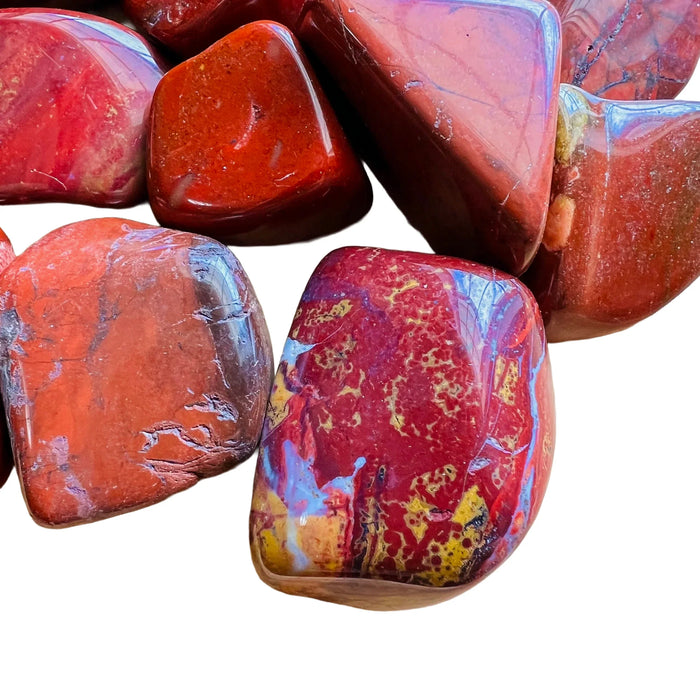
Hardness runs 6.5 to 7 on the Mohs scale, durable enough for daily-wear jewelry. No cleavage, conchoidal fracture, waxy-to-vitreous luster. Unlike agate, Red Jasper is fully opaque due to the density of its microcrystalline structure. It takes a high polish and often shows subtle banding, veining, or occasional mineral inclusions (small white quartz veins are common).
The origins.
Red Jasper is mined across many commercial producer regions worldwide. Madagascar's Antsirabe region produces significant volumes for the small-shop market. South Africa's Northern Cape has long been a classic source. Brazil's Rio Grande do Sul is another major supplier. India, Russia, Australia, and the United States (Oregon, Idaho, Arizona) all produce commercial quantities.
Each source has a recognizable color signature. Malagasy material tends toward saturated brick red. South African pieces can show deeper oxblood tones. Brazilian material is often more variable, with subtle banding. American Red Jasper from Oregon's Biggs area has its own collector following for picture-jasper patterns. The natural color variation across sources is genuine and part of the appeal.
Traditional associations.
Red Jasper has one of the longest documented working traditions of any stone. Egyptian tradition considered it the dried blood of Isis and used it in funerary amulets, jewelry, and protective carvings; Red Jasper appears in Tutankhamun's burial goods. Roman soldiers carried Red Jasper signet rings into battle. Viking-era graves in Scandinavia contain Red Jasper beads and pendants. The stone appears in Chinese, Indian, and Pre-Columbian traditions as well.
Many people work with Red Jasper for grounding, physical strength, endurance, and the steady warmth that holds you through long stretches. It's most commonly associated with the Root chakra, the elements of Earth and Fire, and the zodiac signs Aries and Scorpio. The classic working is as a pocket companion stone for stamina and steadiness during physical or emotional effort.
Spotting the real thing.
Real Red Jasper has a matte-to-waxy finish when polished and a natural uneven color that can vary from brick to deep oxblood across a single piece. Held to strong light, the stone stays opaque, with no translucency at thin edges. Under a loupe, you may see tiny pits or grain typical of microcrystalline material. Natural Red Jasper often shows subtle banding, veining, or small white quartz inclusions.
Dyed chalcedony is the main imitation; dyed pieces show saturated uniform color with no natural variation and may pool color in surface fractures. Glass imitations feel warmer and show bubbles. Reconstituted jasper (ground material bonded with resin) is rare but exists; it feels lighter and shows visible particles under magnification. Reputable sellers name country of origin.
Care & handling.
Water safe for a brief rinse with warm water and a soft cloth. Skip long soaks, saltwater, and ultrasonic cleaners. Red Jasper is stable under sunlight and doesn't fade, so display and storage are straightforward. Temperature shifts are fine within reason.
Cleanse energetically with moonlight, sound, smoke, or by placing on selenite overnight. At 6.5 to 7 on the Mohs scale, Red Jasper handles daily wear well in all jewelry settings. Store separately from harder stones like topaz and sapphire to preserve the polish.
Pairs well with.
Proof, not promises.
We measure our own sourcing across five dimensions. Supply chain, environmental footprint, artisan support, market integrity, and pricing. The number is honest, not perfect. Where we can do better, we say so.
A deeper look.
Extended geology, sourcing, authentication, history, varieties, and pricing, for when the quick guide isn't quite enough.
Extended geology
Red Jasper is microcrystalline quartz (SiO₂) in which the crystalline structure is made up of tightly interlocked grains too small to resolve without magnification. This density is what makes jasper opaque. The red color comes from iron oxide inclusions, primarily hematite (Fe₂O₃), distributed through the matrix. Trace amounts of other iron oxides and sometimes manganese contribute to color variation.
Specific gravity runs 2.58 to 2.91 depending on inclusions. Mohs hardness 6.5 to 7. Luster vitreous to waxy. No cleavage; conchoidal fracture. Red Jasper forms in hydrothermal veins, sedimentary beds, and as replacement material in volcanic host rock. The variety of formation settings produces the different character of material from different global sources.
Extended sourcing
Madagascar's Antsirabe region yields significant commercial Red Jasper, often with saturated brick red color and consistent quality. South Africa's Northern Cape has been a classic source for decades. Brazil's Rio Grande do Sul produces material alongside its famous agate deposits.
India (particularly Gujarat) produces huge volumes of chalcedony and jasper for the global tumbling market. Russia's Ural Mountains have historical Red Jasper deposits. Australia (Queensland) and the United States (Biggs Jasper from Oregon, and other Pacific Northwest sources) produce collector and commercial material with distinctive regional character.
Authentication and warning signs
Real Red Jasper shows natural color variation and sometimes subtle banding or veining across a single piece. The polish reads matte-to-waxy rather than glassy. Held to light, the stone remains fully opaque. Hardness 6.5 to 7 will scratch glass. Natural pieces may have small white quartz inclusions that are genuine to the material.
Dyed chalcedony shows saturated uniform color with dye pooling in fractures. Reconstituted jasper (ground material bonded with resin) feels lighter and shows visible particles under magnification. Glass imitations are warmer to the touch. Reputable sellers confirm country of origin.
Historical and cultural context
Red Jasper has continuous documented use going back over 8,000 years. Egyptian tradition treated it as the dried blood of Isis, associating it with life, protection, and the afterlife. The Bible mentions jasper in the breastplate of the high priest and in the foundations of the New Jerusalem. Greek and Roman traditions used Red Jasper in signet rings, cameos, and soldier's amulets.
Viking-era Scandinavian graves contain Red Jasper beads and pendants, suggesting trade networks reaching the Mediterranean. Chinese, Indian, Islamic, and Pre-Columbian traditions all worked Red Jasper into jewelry, ceremonial objects, and ritual items. In contemporary practice, it's grouped with root-chakra and grounding stones, often paired with Hematite or Black Tourmaline.
Varieties and trade names
Red Jasper: the general term for red-colored jasper.
Brick Red Jasper: warmer, brown-leaning red material.
Oxblood Jasper: deeper, more burgundy-leaning red.
Biggs Jasper: scenic patterned variety from Oregon, a separate collector category.
Poppy Jasper: red jasper with white or yellow orbicular patterns.
Brecciated Jasper: angular fragments of red jasper cemented together.
Pricing reality
Tumbled Red Jasper: 1 to 5 dollars per piece. Small carved shapes and palm stones: 6 to 25 dollars. Larger polished freeforms, spheres, and slabs: 20 to 120 dollars depending on size and color quality. Specimen-grade Biggs Jasper and other scenic patterned varieties: collector pricing, 50 to several hundred dollars.
Value drivers: depth and evenness of red, absence of chips and cracks, clean polish, and documented origin. Warning signs: suspiciously uniform saturated red at very low prices (possibly dyed), no origin offered, or pieces with the cold plasticky feel that suggests resin or glass imitation.
Good sourcing is a practice, not a claim.
Nothing we sell is dyed chalcedony or reconstituted material sold as natural Red Jasper. We name our origins where we can. We say so when we cannot. We walk away from material that doesn't meet our standard, even when it costs us sales.
Bring red-jasper home.
Every piece we carry is photographed individually and listed with its own origin and treatment notes. What you see is what ships. Browse our full jasper collection for related varieties.
Shop the red-jasper collectionGrounded Connections
New stones go to the list first.
No forwarding, no selling. Unsubscribe in one click. Privacy