


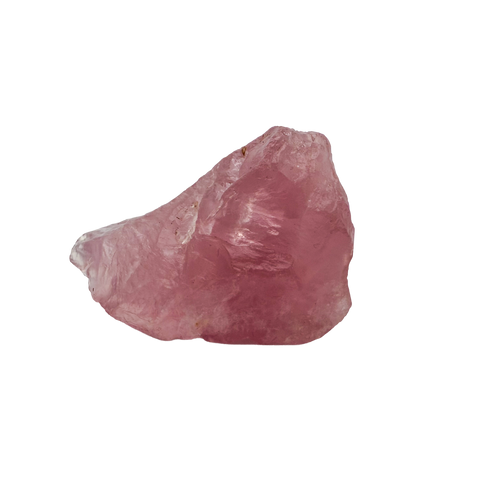
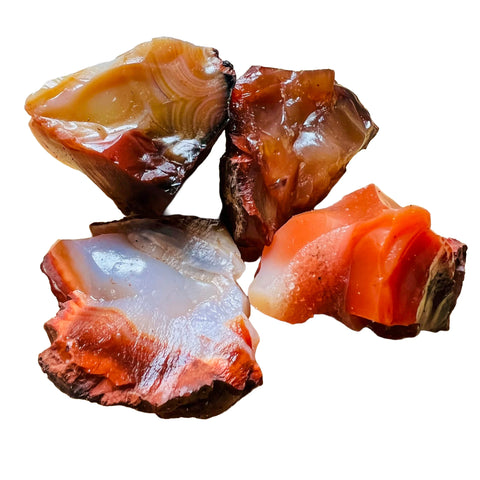


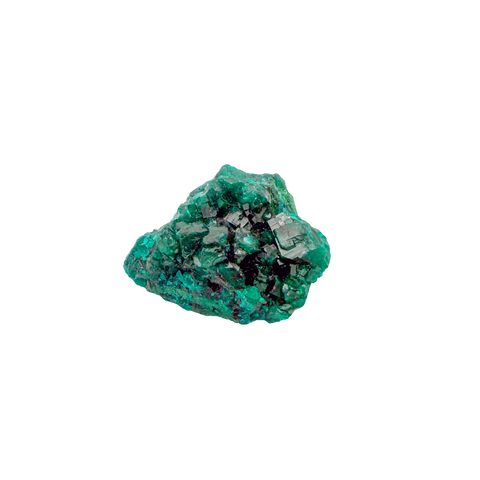
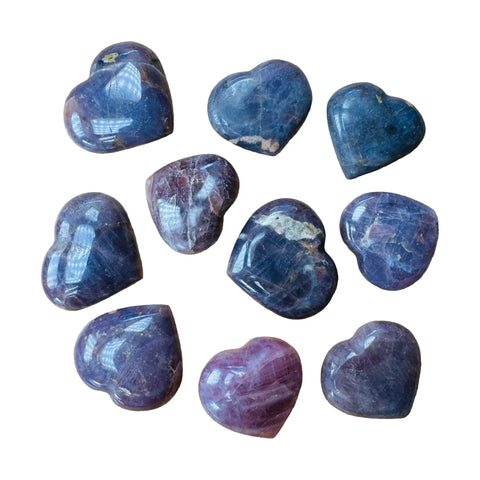
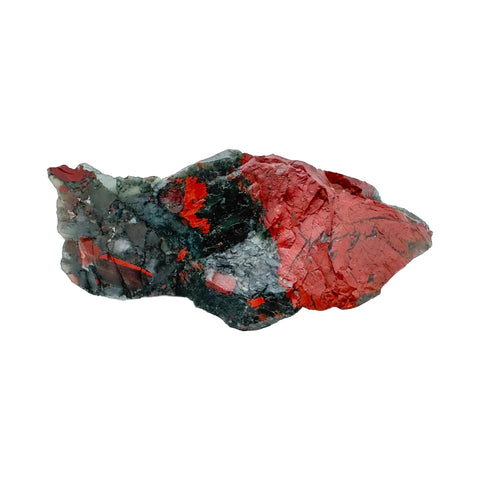
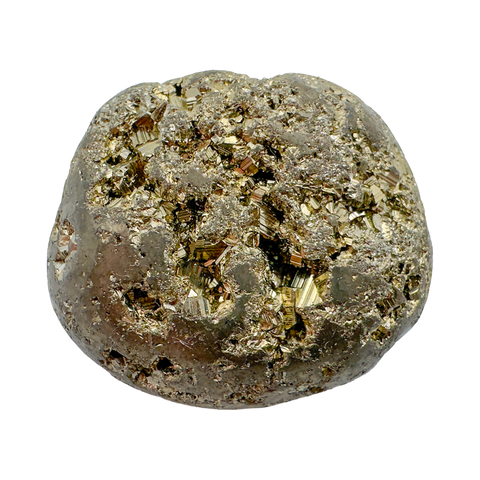
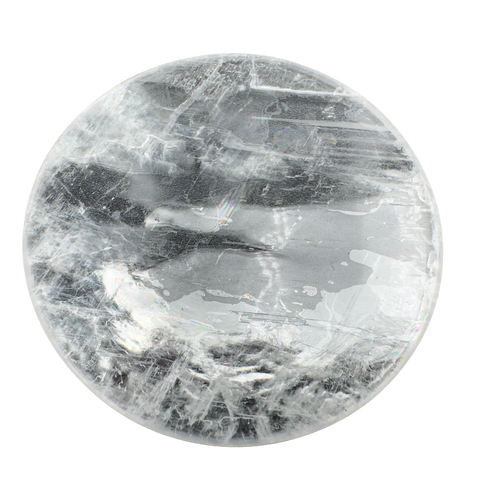
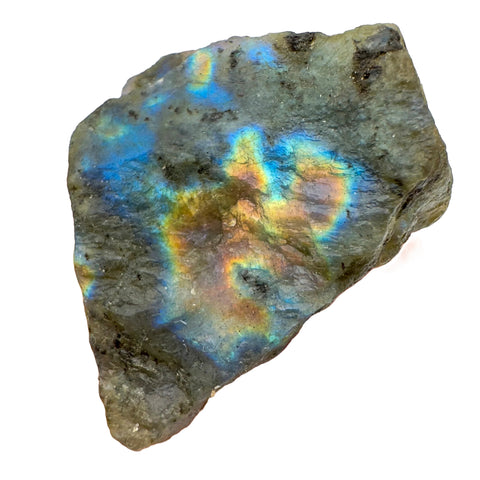
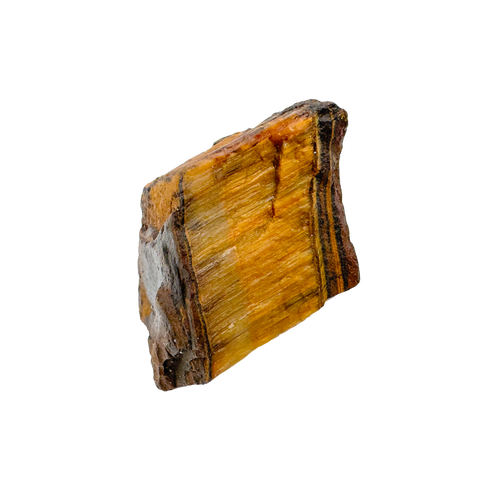
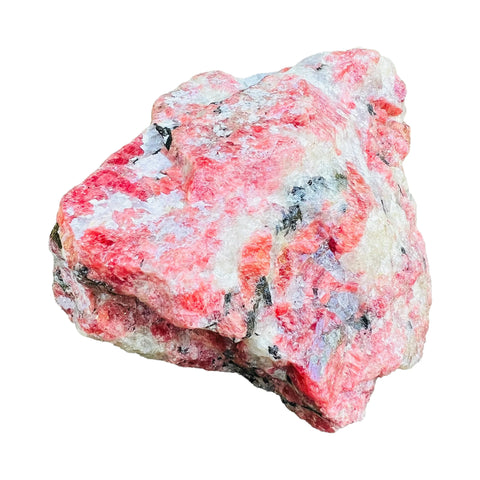
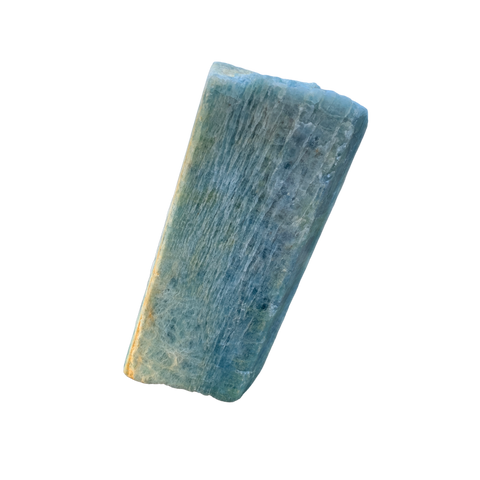
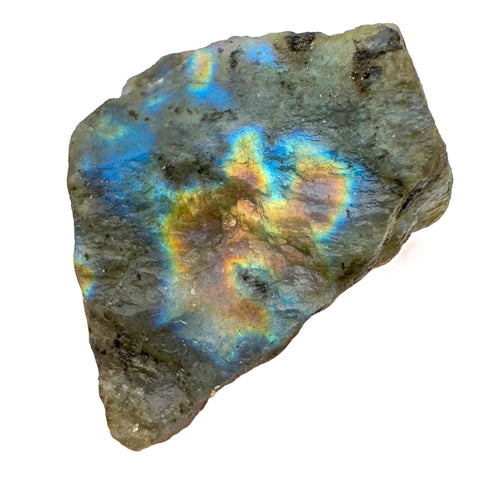
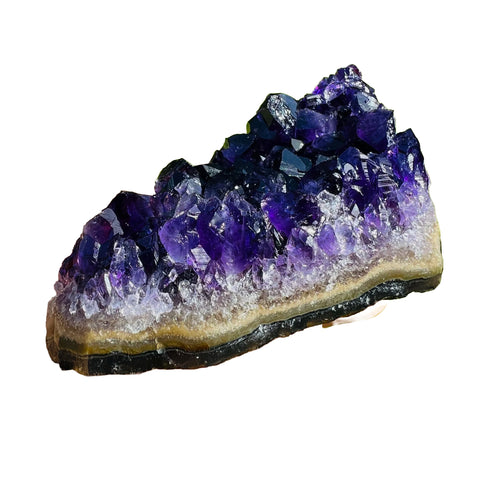


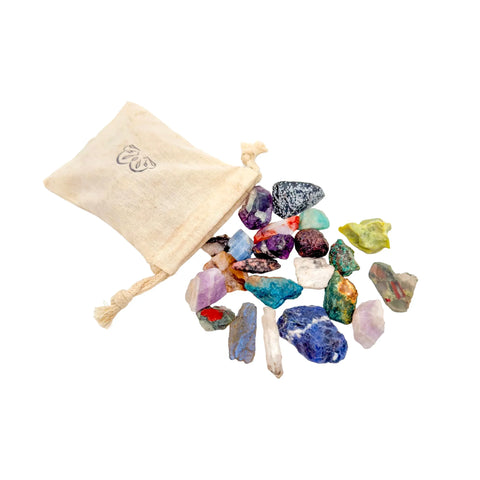
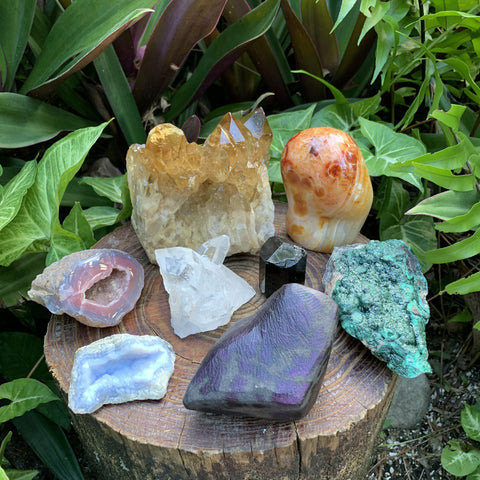
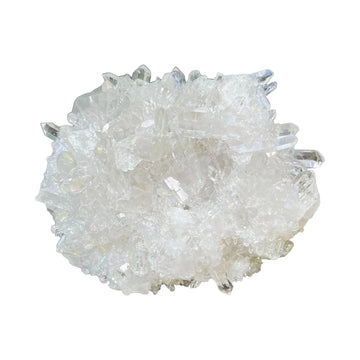
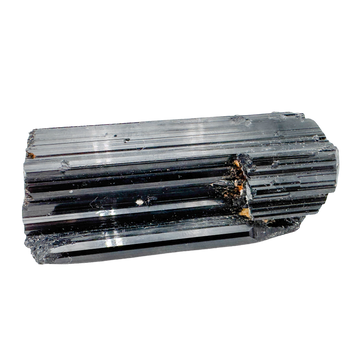
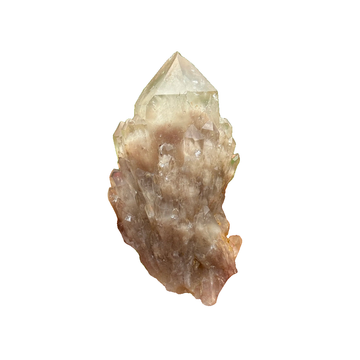
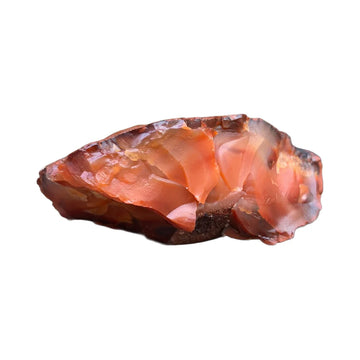
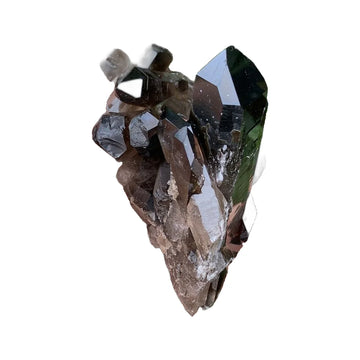
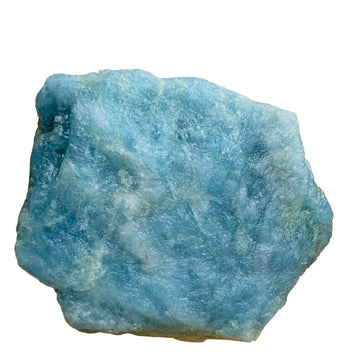
 Raw Stones
179 pieces
Raw Stones
179 pieces
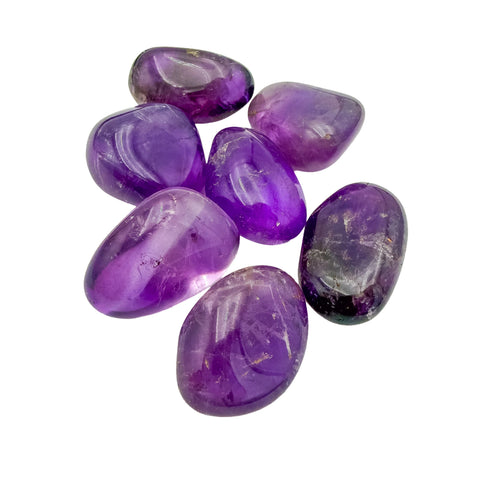
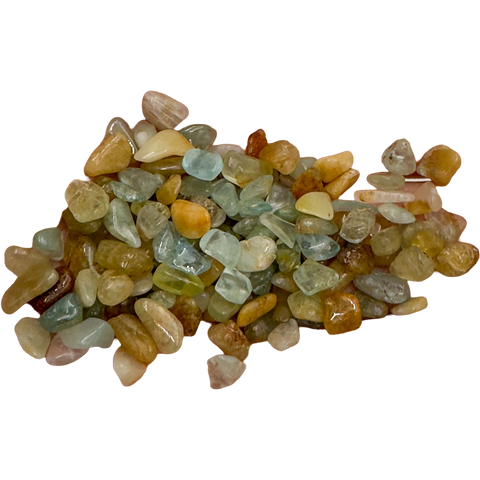
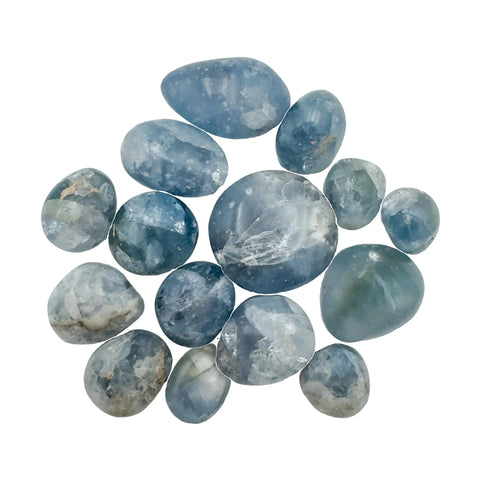
 Tumbled Stones
162 pieces
Tumbled Stones
162 pieces
 Palm Stones
25 pieces
Palm Stones
25 pieces
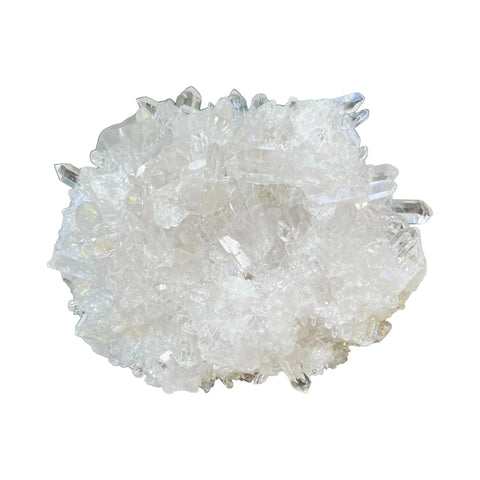
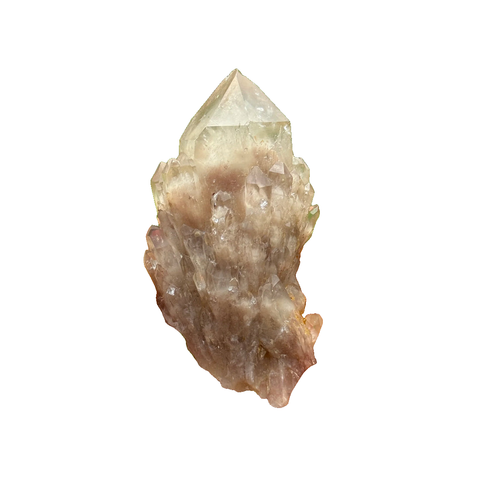
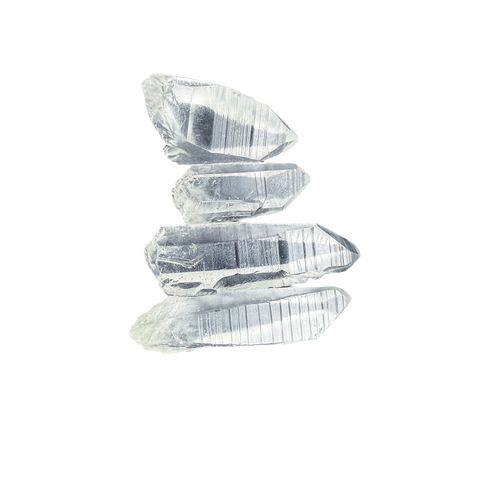
 Crystal Points
23 pieces
Crystal Points
23 pieces
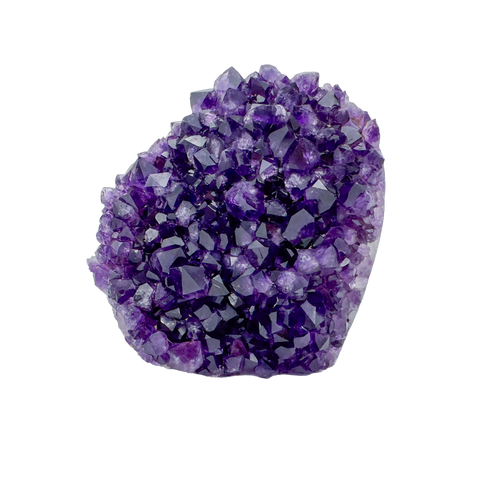
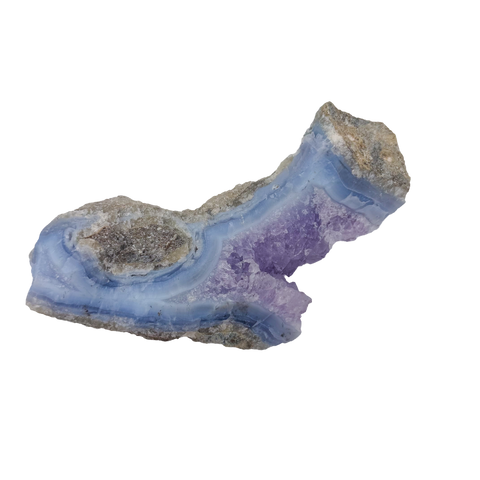
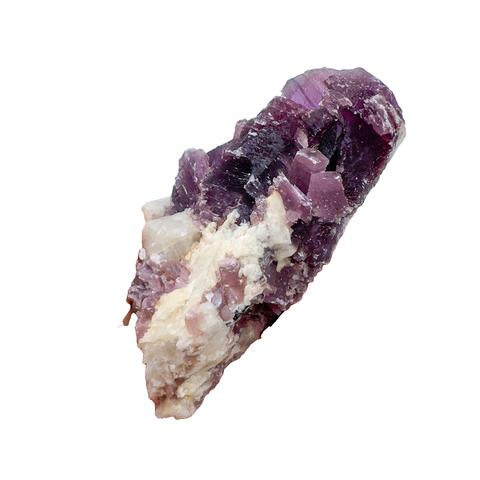
 Clusters & Geodes
105 pieces
Clusters & Geodes
105 pieces
 Polished & Decor
151 pieces
Polished & Decor
151 pieces
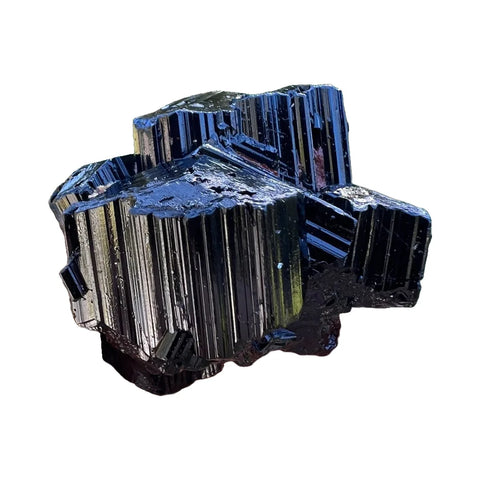
 Mineral Specimens
262 collector pieces
Mineral Specimens
262 collector pieces
 Crystal Chips
21 pieces
Browse everything
Every collection, one page.
View All Collections →
Crystal Chips
21 pieces
Browse everything
Every collection, one page.
View All Collections →


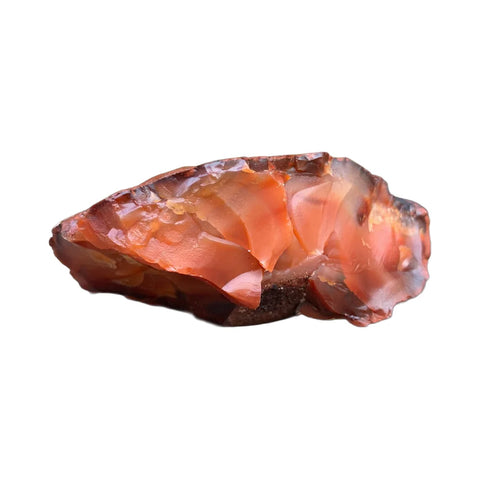
 Aries
Mar 21 – Apr 19
Carnelian
›
Aries
Mar 21 – Apr 19
Carnelian
›
 Taurus
Apr 20 – May 20
Rose Quartz
›
Taurus
Apr 20 – May 20
Rose Quartz
›
 Gemini
May 21 – Jun 20
Agate
›
Gemini
May 21 – Jun 20
Agate
›
 Cancer
Jun 21 – Jul 22
Moonstone
›
Cancer
Jun 21 – Jul 22
Moonstone
›
 Leo
Jul 23 – Aug 22
Citrine
›
Leo
Jul 23 – Aug 22
Citrine
›
 Virgo
Aug 23 – Sep 22
Amazonite
›
Virgo
Aug 23 – Sep 22
Amazonite
›
 Libra
Sep 23 – Oct 22
Blue Lace Agate
›
Libra
Sep 23 – Oct 22
Blue Lace Agate
›
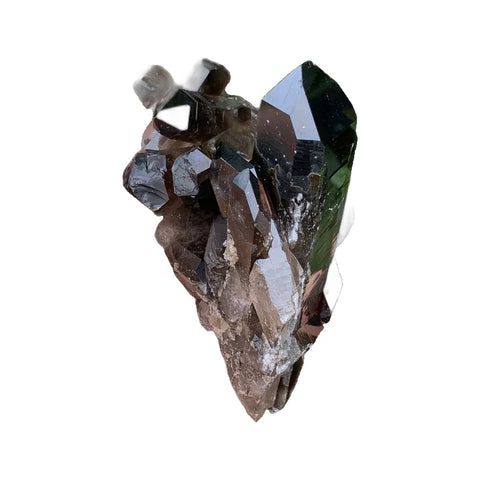
 Scorpio
Oct 23 – Nov 21
Obsidian
›
Scorpio
Oct 23 – Nov 21
Obsidian
›
 Sagittarius
Nov 22 – Dec 21
Sodalite
›
Sagittarius
Nov 22 – Dec 21
Sodalite
›
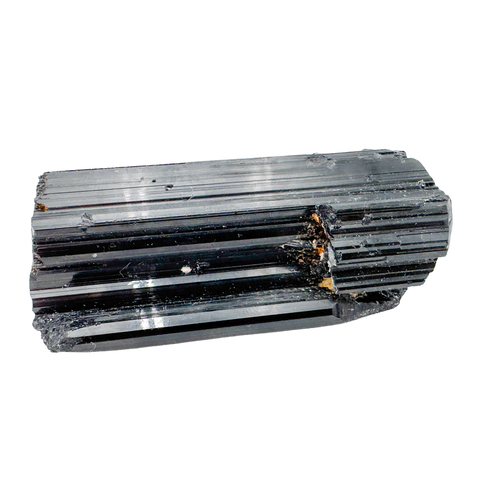
 Capricorn
Dec 22 – Jan 19
Black Tourmaline
›
Capricorn
Dec 22 – Jan 19
Black Tourmaline
›
 Aquarius
Jan 20 – Feb 18
Amethyst
›
Aquarius
Jan 20 – Feb 18
Amethyst
›
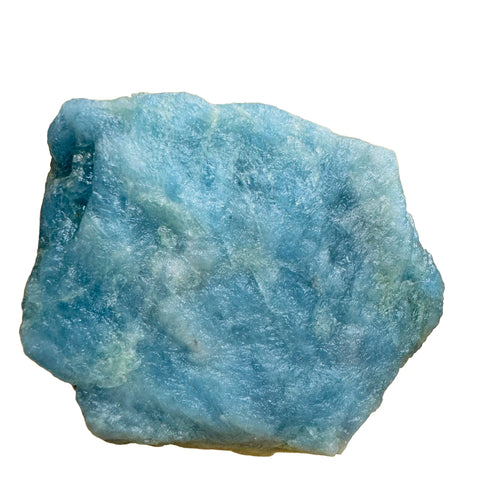
 Pisces
Feb 19 – Mar 20
Aquamarine
›
Gifting?
A birthday stone is the safe bet.
Read the zodiac guide →
Pisces
Feb 19 – Mar 20
Aquamarine
›
Gifting?
A birthday stone is the safe bet.
Read the zodiac guide →
Ocean Jasper
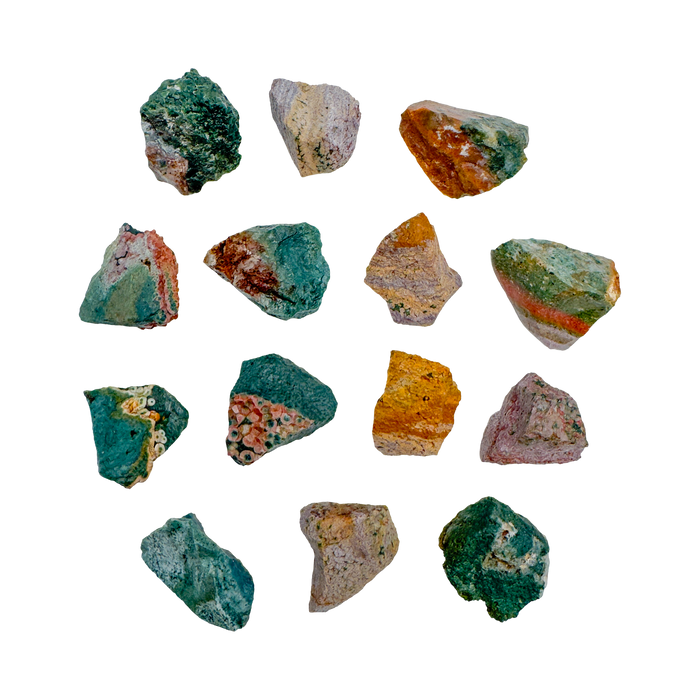
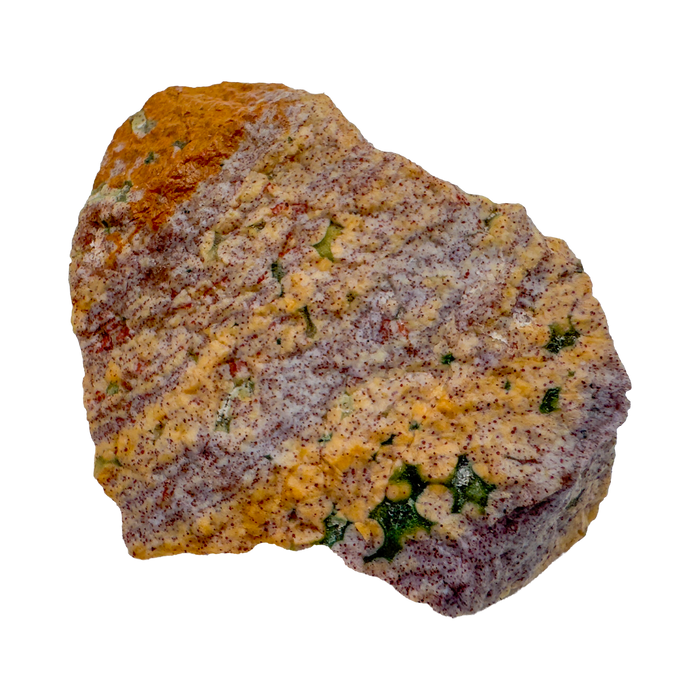
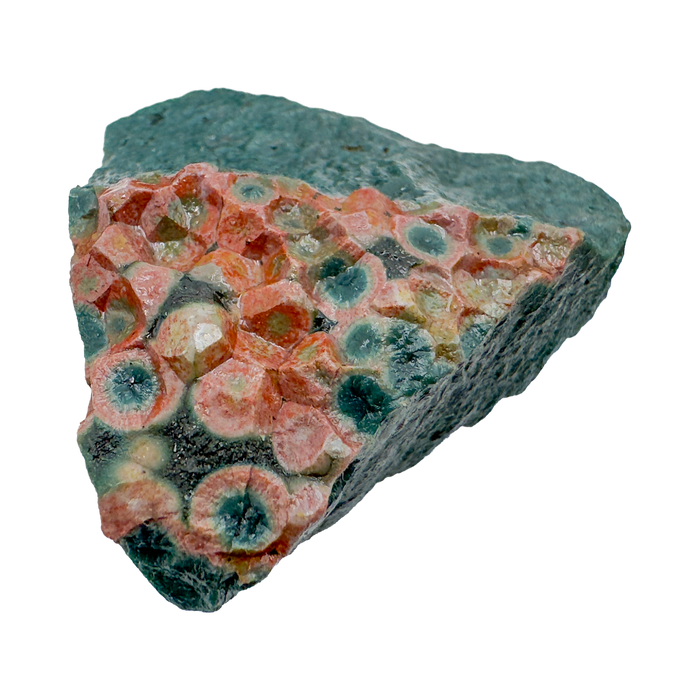
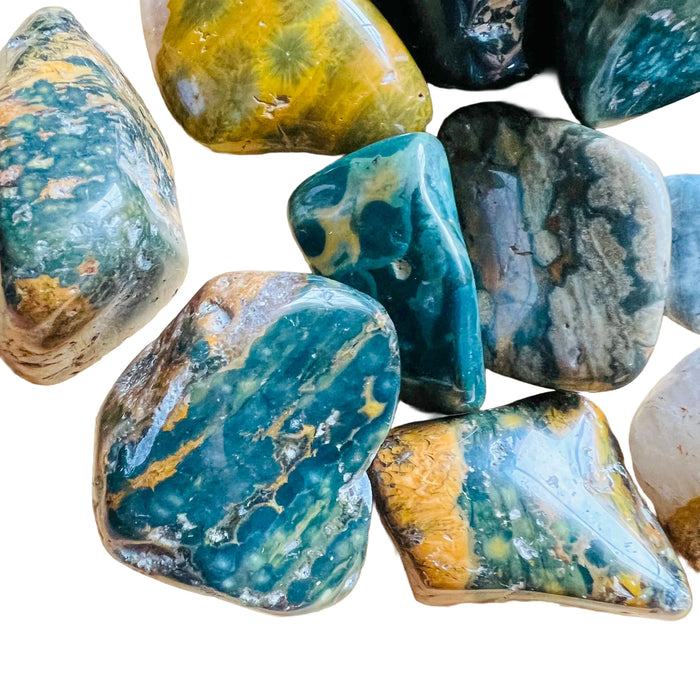
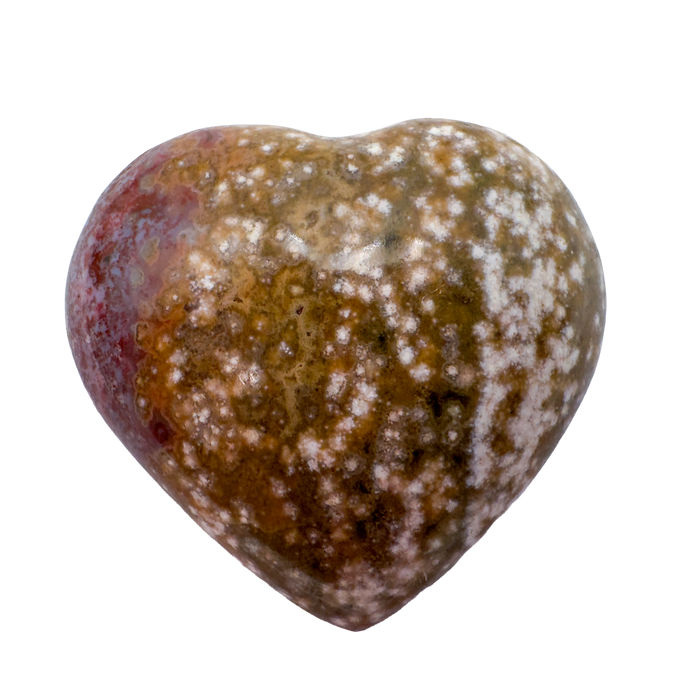
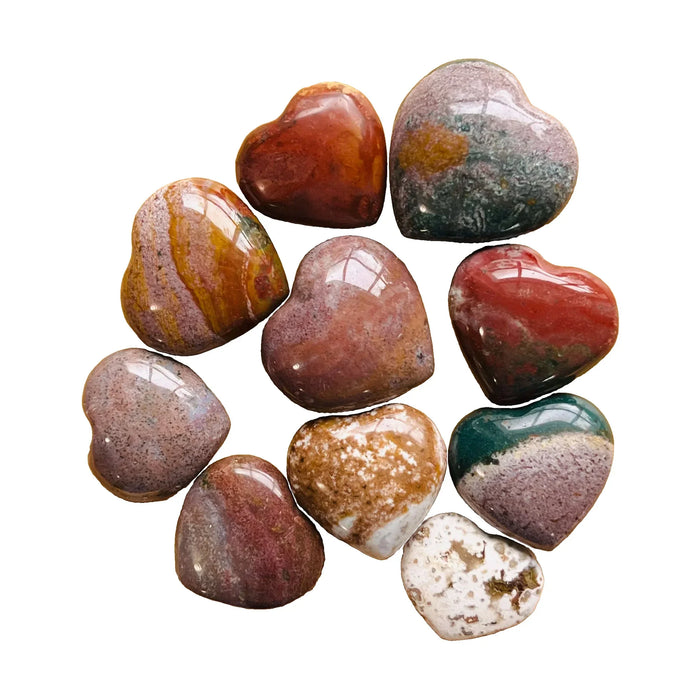
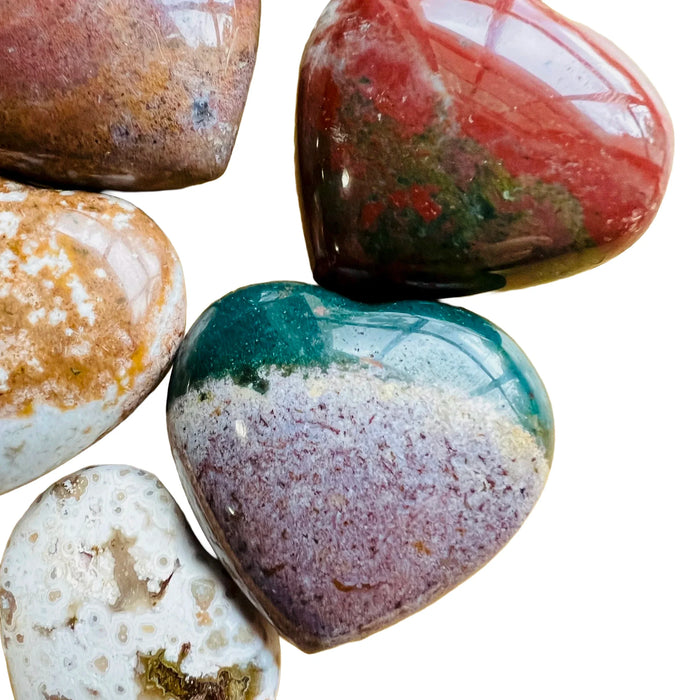
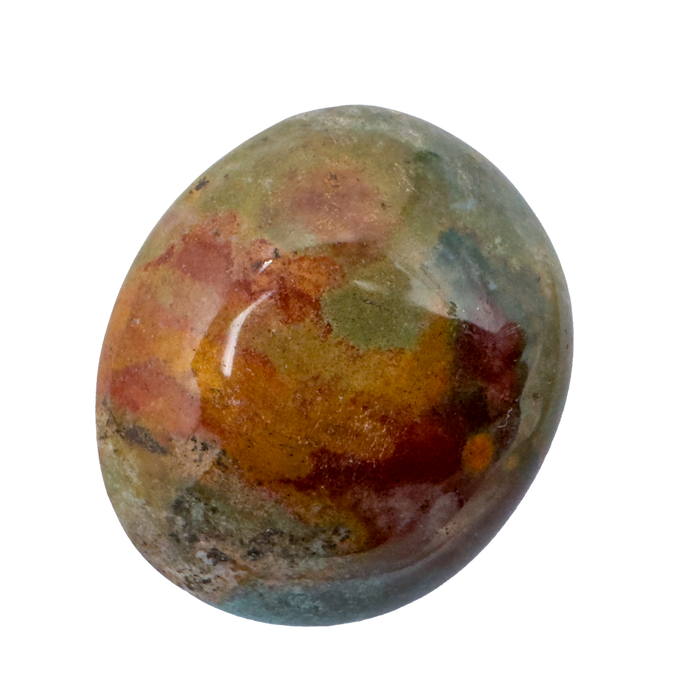
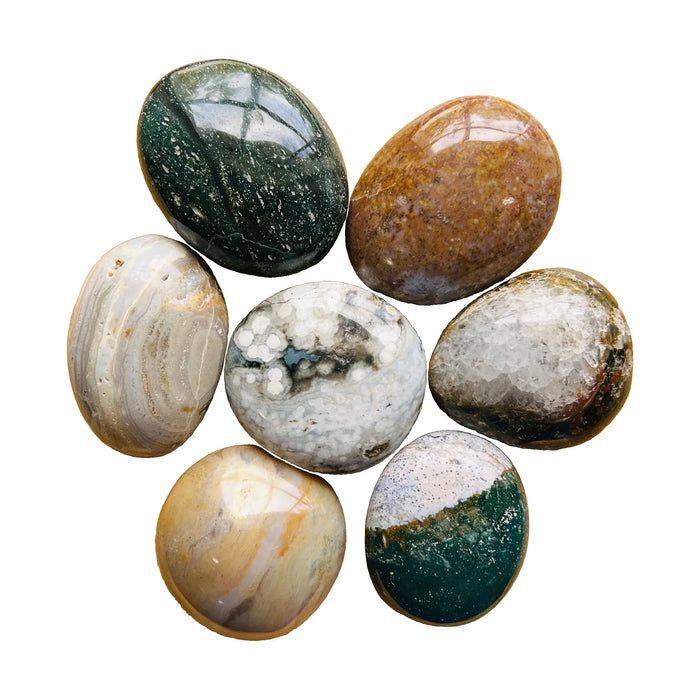
Ocean Jasper is a distinctive variety of chalcedony and jasper from a single coastal locality in Madagascar, showing dramatic orbicular patterns (small circular 'eyes') in colors ranging from cream and pink through green and gray. Traditionally associated with patient self-care, emotional circulation, and the quiet work that supports everything else. Mined out at the primary locality in 2005; active deposits from nearby areas continue.
Shop ocean-jasperThe geology.
Ocean Jasper is a chalcedony-jasper mix with distinctive orbicular patterns, showing small circular 'eyes' formed during crystallization when silica deposited radially around nucleation points. The stone is a mix of microcrystalline quartz (chalcedony) and iron-rich jasper, with color variation coming from different trace minerals in the crystallizing fluid. Each orb is essentially a microspherulite of radially-arranged silica fibers surrounded by the chalcedony matrix.
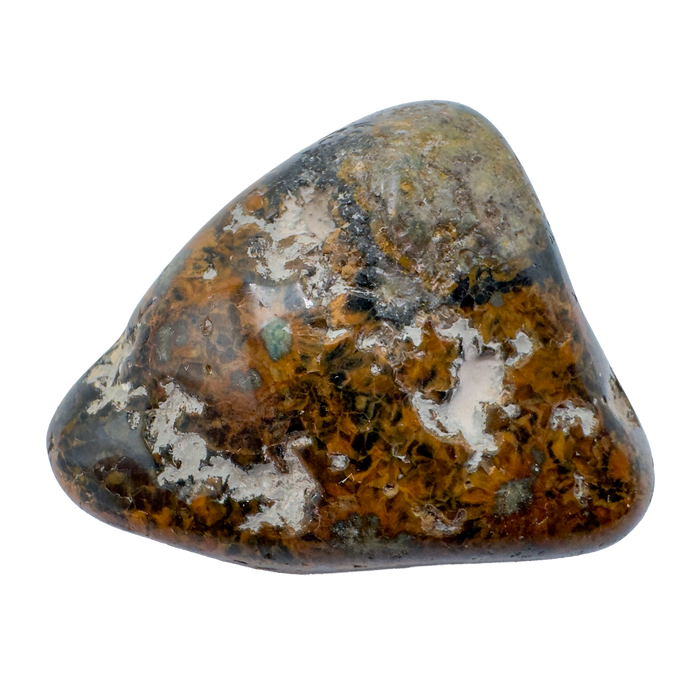
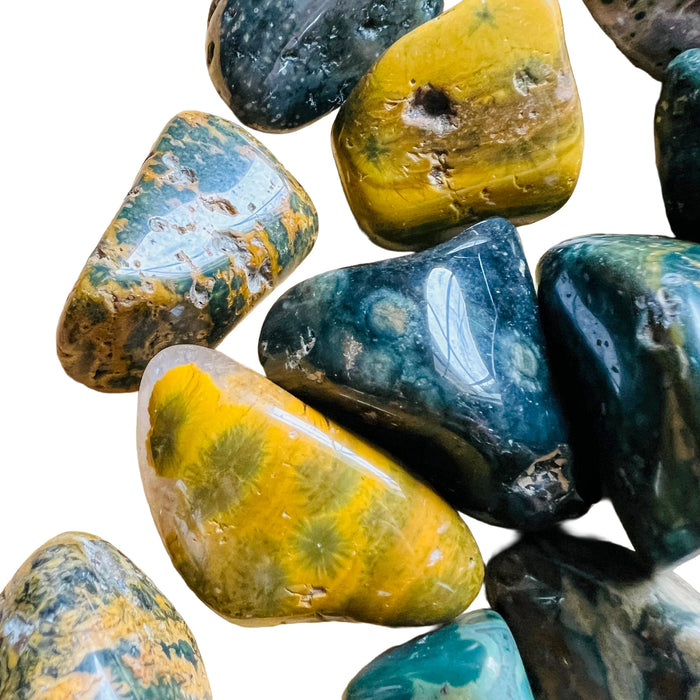
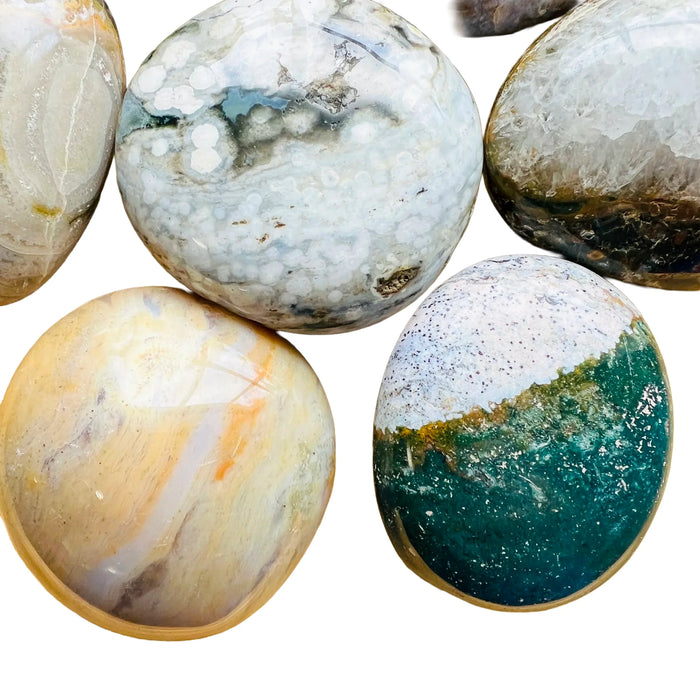
Hardness runs 6.5 to 7 on the Mohs scale, durable enough for daily-wear jewelry. No cleavage, conchoidal fracture, vitreous-to-waxy luster. Ocean Jasper shows enormous variation in color and pattern: cream with pink orbs, green with yellow centers, gray with multicolor patterns, and many combinations. The primary original locality was mined out in 2005; current commercial Ocean Jasper comes from secondary deposits in the same coastal region.
The origins.
Ocean Jasper is essentially Madagascan in commercial terms. The original discovery locality was a remote coastal cliff in the Ambolobozo Peninsula on Madagascar's northwest coast, accessible only by sea. That primary deposit was mined out in 2005 after about five years of intensive production. Current commercial Ocean Jasper comes from related deposits in the same coastal region, with slightly different pattern and color character than the original find.
The specific coastal geology, volcanic host rock with iron-bearing groundwater near the ocean, produced the orbicular patterns that define Ocean Jasper. The 'ocean' in the name refers both to the coastal mining location and to the wave-and-tide-pool quality of the patterns. Similar orbicular jasper from other global localities (such as Mexico's Chiapas region) is sometimes sold as 'Ocean Jasper' but technically is distinct material.
Traditional associations.
Ocean Jasper has no pre-modern tradition because it was only discovered and named in the year 2000 by Paul Obenich, who identified the material at a remote Madagascan coastal cliff. The commercial name 'Ocean Jasper' is a trade designation, and the stone's metaphysical associations are all contemporary rather than drawn from deep tradition.
Many people work with Ocean Jasper for patient self-care, emotional circulation, and the steady work that supports other practices. It's most commonly associated with the Heart, Throat, and Solar Plexus chakras, the elements of Water and Earth, and the zodiac sign Cancer. Contemporary practice often frames it as a stone for people who tend to focus on caring for others and need support in turning some of that care inward.
Spotting the real thing.
Real Ocean Jasper shows orbicular patterns with 'eyes' of varying sizes and colors distributed through a chalcedony-jasper matrix. The orbs are three-dimensional: broken edges show they extend into the stone, not just across the surface. Color variation within a single piece is natural and organic-looking. Hardness 6.5 to 7 will scratch glass easily.
Orbicular jasper from other localities (particularly Mexican Chiapas) is sometimes sold as 'Ocean Jasper' but is technically distinct material with different character. This is typically a labeling issue rather than an outright fraud concern. Pre-2005 original Ocean Jasper commands collector pricing; current commercial material from secondary Madagascan deposits is still authentic Ocean Jasper but with different color and pattern character.
Care & handling.
Water safe for normal cleaning with warm water and a soft cloth. Handles saltwater rinses and brief ultrasonic cleaning. Stable under sunlight and temperature shifts within reason.
Cleanse energetically with moonlight, sound, smoke, salt water, or by placing on selenite overnight. At 6.5 to 7 on the Mohs scale, Ocean Jasper handles daily wear well in all jewelry settings. Store separately from harder stones to preserve the polish.
Pairs well with.
Proof, not promises.
We measure our own sourcing across five dimensions. Supply chain, environmental footprint, artisan support, market integrity, and pricing. The number is honest, not perfect. Where we can do better, we say so.
A deeper look.
Extended geology, sourcing, authentication, history, varieties, and pricing, for when the quick guide isn't quite enough.
Extended geology
Ocean Jasper is a mix of chalcedony (microcrystalline quartz, SiO₂) and jasper (iron-rich chalcedony) with distinctive orbicular patterns. The orbs are microspherulites: radial arrangements of silica fibers that crystallized around nucleation points during formation. The varied coloration comes from trace mineral content in the crystallizing fluid: iron for reds and yellows, chlorite or chrome for greens, manganese for pinks.
Mohs hardness 6.5 to 7. Specific gravity 2.58 to 2.64. Luster vitreous to waxy. No cleavage; conchoidal fracture. The original Madagascan locality's specific geology (volcanic host rock with iron-rich coastal groundwater) produced the characteristic orbicular patterns.
Extended sourcing
Ocean Jasper was discovered in 2000 by Paul Obenich at a remote Madagascan coastal cliff in the Ambolobozo Peninsula on the northwest coast. The primary deposit was accessible only by sea and was mined for about five years before the main veins were mined out in 2005. During those five years, Ocean Jasper entered the global crystal market and became a recognized premium material.
Post-2005, current commercial Ocean Jasper comes from secondary deposits in the same Madagascan coastal region, with somewhat different pattern and color character than the original. Material from the original mined-out locality commands premium collector pricing; 'new' Ocean Jasper from current deposits is authentic Ocean Jasper but sometimes distinguished from the original. Similar orbicular jasper from other global localities (such as Chiapas, Mexico) is sometimes misidentified as Ocean Jasper.
Authentication and warning signs
Real Ocean Jasper shows three-dimensional orbicular patterns that extend into the stone rather than sitting on the surface. Under magnification, the radial spherulite structure of individual orbs is sometimes visible. Color variation across a single piece is natural and organic-looking. Hardness 6.5 to 7 scratches glass.
The main authentication issue is orbicular jasper from other global sources (particularly Mexican Chiapas) being sold as Ocean Jasper. This is typically a trade-name confusion rather than fraud. Reputable sellers specify Madagascan origin and sometimes distinguish between original (pre-2005) and new locality material.
Historical and cultural context
Ocean Jasper has no pre-modern tradition because it was only discovered in 2000. Paul Obenich, an American prospector, identified the material during an expedition to Madagascar and worked with local partners to develop commercial extraction. The dramatic orbicular patterns and consistent high quality led to rapid adoption in the global crystal market.
The modern metaphysical associations are contemporary, built on the 'ocean' naming, the coastal origin, and the wave-and-tide-pool quality of the patterns. Working associations with patient self-care and emotional circulation emerged from the stone's visual character and the coastal symbolism rather than from deep tradition. Ocean Jasper is representative of the modern crystal market's adoption of new varieties through commercial naming and associative metaphysical interpretation.
Varieties and trade names
Ocean Jasper: the Madagascan orbicular chalcedony-jasper variety.
Original Ocean Jasper (pre-2005): from the mined-out original locality, collector material.
New Ocean Jasper: current commercial material from secondary Madagascan deposits.
Orbicular Jasper: broader category including Ocean Jasper and similar materials from other localities.
Chiapas Jasper: orbicular jasper from Mexico, sometimes misidentified as Ocean Jasper.
Pricing reality
Tumbled Ocean Jasper: 2 to 10 dollars per piece. Small polished shapes and palm stones: 10 to 40 dollars. Larger polished freeforms and slabs: 30 to 200 dollars. Pre-2005 original locality material commands premium: tumbled 20-60 dollars, specimens 100-500+ dollars. Fine collector specimens with dramatic orb patterns: 100 to 1,000 dollars.
Value drivers: orb quality and variety, color balance and contrast, size, clean polish, and documented Madagascan origin. Warning signs: orbicular jasper from other regions sold as Ocean Jasper, pieces without specific Madagascan provenance at premium pricing, or material with uniform pattern suggesting it's not genuine Ocean Jasper.
Good sourcing is a practice, not a claim.
Nothing we sell is orbicular jasper from other localities mislabeled as Ocean Jasper. We source specifically from Madagascan coastal deposits with documented origin and walk away from material that doesn't meet our standard, even when it costs us sales.
Bring ocean-jasper home.
Every piece we carry is photographed individually and listed with its specific Madagascan origin and treatment notes. What you see is what ships.
Shop the ocean-jasper collectionOcean Jasper, in stock now.
Our most-loved Ocean Jasper pieces, ready to ship.
- from 1,000+ reviews
- Ships within 72 hoursMonday to Friday, tracked
- 90 days to return itif you do not love it
- Free US shipping over $99$8.99 flat rate under
The Slow Note
New stones go to the list first.
No forwarding, no selling. Unsubscribe in one click. Privacy