


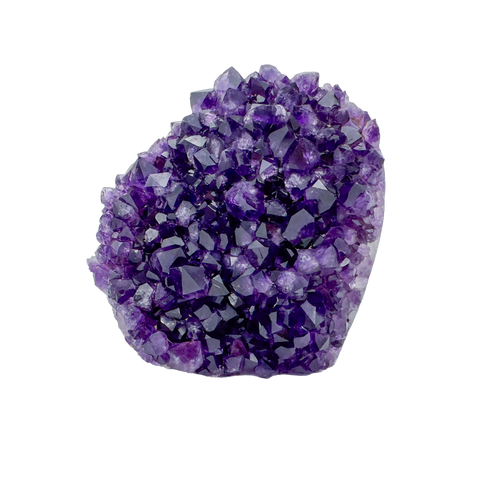
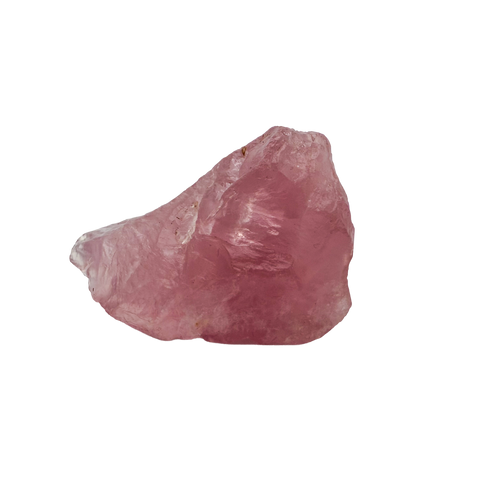
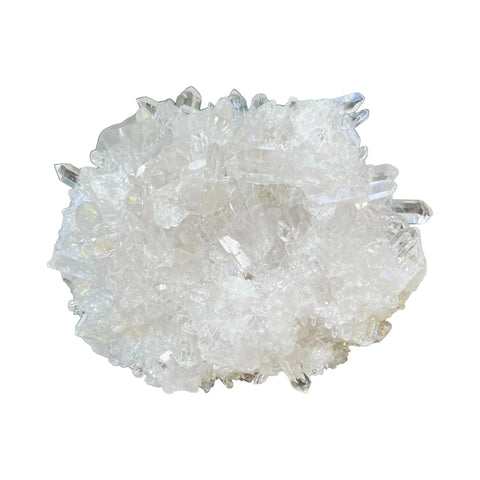
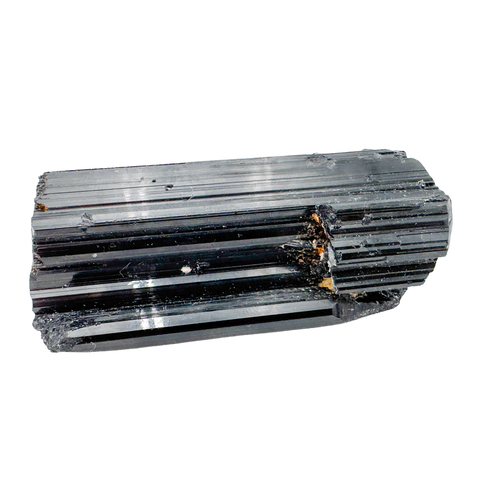
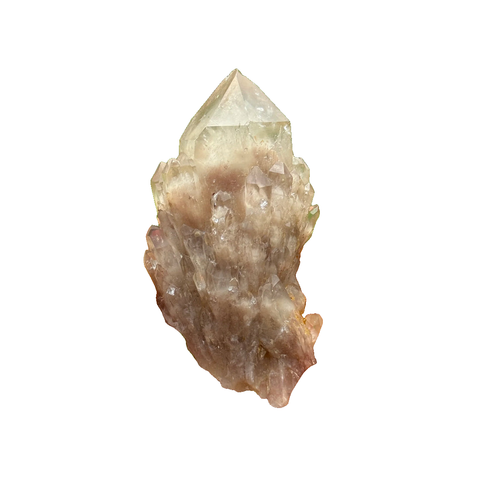
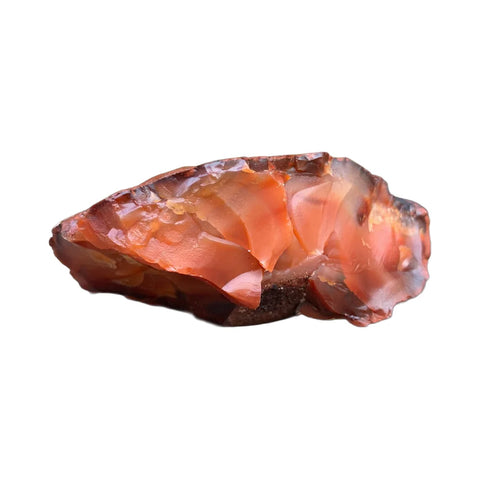
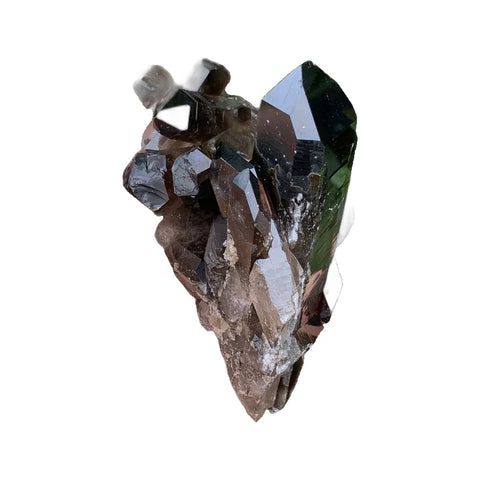
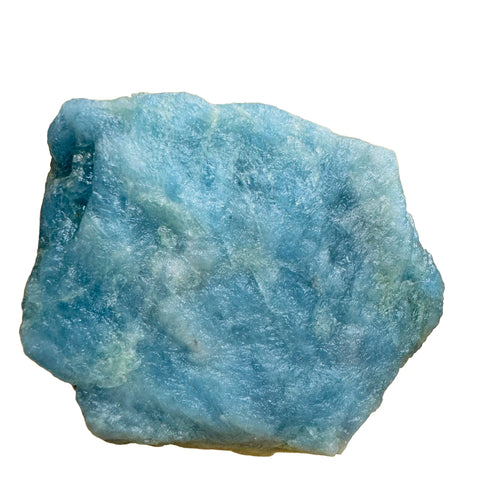
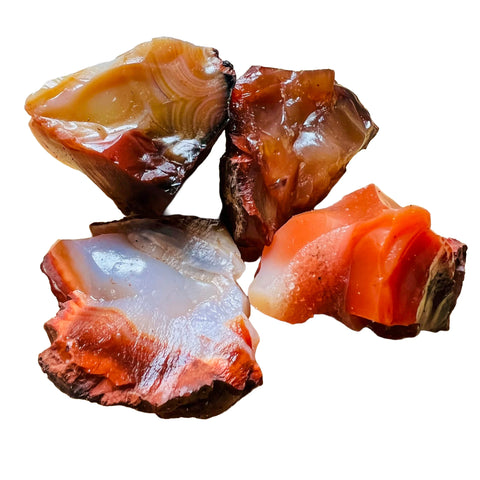


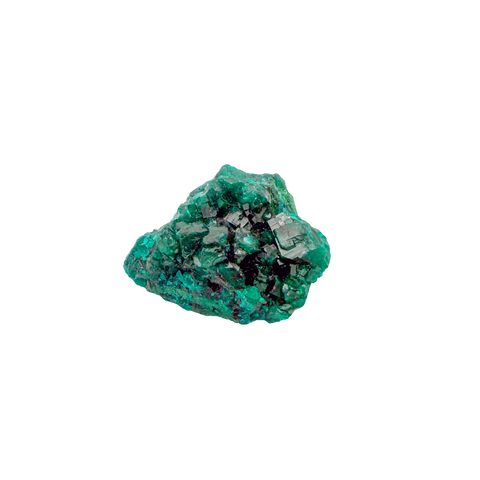
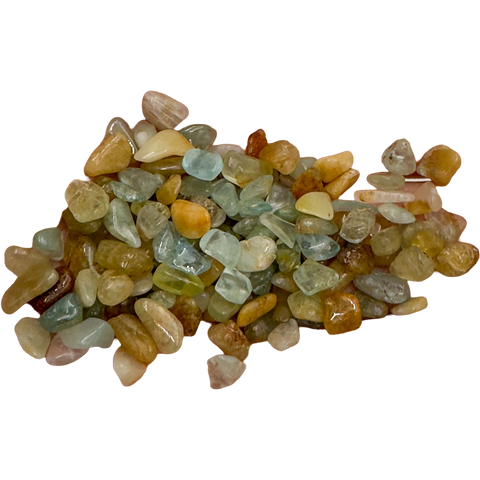
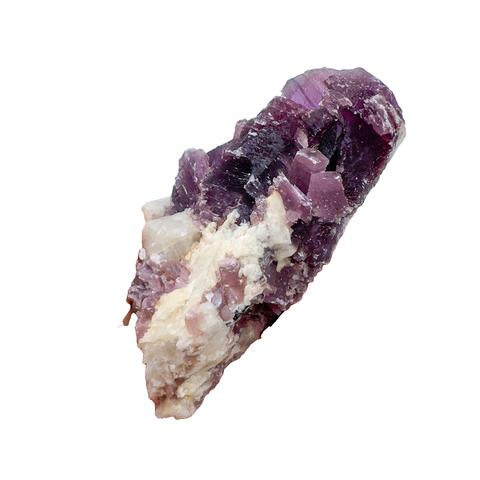
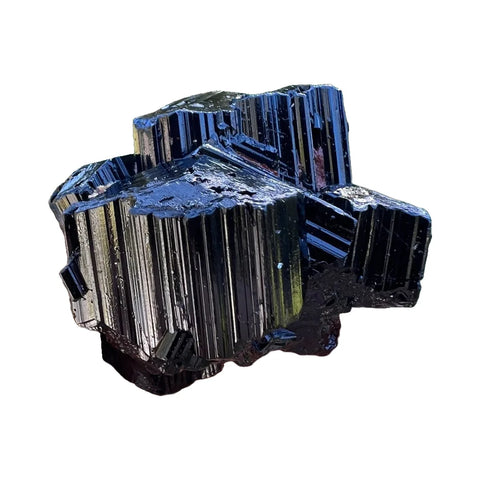
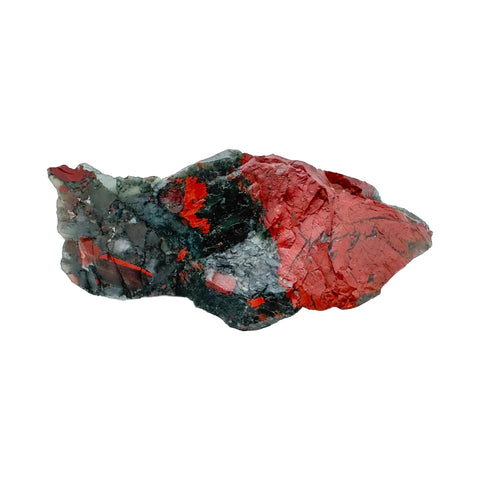
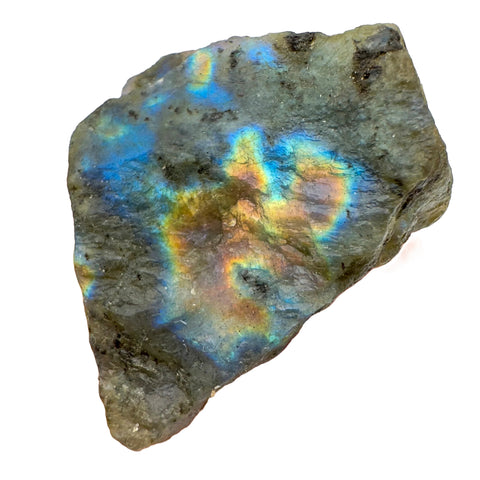
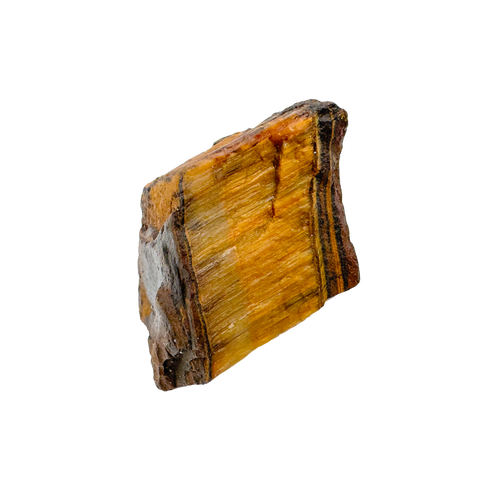
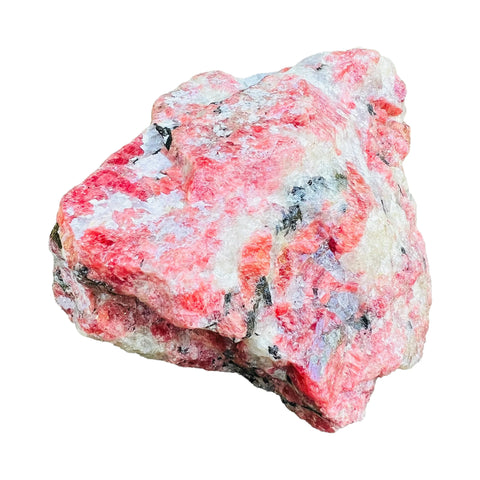
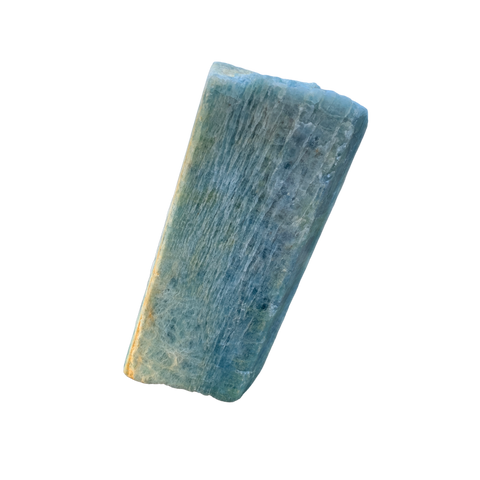
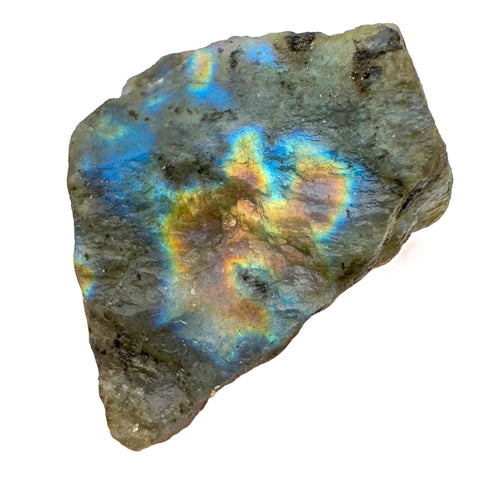
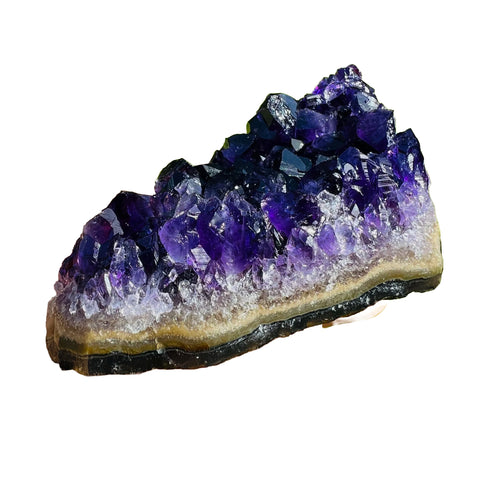



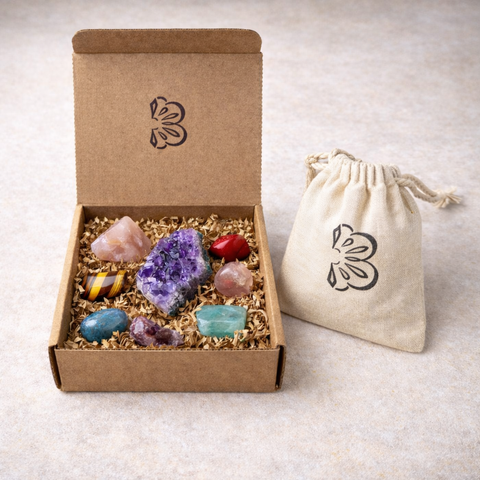
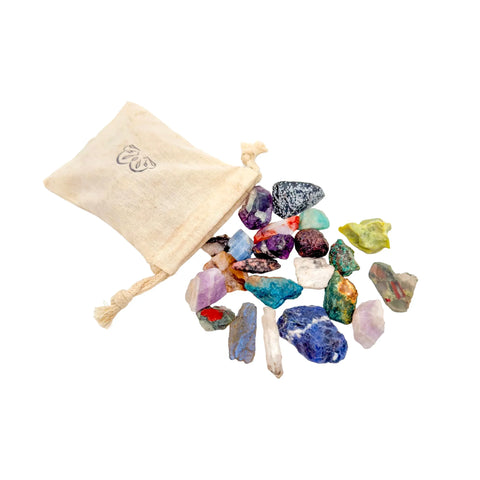
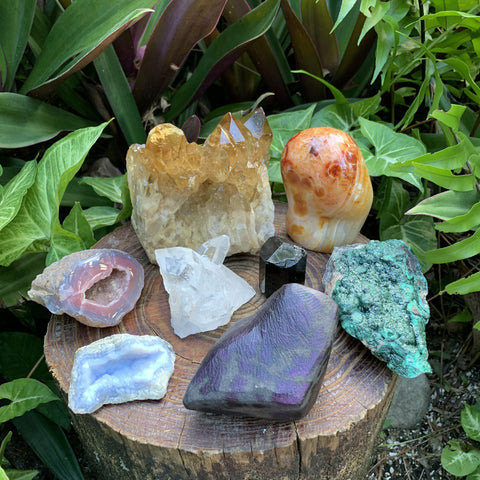
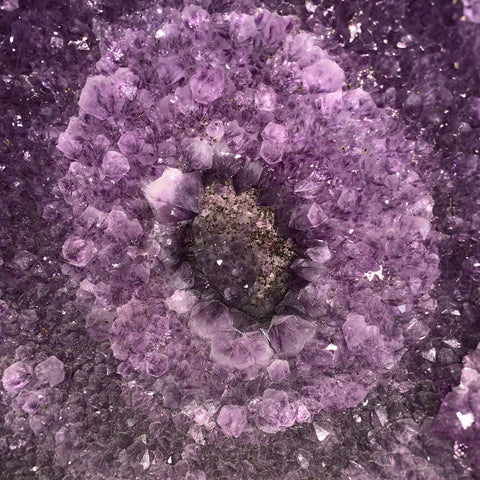
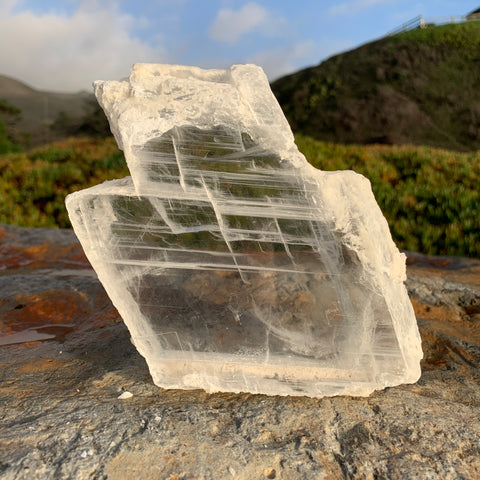
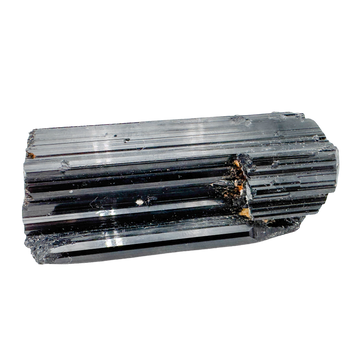
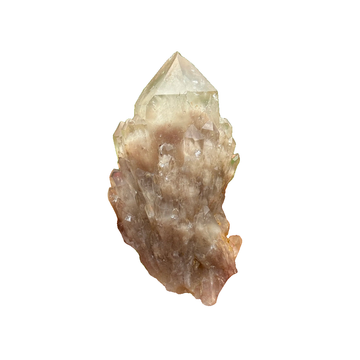
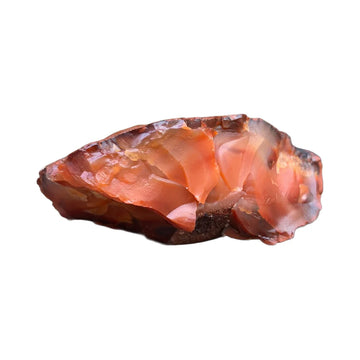
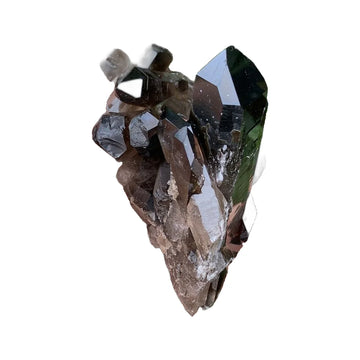
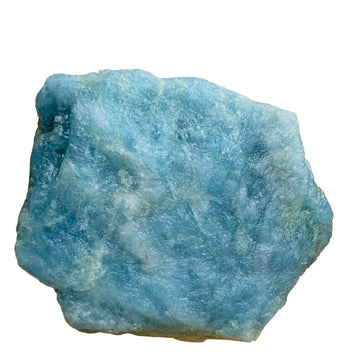
 Raw Stones
179 pieces
Raw Stones
179 pieces
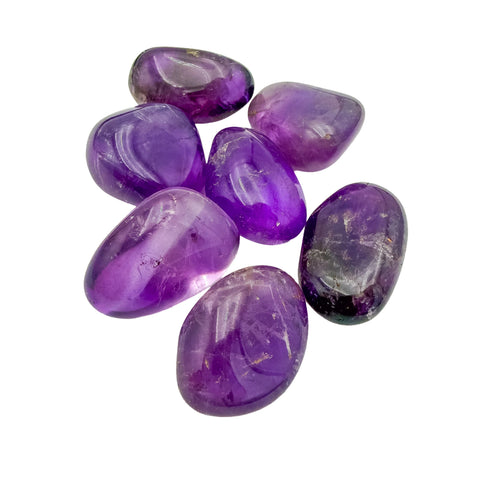
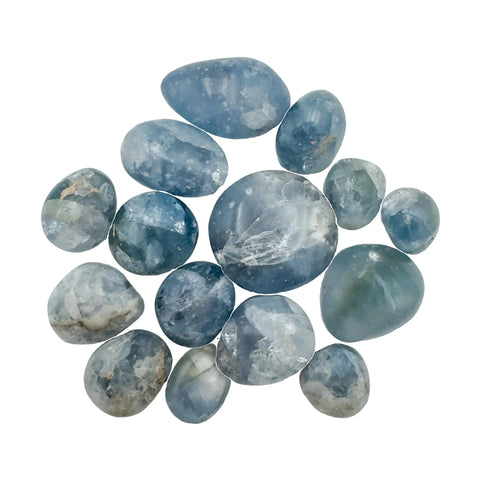
 Tumbled Stones
162 pieces
Tumbled Stones
162 pieces
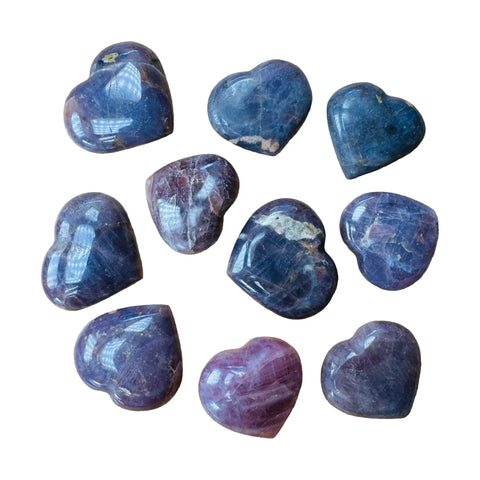
 Palm Stones
25 pieces
Palm Stones
25 pieces
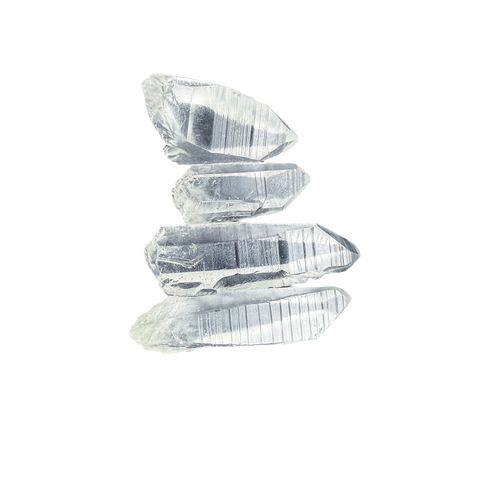
 Crystal Points
23 pieces
Crystal Points
23 pieces
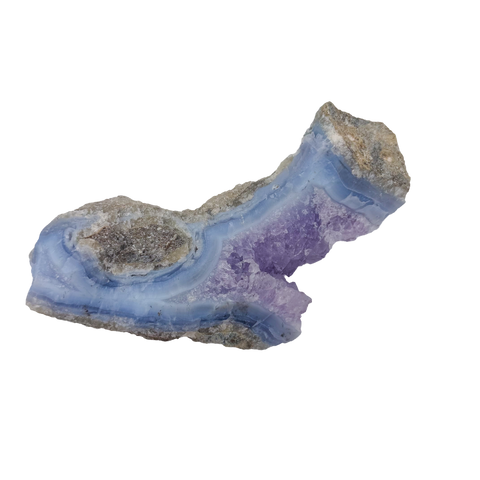
 Clusters & Geodes
104 pieces
Clusters & Geodes
104 pieces
 Polished & Decor
148 pieces
Polished & Decor
148 pieces
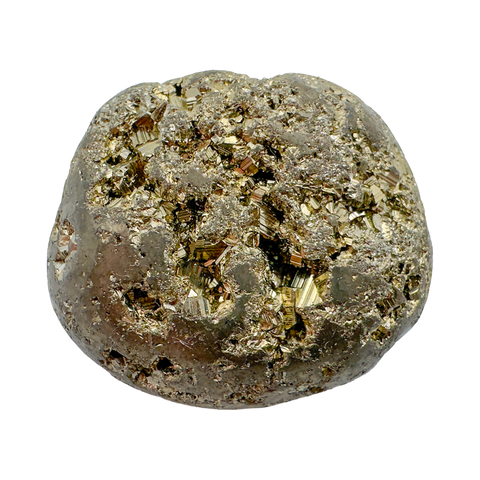
 Mineral Specimens
259 collector pieces
Mineral Specimens
259 collector pieces
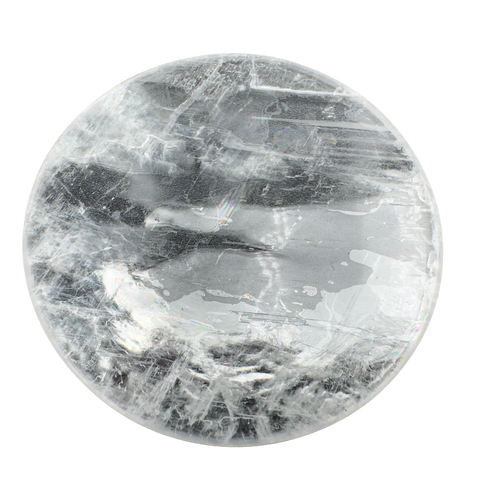
 Crystal Chips
21 pieces
Browse everything
Every collection, one page.
View All Collections →
Crystal Chips
21 pieces
Browse everything
Every collection, one page.
View All Collections →


 Aries
Mar 21 – Apr 19
Carnelian
›
Aries
Mar 21 – Apr 19
Carnelian
›
 Taurus
Apr 20 – May 20
Rose Quartz
›
Taurus
Apr 20 – May 20
Rose Quartz
›
 Gemini
May 21 – Jun 20
Agate
›
Gemini
May 21 – Jun 20
Agate
›
 Cancer
Jun 21 – Jul 22
Moonstone
›
Cancer
Jun 21 – Jul 22
Moonstone
›
 Leo
Jul 23 – Aug 22
Citrine
›
Leo
Jul 23 – Aug 22
Citrine
›
 Virgo
Aug 23 – Sep 22
Amazonite
›
Virgo
Aug 23 – Sep 22
Amazonite
›
 Libra
Sep 23 – Oct 22
Blue Lace Agate
›
Libra
Sep 23 – Oct 22
Blue Lace Agate
›
 Scorpio
Oct 23 – Nov 21
Obsidian
›
Scorpio
Oct 23 – Nov 21
Obsidian
›
 Sagittarius
Nov 22 – Dec 21
Sodalite
›
Sagittarius
Nov 22 – Dec 21
Sodalite
›
 Capricorn
Dec 22 – Jan 19
Black Tourmaline
›
Capricorn
Dec 22 – Jan 19
Black Tourmaline
›
 Aquarius
Jan 20 – Feb 18
Amethyst
›
Aquarius
Jan 20 – Feb 18
Amethyst
›
 Pisces
Feb 19 – Mar 20
Aquamarine
›
Gifting?
A birthday stone is the safe bet.
Read the zodiac guide →
Pisces
Feb 19 – Mar 20
Aquamarine
›
Gifting?
A birthday stone is the safe bet.
Read the zodiac guide →

Dendritic Agate
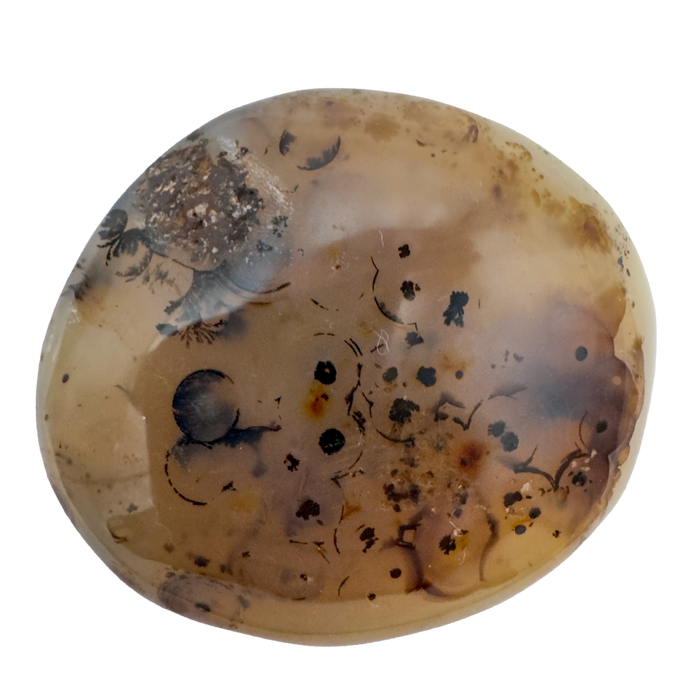
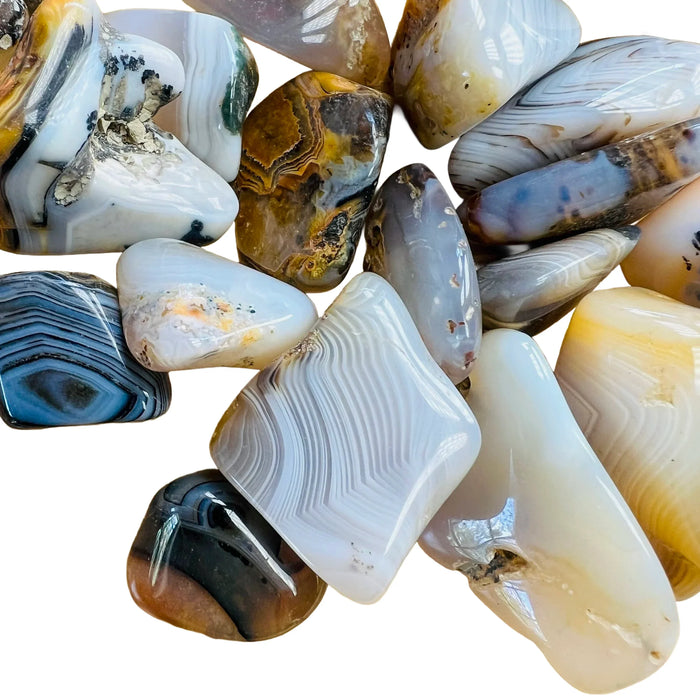
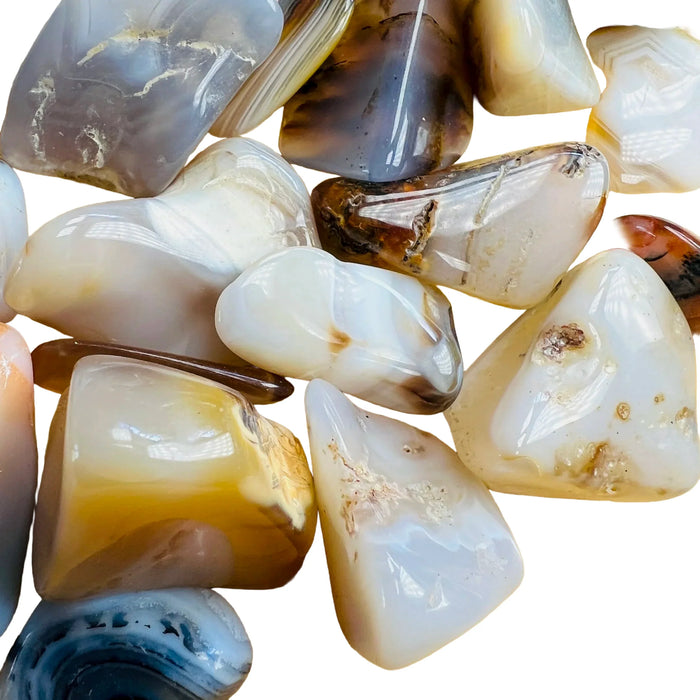
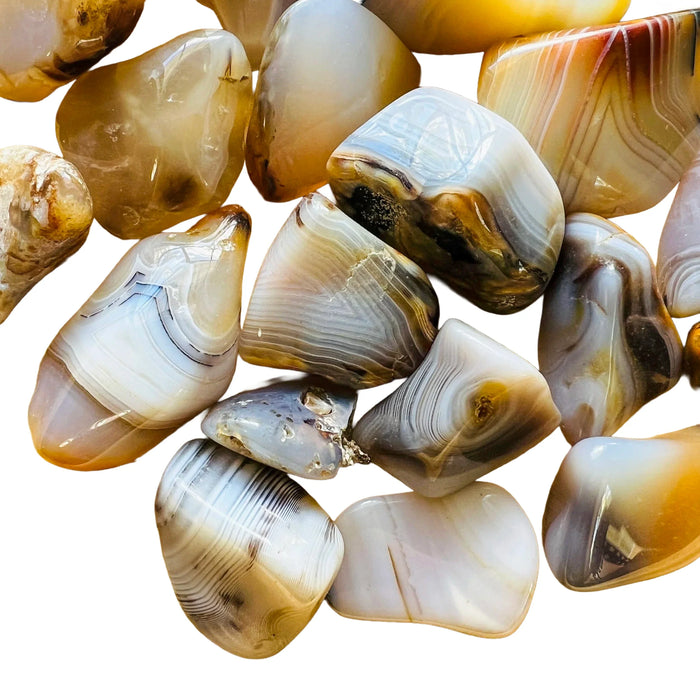
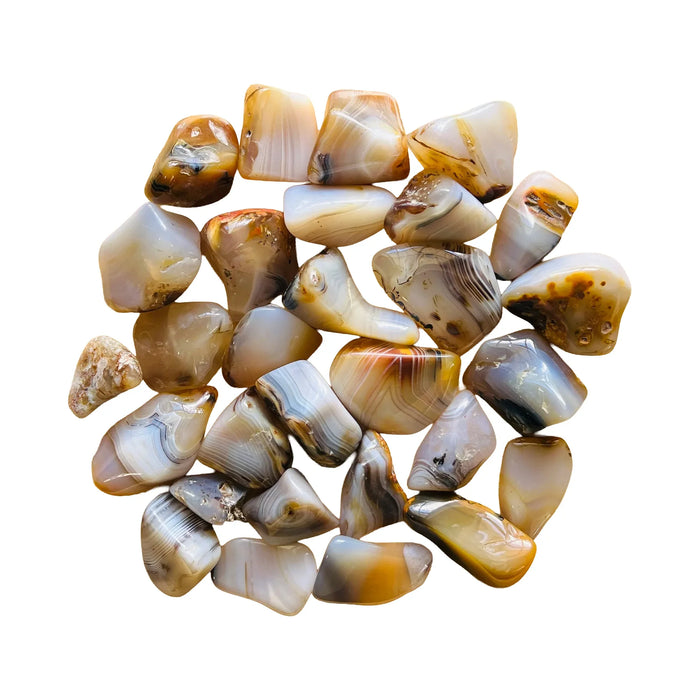
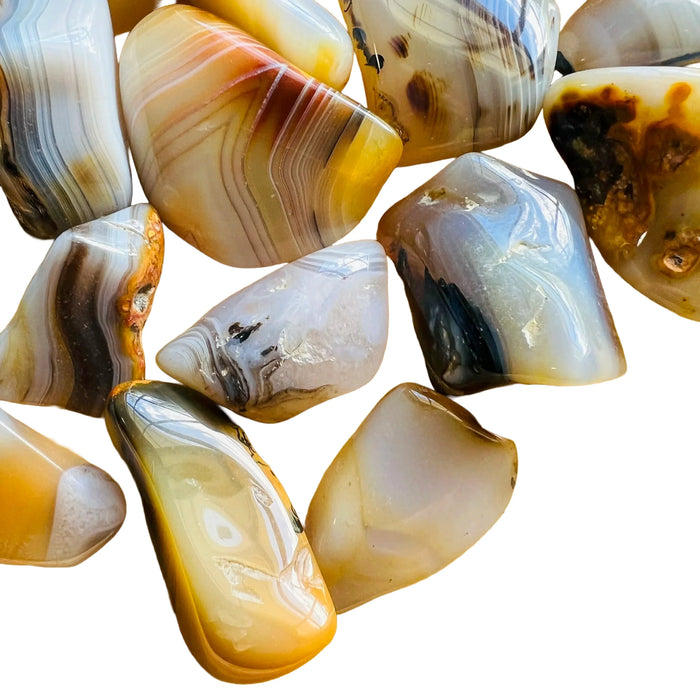
Dendritic agate is a translucent chalcedony variety featuring beautiful fern, tree, or branching patterns inside the stone. The dendrites are not fossilized plants; they're iron or manganese oxide mineral deposits that formed in tree-like shapes along fractures within the silica matrix. Dendritic agate is typically semi-transparent to milky, with the dendrites visible as dark brown, black, or reddish formations. The effect is striking and entirely natural. Most commercial material is sold untreated.
Shop dendritic agateThe geology.
Dendritic agate is a variety of chalcedony, a cryptocrystalline form of quartz with the chemical formula SiO2. The stone's signature dendrites are not organic matter but mineral inclusions, typically iron oxide (hematite, limonite) or manganese oxide, that crystallized in dendritic, fern-like, or tree-branching patterns along fracture lines within the silica matrix. These patterns form during the stone's formation as mineral-rich solutions percolate through cracks and gradually deposit oxides in branching shapes.
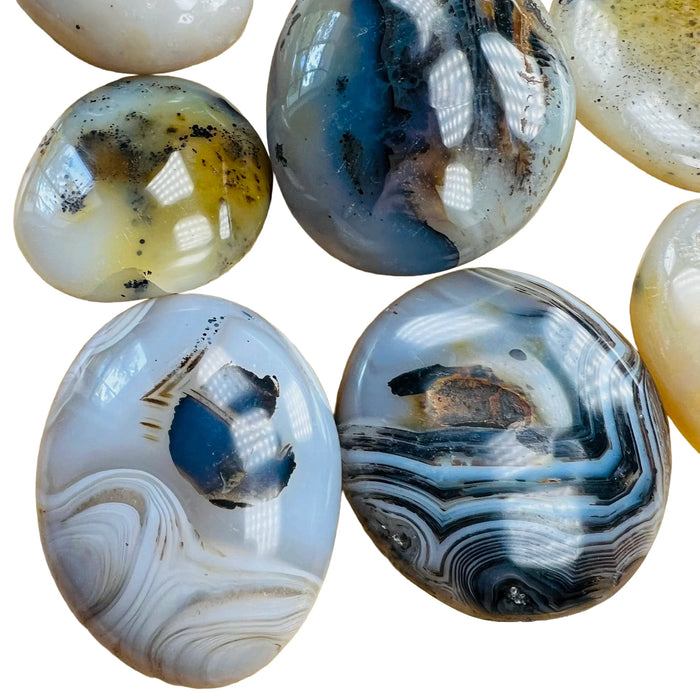
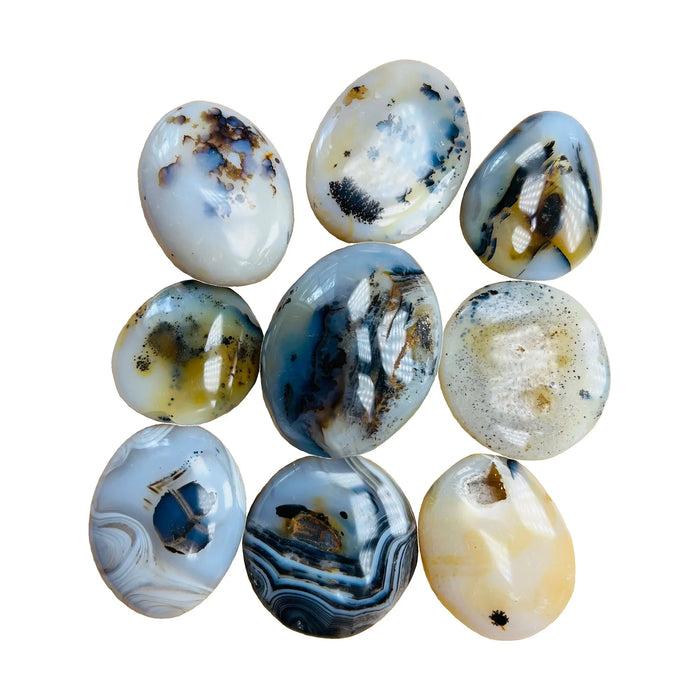
Dendritic agate is usually semi-transparent to translucent, ranging from colorless to pale gray or milky white as the base body, with the dendrites visible as dark brown, black, or occasionally reddish formations throughout. The patterns vary from delicate feathering to bold branching structures that resemble actual trees or ferns, though no organic material is present. Hardness sits at 6.5 to 7 on the Mohs scale, consistent with chalcedony generally. The stone takes a good polish and has a waxy to glassy luster. Unlike some agates, dendritic agate doesn't require treatment to achieve its appearance; the dendrites are a genuine record of the stone's mineral history.
The origins.
Dendritic agate is found across multiple regions, but the primary commercial sources are India and Madagascar. India, particularly Madhya Pradesh, produces the majority of dendritic agate on the global market. The material from this region is worked through established small-scale mining operations and artisan finishing centers. Indian dendritic agate tends to show bold, dark dendrite patterns on pale or milky chalcedony bases, and the pieces are often well-polished with a clean, professional finish.
Madagascar produces a softer, more delicate aesthetic in dendritic agate. The base stone tends toward finer translucency, with more subtle, fern-like dendrite patterns. The material is less commonly seen in the North American market than Indian sources, but represents genuine, untreated dendritic agate of distinct character. The dendrites in Malagasy material often show reddish or brownish tones rather than pure black.
Dendritic agate is also found in Brazil, Kazakhstan, and other regions worldwide. The India and Madagascar origins offer the most reliable supply and consistent quality to our sourcing region, though other deposits produce equally genuine material. Each source develops its own visual signature based on local mineral composition and formation conditions.
Traditional associations.
Dendritic agate is a modern stone in crystal practice, gaining popularity over the last few decades as global mineral sourcing expanded and the stone became more widely available. It doesn't have deep historical roots in traditional metaphysical systems. Instead, its current associations emerged from contemporary crystal workers who recognized the stone's visual metaphor of growth and branching, and who connected it to themes of patience, rootedness, and connection to nature.
In modern practice, dendritic agate is most often associated with the Heart and Root chakras, the element Earth, and intentions around grounding, growth, patience, nature connection, and inner strength. Many people work with it as a meditation stone when seeking the kind of calm that comes from feeling rooted or connected to the earth. The branching dendrite patterns suggest both the visible growth of trees and the hidden growth of roots, making it a popular choice for people tending to long-term patience or working through gradual change. The stone is often chosen by those who feel pulled to nature, who collect stones over time, or who want a visual reminder that growth doesn't happen in straight lines.
Spotting the real thing.
Genuine dendritic agate has visible, distinct dendrite patterns that appear three-dimensional within the stone's body. The dendrites branch in organic, tree-like or fern-like formations and show natural variation in thickness and color from root to tip. The base stone is translucent to semi-transparent, and the dendrites are dark brown, black, or reddish oxide deposits. When light passes through the stone, the dendrites remain visible as distinct formations, not surface coatings.
Dyed or artificially enhanced material shows uniform color in the base and may have color patterns that appear painted or surface-level rather than embedded within the stone. If dendrite patterns are present but show unusual uniformity or precision, or if they appear primarily on the surface rather than throughout the depth of the stone, the material may be enhanced. Genuine dendritic agate resists being scratched with a fingernail; the hardness (6.5 to 7 Mohs) means it will scratch glass, not the reverse. If a stone feels soft or scratches easily, it's not dendritic agate.
Care & handling.
Dendritic agate is a hard stone at 6.5 to 7 Mohs and doesn't require special handling beyond what you'd do for any quartz-family piece. It can be safely washed with warm soapy water and a soft brush. Avoid harsh chemicals, ultrasonic cleaners, and prolonged exposure to very high heat, which can cause cracking. The stone is safe to wear daily and won't be damaged by contact with other minerals or everyday life.
Store dendritic agate away from direct, intense sunlight if you want to preserve the contrast between the base stone and the dendrites; prolonged UV exposure can fade the visual distinction slightly over years. This is minimal and slow. The stone pairs well with other quartz varieties and earth-toned minerals. For energetic cleansing, water is perfectly safe, or use smoke, sound, or moonlight if you prefer non-water methods.
Pairs well with.
Proof, not promises.
We measure our own sourcing across five dimensions. Supply chain, environmental footprint, artisan support, market integrity, and pricing. The number is honest, not perfect. Where we can do better, we say so.
A deeper look.
Extended geology, dendrite formation, sourcing, authentication, and practical notes for when the quick guide isn't quite enough.
Extended geology and dendrite formation
Dendritic agate is a member of the chalcedony group, a cryptocrystalline form of quartz (SiO2) with an average hardness of 6.5 to 7 Mohs. The stone's signature feature, the dendrites, consists of iron oxide (hematite, limonite) or manganese oxide that crystallized in dendritic patterns during the stone's formation. These patterns are not random but follow the pathways of mineral-rich fluids moving through fractures in the chalcedony matrix.
Dendrites form over geological time as silica-rich solutions percolate through cracks in the forming stone. When iron or manganese-rich solutions reach these fractures, they precipitate out in crystalline form, following the direction of fluid flow. The result is a branching, tree-like or fern-like pattern that records the path of the mineral solution. This process cannot be replicated artificially; the dendrites are a genuine geological signature, not a treatment or enhancement.
The base stone ranges from colorless to pale gray or milky white, depending on trace mineral content and the density of the chalcedony matrix. The dendrites typically appear as dark brown to black formations, though reddish and greenish varieties exist in some deposits. Specific gravity sits at 2.58 to 2.64, consistent with quartz. The stone has a waxy to glassy luster when polished and fractures unevenly rather than along defined cleavage planes.
Sourcing in India and Madagascar
India's primary dendritic agate deposits are found in Madhya Pradesh, one of the richest mineral regions on the subcontinent. The material from this region is worked through small-scale mining operations and artisan finishing centers that have developed traditional techniques for extracting and polishing the stone without damage. Indian dendritic agate typically shows bold, well-defined dendrite patterns on milky or pale chalcedony bases.
Madagascar produces dendritic agate with a softer aesthetic. The base stone tends toward finer translucency, and the dendrite patterns are often more delicate and fern-like. The material is less commonly exported to North America than Indian sources, which makes it a less familiar find, though both origins produce equally genuine material. The dendrites in Malagasy pieces often show reddish or brownish oxide tones.
Dendritic agate occurs in other deposits worldwide, including Brazil, Kazakhstan, and various regions across Africa and Central Asia. No single origin produces a monopoly; the stone is relatively common in geological terms. India and Madagascar represent the most reliable commercial sources for consistent quality and transparent supply chains in the North American market.
Authentication and testing
Genuine dendritic agate shows dendrites that appear three-dimensional within the stone, not surface-painted. The patterns branch organically and show natural variation in thickness. Light passing through the stone illuminates the dendrites from within, confirming their presence throughout the depth of the stone, not just on the surface.
Hardness testing is reliable. Genuine dendritic agate will scratch glass and resist scratching from a fingernail or copper coin. If a stone scratches easily or feels soft, it is not dendritic agate. Dyed or artificially enhanced chalcedony often shows uniform color in the base and may have dendrite-like patterns that appear painted or surface-level. Under a loupe, genuine dendrites show irregular, organic branching; artificial imitations show more precise, repeated patterns.
The acid test (vinegar on a hidden edge produces fizz) confirms the presence of chalcedony chemically, though this is destructive and best reserved for pieces you do not plan to keep. More practical: if the stone is hard (scratches glass), shows three-dimensional dendrites throughout its depth, and exhibits natural variation in pattern and density, it is genuine dendritic agate.
Pricing and market context
Tumbled dendritic agate typically runs $4 to $12 per piece at retail depending on size and the clarity and complexity of the dendrite pattern. Well-polished pieces and palm stones range $10 to $20. Larger display pieces, high-polish carvings, or specimens with exceptionally striking patterns can reach $25 to $60.
Commodity-priced dendritic agate (under $2 per tumble) should prompt questions about origin and authenticity. Genuine dendritic agate at those prices usually reflects smaller size or modest polishing quality rather than legitimate bargains. Very high pricing often reflects artistry, carving work, or size rather than the mineral itself.
Market warning signs: dendritic agate sold without origin disclosure, material claimed to be rare when it is commercially available, and pieces that show no natural variation in dendrite pattern despite claims of natural status. Dyed imitations may be sold as dendritic agate; these typically show uniform color in the base and less organic dendrite patterns.
Good sourcing is a practice, not a claim.
Nothing we sell is dyed, stabilized, reconstituted, or color-enhanced without full disclosure. We name our origins where we can. We say so when we cannot. We walk away from material that does not meet our standard, even when it costs us sales.
Bring dendritic agate home.
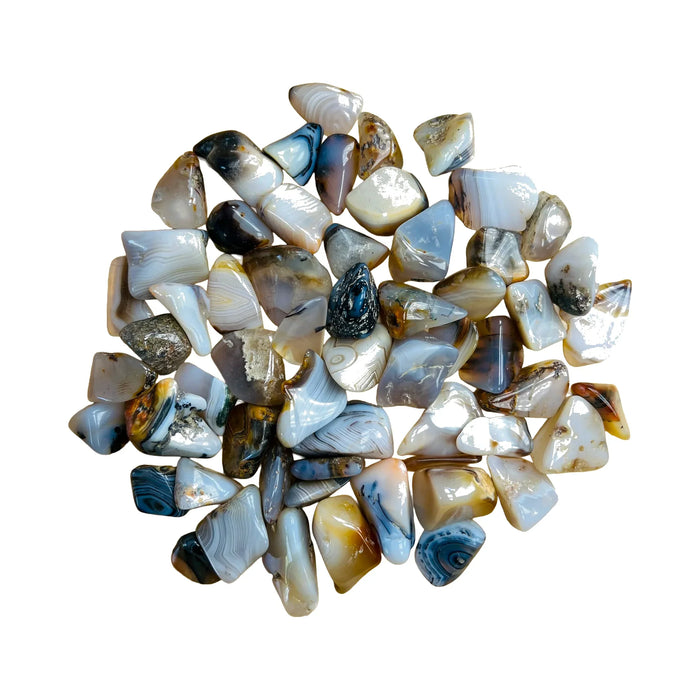
Natural, untreated dendritic agate from India and Madagascar. Hand-selected for dendrite pattern clarity and finish quality. Each piece comes with origin documentation confirming India (Madhya Pradesh) or Madagascar source.
Shop the dendritic agate collectionDendritic Agate, in stock now.
Our most-loved Dendritic Agate pieces, ready to ship.
- from 1,000+ reviews
- Ships within 72 hoursMonday to Friday, tracked
- 90 days to return itif you do not love it
- Free US shipping over $99$8.99 flat rate under
The Slow Note
New stones go to the list first.
No forwarding, no selling. Unsubscribe in one click. Privacy