









 Agatefor stress relief
 Amazonitefor stress relief
 Aquamarinefor serenity
 Aventurinefor luck
 Bloodstonefor energy
 Blue Kyanitefor confidence
 Blue Lace Agatefor stress relief
 Chrysocollafor emotional healing
 Fluoritefor focus
 Garnetfor energy
 Lepidolitefor stress relief
 Malachitefor emotional healing
 Moonstonefor grounding
 Obsidianfor protection
 Ocean Jasperfor emotional healing
 Red Jasperfor grounding
 Rhodonitefor emotional healing
 Selenitefor cleansing
 Sodalitefor focus
 Tiger Eyefor confidence








































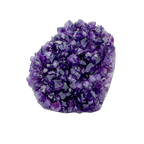 Amethyst
 Clear Quartz
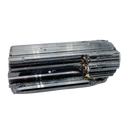 Black Tourmaline
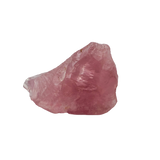 Rose Quartz
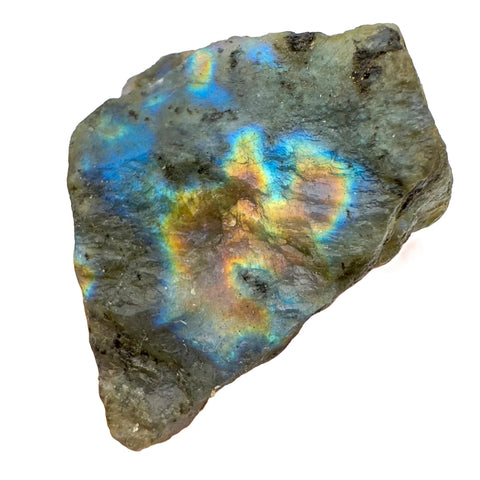
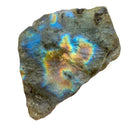 Labradorite
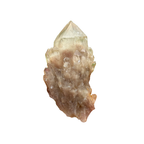 Natural Citrine
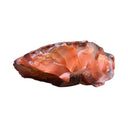 Carnelian
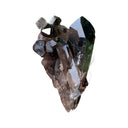 Smoky Quartz
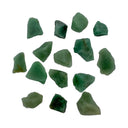 Aventurine
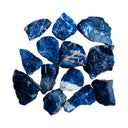 Sodalite
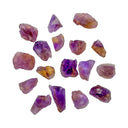 Ametrine
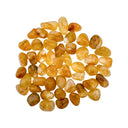 Golden Healer
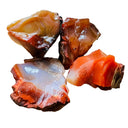 Raw Stones
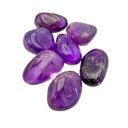 Tumbled Stones
 Palm Stones
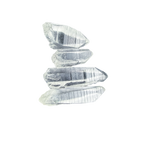 Crystal Points
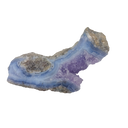 Clusters & Geodes
 Polished & Decor
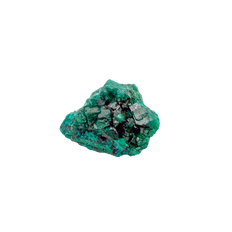 Mineral Specimens
 Crystal Chips




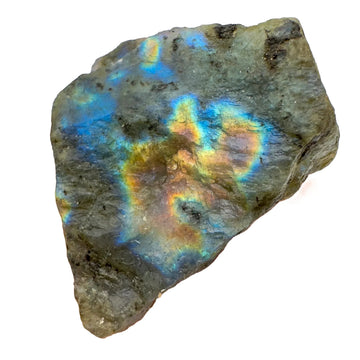



 Raw Stones
179 to choose from
Raw Stones
179 to choose from
 Tumbled Stones
162 to choose from
Tumbled Stones
162 to choose from
 Palm Stones
25 to choose from
Palm Stones
25 to choose from
 Crystal Points
23 to choose from
Crystal Points
23 to choose from
 Clusters & Geodes
99 to choose from
Clusters & Geodes
99 to choose from
 Polished & Decor
147 to choose from
Polished & Decor
147 to choose from
 Mineral Specimens
248 to choose from
Mineral Specimens
248 to choose from
 Crystal Chips
21 to choose from
Crystal Chips
21 to choose from


 AngolaAquamarine
›
AngolaAquamarine
›
 BotswanaCarnelian, Tree Agate
›
BotswanaCarnelian, Tree Agate
›
 DR CongoMalachite, Natural Citrine
›
DR CongoMalachite, Natural Citrine
›
 EswatiniBloodstone
›
EswatiniBloodstone
›
 MadagascarLabradorite, Clear Quartz
›
MadagascarLabradorite, Clear Quartz
›
 MalawiBlue Lace Agate, Garnet
›
MalawiBlue Lace Agate, Garnet
›
 MozambiqueAmazonite
›
MozambiqueAmazonite
›
 NamibiaSodalite, Blue Lace Agate
›
NamibiaSodalite, Blue Lace Agate
›
 Republic of the CongoDioptase
›
Republic of the CongoDioptase
›
 South AfricaTiger Eye, Unakite
›
South AfricaTiger Eye, Unakite
›
 ZambiaChevron Amethyst
›
ZambiaChevron Amethyst
›
 ZimbabweEmerald, Rhodonite
›
ZimbabweEmerald, Rhodonite
›
 ArgentinaBlack Obsidian, Rhodochrosite
›
ArgentinaBlack Obsidian, Rhodochrosite
›
 BoliviaAmetrine
›
BoliviaAmetrine
›
 BrazilAmethyst, Clear Quartz
›
BrazilAmethyst, Clear Quartz
›
 PeruSerpentine, Jade
›
PeruSerpentine, Jade
›
 UruguayAmethyst
›
UruguayAmethyst
›
 Dominican RepublicLarimar
›
Dominican RepublicLarimar
›
 MexicoRainbow Obsidian, Crazy Lace Agate
›
MexicoRainbow Obsidian, Crazy Lace Agate
›
 United StatesSelenite, Peridot
›
United StatesSelenite, Peridot
›
 ChinaFluorite
›
ChinaFluorite
›
 RussiaShungite
›
RussiaShungite
›
 AustraliaMookaite
›
AustraliaMookaite
›
 Where our crystals come from
See where we source →
Where our crystals come from
See where we source →


 Aries
Mar 21 to Apr 19
Carnelian
›
Aries
Mar 21 to Apr 19
Carnelian
›
 Taurus
Apr 20 to May 20
Rose Quartz
›
Taurus
Apr 20 to May 20
Rose Quartz
›
 Gemini
May 21 to Jun 20
Agate
›
Gemini
May 21 to Jun 20
Agate
›
 Cancer
Jun 21 to Jul 22
Moonstone
›
Cancer
Jun 21 to Jul 22
Moonstone
›
 Leo
Jul 23 to Aug 22
Citrine
›
Leo
Jul 23 to Aug 22
Citrine
›
 Virgo
Aug 23 to Sep 22
Amazonite
›
Virgo
Aug 23 to Sep 22
Amazonite
›
 Libra
Sep 23 to Oct 22
Blue Lace Agate
›
Libra
Sep 23 to Oct 22
Blue Lace Agate
›
 Scorpio
Oct 23 to Nov 21
Obsidian
›
Scorpio
Oct 23 to Nov 21
Obsidian
›
 Sagittarius
Nov 22 to Dec 21
Sodalite
›
Sagittarius
Nov 22 to Dec 21
Sodalite
›
 Capricorn
Dec 22 to Jan 19
Black Tourmaline
›
Capricorn
Dec 22 to Jan 19
Black Tourmaline
›
 Aquarius
Jan 20 to Feb 18
Amethyst
›
Aquarius
Jan 20 to Feb 18
Amethyst
›
 Pisces
Feb 19 to Mar 20
Aquamarine
›
Gifting?
A birthday stone is the safe bet.
Read the zodiac guide →
Pisces
Feb 19 to Mar 20
Aquamarine
›
Gifting?
A birthday stone is the safe bet.
Read the zodiac guide →


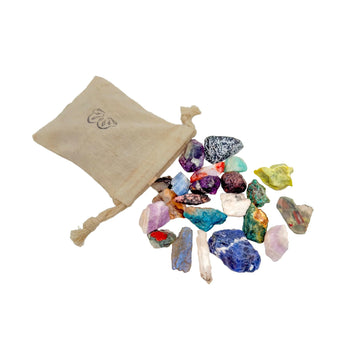










Dendritic Opal
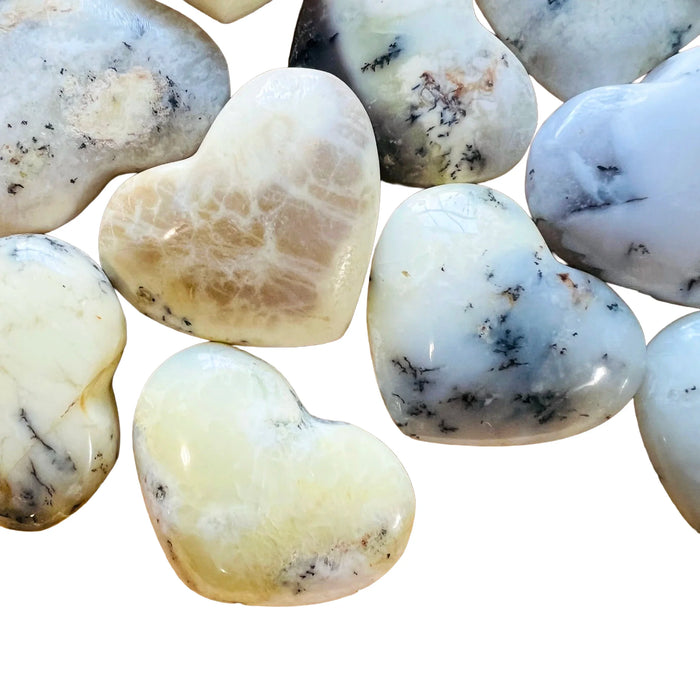
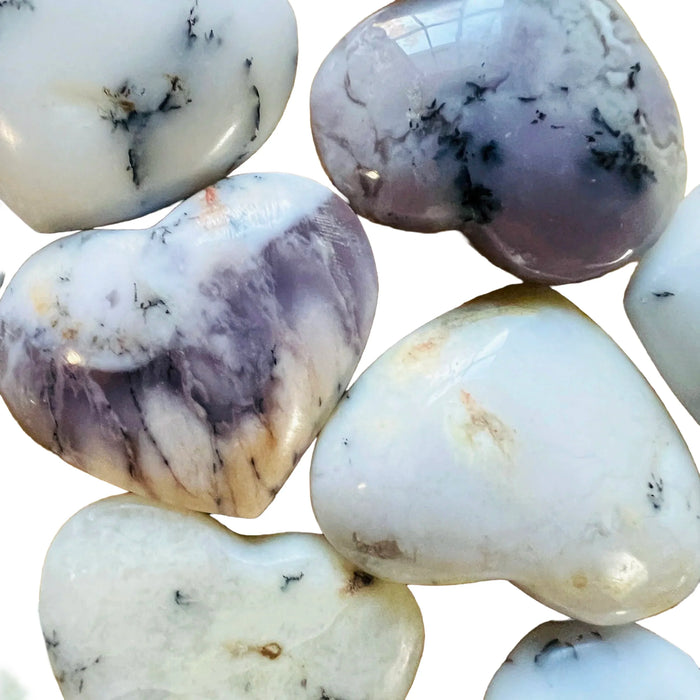
Dendritic opal is a white-to-cream or pale translucent opal containing dark dendritic inclusions, iron or manganese oxide deposits that form fern-like or tree-branch patterns inside the stone. Most commercial material comes from Madagascar. Unlike precious opal, dendritic opal does not show rainbow play of color. Its beauty lies in the striking natural dendrites against the milky opal base. The stone is soft (Mohs 5.5 to 6.5), water-bearing, and can fade in prolonged sunlight. The dendrites are not fossilized plants, they are pure mineral formations that mimic organic shapes.
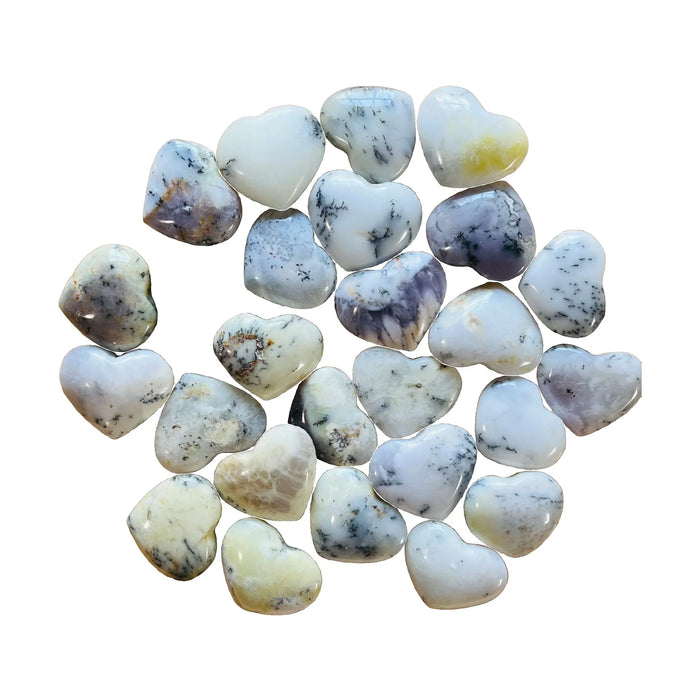
Shop dendritic opalDendritic Opal, in stock now.
From Atsinanana, Madagascar, ready to ship.
- from 1,000+ reviews
- Ships within 72 hoursMonday to Friday, tracked
- 90 days to return itif you do not love it
- Free US shipping over $99$8.99 flat rate under
The geology.
Dendritic opal is hydrated silica (SiO2.nH2O) with suspended dendrites, which are tree-like or fern-like inclusions of iron and manganese oxides. These oxides crystallize along fracture lines and natural planes within the opal matrix, creating patterns that mimic botanical growth. The base opal is typically milky white, translucent, or pale cream, with Mohs hardness ranging from 5.5 to 6.5, making it softer than most common stones used in jewelry. Specific gravity runs from 1.9 to 2.3, reflecting the high water content.
Unlike precious opal, dendritic opal does not display the characteristic play of color, or opalescence. Its appeal is entirely in the contrast between the pale opal body and the dark, intricate dendrite patterns. The stone forms in sedimentary deposits where silica-rich fluids percolate through host rock, depositing opal around existing mineral structures or impurities. The dendrites form as these iron and manganese minerals crystallize within the opal, and their shapes are determined by mineral chemistry and the geometry of the host rock. The water content in opal can make the stone vulnerable to color fading under prolonged direct sunlight, a characteristic shared with other opals. This is not a sign of poor quality but rather a natural property of the mineral.
The origins.
Dendritic opal is primarily found in Madagascar, where it occurs in lateritic deposits and weathered zones overlying basaltic host rock. The stone has been commercially mined and sold for the past two decades, becoming more widely available as sourcing from Madagascar expanded. The most prized dendritic opal displays sharp, clearly defined dendrite patterns against a clean, pale opal base. Material from Madagascar varies in dendrite clarity and opal body quality depending on the specific deposit and processing methods used.
Dendritic opal also occurs in smaller quantities in deposits in the United States, Peru, and other regions, but Madagascar remains the primary commercial source for the North American market. The mining is typically small-scale, involving hand-extraction and on-site sorting for quality. The dendrite patterns are naturally formed and cannot be artificially created, which makes each stone unique in its branching design. Smaller quantities of dendritic opal may come from other sources, but provenance for non-Madagascar material is often unclear or undocumented in commercial channels.
Traditional associations.
Dendritic opal entered contemporary crystal practice recently as Malagasy sourcing increased and the stone became more available. It does not have deep traditional or historical roots in established crystal systems. Its current associations have developed among modern crystal workers who are drawn to the stone's appearance and its associations with nature, growth, and patience. The dendritic patterns visually resemble plant growth and tree branches, which inform how people relate to the stone metaphorically.
In modern practice, dendritic opal is often associated with grounding, nature connection, patience, and the slow unfolding of personal growth. Many people work with it during times of transition or when cultivating patience with natural timing. The Heart and Root chakra associations reflect its positioning as a stone that bridges earthiness with emotional openness. Some people pair it with stones associated with growth or new beginnings, though dendritic opal's essence is more about honoring patience than rushing outcomes. It is sometimes called Merlinite in certain traditions, though this refers to a different stone with distinct characteristics. The actual dendritic opal carries no such alternate name in most reputable sources.
Spotting the real thing.
Genuine dendritic opal shows clear, natural dendrite patterns that are sharp and well-defined within a pale, milky opal matrix. The opal base itself should feel slightly waxy or glassy to the touch and show some translucency when held to light. The dendrite patterns should look like actual mineral growths, not painted or applied decoration. Under magnification, you can see that the dendrites are embedded within the opal, not surface-applied. The softness of the opal is characteristic and can be tested gently, as the stone will scratch under fingernail or a copper coin, though you should avoid aggressive testing on pieces you intend to keep.
Imitations may include dendrite-painted agate or other minerals, which will be harder and feel completely different in the hand. Synthetic or artificially dendrite-patterned materials typically show uniform, too-perfect patterns that lack the organic variation of natural dendrite growth. Real dendrite patterns are always unique, with slight variations in density, sharpness, and distribution. If the stone feels very hard, shows no translucency, and the dendrite patterns appear almost identical on two different pieces, it is likely not genuine dendritic opal. The softness and water-sensitivity are defining traits of authentic material.
Care & handling.
Dendritic opal is soft and water-bearing, requiring gentle handling and careful storage. Avoid extended soaking, water immersion, or exposure to water-based cleaners. Brief rinsing under cool running water is acceptable if you're careful, but standing in water, salt baths, or steam cleaning will damage the stone over time. The water content can cause the opal to become brittle or to develop surface cracks if subjected to rapid temperature changes or prolonged desiccation. Store in a cool, stable environment away from direct heat sources and radiators.
Handle with care to avoid drops or pressure on edges. The stone's softness means it can be scratched by harder minerals carried in pockets or stored near them. Do not use ultrasonic or steam cleaners. The pale color and translucency can fade gradually with prolonged direct sunlight, which is a natural property of the water-bearing opal and not a defect. For energetic cleansing, use smoke, sound, breath, or moonlight rather than water or salt. Store separately from harder stones. Treat the softness as part of the stone's character, not a flaw to overcome.
Pairs well with.
Proof, not promises.
We measure our own sourcing across five dimensions. Supply chain, environmental footprint, artisan support, market integrity, and pricing. The number is honest, not perfect. Where we can do better, we say so.
A deeper look.
Extended geology, dendrite formation, sourcing, authentication, color fading, care details, and naming confusion for when the quick guide isn't quite enough.
Extended geology and dendrite formation
Dendritic opal is hydrated silicon dioxide (SiO2.nH2O), a cryptocrystalline to amorphous mineral with variable water content between 3 and 20 percent by weight. The base opal forms from silica-rich solutions that percolate through sedimentary and lateritic deposits, eventually hardening into the solid opal matrix. The dendrites themselves are inclusions of iron oxides (hematite, limonite) and manganese oxides that crystallize along the natural fracture planes, stress lines, and chemical discontinuities within the forming opal.
As the opal solution flows through the host rock, iron and manganese ions suspended in the fluid follow the path of least resistance, concentrating along weaknesses in the developing opal. Over time, these ions crystallize into fine branching patterns that mimic botanical growth. The result is a mineral dendrite, not a fossilized plant. The patterns are entirely inorganic and determined by mineral chemistry and rock geometry, yet they create a striking visual resemblance to ferns, trees, and root systems. This resemblance is purely coincidental but is the primary appeal of the stone to collectors and crystal workers.
Opal water content and color fading
The water in opal is integral to its structure, occupying spaces within the silica matrix. This water content makes opal sensitive to both moisture loss and moisture gain. Extended exposure to dry environments or direct heat can cause the opal to lose water gradually, leading to color dulling and sometimes surface cracking. Prolonged direct sunlight can also cause the pale opal body and its visual contrast with dendrites to fade gradually. This fading is reversible in the sense that the stone remains chemically intact, but the color shift is not recoverable by simply adding water back. For collectors who want to preserve color intensity, indirect light storage and moderate humidity are best practices.
Madagascar sourcing and mining practices
Dendritic opal is mined in lateritic deposits in Madagascar, particularly in regions where ancient basaltic rock has weathered and oxidized. The mining is typically small-scale and involves hand-extraction, sometimes with basic machinery to break overburden. The material is on-site sorted for dendrite clarity and opal body quality. Labor conditions and environmental oversight vary by operation and region. We work with suppliers who document their practices and provide above-market compensation for labor, though we do not claim perfect working conditions across the supply chain.
Authentication and distinguishing from imitations
Genuine dendritic opal can be distinguished from imitations by several tests. The hardness is measurable at 5.5 to 6.5 on the Mohs scale, meaning the stone scratches under fingernail or copper coin. A piece that feels hard and resists scratching is not opal. The opal base should show some translucency when held to light; opaque white material is less likely to be opal. The dendrite patterns should show variation in density and sharpness, reflecting natural mineral growth rather than applied decoration. Under magnification, genuine dendrites are embedded within the opal matrix, not surface-applied.
Painted or printed dendrites on other stones (agate, jade, calcite) are surface-level and easily distinguished with magnification. Synthetic dendrite-patterned materials often show too-uniform branching or unnatural repetition. Authentic dendrite patterns are always unique. The waxy feel of genuine opal and its tendency to become fragile or translucent at edges are also characteristic. If a piece claims to be dendritic opal but feels very hard, shows no translucency, and displays near-identical patterns on multiple pieces, it is likely not genuine.
Merlinite confusion
Dendritic opal is sometimes loosely called Merlinite in certain contemporary crystal texts, yet Merlinite is actually a different stone, typically a gray or white feldspar with black magnetite dendrites. The confusion arose because both stones display dendrites and are sometimes sourced from similar regions. However, they have distinct mineral compositions, hardnesses, and properties. Genuine Merlinite is harder than dendritic opal and shows different color relationships. When buying, it's worth confirming which stone is actually being offered, as the two are distinct minerals with different care requirements.
Care and storage best practices
Store dendritic opal in a stable, cool environment away from direct sunlight, heating sources, and rapid temperature fluctuations. Avoid prolonged water exposure, salt baths, or steam cleaning. Brief rinsing under cool running water is fine, but standing in water will damage the stone over time. The water-bearing nature of the opal means it is sensitive to both desiccation and oversaturation. Moderate humidity (40-60%) is ideal. Store separately from harder minerals to prevent scratching. Handle gently and avoid drops or pressure on edges. For energetic cleansing, use smoke, sound, breath, or moonlight rather than water.
Pricing and market context
Dendritic opal is a moderately priced stone, with polished pieces typically ranging from $8 to $20 depending on size and dendrite clarity. Raw or unpolished specimens are usually $6 to $15. Larger display pieces and exceptionally clear specimens can reach $25 to $40 or more. Pricing reflects the careful sourcing and transparency of origin rather than extreme rarity. Dendritic opal that is significantly cheaper than these ranges may indicate lower-quality dendrite patterns, smaller sizes, or undisclosed treatment or origin. Very expensive pricing may reflect artistry in carving or exceptional clarity and pattern definition.
Good sourcing is a practice, not a claim.
Nothing we sell is dyed, stabilized, reconstituted, or color-enhanced without full disclosure. We name our origins where we can. We say so when we cannot. We walk away from material that does not meet our standard, even when it costs us sales.
Bring dendritic opal home.
Natural, untreated dendritic opal from Madagascar. Pale translucent opal with sharp natural dendrite patterns, hand-selected for clarity and pattern definition. Each piece comes with origin documentation confirming Madagascar source.
Shop the dendritic opal collectionGrounded Connections
New stones go to the list first.
No forwarding, no selling. Unsubscribe in one click. Privacy