









 Agatefor stress relief
 Amazonitefor stress relief
 Aquamarinefor serenity
 Aventurinefor luck
 Bloodstonefor energy
 Blue Kyanitefor confidence
 Blue Lace Agatefor stress relief
 Chrysocollafor emotional healing
 Fluoritefor focus
 Garnetfor energy
 Lepidolitefor stress relief
 Malachitefor emotional healing
 Moonstonefor grounding
 Obsidianfor protection
 Ocean Jasperfor emotional healing
 Red Jasperfor grounding
 Rhodonitefor emotional healing
 Selenitefor cleansing
 Sodalitefor focus
 Tiger Eyefor confidence








































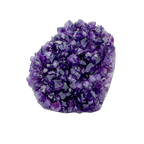 Amethyst
 Clear Quartz
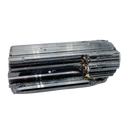 Black Tourmaline
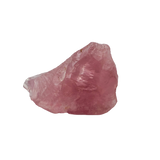 Rose Quartz
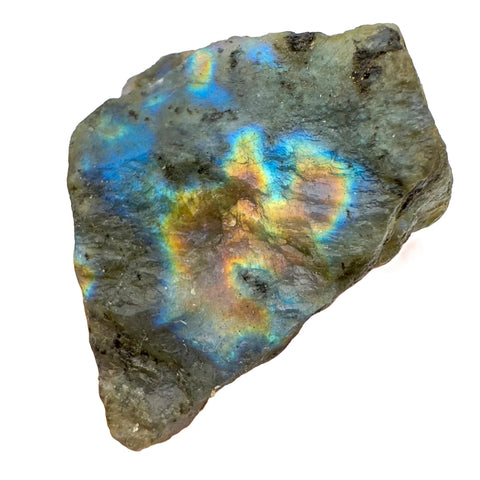
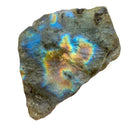 Labradorite
 Natural Citrine
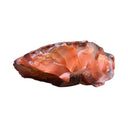 Carnelian
 Smoky Quartz
 Aventurine
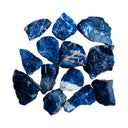 Sodalite
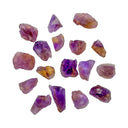 Ametrine
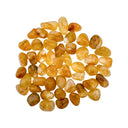 Golden Healer
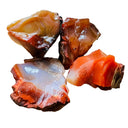 Raw Stones
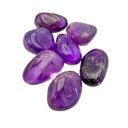 Tumbled Stones
 Palm Stones
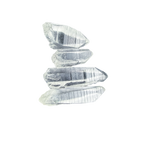 Crystal Points
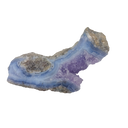 Clusters & Geodes
 Polished & Decor
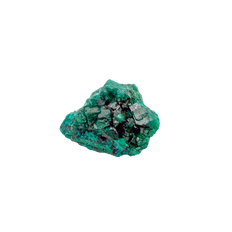 Mineral Specimens
 Crystal Chips







 Raw Stones
179 to choose from
Raw Stones
179 to choose from
 Tumbled Stones
162 to choose from
Tumbled Stones
162 to choose from
 Palm Stones
25 to choose from
Palm Stones
25 to choose from
 Crystal Points
23 to choose from
Crystal Points
23 to choose from
 Clusters & Geodes
103 to choose from
Clusters & Geodes
103 to choose from
 Polished & Decor
148 to choose from
Polished & Decor
148 to choose from
 Mineral Specimens
257 to choose from
Mineral Specimens
257 to choose from
 Crystal Chips
21 to choose from
Crystal Chips
21 to choose from


 AngolaAquamarine
›
AngolaAquamarine
›
 BotswanaCarnelian, Tree Agate
›
BotswanaCarnelian, Tree Agate
›
 DR CongoMalachite, Natural Citrine
›
DR CongoMalachite, Natural Citrine
›
 EswatiniBloodstone
›
EswatiniBloodstone
›
 MadagascarLabradorite, Clear Quartz
›
MadagascarLabradorite, Clear Quartz
›
 MalawiBlue Lace Agate, Garnet
›
MalawiBlue Lace Agate, Garnet
›
 MozambiqueAmazonite
›
MozambiqueAmazonite
›
 NamibiaSodalite, Blue Lace Agate
›
NamibiaSodalite, Blue Lace Agate
›
 Republic of the CongoDioptase
›
Republic of the CongoDioptase
›
 South AfricaTiger Eye, Unakite
›
South AfricaTiger Eye, Unakite
›
 ZambiaChevron Amethyst
›
ZambiaChevron Amethyst
›
 ZimbabweEmerald, Rhodonite
›
ZimbabweEmerald, Rhodonite
›
 ArgentinaBlack Obsidian, Rhodochrosite
›
ArgentinaBlack Obsidian, Rhodochrosite
›
 BoliviaAmetrine
›
BoliviaAmetrine
›
 BrazilAmethyst, Clear Quartz
›
BrazilAmethyst, Clear Quartz
›
 PeruSerpentine, Jade
›
PeruSerpentine, Jade
›
 UruguayAmethyst
›
UruguayAmethyst
›
 Dominican RepublicLarimar
›
Dominican RepublicLarimar
›
 MexicoRainbow Obsidian, Crazy Lace Agate
›
MexicoRainbow Obsidian, Crazy Lace Agate
›
 United StatesSelenite, Peridot
›
United StatesSelenite, Peridot
›
 ChinaFluorite
›
ChinaFluorite
›
 RussiaShungite
›
RussiaShungite
›
 AustraliaMookaite
›
AustraliaMookaite
›
 Where our crystals come from
See where we source →
Where our crystals come from
See where we source →


 Aries
Mar 21 to Apr 19
Carnelian
›
Aries
Mar 21 to Apr 19
Carnelian
›
 Taurus
Apr 20 to May 20
Rose Quartz
›
Taurus
Apr 20 to May 20
Rose Quartz
›
 Gemini
May 21 to Jun 20
Agate
›
Gemini
May 21 to Jun 20
Agate
›
 Cancer
Jun 21 to Jul 22
Moonstone
›
Cancer
Jun 21 to Jul 22
Moonstone
›
 Leo
Jul 23 to Aug 22
Citrine
›
Leo
Jul 23 to Aug 22
Citrine
›
 Virgo
Aug 23 to Sep 22
Amazonite
›
Virgo
Aug 23 to Sep 22
Amazonite
›
 Libra
Sep 23 to Oct 22
Blue Lace Agate
›
Libra
Sep 23 to Oct 22
Blue Lace Agate
›
 Scorpio
Oct 23 to Nov 21
Obsidian
›
Scorpio
Oct 23 to Nov 21
Obsidian
›
 Sagittarius
Nov 22 to Dec 21
Sodalite
›
Sagittarius
Nov 22 to Dec 21
Sodalite
›
 Capricorn
Dec 22 to Jan 19
Black Tourmaline
›
Capricorn
Dec 22 to Jan 19
Black Tourmaline
›
 Aquarius
Jan 20 to Feb 18
Amethyst
›
Aquarius
Jan 20 to Feb 18
Amethyst
›
 Pisces
Feb 19 to Mar 20
Aquamarine
›
Gifting?
A birthday stone is the safe bet.
Read the zodiac guide →
Pisces
Feb 19 to Mar 20
Aquamarine
›
Gifting?
A birthday stone is the safe bet.
Read the zodiac guide →


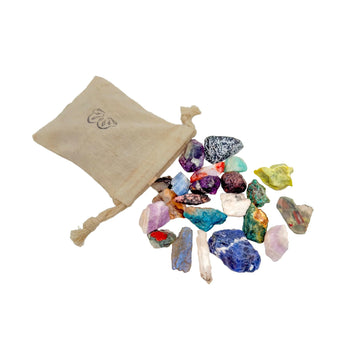










Carnelian
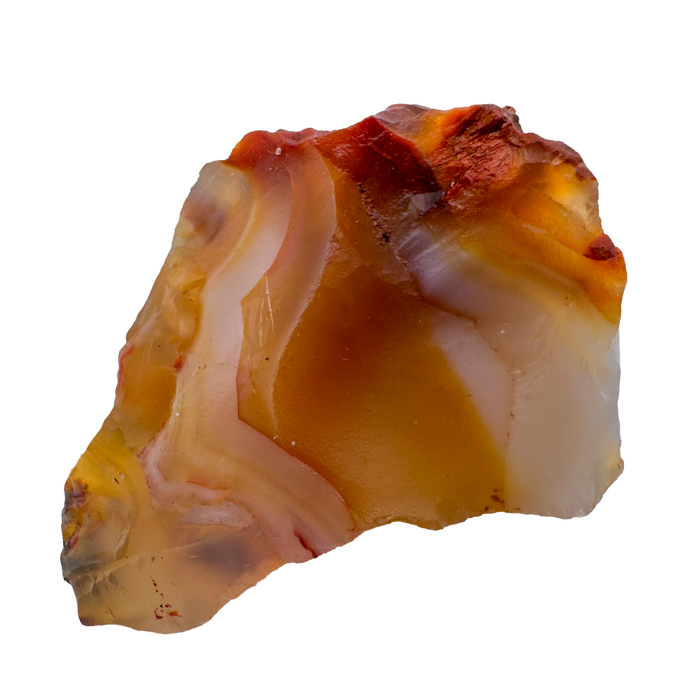
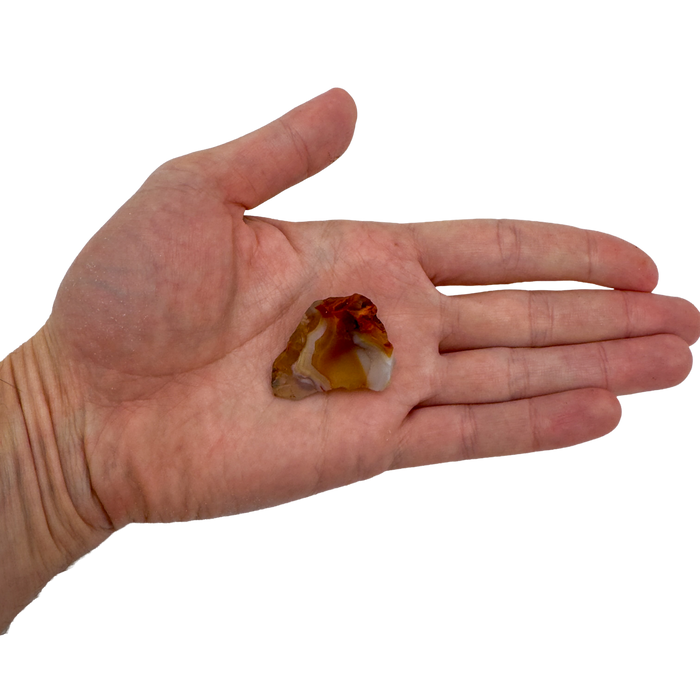
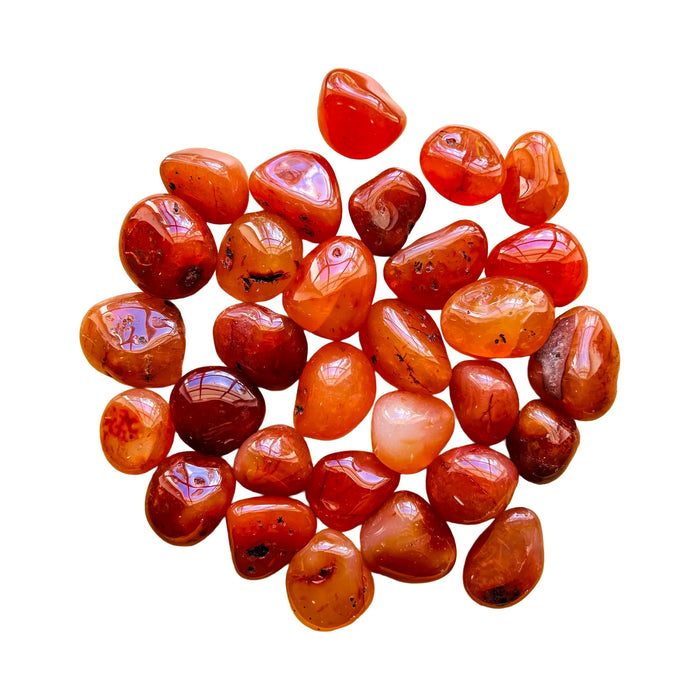
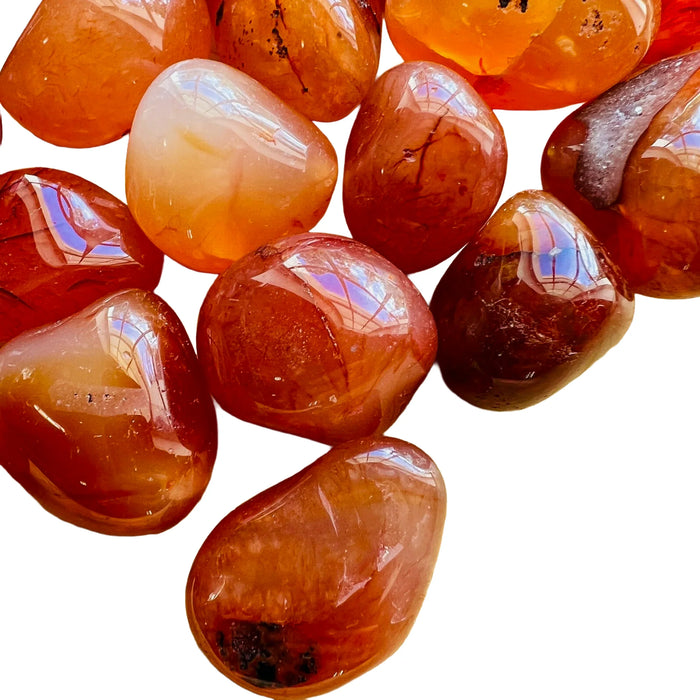
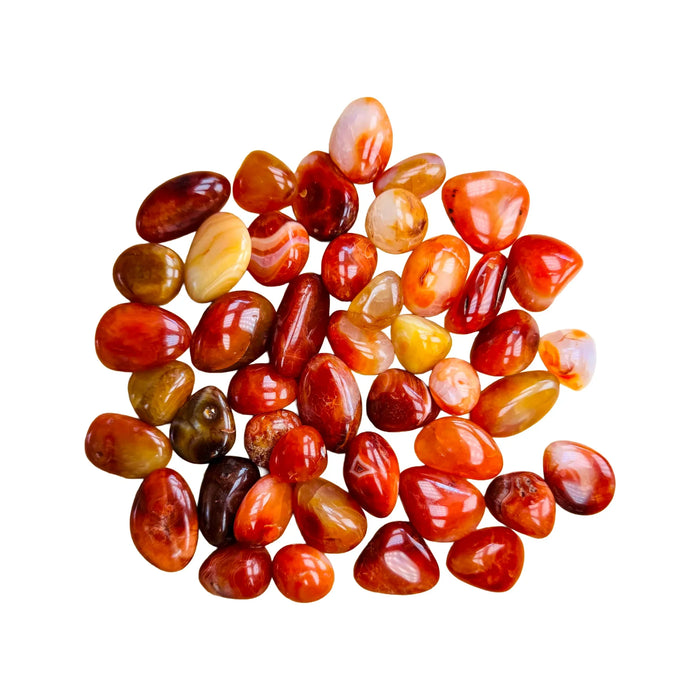
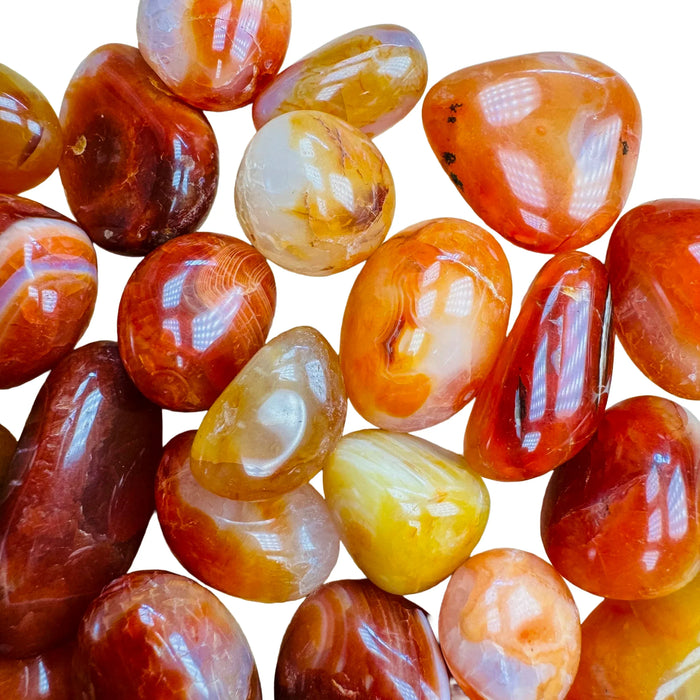
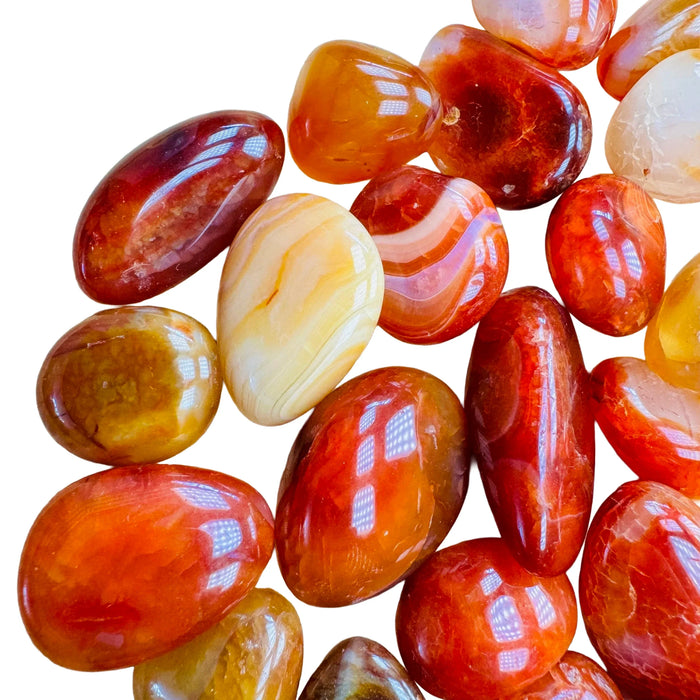
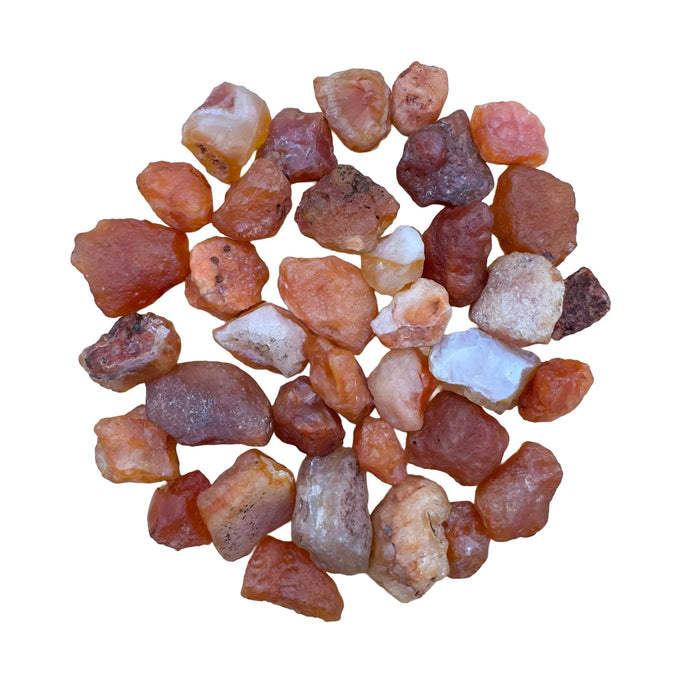
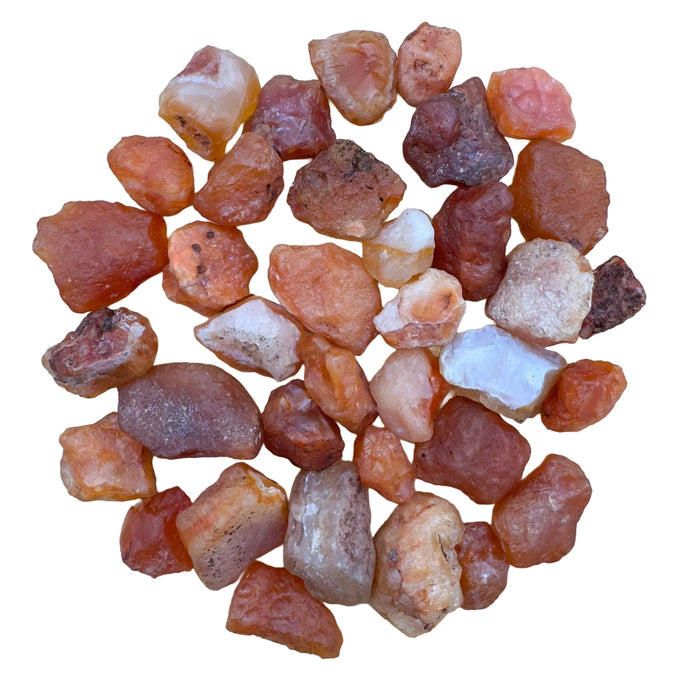
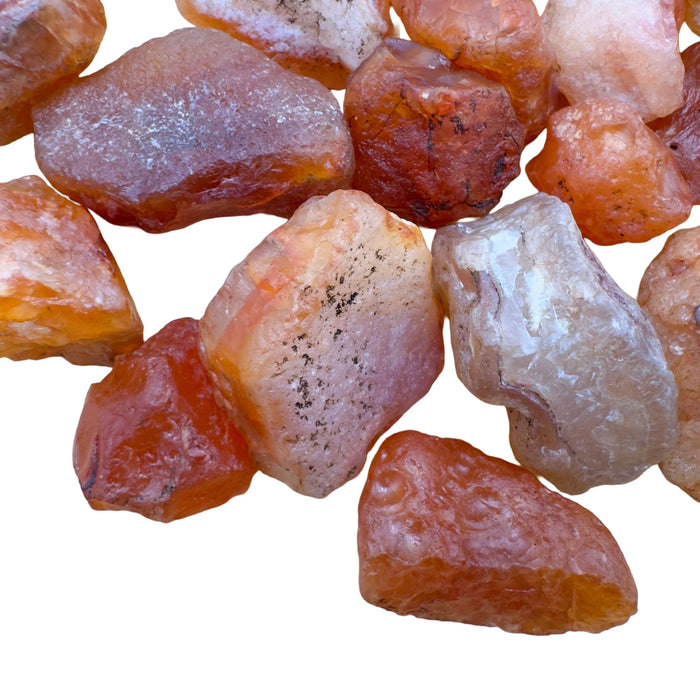
Carnelian is a warm orange to red-orange variety of chalcedony, a microcrystalline quartz colored by iron oxides. Most commercial carnelian you'll find has been gently heated from pale chalcedony to intensify the orange and red hues into something vivid and rich. The stone carries deep history, valued in ancient Egypt and Rome as a talisman of vitality and creative warmth. We source ours with full disclosure about the heat treatment, because knowing what we're working with matters more than pretending every piece is untouched.
Shop carnelianCarnelian, in stock now.
Our most-loved Carnelian pieces, ready to ship.
- from 1,000+ reviews
- Ships within 72 hoursMonday to Friday, tracked
- 90 days to return itif you do not love it
- Free US shipping over $99$8.99 flat rate under
The geology.
Carnelian is a variety of chalcedony, a microcrystalline form of quartz with the chemical formula SiO2. Its warm orange to red-orange color comes from iron oxide impurities distributed throughout the stone's structure. The color intensity and hue vary with iron content and concentration, ranging from pale salmon orange to deep brick red depending on the deposit and how the material has been treated. Carnelian is part of the larger quartz family and sits at 6.5 to 7 on the Mohs hardness scale, making it fairly durable for everyday wear as a tumbled stone or pendant.
The stone forms in sedimentary and volcanic environments, often in the form of larger nodules or banded deposits rather than as distinct crystals. Carnelian has a trigonal crystal system at the microscopic level, though the microcrystalline nature means crystal faces are invisible to the naked eye. It shows a waxy to glossy luster when polished and typically fractures unevenly rather than along cleavage planes. Most commercial carnelian has been heat-treated to intensify the color. This is standard practice in the industry and is not a hidden flaw. The treatment is stable, permanent, and brings out the vivid warmth that makes carnelian such a visually striking stone.
The origins.
Carnelian deposits exist in many parts of the world. Brazil, India, and Madagascar are the primary sources of commercial carnelian sold in North America, though material also comes from Uruguay, Peru, Botswana, and other locations. Brazil produces a significant volume of carnelian, often in the form of larger nodules that are sliced, polished, and tumbled into the pieces that reach collectors. The Brazilian material tends toward warm orange tones and high polish quality. India's carnelian comes from several regions and ranges from pale orange to deeper red, with some pieces showing subtle banding. Madagascar has become an increasingly reliable source in recent years, offering both tumbled stones and raw material with consistent coloring.
The differences between origins are subtle but real. Brazilian carnelian often has a slightly deeper, more saturated orange. Indian carnelian sometimes shows more variation in tone across a single piece, with subtle shifts from orange to rust to red. Madagascan carnelian tends toward a bright, clean orange without as much variation. None of these differences indicates quality difference. They're simply the visual signature of different geological deposits and different mining and processing practices. Most commercial carnelian from all these sources has been heat-treated to intensify color and is treated consistently, making color more predictable than it would be with untreated material.
Carnelian deposits exist in other locations worldwide, but Brazil, India, and Madagascar offer the most stable supply, the widest range of finished forms, and reliable sourcing relationships we can document and verify.
Traditional associations.
Carnelian carries one of the longest histories of any crystal in human culture. Ancient Egyptians valued it deeply as a protective stone and symbol of vitality. Roman soldiers wore carnelian for courage in battle. It appears in medieval lapidaries as a stone of warmth and creative action. Modern crystal practice drew heavily on these historical threads, and carnelian remains associated with activation, courage, creative confidence, and warmth. Unlike newer stones in crystal work, carnelian arrived already loaded with meaning across many cultures.
In contemporary practice, carnelian is most commonly associated with the Sacral chakra, the element Fire, and intentions around creativity, confidence, vitality, and personal warmth. Many people carry or wear carnelian when they want to feel more grounded in their own power, or when they're working on creative projects that need momentum. It's often chosen by people drawn to the "fire" energy of initiation and courage. Others simply love the color and the way it feels warm in the hand. The traditional associations emphasize activation and creative flow without the intensity that some other fire stones carry. Carnelian feels approachable and warm rather than overwhelming.
Spotting the real thing.
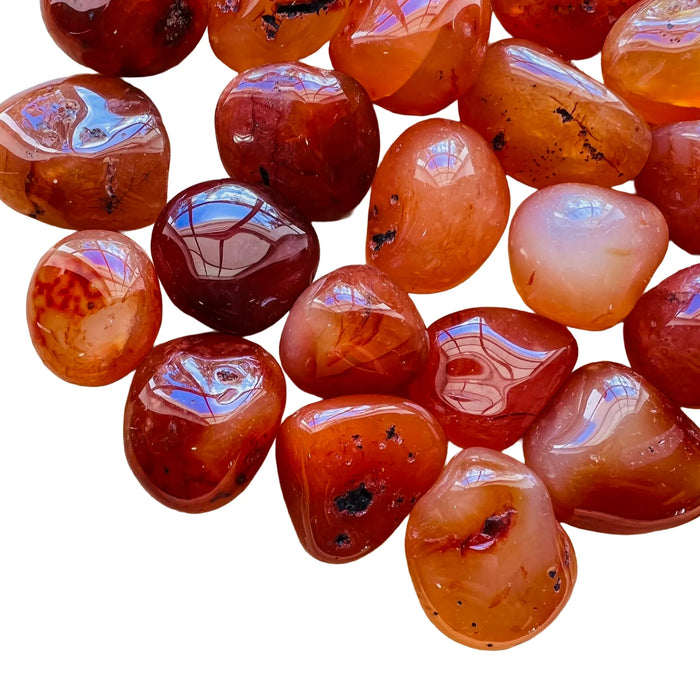
Genuine carnelian feels smooth and warm in the hand, with a waxy to glossy polish and a consistent weight that reflects quartz density. The color should be warm orange to red-orange, uniform or with subtle banding depending on the source, and should not look artificially vivid in an unnatural way. Real carnelian will show slight variation in tone across a piece and will have a translucent or slightly translucent quality if you hold it up to light. Look for pieces where the color feels saturated but natural, not neon or plastic-like.
Dyed stones and poor-quality glass imitations feel different. Glass substitutes are too light, too glossy, or feel cold in the hand. Dyed agate or dyed chalcedony can be harder to spot, but genuine carnelian chalcedony will feel softer and more waxy than dyed agate, which is harder and glassier. A simple test: genuine carnelian chalcedony will scratch more easily with a coin than a higher-hardness agate will. If a stone is extremely hard and glassy-looking, it's likely agate or another imitation. Genuine heat-treated carnelian looks warm and natural, not like plastic or laboratory glass. When in doubt, ask the seller for documentation of origin and whether the piece is treated or natural.
Care & handling.
Carnelian is fairly durable at 6.5 to 7 on the Mohs scale, making it suitable for everyday wear as a tumbled stone, pendant, or ring. It's harder than chalcedony varieties like blue calcite, so it stands up better to casual handling. You can rinse it under cool running water and dry it with a soft cloth. Avoid prolonged soaking, extreme temperature changes, harsh chemicals, and ultrasonic or steam cleaners, which can damage the stone over time. If you carry it in a pocket, keep it separate from harder stones that could scratch it.
Store carnelian in soft light rather than prolonged direct sunlight, as intense UV exposure can fade the color slightly over many years (this is slow and subtle, not dramatic). The stone is stable enough for most rituals, energy work, and daily practice. For cleansing, you can use smoke, sound, moonlight, or breath rather than salt water, which is harsh on many stones. Treat it with the same care you'd give to any stone that holds meaning for you, and it will stay vivid and warm for as long as you carry it.
Pairs well with.
Proof, not promises.
We measure our own sourcing across five dimensions. Supply chain, environmental footprint, artisan support, market integrity, and pricing. The number is honest, not perfect. Where we can do better, we say so.
A deeper look.
Extended geology, heat treatment details, sourcing, authentication, hardness considerations, and pricing for when you want to understand carnelian more thoroughly.
Extended geology
Carnelian is microcrystalline quartz, belonging to the chalcedony family. Its chemical formula is SiO2, identical to all quartz varieties. The orange to red coloring comes from iron oxide (Fe2O3 and other iron compounds) distributed throughout the microscopic quartz structure. Iron content and oxidation state determine the precise hue. Carnelian with higher iron concentration tends toward deeper red; lighter iron concentration produces pale orange or salmon tones.
The stone forms in sedimentary deposits, volcanic rocks, and hydrothermal environments as part of larger nodules or banded layers. These nodules are quarried, and the rough is sorted, cut, and polished into the forms that reach the market. Carnelian's trigonal crystal system is visible only at microscopic scale in microcrystalline material. Mohs hardness sits between 6.5 and 7, making it significantly harder than blue calcite (3) but slightly softer than many other quartz varieties. Specific gravity runs 2.58 to 2.64. The stone shows a waxy to glossy luster when polished and fractures unevenly.
Heat treatment
Heat treatment of carnelian is ubiquitous in the industry and has been standard for decades. Pale chalcedony containing iron oxides is gently warmed (typically to temperatures between 200–400 degrees Fahrenheit) to dehydrate the material and intensify the iron oxide color. The treatment is stable and permanent. Once cooled, the stone retains its color indefinitely under normal conditions. This is different from a temporary dye, which can fade or wash away.
The pale untreated material exists in nature but is less visually appealing to most buyers and less commercially valuable. Heat treatment makes the color vivid enough to warrant retail pricing. If you see deeply colored carnelian with rich orange-to-red tones, it is almost certainly heat-treated. Untreated carnelian is pale, sometimes nearly translucent orange or peachy, and is rarer and more expensive because of its scarcity in the market. Both treated and untreated carnelian are genuine, but treated is the norm by far.
Sourcing regions
Brazil produces the largest volume of commercial carnelian globally, from deposits in several states. The material is extracted through open-pit mining and quarrying, then processed through tumbling, polishing, and heat treatment at cutting and tumbling operations. The finished material is consistent and widely available. Brazilian carnelian tends toward warm, saturated orange with high polish quality.
India has a long history of carnelian mining and cutting, with significant deposits in Rajasthan and Gujarat. Indian carnelian often shows more subtle color variation and sometimes includes banding or striping. The stone has been valued and worked in India for centuries and continues to be a major commercial source.
Madagascar has emerged in recent years as a reliable source for high-quality tumbled carnelian. Material is clean, well-sorted, and consistently colored. The stone comes from alluvial deposits and is hand-sorted before being sent to cutting facilities. Madagascan carnelian often has a bright, clean orange tone.
Other regions including Peru, Uruguay, and Botswana produce carnelian, but Brazil, India, and Madagascar account for the majority of what reaches the North American market.
Hardness and durability
At 6.5–7 on the Mohs scale, carnelian is harder than many other stones people carry daily. It's hard enough for rings, pendants, and regular pocket carrying. It will scratch with continued contact with much harder stones like diamonds or sapphires, but it resists scratching from softer materials and from most normal handling. The chalcedony family generally is more durable than softer carbonate stones like calcite, making carnelian a better choice if durability is a priority.
Authentication and testing
Genuine carnelian feels warm in the hand and has a waxy, slightly translucent quality in thinner pieces. The color is warm orange to red-orange, not neon or artificially vivid. Under magnification, you'll see fine granular quartz structure with no visible crystal faces. Banding or striping may be present but is subtle.
Dyed agate substitutes are harder and feel glassier. They often show concentric banding typical of agate formation rather than the finer banding of chalcedony. Dyed glass imitations feel cold and lightweight. Real carnelian is warm-feeling and has proper density for its size.
The acid test (vinegar on a hidden area) will fizz slightly on some iron oxides, but is destructive and not recommended for pieces you want to keep. More practical: genuine carnelian chalcedony scratches more easily than agate when tested with a hardness pick or coin. If a stone resists scratching heavily, it's likely not carnelian.
Color fading
Heat-treated carnelian is stable under normal light exposure. The color does not fade quickly or noticeably from everyday wear. Prolonged exposure to intense direct sunlight over many years may cause very slight dulling, but this is slow and subtle. Most carnelian you carry will show no visible color change during your lifetime of wear.
Pricing notes
Tumbled heat-treated carnelian typically runs $2 to $6 per stone retail depending on size and polish quality. Hand-polished or high-grade tumbled pieces command $6 to $12. Palm stones and larger finished pieces scale upward from $10 to $30. Rare natural untreated carnelian in good color is less common in the market and typically commands 20 to 40 percent higher prices than heat-treated material of the same size and quality. Exceptionally large or high-polish carvings and display pieces can reach $50+.
Extremely low prices (under $1 per tumble) should prompt questions about authenticity and origin. Extremely high prices for tumbled stones usually reflect artistry or special grading rather than the stone itself. Most commercial carnelian at fair-trade pricing falls in the middle range.
Good sourcing is a practice, not a claim.
Nothing we sell is dyed, stabilized, reconstituted, or color-enhanced without full disclosure. We name our origins where we can. We say so when we cannot. We walk away from material that does not meet our standard, even when it costs us sales.
Bring carnelian home.
Heat-treated and natural carnelian from Brazil, India, and Madagascar. Tumbled, hand-polished, and palm stone forms. Each listing includes treatment status and origin. Natural untreated pieces are noted separately.
Shop the carnelian collectionGrounded Connections
New stones go to the list first.
No forwarding, no selling. Unsubscribe in one click. Privacy