






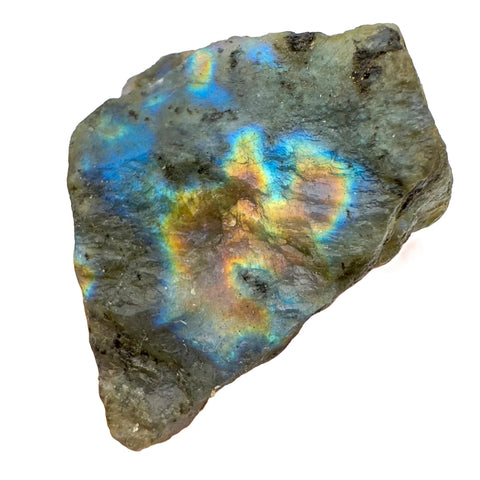



 Agatefor stress relief
 Amazonitefor stress relief
 Aquamarinefor serenity
 Aventurinefor luck
 Bloodstonefor energy
 Blue Kyanitefor confidence
 Blue Lace Agatefor stress relief
 Chrysocollafor emotional healing
 Fluoritefor focus
 Garnetfor energy
 Lepidolitefor stress relief
 Malachitefor emotional healing
 Moonstonefor grounding
 Obsidianfor protection
 Ocean Jasperfor emotional healing
 Red Jasperfor grounding
 Rhodonitefor emotional healing
 Selenitefor cleansing
 Sodalitefor focus
 Tiger Eyefor confidence








































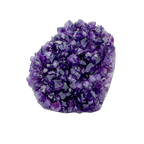 Amethyst
 Clear Quartz
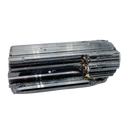 Black Tourmaline
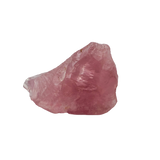 Rose Quartz
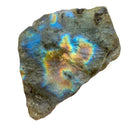 Labradorite
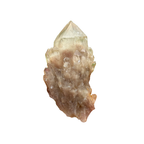 Natural Citrine
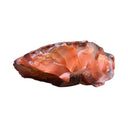 Carnelian
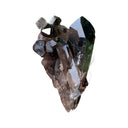 Smoky Quartz
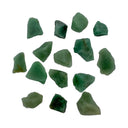 Aventurine
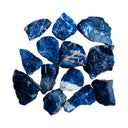 Sodalite
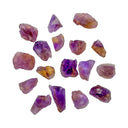 Ametrine
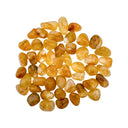 Golden Healer
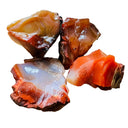 Raw Stones
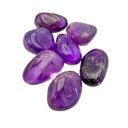 Tumbled Stones
 Palm Stones
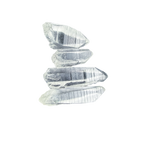 Crystal Points
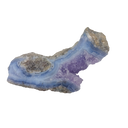 Clusters & Geodes
 Polished & Decor
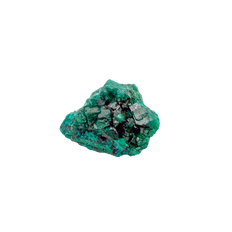 Mineral Specimens
 Crystal Chips




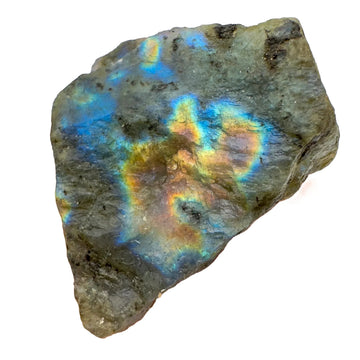



 Raw Stones
179 to choose from
Raw Stones
179 to choose from
 Tumbled Stones
162 to choose from
Tumbled Stones
162 to choose from
 Palm Stones
25 to choose from
Palm Stones
25 to choose from
 Crystal Points
23 to choose from
Crystal Points
23 to choose from
 Clusters & Geodes
98 to choose from
Clusters & Geodes
98 to choose from
 Polished & Decor
147 to choose from
Polished & Decor
147 to choose from
 Mineral Specimens
248 to choose from
Mineral Specimens
248 to choose from
 Crystal Chips
21 to choose from
Crystal Chips
21 to choose from


 AngolaAquamarine
›
AngolaAquamarine
›
 BotswanaCarnelian, Tree Agate
›
BotswanaCarnelian, Tree Agate
›
 DR CongoMalachite, Natural Citrine
›
DR CongoMalachite, Natural Citrine
›
 EswatiniBloodstone
›
EswatiniBloodstone
›
 MadagascarLabradorite, Clear Quartz
›
MadagascarLabradorite, Clear Quartz
›
 MalawiBlue Lace Agate, Garnet
›
MalawiBlue Lace Agate, Garnet
›
 MozambiqueAmazonite
›
MozambiqueAmazonite
›
 NamibiaSodalite, Blue Lace Agate
›
NamibiaSodalite, Blue Lace Agate
›
 Republic of the CongoDioptase
›
Republic of the CongoDioptase
›
 South AfricaTiger Eye, Unakite
›
South AfricaTiger Eye, Unakite
›
 ZambiaChevron Amethyst
›
ZambiaChevron Amethyst
›
 ZimbabweEmerald, Rhodonite
›
ZimbabweEmerald, Rhodonite
›
 ArgentinaBlack Obsidian, Rhodochrosite
›
ArgentinaBlack Obsidian, Rhodochrosite
›
 BoliviaAmetrine
›
BoliviaAmetrine
›
 BrazilAmethyst, Clear Quartz
›
BrazilAmethyst, Clear Quartz
›
 PeruSerpentine, Jade
›
PeruSerpentine, Jade
›
 UruguayAmethyst
›
UruguayAmethyst
›
 Dominican RepublicLarimar
›
Dominican RepublicLarimar
›
 MexicoRainbow Obsidian, Crazy Lace Agate
›
MexicoRainbow Obsidian, Crazy Lace Agate
›
 United StatesSelenite, Peridot
›
United StatesSelenite, Peridot
›
 ChinaFluorite
›
ChinaFluorite
›
 RussiaShungite
›
RussiaShungite
›
 AustraliaMookaite
›
AustraliaMookaite
›
 Where our crystals come from
See where we source →
Where our crystals come from
See where we source →


 Aries
Mar 21 to Apr 19
Carnelian
›
Aries
Mar 21 to Apr 19
Carnelian
›
 Taurus
Apr 20 to May 20
Rose Quartz
›
Taurus
Apr 20 to May 20
Rose Quartz
›
 Gemini
May 21 to Jun 20
Agate
›
Gemini
May 21 to Jun 20
Agate
›
 Cancer
Jun 21 to Jul 22
Moonstone
›
Cancer
Jun 21 to Jul 22
Moonstone
›
 Leo
Jul 23 to Aug 22
Citrine
›
Leo
Jul 23 to Aug 22
Citrine
›
 Virgo
Aug 23 to Sep 22
Amazonite
›
Virgo
Aug 23 to Sep 22
Amazonite
›
 Libra
Sep 23 to Oct 22
Blue Lace Agate
›
Libra
Sep 23 to Oct 22
Blue Lace Agate
›
 Scorpio
Oct 23 to Nov 21
Obsidian
›
Scorpio
Oct 23 to Nov 21
Obsidian
›
 Sagittarius
Nov 22 to Dec 21
Sodalite
›
Sagittarius
Nov 22 to Dec 21
Sodalite
›
 Capricorn
Dec 22 to Jan 19
Black Tourmaline
›
Capricorn
Dec 22 to Jan 19
Black Tourmaline
›
 Aquarius
Jan 20 to Feb 18
Amethyst
›
Aquarius
Jan 20 to Feb 18
Amethyst
›
 Pisces
Feb 19 to Mar 20
Aquamarine
›
Gifting?
A birthday stone is the safe bet.
Read the zodiac guide →
Pisces
Feb 19 to Mar 20
Aquamarine
›
Gifting?
A birthday stone is the safe bet.
Read the zodiac guide →


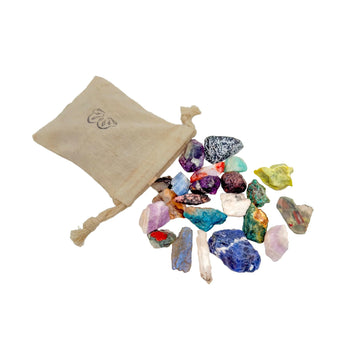










Sillimanite
Sillimanite is nesosilicates (Al2SiO5 polymorph), Al2SiO5. In the hand, it rates 6.5 to 7.5 on the Mohs scale, and it runs gray-white and pale blue. Silky fibrous bundles or slender glassy prisms in high-grade metamorphic rock, the high-temperature sibling of kyanite and andalusite, often cut as a chatoyant cat's-eye.
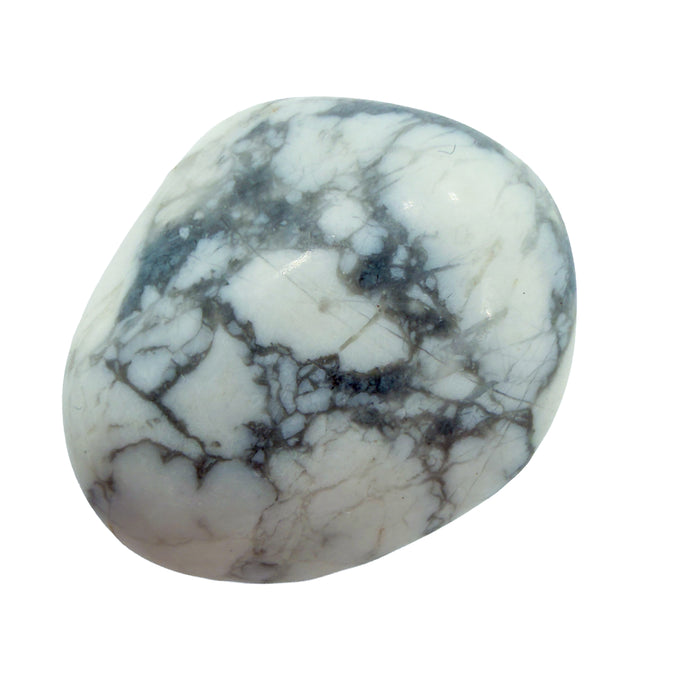
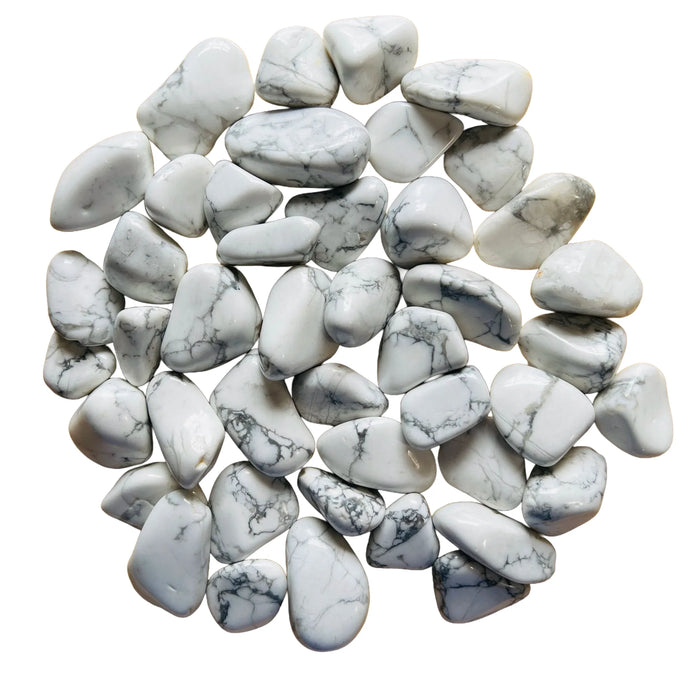
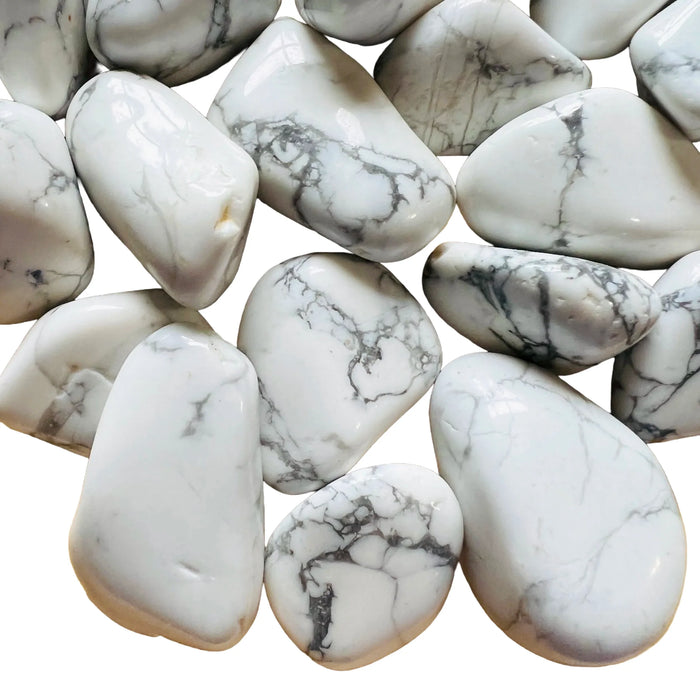
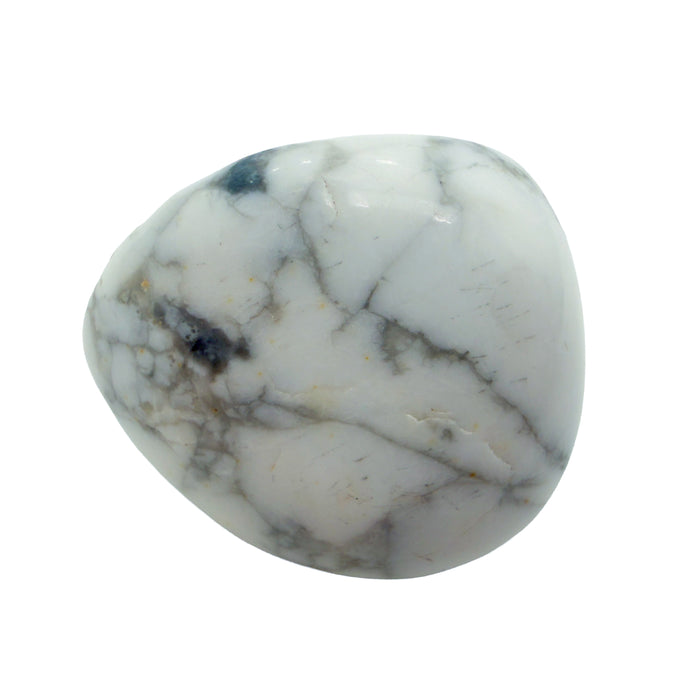
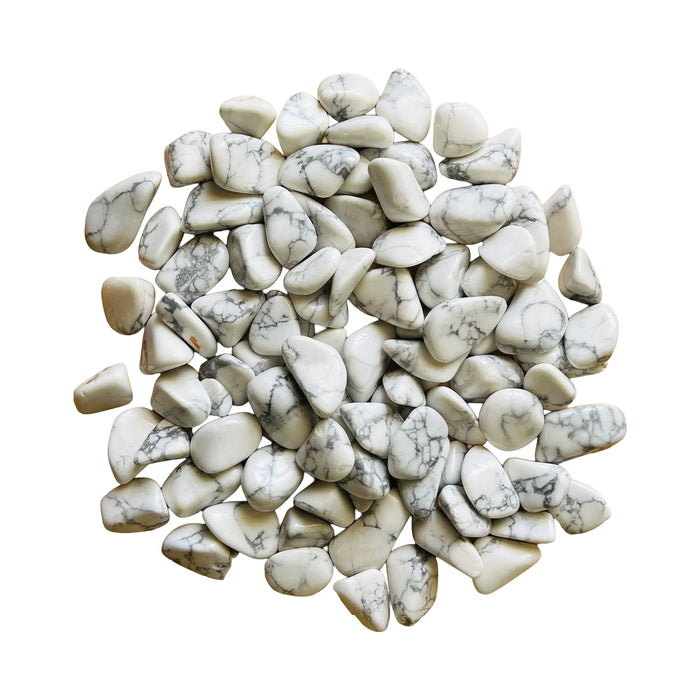
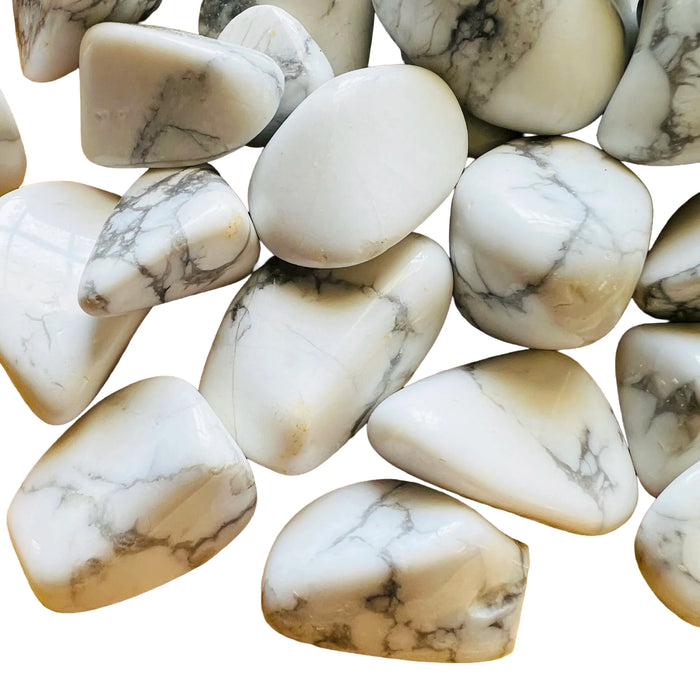
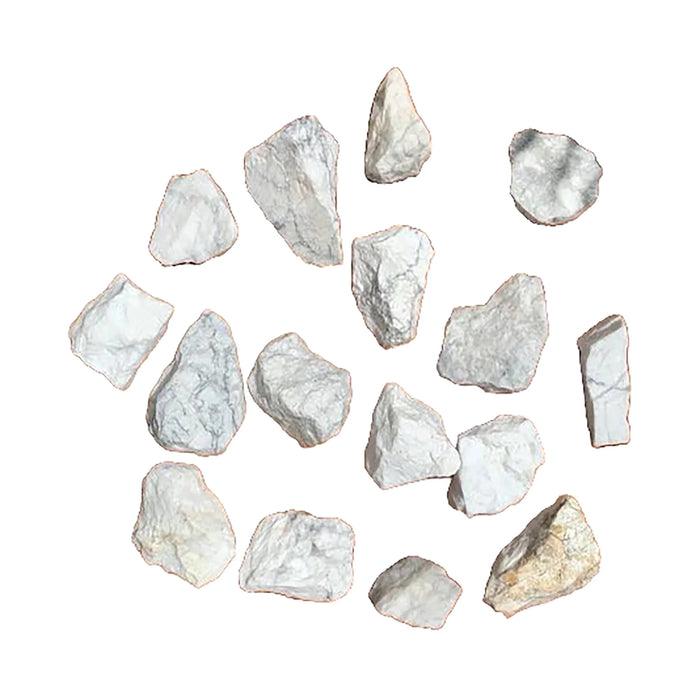
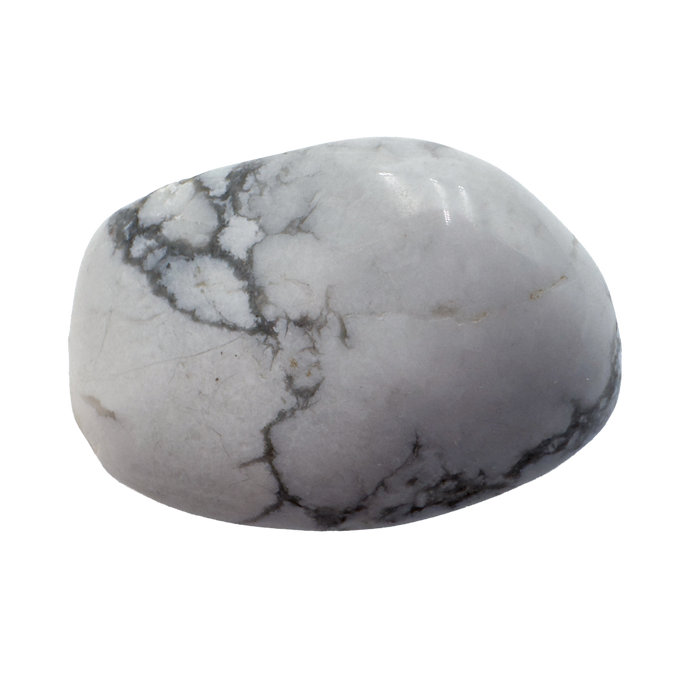
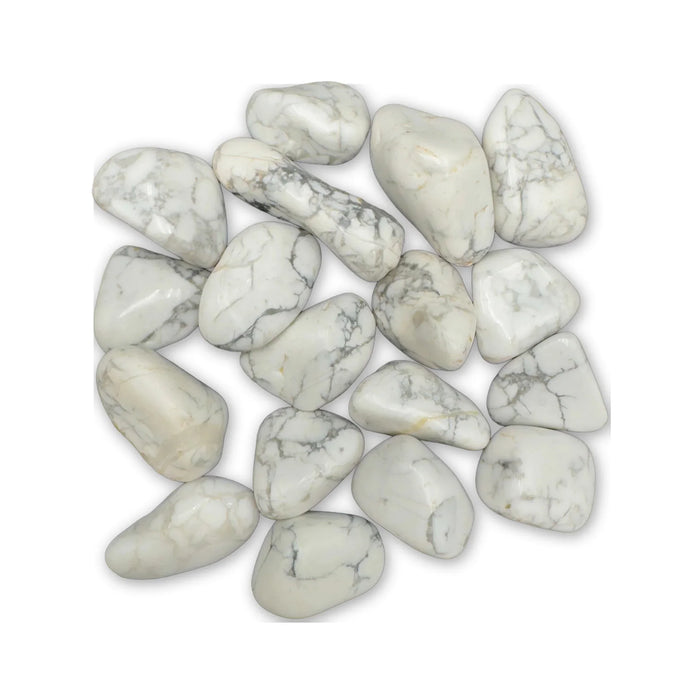
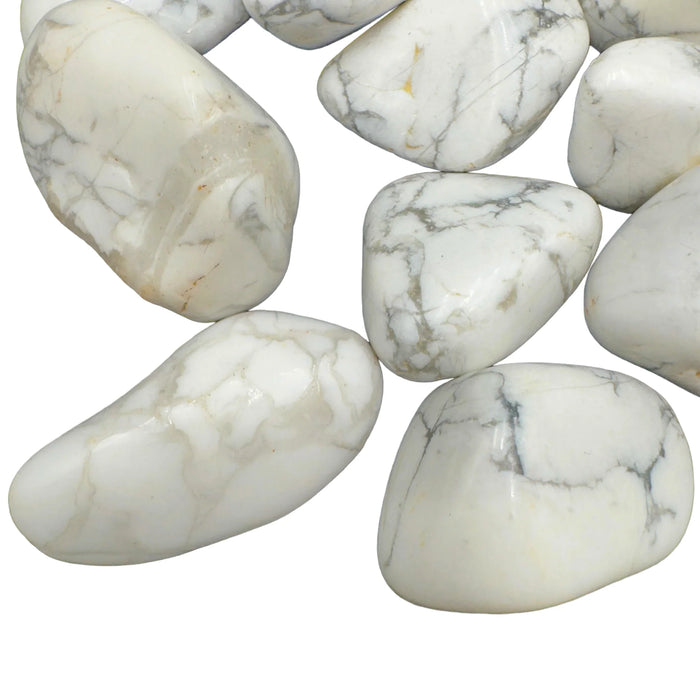
Love Sillimanite? Meet Howlite.
Sillimanite is not something we carry. Howlite is the closest match in color, and every product page names its origin and grade.
- from 1,000+ reviews
- Ships within 72 hoursMonday to Friday, tracked
- 90 days to return itif you do not love it
- Free US shipping over $99$8.99 flat rate under
The geology.
Sillimanite carries the formula Al2SiO5. It belongs to the orthorhombic system. Its listing category is nesosilicates (Al2SiO5 polymorph).
It sits at 6.5 to 7.5 on the Mohs scale. The surface reads vitreous to silky. Light behavior is transparent to translucent. Specific gravity runs 3.23 to 3.27. The streak is white. It breaks with perfect cleavage one direction; splintery fracture.
Silky fibrous bundles or slender glassy prisms in high-grade metamorphic rock, the high-temperature sibling of kyanite and andalusite, often cut as a chatoyant cat's-eye.
It turns up mostly as fibrous mats (fibrolite), slender prisms in gneiss, cat's-eye cabochons or faceted rarities.
The origins.
High-temperature metamorphic rocks, India and Sri Lanka gem gravels, Brazil, and classic American gneiss terrains.
On value, the database notes: affordable; clean faceted stones and sharp cat's-eyes are collector items.
Traditional associations.
In energy work traditions, sillimanite is said to align scattered efforts into one clear line of intent.
This is lore, and we label it as lore. The measurable facts are further up the page.
Spotting the real thing.
Silky fibrous bundles or slender glassy prisms in high-grade metamorphic rock, the high-temperature sibling of kyanite and andalusite, often cut as a chatoyant cat's-eye.
Cat's-eye sillimanite is sometimes sold as rarer cat's-eye chrysoberyl, chrysoberyl is notably harder (8.5) and denser.
| Looks like | How to tell them apart |
|---|---|
| Kyanite | Same chemistry; kyanite forms blue blades with split hardness (soft along, hard across) |
| Andalusite | Same chemistry again; andalusite forms stubby square prisms, sometimes with chiastolite crosses |
| Tremolite/actinolite fibers | Amphiboles are softer with two cleavages at 120° |
At-home tests.
A loupe and a window seat settle most questions about sillimanite. No workshop required.
| Test | What you should see |
|---|---|
| Scratch check | Hardness ~7 in all directions (unlike kyanite) |
| By eye | Splintery fibrous habit with silky sheen |
| By eye | Found in gneiss/schist of the highest metamorphic grade |
Anything that scratches, burns or dissolves the piece is a lab job. Get it appraised rather than testing it apart.
Care & handling.
At 6.5 to 7.5 on the Mohs scale it handles careful wear but scratches against quartz and dust. Store it separately and take rings off before rough work.
It breaks with perfect cleavage one direction; splintery fracture, which is worth knowing before you set it or drop it.
Warm water and a soft cloth clean almost everything. Ultrasonic tanks, steamers and household cleaners are where pieces get ruined.
Fibrous fibrolite dust is a respiratory irritant, avoid grinding without protection; solid stones are fine to handle.
A deeper look.
Extended detail on composition, sourcing, authentication and market value.
The physical record
The formula on record is Al2SiO5. Crystal system: Orthorhombic. Specific gravity: 3.23 to 3.27. Streak: White. Cleavage and fracture: Perfect cleavage one direction; splintery fracture.
How it reaches the market
High-temperature metamorphic rocks, India and Sri Lanka gem gravels, Brazil, and classic American gneiss terrains.
What it gets confused with
Kyanite: Same chemistry; kyanite forms blue blades with split hardness (soft along, hard across). Andalusite: Same chemistry again; andalusite forms stubby square prisms, sometimes with chiastolite crosses. Tremolite/actinolite fibers: Amphiboles are softer with two cleavages at 120°.
What it is worth
Affordable; clean faceted stones and sharp cat's-eyes are collector items.
Where buyers get caught
Cat's-eye sillimanite is sometimes sold as rarer cat's-eye chrysoberyl, chrysoberyl is notably harder (8.5) and denser.
One more thing
Sillimanite is Delaware's state mineral and a geologist's thermometer, kyanite, andalusite, and sillimanite are the same formula frozen at different pressure-temperature depths, so finding one tells you how hard the rock was cooked.
An education-first guide.
No product links here. We do not sell sillimanite, and a guide that only covers our own shelves would not be much of a guide.
Explore the Crystal GuideGrounded Connections
New stones go to the list first.
No forwarding, no selling. Unsubscribe in one click. Privacy