









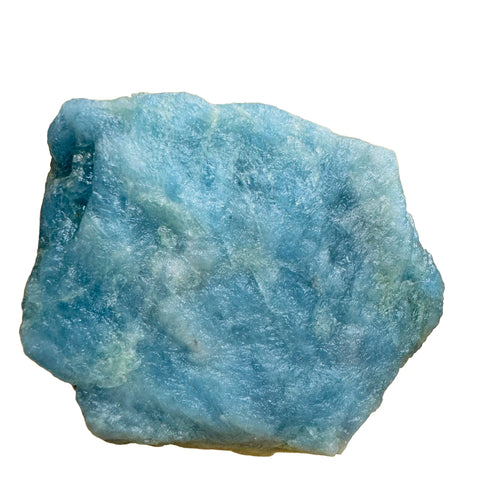











































 Raw Stones
179 pieces
Raw Stones
179 pieces
 Tumbled Stones
162 pieces
Tumbled Stones
162 pieces
 Palm Stones
25 pieces
Palm Stones
25 pieces
 Crystal Points
23 pieces
Crystal Points
23 pieces
 Clusters & Geodes
104 pieces
Clusters & Geodes
104 pieces
 Polished & Decor
148 pieces
Polished & Decor
148 pieces
 Mineral Specimens
259 collector pieces
Mineral Specimens
259 collector pieces
 Crystal Chips
21 pieces
Browse everything
Every collection, one page.
View All Collections →
Crystal Chips
21 pieces
Browse everything
Every collection, one page.
View All Collections →


 Aries
Mar 21 – Apr 19
Carnelian
›
Aries
Mar 21 – Apr 19
Carnelian
›
 Taurus
Apr 20 – May 20
Rose Quartz
›
Taurus
Apr 20 – May 20
Rose Quartz
›
 Gemini
May 21 – Jun 20
Agate
›
Gemini
May 21 – Jun 20
Agate
›
 Cancer
Jun 21 – Jul 22
Moonstone
›
Cancer
Jun 21 – Jul 22
Moonstone
›
 Leo
Jul 23 – Aug 22
Citrine
›
Leo
Jul 23 – Aug 22
Citrine
›
 Virgo
Aug 23 – Sep 22
Amazonite
›
Virgo
Aug 23 – Sep 22
Amazonite
›
 Libra
Sep 23 – Oct 22
Blue Lace Agate
›
Libra
Sep 23 – Oct 22
Blue Lace Agate
›
 Scorpio
Oct 23 – Nov 21
Obsidian
›
Scorpio
Oct 23 – Nov 21
Obsidian
›
 Sagittarius
Nov 22 – Dec 21
Sodalite
›
Sagittarius
Nov 22 – Dec 21
Sodalite
›
 Capricorn
Dec 22 – Jan 19
Black Tourmaline
›
Capricorn
Dec 22 – Jan 19
Black Tourmaline
›
 Aquarius
Jan 20 – Feb 18
Amethyst
›
Aquarius
Jan 20 – Feb 18
Amethyst
›
 Pisces
Feb 19 – Mar 20
Aquamarine
›
Gifting?
A birthday stone is the safe bet.
Read the zodiac guide →
Pisces
Feb 19 – Mar 20
Aquamarine
›
Gifting?
A birthday stone is the safe bet.
Read the zodiac guide →











Moqui Marbles
Moqui Marbles is sedimentary (iron-oxide concretion), (hematite/goethite shell, sandstone core). In the hand, it rates 3 to 5 (shell harder than core) on the Mohs scale, and it runs chocolate brown and rusty black. Chocolate-brown stone marbles with gritty sandstone hearts and iron-oxide shells, desert-born concretions that ring slightly metallic when tapped together.
The geology.
Moqui Marbles carries the formula (hematite/goethite shell, sandstone core). It has no single crystal system. The trade files it under sedimentary (iron-oxide concretion).
It sits at 3 to 5 (shell harder than core) on the Mohs scale. The surface reads metallic-dull shell. Light behavior is opaque. Specific gravity runs 2.5 to 3.5. The streak is red-brown to yellow-brown. It breaks with shell may crack from sandy core.
Chocolate-brown stone marbles with gritty sandstone hearts and iron-oxide shells, desert-born concretions that ring slightly metallic when tapped together.
Common cuts are round balls, buttons and discs or paired 'male/female' sets (marketing).
The origins.
Weathering out of the Navajo Sandstone: southern Utah/northern Arizona (USA), collecting is restricted in protected areas; buy legal stock.
On value, the database notes: affordable; matched large pairs cost more.
Traditional associations.
In energy work traditions, sold as shaman stones for grounding and pathing, with male/female pairings that are pure marketing.
Included for completeness. Tradition is worth knowing about, and it is worth keeping separate from the mineralogy.
Spotting the real thing.
Chocolate-brown stone marbles with gritty sandstone hearts and iron-oxide shells, desert-born concretions that ring slightly metallic when tapped together.
Check sourcing, national-park collection is illegal; commercial stones come from private land.
| Looks like | How to tell them apart |
|---|---|
| Hematite tumbles | Solid hematite is far heavier and mirror-gray when polished; moquis are sand-cored |
| Concretions (lime) | Carbonate concretions fizz; moqui shells don't |
| Meteorites (hopeful) | Moquis aren't magnetic enough and show sand inside, classic 'meteor-wrong' |
At-home tests.
These checks cost nothing. Daylight, a 10x loupe and a little patience are the whole kit for moqui marbles.
| Test | What you should see |
|---|---|
| By eye | Red-brown streak from the shell |
| By eye | Sandy interior on broken pieces |
| Magnet check | Weak or no magnet response |
Destructive tests belong to a gemologist, not a kitchen table. If a piece matters to you, pay for an appraisal before you take a file to it.
Care & handling.
At 3 to 5 (shell harder than core) on the Mohs scale this is a soft material. Keep it as a display piece, store it apart from harder stones, and skip daily-wear settings.
It breaks with shell may crack from sandy core, which is worth knowing before you set it or drop it.
Clean it by hand, dry it properly, and keep it away from ultrasonic cleaners and hot steam.
A deeper look.
Extended detail on composition, sourcing, authentication and market value.
The physical record
The formula on record is (hematite/goethite shell, sandstone core). Crystal system: not applicable. Specific gravity: 2.5 to 3.5. Streak: Red-brown to yellow-brown. Cleavage and fracture: Shell may crack from sandy core.
How it reaches the market
Weathering out of the Navajo Sandstone: southern Utah/northern Arizona (USA), collecting is restricted in protected areas; buy legal stock.
What it gets confused with
Hematite tumbles: Solid hematite is far heavier and mirror-gray when polished; moquis are sand-cored. Concretions (lime): Carbonate concretions fizz; moqui shells don't. Meteorites (hopeful): Moquis aren't magnetic enough and show sand inside, classic 'meteor-wrong'.
What it is worth
Affordable; matched large pairs cost more.
Where buyers get caught
Check sourcing, national-park collection is illegal; commercial stones come from private land.
One more thing
NASA studied moquis as analogs for the 'blueberries' the Opportunity rover found on Mars, twin concretions on two planets.
An education-first guide.
We do not stock moqui marbles. Writing it up regardless is the point of a reference library.
Explore the Crystal GuideLove Moqui Marbles? Meet Jasper.
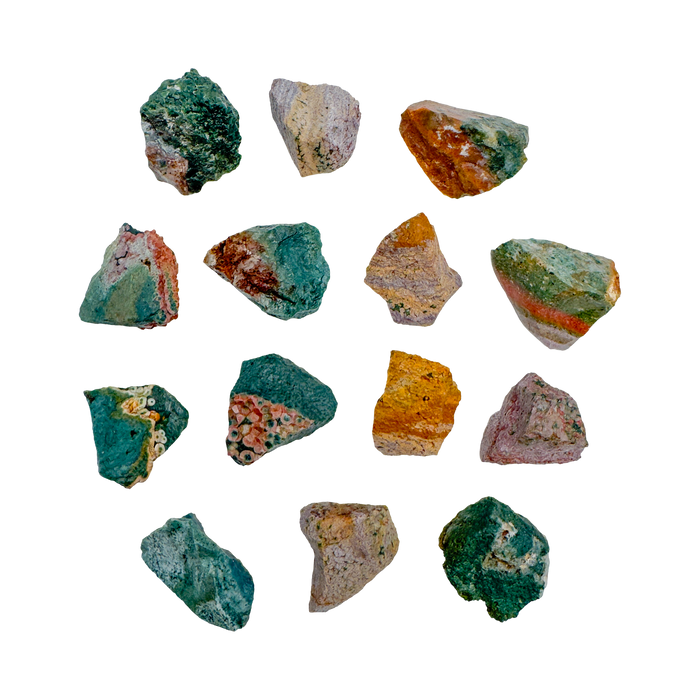
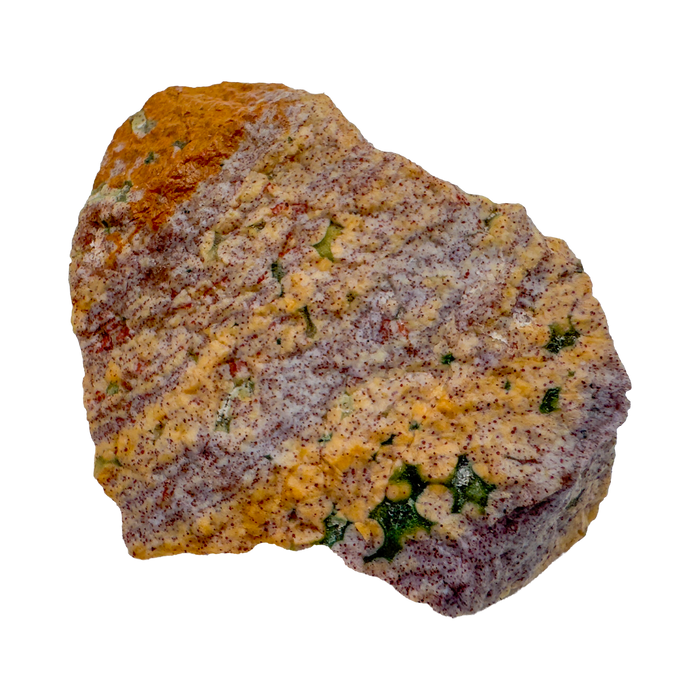
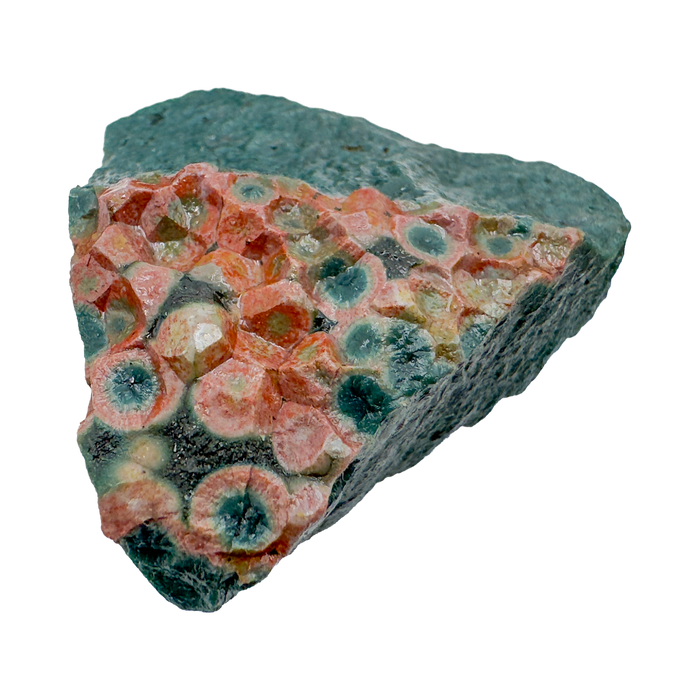
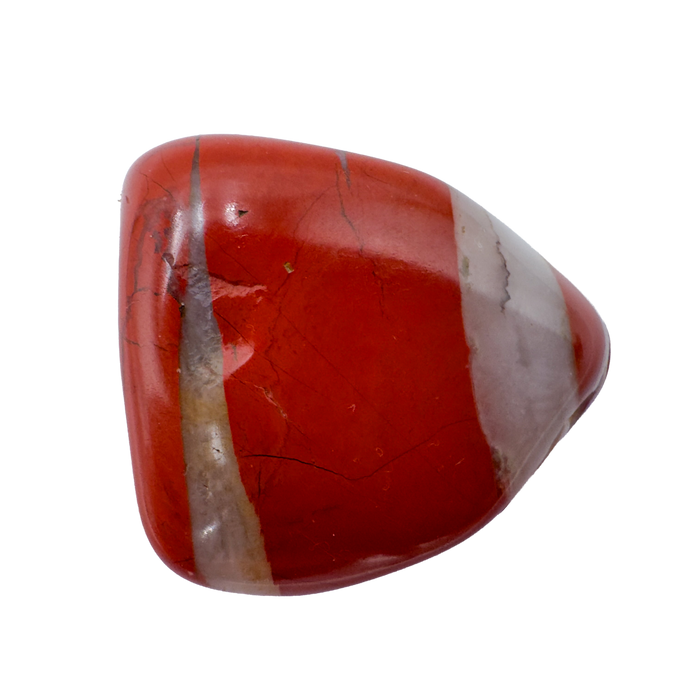
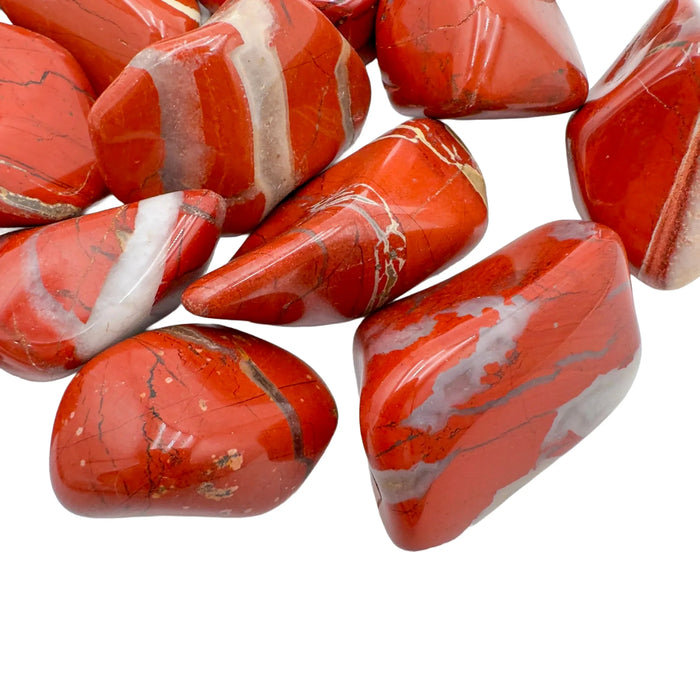
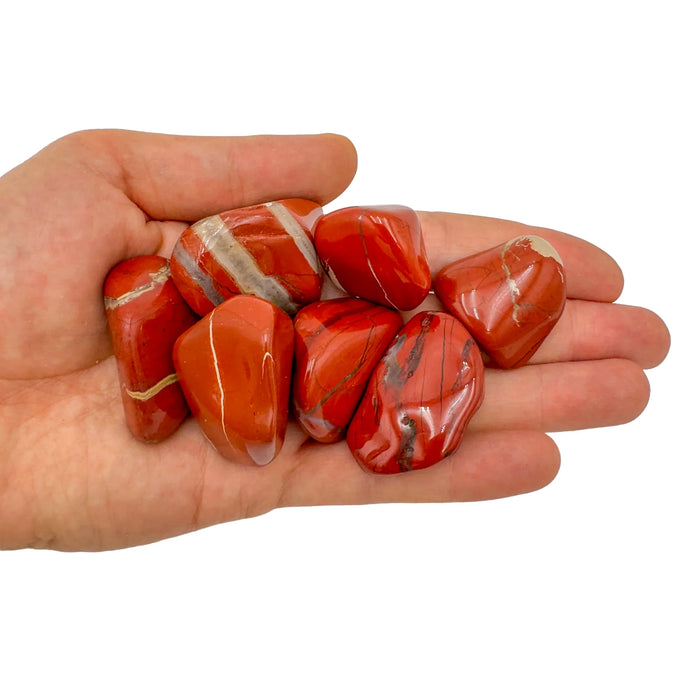
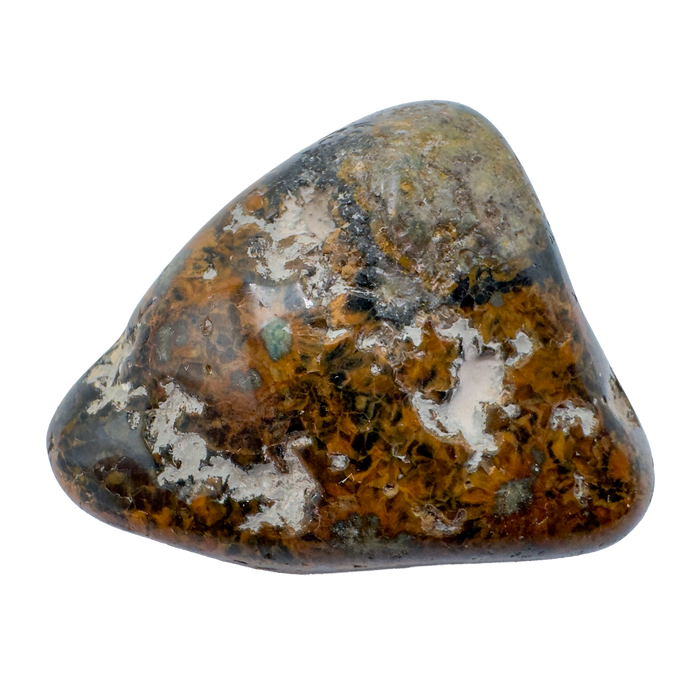
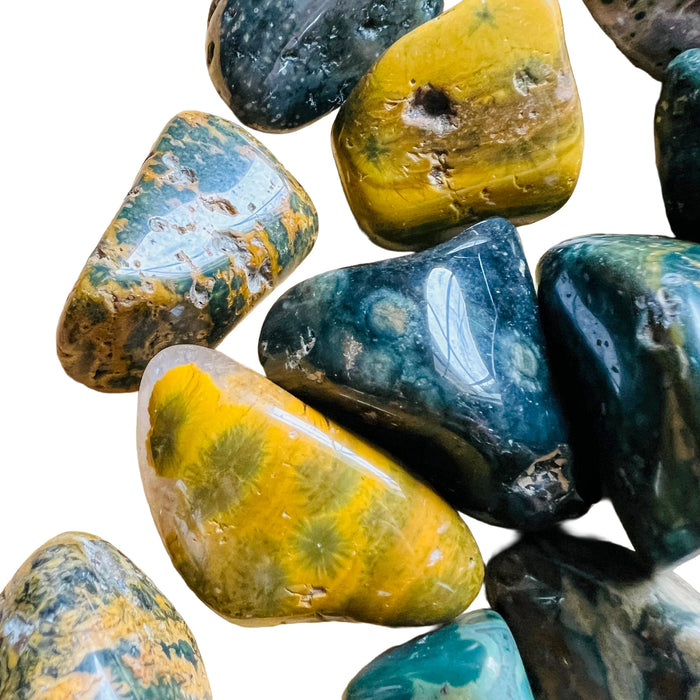
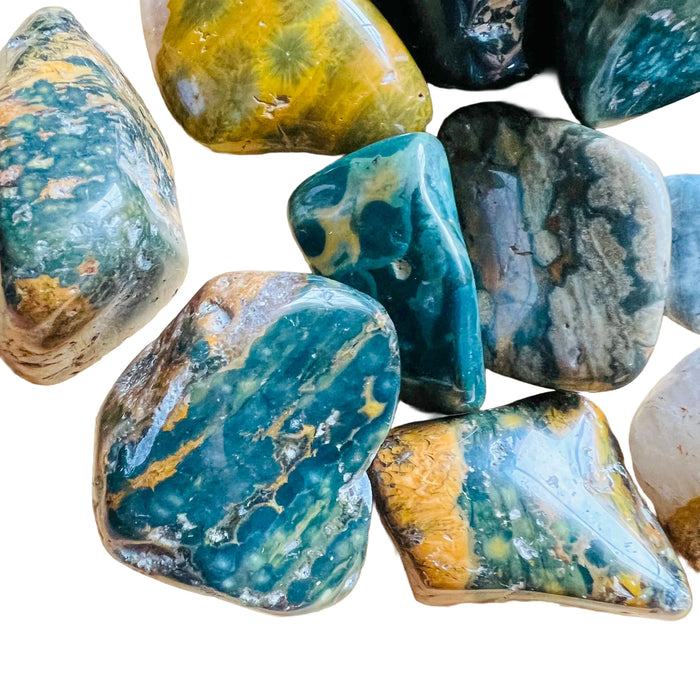
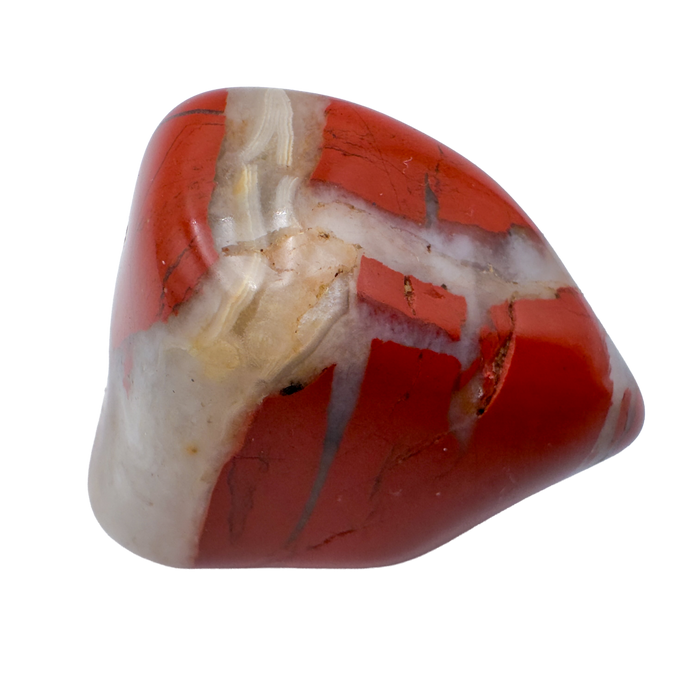
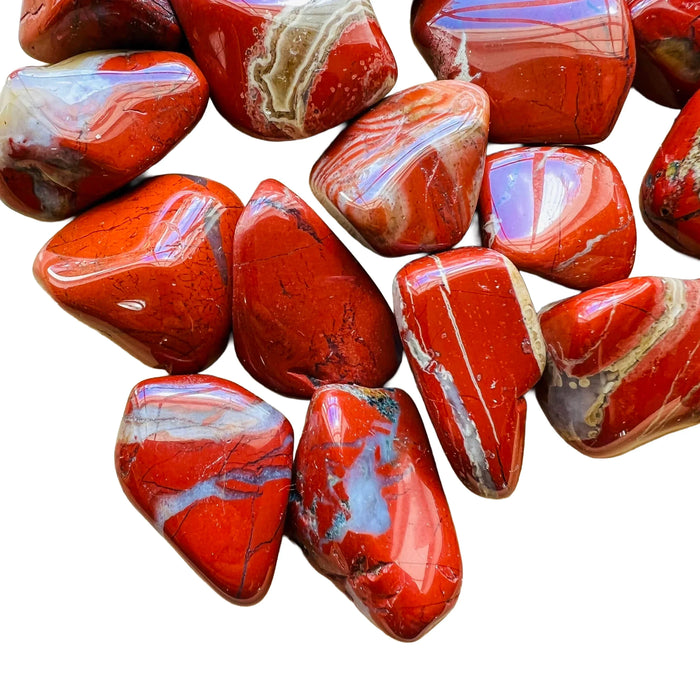
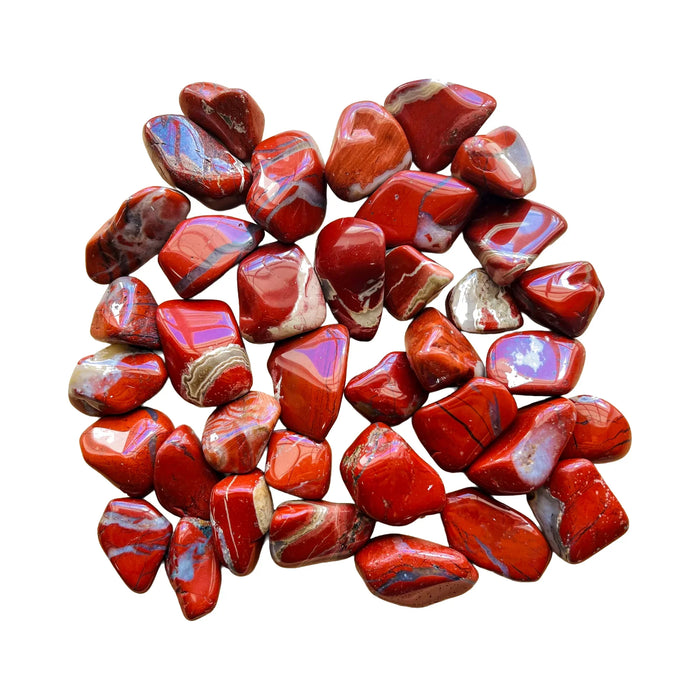
Moqui Marbles is not something we carry. Jasper is the closest match in color, and every piece passes our sourcing standards: origin named, treatments disclosed.
- from 1,000+ reviews
- Ships within 72 hoursMonday to Friday, tracked
- 90 days to return itif you do not love it
- Free US shipping over $99$8.99 flat rate under
The Slow Note
New stones go to the list first.
No forwarding, no selling. Unsubscribe in one click. Privacy