










Lapis, Sodalite, Azurite, or Dumortierite? Sorting the Blues
Four blue stones that fool the eye, and the simple physical tells, gold flecks, white veins, and hardness, that pull them apart.
Set lapis lazuli, sodalite, azurite, and dumortierite side by side and they all read as one thing: blue. Yet one is a gold-flecked rock, one a veined mineral, one a soft copper stone, and one a hard fiber often hidden inside quartz. Here is how to tell them apart without a lab.

Hardness and inclusions sort them fast. Lapis shows gold pyrite flecks; sodalite shows white veins and no gold. Azurite is soft at 3.5 to 4 and shades toward green. Dumortierite is much harder, near 7 to 8, and often hides inside quartz. Check the flecks, then scratch test.
Four Blues, One Easy Mix-Up
Blue is one of the harder colors to read in a crystal shop, because so many different materials land in the same royal-blue range. The fix is to stop judging by color and check three things instead: how hard the stone is, what flecks or veins run through it, and how its blue is actually made.
Start with hardness on the Mohs scale, where talc is 1 and diamond is 10. These four spread across a wide span, so a scratch test and a little weight in the hand narrow the field before you study the surface.
Mohs hardness of azurite, by far the softest blue here
Mohs hardness of sodalite, right in the lapis range
Mohs hardness of dumortierite, the hardest of the four
Mohs values per standard references. Lapis lazuli sits near 5 to 5.5.
Lapis and sodalite look alike for a real reason. The blue in lapis comes from lazurite, a mineral in the same family as sodalite, so the two are chemical cousins. Our guide to what gives crystals color covers why some blues come from sulfur trapped in the structure and others from copper.
Lapis, Sodalite, Azurite, and Dumortierite Compared
Here is the full picture in one view. Each card gathers one stone, so on a phone you read down a card instead of across a wide table.
Lapis Lazuli
A blue rock, not one mineral
Sodalite
A feldspathoid mineral
Azurite
A soft copper carbonate
Dumortierite
An aluminum borosilicate
Gold Flecks, Then a Scratch Test
Two checks separate these four most of the time. The first is to look for gold. Lapis lazuli almost always carries pyrite, which shows as tiny brassy flecks scattered through the blue. Sodalite has none; instead it shows white veins of calcite. If you see gold, you are almost certainly holding lapis, not sodalite.
The second is hardness. Azurite is soft enough to mark with a steel blade and often shows green where it is altering to malachite, so it stands apart quickly. Dumortierite is the opposite, hard and often locked inside clear quartz as a haze of blue fibers.

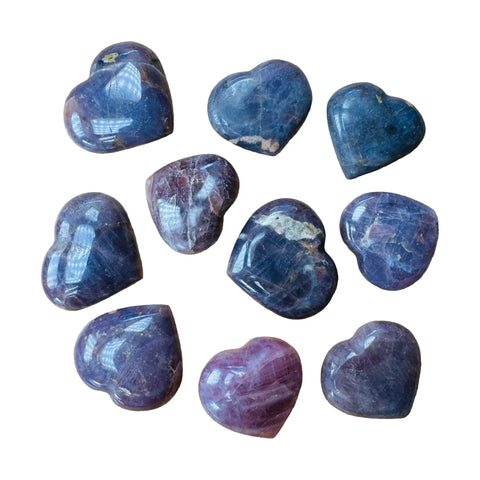
Sodalite. Royal blue cut by white calcite veins, and never the gold pyrite of lapis.

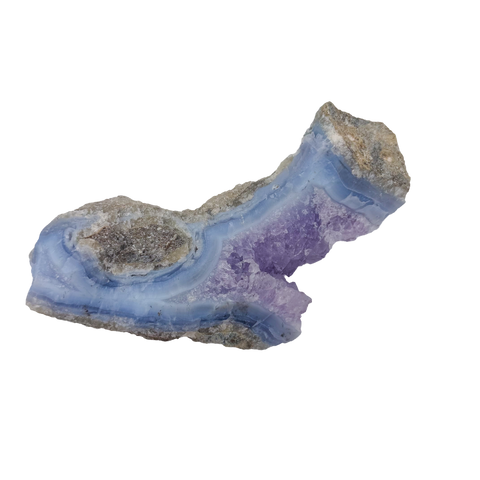
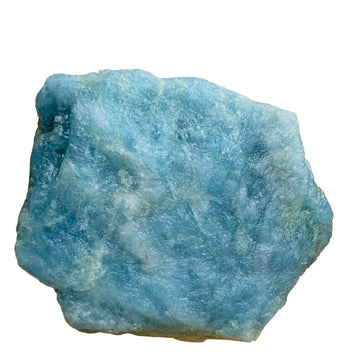
Azurite. A soft copper stone, deep azure shading to green where it begins turning to malachite.

Sodalite again, polished. The same mineral reads as a more even blue once it is tumbled smooth.
Dyes, Fakes, and the Blue Lookalikes
The blue aisle carries plenty of imitation, because lapis in particular has been faked for centuries. A few patterns cover most of what you will meet.
White howlite or magnesite dyed deep blue and sold as lapis. A cotton swab with acetone lifts the dye, while real lapis never bleeds.
Pale jasper dyed blue, sometimes called Swiss or German lapis. The color is too even, and it lacks real pyrite and calcite.
Lapis powder bound with resin. It looks uniform, with a dye-bright blue and few natural veins, and it feels lighter than solid stone.
An honest stone under the wrong name. The tell is simple: sodalite carries white veins and no gold pyrite.
Azurite can lose blue and turn green in strong light and open air. That is the mineral altering, not a fake, but keep it out of direct sun.
When dumortierite grows inside quartz it is sold as blue quartz. It is real, just harder and more fibrous than the sodalite it resembles.
Azurite asks for the most care here. It is soft, light-sensitive, and its dust is not for breathing, so keep it polished, dry, and out of strong sun. See which stones are worth real caution and how to clean delicate stones without water.
Related Guides
The gold-flecked blue rock up close: lazurite, pyrite, calcite, and how to spot a fake.
Explore lapis lazuliThe veined royal blue: where it forms, why it has no pyrite, and how to care for it.
Explore sodaliteWhy some blues come from trapped sulfur and others from copper.
Read the scienceA calm, accurate look at the stones, azurite among them, that ask for careful handling.
Check the listWhat a Mohs hardness number means for daily wear, cleaning, and water.
Check durabilityOur full set of trust-first crystal guides and side-by-side comparisons.
Browse the LibraryFrequently Asked
How do I tell lapis lazuli from sodalite?
Look for gold. Lapis almost always carries flecks of pyrite, a brassy gold mineral, while sodalite shows white veins of calcite and no gold at all. Lapis tends to be an even royal blue, sodalite is often more mottled, and sodalite is a touch harder.
Is my lapis lazuli real or dyed?
Real lapis does not bleed color. Wipe a hidden spot with a cotton swab dipped in acetone or nail polish remover. Dyed howlite or jasper leaves blue on the swab, while genuine lapis stays clean and shows natural pyrite and white calcite.
What is denim lapis?
Denim lapis is simply lower grade lapis. It carries more calcite and less lazurite, so the blue is paler, a soft denim shade rather than deep royal blue. It is real lapis, just lighter and more affordable, not a fake.
Why is my azurite turning green?
Because it is doing what azurite does. Azurite is less stable than its green cousin malachite, and over time, with moisture and air, it slowly alters to malachite. The green patches are natural and a sign the piece is genuine copper mineral.
Is azurite safe to handle?
Holding a solid, polished azurite is fine. The real caution is dust, since cutting or grinding it releases copper-bearing particles that should not be inhaled. Keep it away from young children, do not swallow it, and store it out of strong light and water.
Is dumortierite the same as sodalite or lapis?
No. Dumortierite is a separate mineral, a hard, fibrous borosilicate that often grows inside quartz as blue quartz. It is far harder than sodalite or lapis, around 7 to 8 on the Mohs scale, and its fibrous texture sets it apart.
Which of these blue stones is the softest?
Azurite, at 3.5 to 4 on the Mohs scale, which is why it scratches and chips easily and asks for gentle care. Lapis and sodalite are middling at 5 to 6, and dumortierite is the hardest at 7 to 8.