









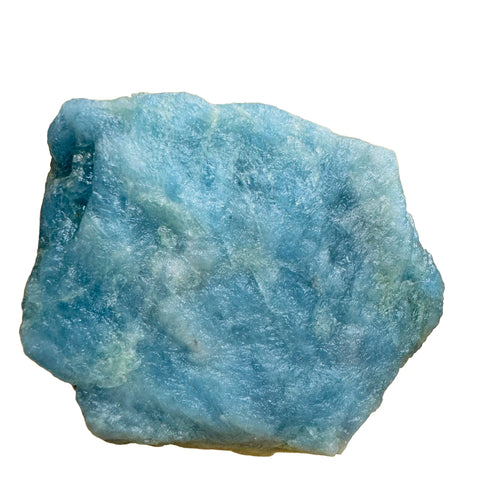


























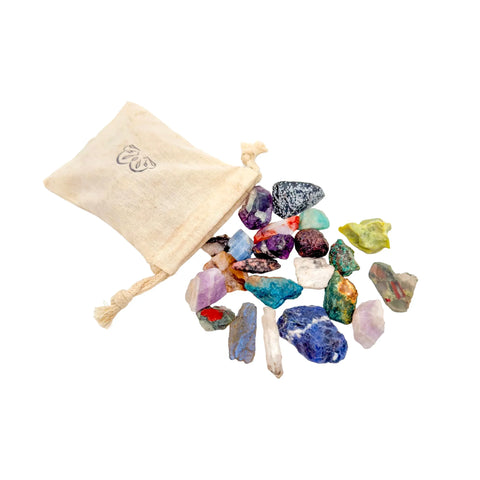

















 Raw Stones
179 pieces
Raw Stones
179 pieces
 Tumbled Stones
162 pieces
Tumbled Stones
162 pieces
 Palm Stones
25 pieces
Palm Stones
25 pieces
 Crystal Points
23 pieces
Crystal Points
23 pieces
 Clusters & Geodes
105 pieces
Clusters & Geodes
105 pieces
 Polished & Decor
151 pieces
Polished & Decor
151 pieces
 Mineral Specimens
262 collector pieces
Mineral Specimens
262 collector pieces
 Crystal Chips
21 pieces
Browse everything
Every collection, one page.
View All Collections →
Crystal Chips
21 pieces
Browse everything
Every collection, one page.
View All Collections →


 Aries
Mar 21 – Apr 19
Carnelian
›
Aries
Mar 21 – Apr 19
Carnelian
›
 Taurus
Apr 20 – May 20
Rose Quartz
›
Taurus
Apr 20 – May 20
Rose Quartz
›
 Gemini
May 21 – Jun 20
Agate
›
Gemini
May 21 – Jun 20
Agate
›
 Cancer
Jun 21 – Jul 22
Moonstone
›
Cancer
Jun 21 – Jul 22
Moonstone
›
 Leo
Jul 23 – Aug 22
Citrine
›
Leo
Jul 23 – Aug 22
Citrine
›
 Virgo
Aug 23 – Sep 22
Amazonite
›
Virgo
Aug 23 – Sep 22
Amazonite
›
 Libra
Sep 23 – Oct 22
Blue Lace Agate
›
Libra
Sep 23 – Oct 22
Blue Lace Agate
›
 Scorpio
Oct 23 – Nov 21
Obsidian
›
Scorpio
Oct 23 – Nov 21
Obsidian
›
 Sagittarius
Nov 22 – Dec 21
Sodalite
›
Sagittarius
Nov 22 – Dec 21
Sodalite
›
 Capricorn
Dec 22 – Jan 19
Black Tourmaline
›
Capricorn
Dec 22 – Jan 19
Black Tourmaline
›
 Aquarius
Jan 20 – Feb 18
Amethyst
›
Aquarius
Jan 20 – Feb 18
Amethyst
›
 Pisces
Feb 19 – Mar 20
Aquamarine
›
Gifting?
A birthday stone is the safe bet.
Read the zodiac guide →
Pisces
Feb 19 – Mar 20
Aquamarine
›
Gifting?
A birthday stone is the safe bet.
Read the zodiac guide →

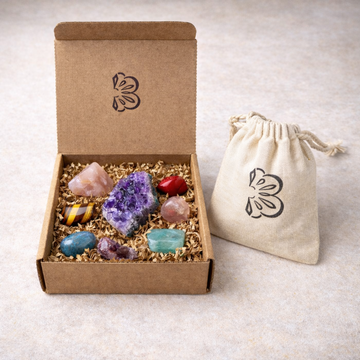
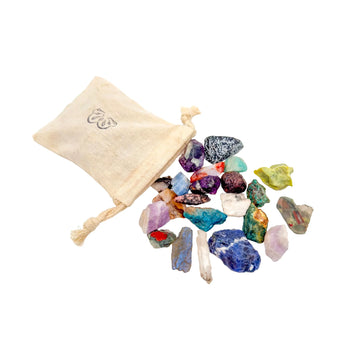










Sodalite
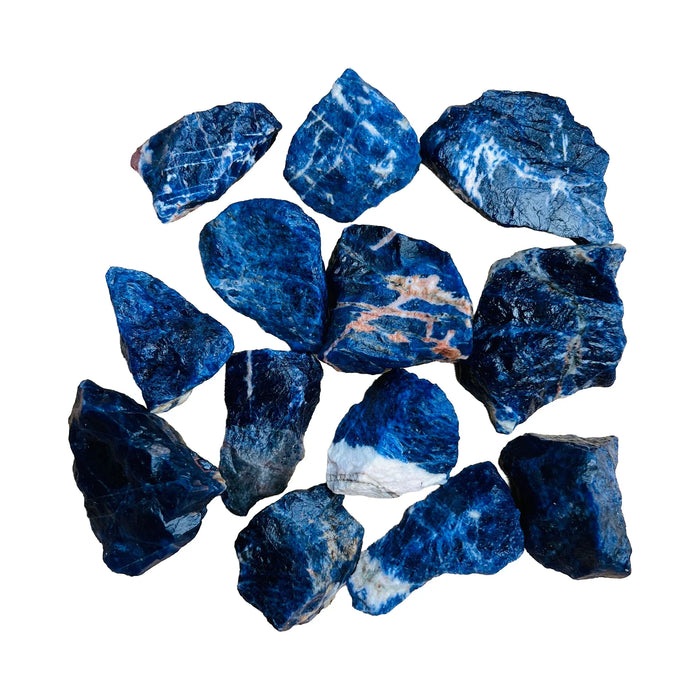
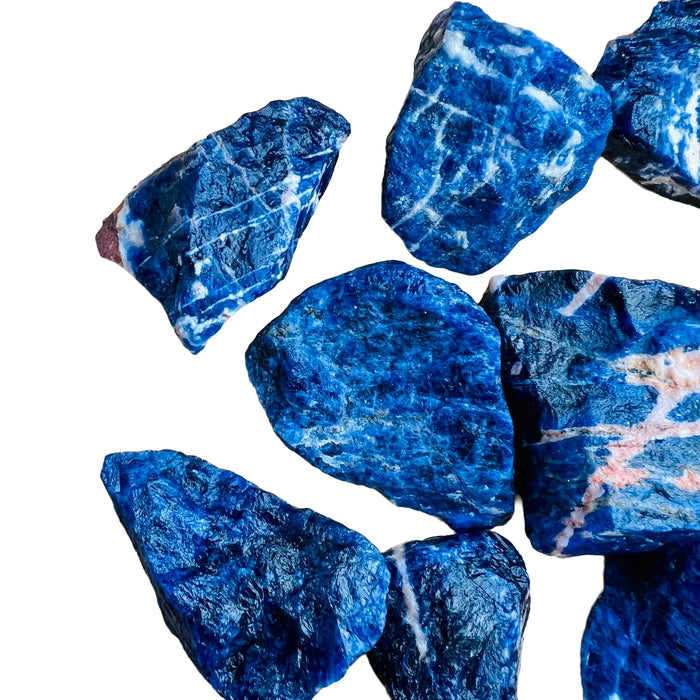
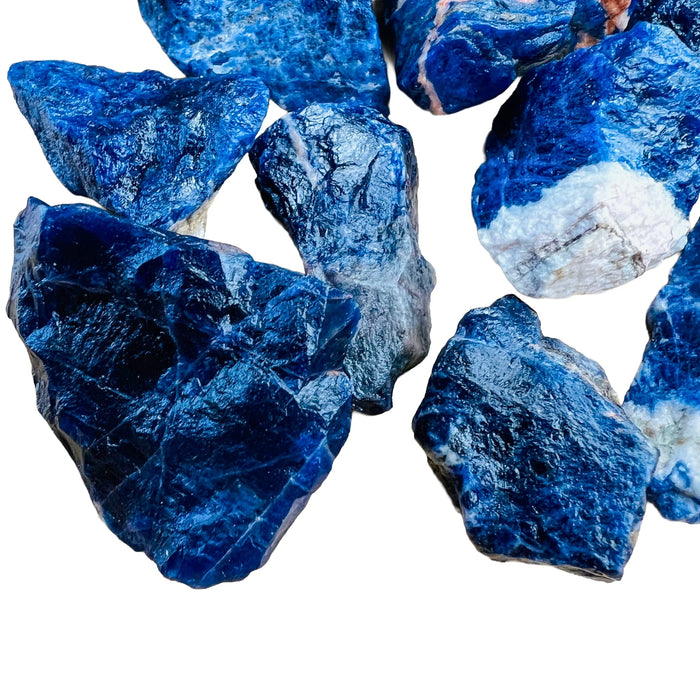
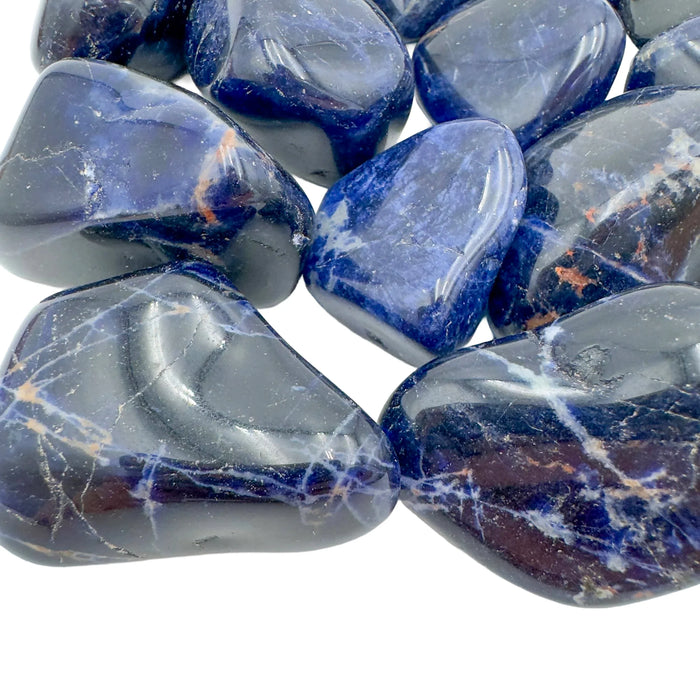
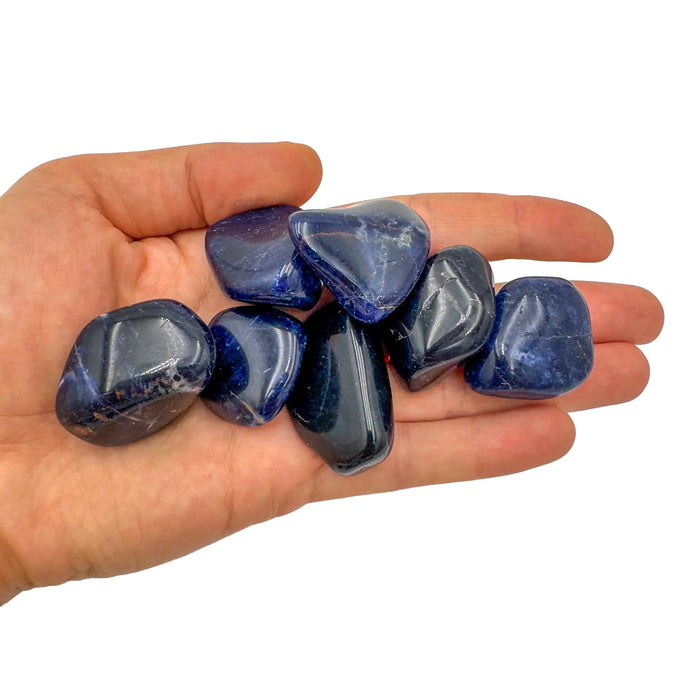
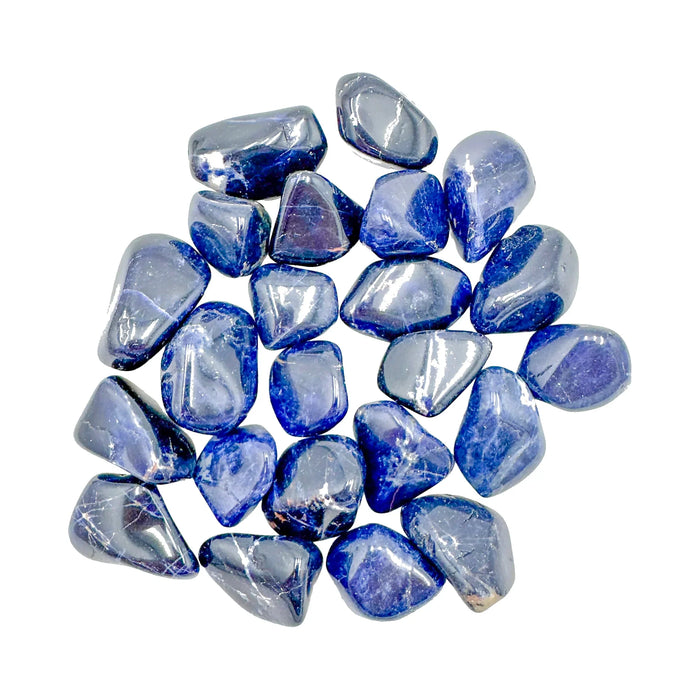
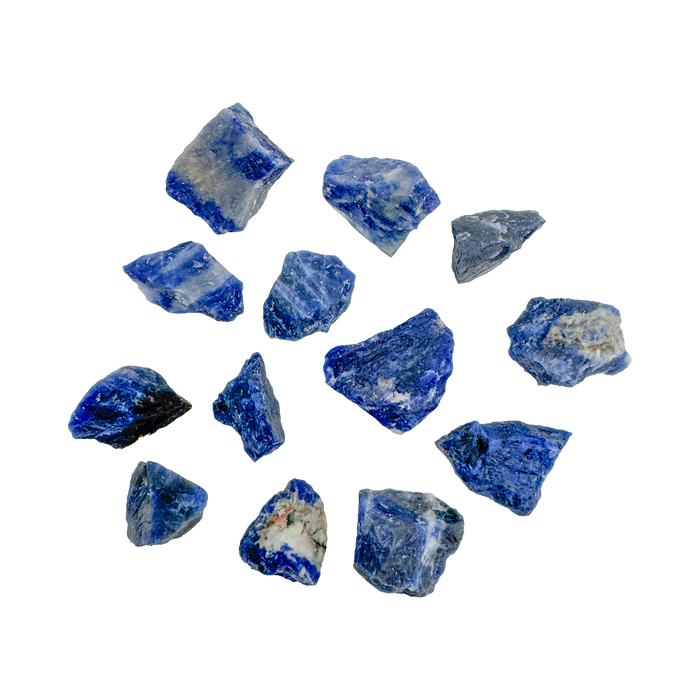
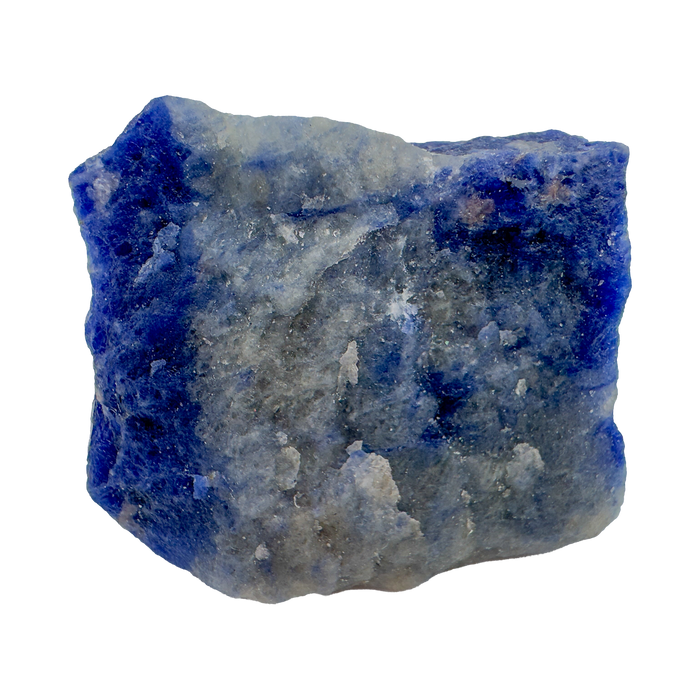
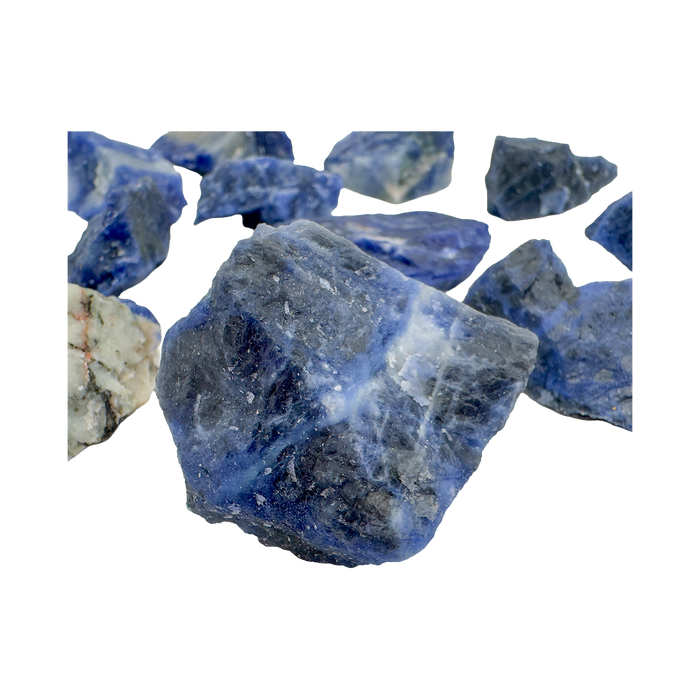
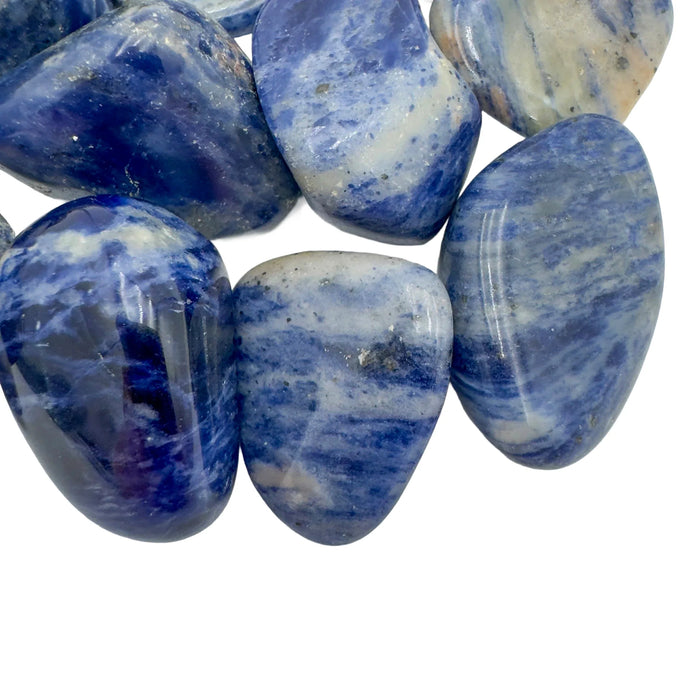
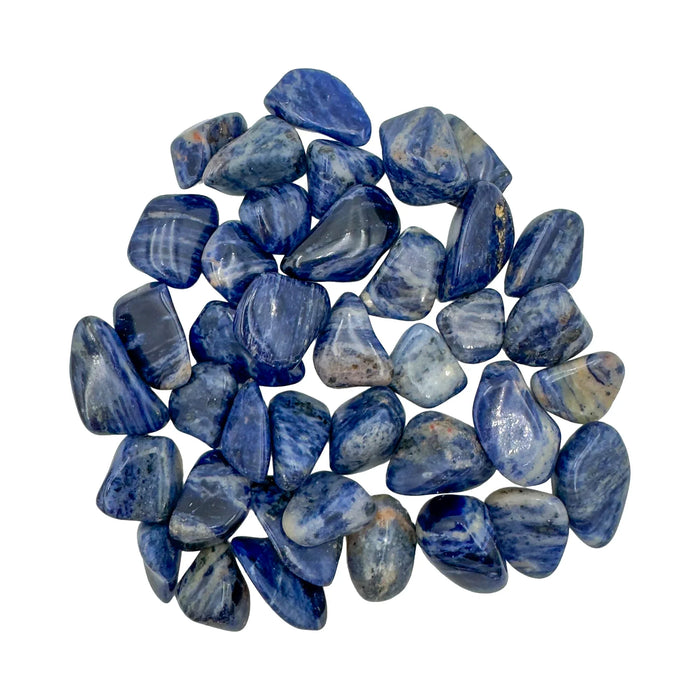
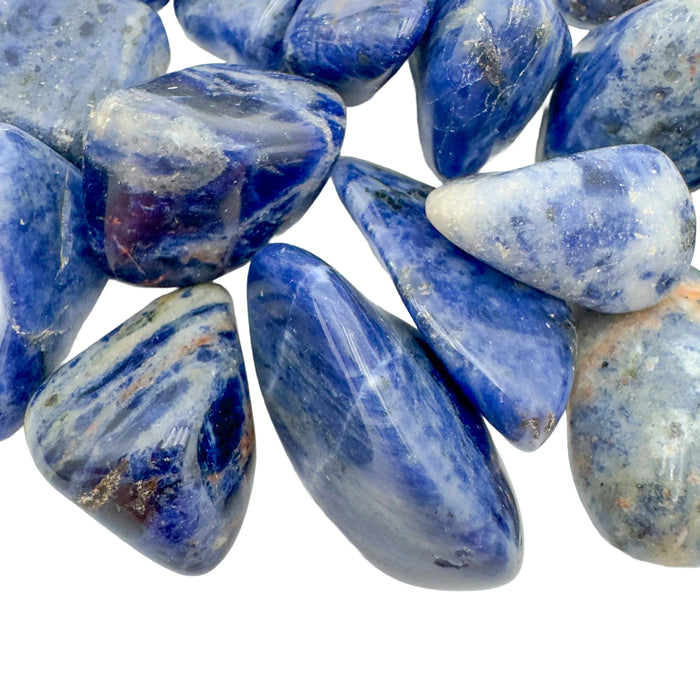
Sodalite is a deep blue sodium aluminosilicate mineral, often streaked with white calcite veining. Traditionally associated with honest communication, mental clarity, and the kind of truth-telling that strengthens rather than wounds. It's been worn in jewelry since ancient Egypt and carries a quieter presence than its cousin lapis lazuli.
Shop sodaliteThe geology.
Sodalite is a sodium aluminosilicate with the chemical formula Na₈(Al₆Si₆O₂₄)Cl₂, in the feldspathoid group. Its signature royal blue color comes from its chloride content combined with trace iron, and the white streaks or patches running through most commercial pieces are intergrown calcite. True Sodalite fluoresces orange under longwave UV, which is one of the more reliable ways to distinguish it from lookalikes.
Hardness sits at 5.5 to 6 on the Mohs scale, softer than quartz but hard enough for careful jewelry wear. Cleavage is poor, and fracture is conchoidal to uneven. It often gets confused with lazurite (the main component of lapis lazuli), which is chemically very close, but Sodalite lacks the golden pyrite flecks that define lapis.
The origins.
Sodalite is mined in several commercial producer regions worldwide. Namibia's Swartbooisdrif pegmatite is a primary source of high-grade specimen material with the deepest blue color. Brazil, particularly Bahia state, produces large volumes of tumble-grade Sodalite. Canada's Bancroft area in Ontario is the classic historical source, and Greenland (Ilimaussaq complex) yields rare collector-grade pieces. India, Russia, and Bolivia round out the global market.
Each source has a signature. Namibian Sodalite tends toward the deepest, most saturated blue. Brazilian material is often lighter with more visible calcite veining. Canadian Bancroft Sodalite is the historical reference and still appears in collector circles. The calcite veining that most buyers dismiss as a flaw is actually a good authentication sign, synthetic or dyed material almost always shows uniform color with no veining at all.
Traditional associations.
Sodalite has been worked since at least the third millennium BCE, with beads and carvings found in Mesopotamian and Egyptian archaeological sites. It wasn't formally identified as a distinct mineral species until 1811, when it was described from Greenland. The name comes from its high sodium content. Indigenous peoples in the Andes also worked it into ornaments and ceremonial objects.
Many people work with Sodalite for honest communication, mental clarity, and the calm confidence that lets hard truths come out kindly. It's most commonly associated with the Throat and Third Eye chakras, the elements of Water and Air, and the zodiac sign Sagittarius. The classic working is to carry a piece before a difficult conversation or to set one on a desk during writing.
Spotting the real thing.
Real Sodalite shows a natural, slightly uneven deep blue with white calcite veining running through the matrix. Under longwave UV light, the blue areas fluoresce orange, a diagnostic feature that imitations almost never replicate. The surface has a vitreous to slightly greasy luster when polished, and you can sometimes see tiny white flecks of other intergrown minerals under a loupe.
The most common imitation is dyed howlite, which is chalky white in its natural state but takes dye readily. Dyed howlite shows uniform, saturated blue with no veining, and the dye often pools in surface fractures. Lazulite and lapis lazuli are occasionally misidentified as Sodalite; lapis has visible pyrite flecks that Sodalite lacks. Ask for country of origin and test with UV if you have one available.
Care & handling.
Water safe for a brief rinse with warm water and a soft cloth. Skip long soaks, saltwater, and ultrasonic cleaners. The softer calcite veining can be attacked by acidic cleaners, so stick to water and gentle soap at most. Sodalite is stable under sunlight and doesn't fade.
Cleanse energetically with moonlight, sound, smoke, or by placing on selenite overnight. At 5.5 to 6 on the Mohs scale, Sodalite handles careful daily wear in jewelry but isn't ideal for rings subjected to physical work. Store separately from harder stones like quartz, topaz, and sapphire to preserve the polish.
Pairs well with.
Proof, not promises.
We measure our own sourcing across five dimensions. Supply chain, environmental footprint, artisan support, market integrity, and pricing. The number is honest, not perfect. Where we can do better, we say so.
A deeper look.
Extended geology, sourcing, authentication, history, varieties, and pricing, for when the quick guide isn't quite enough.
Extended geology
Sodalite is a sodium aluminosilicate in the feldspathoid group, with chemical formula Na₈(Al₆Si₆O₂₄)Cl₂. It crystallizes in the cubic system, though most commercial material is massive rather than showing distinct crystals. The royal blue color derives from the chloride anion combined with trace iron and sulfur, held in the tetrahedral framework of the silicate structure.
Specific gravity runs 2.14 to 2.30. Luster is vitreous to greasy. Mohs hardness 5.5 to 6. Cleavage is poor in six directions; fracture conchoidal to uneven. Longwave UV fluorescence in the orange-red range is diagnostic, most imitations don't replicate this.
Extended sourcing
Namibia's Swartbooisdrif pegmatite in the Erongo region produces the most saturated, specimen-grade Sodalite. Brazil's Bahia state, particularly near Itaju do Colonia, yields the majority of commercial tumbling material. Canada's Bancroft area in Ontario is the historical type locality for North American material and still produces collector pieces.
Greenland's Ilimaussaq intrusive complex produces rare collector-grade pieces including the fluorescent Hackmanite variety. India (primarily the Dindori region), Russia (the Kola Peninsula), and Bolivia also contribute to global supply. Each source has a recognizable color and texture signature once you've handled enough pieces.
Authentication and warning signs
The longwave UV test is the most reliable: real Sodalite fluoresces orange-red. Dyed howlite, the most common imitation, does not. Look for natural calcite veining, real Sodalite almost always shows white streaks or patches in the matrix. Uniform saturated blue with no veining suggests dye. Under magnification, dyed pieces often show color concentrated in surface fractures.
Lazurite (the main component of lapis lazuli) is chemically very close to Sodalite but contains sulfur, not chloride, and is typically associated with pyrite flecks and calcite. Lapis is a rock, Sodalite is a mineral. Reputable sellers name the species and country, and distinguish between the two.
Historical and cultural context
Sodalite has been worked since at least 3000 BCE. Beads and carved ornaments have been recovered from Mesopotamian sites (Ur) and Egyptian tombs, where it was likely traded alongside lapis lazuli from similar Central Asian sources. Pre-Columbian Andean cultures worked Sodalite from South American sources into ceremonial objects and beadwork.
The material wasn't formally identified as a distinct mineral species until 1811, when Thomas Thomson described it from Greenland specimens. The name reflects the high sodium content. In contemporary metaphysical practice, Sodalite is grouped with stones for throat-chakra work and rational clarity, often paired with Amazonite for balanced communication.
Varieties and trade names
Standard Sodalite: the classic royal blue with white calcite veining.
Hackmanite: a rare variety from Greenland and Afghanistan that shows tenebrescence (color that changes with light exposure), shifting from pink to violet-blue.
Bancroft Blue: trade name for Canadian Sodalite from the Ontario deposits.
Namibian Blue: trade name for high-grade Sodalite from Swartbooisdrif.
Pricing reality
Tumbled Sodalite: 1 to 6 dollars per piece. Small carved shapes and palm stones: 8 to 30 dollars. Larger polished freeforms and spheres: 25 to 120 dollars. Specimen-grade Namibian Sodalite: 40 to 300 dollars. Fine Hackmanite specimens: 150 to 1,000 dollars depending on size and color shift.
Value drivers: depth and saturation of blue, balance and pattern of calcite veining, clean polish, documented origin, and UV fluorescence response. Warning signs: perfectly uniform saturated blue at low prices, no origin named, or material with the cold plasticky feel that suggests dyed howlite.
Good sourcing is a practice, not a claim.
Nothing we sell is dyed howlite, dyed chalcedony, or lazulite mislabeled as Sodalite. We name our origins where we can. We say so when we cannot. We walk away from material that doesn't meet our standard, even when it costs us sales.
Bring sodalite home.
Every piece we carry is photographed individually and listed with its own origin and treatment notes. What you see is what ships.
Shop the sodalite collectionSodalite, in stock now.
Our most-loved Sodalite pieces, ready to ship.
- from 1,000+ reviews
- Ships within 72 hoursMonday to Friday, tracked
- 90 days to return itif you do not love it
- Free US shipping over $99$8.99 flat rate under
The Slow Note
New stones go to the list first.
No forwarding, no selling. Unsubscribe in one click. Privacy