

































































Crystal Shop Red Flags: Ten Signs to Watch For
How to read a seller before you trust them with your money.
You cannot run a lab test at a checkout page. What you can do is read the listing and the shop behind it. Honest sellers tell you what a stone is, where it came from, and what was done to it. The warning signs almost always show up before you ever click buy.

The biggest crystal shop red flags are no stated origin, no treatment disclosure, certificates used as proof, invented names with no mineral named, prices too good to be true, mislabeled lookalikes, stock-photo-only listings, and an anonymous seller with no address or returns. Honest shops name the stone, the source, and the treatment.
A Crystal Shop Can Hide More Than You Think
A crystal travels a long way before it reaches a shelf. It is dug, sorted, traded across borders, polished, and often passed through several hands before a shop ever lists it. At each step a label can be lost, guessed at, or quietly changed. By the time you see a photo and a price, most of that history is invisible.
Two things make it worse. First, anyone can open a storefront overnight, buy a container of cheap stones from an overseas wholesaler, and resell them under a brand with no real name behind it. Second, lookalike stones get mislabeled all the way down the chain, so a seller can pass on a wrong name in good faith and never know. The signs below are how you protect yourself without needing a mineralogy degree.
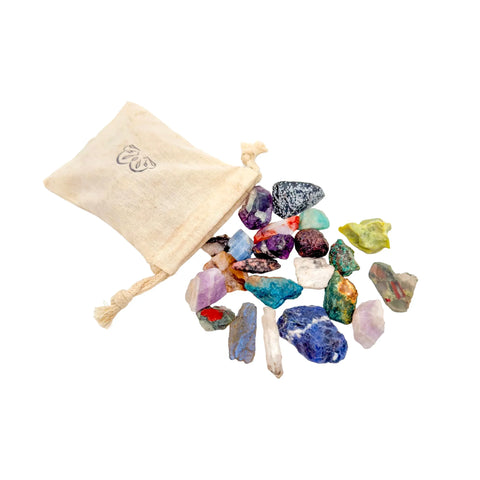
Raw, unlabeled specimens are where confusion begins. Many minerals share a color, a shape, or a sparkle, and once the origin paperwork is gone, only an experienced eye can tell some of them apart. A shop that cannot name what it is selling is a shop guessing along with you.

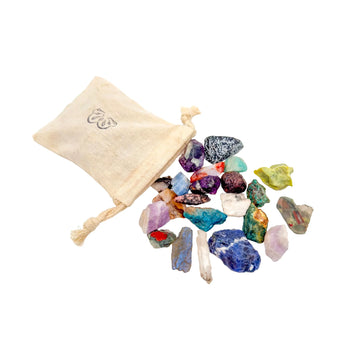
Raw specimens with no names attached. Lookalikes are easy to mix up once the origin is lost, by accident or on purpose.
Ten Signs a Seller Cannot Be Trusted
No single sign is proof on its own. Look for several together. The more of these a shop ticks, the less you should rely on what its listings claim.
Honest shops name where a stone was mined, or at least the country. If origin is always missing or always a vague continent, the supply chain is opaque and the seller may not know either.
Dyeing, heating, and irradiation are common and perfectly legal when disclosed. A blanket promise that nothing is ever treated is statistically unlikely and a sign the seller is not paying attention.
A printed certificate means little unless it names a real lab with a searchable database and covers that exact stone. Batch certificates and unnamed labs prove nothing about what you are buying.
Mystical trade names with no mineral named underneath often hide ordinary glass or a common stone. Ask what the actual mineral is. A seller who cannot answer is selling a story, not a stone.
Large, flawless, or genuinely rare stones at low prices are usually too cheap to be what they claim. A deep bargain on something scarce is a warning, not a win.
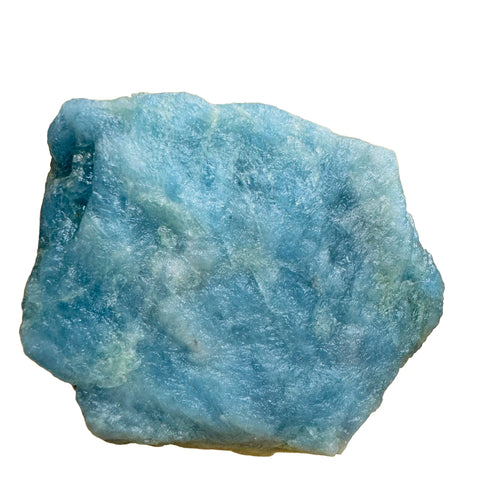
Lookalikes are mislabeled constantly, like blue calcite sold as celestite or dyed howlite sold as turquoise. A seller who cannot tell two similar stones apart should give you pause.
For one-of-a-kind pieces, a single stock image means you may not receive the stone you saw. Good shops photograph the actual piece you will get, from more than one angle.
If an identical product image shows up across many different shops, you are likely looking at a dropshipped stone, marked up and shipped from a warehouse with no handling or vetting.
Photographs flatter. Without dimensions or weight, a small stone can look like a centerpiece. Missing measurements are an easy way to oversell a little piece for a big price.
No address, no name, no return policy, and pressure to buy now. Anonymous storefronts make it impossible to know who you are paying or how to make it right if the stone is wrong.
Two Stones Sellers Mix Up Most
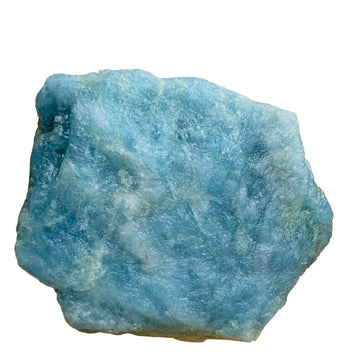
Sign number six deserves a closer look, because the most common mislabeling is not malice, it is repetition. A wrong name gets copied down the chain until almost everyone is using it. Blue calcite and celestite are the classic pair. Each card gathers one stone, so on a phone you read straight down instead of across a wide table.
Blue Calcite
Often sold as celestite
Celestite
The true sky-blue crystal
The heft test is the giveaway. Celestite is far denser than blue calcite, so a piece that feels surprisingly heavy for its size is almost certainly celestite, while a lighter, opaque, veined stone is blue calcite. Dyed howlite sold as turquoise follows the same logic. Learn the real stone, and the copy stops fooling you.
What an Honest Listing Looks Like
It is easy to read this as a list of things to fear. Flip it around. The same signs, in reverse, are exactly what a trustworthy shop puts in front of you without being asked.
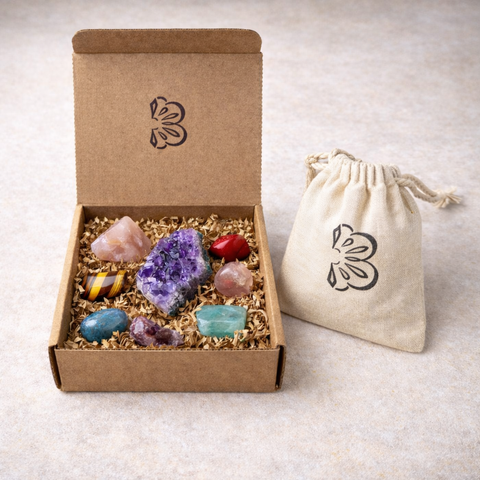
A polished display can dazzle. What tells you a seller is honest is not the shine, it is the detail underneath. Origin, treatment, exact size, and a real person behind the counter all say the shop has nothing to hide.

Polished points photograph beautifully. A real listing still tells you what each piece is, where it came from, and how big it is.
A country, region, or mine stated plainly, even when the honest answer is that the country is known but the exact mine is not.
When a stone is dyed, heated, stabilized, or coated, an honest listing says so in plain words rather than hiding behind the word natural.
For unique specimens, the photo is the stone you receive, shown from several angles and listed with its real measurements.
A findable business with an address, honest reviews, and a fair return policy stands behind what it sells and answers questions gladly.
A good seller tells you what a stone is, where it came from, and what was done to it. Silence on any of the three is the warning.
Beyond Bohemian publishes its sourcing models and treatment notes because a stone should never have to carry a claim it cannot support. The point is not that treated or common stones are bad. They are honest materials with a fair price. The only real problem is a label that promises more than the piece can deliver.
Related Guides
Why a printed certificate proves far less than it appears to, and what actually counts.
Read the guideHow to check a sourcing story and read between the lines of a vague origin.
Read the guideThe tells for dyed agate, howlite, and more, so a treated stone cannot pass as natural.
Spot the dyeInvented names and marketing labels translated back into real geology.
Decode the namesOpalite, goldstone, and cherry quartz, and how to recognize man-made material.
Read the guideEvery Beyond Bohemian guide to sourcing, value, and care in one place.
Browse the LibraryCrystal Shopping FAQ
What are the biggest red flags at a crystal shop?
The clearest red flags are no stated country of origin, no treatment disclosure, certificates used as proof, invented names with no mineral named, prices that are too good to be true, mislabeled lookalikes, stock-photo-only listings, identical photos across many shops, no size or weight, and an anonymous seller with no address or return policy.
How do I know if a crystal seller is trustworthy?
A trustworthy seller names the stone, states its origin and any treatment, photographs the exact piece for unique specimens, lists real size and weight, and has a findable business with reviews and a fair return policy. Welcoming your questions is one of the strongest signs of all.
Are crystal certificates of authenticity worth anything?
Usually very little. A certificate only means something when it names a real laboratory with a searchable database and applies to that exact stone. Certificates from unnamed labs, or one certificate covering a whole batch, prove nothing. For most crystals, a clear photo and an honest description tell you more.
Why will a seller not tell me where a crystal is from?
Often because they do not know. When stones pass through many hands, the origin can be lost long before the final seller. Sometimes the silence is deliberate, to hide a cheap or unwanted source. Either way, a seller who cannot or will not name a country is a reason to be cautious.
Is a cheap crystal always fake?
No. Many common stones are genuinely inexpensive. The warning comes when the price does not match the claim, like a large flawless stone or a rare species offered far below what real material costs. A bargain on something that should be scarce is the signal to slow down.
What does it mean if a shop says its crystals are never treated?
To most buyers it should read as a warning. Dyeing, heating, and irradiation are common across the trade and legal when disclosed. A shop claiming that nothing it sells is ever treated is either not looking closely or not being honest. The better answer is disclosure when treatment applies.
How can I tell if a shop is dropshipping crystals?
Search the product image. If the same photo appears on many different storefronts, the stone is likely dropshipped, bought from an overseas warehouse and marked up with no handling or vetting. Generic stock photos, no size details, and long shipping times point the same way.
What questions should I ask before buying a crystal?
Three questions cover most of it. What mineral is this and where was it mined, has it been treated in any way, and will I receive the exact piece in the photo. Honest sellers answer all three plainly. Vague or defensive answers tell you what you need to know.