























































What a Crystal Certificate of Authenticity Actually Proves
A certificate can look official and still tell you almost nothing. Here is how to read one.
Plenty of crystals arrive with a printed certificate, a gold seal, and a confident signature. Very few of those documents mean what most buyers assume they mean.

A certificate of authenticity for a crystal is usually a seller-made document, not an independent lab report. No standards body governs who can issue one, and anyone can print a template. For everyday stones, the seller's transparency and the stone's own testable properties prove far more than any paper.
Most Crystal COAs Are Written by the Seller
Start with what the letters mean. A certificate of authenticity, or COA, is a statement that a stone is what the seller says it is. The catch is who makes that statement. For the great majority of crystals, the COA is produced by the same shop selling the piece, on a template anyone can buy online, with no outside testing behind it.
That is a different thing from an independent laboratory report. A real gem lab examines one specific stone, identifies the mineral, checks for synthetics and treatments, and puts its own reputation behind the result. A seller COA and a lab report can look similar on paper, yet only one of them involved a microscope and an accountable third party.
It helps to sort the paperwork by who actually stands behind it.
Generic seller COA
Seller-issued paper
Recognized lab report
Independent testing
Lookalike-acronym card
Imitation authority
No certificate, full disclosure
Written transparency
None of this makes every certificate worthless. It means the value lives in the issuer, not the seal. A document is only as credible as the person or lab who signed it.
Why a Certificate on a Ten-Dollar Stone Rarely Adds Up
There is a simple cost test that settles most cases. Sending a single stone to an independent gem laboratory for identification generally costs from tens of dollars to over a hundred, and a lab reports on one piece at a time, never a whole batch. Run that figure against the price of the stone.
If a five-dollar tumble or a small cluster ships with a "certificate," the math does not work. No lab was paid to test it, because the testing would cost many times the stone itself. What came in the box is almost always a printed card, not a laboratory result. The same logic rules out one certificate covering a tray of fifty stones.

Affordable tumbled stones are wonderful to own. A genuine lab report usually costs more than the stone itself, which is why most carry only a seller's note.
rough cost to independently identify a single stone at a gem lab
how lab reports are issued, for a single piece and never a batch
Lab-fee and per-stone figures from gem-trade and laboratory sources.
GIA and Its Peers Grade Gems, Not Tumbles

Raw stones and clusters are sold by the piece or the lot. The recognized gem labs were built for cut gemstones, not material like this.
The recognized authorities do exist. The Gemological Institute of America, founded in 1931, is a non-profit that created the diamond grading language most of the trade now uses. The International Gemological Institute and the American Gem Society sit alongside it. When people picture a "certified" stone, these are the labs they have in mind.
Two things matter for crystal buyers. First, these labs were built to grade diamonds and faceted colored gemstones, and submitting a stone is voluntary and paid. Second, there is no equivalent that routinely grades the tumbles, clusters, and raw specimens that make up most of the crystal market. So when a decorative crystal arrives with a "certificate," it is almost never one of these reports.
Watch for official-sounding initials. Some cards carry an acronym chosen to echo GIA (a "GRA" card, for example, often travels with moissanite). A logo and three capital letters are easy to print. A recognized gemological laboratory is not.
Three Things That Beat a Printed Seal
If a certificate is not the answer, what is? Three things carry far more weight than a card in the box, and you can use all of them before you buy.
Hardness, density, color behavior, and matrix pattern are physical facts that are hard to fake. Our guide to telling real turquoise from fake walks through the at-home checks that apply to many stones.
For a genuinely high-value piece, a report from GIA, IGI, or AGS is worth the fee. It names one tested stone and states identity and treatments. For an everyday crystal, it is rarely worth the cost.
Treatment, origin, and grade stated in writing. Clear photos of the actual piece. A return policy. A straight answer when you ask a direct question. This is the signal that travels furthest.
Transparency, Not a Token Certificate
This is why Beyond Bohemian does not lean on generic certificates. We would rather tell you, in plain language, what a stone is, what was done to it, and what we know about where it came from. That record is more useful than a card, and it is far harder to fake.
Where a stone has been treated, we say so. Where origin is known, we name it, and where the supply chain only takes us so far, we say that too. A printed seal cannot promise any of that. A clear, testable description can.

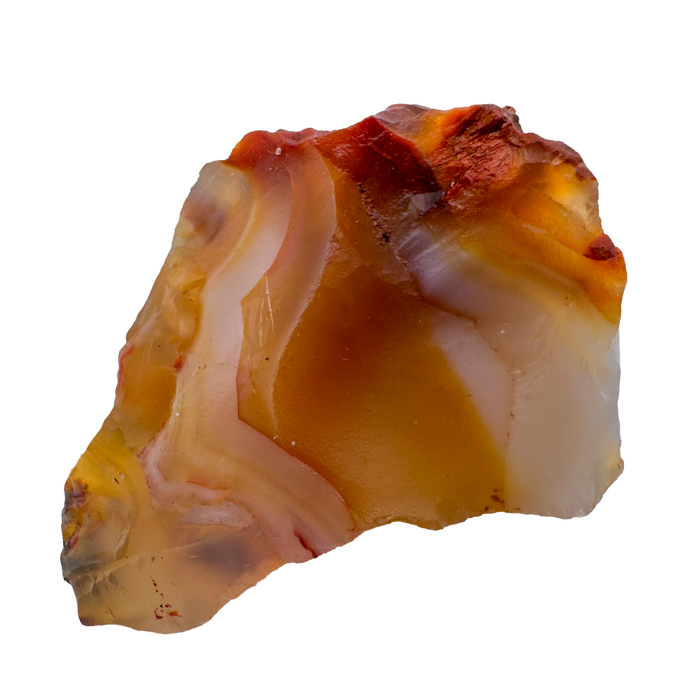
Polished pieces, described by treatment and origin in plain words. That written record outlasts any certificate card.
Paper can be printed by anyone. A clear, testable description is harder to fake, and easier to trust.
Go Deeper
The at-home tests that check a stone instead of a certificate.
Run the testsWhich impressive names are geology, and which are marketing.
Decode the namesWhat A, AA, and AAA mean, and why a grade is not a guarantee.
Read the guideHow we vet and describe what we sell, certificate or not.
See the standardCollector-grade pieces, described in plain language.
Browse specimensBrowse every Beyond Bohemian guide to sourcing, value, and care.
Back to the LibraryCrystal Certificate FAQ
Does a certificate of authenticity mean a crystal is real?
Not by itself. Most crystal COAs are written by the seller rather than an independent lab, and no standards body decides who may issue one. Treat the document as a starting point, then check the stone's properties and the seller's track record.
Who can issue a certificate of authenticity?
Almost anyone. No law restricts it for crystals, and certificate templates are sold online for a few dollars. That is why the issuer matters far more than the seal, the signature, or the gold foil.
What is the difference between a COA and a gem lab report?
A COA is usually a seller's own statement. A lab report comes from an independent laboratory such as GIA, IGI, or AGS that tested one specific stone for identity, treatment, and sometimes origin. They can look alike, but only one involved outside testing.
Are GIA or IGI reports available for tumbled stones and clusters?
Rarely. Those labs were built to grade diamonds and faceted gemstones. The tumbles, clusters, and raw specimens that fill the crystal market are almost never submitted, because the fee usually exceeds the value of the stone.
How much does it cost to get a crystal independently tested?
Independent identification generally runs from tens of dollars to over a hundred per single stone, and labs report on one piece at a time, not a batch. That cost is why a certificate on an inexpensive stone seldom came from a real laboratory.
Is a GRA certificate the same as a GIA report?
No. GRA is a private label whose name echoes GIA, and it commonly accompanies moissanite. An official-looking acronym is not the same as a recognized gemological authority.
What should I trust instead of a certificate?
The stone's own testable properties, a recognized lab report for genuinely high-value pieces, and the seller's transparency: treatment, origin, and grade stated in writing, with clear photos and a return policy.
Should I avoid sellers who include certificates?
Not at all. A certificate is fine as an extra. The warning sign is a seller who leans on the paper instead of describing the stone honestly, or who issues certificates for cheap stones in bulk.