










Opalite, Goldstone, and the Pretty Glass Sold as Crystal
A few of the most popular "crystals" in the shop never came out of the ground.
Some of the stones you see most often are not stones at all. They are glass, made in a factory, given a crystal-sounding name, and priced like the real thing. None of that is a problem when a seller says so. It becomes one when they do not.

Opalite, goldstone, cherry quartz, and Andara are man-made glass, not natural crystals. Glass itself is fine when it is labeled honestly. The trouble starts when it is sold as a mined stone at a mined-stone price. Round bubbles, frozen swirls, and color that is too even are the giveaways.
Some "Crystals" Never Came From a Mine
Walk through almost any crystal market and you will pass a few trays that sparkle a little too evenly. The colors are bright, the price is low, and the names sound geological: opalite, goldstone, cherry quartz. What they have in common is simple. They are glass.
This is not a fringe problem. These materials are among the most common "crystals" sold online, partly because they are cheap to make and easy to love. Glass can be melted, colored, and shaped into almost anything, so it can mimic the glow of opal, the sparkle of aventurine, or the blush of pink quartz at a fraction of the cost.
Honest sellers label them as glass or man-made, and there is nothing wrong with buying a pretty piece of glass on purpose. The issue is the listing that calls a fused, dyed bead a "quartz" and charges quartz money for it. We covered the marketing-name side of this in Crystal Trade Names, Decoded. This guide is the field test for the glass itself.
Man-made is not the same as fake. A clearly labeled glass piece is an honest product. The same piece sold as a natural crystal, with no disclosure, is a misrepresentation. Everything below is about telling those two apart.
The Glass Most Often Sold as Crystal
Most of the man-made glass in the crystal trade comes down to a handful of repeat offenders. Each one imitates a real stone, and each one has a tell once you know what you are looking at.
Opalite
Opalescent glass
Goldstone
Aventurine glass
Blue Goldstone
Cobalt-colored glass
Cherry "Quartz"
Colored glass
"Strawberry Quartz"
Usually glass with specks
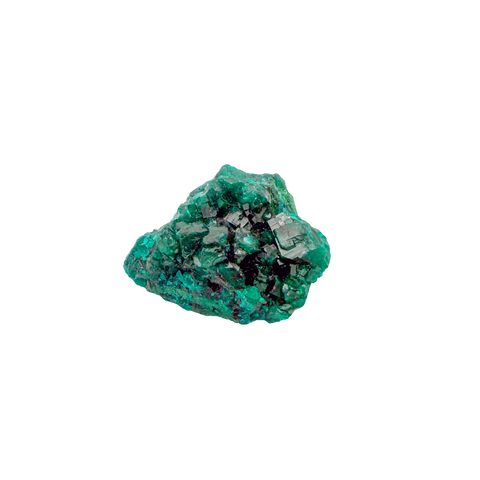
Andara "Crystal"
Soda-lime or slag glass
Goldstone: The Glass Named After a Real Stone
Goldstone is the most quietly misleading of the group, because its other name is "aventurine glass," and aventurine is a real stone. The glass was first made in seventeenth-century Venice by the Miotti family, who held an exclusive license from the Doge and kept the recipe secret for generations.
It is made by melting silica with copper oxide in a low-oxygen furnace, then cooling it slowly so tiny copper crystals form and throw off that signature glitter. Blue, green, and purple versions swap in cobalt, chromium, or manganese for color.
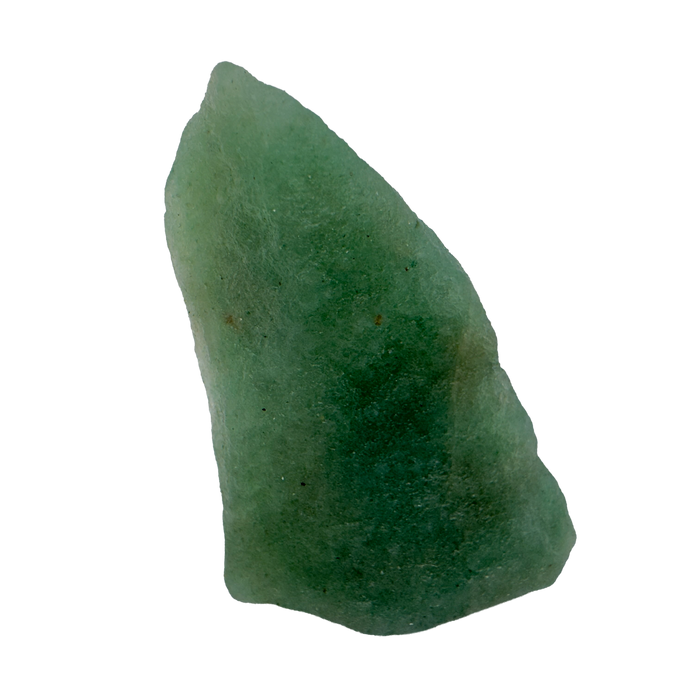
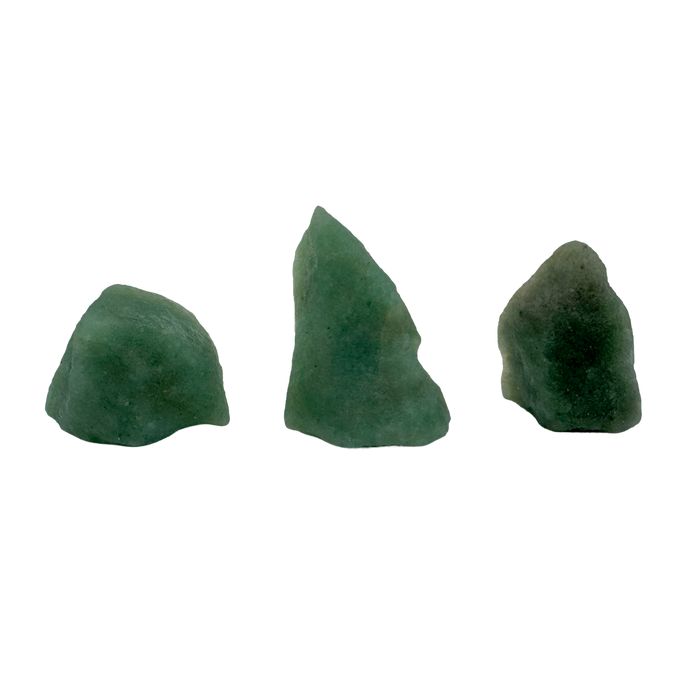
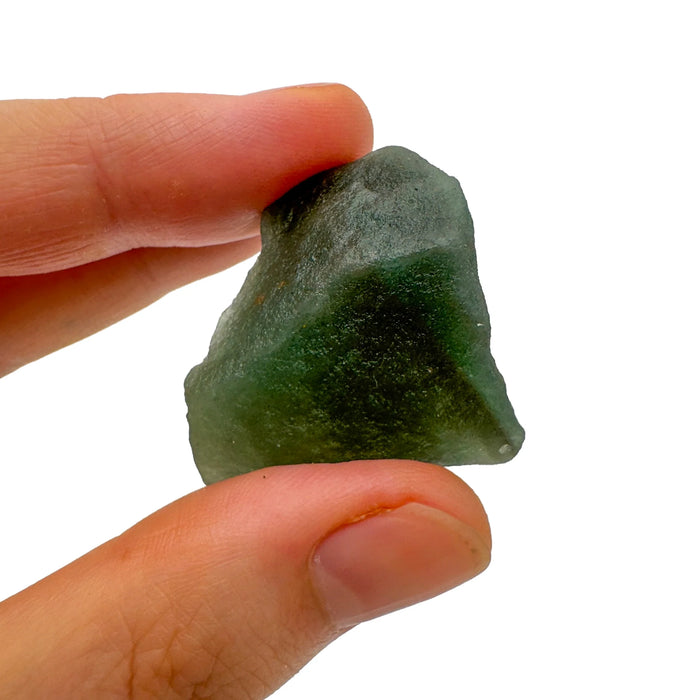
Real aventurine, by contrast, is a quartz. Its shimmer, called aventurescence, comes from natural mineral flecks, and it is subtle and uneven. Goldstone's sparkle is brighter, denser, and far too regular. If every fleck looks evenly placed and the whole piece glitters like a night sky, you are almost certainly holding glass.

Real Green Aventurine. Its sparkle is soft and uneven. "Goldstone" borrows the name aventurine glass but is manufactured, with a far more uniform glitter.
Cherry and Strawberry "Quartz": Color That Was Poured, Not Grown

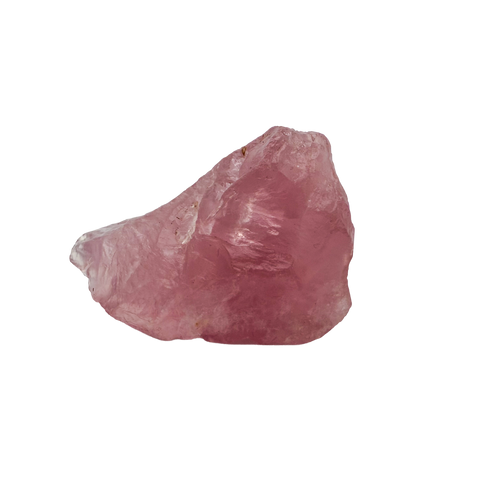
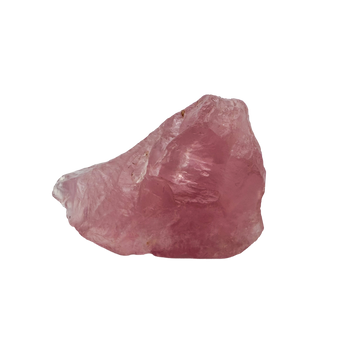
Real Rose Quartz is softly cloudy and uneven in color. Cherry "quartz" is clear glass with poured-in red swirls, a look no natural quartz produces.
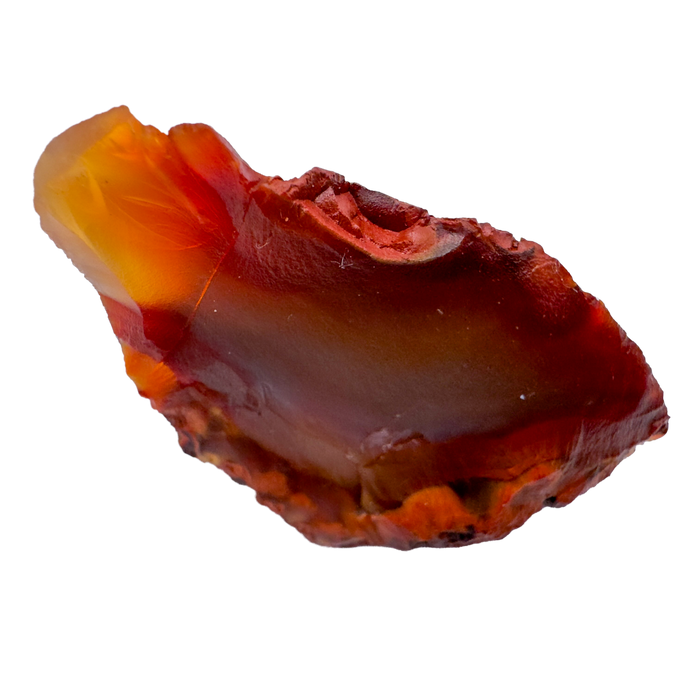
There is no natural quartz that looks like cherry quartz. The bright, cherry-red glass threaded with milky swirls is exactly that: glass, sometimes called "smelt quartz," colored and swirled while molten. Sellers occasionally claim the red comes from cinnabar, but most cherry quartz is simply colored glass, and the price almost never matches the elaborate process that claim would require.
Strawberry quartz is the trickier cousin, because a real version does exist. Genuine strawberry quartz is quartz filled with natural flecks of iron minerals like hematite or lepidocrocite, and it is uncommon. The catch is that most material sold under the name is glass with red specks mixed in.
The tell is the same one that runs through this whole guide. Natural inclusions are irregular and scattered at random, while glass shows uniform specks, wispy dye, or round bubbles.
Six Ways to Spot Glass in Your Hand
You do not need a laboratory. A loupe, a steady eye, and a few minutes settle most cases. No single sign is proof on its own, so look for two or three together before you decide.
The most reliable giveaway is the bubble. Natural quartz grows as solid crystal and does not trap round pockets of air. Glass, poured while molten, often does.

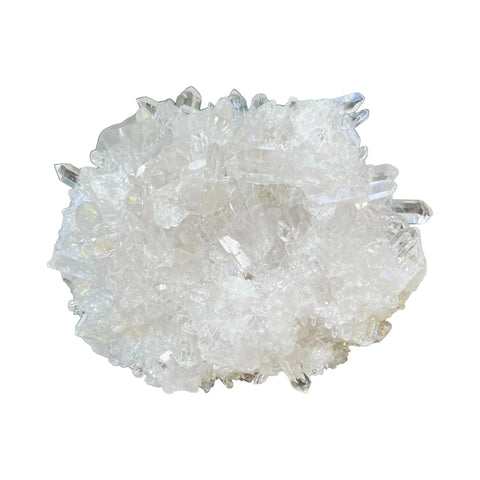
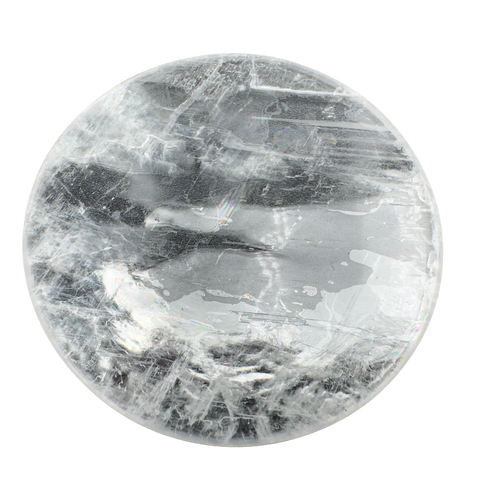
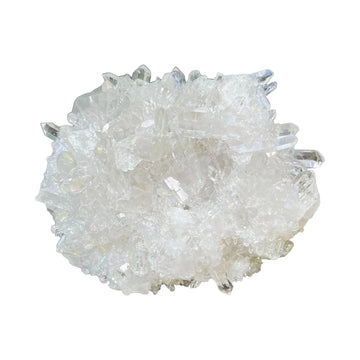
Natural Clear Quartz grows in angular, six-sided crystals with irregular interiors. Glass is poured into molds and may carry round bubbles or faint seams.
Perfectly round air pockets, with or without a loupe, mean glass. Natural quartz does not contain them.
Wispy streaks of color that look frozen mid-motion are molten glass that cooled while flowing.
Color that is uniform, unusually vivid, and identical from piece to piece points to a manufactured batch.
Glass warms quickly in your hand. Quartz has higher thermal conductivity and stays cool longer.
Quartz (Mohs 7) scratches glass (about 5.5), not the reverse. Only ever test on a hidden spot. See our durability guide.
A faint mold seam, or two "identical" stones, suggests a casting rather than a natural find.
Disclosed Is Fine. Disguised Is Not.
None of this means glass is the enemy. Goldstone has roughly four centuries of craft behind it. Opalite can be genuinely lovely. The problem is never the material. It is the label.
In the United States, the Federal Trade Commission's jewelry guides (16 CFR Part 23) say a man-made or imitation material cannot be described with a natural stone's name unless a disclosure such as "imitation," "simulated," or "laboratory-created" sits right beside it, just as conspicuously. The word "faux" alone does not count. A bead listed only as "cherry quartz" is exactly what those rules exist to prevent.
The practical harm is money and trust. Glass costs pennies to produce. When it is sold as a mined crystal, you pay stone prices for factory output, and you lose the one thing that drew you to crystals in the first place: knowing what you actually have.
"A real stone earns its value from the earth. Glass earns it from the label."
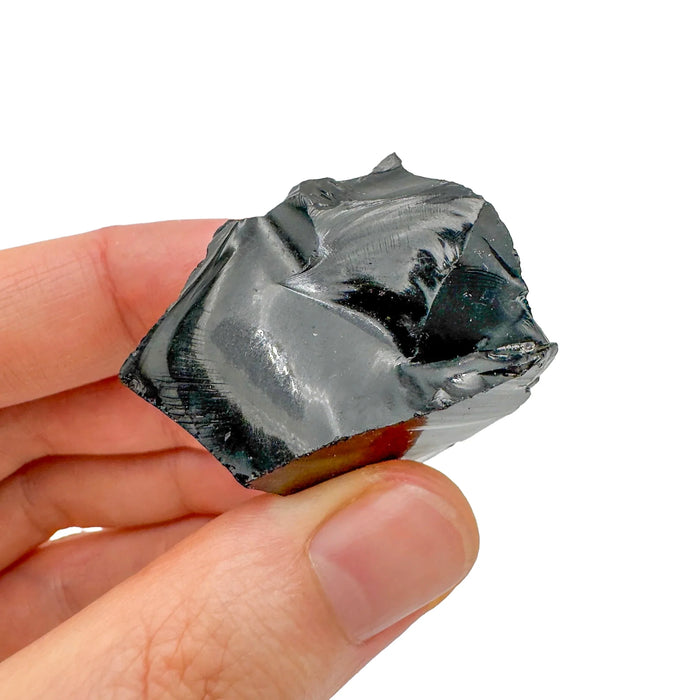
"Andara crystals," marketed as rare etheric stones for hundreds of dollars, test as ordinary soda-lime or slag glass. The "monatomic" and "etherium" claims behind them have never been verified by any gemological laboratory. It is the same trick as a cheap bead, with a much larger markup. At Beyond Bohemian we do not sell glass as stone, and where people place meaning, practitioners generally treat man-made glass as carrying the qualities of glass, not of the stone it resembles. Opalite is not moonstone, and saying so is just accuracy.
Read Next
The companion guide to the marketing names: which are real geology, and which are stickers.
Read the guideThe real quartz that "goldstone" glass is named after, and how its natural shimmer differs.
See aventurineThe genuine adularescent stone that opalite glass is built to imitate.
See moonstoneWhat real pink quartz looks like, next to the poured color of cherry "quartz."
See rose quartzThe Mohs hardness primer behind the scratch test, and how to handle softer stones.
Check durabilityOur full collection of plain-spoken guides to sourcing, treatment, and value.
Browse the LibraryFrequently Asked
Is opalite a real crystal?
No. Most opalite is man-made opalescent glass, sometimes sold as "sea opal" or "opal moonstone." It is made to imitate the glow of opal or moonstone but shows no true play-of-color and shares none of their mineral properties. A small amount of natural "opalite" (common opal) exists, but it is rarely what you find in the crystal trade.
Is goldstone a natural stone?
No. Goldstone is man-made glass, also called aventurine glass. It was first produced in seventeenth-century Venice by the Miotti family. Its sparkle comes from tiny copper crystals formed in the glass during a slow, low-oxygen cooling process. Blue, green, and purple goldstone use cobalt, chromium, or manganese for color.
Is cherry quartz real quartz?
No. Cherry quartz is colored man-made glass, sometimes called "smelt quartz." There is no natural quartz that looks like it, with bright red color and wispy swirls frozen inside clear glass. Claims that it contains cinnabar are usually marketing, since most cherry quartz is simply colored glass.
How can I tell if a stone is actually glass?
Look for round air bubbles, wispy swirls or flow lines, and color that is too even or too vivid. Glass also warms up quickly in your hand, while quartz stays cool. Quartz (hardness 7) will scratch glass (about 5.5), though you should only test that on a hidden spot. No single sign is proof, so look for two or three together.
Are Andara crystals real crystals?
Laboratory analysis shows Andara is soda-lime or slag glass, often recycled. The popular claims that it is "monatomic" or contains "etherium" have not been verified by any gemological laboratory. It is glass, frequently sold at high prices.
Is strawberry quartz fake?
Not always. A genuine natural strawberry quartz exists, with random flecks of iron minerals like hematite inside the quartz, but it is uncommon. Most material sold under the name is glass with red specks added. Irregular, scattered inclusions point to the real stone, while uniform specks or round bubbles point to glass.
Is it bad to buy man-made glass?
Not at all, as long as it is described honestly. Glass like goldstone has real craft and history behind it. The problem is when glass is sold as a natural crystal with no disclosure, so you pay stone prices and miss what you thought you were getting.
What is the difference between aventurine and goldstone?
Aventurine is a natural quartz, and its shimmer (aventurescence) is soft and uneven. Goldstone is man-made glass named after aventurine, and its glitter is brighter and spread far more evenly. If the sparkle looks perfectly uniform across the whole piece, it is almost certainly goldstone glass.