













Real Amber vs Copal vs Plastic: How to Actually Tell
Six honest tests and a clear way to know whether you are holding fossilized resin or a convincing copy.
Amber is one of the most copied materials in the crystal world, partly because three different things get sold under its name: real fossilized amber, much younger copal, and outright plastic or glass. Here is how to tell them apart at home, and when only a lab can settle it.

Real amber is fossilized tree resin, millions of years old. Copal is the same kind of resin but far younger and softer, and most fakes are plastic or glass. A hot point smells of pine on amber, sweeter on copal, and acrid on plastic. No single test is enough, so combine two or three.
Amber, Copal, or Imitation?
Almost everything sold as amber falls into one of four groups, and only the first is fossilized amber in the strict sense. Knowing which group you are likely in tells you which tests matter: copal needs the acetone and hot-point tests, glass gives itself away by weight and temperature, and plastic usually fails on smell.
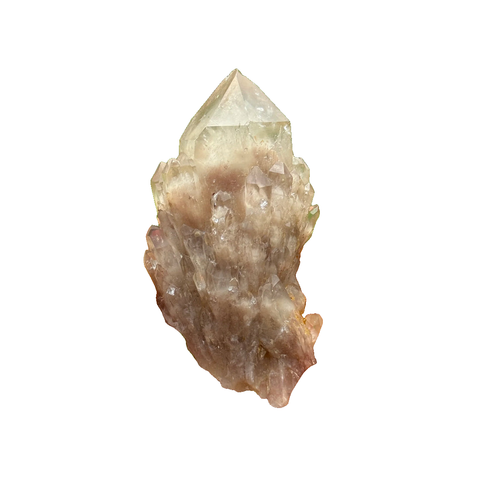
Fully fossilized tree resin, millions of years old. Warm, light, and soft, with a faint pine scent when warmed.
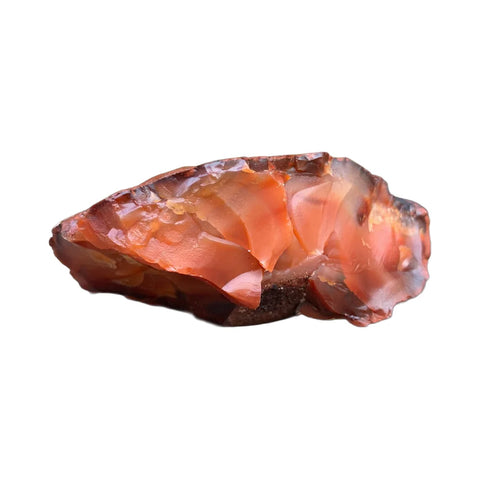
The same tree resin, but young and only partly hardened. A real natural material, just not amber, and worth far less.
Real amber fragments fused under heat and pressure. Genuine amber material, though it should be sold as pressed, not natural.
Modern imitations. Plastic can fool a quick glance, and glass gives itself away by feeling cold and heavy.
What Separates Amber From Copal
Amber and copal are the same thing, tree resin, caught at two stages of a very slow process. Fresh resin seeps from a tree, hardens, gets buried, and over a very long time loses its volatile compounds and polymerizes into hard, stable amber. The dividing line is age: amber has fully fossilized over millions of years, while copal is much younger, from a few decades to a couple of million years old, and has not finished hardening.
That unfinished state is why copal is softer, melts sooner, and reacts to solvents that leave amber untouched. None of this makes copal a fake. It is a genuine natural resin with a long history of use as incense. The only problem is honesty: copal sold as copal is fine, copal sold as amber at amber prices is the deception.
Copal often carries real insect inclusions, because young resin traps modern insects just as ancient resin once did. A real bug inside is not proof of amber. A large, showy, perfectly centered insect is more often a sign of copal or a resin imitation than of genuine amber.
"Copal is not fake amber. It is young amber, and the only thing being faked is the label."
The Tests That Actually Work at Home
These tests work because amber behaves like hardened resin, not stone. It is soft, 2 to 2.5 on the Mohs scale, light enough to float in salt water at a specific gravity near 1.05 to 1.10, and Baltic amber carries 3 to 8 percent succinic acid, its chemical signature as succinite. No single test is decisive, so stack two or three that agree, starting with the gentlest. Save the hot point for a hidden spot or a loose bead, never a finished surface you care about.
Stir about seven tablespoons of salt into a cup of warm water. Amber floats, and so does copal. Glass and most plastics sink. This rules out the heavy fakes but cannot separate amber from copal.
Touch a heated pin to a hidden spot. Amber resists and smells of pine and incense. Copal softens sooner and smells sweeter. Plastic melts with an acrid smell. The most telling test, but it leaves a mark.
Under ultraviolet light, amber usually glows a soft blue or blue-white. Copal gives a weaker, greener, chalky glow, and most plastics stay flat. Best done in a dark room.
A drop of acetone or nail-polish remover on a hidden spot leaves amber untouched. Copal turns tacky within a minute because it is less hardened. Wipe dry afterward.
Rub the piece briskly on wool. Amber and copal build a static charge that lifts a scrap of paper or a strand of hair. Glass will not. This separates resin from glass, not amber from copal.
Amber feels warm and surprisingly light. Glass feels cold and heavy. A piece that sits in the hand like a cool, dense bead is almost certainly glass.
Amber, Copal, Plastic, and Glass Compared
Each card gathers one material, so on a phone you read straight down instead of across a wide table.
Real Amber
Fossilized resin, the real thing
Copal
Young resin, not yet amber
Plastic
Synthetic imitation
Glass
Molded and cold
Pressed Amber and Amber With Insects
Two things sit between real and fake and cause most of the confusion. Pressed amber, also called reconstituted amber, is made from real amber fragments fused under heat and pressure, a practice since the late 1800s. It is genuine amber, but under a loupe it shows flow lines, elongated bubbles, and abrupt color boundaries, and it should be priced and labeled as pressed, not as a single natural piece.
Insect inclusions are the other gray area. Natural inclusions tend to be small, off-center, and a little degraded. A large, pristine, perfectly centered insect, especially in a cheap clear piece, points to copal or a resin imitation. For any gray-area piece, the acetone test and a 10x loupe tell you more than price or appearance ever will.
Beyond Bohemian does not currently carry amber, so this guide is here as education, not a sales pitch. The principle is the one we apply to every stone we do carry: a material is only worth what it honestly is. Copal, pressed amber, and natural amber are all legitimate. The problem is never the material, only a label that claims more than the piece delivers.
Related Guides
Another case of telling a natural material from an altered one, this time in quartz.
Read the guideSame mineral, different name. The honesty-of-labels question, applied to gypsum.
Read the guideWhy soft materials like amber need gentle handling, and what Mohs hardness means for care.
Check durabilityCare without water or harsh heat, which matters for soft, resinous, and water-sensitive pieces.
Read the guideOur full collection of trust-first crystal guides and comparisons.
Browse the LibraryFrequently Asked
Is copal the same as fake amber?
No. Copal is real, natural tree resin, just much younger than amber and not fully fossilized. It is only a problem when it is sold as amber at amber prices. Copal sold honestly as copal is a legitimate material.
Will real amber float in water?
Not in plain water, where it sinks. Amber floats only in saturated salt water, roughly seven tablespoons of salt to a cup. Copal and some light plastics float too, so the test rules out heavy fakes but does not prove amber on its own.
What is the most reliable home test for amber?
The hot-point test on a hidden spot. Real amber resists the heat and gives off a piney, incense-like smell, copal smells sweeter and softens sooner, and plastic melts with an acrid chemical smell. Because it leaves a small mark, run the gentler tests first.
Does real amber always have insects in it?
No, and most amber does not. Insect inclusions are uncommon and usually small and off-center. A large, flawless, perfectly centered insect in a cheap clear piece is more often a sign of copal or a resin imitation than of genuine amber.
Is pressed amber real amber?
Yes. Pressed or reconstituted amber is made from real amber fragments fused under heat and pressure. It is genuine amber material, but it should be labeled and priced as pressed, not as a single natural piece. Under a loupe it shows flow lines and elongated bubbles.
Can I test amber jewelry without damaging it?
Yes, by sticking to the non-destructive tests. UV light, the rub-for-static test, and judging warmth and weight harm nothing. Save the hot point and acetone for a hidden spot or a loose, undrilled bead, never a finished surface you want to keep.