























































Natural Citrine vs Heat-Treated Amethyst: how to tell the difference
Most "Citrine" on the market is not what people think it is. That is not a scandal. It is a disclosure question.
If you have ever stood in front of a shelf of bright orange "Citrine" points and wondered why they all look slightly the same, this guide is for you. There is a kiln in the story.
Most commercial Citrine is heat-treated Amethyst, converted in a kiln above roughly 300 degrees Celsius. The crystal structure stays intact. The ethics question is not the treatment. It is the disclosure.
How a purple crystal becomes an orange one
Amethyst and Citrine are both quartz. Same chemistry, SiO2. The difference between them is iron, the trace impurity that gives quartz its color, and the way that iron behaves at temperature.
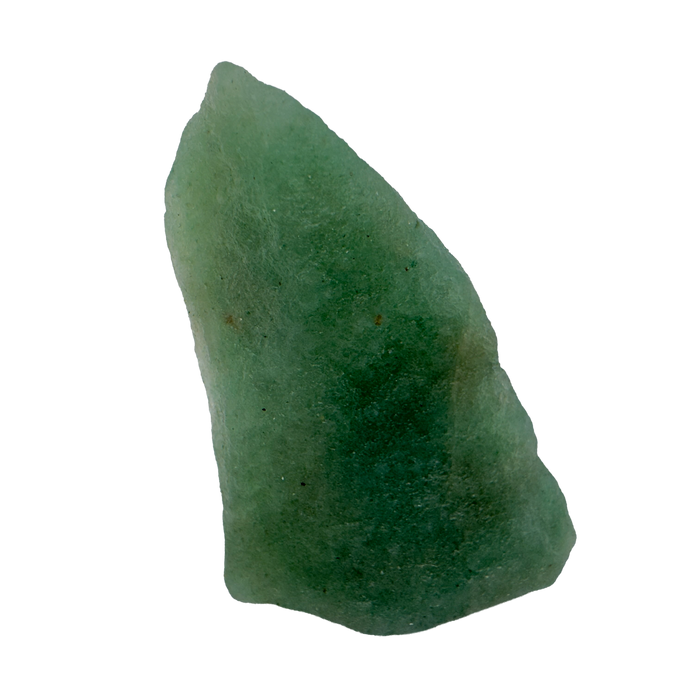
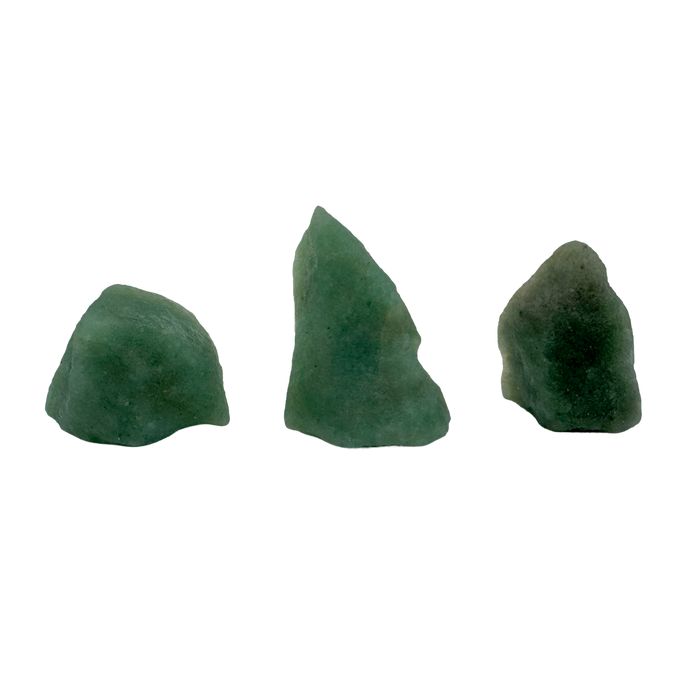
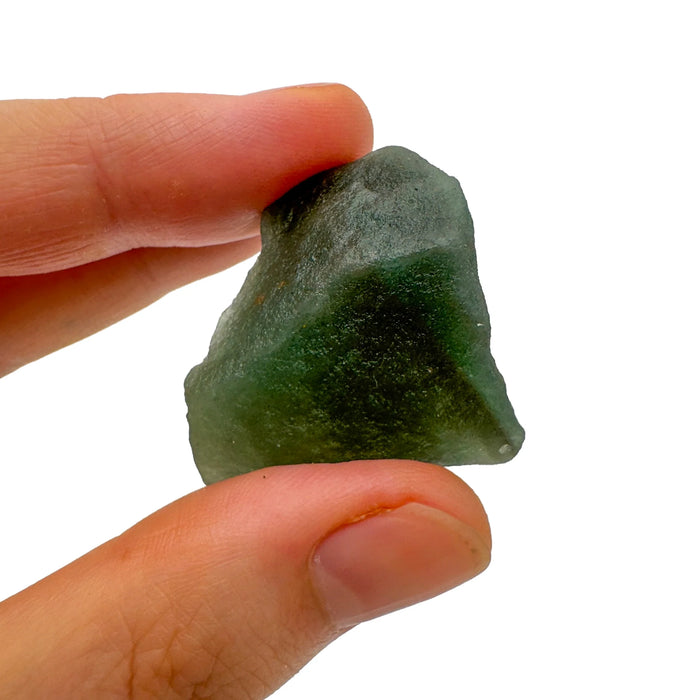
When you heat Amethyst above roughly 300 degrees Celsius, the iron centers in the crystal shift. The purple drops out. What is left is the warm yellow-to-orange tone we know as Citrine. Push the temperature higher, hold it longer, and the color can deepen toward a more saturated burnt orange. Take it in a different direction and you can produce the pale green called Prasiolite.
Natural Amethyst, Brazil
Natural Citrine, Brazil
Heat-treated Amethyst, sold as "Citrine"
Three pieces of quartz from the same mineral family. The Amethyst on the left held its purple in the ground. The Citrine in the middle held its honey gold the same way. The pile on the right started as Amethyst and came out of a kiln looking like that.
The crystal lattice itself does not move when heat is applied. There is no fracture, no clouding, no loss of clarity. Hardness, refractive index, and the traditional metaphysical associations are unchanged. The only thing that changes is the color.
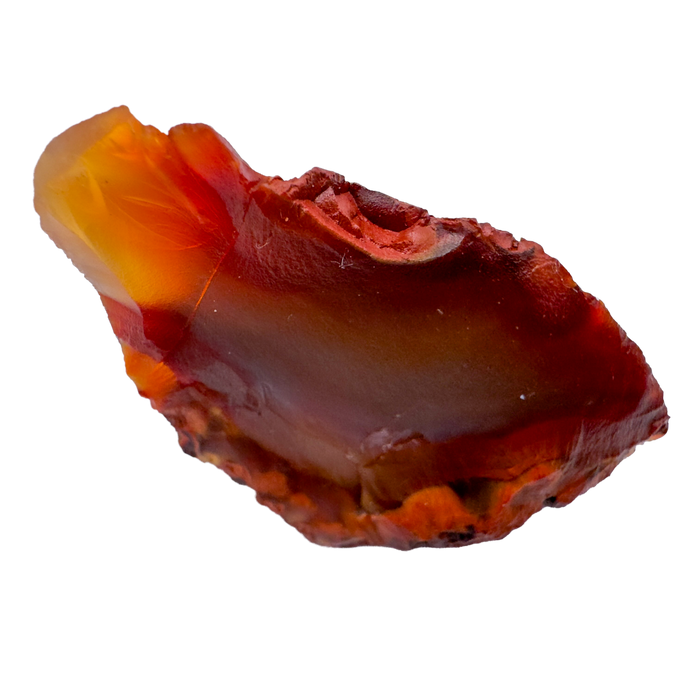
Natural Citrine, formed by slow geothermal heating deep in the earth over geological time, does exist. It is rare in commercial quantities. Most of what reaches retail shelves under the name "Citrine" was made in a kiln.
Three visual cues
No single cue is conclusive. A combination of them, in person and in good light, gets you close. Lab analysis is the only certainty.
Heat-treated Amethyst points often show a sharp white-to-orange gradient, with the tips burnt to a richer orange than the base. Natural Citrine tends to hold a more even, softer yellow throughout the crystal.
A bright, almost neon orange concentrated at the tip is a near-tell for heat. Real natural Citrine reads paler and more golden, closer to a lemon or whiskey tone than a sunset.
Natural Amethyst and natural Citrine usually show subtle color zoning and growth patterns under a 10x loupe. Heat-treated stones often look more uniformly saturated, with the natural zoning either washed out or replaced by a single dominant tone.
Prasiolite, sometimes sold as "green Amethyst" or "vermarine," is another product of the same conversion process. Pale green, often glassy, frequently created by heat-treating a specific iron-rich Amethyst from Brazil. It belongs in the same conversation as heat-treated Citrine: the stone is real quartz, the color is not how it left the ground.
Treatment is not the problem. Silence is.
There is nothing inherently wrong with a heat-treated stone. The trade has been heating Amethyst for decades. Plenty of people work with it happily once they know what they have. Some prefer the deeper saturation. Some prefer the price point. Some are just drawn to the color.
The problem is when a kiln-treated stone gets labeled "natural Citrine" with no qualifier. That is a different transaction. You are paying a premium for a rarity story that does not apply to the piece in your hand.
Reputable sellers confirm treatment status in writing. They are willing to say which stones were heated and which were not. They charge differently for each. If a retailer cannot or will not answer that question, the answer is the silence itself.
What Beyond Bohemian carries
Our Amethyst is natural, unheated, and un-irradiated, confirmed per batch. Our Citrine is sold as what it actually is, with the treatment status named on the product page. Where we carry natural Citrine, we call it natural. Where the material is heat-treated quartz, we call it heat-treated. The price reflects the difference.
If you are looking for a piece to work with, both options are honest options. The choice is yours once you know what you are choosing.
Frequently asked
How can I tell if Amethyst has been heat-treated?
Heat-treated Amethyst (sold as "Citrine" or "Prasiolite") usually shows a uniform, slightly washed-out tone with sharp color gradients at the tips. Natural Amethyst holds richer purple zoning and softer growth patterns under a 10x loupe. Lab analysis is the only definitive answer.
Is heated Citrine the same as natural Citrine?
Visually similar in cut shapes, but the formation history is different. Most commercial "Citrine" is Amethyst that was heated above roughly 300 degrees Celsius until the purple converted to yellow or orange. Natural Citrine is rare in commercial quantities and tends to read softer and more golden than the burnt-orange of heat-treated material.
Is heated Citrine ethical to buy?
Treatment itself is not the ethics question. Undisclosed treatment is. A heated stone sold honestly as heated is a fair purchase. The same stone sold as "natural Citrine" without disclosure is not.
Does heat treatment damage the stone?
No. The crystal structure stays intact. Hardness, refractive index, and traditional metaphysical use are unchanged. Color stability under prolonged sun exposure may shift slightly over years, but the stone itself is not weakened by the conversion.
What is Prasiolite?
Prasiolite (sometimes called "green Amethyst") is Amethyst heated under specific conditions to produce a pale green color. Same source material as heat-treated Citrine, different heating profile. Real quartz, color produced in a kiln.
Why does so much "Citrine" look the same?
Because most of it comes from the same Brazilian Amethyst deposits, runs through the same kilns, and gets cut into the same shapes. Real natural Citrine shows more variation in color and form, and is harder to source in volume.
Can I trust a retailer that does not mention treatment?
The silence is itself the answer. Reputable sellers will confirm treatment status in writing if you ask. If you cannot get a clear yes-or-no, treat the piece as you would any other unverified claim.
What does Beyond Bohemian carry?
Our Amethyst is natural, unheated, and un-irradiated, confirmed per batch. Our Citrine is sold with treatment status named on each product page, so you can see exactly which pieces are natural and which are heat-treated before you decide.