























































Garnet, Red Jasper, or Carnelian? Sorting the Red Stones
A shelf of red stones, several different minerals, and a one-minute light test that tells most of them apart.
Garnet, red jasper, and carnelian all read as red, yet they are different minerals with different transparency, hardness, and value. Here is how to tell them apart by eye, plus the soft red outliers worth handling with care.

Transparency sorts red stones fastest. Hold each to a light. Garnet glows deep and glassy, often as well formed crystals. Carnelian glows warm orange at the edges. Red jasper stays solid and dark, letting no light through. Hardness only separates the soft outliers, like toxic cinnabar and dyed stand ins.
Three Red Stones, One Red Blur
Line up a garnet, a red jasper, and a carnelian and the color alone will not save you. All three land somewhere in the red-to-orange range, which is exactly why "is this carnelian or red jasper?" and "is my red stone garnet?" are such common questions in any crystal shop.
The good news is that these three separate cleanly once you stop staring at the color and start reading how light moves through the stone, whether it grew as crystals, and how it is patterned. You do not need a lab, just a lamp and a close look.
The glassy, see-through one. A deep red silicate, hard and often shaped as little many-sided crystals. Light makes it glow.
The solid, opaque one. An earthy brick-red quartz that no light passes through, usually with tan or gray veining.
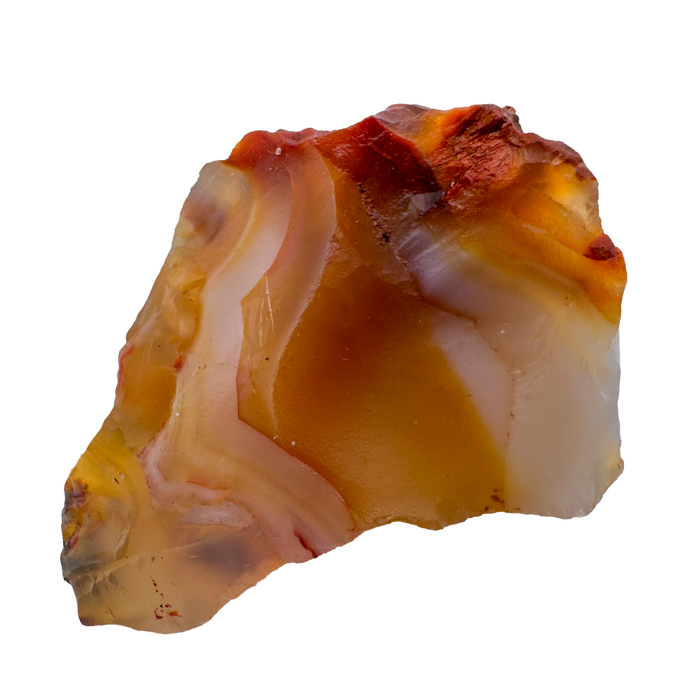
The warm, glowing one. A translucent quartz that lights up orange-red at the edges, often deepened by heat.
The Light Test Comes First
With the pink stones, hardness does most of the sorting. Red is different. Garnet, red jasper, and carnelian all sit right around 7 on the Mohs scale, so a scratch test barely separates them. What separates them is how light behaves.
Hold each stone up to a lamp or a phone flashlight. Carnelian is translucent and lights up warm orange at the edges. Garnet is transparent to translucent and glows a deep glassy red. Red jasper is opaque and stays solid and dark, letting nothing through. That one test settles most red stones in seconds.
Mohs hardness of red garnet (almandine)
Mohs hardness of red jasper, a quartz
Mohs hardness of carnelian, a chalcedony
Hardness values per standard mineralogical references. All three cluster near 7, so transparency and pattern separate them, not a scratch test.
Save the scratch test for the outliers. It will not tell garnet from jasper, but it quickly exposes the soft impostors: dyed howlite and magnesite are only about 3.5, and toxic cinnabar is a soft 2 to 2.5. If a "red stone" is easily marked by a coin, it is one of these, not a garnet or a jasper.
Garnet, Red Jasper, and Carnelian Compared
Here is the full picture in one view. Each card gathers everything about one stone, so on a phone you read straight down instead of pinching across a wide table.
Garnet
Iron silicate, the glassy red
Red Jasper
Opaque quartz, the earthy red
Carnelian
Translucent quartz, the glowing red
Garnet: Deep, Glassy, and Often Crystalline
Garnet is not one mineral but a family, and the deep red stones most people mean are usually almandine, an iron aluminum silicate. Iron gives the color, a red that leans dark and can shade toward brownish or wine.
Unlike the quartz reds, garnet often shows up as actual crystals, little rounded shapes with many flat faces (rhombic dodecahedra) that grow inside metamorphic rock. That crystal habit is a strong clue on its own, since jasper and carnelian never form crystals.
At 7 to 7.5 on the Mohs scale it is the hardest of the common reds, glassy where it breaks, and see-through enough that a light behind it makes it glow. If your red stone has crystal faces and a deep glassy glow, garnet is the likely answer.

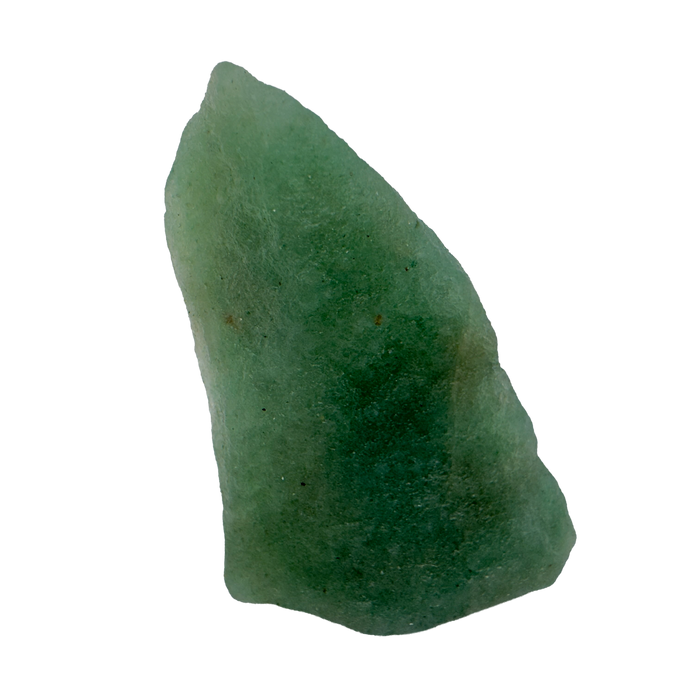
Raw garnet. The flat, many-sided crystal faces and glassy depth set it apart from the quartz reds.
Red Jasper: Solid, Earthy, and Grounding

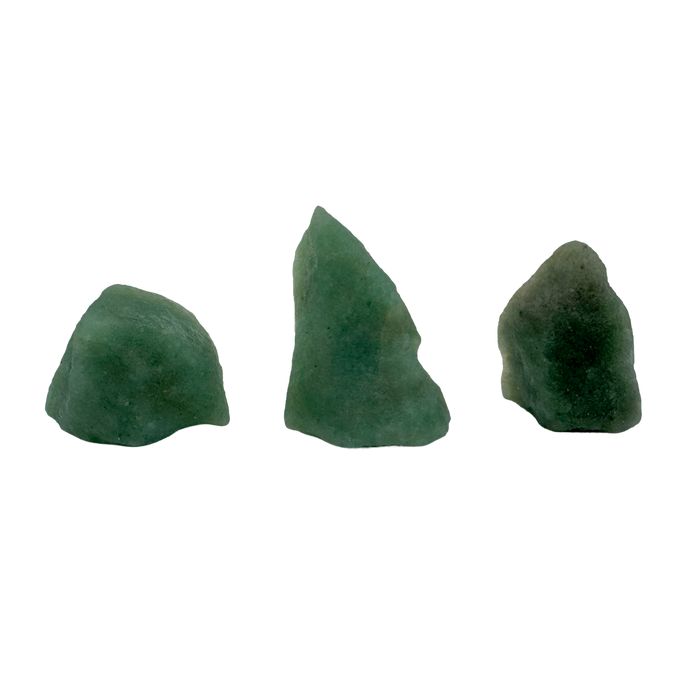
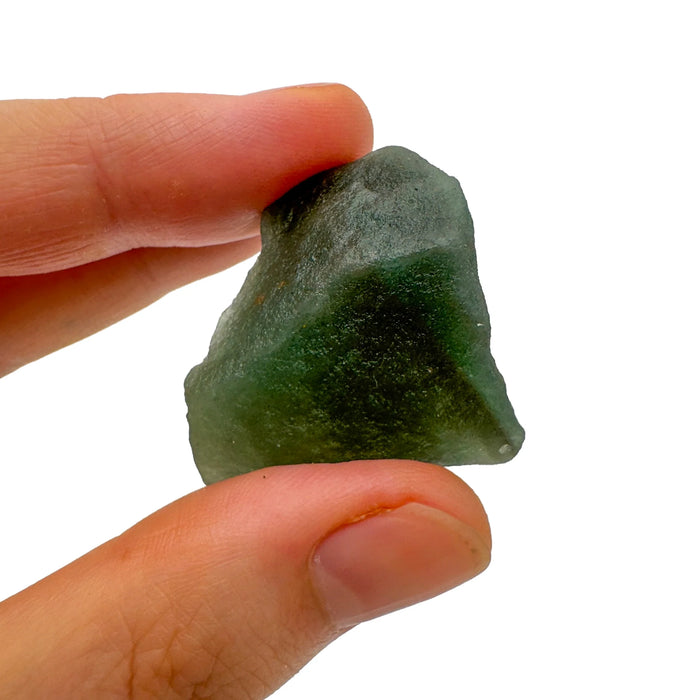
Raw red jasper. Opaque, earthy, and matte, with no glassy depth and no crystals.
Red jasper is quartz too, but the opaque kind. It is a microcrystalline quartz packed so densely with iron oxide that no light gets through, which is the single fastest way to separate it from carnelian and garnet. Hold it to a lamp and it stays solid and dark.
The color is an earthy brick-red, often broken up by tan, gray, or white veins where other minerals crept in. It has no crystals and no glassy depth, just a solid, matte-to-waxy body that takes a soft polish.
Red jasper is a hard-wearing stone at Mohs 7, which is why it turns up so often as tumbles and palm stones meant to be carried and handled.
"Light glows through carnelian, dances inside garnet, and stops dead at red jasper."
Carnelian: Warm, Translucent, and Often Heated
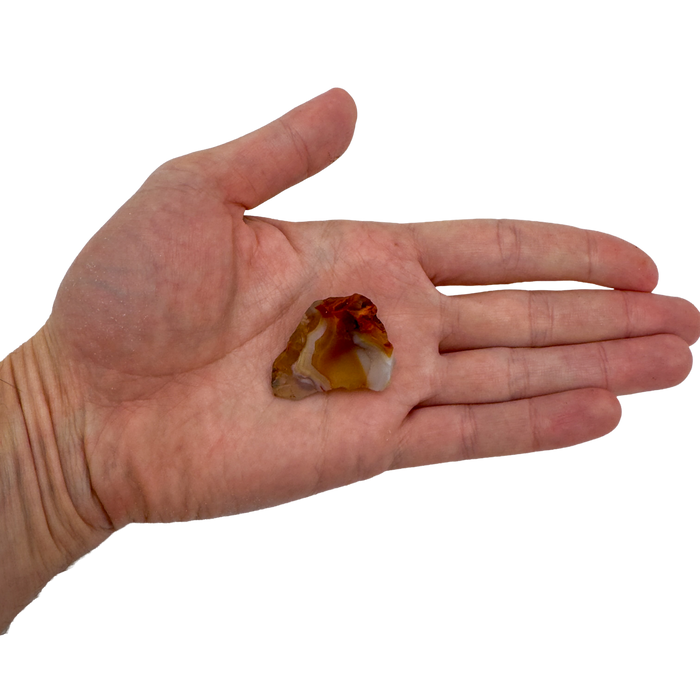
Carnelian is the warm, glowing one. Like jasper it is a chalcedony, a microcrystalline quartz, but where jasper is opaque, carnelian is translucent, so a light behind it lights up the edges in warm orange to red.
The color comes from iron oxide, and here is the honest part: most carnelian on the market has been heat-treated to deepen a paler orange into a richer red. It is a long-standing and widely accepted practice, and heat simply speeds up what sunlight can do over centuries.
If the stone shows distinct bands, it is technically banded agate rather than pure carnelian. For that overlap, see our guide on carnelian and heat-treated agate.

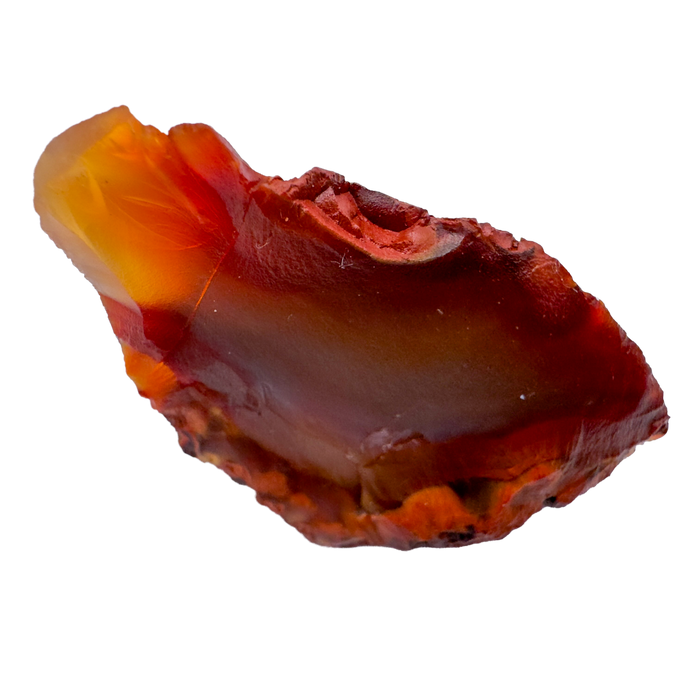
Polished carnelian. Translucent and warm, it glows orange-red where the light comes through.
Tests You Can Do at Home
Run these on a hidden spot, like the base of a piece, and start gentle. You rarely need more than the first two or three to know what you are holding.
Carnelian glows warm at the edges, garnet glows deep, red jasper stays solid and dark. This one test sorts the big three.
Flat, many-sided little crystals point to garnet. Jasper and carnelian arrive as smooth masses, never crystals.
Earthy brick-red with tan or gray veins is jasper. An even orange-to-red glow is carnelian. A clean deep red is garnet.
The big three all sit near Mohs 7, so a scratch mostly helps spot the soft fakes and cinnabar, which a coin will mark.
Cinnabar is startlingly heavy for its size because of its mercury content. Handle it sealed and wash up afterward.
Color that pools in cracks and lifts on an acetone swab means a dyed white stone like howlite, not a natural red.
Other Reds, and a Word on Fakes
These three cover most of the confusion, but a few other reds join the lineup, and a couple of common impostors are worth knowing so a colored or man-made stone does not fool you.
Corundum at Mohs 9, the hardest red by far, colored by chromium. Most ruby is heat-treated, which is accepted; cheap lead-glass composite ruby is heavily treated and fragile.
A quartz around Mohs 6.5 to 7 with a soft sparkle from tiny hematite platelets. The glitter and brownish-red tone set it apart from clean carnelian.
A soft (Mohs 2 to 2.5), very heavy, vivid scarlet mercury ore. Safe to look at, but not to grind, heat, or breathe as dust. Keep it sealed and wash your hands.
Usually golden tiger's eye that has been heated or dyed to a reddish tone. Look for the moving band of light (chatoyancy) across the surface.
Not quartz at all, but man-made glass, usually with wispy red swirls and sometimes trapped bubbles. Fine when sold honestly, misleading when not.
Naturally white and porous, so they take dye easily. The red often pools in the veins, and the shade can read too flat or too bright.
Cinnabar is a mercury mineral, so enjoy it as a sealed specimen, keep it away from heat, and wash your hands after handling. The rest of the reds here are hard and stable, though dyed stand-ins are common, so when a red looks too uniform or too cheap, slow down. See our guides on toxic-to-handle stones, what gives crystals color, and spotting a dyed stone.
Related Guides
Formation, sourcing, and care for the glassy red silicate.
Explore garnetThe earthy, opaque quartz up close: where it forms and how to care for it.
Explore red jasperThe warm, translucent chalcedony, from color to sourcing.
Explore carnelianWhy iron, chromium, and trace elements turn a stone red.
Read the guideA calm, accurate look at cinnabar and the few stones worth caution.
Check the factsOur full collection of trust-first crystal guides and comparisons.
Browse the LibraryFrequently Asked
What is the fastest way to tell carnelian from red jasper?
Shine a light behind the stone. Carnelian is translucent, so it glows warm orange-red at the edges. Red jasper is opaque, so it stays solid and dark with no light passing through. That single light test settles it almost every time.
Is garnet harder than red jasper or carnelian?
Slightly. Red garnet (almandine) sits at about 7 to 7.5 on the Mohs scale, red jasper is around 7, and carnelian is about 6.5 to 7. They are all close, which is why hardness rarely separates them. Transparency and crystal form are the better tells.
How do I tell garnet from ruby?
Hardness and color are the giveaways. Ruby is corundum at Mohs 9 and will scratch garnet, while garnet cannot scratch ruby. Ruby's red comes from chromium and tends toward crimson, while garnet's iron-based red leans darker and browner. Ruby also carries a far higher price.
Why is my carnelian such a bright, even red? Is it dyed?
Most likely it is heat-treated, not dyed. Heating is the standard, accepted way to deepen carnelian's natural orange into a richer red, and it produces an even, translucent glow. Dye tends to look flat and to pool in cracks, so a translucent, glowing red usually points to heat rather than dye.
Is cinnabar safe to handle?
Cinnabar is mercury sulfide, a mercury ore. As a solid, sealed specimen it is safe to look at and keep, but it should never be ground, heated, or handled as dust, since that can release mercury. Keep it away from heat, store it sealed, and wash your hands after touching it.
What is cherry quartz?
Cherry quartz is not quartz at all. It is man-made glass, usually clear to milky with wispy red swirls, and it can contain trapped air bubbles that real quartz does not. It is a perfectly fine material when it is sold honestly as glass, and a problem only when it is passed off as a natural stone.
How can I tell if a red stone is dyed?
Look for color that is too uniform or unnaturally bright, and check whether the red pools inside cracks and veins. Dyed howlite and magnesite are common red impostors, and an acetone swab on a hidden spot will often lift the color. Our guide on spotting dyed stones walks through the tells.
Can red stones go in water?
The hard quartz reds, red jasper and carnelian, along with garnet, tolerate a brief rinse. Cinnabar should stay dry and sealed, and any soft or dyed stone is best kept out of water, since dye and softness do not mix well with soaking. When in doubt, clean dry, as covered in our durability guide.