











Carnelian, Sard, and the Orange-Red Confusion
Why the orange stones on the shelf are closer cousins than their labels suggest.
Walk through any crystal shop and you will see stones labeled carnelian, sard, red agate, and sardonyx, often side by side and often priced very differently. Most of them are the same mineral wearing different names.

Carnelian, sard, and most red-orange agate are one mineral: chalcedony colored by iron. Carnelian runs orange, sard runs deeper brown-red, and much bright carnelian is agate reddened by heat. Heat is a stable, accepted finish. Dye is the one to look at closely.
It Is All One Mineral Family
Carnelian, sard, and the stone you might see called red agate all belong to chalcedony, the microcrystalline form of quartz. Instead of one visible crystal, chalcedony is built from countless silica fibers too small to see, which is why it looks solid and slightly waxy rather than glassy.
Within that family, the names mostly describe pattern and color. Agate is banded and translucent. Jasper is opaque. Carnelian and sard are the warm, iron-colored members, prized since antiquity for their glow.
So the orange-red confusion is not really about different stones. It is about the same mineral colored a few different ways, and labeled by whoever is selling it.

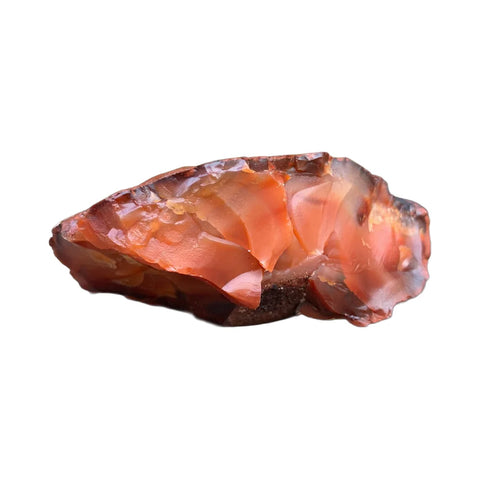
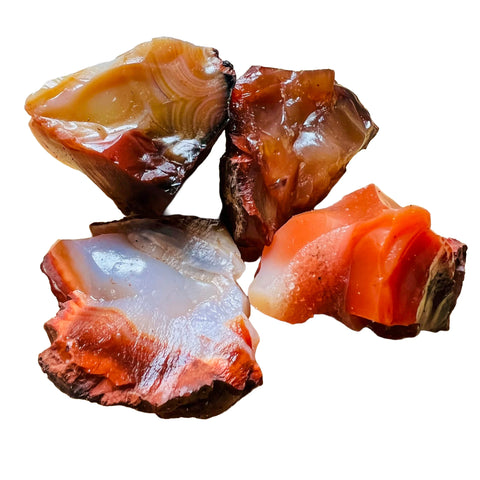
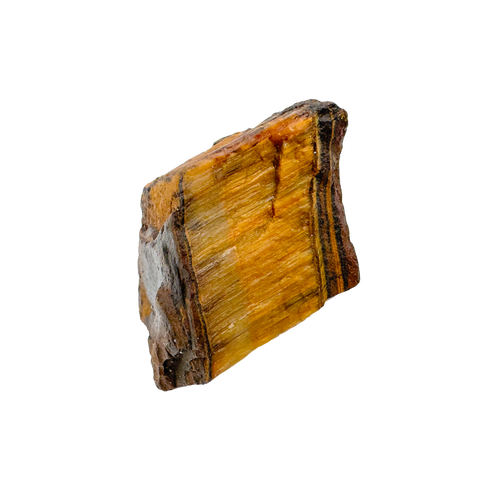
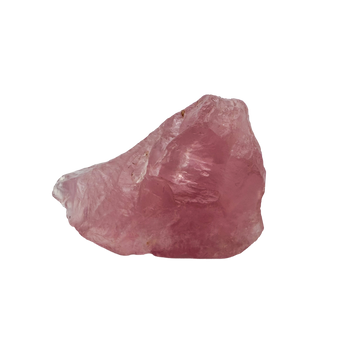
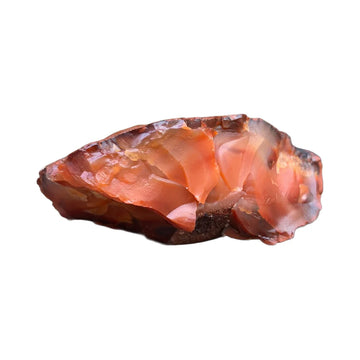
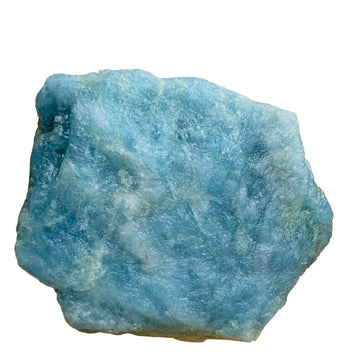
Raw carnelian rough from Brazil. The warm color comes from iron oxide spread through the silica, not from a coating.
Carnelian, Sard, and Sardonyx

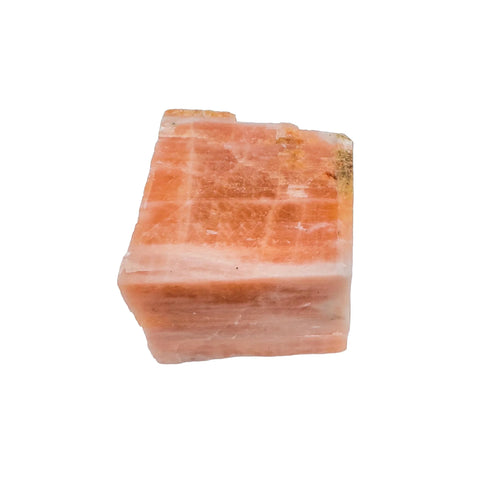
Deeper, browner red shades toward sard. Faint banding like this is the agate structure showing through.
Carnelian is the orange to orange-red end of the range. Sard is the same mineral pushed darker, into reddish-brown and chestnut tones. There is no exact point where one becomes the other, so whether a stone is sold as carnelian or sard often comes down to the seller's eye.
Sardonyx adds a third name to the pile. It is sard layered with bands of near-white onyx, another chalcedony. Those straight, flat layers are why sardonyx has been carved into cameos for centuries.
The cards below sort the orange-red look-alikes by what they actually are, where the color comes from, and what to check before you trust the label.
Carnelian
Chalcedony, the orange one
Sard
Carnelian, gone darker
Sardonyx
Sard banded with onyx
Carnelian from heat-treated agate
Agate reddened in a kiln
Dyed agate sold as carnelian
Pale agate, stained
How Heat Makes Orange, and Why That Is Usually Fine
Most of the orange in carnelian is iron. When chalcedony holds yellow-brown iron minerals like goethite, heating drives off water and converts them toward hematite, the same red iron oxide that gives rust and red clay their color. The stone reddens from the inside, and the change is permanent.
This is not a modern shortcut. Bead makers in the Indus Valley were heating pale chalcedony to deepen it more than four thousand years ago, then trading those red beads across the ancient world. Heat treatment of carnelian is one of the oldest stone treatments we know of.
Heat at which goethite, a yellow-brown iron mineral, converts toward red hematite
How long carnelian has been deepened with heat, documented in the Indus Valley
Iron-oxide conversion temperature and ancient bead-making dates verified against mineralogy and archaeology references.
"Heat does not add anything to carnelian. It finishes what the iron already started."
Because heat only completes a change that also happens slowly in nature, the trade treats heated carnelian as genuine. It is real chalcedony, the color is stable, and it sits at the same quartz-family hardness as untreated material. This is the same honest, well-understood kind of treatment behind natural citrine versus heat-treated amethyst. Heated pieces usually cost a little less than fine untreated carnelian, which is the main reason the distinction matters.
Dye Is a Different Story
Heating works with iron the stone already contains. Dyeing adds color that was never there. For centuries, cutters in places like Idar-Oberstein in Germany have soaked porous agate in iron salts or other coloring agents, then set the color with heat, turning plain gray stone into bright red, blue, or black.
Dye is not automatically a scam. It becomes a problem when a dyed stone is sold as natural carnelian at a natural carnelian price, with no disclosure. The color also behaves differently. It tends to sit in the pores and cracks rather than spreading evenly, and some surface dyes can fade over time.
Dye pools where the stone is most porous, so look for color concentrated along bands, fractures, and pits rather than spread evenly through the body.
A hue that looks uniform like a candy coating, or unnaturally neon, is a common sign of dye. Natural iron color is warm and slightly uneven.
A cotton swab with a little acetone or nail polish remover, rubbed gently on an inconspicuous spot, may pick up color from a dyed surface. Natural and heated stones will not transfer.
Reading an Orange Stone in Your Hand
You will rarely know a stone's full history from looking, and that is fine. The goal is not to catch every kiln or dye vat. It is to read the obvious tells so you know roughly what you are holding and whether the price makes sense.
The single most useful move is to hold the stone up to a bright light and watch how the color is arranged. Even, cloudy color that fades softly from one area to the next reads as carnelian. Color locked into sharp parallel bands reads as agate, whether that agate was left natural, heated, or dyed.

Even, cloudy orange with soft zoning: the classic carnelian look.

Visible bands and stripes: the agate structure showing through.
Banding and a faint fibrous look under bright light point to agate. Soft, even cloudiness points to carnelian.
Fine internal fractures or a faint crackle can appear in heat-treated stones. It is not a defect, just a clue to the kiln.
Carnelian sits around 6.5 to 7 on the Mohs scale and stays cool to the touch. It scratches glass; glass imitations will not scratch it back.
What This Means When You Are Buying
None of this should make carnelian feel risky. It is an affordable, durable, beautiful stone with one of the longest histories in human ornament. The point is simply to match the name and the price to the truth of the stone.
Heat-treated carnelian is real, stable chalcedony. Expect it to cost a little less than fine untreated material, and expect an honest seller to tell you.
Dyed agate sold as dyed agate is fine. Dyed agate sold as natural carnelian at a premium is the thing to walk away from.
A clear yes or no to "has the color been enhanced?" tells you more than any certificate. A seller who cannot answer is the real warning sign.
Heat treatment is so common and so stable that many sellers never mention it. We would rather explain it. Knowing whether a stone's color came from the earth, from a kiln, or from a dye vat is part of buying with your eyes open, which is the whole point of the way we source. Carnelian is also a favorite in collections and intention practice, but telling these stones apart is purely physical.
Related Reading
Properties, meaning, sourcing, and care for carnelian, with the tangible details first.
Read the guideThe banded chalcedony behind so much of the orange-red confusion, explained in full.
Read the guideThe same honest question about heat, applied to the purple-to-gold quartz crossover.
Compare themWhat Mohs hardness means for water, sunlight, and everyday wear, carnelian included.
Check durabilityHand-selected carnelian, graded and described with its origin and finish in plain terms.
Browse the collectionOur full shelf of trust-first guides on sourcing, treatment, value, and care.
Back to the LibraryCarnelian and Sard, Answered
Is carnelian just dyed agate?
No. Carnelian is a natural orange variety of chalcedony colored by iron oxide spread through the silica. Some stones sold as carnelian are dyed or heat-treated agate, but genuine carnelian gets its color from iron, not from added dye.
Is all carnelian heat treated?
A large share of commercial carnelian has been heated to deepen its orange, because heat completes the same iron oxidation that happens naturally. Heat-treated carnelian is still real chalcedony and is widely accepted. Untreated natural carnelian also exists and tends to cost more.
How can I tell natural carnelian from dyed agate?
Hold it to a bright light. Even, cloudy color with soft zoning points to carnelian. Color concentrated in sharp bands or pooled in cracks points to dyed or banded agate. A cotton swab with a little acetone can lift surface dye from a treated stone.
Is heat-treated carnelian still real carnelian?
Yes. Heating does not add anything. It oxidizes iron already in the stone, the same change that happens slowly in nature. The result is genuine, stable chalcedony, usually priced a little below fine untreated material.
What is the difference between carnelian and sard?
They are the same mineral. Carnelian is the lighter orange to red end, and sard is the deeper brown-red end. There is no exact dividing line, so the name often comes down to the seller's eye.
What is the difference between carnelian and red agate?
Both are chalcedony. Red agate usually shows visible bands, while carnelian shows even, uniform color. Much red agate on the market is dyed and much carnelian is heated agate, so the two labels overlap in practice.
Will dyed or heat-treated carnelian fade?
Heat-treated color is stable and permanent because it is a real mineral change. Dye is more variable. Some surface dyes can fade with sunlight, heat, or harsh cleaning, especially when the color only sits in cracks rather than throughout the stone.
Can I get carnelian wet?
Carnelian is a quartz-family stone at around 6.5 to 7 on the Mohs scale, so brief contact with water is fine. Avoid long soaks, prolonged direct sun, and harsh chemicals, which are hardest on dyed pieces.