





Amethyst, Fluorite, Lepidolite, or Charoite? Sorting the Purples
Four purple stones people mix up, and the physical tells, hardness, how they break, and crystal shape, that separate them.
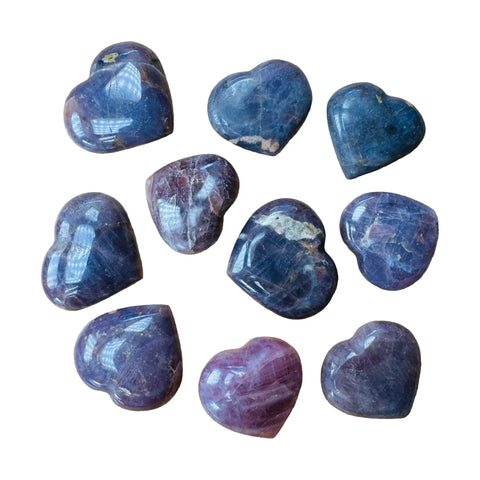
Set amethyst, purple fluorite, lepidolite, and charoite side by side and they all read as one thing: purple. Yet one is glassy quartz, one splits into perfect octahedrons, one peels apart in flakes, and one swirls in a pattern found in only a single place on Earth. Here is how to tell them apart without a lab.

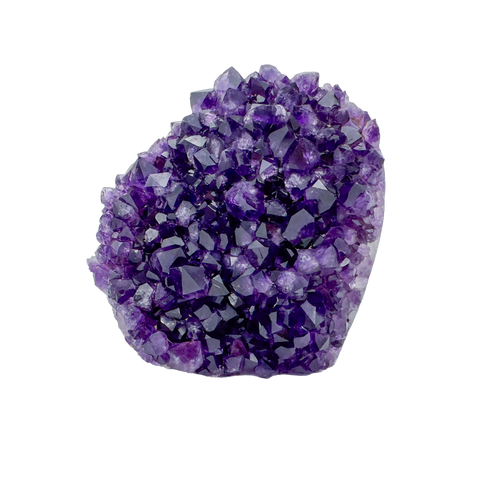
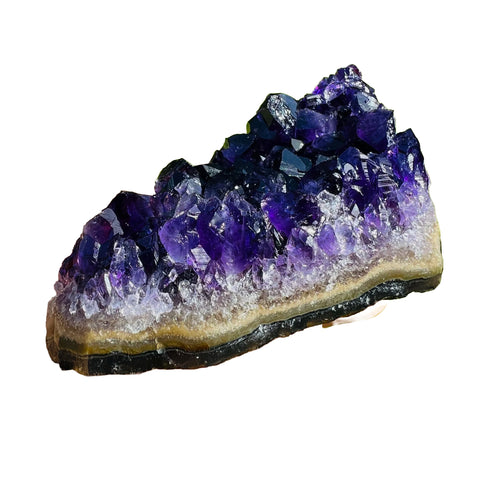
Hardness sorts them fast. Amethyst is quartz at Mohs 7, glassy, with shell-like breaks and no cleavage. Fluorite is soft at 4 and splits into octahedrons. Lepidolite is softer still at 2.5 to 3 and peels in flakes. Charoite is fibrous, swirling, and mined only in Siberia.
Four Purples, One Easy Mix-Up
Purple is one of the trickier colors to read in a shop, because very different materials all land in the same violet range. Stop judging by color and check three things instead: how hard the stone is, how it breaks, and the shape its crystals grow into.
Start with hardness on the Mohs scale, where talc is 1 and diamond is 10. These four spread across a wide span, so a simple scratch test narrows the field before you study the surface.
Mohs hardness of amethyst, the hardest purple here
Mohs hardness of fluorite, soft enough to scratch with a blade
Mohs hardness of lepidolite, soft enough for a fingernail to mark
Mohs values per standard references. Charoite sits near 5 to 6, sugilite near 5.5 to 6.5.
These purples are not colored the same way. Amethyst gets its violet from iron plus natural irradiation, lepidolite and sugilite take their lilac from manganese, and fluorite draws color from trace impurities and defects. Our guide to what gives crystals color covers why some of them also fade in the sun.
Amethyst, Fluorite, Lepidolite, and Charoite Compared
Here is the full picture in one view. Each card gathers one stone, so on a phone you read down a card instead of across a wide table.
Amethyst
Purple quartz
Fluorite
Calcium fluoride
Lepidolite
Lithium mica
Charoite
Rare Siberian silicate
A Scratch Test, Then the Shape
Two checks separate these four most of the time. The first is hardness. Amethyst shrugs off a steel blade at Mohs 7, fluorite scratches easily at 4, and lepidolite is so soft a fingernail can mark its edges. That order alone nearly sorts the group.
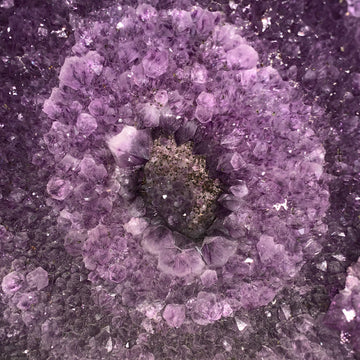
The second is shape, and how each one breaks. Amethyst grows as six-sided points and breaks with curved, glassy faces. Fluorite forms cubes and octahedrons and splits along flat planes. Lepidolite is a stack of thin sheets that flake apart, and charoite stands alone with its swirling grain.

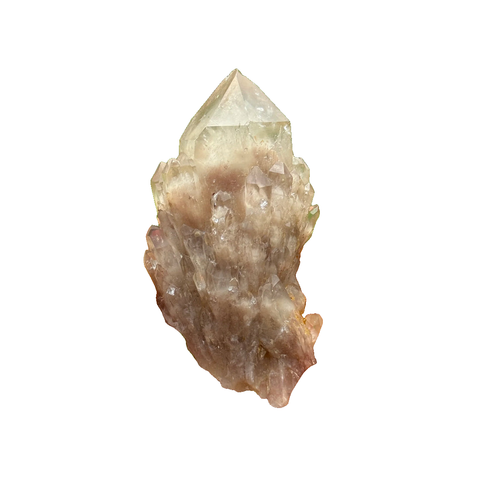
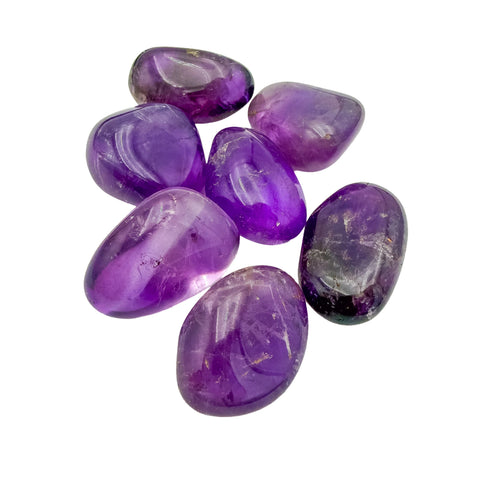
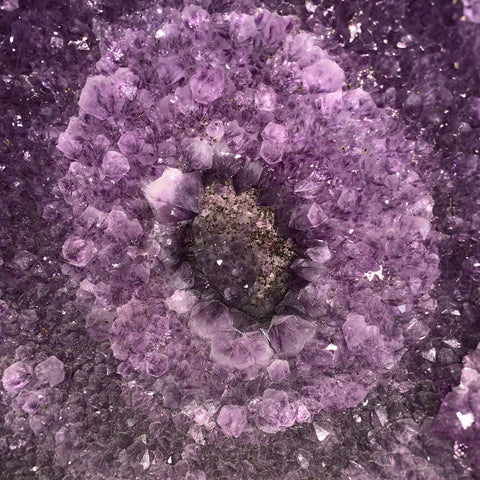
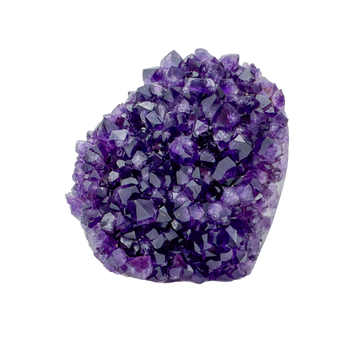
Amethyst. Glassy six-sided points at Mohs 7, purple from iron and natural irradiation, with no flat cleavage.

Fluorite. Softer at Mohs 4, often purple banded with green, splitting along four directions of perfect cleavage.

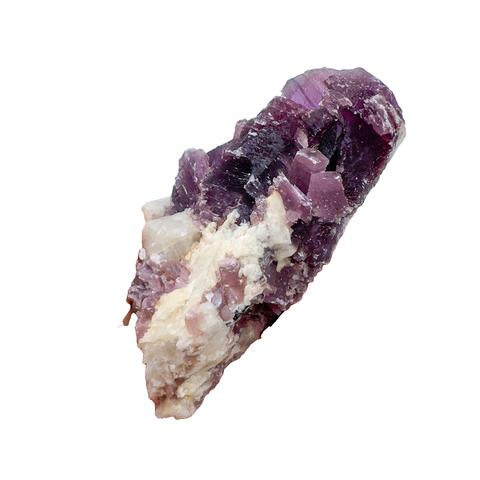
Lepidolite. A lithium mica so soft a fingernail marks it, lilac and flaky, peeling in thin sheets.
Dyes, Glass, and the Purple Lookalikes
The purple aisle carries plenty of imitation, because a vivid violet sells. A few patterns cover most of what you will meet.
Natural agate is not bright purple, so a vivid purple slice is usually dyed. A swab of acetone on a hidden spot lifts added color.
Molded glass shows swirls rather than crystal faces, sometimes with tiny bubbles, and warms in the hand while quartz stays cool.
Porous white stone dyed purple. The dye pools in veins and pits, so color looks deepest in the cracks rather than even.
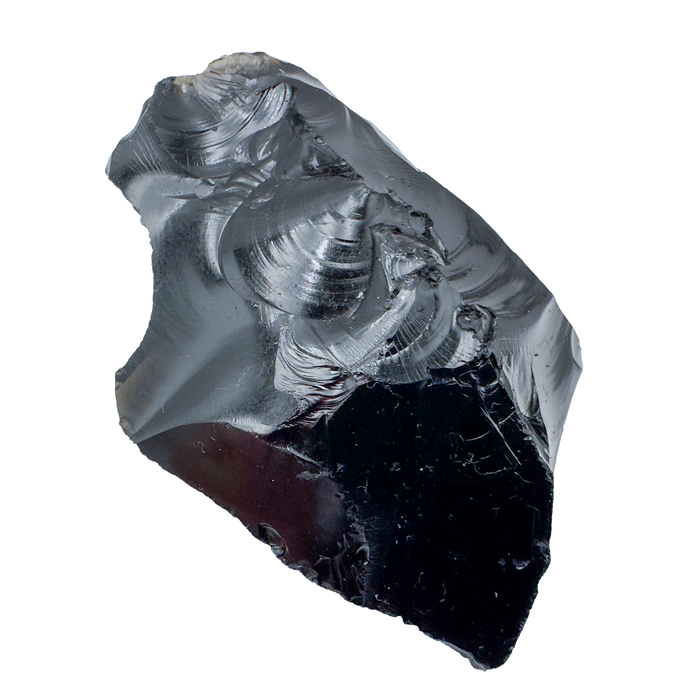
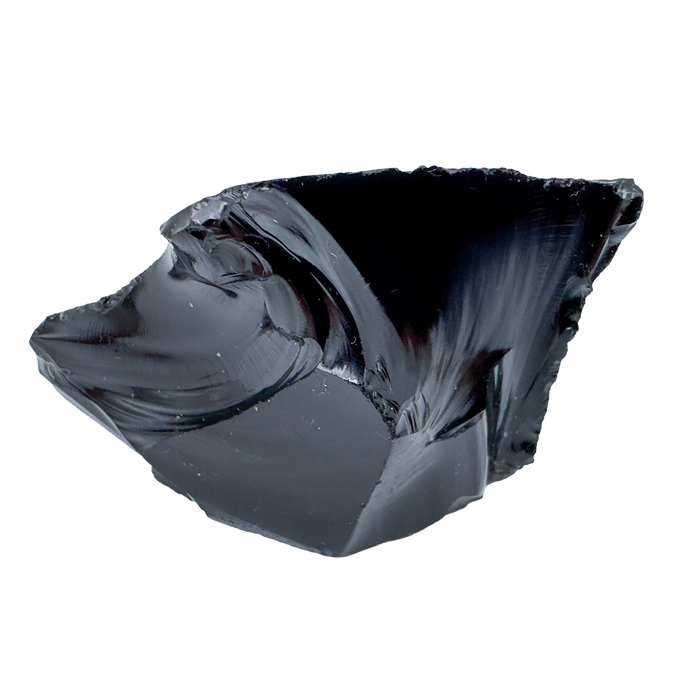
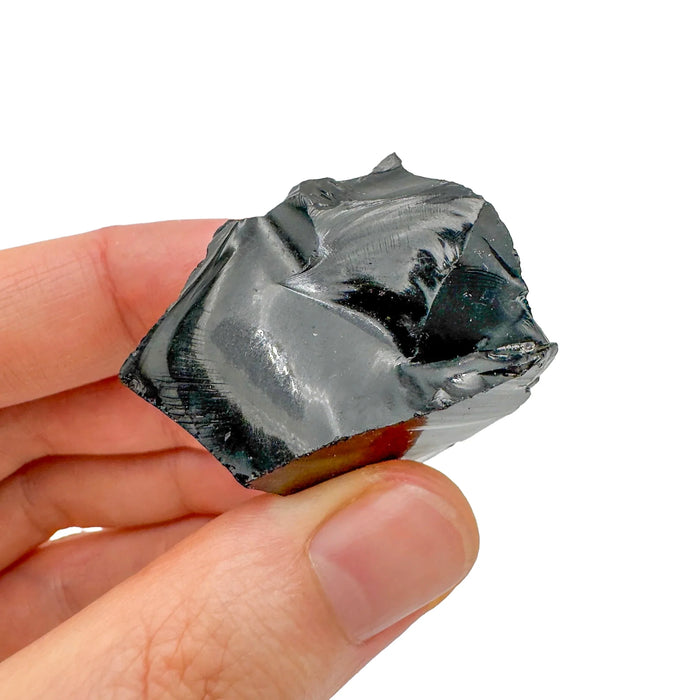
Natural obsidian is not purple. Purple obsidian is manufactured glass, pretty but not a natural stone, and should be sold as such.
An honest stone under the wrong name. Fluorite is softer, so a steel blade scratches it, and its color is often banded with green.
Amethyst and especially fluorite lose color in sunlight, and the loss is permanent. A washed-out patch is light damage, not a fake.
Fluorite and lepidolite are soft, and both amethyst and fluorite fade with long sun exposure, so keep these purples out of bright windows and handle the softer ones gently. See how a hardness number shapes daily care in our crystal durability guide, and learn the dye tests in how to tell if a crystal is dyed.
Related Guides
The purple quartz up close: how it forms, why it fades, and how to spot a dyed or glass fake.
Explore amethystThe soft, color-banded mineral with perfect octahedral cleavage and a vivid glow under UV.
Explore fluoriteThe flaky lithium mica: where it forms, its lilac color, and why it is so soft.
Explore lepidoliteWhy some purples come from iron, some from manganese, and which ones fade in light.
Read the scienceThe simple at-home checks for dyed agate, howlite, and other added-color stones.
Learn the testsOur full set of trust-first crystal guides and side-by-side comparisons.
Browse the LibraryFrequently Asked
How do I tell amethyst from purple fluorite?
Hardness settles it. Amethyst is quartz at Mohs 7, so a steel blade will not mark it, while fluorite is a 4 and scratches easily. Amethyst also grows as six-sided points with glassy, curved breaks, while fluorite forms cubes and octahedrons and is often banded purple and green.
Is my amethyst real or dyed glass?
Real quartz stays cool to the touch and shows crystal faces and natural color zoning, while glass warms fast in the hand and shows swirls, sometimes with tiny bubbles. For suspected dyed agate, rub a hidden spot with acetone on a swab; added dye lifts off, and real amethyst does not bleed.
Why is my amethyst turning pale?
Amethyst fades in prolonged sunlight or strong UV as its iron-based color center reverts, and the loss is permanent. Keep it out of sunny windows. Fading is normal for the stone, not a sign it was fake.
Is lepidolite safe to handle?
Holding a solid, polished piece is fine. Lepidolite carries lithium, but keeping or wearing it does not expose you to loose lithium. The real caution is dust, so do not grind or sand it or breathe the powder, and store it away from small children.
Is charoite always from Russia?
Yes. The only known commercial source is the Murun Massif in the Sakha Republic of Siberia. Its swirling violet looks synthetic to many people, but the natural material is real; dyed and purple-jasper lookalikes exist, so buy from sellers who name the source.
Which purple crystal is the softest?
Lepidolite, at 2.5 to 3 on the Mohs scale, soft enough for a fingernail to mark. Fluorite is next at 4, then charoite at 5 to 6 and sugilite near 5.5 to 6.5, with amethyst hardest at 7.
Is sugilite a purple stone too?
Yes. Sugilite is a rare purple mineral colored by manganese, with gem-quality material mostly from the Wessels Mine in South Africa, near Mohs 5.5 to 6.5. It is often confused with charoite, but reads as a more solid purple without the swirl.