

















Citrine, Tiger's Eye, or Pyrite?
Four very different minerals can wear the same warm color. Here is how to tell your gold-toned stone apart, no lab required.
Yellow and gold stones are some of the easiest to confuse, because that soft golden glow can come from quartz, a carbonate, or even a metal. A few simple checks sort them out fast.

Most gold-toned stones sort out with three checks: hardness, luster, and how they meet light. Citrine and tiger's eye are hard quartz. Golden calcite is soft and fizzes in vinegar. Pyrite is a heavy, metallic mineral, not a gem. And much of the citrine sold is heat-treated amethyst.
Start With Three Quick Checks
Before you name a gold stone, look at how it behaves, not just its color. Golden minerals run from see-through quartz to soft carbonate to heavy metal, and each gives itself away with a simple home test.
Citrine and tiger's eye are quartz, a 7 on the Mohs scale, hard enough to scratch glass. Golden calcite is only a 3 and is scratched by a steel key. That gap alone separates them.
Hold the piece to the light. A bright, mirror-like metal shine means pyrite. A glassy sparkle points to citrine, a soft silky sheen to tiger's eye. Calcite looks waxy, never metallic.
See how light passes. Citrine is often see-through, golden calcite glows softly, tiger's eye shows a moving band, and pyrite lets no light through at all.
The Three Golden Gems People Mix Up
Three warm-toned stones cause most of the confusion. They look golden at a glance but are three different minerals, with very different hardness and character. Here is how they line up.
Citrine
Quartz, hardness 7
Tiger's Eye
Quartz, hardness 7
Golden Calcite
Calcite, hardness 3
Citrine and the Heat-Treatment Question
The fact that surprises most buyers: much of the citrine on the market is not natural citrine at all. It is amethyst heated until its purple turns golden, a real, long-disclosed practice and not a scam, but it changes what you are holding and what it is worth.
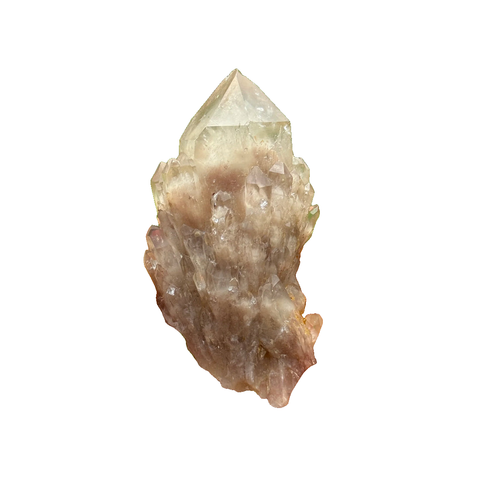
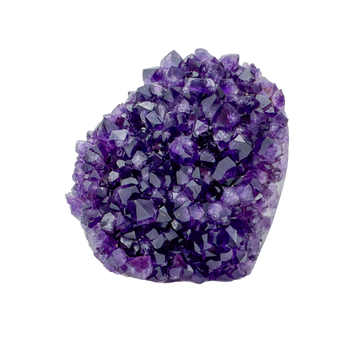
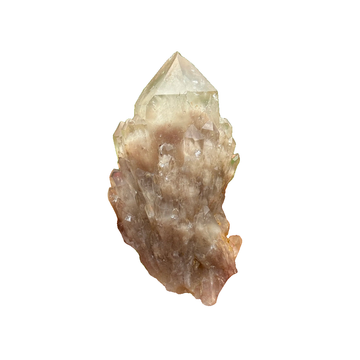
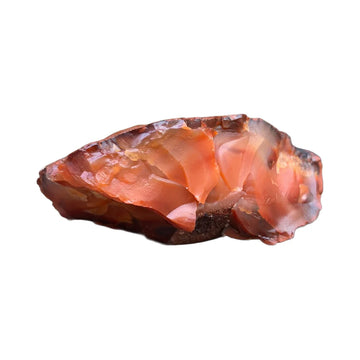
Natural, unheated citrine tends toward a gentle, champagne-to-lemon yellow. Heat-treated amethyst usually goes a warmer orange or reddish tone. On cluster points, heating often leaves a stark white base with orange tips, and natural citrine rarely forms the hollow geodes so often sold as citrine.

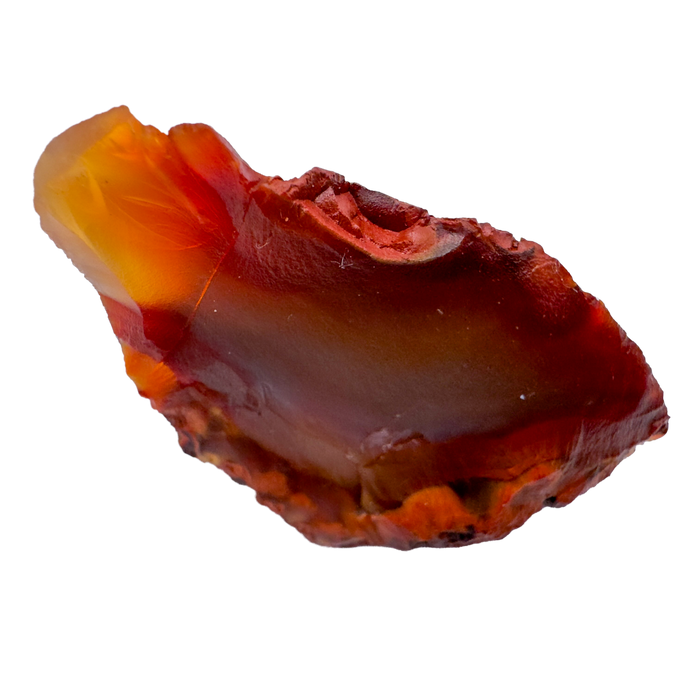
Raw, unheated natural Citrine is usually a soft, pale champagne yellow, not a deep orange.

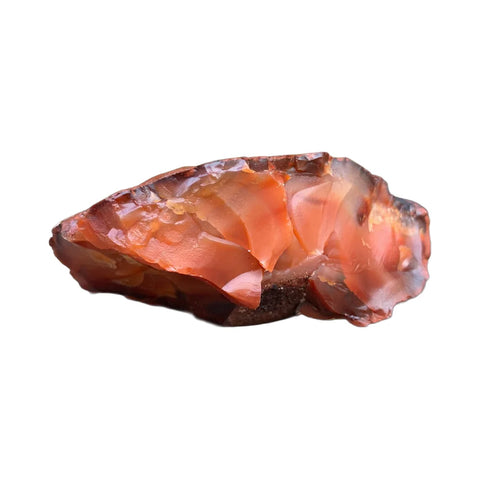
Polished natural Citrine ranges from pale lemon to a warm honey gold. A strong orange-red glow is the sign to ask about heat treatment.
Our full guide to natural citrine versus heat-treated amethyst walks through every tell, from color zoning to crystal shape.
Tiger's Eye: The Golden Stone That Moves

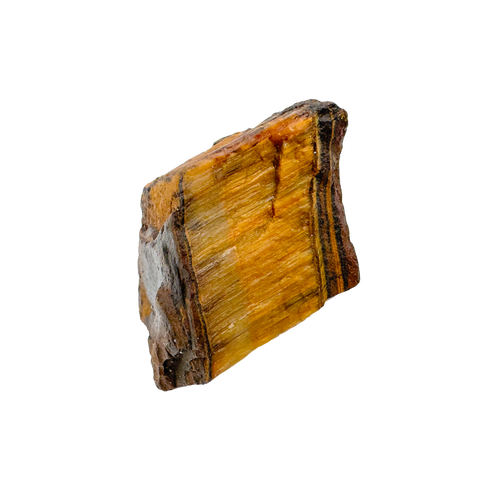
Tiger's Eye shows a silky band of light that glides across the surface as you turn it, the effect called chatoyancy.
Tiger's Eye is the easiest gold stone to identify once you have seen it move. It began as fibrous blue crocidolite that quartz gradually replaced, keeping the parallel fibers. Those fibers reflect light into a single silky band that slides across the surface as you tilt it, the effect called chatoyancy.
That moving ribbon, plus its opaque banding, sets it apart from the see-through evenness of citrine. Natural Tiger's Eye is already a rich honey brown, so treat electric blue or candy-red pieces as dyed. More in our Tiger's Eye crystal guide.
Fool's Gold and the Soft Impostor
Two more gold-toned stones round out the group, and neither behaves like a quartz gem.
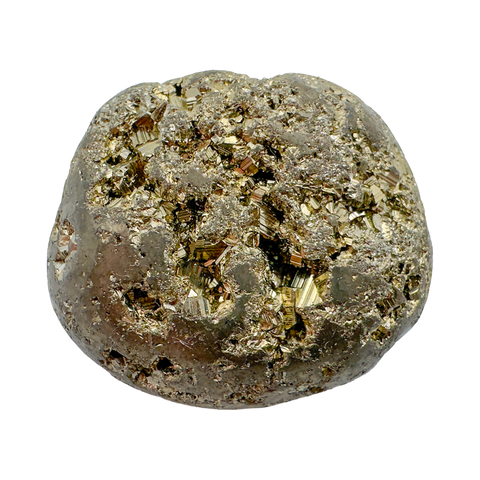
Pyrite is the famous fool's gold, not a translucent gem but a metallic mineral, iron sulfide, with a brassy shine that looks like polished metal. It is heavy for its size, often forms cube-shaped crystals, and is brittle. Rubbed on unglazed tile it leaves a dark greenish-black streak, where real gold leaves a gold one. Our pyrite crystal guide covers it in full.
"If it shines like polished metal and feels heavy in the hand, it is pyrite, not a golden gem."
Golden or honey calcite is the opposite problem. It looks like a warm, glowing gem, but it is a soft carbonate, only a 3 on the Mohs scale. It scratches with a steel blade, and a drop of vinegar makes it fizz. Lovely on a shelf but easily damaged, not a stone for rings or daily wear.
The Other Golds: Needles, Resin, and Glass
A few more gold-toned materials show up often, and one is not a stone at all.
Clear quartz threaded with fine golden needles of rutile, a titanium mineral. Those gold strands, sometimes called Venus hair, are natural inclusions rather than flaws, and collectors seek them out. More in crystal inclusions.
Not a mineral but fossilized tree resin. It is warm to the touch, very light for its size, and soft, around a 2 on the Mohs scale. Copal and plastic are common stand-ins, covered in real amber versus fakes.
The sparkly copper-flecked material sold as goldstone is man-made glass, not a mineral. Its too-even, all-over glitter is the tell. Fine to own if labeled honestly. See glass sold as crystal.
At Beyond Bohemian we name a gold stone for exactly what it is: natural citrine, heat-treated citrine, tiger's eye, golden calcite, pyrite, or glass. If a piece has been heated or is man-made, we say so plainly, because color is only part of what you are paying for. For why a stone looks the way it does, see what gives crystals their color.
Related Guides
Formation, sourcing, and how to read natural versus heated citrine.
Explore citrineWhy the light moves, where it comes from, and how to spot dye.
Explore tiger's eyeThe metallic mineral behind the fool's gold name.
Explore pyriteEvery tell for the most common gold-stone mix-up.
See the differenceWhy a stone is yellow, gold, or brown in the first place.
Read the guideOur full collection of trust-first crystal guides and comparisons.
Browse the LibraryFrequently Asked
How can I tell citrine from tiger's eye?
Citrine is usually see-through with even color, while tiger's eye is opaque with golden-brown bands and a silky ribbon of light that moves as you tilt it. Both are quartz with a hardness of 7, so the look, not a scratch test, tells them apart.
Is most citrine actually heat-treated amethyst?
Much of the citrine sold today is heat-treated amethyst, which turns golden to orange when heated. It is a real, disclosed practice in reputable shops. Natural citrine tends to be a paler, champagne yellow and often grows as single points rather than hollow geodes.
How do I know if my gold stone is pyrite?
Pyrite has a bright, metallic, brass-like shine, is heavy for its size, and often forms cube-shaped crystals. Translucent gold gems like citrine and calcite never look like polished metal. On unglazed tile, pyrite leaves a dark greenish-black streak.
What is the soft golden stone that scratches easily?
That is usually golden or honey calcite, only a 3 on the Mohs scale. It scratches with a steel blade and chips easily, and a drop of vinegar makes it fizz because it is a carbonate. Keep it away from rings and daily wear.
Is goldstone a real crystal?
No. Goldstone is man-made glass with tiny copper flecks that create its sparkle. It is attractive and fine to own, but it is not a natural mineral, and honest sellers label it as glass rather than stone.
What are the gold threads inside clear quartz?
Those are rutile needles, a natural titanium-mineral inclusion, and the stone is called rutilated quartz. The golden strands form as the quartz grows and are considered a feature, not a flaw.