




















































 Raw Stones
179 pieces
Raw Stones
179 pieces
 Tumbled Stones
162 pieces
Tumbled Stones
162 pieces
 Palm Stones
25 pieces
Palm Stones
25 pieces
 Crystal Points
23 pieces
Crystal Points
23 pieces
 Clusters & Geodes
105 pieces
Clusters & Geodes
105 pieces
 Polished & Decor
151 pieces
Polished & Decor
151 pieces
 Mineral Specimens
262 collector pieces
Mineral Specimens
262 collector pieces
 Crystal Chips
21 pieces
Browse everything
Every collection, one page.
View All Collections →
Crystal Chips
21 pieces
Browse everything
Every collection, one page.
View All Collections →


 Aries
Mar 21 – Apr 19
Carnelian
›
Aries
Mar 21 – Apr 19
Carnelian
›
 Taurus
Apr 20 – May 20
Rose Quartz
›
Taurus
Apr 20 – May 20
Rose Quartz
›
 Gemini
May 21 – Jun 20
Agate
›
Gemini
May 21 – Jun 20
Agate
›
 Cancer
Jun 21 – Jul 22
Moonstone
›
Cancer
Jun 21 – Jul 22
Moonstone
›
 Leo
Jul 23 – Aug 22
Citrine
›
Leo
Jul 23 – Aug 22
Citrine
›
 Virgo
Aug 23 – Sep 22
Amazonite
›
Virgo
Aug 23 – Sep 22
Amazonite
›
 Libra
Sep 23 – Oct 22
Blue Lace Agate
›
Libra
Sep 23 – Oct 22
Blue Lace Agate
›
 Scorpio
Oct 23 – Nov 21
Obsidian
›
Scorpio
Oct 23 – Nov 21
Obsidian
›
 Sagittarius
Nov 22 – Dec 21
Sodalite
›
Sagittarius
Nov 22 – Dec 21
Sodalite
›
 Capricorn
Dec 22 – Jan 19
Black Tourmaline
›
Capricorn
Dec 22 – Jan 19
Black Tourmaline
›
 Aquarius
Jan 20 – Feb 18
Amethyst
›
Aquarius
Jan 20 – Feb 18
Amethyst
›
 Pisces
Feb 19 – Mar 20
Aquamarine
›
Gifting?
A birthday stone is the safe bet.
Read the zodiac guide →
Pisces
Feb 19 – Mar 20
Aquamarine
›
Gifting?
A birthday stone is the safe bet.
Read the zodiac guide →











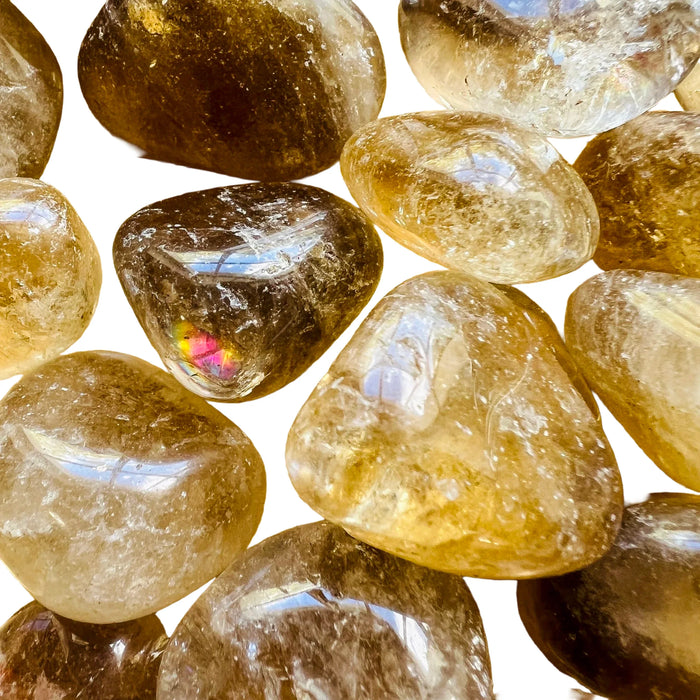
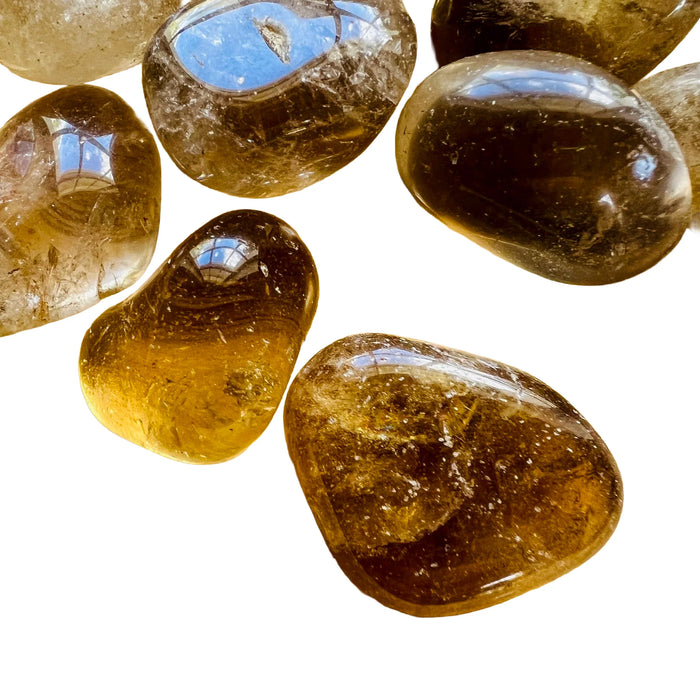
Citrine
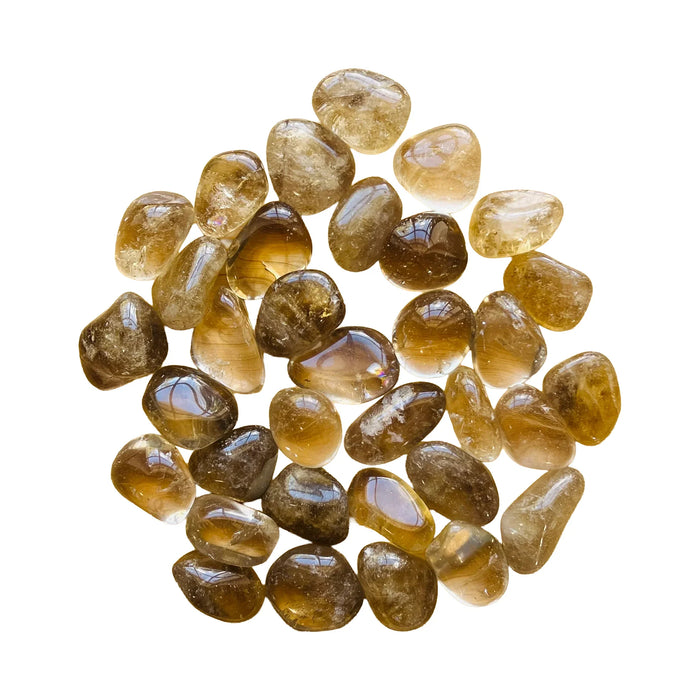
Citrine is the yellow-to-orange variety of quartz, colored by trace iron. The critical piece: natural citrine is genuinely rare. The vast majority of "citrine" sold at ordinary retail prices is heat-treated amethyst from Brazil, which turns yellow or orange above roughly 470 degrees Celsius. True unheated citrine exists but commands a premium and comes with provenance documentation. We'll tell you honestly what each piece is.
Shop citrineThe geology.
Citrine is a silicon dioxide mineral, chemical formula SiO2, from the quartz family. Its yellow-to-orange color comes from trace iron, usually ferric iron (Fe3+), within the crystal lattice. The intensity of the color varies widely depending on iron concentration and how much natural or artificial heat has altered the crystal. Citrine sits at 7 on the Mohs hardness scale, the same as all quartz varieties, which makes it durable for daily wear and resistant to scratching.
The crystal system is trigonal (hexagonal), and well-formed citrine points show the characteristic six-sided terminations typical of quartz. Specific gravity runs around 2.65, consistent with quartz generally. The stone has a vitreous luster and fractures conchoidally rather than along cleavage planes. One essential fact: the yellow color in natural citrine is relatively pale and often shifts to smoky-yellow or golden tones depending on light. The bright amber and orange colors most people associate with "citrine" are almost always heat-induced from amethyst.
The origins.
Natural citrine is found in Brazil (Minas Gerais is the primary source for unheated material), Madagascar, Russia (Ural Mountains), Zaire, Spain, and Scotland. The material is not common relative to the demand in the commercial market, which is why heat-treated amethyst dominates supply.
Brazil produces both natural unheated citrine and, more significantly, the heat-treated amethyst that floods the market under the "citrine" label. The distinction matters enormously. Madagascar produces pale yellow citrine that is genuinely natural but less saturated in color than what many buyers expect. Russia's Ural Mountains have produced exceptional citrine historically, though supply is limited.
The heat-treated "citrine" comes almost entirely from Brazilian amethyst, mined and then heated in kilns to convert the purple color to yellow or orange. This is a legitimate product when disclosed honestly, but the industry has built a habit of calling it "natural citrine" or simply "citrine" without qualification, which masks the treatment.
Heat treatment in the citrine market.
Heat treatment is near-universal in the commercial citrine market. Most "citrine" sold at ordinary retail prices is heat-treated amethyst from Brazil. The process involves heating amethyst above roughly 470 degrees Celsius, which converts the iron impurities and produces yellow, orange, or reddish-brown color. The stone is still quartz, but the color is heat-induced rather than naturally formed. The treatment is permanent and does not harm the stone.
True unheated citrine is rare and commands a significant premium. Its natural color is typically a softer, paler yellow to smoky-yellow, distinct from the vivid amber or orange of heated amethyst. Reputable sellers disclose treatment status in writing. The market-wide problem is that many sellers simply don't mention treatment at all, leaving buyers to assume the stone is natural.
We disclose the treatment status of every citrine piece we carry. If a stone has been heat-treated from amethyst, we say so. If it's natural unheated citrine, we document origin and provenance. Both are legitimate products when accurately disclosed. The problem is the industry practice of selling heat-treated material without qualification.
Traditional associations.
Citrine has a long presence in crystal practice and folklore, though historical references often conflate it with topaz and other yellow stones. In modern crystal work, citrine is most commonly associated with the Solar Plexus chakra, the element Fire, and the intentions of abundance, warmth, confidence, and manifestation.
Many people work with citrine for intention-setting around confidence and personal power, for meditation when they want to feel grounded or energized, and for practices around solar plexus activation. It's often chosen by people looking for a stone that feels warm and optimistic without the intensity that some other power stones carry. The traditional associations emphasize its connection to light, warmth, and the kind of clarity that comes with standing in your own power.
Spotting natural citrine.
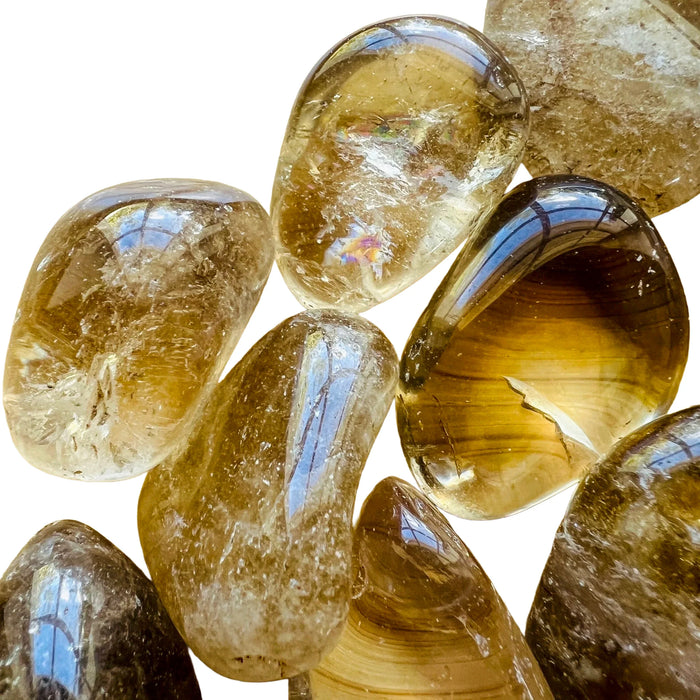
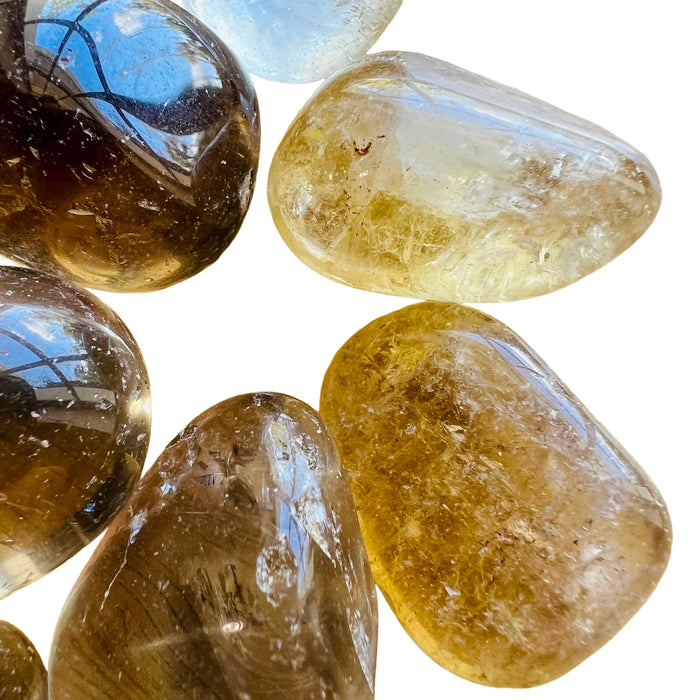
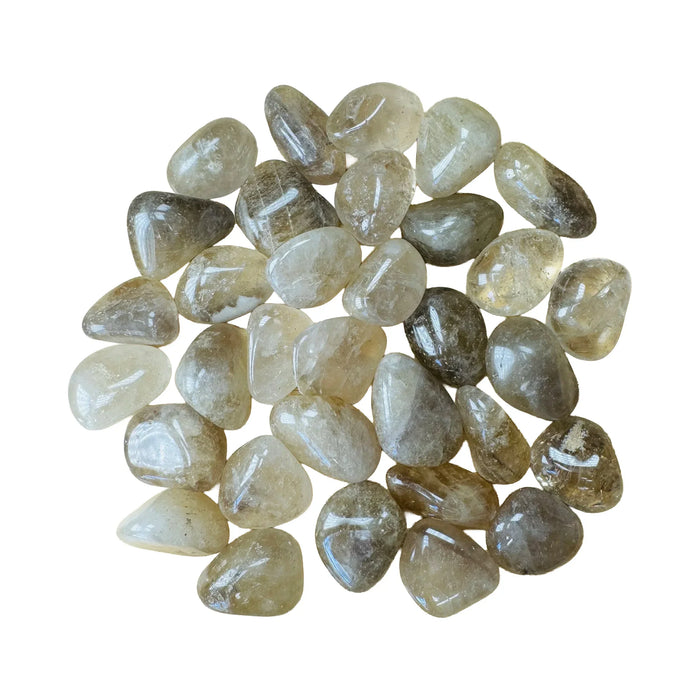
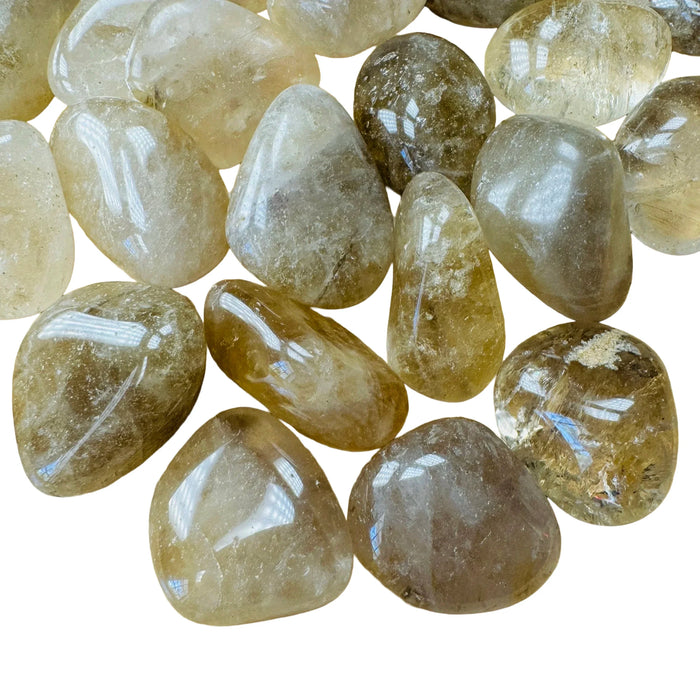
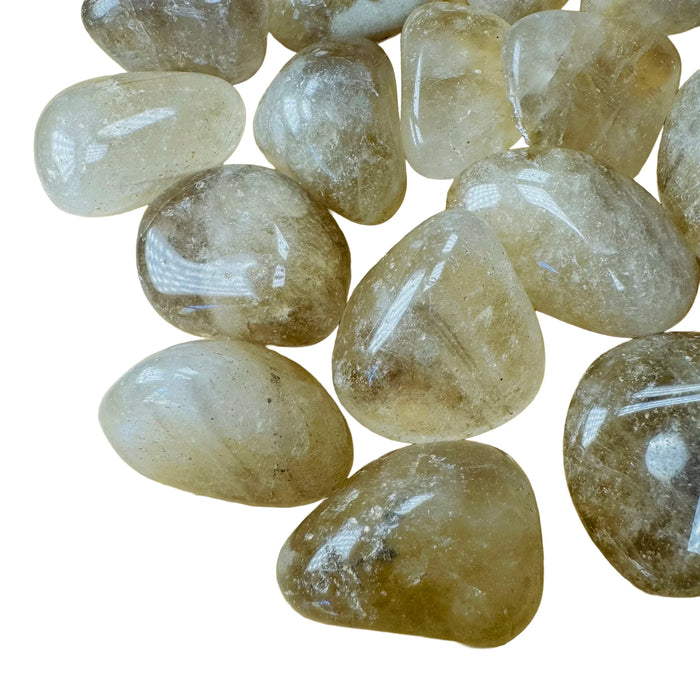
Natural unheated citrine shows a pale to golden yellow color, often with subtle smoky or brown undertones. The color is typically not vivid or uniform but shifts across the piece depending on light. When you hold natural citrine up to bright light, you may see subtle color banding or variation in the intensity of the yellow. The stone has a cool feel and does not show the bright, almost electric amber or orange of heated amethyst.
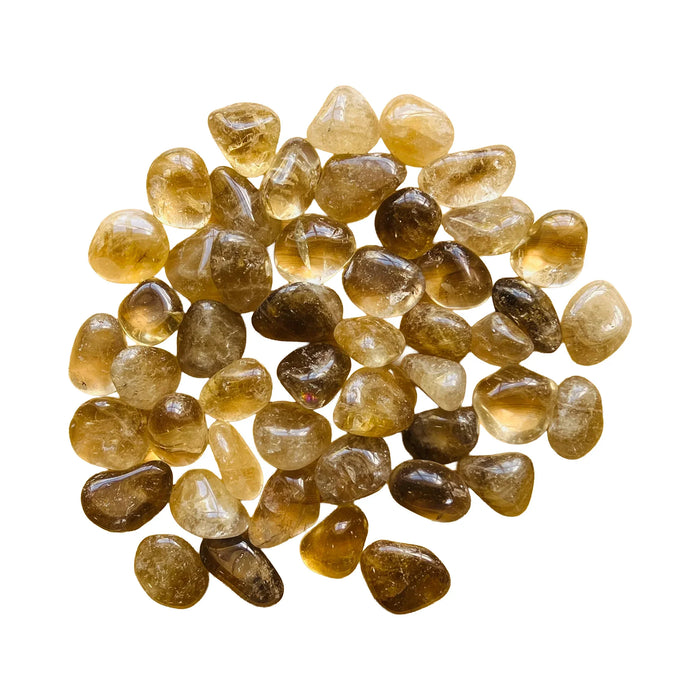
Heat-treated "citrine" (heated amethyst) displays a vivid, uniform amber or orange color that looks striking in photos and display lighting. The color is often too uniform and too saturated compared to natural material. Heat-treated citrine feels slightly warm to the touch compared to unheated citrine, though this is a subtle test. A practical distinction: heat-treated material was amethyst, so it may show faint purple tinges if you look through the stone in bright light. Natural citrine will not.
The simplest approach: buy from a seller who explicitly states treatment status in writing. If you see "citrine" listed without any mention of origin or treatment, assume it is heat-treated amethyst and price it accordingly. If a seller claims natural citrine, ask for the origin and expect documentation.
Care & handling.
Citrine is a hard stone at 7 on the Mohs scale and tolerates daily wear, water, and sunlight. It can be gently rinsed under cool running water and dried with a soft cloth. Avoid harsh chemical cleaners, and do not use ultrasonic or steam cleaners. For energetic cleansing, you can use water, smoke, sound, sunlight, or moonlight, all of which are appropriate for quartz.
One caveat: prolonged, intense direct sunlight exposure can fade some citrine specimens over time, though this happens slowly and is rare. If you want to preserve the color as vivid as possible, store your citrine in soft indirect light when not in use. The stone itself is durable and low-maintenance, which is one reason it's a popular choice for people who want a piece they can actually carry and wear without fussing.
Pairs well with.
Proof, not promises.
We measure our own sourcing across five dimensions. Supply chain, environmental footprint, artisan support, market integrity, and pricing. The number is honest, not perfect. Where we can do better, we say so.
A deeper look.
Extended geology, sourcing, the heat treatment story, authentication, varieties, and the price difference between natural and treated material for when the quick guide isn't quite enough.
Extended geology and color
Citrine is silicon dioxide (SiO2) crystallizing in the trigonal system, identical in structure to all quartz varieties. The yellow-to-orange color comes from ferric iron (Fe3+) in the crystal lattice. The amount of iron and how it's distributed determine both the natural color of unheated citrine and the final color of heat-treated amethyst.
Natural citrine, when it occurs without treatment, typically shows pale to golden yellow tones, sometimes with smoky or brownish undertones. This color is subtle and varies across the specimen depending on light direction. The stone may show banding or color shifts that reflect the geological conditions during formation.
Heat-treated amethyst becomes citrine or "citrine" when heated above 470 degrees Celsius, a temperature at which the purple color shifts to yellow, orange, or occasionally reddish-brown. Higher temperatures can produce darker, more amber-like colors. The treatment is permanent and stable. The resulting stone is still quartz with the same hardness and durability as any other, but the color is entirely induced rather than natural.
Why heat treatment dominates the market
Natural citrine is less common than amethyst in most deposits. Brazil mines both, but heat treatment of amethyst is dramatically more cost-effective than mining and selecting natural citrine. A single amethyst geode can be heated to produce multiple "citrine" pieces at a fraction of what natural citrine sourcing and selection costs. This economics-driven practice has become the industry standard, and the industry has normalized calling the result "citrine" without qualification.
The market-wide habit of not disclosing treatment is not accidental. Unheated natural citrine commands higher prices than heat-treated material, so sellers who want to move volume prefer not to highlight the distinction. Buyers unfamiliar with the difference see the vivid orange color (typical of treated material) and assume it's simply how citrine looks.
Authentication methods
The most reliable distinction is color presentation. Natural citrine: pale yellow, sometimes smoky, subtle color variation, no uniform vivid orange. Heat-treated amethyst: vivid amber or orange, often uniform in color, very bright in display lighting, sometimes showing faint purple if backlit (remnant of the original amethyst color).
Gemological testing can confirm treatment through spectroscopy and thermal analysis, but this is expensive and impractical for casual buyers. The practical approach is to buy from a seller who explicitly states treatment in writing and can prove it through origin documentation or third-party testing.
Pricing and the market
Heat-treated citrine (treated amethyst) retails from about $3 to $8 per tumbled stone, $6 to $15 for polished pieces, scaling upward for carvings and larger forms. This pricing reflects the cost advantage of heating amethyst and the lower market value placed on treated material.
Natural unheated citrine typically runs $8 to $20 per tumbled stone, $18 to $45 for hand-polished pieces, and $25 and upward for palm stones and larger specimens. The price difference is substantial and justified by the rarity of natural material and the cost of honest sourcing.
If you see citrine priced below $5 per piece without treatment disclosure, it's heat-treated amethyst. If you see citrine priced as natural with no documentation of origin or treatment, be skeptical. Legitimate sellers of natural citrine will show their work.
Mining and sourcing geography
Brazil's Minas Gerais region produces both natural citrine and most of the world's commercial amethyst. The deposits overlap geographically, which is why Brazil can supply both natural and treated material to the global market. Madagascar, Russia's Ural Mountains, and smaller deposits in Europe produce natural citrine but in much smaller volumes than Brazil's amethyst supply.
The heat treatment of amethyst happens primarily in Brazil and India, where established kiln operations process raw amethyst into "citrine" for export. This process is not secret or hidden; it's simply not mentioned in most retail contexts.
Honest sourcing means telling you the truth.
With citrine, that truth is simple: most commercial citrine is heat-treated amethyst. We sell both natural unheated citrine and heat-treated material, but we label each one clearly. You choose what you want, knowing exactly what you're getting.
Bring citrine home.
Natural unheated citrine from Brazil and heat-treated citrine from responsibly sourced amethyst, both clearly labeled. Raw, tumbled, and polished forms. Every piece comes with origin and treatment documentation.
Shop the citrine collectionCitrine, in stock now.
Our most-loved Citrine pieces, ready to ship.
- from 1,000+ reviews
- Ships within 72 hoursMonday to Friday, tracked
- 90 days to return itif you do not love it
- Free US shipping over $99$8.99 flat rate under
The Slow Note
New stones go to the list first.
No forwarding, no selling. Unsubscribe in one click. Privacy