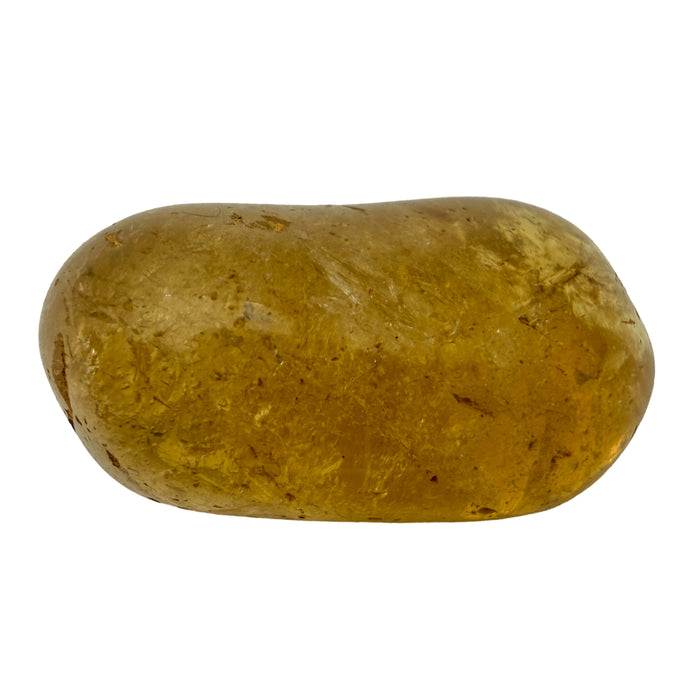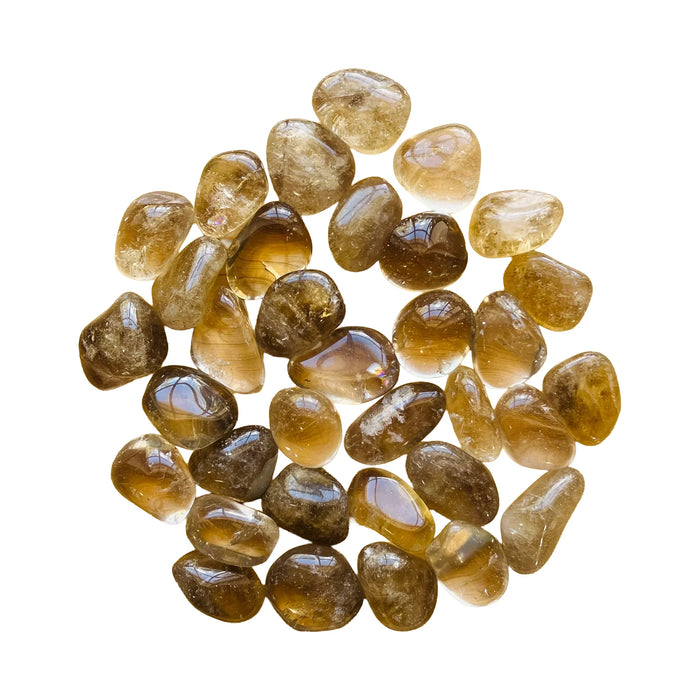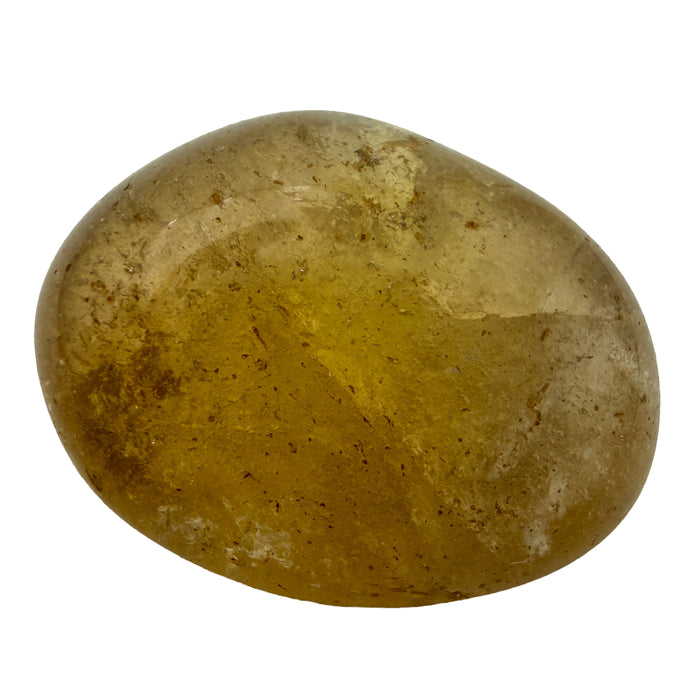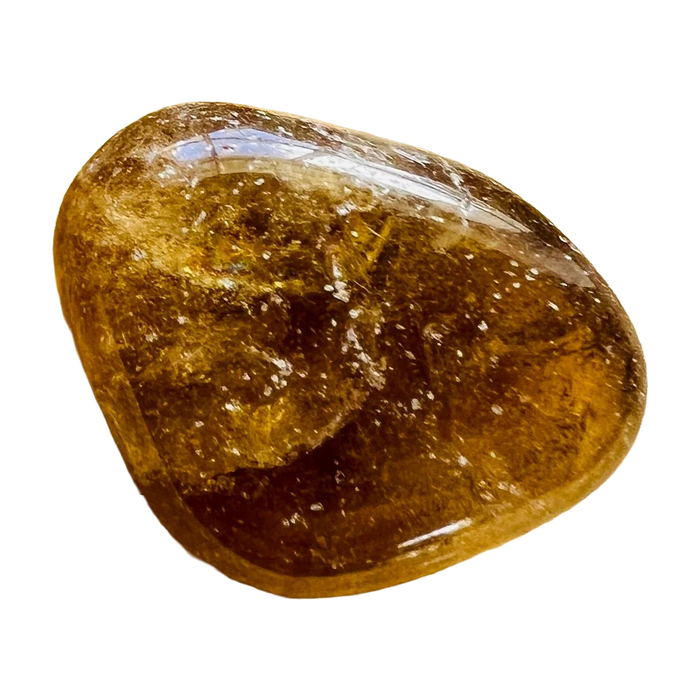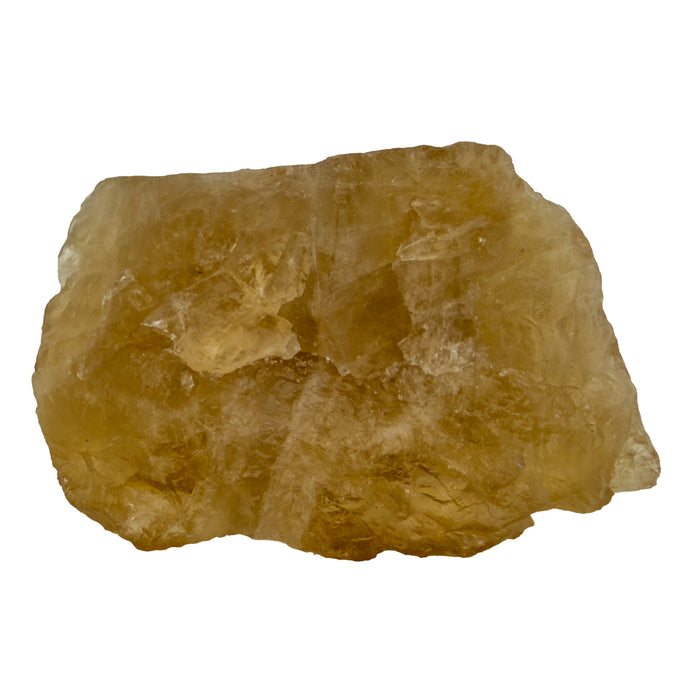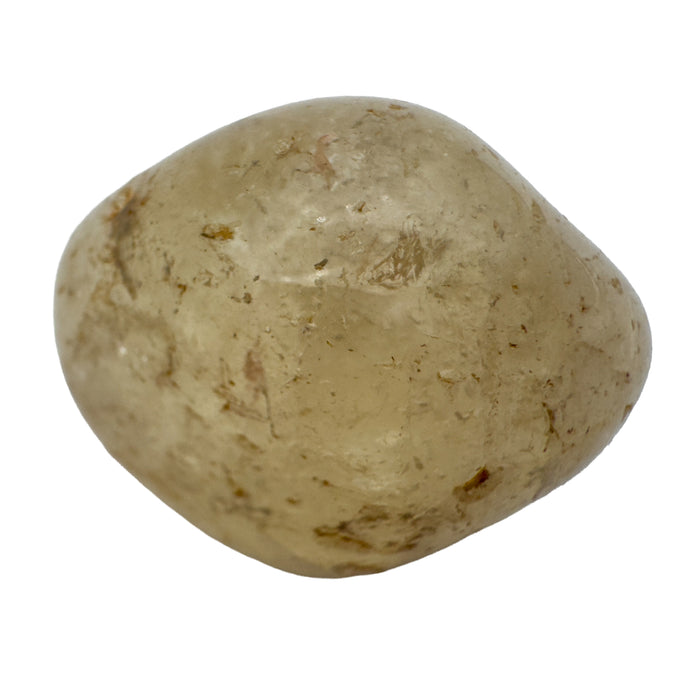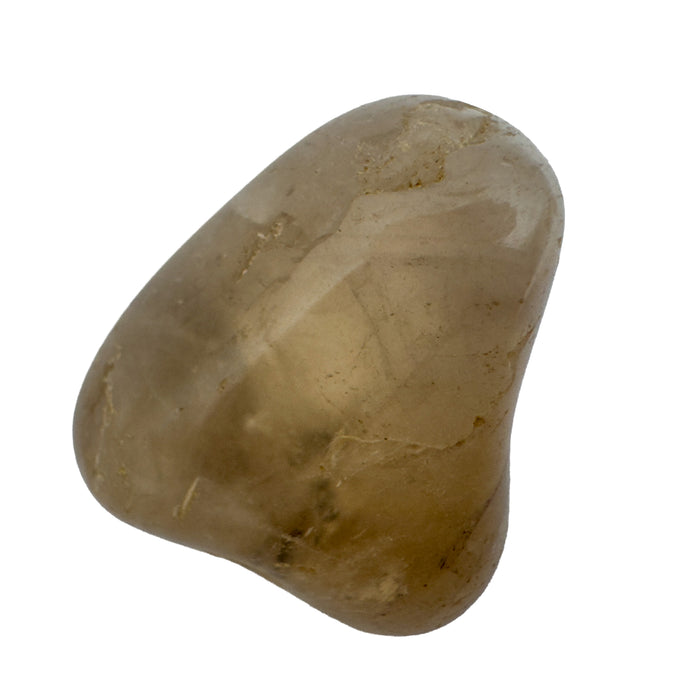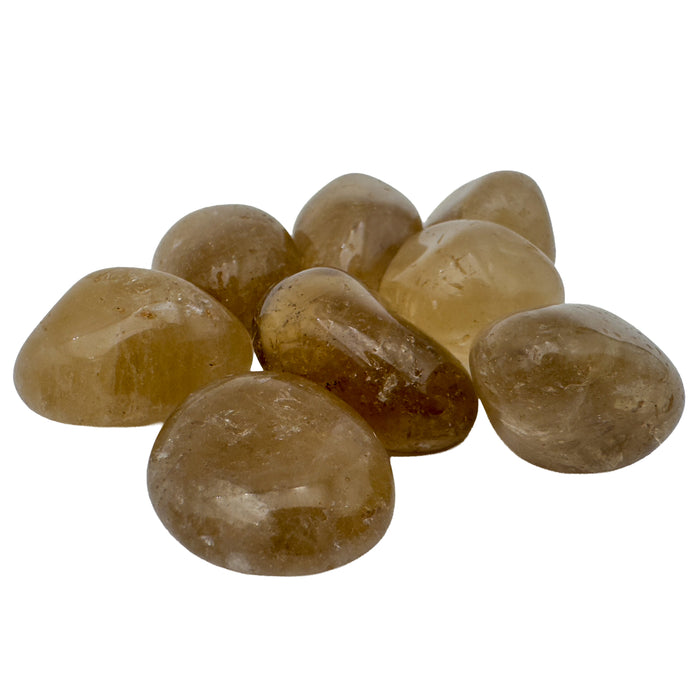


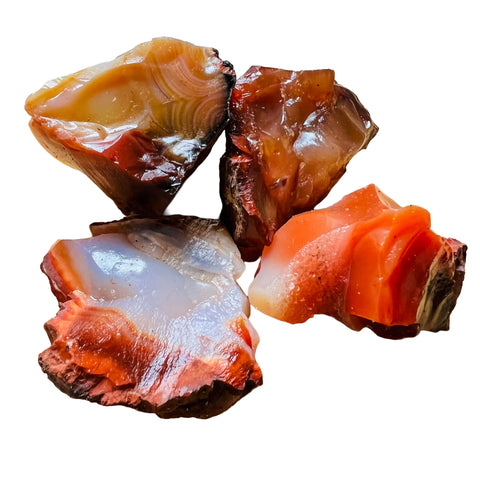
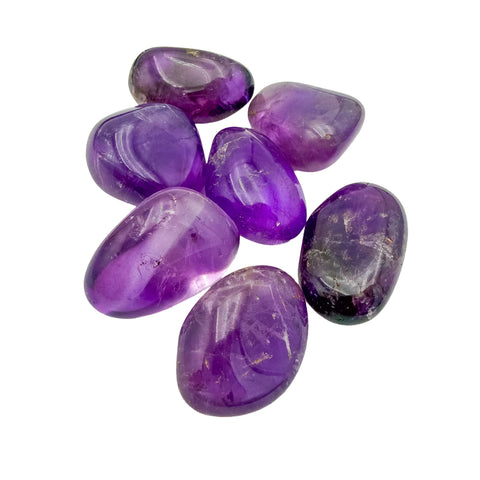

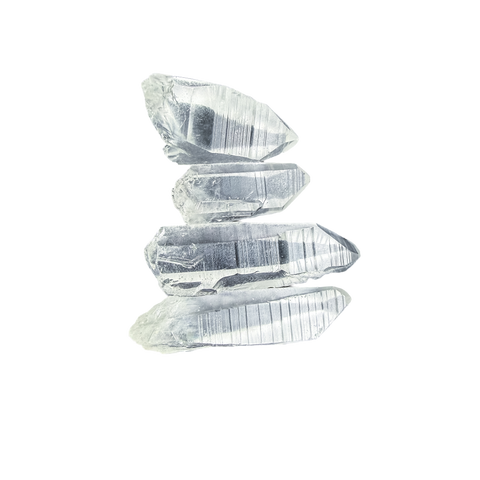
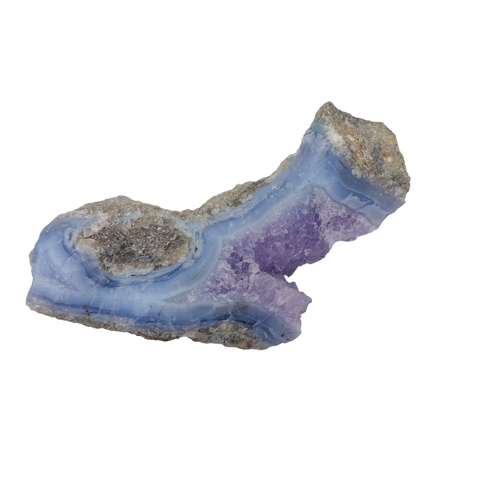












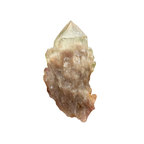
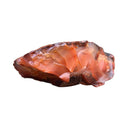
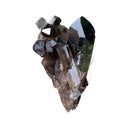
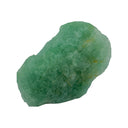
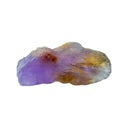










Most citrine on the market is heat-treated amethyst. Real photos side by side, the four visual tells, why price and disclosure matter, and what to check before you spend.
Real vs Fake Citrine: How to Tell If Your Stone Is Natural or Heated Amethyst

The short answer: Most of the citrine sold in the world is not natural citrine. It's amethyst that's been heated in a kiln until its color shifts from purple to orange. Both are quartz, both are real stones, and heating itself isn't a problem. The problem is when heated amethyst is sold as "natural citrine" with no disclosure. You can usually tell the two apart by color, base, price, and where the color sits in the crystal.
TL;DR: Most citrine sold as "natural" is heat-treated amethyst, same quartz family, different color path. Real natural citrine is pale yellow to smoky honey with color distributed throughout. Heated amethyst runs brighter orange, with color concentrated at the tips and a chalky white base, and it usually costs far less. Both are real quartz; undisclosed treatment is the problem.

Are natural citrine and heat-treated amethyst the same stone?
Geologically, yes. Both are silicon dioxide, quartz at its purest. The difference is how each one got its yellow-to-orange color.
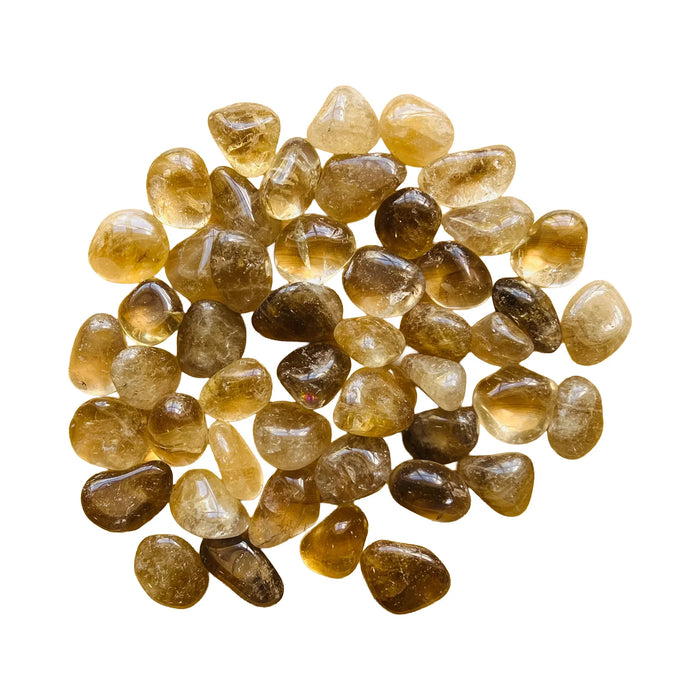
Natural citrine forms when amethyst-leaning quartz grows close to a heat source underground, like a lava flow or a hot brine. Iron impurities in the crystal lattice oxidize over geologic time, and the stone keeps a soft yellow, smoky, or honey tone. True natural citrine is uncommon. Most of the world's commercial supply comes from a small number of deposits in Brazil, the Democratic Republic of Congo, Russia, and Madagascar.
Heat-treated amethyst is a faster version of the same chemistry. Brazilian sellers in the mid-twentieth century noticed that amethyst from certain regions turned orange when heated to roughly 470 to 560 degrees Celsius. That practice scaled. Today, the crystal trade widely estimates that the large majority of stones labeled "citrine" on the global market started life as amethyst before going through a kiln. Industry references and gemological texts consistently describe natural citrine as rare and most market citrine as heat-treated, though the exact percentage isn't centrally tracked.
So when you're looking at a bright orange "citrine" cluster on a shop wall, the more likely story is that it was purple six months ago.
Quick comparison at a glance
Natural Citrine
The rarer, slow-formed stone
Typical color
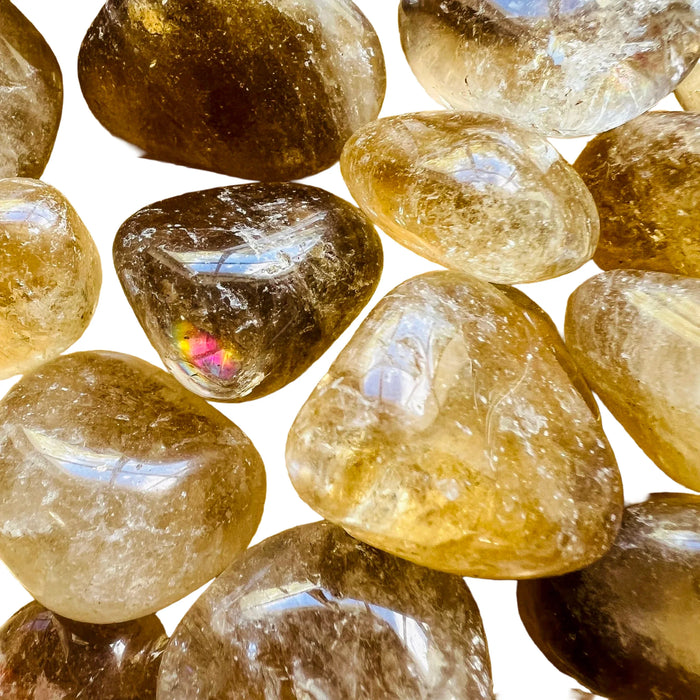
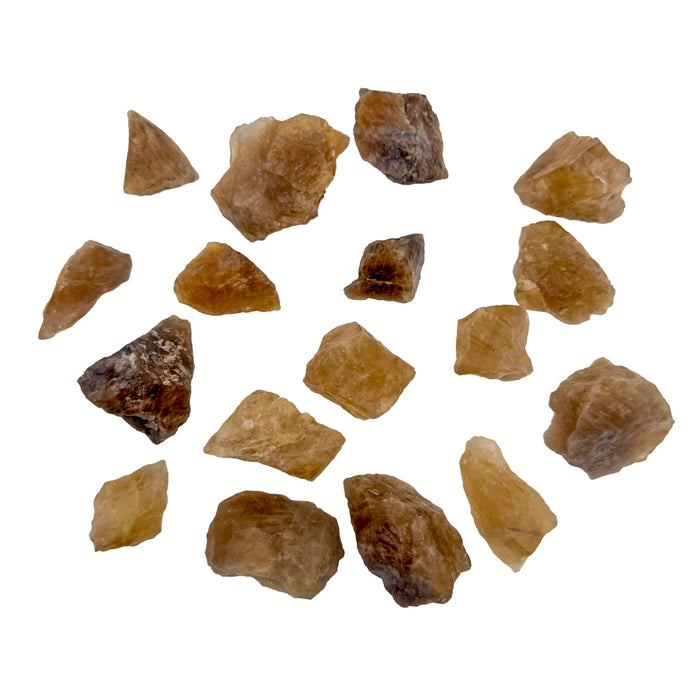
Pale yellow, smoky honey, soft champagne
Color distribution
Even throughout the crystal
Cluster base
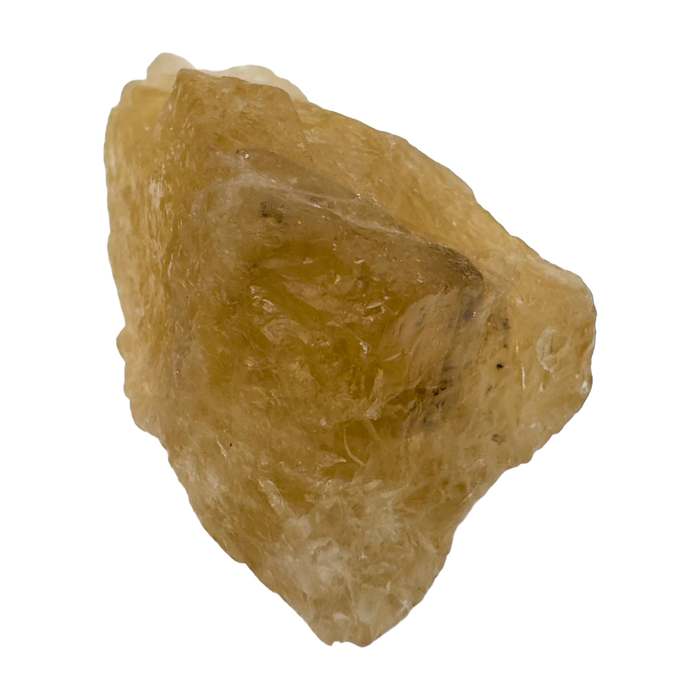
Usually translucent gray, smoky, or pale
Crystal habit
Standalone points or smoky, softer-edged clusters
Origin
Brazil (Minas Gerais, Rio Grande do Sul), DRC, Russia, Madagascar, parts of Bolivia
Price (raw cluster)
Noticeably higher per gram
Common label
"Natural citrine," "unheated citrine"
Heat-Treated Amethyst
The kilned, common-market stone
Typical color
Bright orange, deep amber, burnt sienna
Color distribution
Often concentrated at the tips, lighter at the base
Cluster base
Often chalky white, opaque, or milky
Crystal habit
Tall, sharp amethyst-style points with orange tips
Origin
Almost always Brazilian amethyst, kilned post-mining
Price (raw cluster)
Lower per gram, widely available in bulk
Common label
Often just "citrine" with no disclosure
How to tell which one you have
You don't need a lab. A few visual checks get you most of the way there.
1. Look at the color
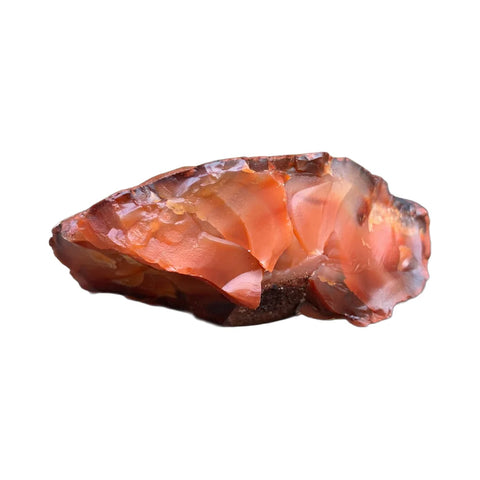
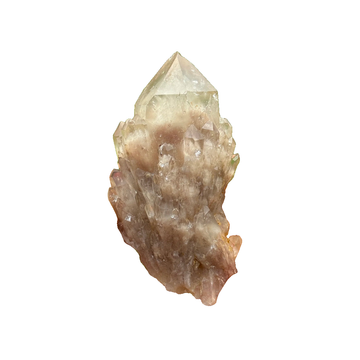
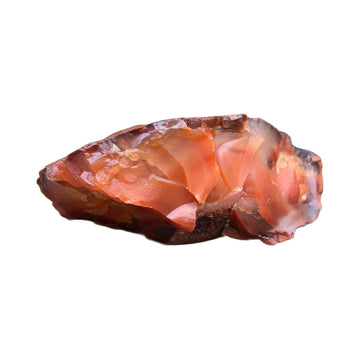
Natural citrine sits in the pale-yellow-to-warm-honey range. It can lean smoky, almost like a champagne quartz. If the stone is a fluorescent orange or a deep, almost reddish amber, the heat-treated story is more likely. The kiln pushes amethyst's iron into oxidation states that produce those punchier tones, and you rarely see them in nature.
2. Check the base of the cluster
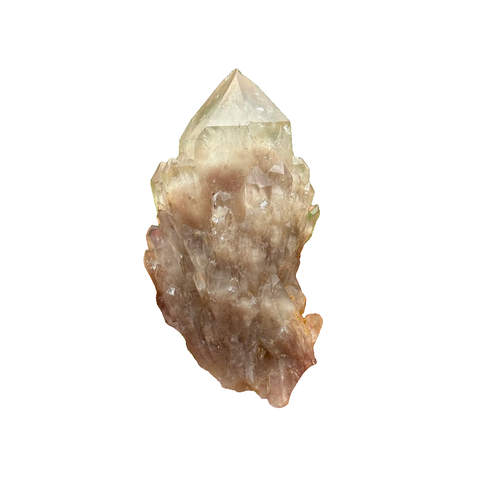
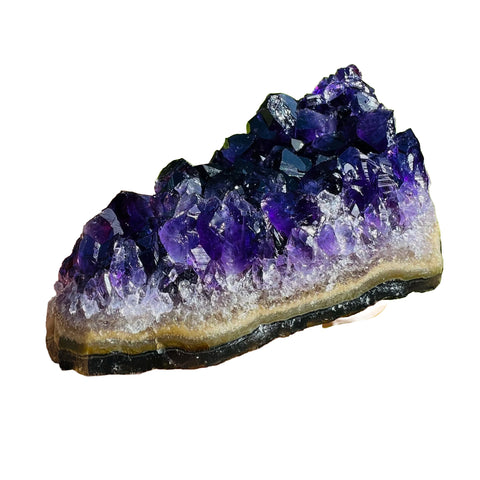
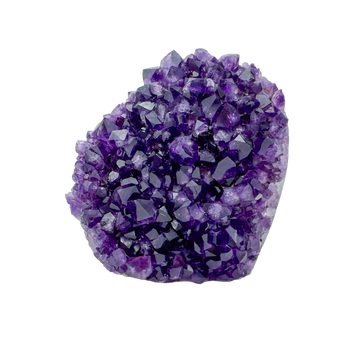
On a heat-treated amethyst cluster, the base is often chalky, opaque white. That's a hint that the original purple at the base was bleached out by the heat. Natural citrine clusters tend to have a translucent, smoky, or gray base because the stone is one continuous piece of quartz that took color slowly.
3. Watch where the color lives
In a heated amethyst point, the orange tends to cluster at the tips, with a sharp transition to a paler or white base. In natural citrine, the color is distributed more evenly through the whole crystal. It's not a hard rule, but it's a reliable tell.
4. Consider the crystal shape
Heated amethyst keeps its original amethyst habit: tall, narrow, sharp-tipped points growing densely on a geode-like base. Natural citrine shows up as standalone terminated points, smaller druzy crusts, or clusters with softer, smokier geometry. Yes, natural citrine does form clusters. What it doesn't have is the bright orange tip sitting on a chalky white base.

5. Check the price
Heated amethyst starts as a common stone, so it's often sold cheap by the pound. Natural citrine is priced for how rarely it turns up. A big, bright orange "citrine" that seems inexpensive for its size is almost always heated.
6. Ask the seller
If a shop can't tell you whether the stone is natural or heat-treated, that's information too. A reputable seller knows. They might still carry heated amethyst, but they'll label it clearly. The right answer is "this is heat-treated amethyst, often sold as citrine." Silence is the signal to watch for.
Is heat-treated amethyst "fake"?
This is where the conversation gets nuanced. Heat-treated amethyst is a real stone. It's quartz. The crystal lattice isn't synthetic. The color change is a real chemical shift, not a dye or a coating. If you bought it and you love the way it looks, nothing about it is "fake" in the sense of being plastic or glass.
The problem is the labeling, not the stone. Heating is a long-standing, legitimate practice across the gem trade. Tanzanite, aquamarine, blue topaz, and a long list of others routinely undergo heat treatment to reach their market color. The line that matters is whether the treatment is disclosed.
If you came in looking for natural citrine and you paid natural-citrine prices for heat-treated amethyst, you were misled. If you came in looking for that bright orange look and the seller told you it was heated, you got exactly what you wanted.
The other treatment almost no one discloses: oil
Heat isn't the only quiet enhancement in the trade. Without some kind of finish, many raw crystals look dull or dusty, so a lot of them are wiped with mineral oil, a petroleum byproduct, to boost color and clarity. It works, and it's almost never mentioned on the label.
When our raw pieces need a finish, we use a light coat of plant-based jojoba oil instead, and the product page says so. Ask any seller the same question you'd ask about heat: has anything been done to this stone?
Why does the labeling matter?
Three reasons.
One, price. Natural citrine is genuinely rarer and costs more to source. Heat-treated amethyst is abundant and inexpensive. Selling the cheaper material at the rarer material's price is the simplest form of misrepresentation in this category.
Two, sourcing. Heated amethyst overwhelmingly comes from Brazilian amethyst, which means it goes through Brazil's industrial mining and kiln supply chain. Natural citrine comes from different deposits with different supply realities. If origin matters to you, treatment status matters too.
Three, the trade norm itself. The more sellers quietly label heated amethyst as citrine, the harder it becomes for newer buyers to learn what natural citrine actually looks like. The color memory of the market drifts toward the orange end, and the soft honey tone of the real stone starts to look "wrong" to people who've only seen the kilned version.
What we do at Beyond Bohemian
We don't currently carry heated amethyst. If we ever do, it'll be labeled heated amethyst, never citrine.
Our Natural Citrine collection is exactly that, sourced from Minas Gerais, Brazil and Haut-Lomami in the Democratic Republic of Congo. Every piece is natural color, never heated, never dyed. The color is soft, the base is smoky to translucent, and the price reflects the stone's real availability.
We also grade our natural citrine, and grade is about clarity and depth of color, not authenticity. Our AAA grade is the rare deep honey gold most people picture when they think of citrine. Our A grade is softer and smokier, and an easy place to start.

Shop by grade: AAA natural citrine tumbled stones or A grade natural citrine tumbled stones.
For more on how we handle treatments and disclosure across the catalog, our Beyond Ethical sourcing criteria covers the standard. Treatment isn't the line we won't cross. Silence about it is.
FAQ
How common is heat-treated citrine?
Very. Gemological references consistently describe most citrine on the market as heat-treated amethyst, and natural citrine as rare. The exact percentage isn't centrally tracked, but if you've bought bright orange citrine from a typical shop, the odds are it started out purple.
Is all bright orange citrine fake?
It's not fake, but it's almost certainly heat-treated amethyst. Truly natural citrine in that vibrant orange range is exceptionally rare. If a seller is offering a bright orange "citrine" cluster at an everyday price, the realistic assumption is kilned amethyst.
Does natural citrine form clusters?
Yes. Natural citrine can grow as clusters, like the ones we source from Haut-Lomami in the Democratic Republic of Congo. Natural clusters have soft, smoky honey color and lack the bright orange tips on a chalky white base that mark heated amethyst.
Does heat treatment change the energy of citrine?
That depends on your framework. Many practitioners feel natural and heated stones carry different qualities. Others treat both as the same mineral and work with them interchangeably. We don't make a metaphysical call for you. We give you the facts about the stone so you can choose for yourself.
How can I tell if a tumbled citrine stone is real?
Tumbled stones lose some of the cluster-level tells, but color is still a strong clue. Pale, soft, smoky honey is natural citrine territory. Bright, uniform orange across a polished surface is more likely heat-treated. Origin information from the seller is the most reliable check.
What's the difference between citrine and yellow quartz?
"Yellow quartz" is a broader trade term that can include natural citrine, heat-treated amethyst, smoky quartz with a yellow tint, or quartz dyed yellow. Citrine specifically refers to the iron-colored variety. If a stone is labeled "yellow quartz" rather than "natural citrine," assume there's a reason the seller chose the looser name.
Is heat-treated amethyst still ethical?
Heat treatment itself is a normal part of the gem and crystal trade. Whether a specific stone is ethical depends on the same factors as any other piece: where it was mined, who was paid, whether the treatment was disclosed, and how the price reflects the real supply chain. Treatment isn't the ethical line. Disclosure is.
Where does natural citrine come from?
Classic sources include Minas Gerais and Rio Grande do Sul in Brazil, the Anahí mine region of Bolivia (more commonly known for ametrine), parts of the Democratic Republic of Congo, Russia's Ural Mountains, and Madagascar. Spain, Scotland, and France have historic deposits too, though commercial supply is mostly Brazilian and Congolese today.
A simple test before you buy
Hold the stone up to a light. Look at three things in order: the tip color, the base color, and the transition between them. Natural citrine usually shows continuity. Heat-treated amethyst usually shows a contrast.
You don't need a gemologist to read that. You just need to know what you're looking at.
Clusters are their own puzzle. If you are looking at a large amethyst or citrine cluster and something feels off, how to spot a fake crystal cluster walks through what to check.
Browse our Natural Citrine if you want to see the soft, real color of the stone, and take a look at our full Crystal Guide if you want to read up on the rest of the catalog before you buy.