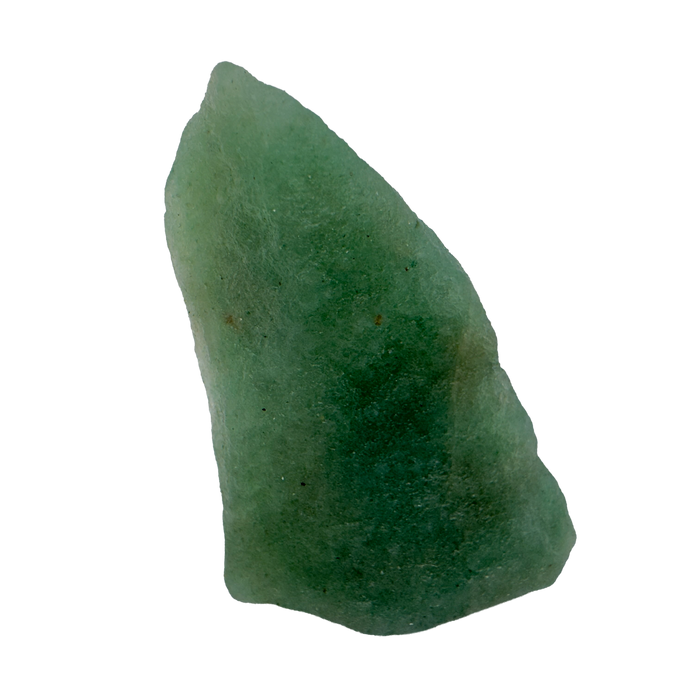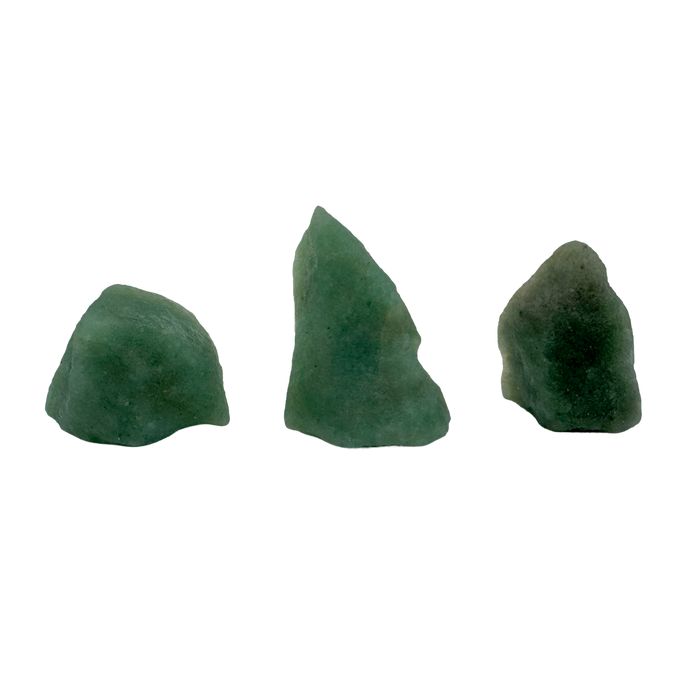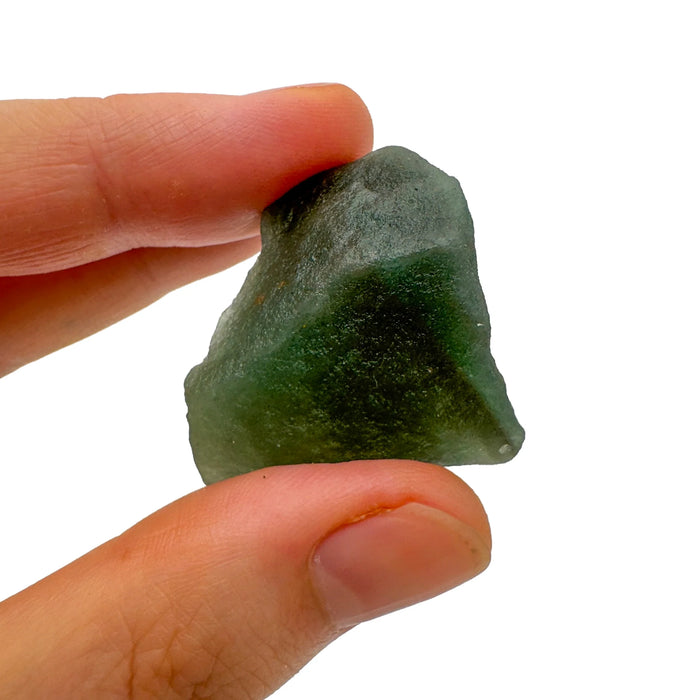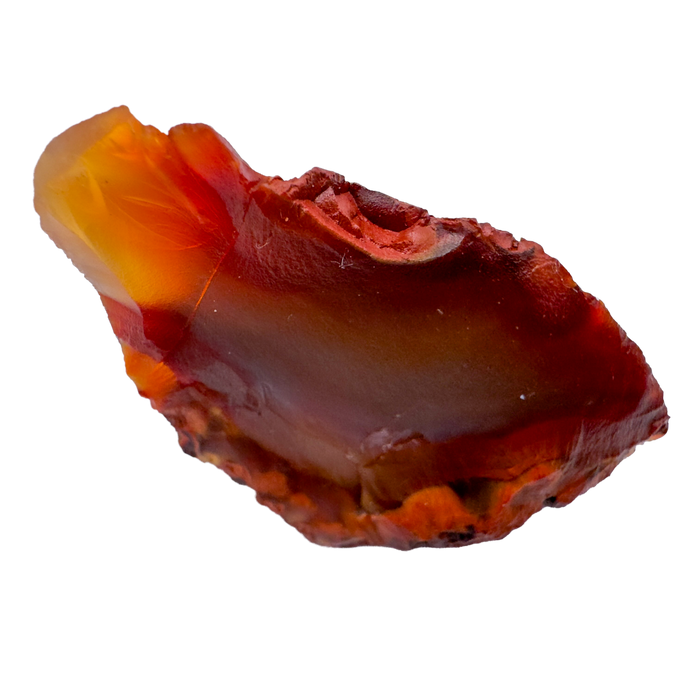
























































Crazy lace agate, amazonite and chrysocolla each carry a visible record of how they formed. Reading it tells you where the stone is weak, how hard it really is, and whether the color is natural.
Crystals for Stress Relief: Reading the Pattern

Most of what you can see in a stone is not decoration. The banding, the streaking and the mottling are all leftovers from a specific event, and once you know which event, you know something useful at the counter: where the stone is weak, how hard it actually is, and whether the color was put there by the Earth or by somebody later. Three stones on the stress relief shelf make that unusually easy to read.
Crazy Lace Agate
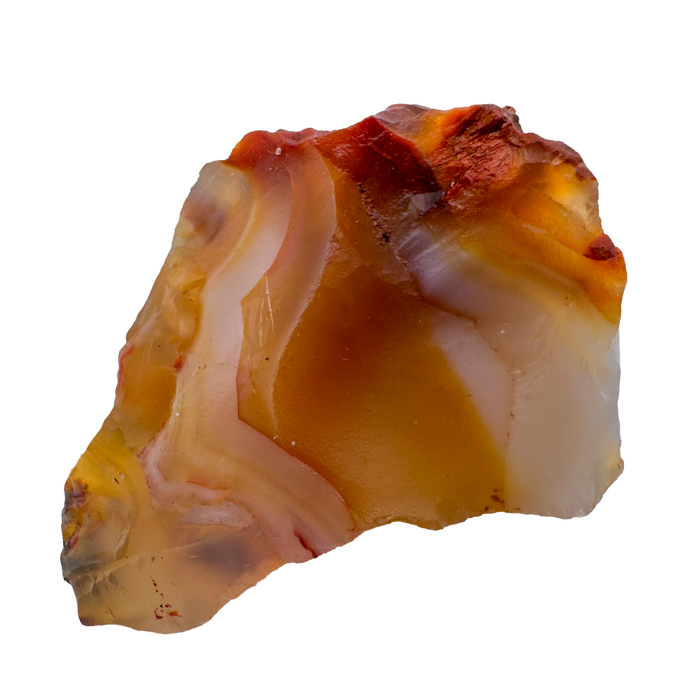
Crazy lace agate is chalcedony, a form of quartz built from crystals too small to see, and its pattern is a record of two separate things happening in order. First the layers. Silica-rich fluid moved into a cavity in volcanic rock and set down a lining on the wall, then came back and did it again, pulse after pulse. Each pulse carried slightly different chemistry, which is why adjacent bands can look nothing alike. Iron oxides account for the reds, oranges and yellow-browns. Manganese oxides account for the grays and blacks. The white and cream bands are close to pure chalcedony with very little in them. Then the break. After the banding formed, the rock was deformed and fractured, and more silica came through and cemented the pieces back together. That is why the lines fold back on themselves and why you can find a fragment of one band sitting inside another. The practical upshot is that the whole stone, bands and healed fractures alike, is the same material at 7 on the Mohs scale. The pattern is not a weak line, which is why crazy lace handles a pocket better than almost anything else in this article. Ours is hand polished AA from Chihuahua, Mexico. One thing worth knowing before you buy anywhere: natural crazy lace runs in creams, browns, rusty reds, grays and soft pinks, and agate is microporous, which is exactly why it takes dye so readily. Bright magenta, electric blue or purple crazy lace is dyed. More in the crazy lace agate guide.
Amazonite
Amazonite is microcline, a potassium feldspar, and the white streaking running through it is not filler, not a second stone dropped in and not a crack. It is a cooling record. As the feldspar cooled slowly, sodium-rich albite separated out of the potassium-rich microcline and settled into fine intergrown layers. The texture has a name, perthite, and how coarse or fine the streaking looks is a rough report on how slowly the whole mass cooled. The color has a better story than the one usually told. For decades the blue-green was attributed to copper, on the reasonable grounds that copper turns a lot of minerals blue-green. Work published in 1985 by Hofmeister and Rossman in American Mineralogist pointed somewhere else entirely, to trace lead sitting in the feldspar structure alongside water, and that finding has held up since. There is no copper in it. What matters when you handle a piece is not the hardness number but the cleavage. Feldspar parts cleanly in two directions that meet at close to a right angle, so a dropped amazonite tends to shed a flat flake rather than chip at random, and that is true at 6 to 6.5 on the Mohs scale just as it would be at 8. Ours is from Amboasitra, Madagascar, natural and untreated, through a community partnership. The amazonite guide has the rest.
Chrysocolla
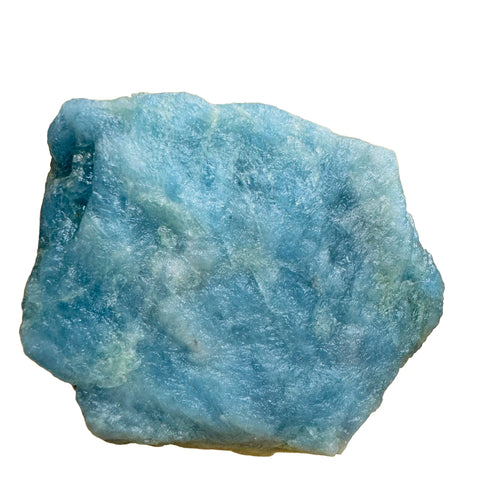
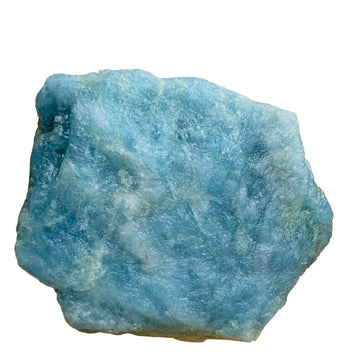
Chrysocolla is a hydrated copper silicate, and it forms in the weathered upper zone of a copper deposit, where surface water dissolves copper out of the primary ore and drops it again in cracks and cavities nearer the top. The mottled, crusted, sometimes grape-like surface is the shape of that deposition, and the pattern is a map of where the fluid could get to. Then comes the part that decides what you are actually buying. Chrysocolla is porous. If silica-rich fluid came through afterward, it filled those pores and locked the copper mineral inside microcrystalline quartz. That process is silicification, and our own listing states the consequence in plain numbers: Mohs 2 to 4 for pure chrysocolla, 5 to 7 once it is silicified. Three points of hardness is not a grade difference. It is a different physical object sold under one name, which is why chrysocolla cut for jewelry is almost always the silicified end of the range and why a lot of soft bead material in the wider trade is resin stabilized instead. You can read it by eye and by touch. Heavily silicified material takes a glassy polish and shrugs off a steel point. Softer material looks duller, closer to chalky, and marks easily. Either way it is a stone to keep dry, because the porous version will take water in. Ours is hand polished AA from Arequipa, Peru, direct source, and it is listed at medium treatment awareness precisely because stabilization is common across this material. See the chrysocolla guide.
A note on amethyst and lepidolite
The two stones a list like this normally opens with already have their own pieces. There is a head to head on amethyst and lepidolite, an honest look at whether crystals help with anxiety, and the full survey on crystals for anxiety. This article stays with three stones whose patterns are worth reading.
Crazy Lace Agate
Amazonite
Chrysocolla
Side by side the three read as three different processes. Hand polished crazy lace agate is all motion, tight bands folding through each other. Tumbled amazonite is flat blue-green with straight pale streaks that all run one way. Hand polished chrysocolla is neither, a soft blur of blue and green with dark host rock still in it. The rest of the shelf sits in the stress relief collection.
What stress relief means here
We are not going to tell you a stone lowers your stress. What people actually report is simpler and worth saying plainly: keeping something in your hand gives your attention a place to go, and a small cool object is easy to notice. That is a habit, and the stone is the prompt for it rather than the cause of anything. If what you are carrying is heavy, a stone is not a substitute for talking to someone qualified. What we can be exact about is the object itself. One of these records a series of floods and a break that healed, one records how slowly a magma body cooled, and one records copper moving through rock and how much silica followed it. That is checkable, and it is the part we can stand behind. Sourcing is set out on our sourcing page, the wider list is on crystals for stress relief, the trade terms are worked through in the crystal glossary, and the formats are compared in crystal shapes and forms.