







The crystal glossary, in plain English
Every trade term, treatment, and geology word you'll meet while shopping, defined without the mystique.
Crystal listings are full of language that sounds technical and often hides more than it explains. Druzy, chatoyancy, stabilized, hydrothermal, AAA. Some of these words describe a real property of the stone. Some describe something that was done to it. A few are marketing. Here is what each one actually means.
Read a listing word by word. A term that names an optical effect (chatoyancy, adularescence) or a physical structure (druzy, geode) is describing the natural stone. A term ending in treated, dyed, coated, stabilized, or lab-grown is describing something added. When a word is doing sales instead of description, it's flagged below.
The way light behaves
These describe how a stone plays with light. They are natural properties, not treatments, and they are usually the reason a specimen is worth more.
ChatoyancyCat's eye
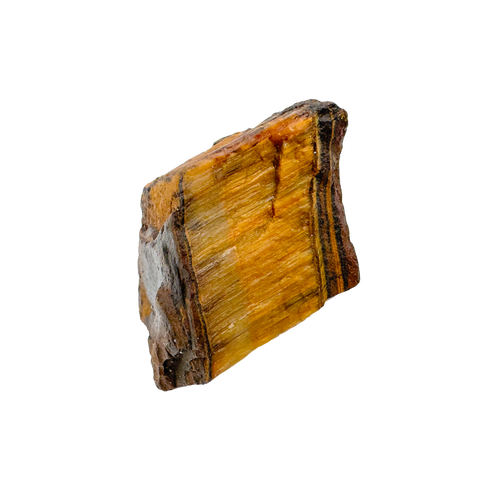
A moving band of light across a polished stone, caused by parallel fibers or channels inside it. Tiger eye is the everyday example. A sharp, single line is the mark of good chatoyancy.
AsterismStar effect
A star of crossing light rays on a domed stone, from inclusions arranged along two or more directions. Seen in star sapphire and some rose quartz cut as cabochons.
Adularescence
The soft blue-white glow that seems to float just under the surface of moonstone. It comes from light scattering between microscopic layers within the feldspar, not from anything on top of the stone.
Labradorescence
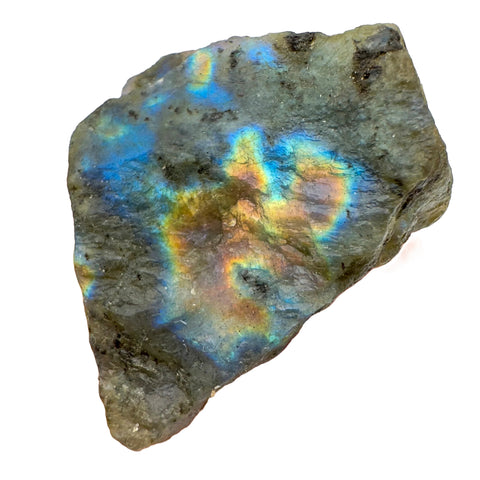
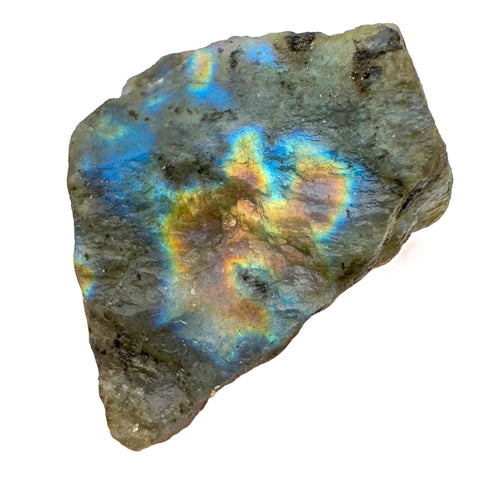
The flash of blue, green, and gold that moves across labradorite as you tilt it. A structural effect from light bouncing between internal layers, which is why it appears and vanishes with the angle.
Aventurescence
A glittery shimmer from tiny reflective mineral flecks, most familiar in aventurine and sunstone. Natural aventurescence is subtle. A dense, uniform sparkle can be a sign of manufactured glass (goldstone).
Iridescence
Rainbow color caused by light splitting inside thin internal layers or fractures, as in rainbow obsidian or the internal rainbows in clear quartz. Distinct from a surface coating, which sits on the outside.
Pleochroism
When a stone shows different colors from different viewing angles, because it absorbs light differently along each crystal axis. Iolite is the classic case, shifting from violet-blue to near colorless.
What's happening inside the stone
Words for the physical makeup of a specimen: how it grew, what grew inside it, and what it grew on. Inclusions are natural and often the point, not a flaw.
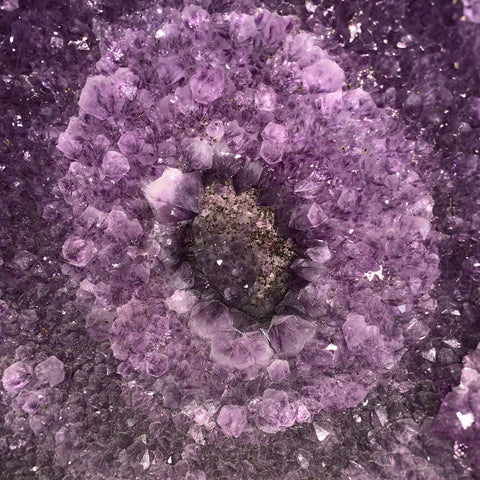
DruzyAlso drusy
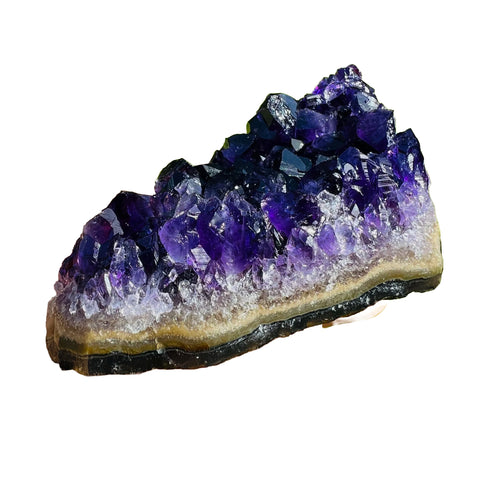
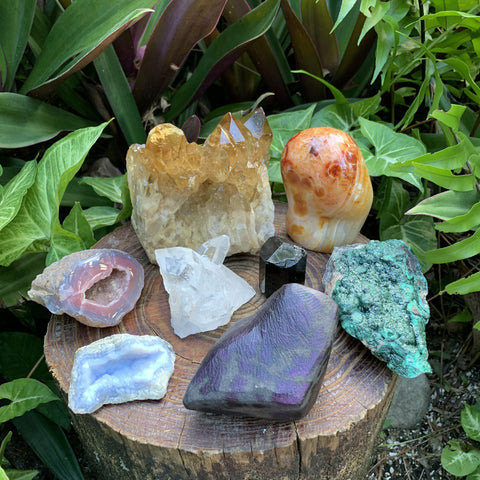
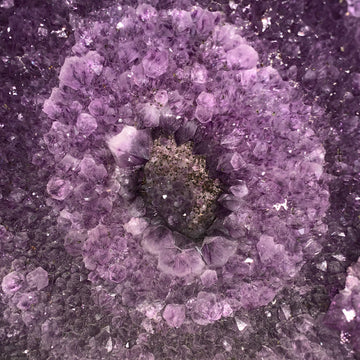
A carpet of tiny crystals coating a surface, like the sparkling interior of a geode. A natural growth texture, valued for its sugar-like glitter.
Geode
A hollow rock lined on the inside with crystals that grew inward from the walls. Amethyst and agate geodes are the common ones. Cracked or cut open, they reveal the crystal cavity.
Vug
A small cavity or pocket inside a rock, often crystal lined. A geode is essentially a large, rounded vug.
Inclusion
Anything trapped inside a crystal as it formed, from mineral threads to gas or liquid. Inclusions are natural fingerprints and are one of the clearest ways to tell a real stone from glass.
Phantom
A ghost of an earlier crystal outline visible inside a larger crystal, marking a pause in its growth. A phantom is one of the more reliable signals that a quartz point is natural, not molded.
Matrix
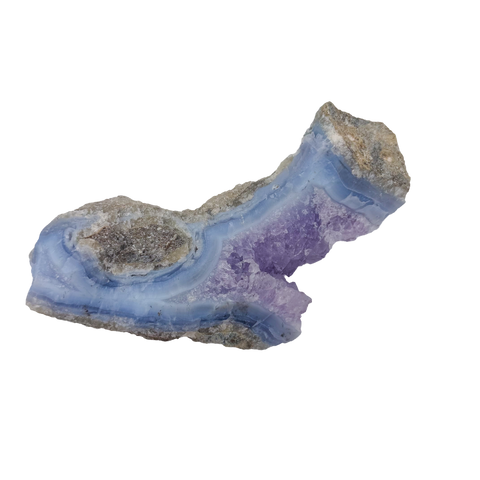
The host rock a crystal grew on or in. A specimen sold on matrix keeps its natural base, which many collectors prefer to a crystal broken free of it.
Botryoidal
A bubbly, grape-cluster surface formed by rounded mineral growth, seen in malachite and hematite. The word comes from the Greek for a bunch of grapes.
Enhydro
A crystal with a sealed pocket of water (and sometimes a moving bubble) trapped inside since it formed. Genuine enhydros are uncommon and the bubble should move when tilted.
Included quartz
Clear quartz carrying visible internal material, such as the red threads of rutile or the green of chlorite. Sold under names like rutilated or lodolite, and covered in our trade names guide.
Banding
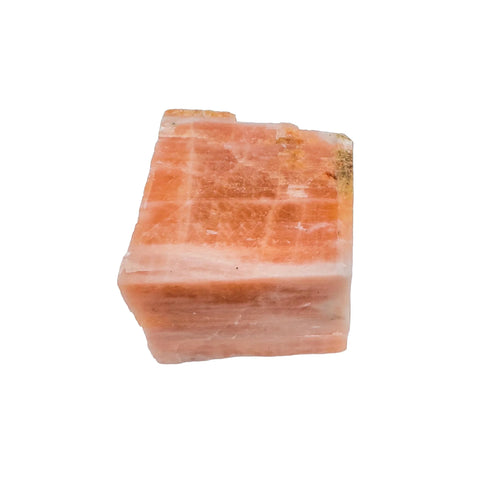
Distinct layers or stripes of color, characteristic of agate and banded amethyst. Even, natural banding follows the contours of the stone. Suspiciously uniform bands can signal dye.
The shapes a stone is sold in
How a raw mineral is finished for sale. The form changes the price and the use, not the mineral itself. Each of these gets a fuller treatment in our shapes and forms guide.
RawRough
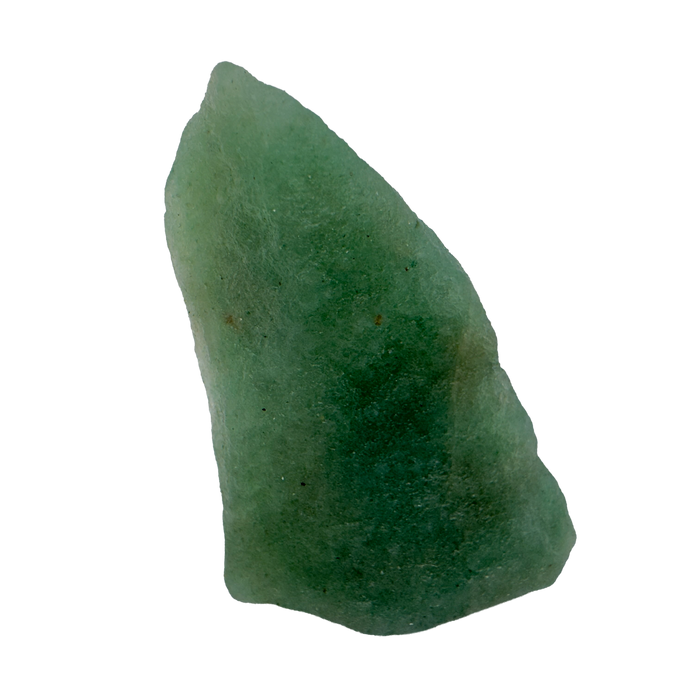
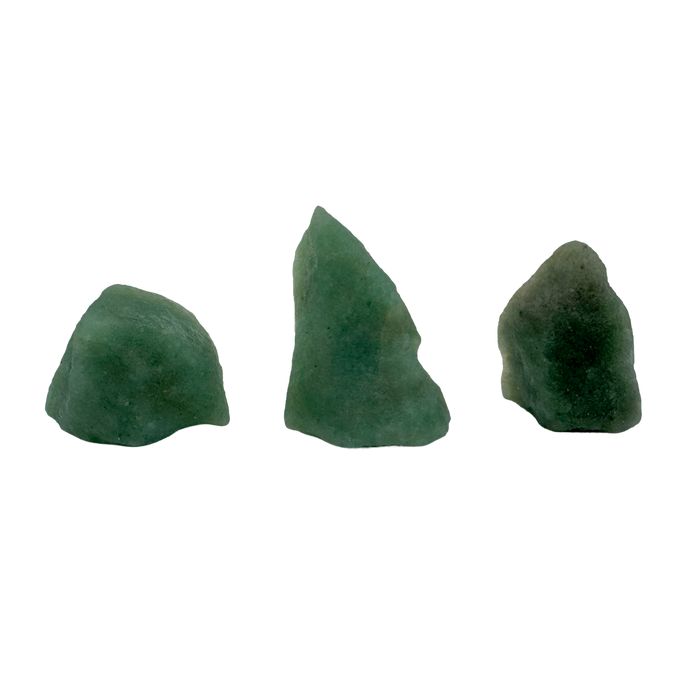
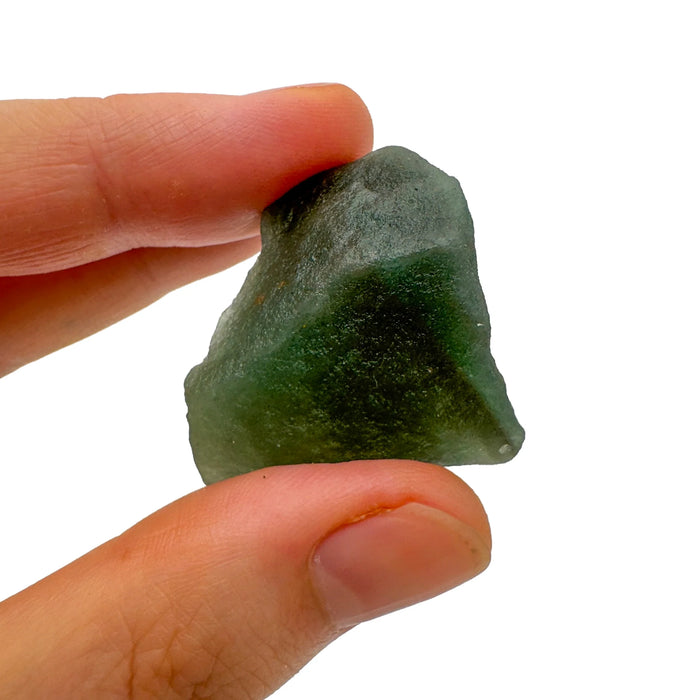
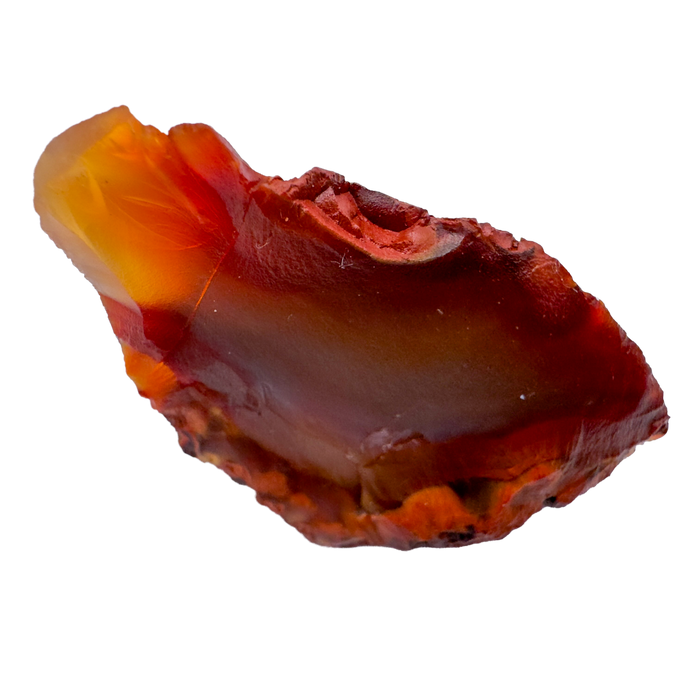
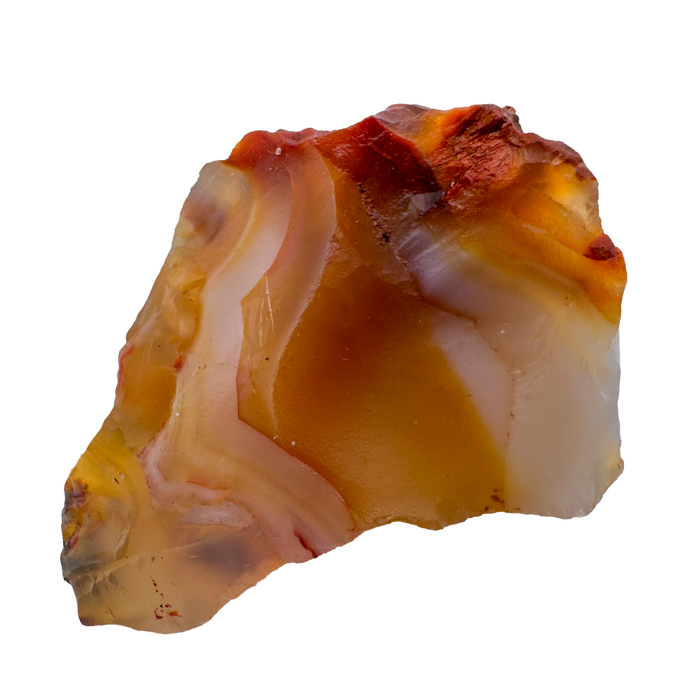
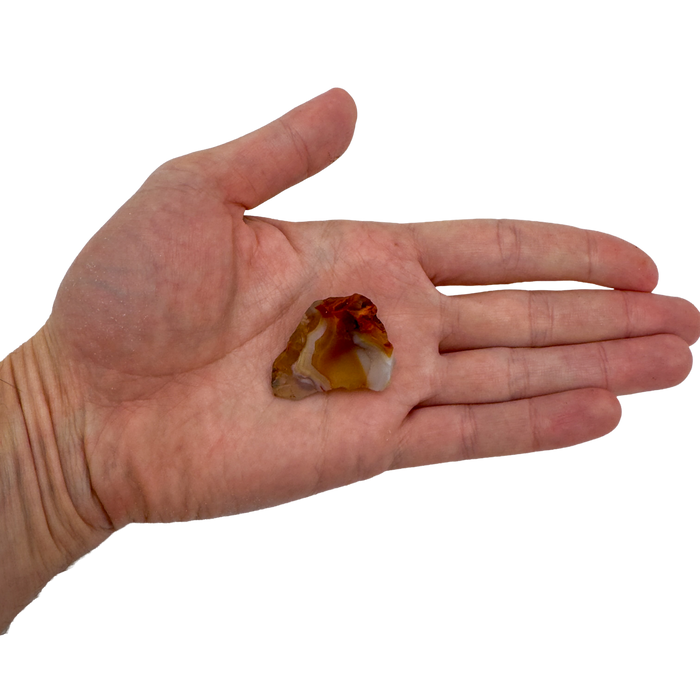
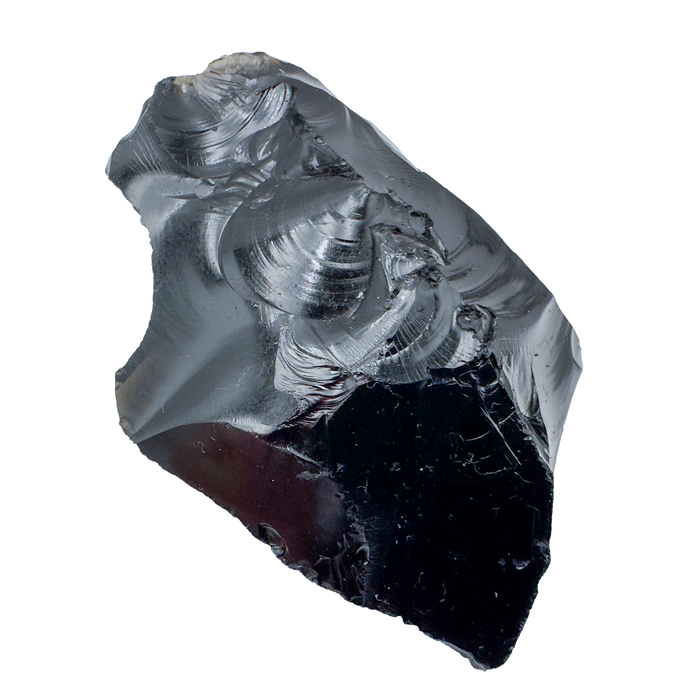
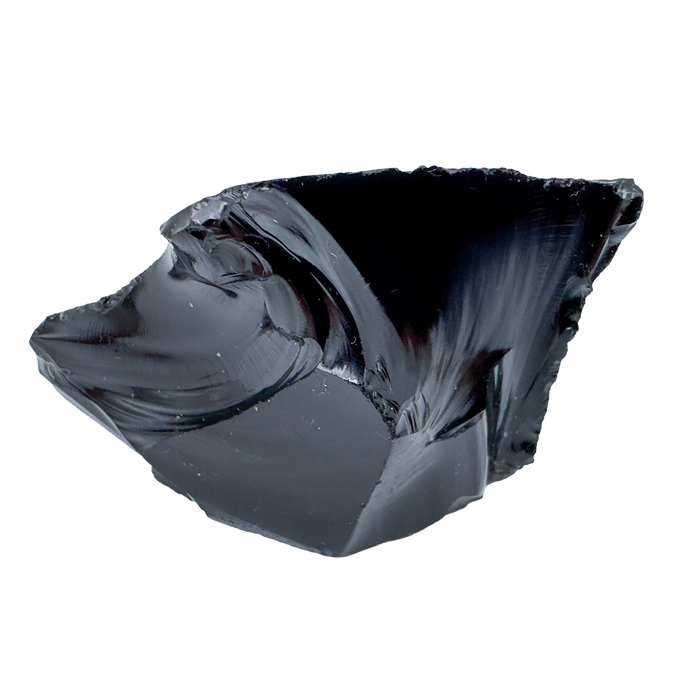
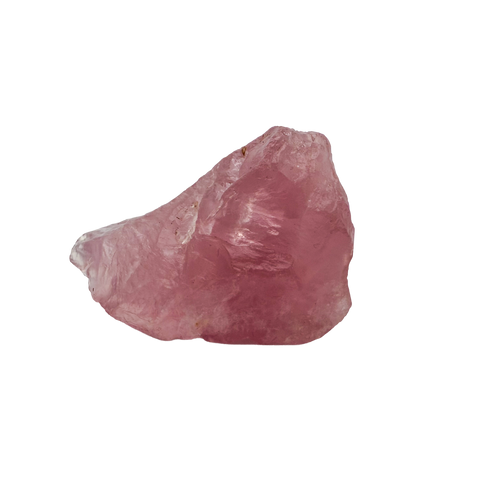
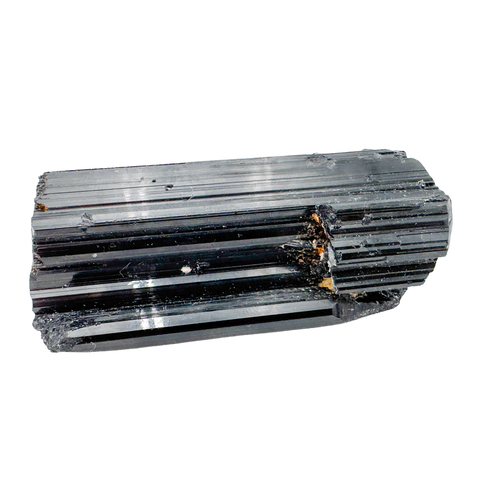
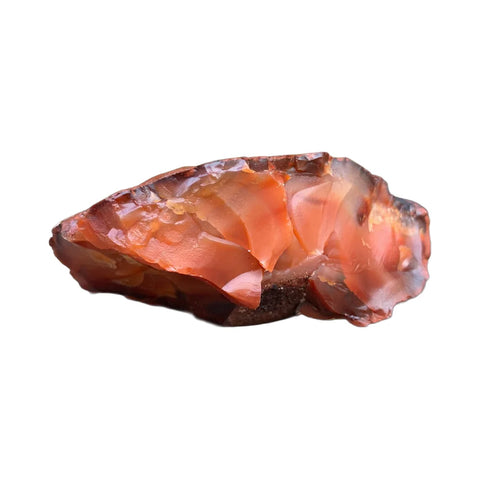
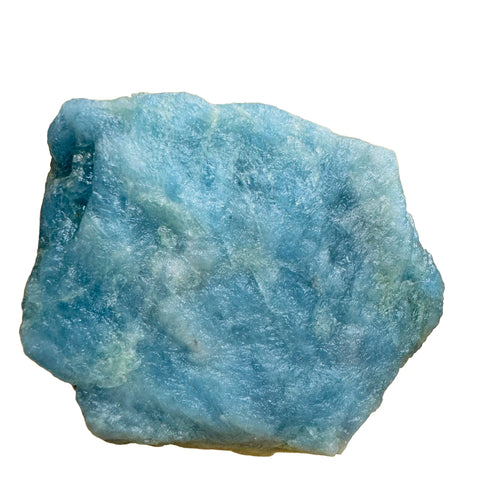
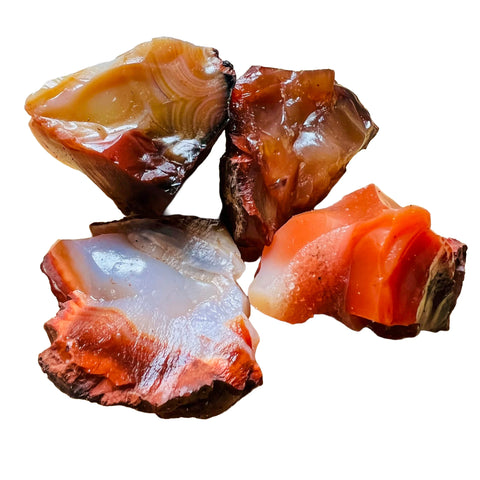
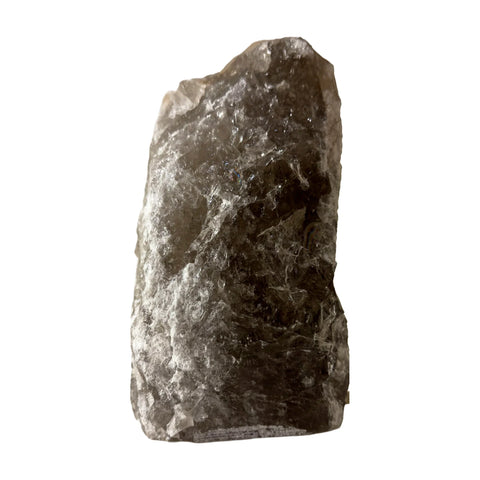
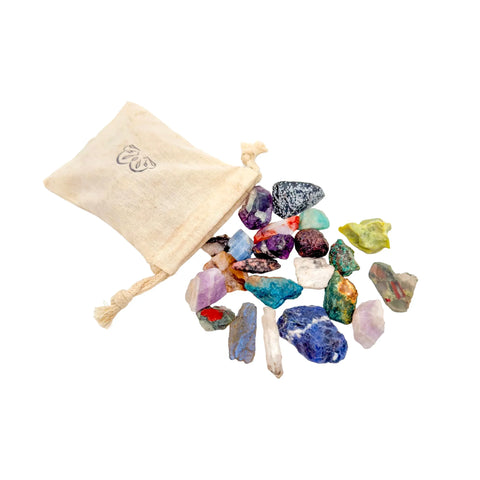
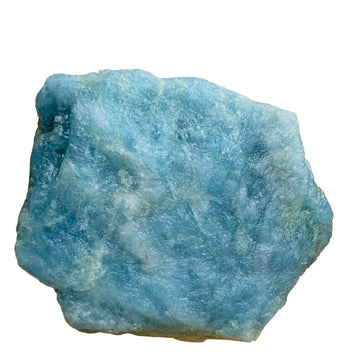
Unpolished, in the natural form it came out of the ground. No cutting or tumbling, so you see the stone as it grew.
Tumbled
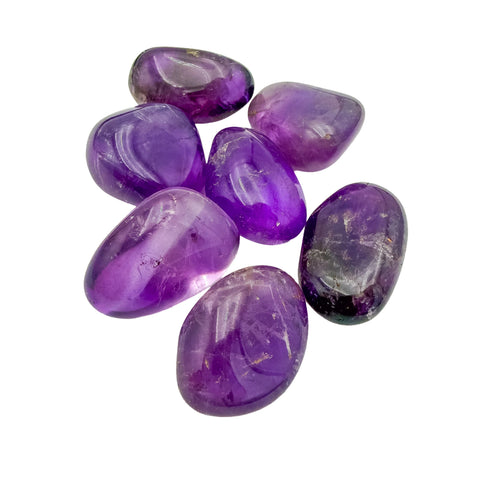
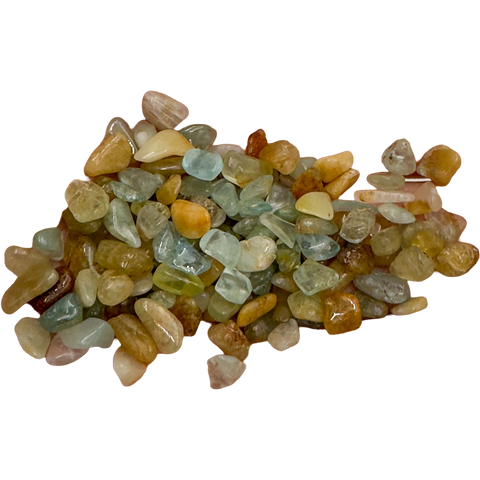
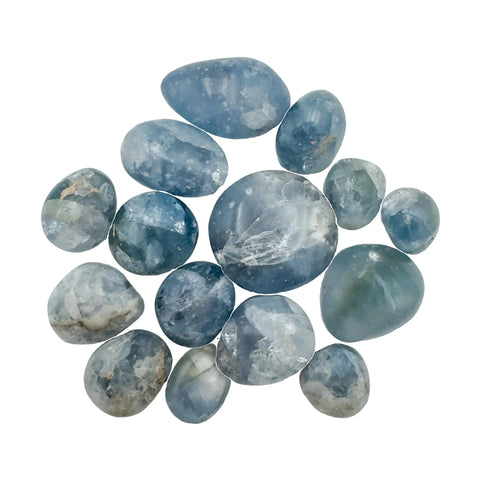
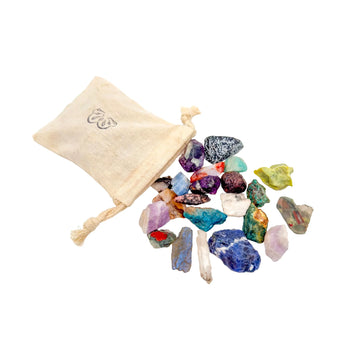
Small stones polished smooth in a rotating barrel with grit over days or weeks. The rounded, pocket-friendly form most people picture first.
PointTower, generator
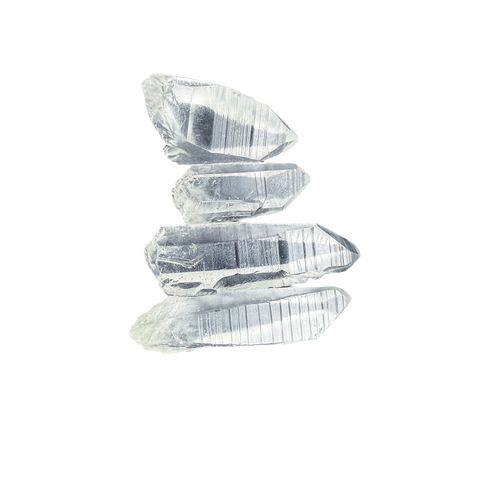
A stone cut or grown to a single terminated tip. A tower is a tall point with a flat base that stands on its own. A generator is a symmetrical, six-faced point.
Cluster
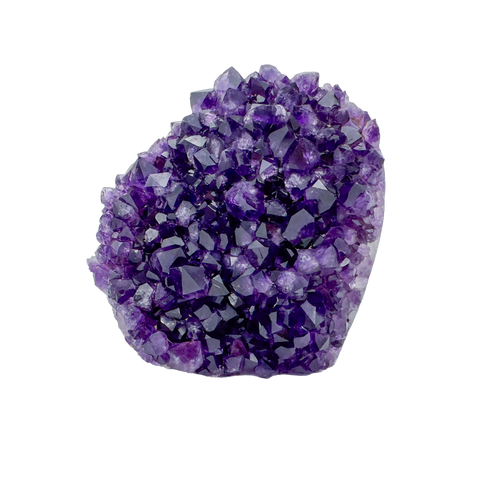
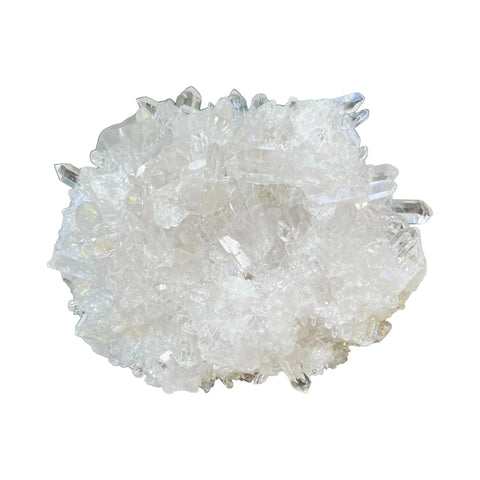
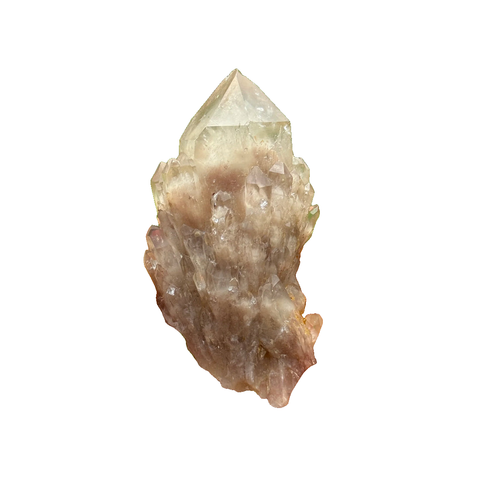
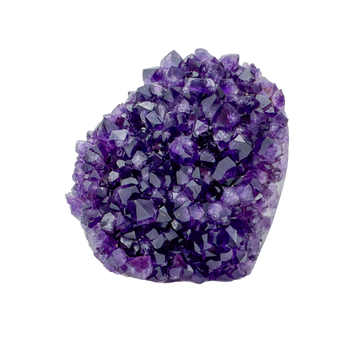
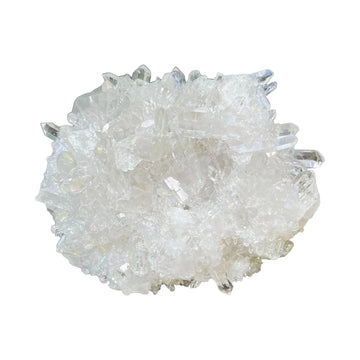
Many crystals sharing one base, grown together naturally. Amethyst and clear quartz clusters are common. Nothing is cut to shape; the arrangement is as it formed.
Sphere, cabochon, freeform, and more
The full set of finishes, including spheres, cabochons, freeforms, slabs, and hearts, with what each is best for and how it is made, is covered on our shapes and forms guide.
How quality and size get described
Grading vocabulary is not standardized across the industry, so the same letters can mean different things at different shops. Here is what the terms point to, and how we use them.
Mohs hardness
A one-to-ten scratch-resistance scale. Quartz sits at 7, calcite at 3, selenite at 2. It tells you which stones are safe in water or handling, which is why we list it. See our grading guide.
Grade (A, AA, AAA)
A shorthand for a specimen's color, clarity, and finish relative to others of the same stone. There is no universal standard, so a grade is only as honest as the seller. We define ours explicitly.
Carat vs gram
Carats measure faceted gemstones (one carat is 0.2 grams). Crystals and specimens are usually sold by the gram or by size in inches. If a specimen is priced by the carat, it is being positioned as a gem.
Gem grade
Transparent, clean material good enough to facet, as opposed to opaque specimen material. A gem-grade label should mean real transparency, not just a high price.
Things done to a stone after it's mined
This is the category that matters most for knowing what you're buying. A treatment is not automatically bad, and several are standard and stable. What matters is that it's disclosed. Each term links to the full explanation.
Heat treated
Heated to deepen or change color. Most commercial citrine is heat-treated amethyst, and a lot of carnelian is heated agate. Stable and common, but it should be labeled. See which stones are heated.
Irradiated
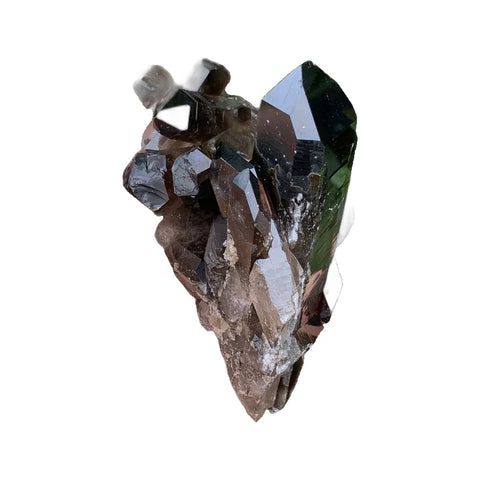
Exposed to radiation to alter color, as with some deep smoky quartz (morion) and certain blue topaz. The result is stable and safe to handle. Covered in our morion guide.
Dyed
Color added with a pigment or stain, common on porous stones like agate and howlite. Tell-tale signs are color pooling in cracks and unnaturally vivid tones. See how to spot dyed stones.
CoatedAura
A thin metallic layer bonded to the surface for an iridescent sheen, sold as angel aura, aqua aura, and flame aura. The color is on the outside, not in the stone. Full detail in aura crystals explained.
Stabilized
Soft or crumbly material (often turquoise) hardened with resin so it can be cut and worn. A legitimate, disclosed process, but stabilized turquoise is not the same value as natural. See real vs fake turquoise.
Reconstituted
Ground stone fragments mixed with binder and pressed into a solid block, then cut. It contains real mineral but is a manufactured composite, not a natural specimen.
Oiled or filled
Fractures filled with oil, wax, or resin to hide them and improve clarity. Standard on some emerald, but it changes durability and needs disclosing. See gem treatments.
Lab-grownSynthetic, hydrothermal
Grown in a lab, chemically identical to the natural stone but formed in weeks instead of ages. Common for quartz and amethyst. Not a fake, but it is not natural, and price should reflect it. See lab-grown vs natural.
Words that sell more than they describe
Some names in the trade are geology. Others are invented for the market and tell you little about the stone. Knowing which is which keeps you from paying a rarity price for a common mineral.
Trade name
A marketing name that is not a recognized mineral, coined to make material sound rarer or more exotic. Not dishonest by default, but worth translating back to the actual stone.
Commercial citrine
Nearly all bright, uniform citrine on the market is heat-treated amethyst. Natural citrine is paler and genuinely uncommon. We label ours as natural or note the treatment, never blur the two.
Lemurian, Super Seven, and similar
Evocative names for specific quartz or mixed material, often carrying a rarity premium. We break down what each one actually is in trade names decoded.
Misnomer
A common name that is geologically wrong, such as calling a manufactured glass a stone. The name sticks in the trade even when it points to the wrong material.
Every listing we write names the mineral, the country of origin, and any treatment it has had, in plain language. If a stone is heated, dyed, coated, stabilized, or lab-grown, that word appears on the page. If a name is a trade name rather than a mineral, we say so.
The point of this glossary is not to make anyone an expert. It is to let you read any crystal listing, ours or anyone else's, and know what is a natural property, what was done to the stone, and what is simply a good piece of marketing.
Frequently asked
What does AAA grade mean for a crystal?
It is a seller's shorthand for a top-quality specimen of that stone, not an industry standard. No official body grades crystals, so AAA at one shop may not match AAA at another. Treat it as a relative label and ask what it means before paying for it.
Is lab-grown amethyst real amethyst?
Chemically, yes. Lab-grown amethyst is the same material as natural, just formed in a lab in weeks rather than in the ground over ages. It is not a fake, but it is not natural either, and the price should reflect that. The only real issue is whether it is disclosed.
Is heat-treated citrine real citrine?
It is real quartz, but most bright citrine on the market is amethyst that has been heated until it turns golden. Natural citrine is paler and uncommon. Neither is fake. What matters is that the treatment is labeled, which is why we separate natural from heated.
Are dyed crystals real stones?
The stone underneath is usually real, but the color has been added, most often on porous stones like agate and howlite. Vivid, neon tones and color pooling in cracks are the giveaways. Dye is fine when disclosed and a problem when a dyed stone is sold as naturally that color.