























































The focus shelf is almost entirely blue, and three of the stones on it are named after other minerals. What sodalite, lazulite, and blue apatite actually are, and which one to keep off your keyring.
Crystals for Focus: Three Blue Stones and a Naming Problem

The focus shelf is almost entirely blue, and the blue is where the trouble starts. Three of the stones sitting on it have names that point at other stones, or at nothing in particular. One is routinely sold as lapis lazuli. One is a single letter away from a completely different mineral. One is named, in Greek, after the act of deceiving people. None of that is a scandal. It is just what happens when a trade names things by color before anyone runs the chemistry.
Sodalite
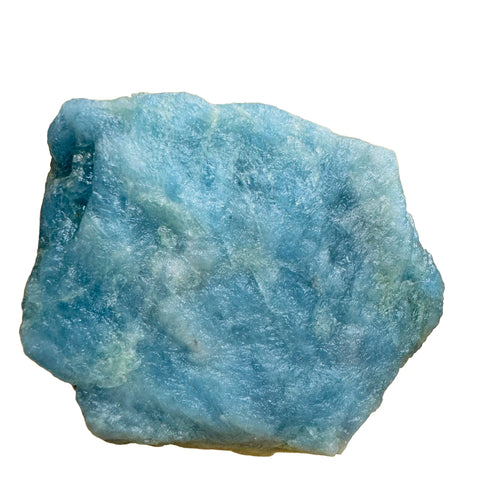
Sodalite is a sodium aluminum silicate, around 5.5 to 6 on the Mohs scale, and it is the stone most often handed over when someone asks for lapis lazuli. The confusion is more reasonable than it looks. Lapis lazuli is not a mineral at all, it is a rock, and the blue in it comes from lazurite, which belongs to the same mineral group as sodalite. Sodalite itself frequently turns up inside lapis. So the two are genuinely related, and they are still not the same thing to buy. Lapis carries gold flecks of pyrite and usually white calcite. Sodalite runs a flatter blue with white veining and no metallic glint. Ours is tumbled from Kunene, Namibia. The sodalite guide goes further.
A note on fluorite
Fluorite is the stone most lists put first for focus, and it earns the spot. It has its own fluorite guide covering the color banding, the perfect cleavage in four directions, and why it chips more easily than people expect. This piece spends its time on the three that get skipped.
Lazulite
Lazulite is a magnesium iron aluminum phosphate, roughly 5.5 to 6 on the Mohs scale, and it is separated from lazurite by exactly one letter. They are not related minerals. Lazurite is a silicate and the blue of lapis. Lazulite is a phosphate and its own thing entirely, usually a deeper and more slate-toned blue. Both names trace back to the same old root word for blue, which is how two unrelated minerals ended up nearly sharing a name and confusing buyers ever since. It is uncommon enough that most shops never stock it. Ours is tumbled from Amoron'i Mania, Madagascar. More in the lazulite guide.
Blue Apatite
Apatite is a calcium phosphate, and its name comes from the Greek word for deceiving, given to it because it was so often mistaken for beryl, tourmaline, and olivine. The name is a warning label written into the mineral. It sits at 5 on the Mohs scale, and not approximately: apatite is the reference mineral that defines 5, so it is the yardstick other stones get measured against. That also makes it soft. It scratches on a keyring and it does not enjoy being tumbled in a bag with quartz. The other thing worth knowing is that apatite is the mineral your own teeth and bones are built from, in the hydroxyapatite form. Ours is tumbled from Anosy, Madagascar. The apatite guide has the rest.
Sodalite
Lazulite
Blue Apatite
If you want to see the difference in person, a raw sodalite shows the white veining more honestly than a polished piece does, a tumbled lazulite is the easiest way to hold the two blues side by side, and a tumbled blue apatite is the one to keep away from your keys. The rest of the shelf is in the focus collection.
What focus means here
Focus is not something a stone performs on your behalf. The older and plainer version is that you put an object on the desk, and the object is a marker for a decision you already made about what the next hour is for. People have used objects that way for a very long time and it does not need a mechanism to be worth doing. What we can tell you is which mineral you are actually holding, where it was mined, and whether anyone treated it. That is on our sourcing page, and the wider list for this intention is on crystals for focus. If the naming problem is the part that interests you, the crystal glossary covers trade names in general.