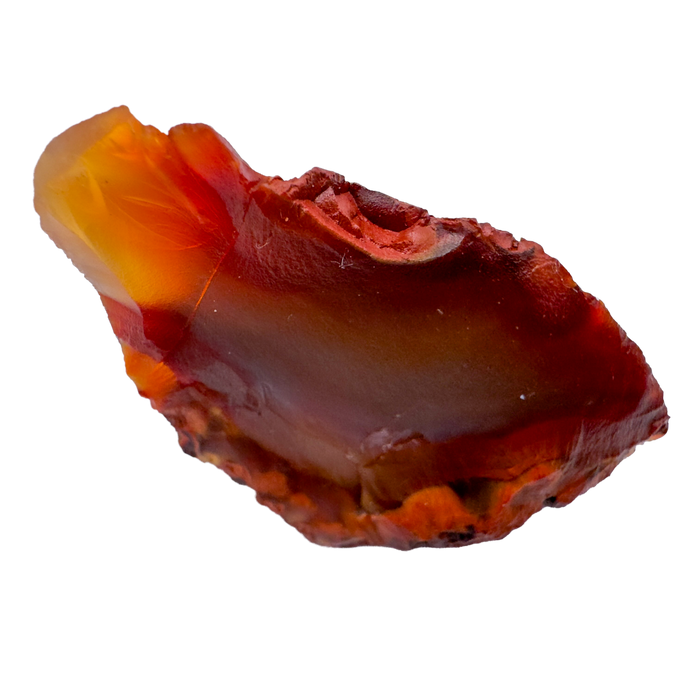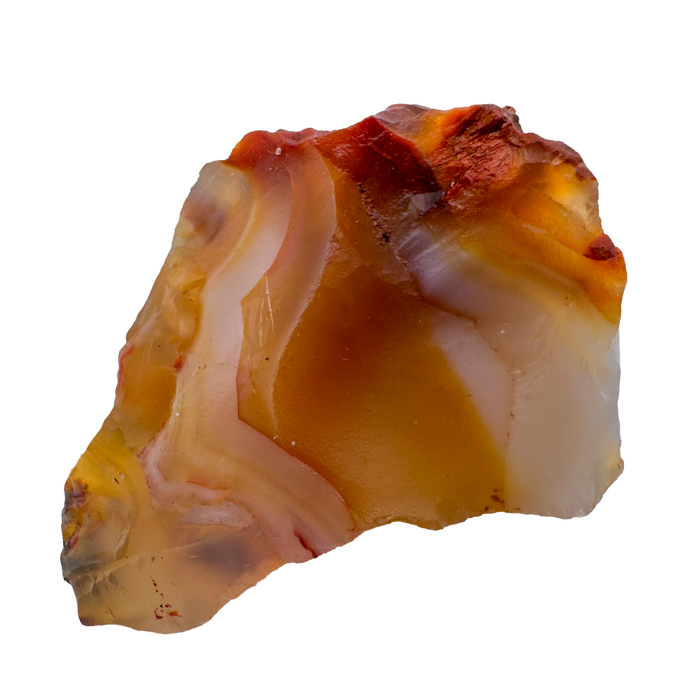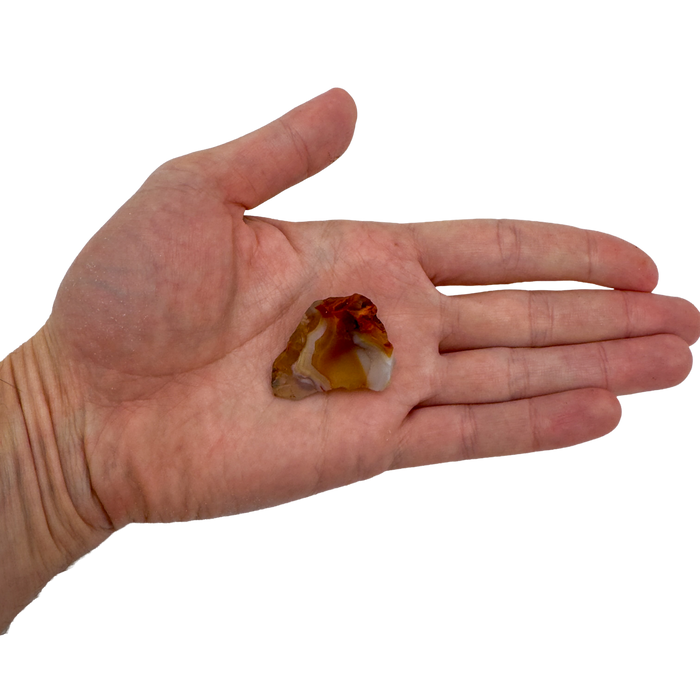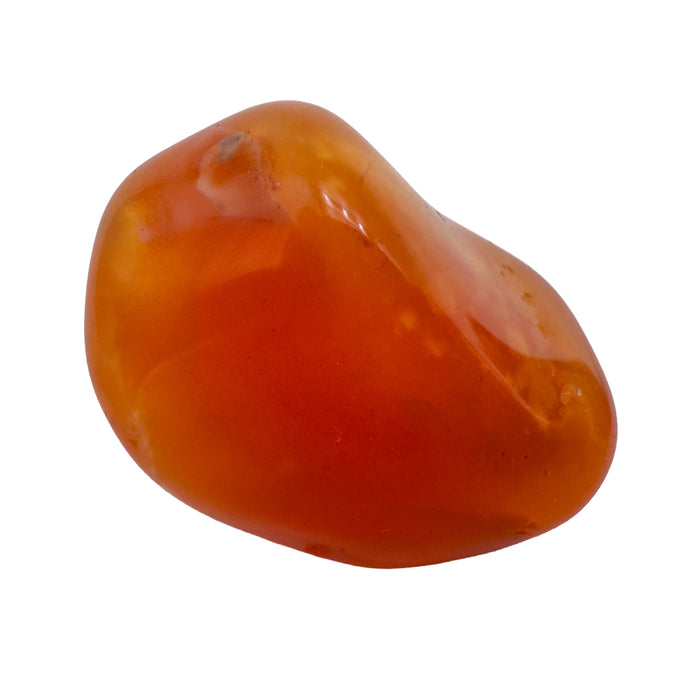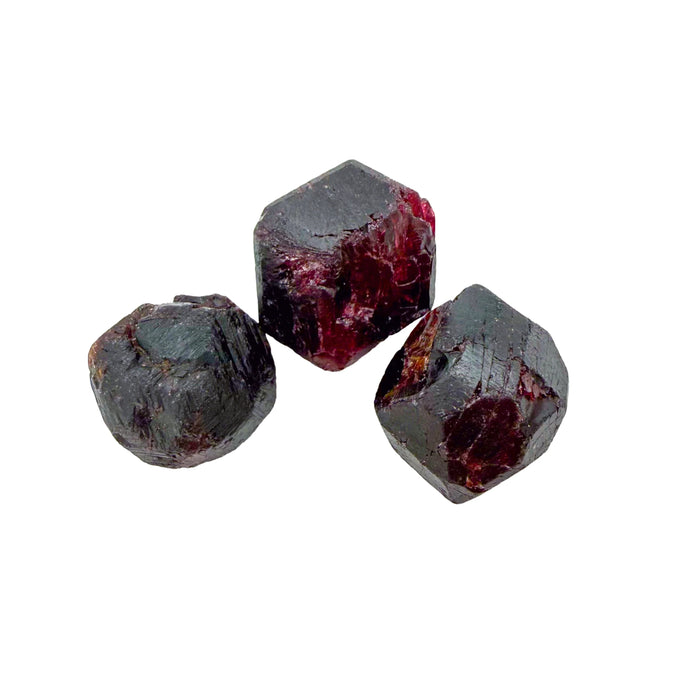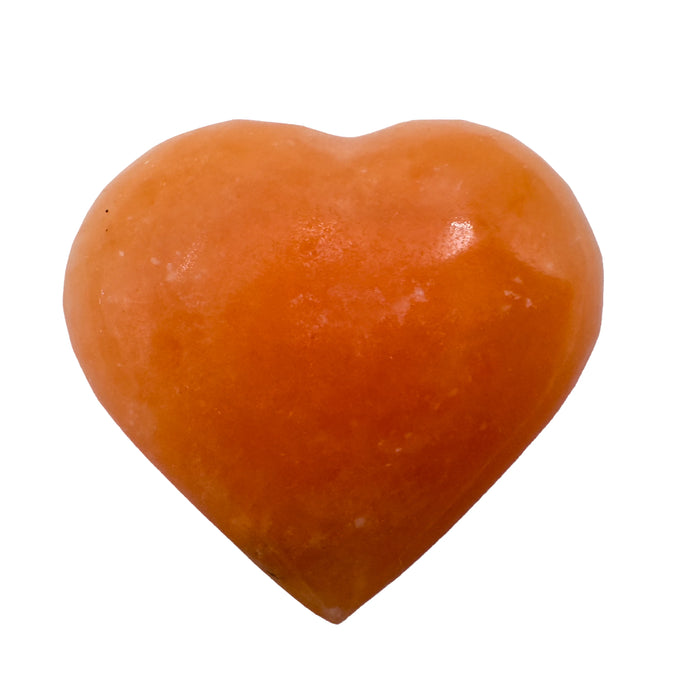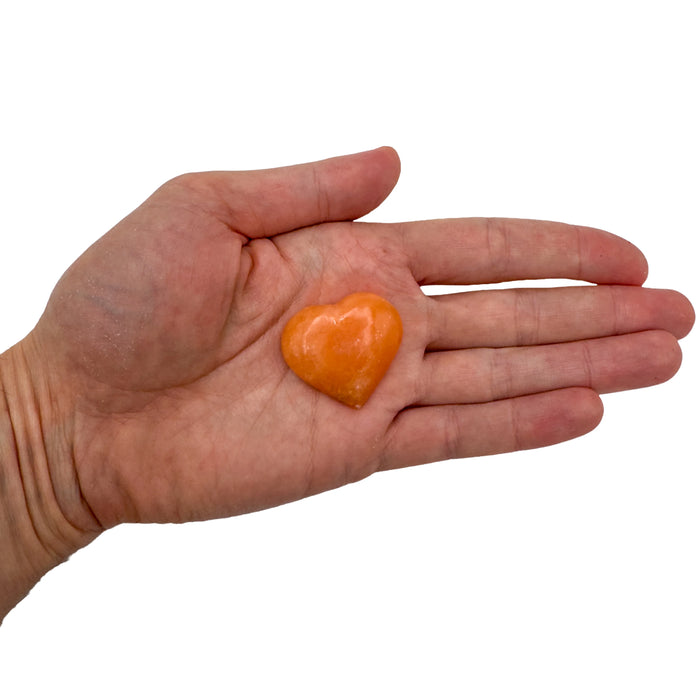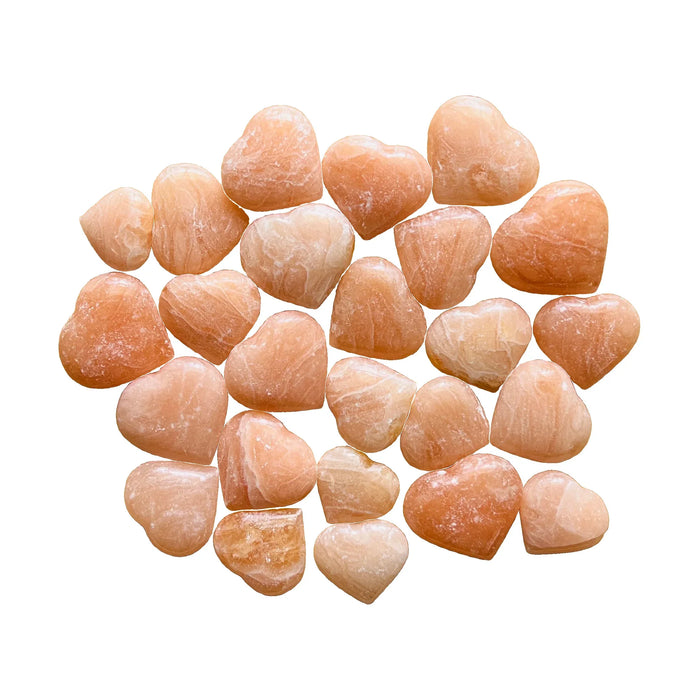
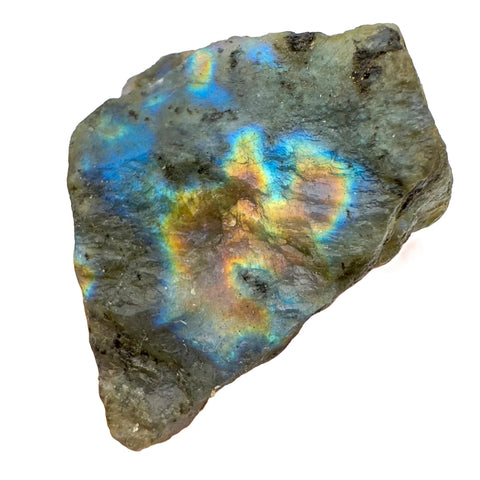
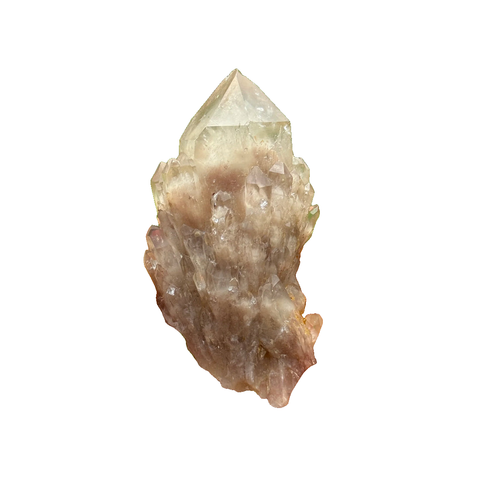
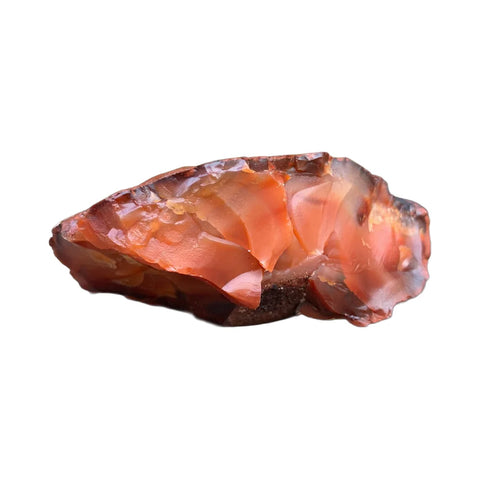
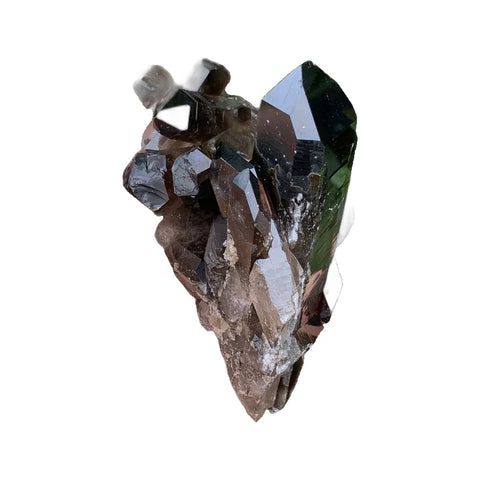






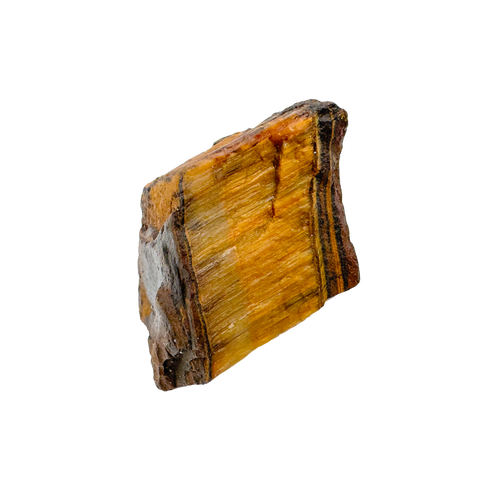
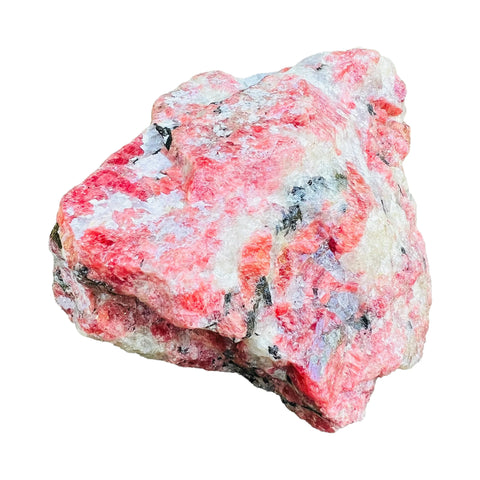
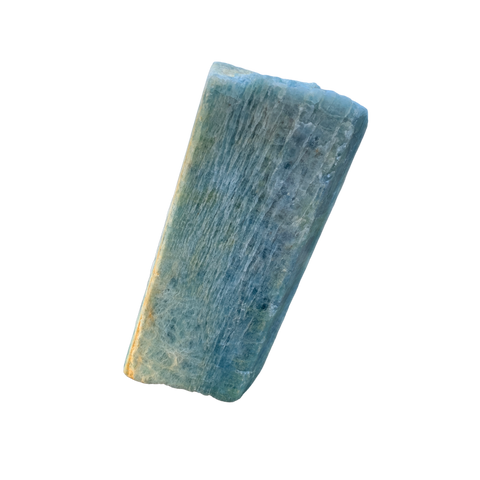
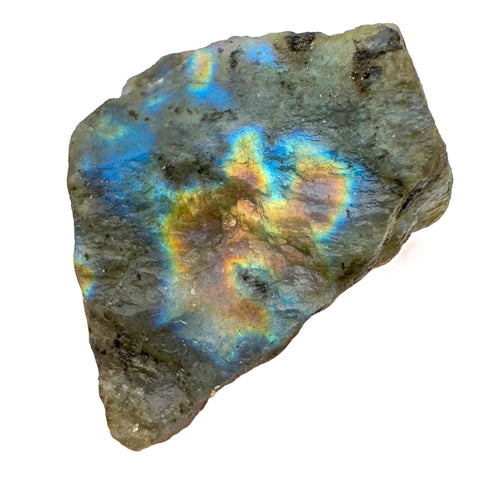





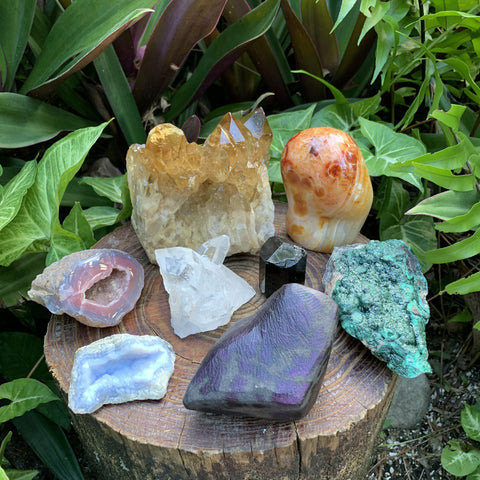
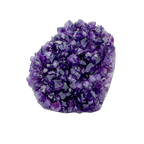

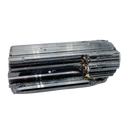
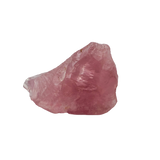
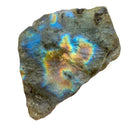
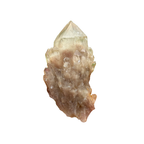
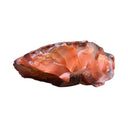
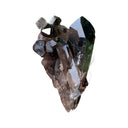
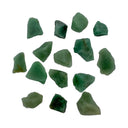

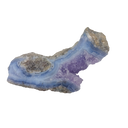

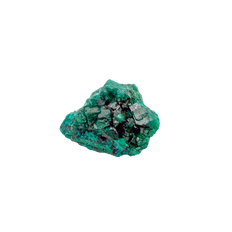
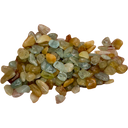
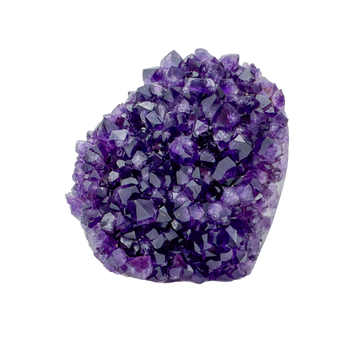
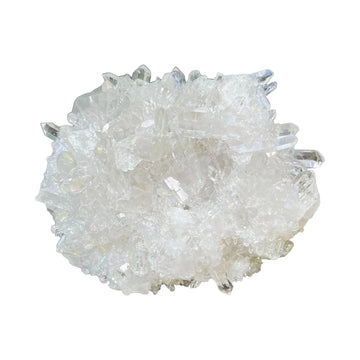
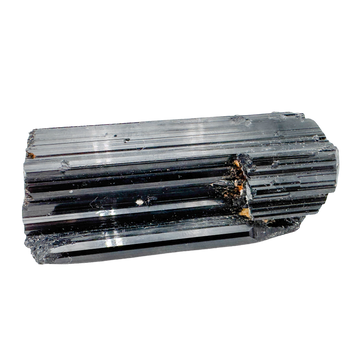
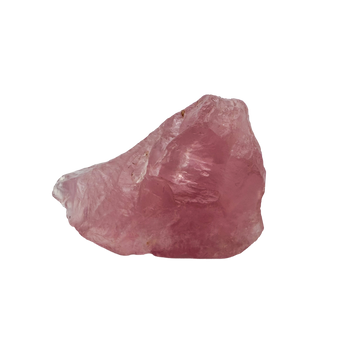
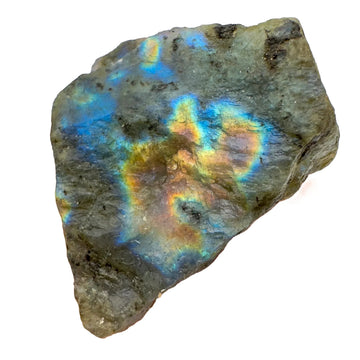
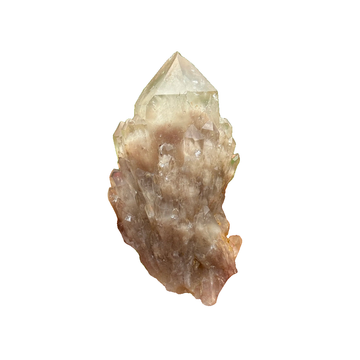
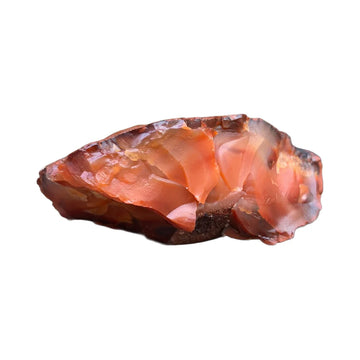
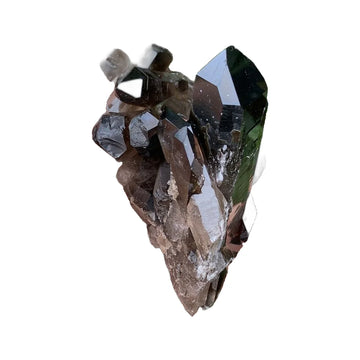




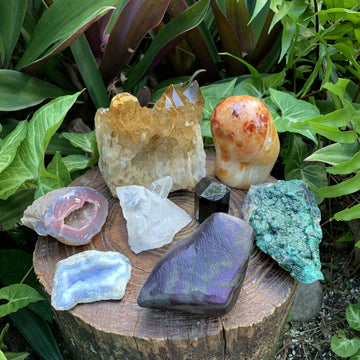
Three red stones from the energy shelf, and three different places the red actually sits. Bloodstone, fire quartz, and garnet by mineral, origin, and hardness.
Crystals for Energy: Where the Red Actually Lives

Pick up three stones from the energy shelf and they are all some version of red. That is the whole reason they ended up in the same category. What almost nobody explains is that the red arrives three completely different ways, and where it sits inside the stone is the thing that decides how the piece looks, how it wears, and whether the pattern you liked in the photo will still be there when you turn it over.
Bloodstone
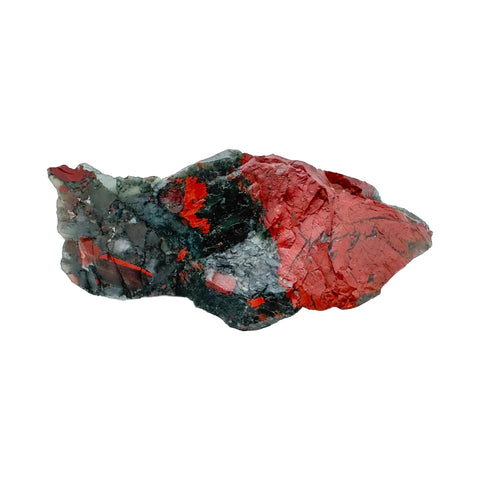
Bloodstone is green first and red second, which is backwards from the name. The body of it is chalcedony, the same fine-grained quartz that makes agate and carnelian, sitting around 6.5 to 7 on the Mohs scale. The green comes from included minerals spread through the whole mass. The red is separate: individual spots and splashes of iron oxide dropped into the green like paint flicked off a brush. That is why no two pieces match and why some stones have three red marks and others have thirty. Its older name is heliotrope. Ours is tumbled from Hhohho, Eswatini, and it is natural and untreated. The bloodstone guide covers the rest.
Worth knowing before you shop: dragon bloodstone is a different material with a similar name, not a grade or variety of this one. We stock both, and the trade names article explains why that pattern shows up across the whole industry.
A note on carnelian
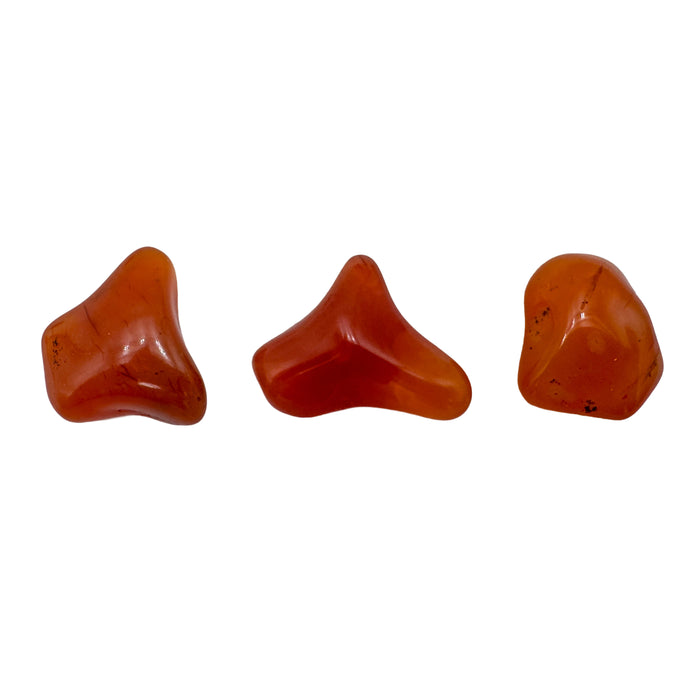
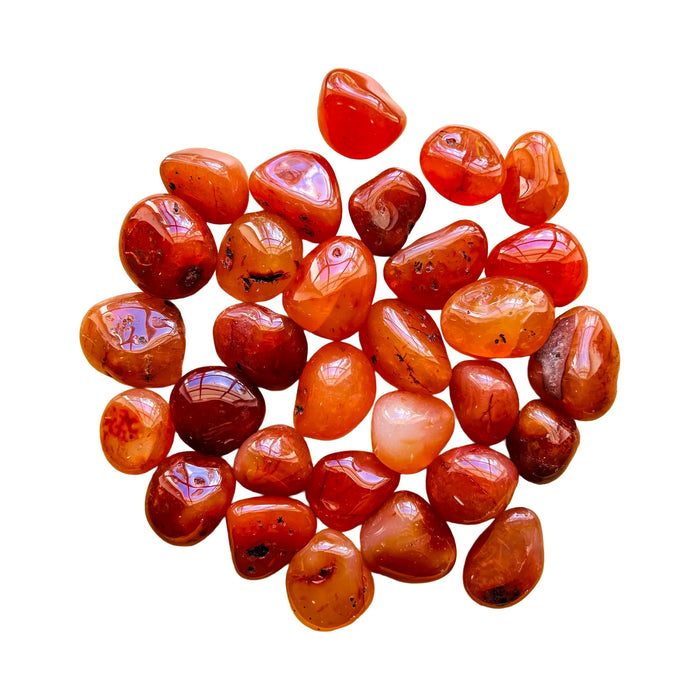
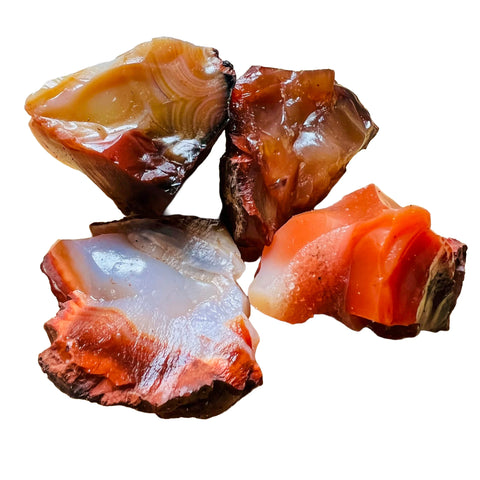
Carnelian is the stone most energy lists lead with, and it fits this same story exactly, since its orange is iron oxide staining the chalcedony throughout rather than sitting in spots. We covered it at length in why carnelian broke out and put it head to head with sunstone in carnelian vs sunstone. Those stand on their own, so this piece leaves them there.
Fire Quartz
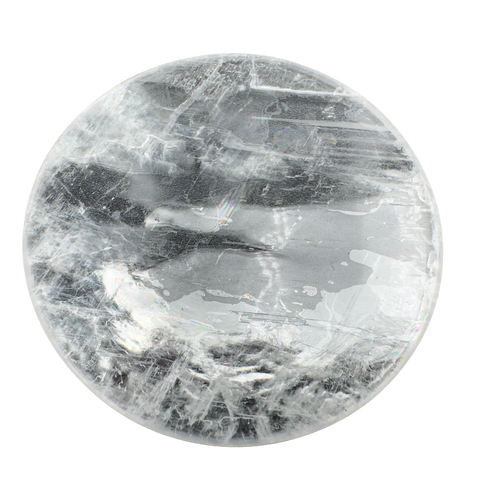
Fire quartz is clear quartz with hematite trapped inside it. The trade also calls it hematoid quartz, which is the more literal name. Quartz sits at 7 on the Mohs scale and the hematite came along while the quartz was still growing, so the red and orange you see is suspended in the interior rather than coating the surface. Hold a piece up to a window and you can usually see straight past the color into clear stone. That is the tell, and it is also why polishing does not remove the pattern the way it would with a surface stain. Ours is tumbled from Alaotra-Mangoro, Madagascar. More in the fire quartz guide.
Garnet
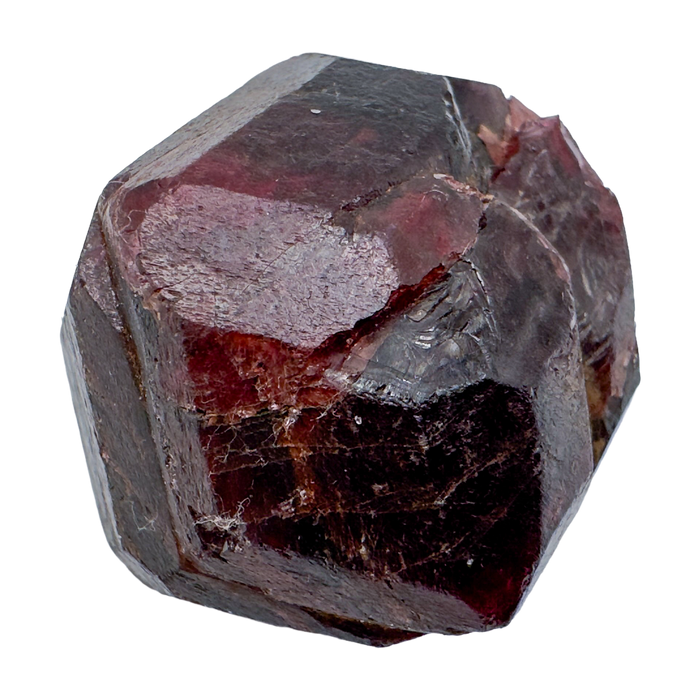
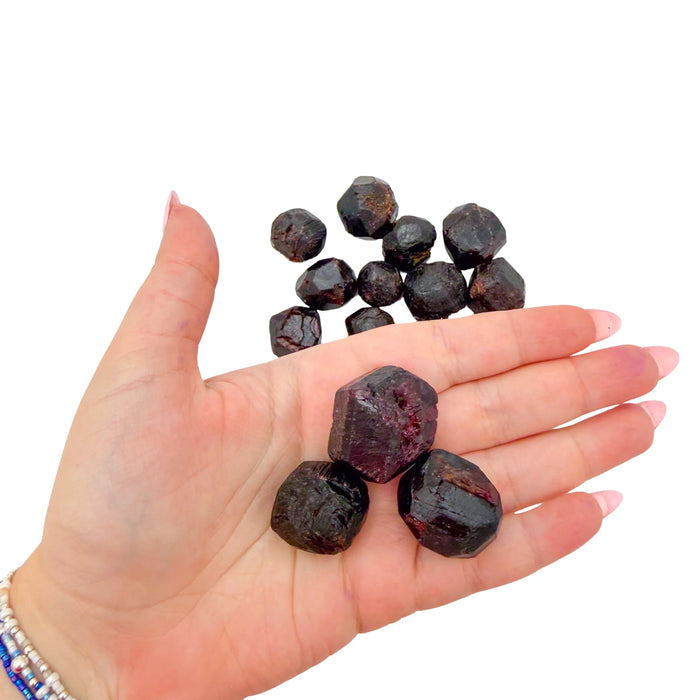
Garnet is the one where the color is not an inclusion or a stain at all. It is built into the crystal itself. Garnet is also not a single mineral: it is a family of related silicates that share a crystal structure and swap out which metals sit inside it, which is why garnets run red, orange, green, and nearly black depending on the recipe. The red ones get their color from metals held in the structure, so the color goes all the way through and cannot flake, wear off, or sit unevenly. At 7 to 7.5 on the Mohs scale it is the hardest of the three here and the least fussy to carry. Ours is tumbled from Minas Gerais, Brazil. The garnet guide has more.
Bloodstone
Fire Quartz
Garnet
If one of the three is calling, a raw bloodstone shows the red spots without a polish smoothing them over, a raw fire quartz is the one to hold up to a light, and a tumbled garnet is the one that will take being carried every day. The rest of the shelf is in the energy collection.
What energy means here
Energy is not something a stone supplies to a person. The tradition behind it is simpler than the word suggests. Red and warm-colored stones have been picked up and kept close for a long time, in a lot of places, largely because people like looking at them and because holding a small bright object is a reliable way to change what you are paying attention to. That does not require a mechanism to be worth doing. What we can tell you is which mineral it is, where it was mined, and whether anyone did anything to it. That is on our sourcing page, and the wider list for this intention is on crystals for energy. Terms like chalcedony and inclusion are unpacked in the crystal glossary.