







Dendritic agate and dendritic opal look like trapped ferns. The branches are manganese oxide, not fossils, and there is a tell you can see. Prehnite is the one where the growth is genuinely its own.
Crystals for Healing: The Fern Inside Is Not a Fern

Three stones on the healing shelf look like something living got trapped inside them. Ferns, moss, tiny black trees. Two of them are not fossils and never were, and the branching has a physical explanation that is more interesting than the marketing. The third one has nothing inside it at all, and what looks like frozen growth is the crystal itself.
Dendritic Agate
Dendritic agate is chalcedony, a quartz built from crystals too small to see, carrying dark branching figures that read as ferns or bare winter trees. Those figures are called dendrites, and they are manganese and iron oxides that crystallized in hairline fractures as mineral-rich water seeped through the stone. Nothing was ever alive. Geologists call this kind of pattern a pseudofossil, and there is a tell you can use with your own eyes: the branches of a dendrite do not overlap or cross each other, because each one grew into space the others had not reached yet. A real plant pressed into rock will show overlapping fronds. The stone itself is 6.5 to 7 on the Mohs scale, so it takes daily handling without much thought. Ours is tumbled from Betsiboka, Madagascar, natural and untreated, which is worth naming because a lot of dendritic agate on the market is dyed to sharpen the contrast. The dendritic agate guide goes further.
Dendritic Opal
Dendritic opal is the same phenomenon in a different container. The dendrites form the same way, in the same kind of fracture, from the same oxides. What changes is the host. Instead of chalcedony this is opal, which is hydrated silica, and the difference shows up in the hardness. At 5.5 it is more than a full point softer than the agate, and a point on the Mohs scale is a much bigger gap than it sounds, because the scale is ordinal rather than even. Practically, that means this is the one that picks up scratches from keys and grit in a pocket. Ours is a polished heart from Atsinanana, Madagascar. Two stones with the same pattern, and the right way to own them is not the same. More in the dendritic opal guide.
Prehnite
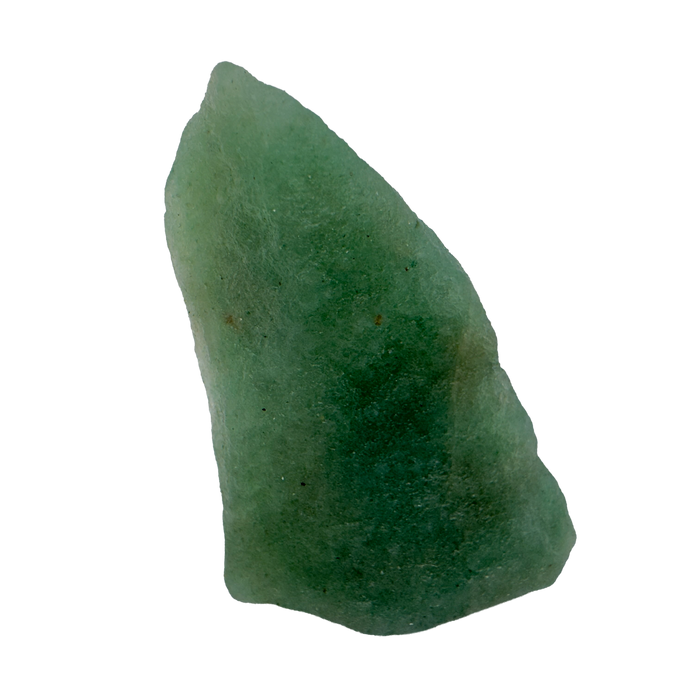
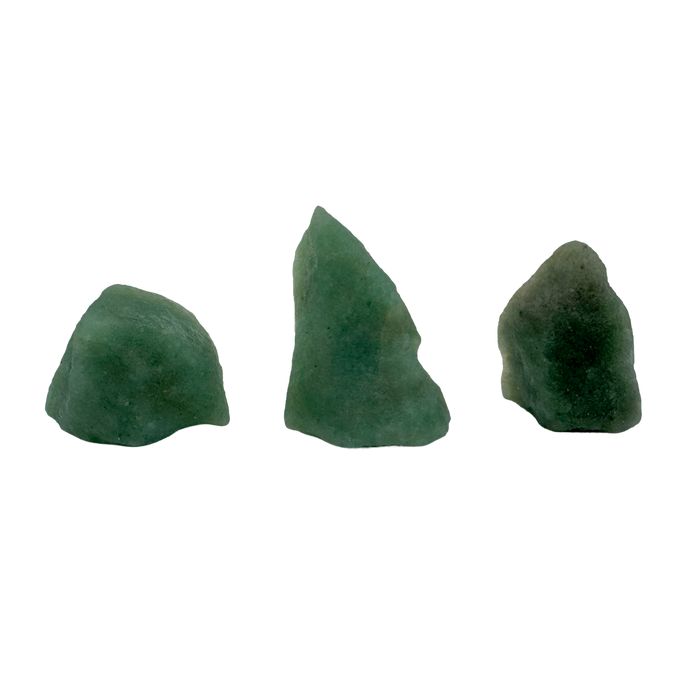
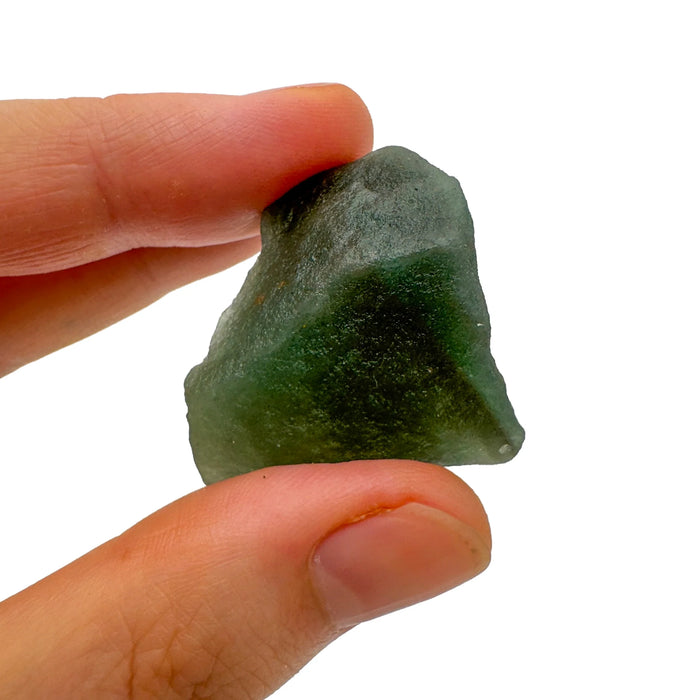
Prehnite is the counterexample, and it is here to make the point stick. It is a calcium aluminum silicate that grows in rounded, bubbly masses, and if you look at a broken face you can see fine fibers radiating outward from the center of each dome. That structure looks like something growing, and for once it is. There is no second mineral and no trapped organism. You are looking at the crystal itself, caught in the shape it took as it filled a cavity in volcanic rock. It sits at 6.5 on the Mohs scale, and the pale green comes from iron in the structure rather than from anything added. Ours is tumbled AA from Erongo, Namibia. The mineral is named for Hendrik von Prehn, the Dutch officer who brought the first specimens back from the Cape in the eighteenth century, which makes it one of the earliest minerals named after a person. More in the prehnite guide.
A note on petrified wood
If you want a stone on this shelf that genuinely was alive, that is petrified wood, where silica replaced the cell structure of a tree and kept the growth rings. We wrote about it in a fossil, a rock, and a blade. The difference between that and a dendrite is the whole point of this article.
Dendritic Agate
Dendritic Opal
Prehnite
Side by side the difference is easy to see. A tumbled dendritic agate shows branches that never cross, a dendritic opal heart shows the same figures in a softer host, and tumbled prehnite shows growth with nothing borrowed. The rest of the shelf is in the healing collection.
What healing means here
We are not going to tell you a stone treats anything, and nothing here replaces care from a qualified person. What we will say is that this particular shelf is where the language leans hardest on ancient life and deep time, and the plain geology is a better story than the pitch. A dendrite is a record of water moving through rock. That is old, and it is real, and it does not need to be a fossil to be worth holding. What we can tell you about any piece is the mineral, the hardness, the origin, and whether anyone touched the color, which is on our sourcing page. The wider list is on crystals for healing, and the trade terms are decoded in the crystal glossary.