























































Petrified wood, unakite, and black kyanite are not single crystals at all. What each one really is, and why a kyanite blade splits if you drop it.
Crystals for Grounding: A Fossil, a Rock, and a Blade

The grounding shelf is where the strangest material in any crystal shop tends to end up. Three of the stones people reach for most are not single crystals in the way amethyst or quartz are single crystals. One of them is a fossil. One is a rock made of three different minerals fused together. One is a mineral that gives you two different hardness readings depending on which direction you scratch it. Knowing which is which changes how you handle the piece you end up with.
Petrified Wood
Petrified wood is a tree. That is the whole appeal and it is also the literal geology. Over a very long stretch of time, silica carried in groundwater moved into the wood and replaced the cellular structure cell by cell, keeping the shape and losing the wood. Mineralogists call the result a pseudomorph, a false form: the outside is a log, the inside is quartz. Good pieces still show the growth rings, the grain, sometimes a knot. At 5.5 to 6.5 on the Mohs scale it takes a polish well and holds up to being carried. Ours is tumbled from Boeny, Madagascar, and it is natural and untreated. The longer story is in our petrified wood guide.
A note on smoky quartz and obsidian
The two stones that usually lead a grounding list are smoky quartz and black obsidian, and we already put them head to head in smoky quartz vs black obsidian. That comparison stands on its own, so this piece leaves it there and spends its time on the three stones that get skipped.
Unakite
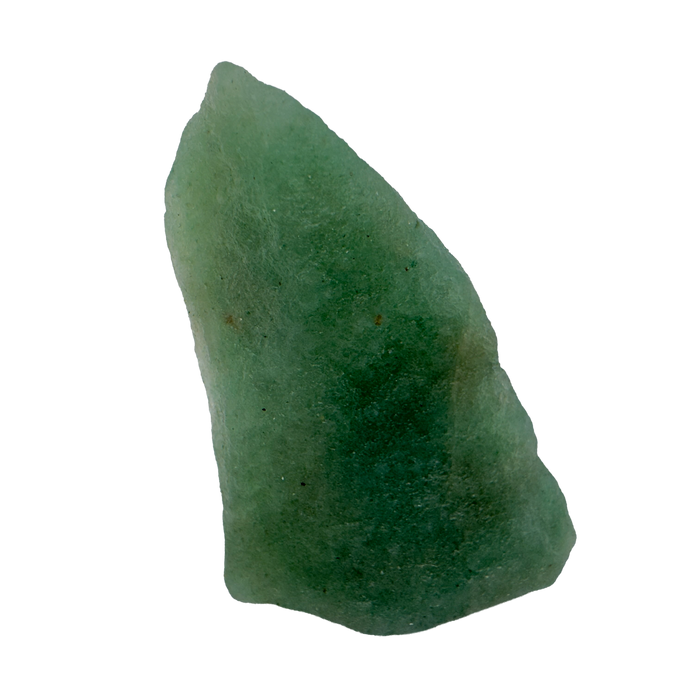
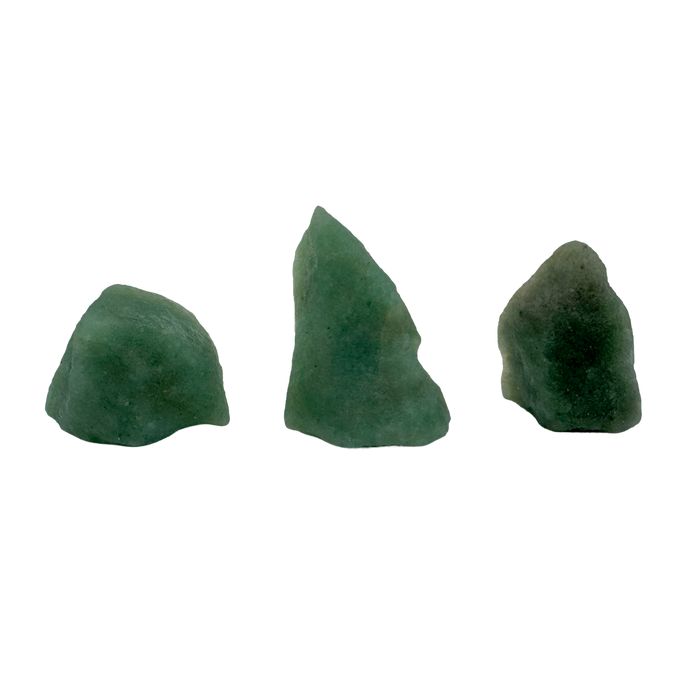
Unakite is not a mineral. It is a rock, which is a real distinction and not a technicality. A mineral is one chemical recipe with one crystal structure. A rock is an assembly. Unakite is green epidote, pink feldspar, and clear quartz grown together in one piece, and the pink and green mottling that makes it recognizable is simply those three minerals sitting next to each other. It was named for the Unaka range on the North Carolina and Tennessee border. It is durable enough at around 6.5 on the Mohs scale that it has been used as building stone, including trim on the front steps of the Smithsonian National Museum of Natural History. Ours is raw from Northern Cape, South Africa. More in the unakite guide.
Black Kyanite
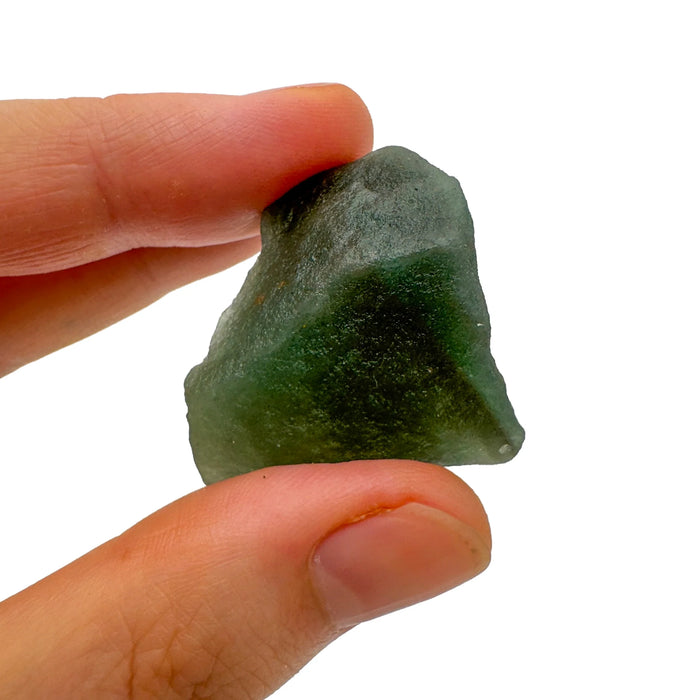
Black kyanite is the one that surprises people who own a hardness pick. Kyanite is an aluminum silicate, and it is anisotropic, which means its hardness depends on direction. Scratch along the length of a blade and it behaves like a 5. Scratch across it and it behaves closer to a 7. The same crystal, two answers. It also has perfect cleavage, so those fanned blades will split cleanly along their length if you drop one or squeeze it hard, which is worth knowing before you put it in a pocket with keys. Handle it like a fan and it lasts. Ours are raw blades from Minas Gerais, Brazil, hand-finished with jojoba oil and otherwise untreated. The black kyanite guide has the rest.
Petrified Wood
Unakite
Black Kyanite
If one of the three is calling, a tumbled petrified wood is the one to hand someone who does not believe a stone can be a tree, a raw unakite shows the three minerals plainly at the break, and a raw black kyanite blade is the one to keep on a shelf rather than in a bag. The rest of the shelf is in the grounding collection.
What grounding means here
Grounding is not something a stone does to a person. The tradition is much plainer than that. You pick up something dense and cool and older than you are, and for a moment your attention has somewhere to go that is not the inside of your own head. People have used heavy stones that way for a long time and it does not need a mechanism to be worth doing. What we can tell you is what the thing in your hand actually is, where it came from, and whether anyone did anything to it. That is on our sourcing page, and the wider list for this intention is on crystals for grounding.