







Aventurine, Jade, Malachite, or Moss Agate? Telling the Green Stones Apart
Four popular green stones, four very different materials, and the simple physical tells that separate them.
Set green aventurine, jade, malachite, and moss agate side by side and they read as one thing: green. Yet one is quartzite flecked with mica, one is a dense interlocking jade, one is a soft copper mineral, and one is clear chalcedony full of mossy inclusions. Here is how to tell them apart without a lab.

Hardness sorts them fastest. Malachite is soft at 3.5 to 4 and shows concentric green bands. Aventurine sparkles from mica flecks. Jade is dense, even, and exceptionally tough. Moss agate is translucent chalcedony carrying green inclusions, not bands. How the green forms is the deeper tell.
Four Green Stones, One Easy Mix-Up
Green is one of the most crowded colors in any crystal shop, and these four get confused most. The fix is to stop judging by color and check three things instead: how hard the stone is, how it is built, and where its green actually comes from.
Start with hardness on the Mohs scale, where talc is 1 and diamond is 10. These sit far enough apart that weight and a scratch test narrow the field quickly, before you study the surface.
Mohs hardness of malachite, by far the softest here
Mohs hardness of aventurine, just under pure quartz
Mohs hardness of jade and moss agate, the hardest here
Mohs hardness values per standard mineralogical references. Nephrite jade can read slightly lower, near 6.
Color alone will not separate green stones, because they overlap so much in shade. What divides them is how the green arises, whether from copper or chromium inside the mineral or from tiny green flecks trapped in a colorless host. Our guide to what gives crystals color covers the full picture.
Aventurine, Jade, Malachite, and Moss Agate Compared
Here is the full picture in one view. Each card gathers one stone, so on a phone you read down a card instead of across a wide table.
Aventurine
Quartzite with mica
Jade
Jadeite or nephrite
Malachite
Copper carbonate
Moss Agate
Included chalcedony
Two Ways a Stone Turns Green
There are really two stories behind a green stone. In the first, the green is part of the mineral itself. Malachite is green because it is a copper mineral, colored right through, and jade owes its green to chromium or iron locked inside the jade.
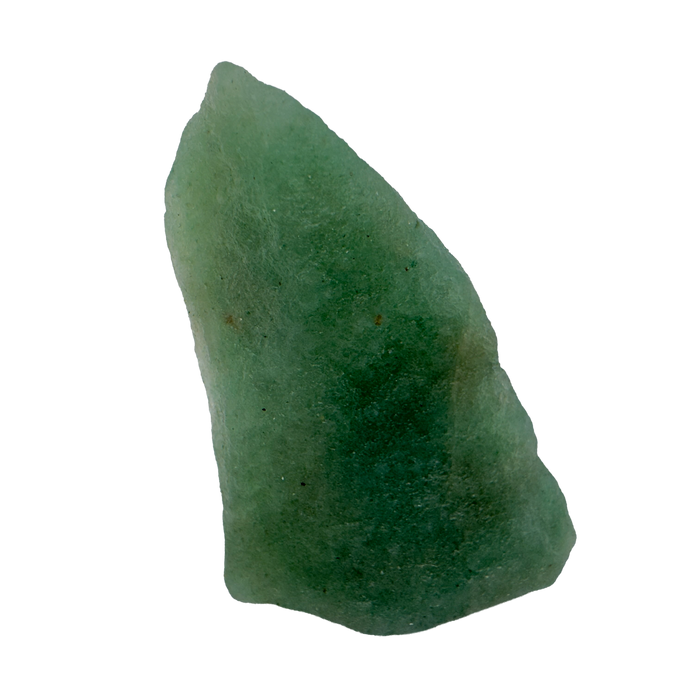
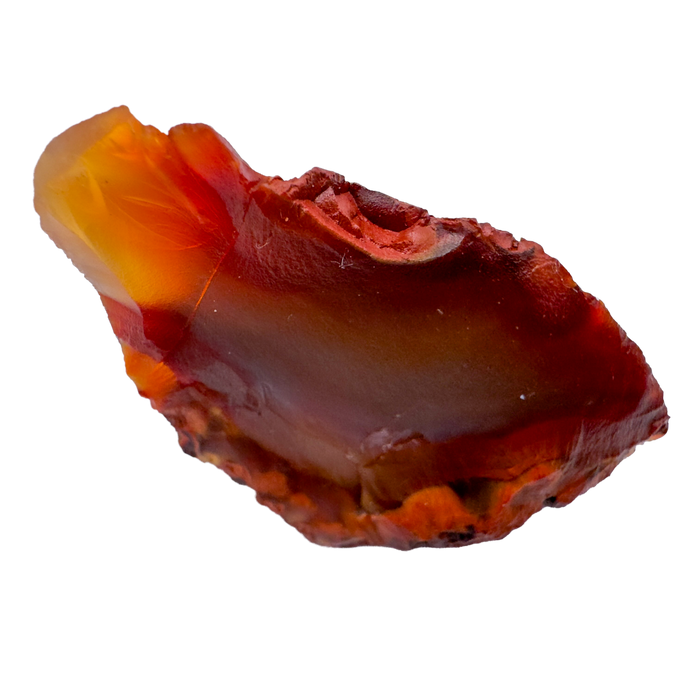
In the second, the host stone is not green at all. Aventurine is mostly colorless quartz; its green comes from flecks of fuchsite, a chromium-rich mica, which also throw off that faint sparkle. Moss agate is clear-to-white chalcedony, and its mossy green is made of separate minerals trapped inside as it formed. That is why aventurine glitters and moss agate looks like it holds tiny plants.

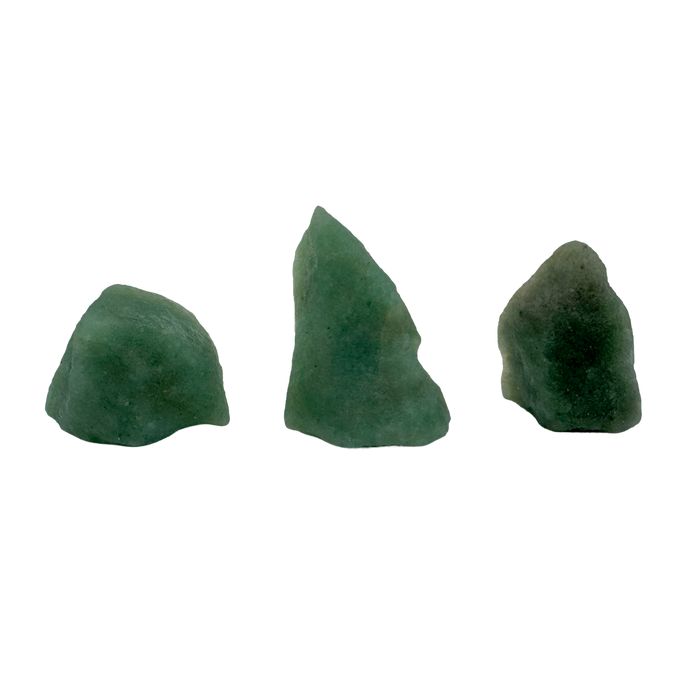
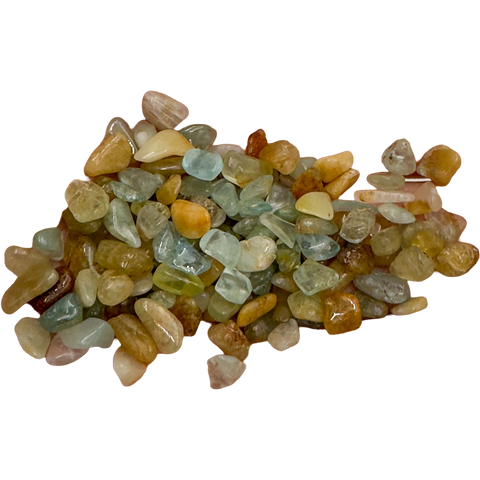
Aventurine. The green comes from flecks of fuchsite mica, which also lend a faint sparkle.

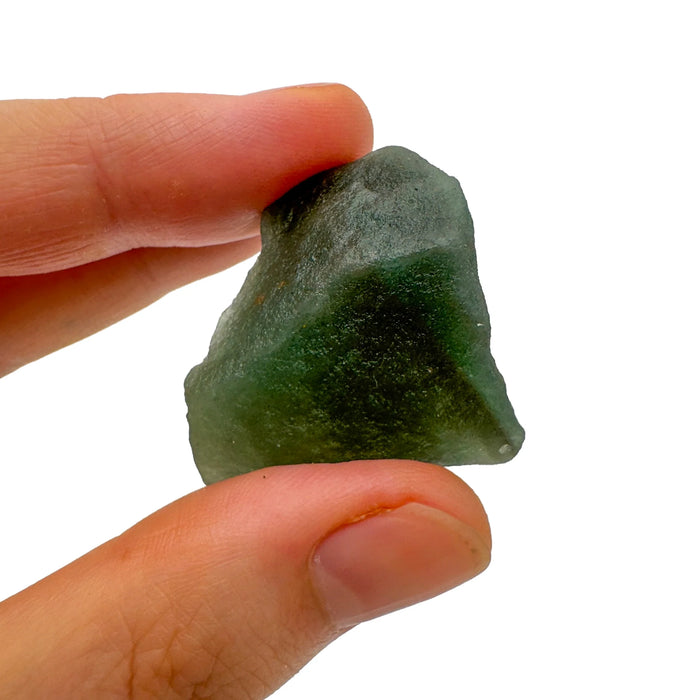
Jade. Dense and even, its green is built into the stone, from chromium or iron.

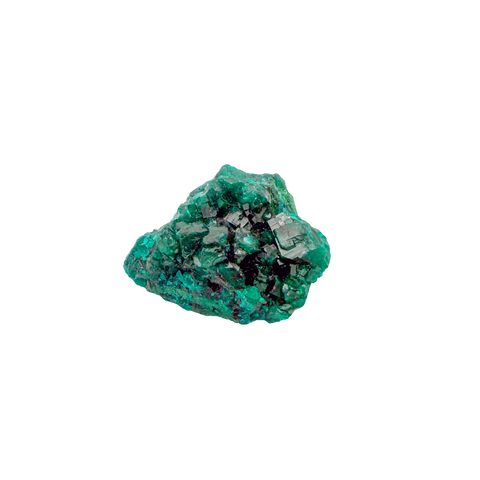
Malachite. A copper mineral, green throughout, with banding that records how it grew.
Dyes, Glass, and the Green Lookalikes
The green aisle carries more imitations than most, because so many cheap materials can be pushed toward jade or aventurine. A few patterns cover the majority of them, and for jade in particular, our guide to real jade versus fake goes further.
Sold as jade or aventurine. The dye pools along grain boundaries and in cracks, leaving a pale stone with greener seams.
Often passed off as jade. It looks too uniform, can hold tiny round gas bubbles, and warms quickly in the hand.
Real malachite dust bound with resin. Look for repetitive, blocky stripes and harsh contrast rather than natural swirling bands, and a lighter feel.
The giveaway is sparkle. Aventurine glitters from its mica flecks, and true jade never does.
A softer, waxy, mottled stone used as a jade stand-in. It scratches more easily than real jade.
An even, flat green that sits in fractures, instead of the three-dimensional mineral inclusions that give real moss agate its depth.
Malachite is the one stone here that asks for a little care. It is soft, so it scratches and chips easily, and the dust from cutting or polishing should not be inhaled. A solid, polished piece is safe to hold and display. See which stones are worth real caution and how to clean delicate stones without water.
Related Guides
The sparkling green quartzite up close: how fuchsite mica colors it, plus care.
Explore aventurineThe banded copper stone: how it forms, why it is soft, and how to handle it.
Explore malachiteJadeite, nephrite, and the dyed imposters, with the tests that actually work.
Sort real from fakeWhy some greens come from the stone itself and others from trapped minerals.
Read the scienceWhat Mohs hardness means for daily wear, cleaning, and water.
Check durabilityOur full set of trust-first crystal guides and side-by-side comparisons.
Browse the LibraryFrequently Asked
How do I tell aventurine from jade?
Look for sparkle. Aventurine is quartzite full of tiny mica flecks, so it glitters faintly when you turn it to the light, and jade never does. Jade also feels denser and colder, is far tougher, and shows a smooth, even, slightly waxy color.
Is my green aventurine real or dyed?
Real aventurine shows a fine, even sparkle from its fuchsite mica and a consistent green. Dyed quartzite gives itself away when color pools in cracks and along grain boundaries over a pale base, and glass imitations look too uniform and may hold small bubbles.
What is the difference between jadeite and nephrite jade?
Both are called jade. Jadeite is a pyroxene of sodium and aluminum, harder at 6.5 to 7, with a glassy luster and often more vivid color. Nephrite is an amphibole of calcium and magnesium, a little softer but even tougher, with a greasier luster and more muted tones.
Is reconstituted malachite real malachite?
It does contain real malachite, crushed and bound back together with resin. It is cheaper and tends to show repetitive, blocky stripes instead of natural swirling rings. Solid natural malachite is noticeably heavier and shows organic, varied banding.
Is malachite toxic, and can it get wet?
Solid, polished malachite is safe to hold and display. The real caution is breathing in dust from cutting or polishing it, because of the copper content. It is also soft, so keep it out of prolonged water and away from harsh cleaners.
Is moss agate a real agate?
It is chalcedony, which is a quartz, but it is not banded the way true agate is. Its green moss is made of mineral inclusions such as chlorite or hornblende, so the name describes the look rather than the structure.
Which of these green stones is the softest?
Malachite, at 3.5 to 4 on the Mohs scale, which is why it scratches and chips easily. Aventurine, jade, and moss agate all sit around 6.5 to 7, so they hold up far better to everyday handling.