




















































 Raw Stones
179 pieces
Raw Stones
179 pieces
 Tumbled Stones
162 pieces
Tumbled Stones
162 pieces
 Palm Stones
25 pieces
Palm Stones
25 pieces
 Crystal Points
23 pieces
Crystal Points
23 pieces
 Clusters & Geodes
104 pieces
Clusters & Geodes
104 pieces
 Polished & Decor
148 pieces
Polished & Decor
148 pieces
 Mineral Specimens
259 collector pieces
Mineral Specimens
259 collector pieces
 Crystal Chips
21 pieces
Browse everything
Every collection, one page.
View All Collections →
Crystal Chips
21 pieces
Browse everything
Every collection, one page.
View All Collections →


 Aries
Mar 21 – Apr 19
Carnelian
›
Aries
Mar 21 – Apr 19
Carnelian
›
 Taurus
Apr 20 – May 20
Rose Quartz
›
Taurus
Apr 20 – May 20
Rose Quartz
›
 Gemini
May 21 – Jun 20
Agate
›
Gemini
May 21 – Jun 20
Agate
›
 Cancer
Jun 21 – Jul 22
Moonstone
›
Cancer
Jun 21 – Jul 22
Moonstone
›
 Leo
Jul 23 – Aug 22
Citrine
›
Leo
Jul 23 – Aug 22
Citrine
›
 Virgo
Aug 23 – Sep 22
Amazonite
›
Virgo
Aug 23 – Sep 22
Amazonite
›
 Libra
Sep 23 – Oct 22
Blue Lace Agate
›
Libra
Sep 23 – Oct 22
Blue Lace Agate
›
 Scorpio
Oct 23 – Nov 21
Obsidian
›
Scorpio
Oct 23 – Nov 21
Obsidian
›
 Sagittarius
Nov 22 – Dec 21
Sodalite
›
Sagittarius
Nov 22 – Dec 21
Sodalite
›
 Capricorn
Dec 22 – Jan 19
Black Tourmaline
›
Capricorn
Dec 22 – Jan 19
Black Tourmaline
›
 Aquarius
Jan 20 – Feb 18
Amethyst
›
Aquarius
Jan 20 – Feb 18
Amethyst
›
 Pisces
Feb 19 – Mar 20
Aquamarine
›
Gifting?
A birthday stone is the safe bet.
Read the zodiac guide →
Pisces
Feb 19 – Mar 20
Aquamarine
›
Gifting?
A birthday stone is the safe bet.
Read the zodiac guide →











Fossil Fern
Fossil Fern is fossilized plant (carbonized foliage). In the hand, it rates 1 to 3 (shale matrix) on the Mohs scale, and it runs white fronds on black shale (St. Clair) and black carbon films on gray. Affordable; large multi-species St. Clair plates are display prizes.
The geology.
Fossil Fern carries the formula Carbon film or pyrophyllite replacement on shale. It belongs to the none (fossil) system. It is classified as fossilized plant (carbonized foliage).
It sits at 1 to 3 (shale matrix) on the Mohs scale. The surface reads dull; silvery-white films on famous material. Light behavior is opaque. Specific gravity runs 2.2 to 2.7. The streak is gray to white. It breaks with splits along shale bedding.
Delicate fern fronds printed leaf-by-leaf on dark shale, the famous Pennsylvania material shows ghost-white foliage on coal-black rock, every pinnule crisp as a botanical plate.
You will most often meet it as split shale slabs with fronds, ironstone nodule halves (Mazon Creek) or framed plates.
The origins.
Carboniferous coal-swamp shales, St. Clair, Pennsylvania (white-on-black), Mazon Creek, Illinois (ironstone nodules), plus coal measures worldwide.
On value, the database notes: affordable; large multi-species St. Clair plates are display prizes.
Traditional associations.
In energy work traditions, fossil ferns represent unfurling growth remembered across deep time.
People buy on this language, so it belongs on the page. It belongs under the facts, though, not over them.
Spotting the real thing.
Delicate fern fronds printed leaf-by-leaf on dark shale, the famous Pennsylvania material shows ghost-white foliage on coal-black rock, every pinnule crisp as a botanical plate.
Mostly honest; the perennial mix-up is dendrites sold (or bought) as 'fern fossils', anatomy under a loupe settles it in seconds.
| Looks like | How to tell them apart |
|---|---|
| Dendrites | The classic confusion: manganese 'ferns' branch fractally with no repeating leaflet anatomy, real ferns have ordered, paired pinnules |
| Modern leaf stains | Surface discoloration without bedding-plane impressions |
| Painted slabs | Brushwork under the loupe; genuine films sit in the rock's split plane |
At-home tests.
You can run every one of these at a kitchen table. Good light matters more than gear when you are looking at fossil fern.
| Test | What you should see |
|---|---|
| Loupe | repeating paired leaflets with midribs = plant; random branching = dendrite |
| By eye | Fronds continue into the rock at slab edges |
| By eye | St. Clair material's white pyrophyllite film is matte, not metallic |
Destructive tests belong to a gemologist, not a kitchen table. If a piece matters to you, pay for an appraisal before you take a file to it.
Care & handling.
At 1 to 3 (shale matrix) on the Mohs scale this is a soft material. Keep it as a display piece, store it apart from harder stones, and skip daily-wear settings.
It breaks with splits along shale bedding, which is worth knowing before you set it or drop it.
Clean it by hand, dry it properly, and keep it away from ultrasonic cleaners and hot steam.
A deeper look.
Extended detail on composition, sourcing, authentication and market value.
The physical record
The formula on record is Carbon film or pyrophyllite replacement on shale. Crystal system: None (fossil). Specific gravity: 2.2 to 2.7. Streak: Gray to white. Cleavage and fracture: Splits along shale bedding.
How it reaches the market
Carboniferous coal-swamp shales, St. Clair, Pennsylvania (white-on-black), Mazon Creek, Illinois (ironstone nodules), plus coal measures worldwide.
What it gets confused with
Dendrites: The classic confusion: manganese 'ferns' branch fractally with no repeating leaflet anatomy, real ferns have ordered, paired pinnules. Modern leaf stains: Surface discoloration without bedding-plane impressions. Painted slabs: Brushwork under the loupe; genuine films sit in the rock's split plane.
What it is worth
Affordable; large multi-species St. Clair plates are display prizes.
Where buyers get caught
Mostly honest; the perennial mix-up is dendrites sold (or bought) as 'fern fossils', anatomy under a loupe settles it in seconds.
One more thing
These 'ferns' shaded the coal swamps 300 million years ago, many are actually extinct seed ferns, and the same forests they fell in became the anthracite that made St. Clair a mining town.
An education-first guide.
We do not stock fossil fern. Writing it up regardless is the point of a reference library.
Explore the Crystal GuideLove Fossil Fern? Meet Snowflake Obsidian.
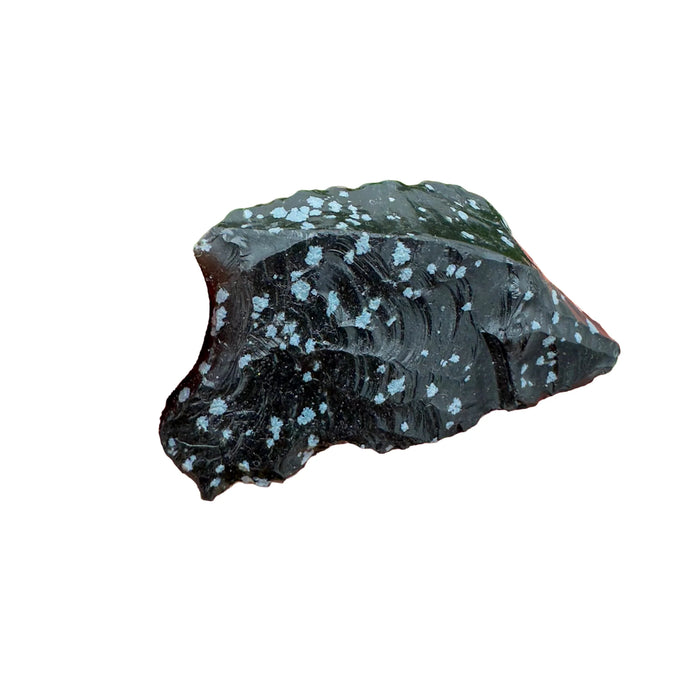
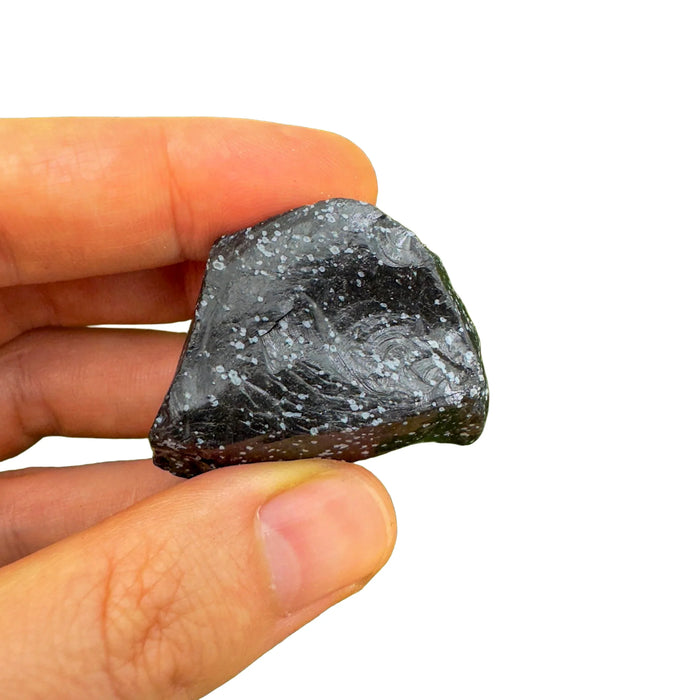
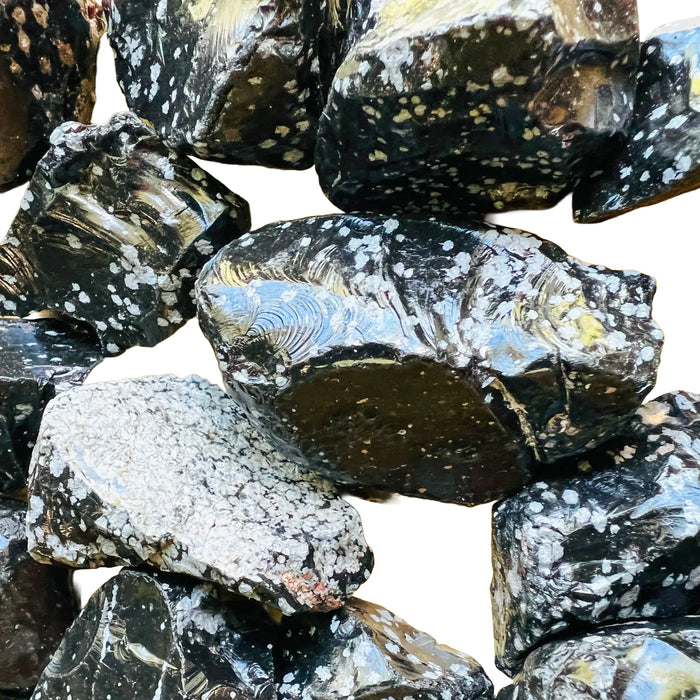
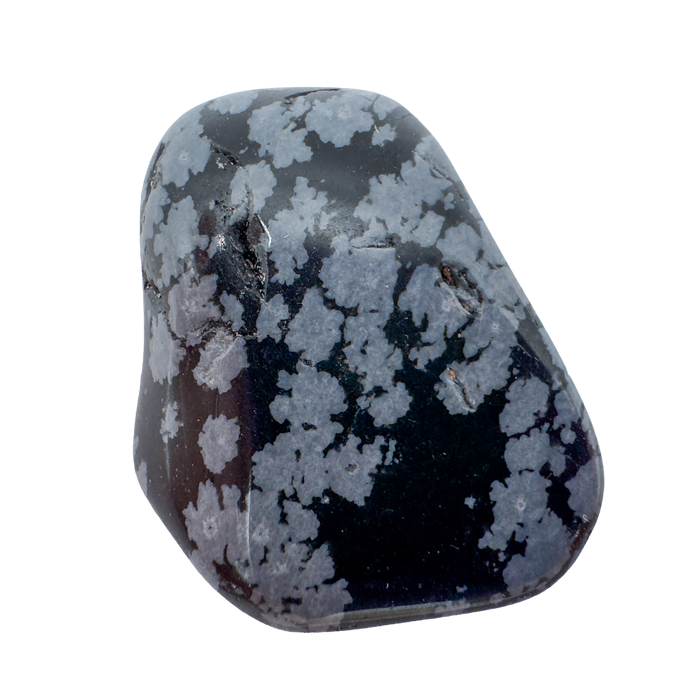
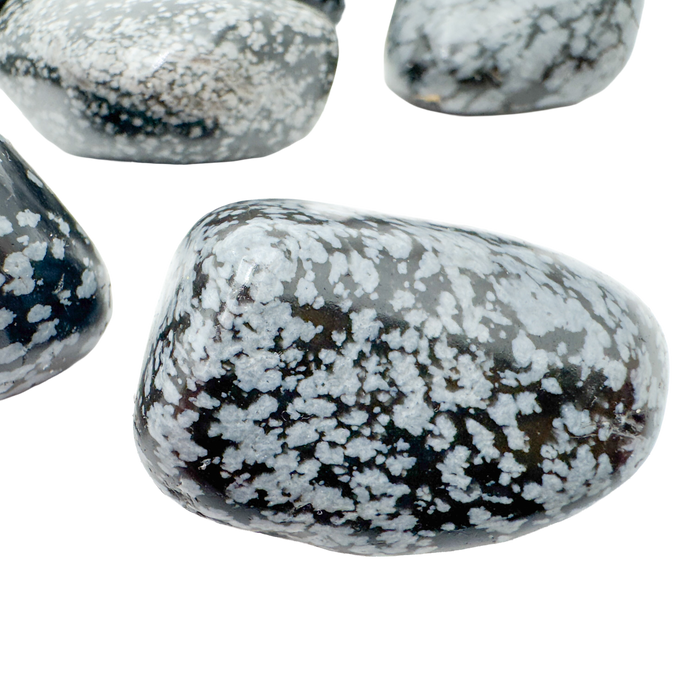
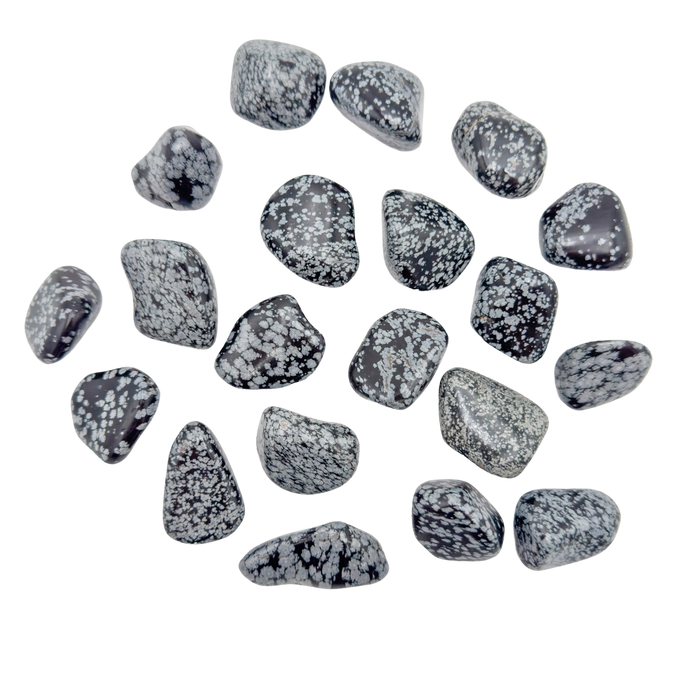
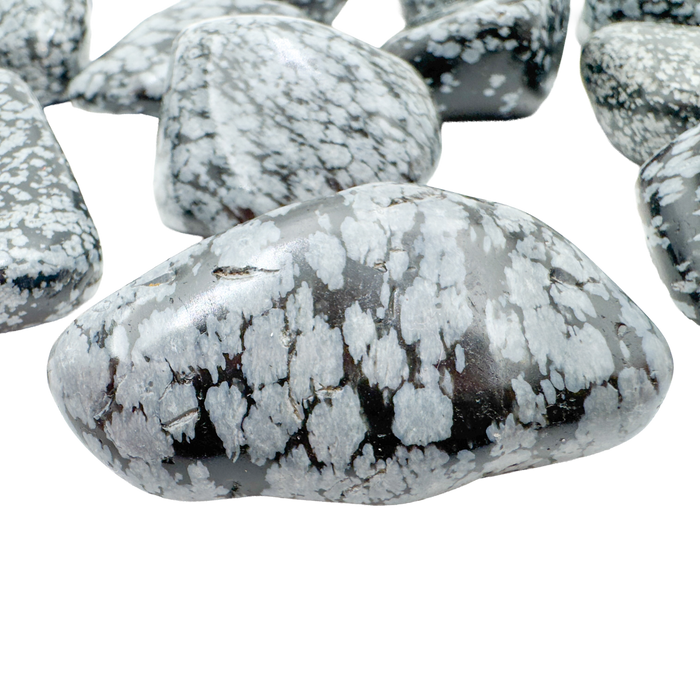
Fossil Fern is not something we carry. Snowflake Obsidian is the closest match in color, and every piece passes our sourcing standards: origin named, treatments disclosed.
- from 1,000+ reviews
- Ships within 72 hoursMonday to Friday, tracked
- 90 days to return itif you do not love it
- Free US shipping over $99$8.99 flat rate under
The Slow Note
New stones go to the list first.
No forwarding, no selling. Unsubscribe in one click. Privacy