






What Makes a Crystal Rare
Real geological scarcity, the marketing version, and how to tell which one you are paying for.
Rare is one of the most overused words in a crystal shop. Some stones earn it, and many borrow it. This guide separates genuine scarcity from a scarcity sticker, so you can spend with your eyes open.

A crystal is genuinely rare when nature cannot easily make more of it: very few known deposits, fussy formation conditions, or top color and clarity in only a sliver of the supply. Marketing rarity leans on exotic names and limited-drop urgency. Real scarcity shows up in the geology and the price, not the label.
Two very different kinds of "rare"
The word does two jobs in this hobby, and they pull in opposite directions. One is a fact about the earth. The other is a fact about a sales page. Keeping them separate is the whole skill.
Geological rarity is measurable. It comes from how few places a mineral forms, how hard it is to grow, and how little of it survives in good condition. Marketing rarity is a feeling someone wants you to have so you buy quickly. Both use the same five letters, and only one of them holds up when you look closely.
Set by nature and impossible to rush. Few localities, demanding chemistry, slow formation, or fine quality in only a small fraction of the material. You can check it against references, and it usually shows in the price.
Set by a seller. Exotic trade names, "limited" drops, and "high-vibration" language wrapped around material that is common, treated, or even glass. It feels rare. It is not measurably rare.
What actually makes a mineral scarce
Mineralogists have a working definition of rarity, and it is humbling. Out of the thousands of mineral species recognized on Earth, most are recorded from only a handful of places. Rarity, in the strict sense, means a mineral has been found at five localities or fewer.
A mineral lands in that group for a few reasons. It may need an unusual mix of elements that rarely occur together. It may form only under a narrow window of temperature, pressure, and chemistry. It may grow slowly over long stretches of time, or be so unstable that it breaks down before anyone finds a good piece. Scarcity is built into the recipe, not added later.
mineral species recognized on Earth
are known from five localities or fewer, the formal bar for "rare"
are known from just one or two places in the world
Mineral-rarity figures: Hazen and Ausubel, American Mineralogist, 2016.
Rare does not automatically mean expensive. Rarity sets a ceiling on supply, but demand sets the price. Plenty of genuinely scarce minerals stay inexpensive because almost no one collects them, while a few rare-and-wanted stones climb fast. Price is rarity multiplied by demand, never rarity alone.
Genuinely rare, by the numbers
A short list of stones earns the word without any marketing help. Most people will never hold one. These are the benchmarks worth knowing, because they show what real scarcity looks like and how far the everyday "rare" crystal sits from it.
Notice the pattern. The genuinely rare stones share a single locality or a tiny one, tiny crystals, and prices that reflect both. None of them turn up in a bargain bin. When a stone is truly scarce, the geology and the price tell the same story.
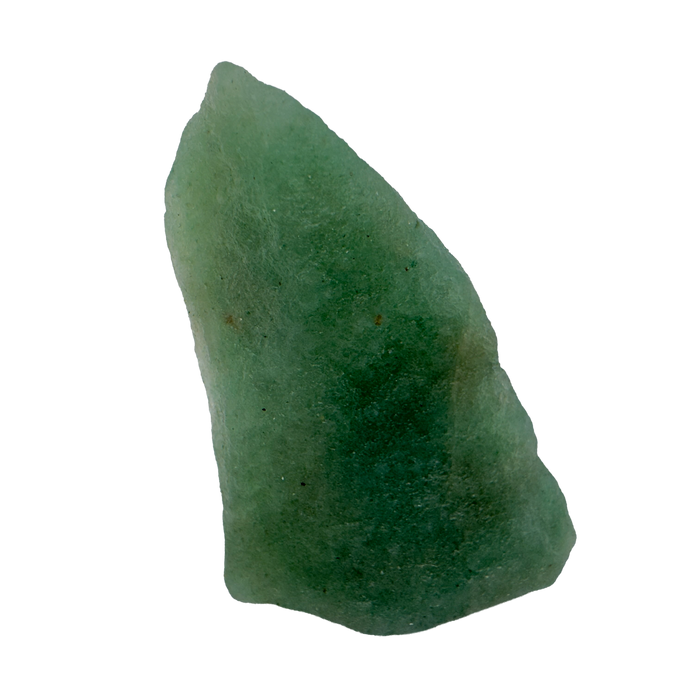
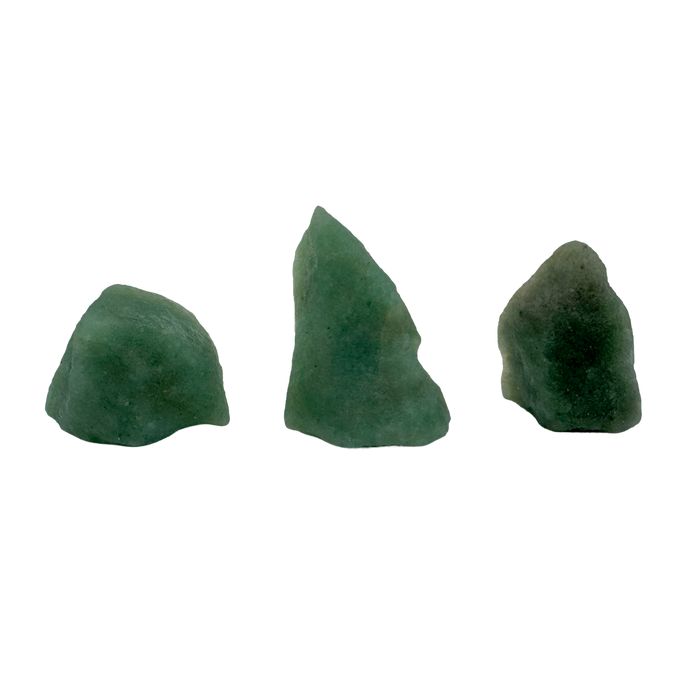
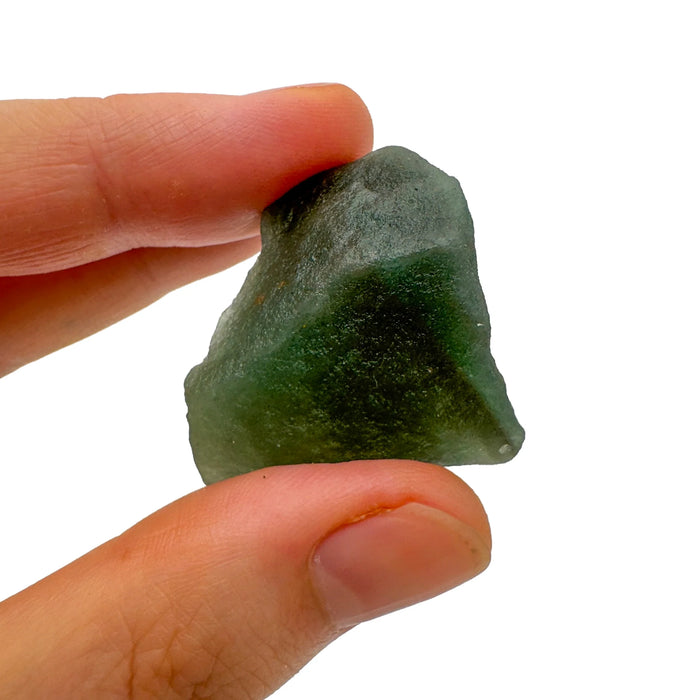
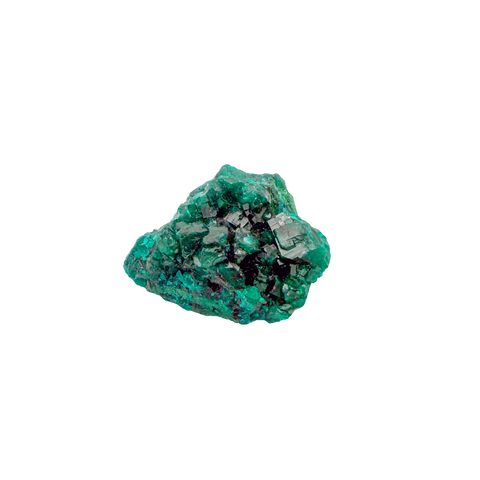
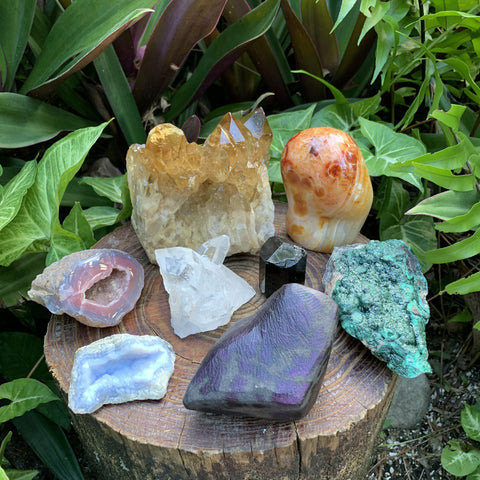
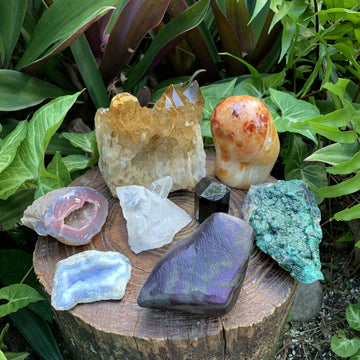
The emerald-green stone at the top of this page, Dioptase, sits just below this tier: a collector favorite from a few copper districts, uncommon but not in the painite-and-red-beryl class. Rarity is a spectrum, not a yes-or-no badge.

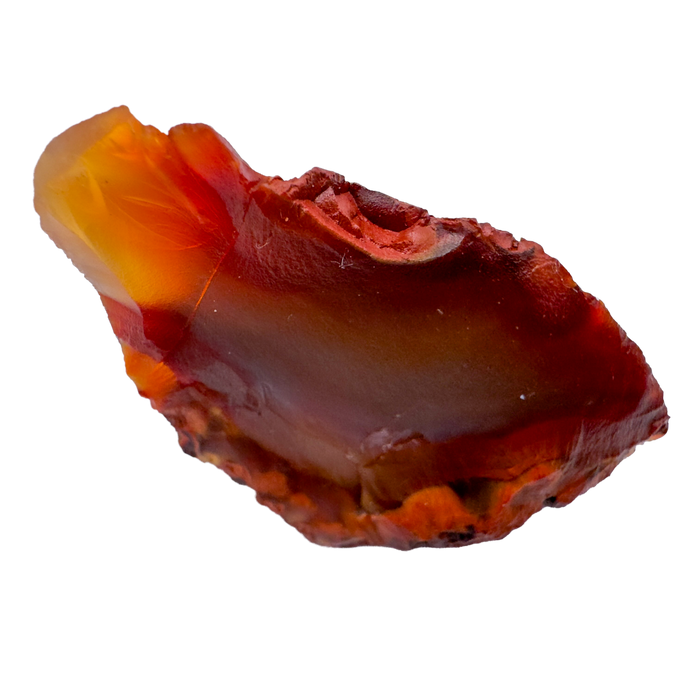
Collector-grade specimens are where genuine rarity lives, judged by locality, size, and condition.
Red Beryl (Bixbite)
Gem beryl, single claim
Benitoite
Barium titanium silicate
Alexandrite
Color-change chrysoberyl
Taaffeite
Beryllium oxide gem
Painite
Borate, once the rarest
Grandidierite
Boron-aluminum silicate
Few places, or fine grade
Two honest forms of scarcity show up again and again, and both are worth paying for when the price is fair.
The first is the single-source stone. A handful of gems come from essentially one spot on the planet, so when that ground is worked out, the supply is finished. Tanzanite comes from one small zone in Tanzania, only a few kilometers across. Larimar comes from about one square mile in the Dominican Republic. Charoite is known from a single area in Siberia and nowhere else. Their scarcity is geographic, and it is real.

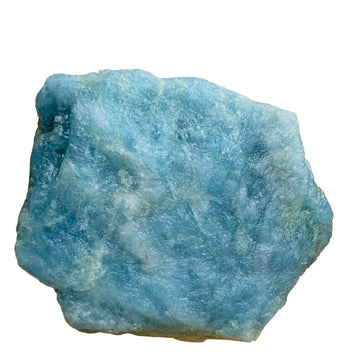
Larimar is found in roughly one square mile of the Dominican Republic, the definition of a single-source stone.

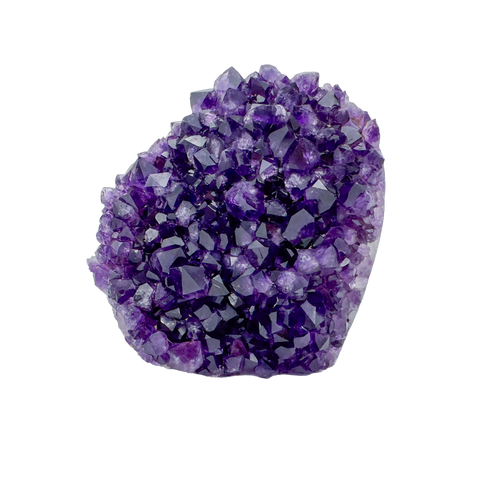
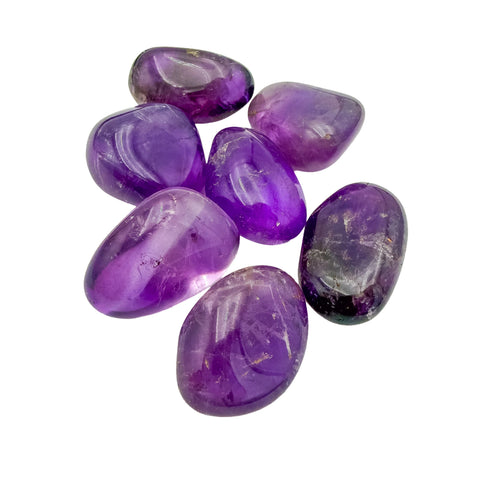
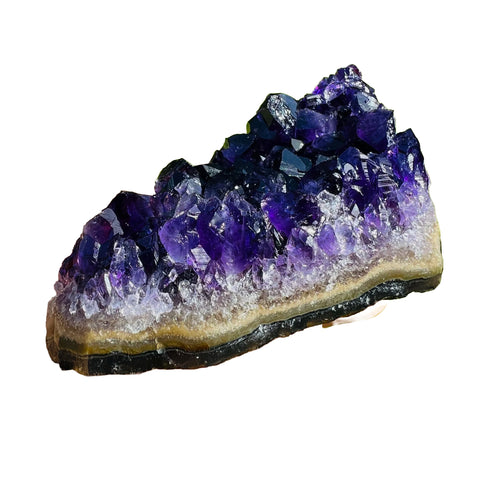
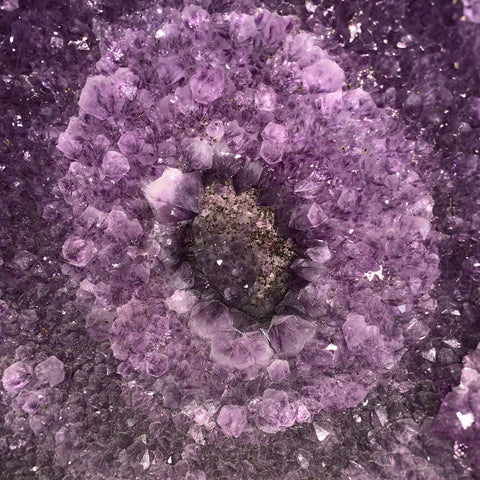
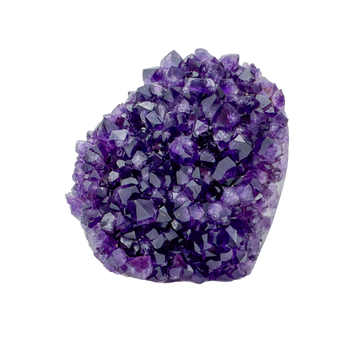
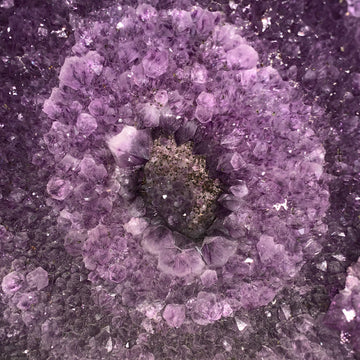
Amethyst is one of the most common quartz varieties, yet deep, clean, large pieces like this are the scarcer grade.
The second is rare grade inside a common species. Amethyst is one of the most abundant crystals on the market, ever since huge deposits turned up in Brazil. But richly saturated, clean, large amethyst is far less common than the pale, included sort, and it is priced accordingly. The species is everyday. That quality is not. Most "rare" you will meet in a shop is really this: an exceptional grade of an ordinary stone, which is a fair thing to value as long as it is described honestly.
"Scarcity you can verify lives in the geology and the price. Scarcity you cannot is usually living on the label."
When "rare" is just a sticker
Manufactured scarcity has a few familiar moves. None of them are about the stone. They are about getting you to decide fast and feel special doing it. Once you can name them, they stop working on you.
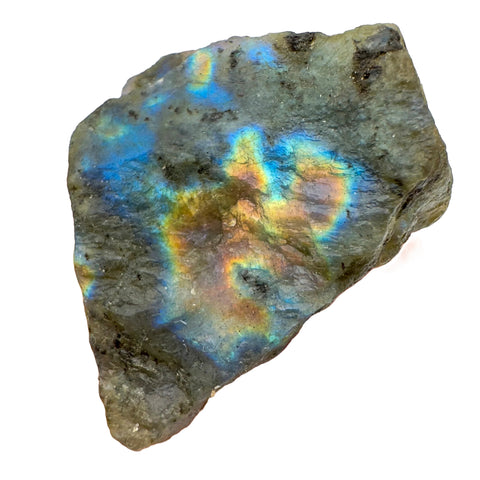
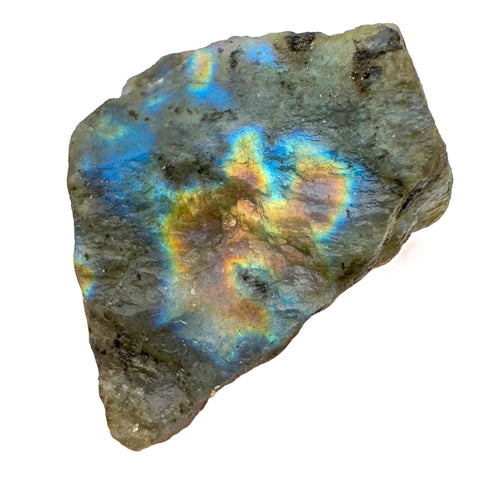
A beautiful stone is not the same as a scarce one. Labradorite flashes like nothing else, and it is also mined in large quantities. The flash is real. The rarity often is not. That gap between gorgeous and genuinely scarce is where a lot of "limited, high-vibration, one-of-a-kind" language does its work.
Exotic and trademarked names are the most common tell. Many of them wrap a brand around ordinary quartz, or around glass. We cover that in our guide to crystal trade names, so you can spot a marketing word dressed up as a mineral.

Labradorite is stunning and widely mined. Striking does not mean scarce.
A brand-style or trademarked name wrapped around common quartz or man-made glass. If no geologist uses the word, treat it as a marketing label, not a species.
"Only a few left," countdowns, and "this batch will never come again." Urgency is a sales tool. It says nothing about how scarce the mineral actually is.
"High-vibration," "rare frequency," "ultra-activated." These describe a pitch, not a deposit, and none of them can be measured or verified.
How to check a rarity claim in a minute
You do not need to be a gemologist to pressure-test the word. Four quick questions will sort almost any "rare" claim into genuine or dressed-up.
Look the mineral up on a reference like Mindat. Five places or fewer is genuinely scarce. Dozens of sources worldwide is not, however pretty the piece.
Is it a recognized mineral, or a trade name? A word you only ever see on shop listings, never in geology, is a clue you are paying for marketing.
Truly rare material is rarely cheap. A "rare" stone at pocket-money pricing is usually common, treated, or mislabeled. Let the price check the claim.
A seller who can name the country, the mining region, and any treatment is more trustworthy than one selling "rare, one of a kind" with no detail.
Rare and wanted is expensive. Rare and ignored is cheap. Common and dressed up is the trap. Many people choose a stone for how it makes them feel, and that is reason enough; just keep the feeling separate from any factual claim about how scarce it is.
Related guides
The emerald-green collector mineral from this page, with its sourcing, properties, and why it stays uncommon.
Which exotic names are geology and which are marketing, from Lemurian to Super Seven.
What A, AA, and AAA really mean, and why "rare grade" is the kind of rarity you meet most often.
A true single-source stone, found in roughly one square mile of the Dominican Republic.
Our collector-grade pieces, chosen for locality, form, and condition rather than hype.
Our full set of plain-spoken, trust-first guides to buying and caring for crystals.
Frequently asked
What does "rare" actually mean for a crystal?
In the strict, geological sense it means the mineral forms in very few places. Mineralogists treat five known localities or fewer as the bar for rarity. In a shop, "rare" is often looser and can mean an exceptional grade of a common stone, or simply a marketing word. The two are worth telling apart.
Does rare always mean expensive?
No. Rarity sets the supply, but demand sets the price. Many genuinely scarce minerals stay cheap because almost no one collects them, while a few rare-and-wanted stones climb fast. Price is rarity multiplied by demand, so a high price needs both.
Is Amethyst rare?
As a species, no. Amethyst is one of the most common quartz varieties, especially since large Brazilian deposits were found. What is scarcer is top quality: deeply saturated, clean, large pieces. So a "rare" amethyst usually means a rare grade, not a rare stone.
What is the rarest crystal you can actually buy?
Stones like red beryl, benitoite, alexandrite, taaffeite, and painite sit at the top of the rarity scale. They tend to be small, costly, and sold as collector pieces or fine gems. Most everyday "rare" crystals are nowhere near this tier, which is exactly why honest pricing matters.
Are single-source stones like Tanzanite or Larimar a good investment?
They are genuinely single-source, so supply is limited by geography. Whether that makes any stone a good "investment" depends on demand, condition, and what you pay at retail, and we do not offer investment advice. The healthier reason to buy one is that you love it and the sourcing is honest, not a promised return.
Why is my "rare" crystal so cheap?
Usually because it is not actually rare. Bargain pricing on a "rare" stone often points to a common mineral, a treated or dyed piece, man-made glass, or a trade name standing in for a species. Let the price sanity-check the claim; truly scarce material is seldom inexpensive.
Is Moldavite rare?
Genuine moldavite is scarce, since it formed in a single impact event and is found mainly in one region. That very scarcity is why so much "moldavite" sold cheaply is green glass. If the price seems too easy, be skeptical, and check the seller's detail and our trade names guide.
How can I tell if a "rare" label is just marketing?
Run four checks: count the localities on a reference like Mindat, ask whether it is a recognized species or a trade name, see if the price matches the claim, and look at how much the seller will tell you about origin and treatment. Real rarity survives all four. Marketing rarely does.