






















Cat's Eye and Star Stones: What Makes the Light Move
One band of light or a six-rayed star, both born from the same trick of crystals lined up inside the stone.
A polished stone catches the light and a single ribbon glides across it as you tilt your hand. Rarer still, a few stones hold a star that follows the light around the room. Both come from the same hidden cause.

Cat's eye and star stones get their moving light from parallel, needle-like inclusions trapped inside the crystal. One direction of needles reflects a single bright band, the cat's eye. Two or three directions reflect crossing bands, the star. A smooth, domed cabochon cut is what gathers either one into focus.
One Trick of the Light, Two Famous Effects
Chatoyancy (the cat's eye) and asterism (the star) look like different phenomena, but they run on the same physics. Both happen when a crystal grows with countless tiny inclusions, needles, fibers, or hollow tubes, all lined up in the same direction. Light hits those parallel lines and reflects back as a concentrated band, set at a right angle to the needles.
The only thing that changes between an eye and a star is how many directions the needles run. One direction gives one band, a cat's eye. When a mineral's structure forces the needles to grow along two or three directions at once, you get two or three bands crossing each other, and those crossings read as a star.
One set of parallel fibers, one band of light. It slides as you turn the stone, like the slit pupil of a cat.
Two or three sets of needles crossing, so the bands cross too. The result is a four or six rayed star on the dome.
Neither effect shows on a faceted stone. Both need a smooth, rounded cut to gather the reflection into one eye or star.
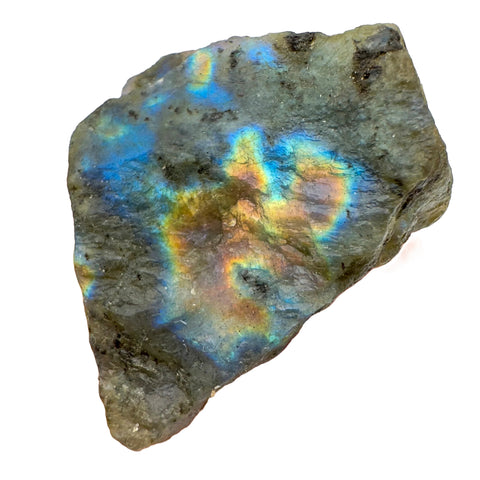
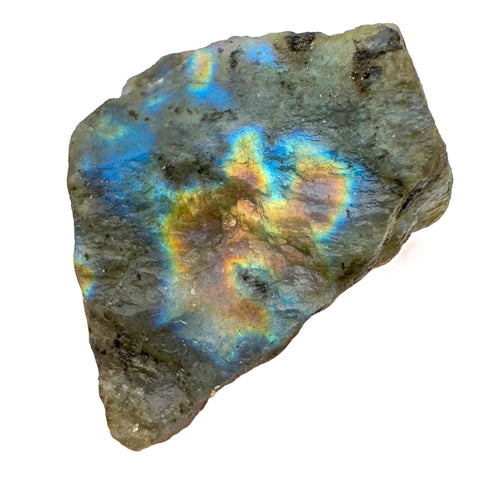
Not every moving light is a cat's eye. Moonstone's floating glow (adularescence) and labradorite's flash of color (labradorescence) come from light bouncing between microscopic layers inside feldspar, not from aligned needles. They belong to the wider family of optical effects, but the cause is different. Our guide to what gives crystals their color covers those.
Chatoyancy: The Eye That Slides
Chatoyancy is the single ribbon of light, named from the French word for cat (chat). The fibers or hollow tubes inside the stone act like a bundle of microscopic mirrors. Each one reflects a thin line of light, and together they merge into one bright band that always sits across the fibers, then glides as the stone moves.
The sharpest cat's eye of all belongs to chrysoberyl. In the gem trade, when someone says "cat's eye" with no other name attached, they mean chrysoberyl, prized for an eye so crisp it looks like a slit in the stone. A classic check called the milk and honey effect shows one half of a fine chrysoberyl glowing honey gold and the other half milky white under a single light.

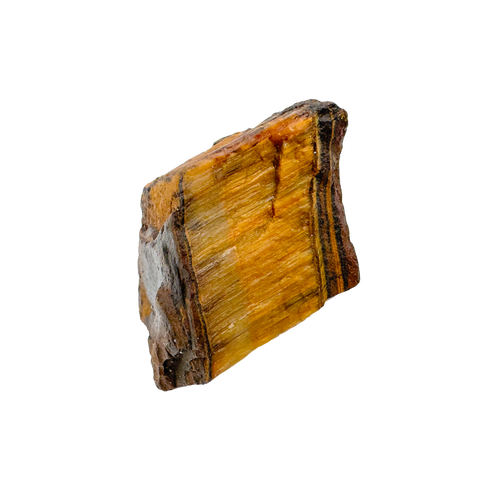
A polished tiger's eye, the most common chatoyant stone, with its band of light crossing the fibers.
Chatoyancy turns up in many minerals beyond chrysoberyl, including quartz, tourmaline, beryl, apatite, and scapolite. Wherever a stone grew with fine parallel fibers, the cat's eye can appear once it is cut correctly.
Tiger's Eye: Chatoyant Quartz, Up Close

AA grade tiger's eye tumbles, each showing the silky chatoyant sheen of aligned fibers.
Tiger's eye is the chatoyant stone most people actually own, and it is a variety of quartz. Its golden bands come from fine fibers locked inside the silica. The traditional explanation is that quartz slowly replaced fibers of crocidolite, a fibrous blue mineral, keeping their parallel alignment in place.
More recent studies of South African tiger's eye debate the exact process, with some pointing to a crack and seal growth where crocidolite fibers are caught inside the quartz rather than fully replaced. Either way the result is the same: parallel fibers, and a silky chatoyant sheen.
The blue-gray stage of the same material is sold as hawk's eye, and the red version is usually brown tiger's eye that has been gently heated. All of it is natural quartz, and all of it shows the cat's eye band when polished into a dome or a smooth tumble.
Asterism: The Bands That Become a Star
A star is simply chatoyancy multiplied. When a crystal's symmetry makes its needles grow along more than one direction, each set reflects its own band, and the bands cross at the center to form a star. The number of rays is set by the mineral's structure and how many needle directions it allows.
In sapphire and ruby (both corundum), needles of rutile, often called silk, grow along three directions about sixty degrees apart. Three crossing bands give the familiar six-rayed star. In star diopside, two sets of magnetite needles meet at right angles, so the star has four rays. Star garnet usually shows four rays as well, occasionally six.
Star Sapphire & Ruby
The six-rayed classic
Star Diopside
The four-rayed cross
Star Garnet
The rare red star
"One direction of needles gives you an eye. Cross two or three, and you get a star."
Why It Has to Be a Cabochon
Cutting decides whether you ever see the effect. A faceted stone scatters the light in too many directions, so the eye and the star both disappear. That is why every cat's eye and star stone is cut as a cabochon, the smooth, domed, unfaceted shape.
Orientation matters just as much as the dome. For a cat's eye, the cutter sets the base parallel to the fibers so the band lies across the top. For a star, the base is cut square to the crystal's main axis so the star sits centered on the dome. A well-judged dome height lifts the band or star and sharpens it.

Polished gold tiger's eye. The smooth, domed surface concentrates the fibers' reflection into a band.
Facets scatter the reflection, so these stones are always polished into a dome instead.
The band or star only centers when the base is cut to the right plane inside the crystal.
A fuller dome tightens the eye or star, while a flat cut spreads and dims it.
Telling Natural From Made
Because a sharp star or eye is desirable, plenty of synthetic and imitation versions exist. They are not a problem when a seller names them plainly. The trouble is a lab or glass piece sold at a natural price.
Synthetic star sapphires (the first were called Linde stars) show a crisp, dead-centered star with evenly spaced legs. Natural stars often waver or have legs of slightly different length.
Lab corundum tends to be vivid and perfectly even, while natural sapphire and ruby usually show some color zoning or unevenness.
Many synthetics have a very smooth, glassy flat back, and some early Linde stones carry a small stamped letter L.
Bright, candy-colored cat's eye beads in inexpensive jewelry are manufactured fiber-optic glass, not stone. The band is unnaturally bright and ruler straight.
Chatoyant tiger's eye is the cat's eye effect you can own without a jeweler's budget, and every piece we sell is natural South African quartz. Star sapphires, star rubies, and cat's eye chrysoberyl are fine gemstones that live outside our shelves, so treat any bargain-priced star with healthy skepticism and ask the seller exactly what it is.
Related Guides
Formation, sourcing, and care for the most common chatoyant stone you can hold.
Explore tiger eyePolished tumbles and palm stones, natural South African quartz with a true cat's eye band.
Browse the collectionThe cousin effects, adularescence and labradorescence, and where color really comes from.
Read the guideThe needles, gardens, and ghosts inside quartz, including the rutile silk behind a star.
Look insideA different kind of moving light, the billowy adularescent sheen of feldspar.
Explore moonstoneOur full collection of trust-first crystal guides and comparisons.
Browse the LibraryFrequently Asked
What causes the cat's eye effect in a crystal?
The cat's eye, or chatoyancy, comes from light reflecting off parallel fibers, needles, or hollow tubes inside the stone. All those tiny lines run in one direction, so they bounce light back as a single bright band set at a right angle to the fibers. The band glides as you turn the stone.
What is the difference between chatoyancy and asterism?
They share one cause, aligned needle-like inclusions, and differ only in how many directions those needles run. One direction reflects a single band, a cat's eye (chatoyancy). Two or three directions reflect crossing bands that form a star (asterism).
Why does a star sapphire have six rays but a star garnet has four?
The ray count follows the crystal's structure. Sapphire and ruby grow rutile needles along three directions about sixty degrees apart, so three crossing bands make a six-rayed star. Star garnet and star diopside grow needles along two directions, usually at right angles, so they show a four-rayed star.
Is tiger's eye natural, and how does it get its shimmer?
Tiger's eye is natural quartz. Its silky bands come from fine parallel fibers inside the silica, long described as quartz replacing fibers of crocidolite while keeping their alignment. The aligned fibers reflect light as a chatoyant sheen once the stone is polished.
Why do cat's eye and star stones have to be cut as cabochons?
A faceted cut scatters light in many directions and hides the effect. A smooth, domed cabochon gathers the reflection from the aligned needles into a single eye or star. The base also has to be cut to the right plane inside the crystal so the band or star sits centered on the dome.
How can I tell a natural star sapphire from a synthetic one?
Natural stars are often slightly uneven, with legs of different length and some color zoning. Synthetic stars, originally sold as Linde stars, tend to be crisp, perfectly centered, and evenly colored, sometimes with a very smooth flat back or a stamped letter L. A gemologist can confirm with proper testing.
Is "cat's eye glass" a real gemstone?
No. The bright, candy-colored cat's eye beads in cheap jewelry are manufactured fiber-optic glass, not a mineral. The band is unnaturally bright and ruler straight. It is fine when sold as glass, but it should never carry a gemstone price.
Is cat's eye chrysoberyl the same as cat's eye quartz?
No, they are different minerals that share the same effect. Chrysoberyl has the sharpest eye of any stone and is what the trade means by "cat's eye" with no other name. Cat's eye quartz, including tiger's eye, is more common and more affordable, with a softer band.