




















































 Raw Stones
179 pieces
Raw Stones
179 pieces
 Tumbled Stones
162 pieces
Tumbled Stones
162 pieces
 Palm Stones
25 pieces
Palm Stones
25 pieces
 Crystal Points
23 pieces
Crystal Points
23 pieces
 Clusters & Geodes
104 pieces
Clusters & Geodes
104 pieces
 Polished & Decor
148 pieces
Polished & Decor
148 pieces
 Mineral Specimens
259 collector pieces
Mineral Specimens
259 collector pieces
 Crystal Chips
21 pieces
Browse everything
Every collection, one page.
View All Collections →
Crystal Chips
21 pieces
Browse everything
Every collection, one page.
View All Collections →


 Aries
Mar 21 – Apr 19
Carnelian
›
Aries
Mar 21 – Apr 19
Carnelian
›
 Taurus
Apr 20 – May 20
Rose Quartz
›
Taurus
Apr 20 – May 20
Rose Quartz
›
 Gemini
May 21 – Jun 20
Agate
›
Gemini
May 21 – Jun 20
Agate
›
 Cancer
Jun 21 – Jul 22
Moonstone
›
Cancer
Jun 21 – Jul 22
Moonstone
›
 Leo
Jul 23 – Aug 22
Citrine
›
Leo
Jul 23 – Aug 22
Citrine
›
 Virgo
Aug 23 – Sep 22
Amazonite
›
Virgo
Aug 23 – Sep 22
Amazonite
›
 Libra
Sep 23 – Oct 22
Blue Lace Agate
›
Libra
Sep 23 – Oct 22
Blue Lace Agate
›
 Scorpio
Oct 23 – Nov 21
Obsidian
›
Scorpio
Oct 23 – Nov 21
Obsidian
›
 Sagittarius
Nov 22 – Dec 21
Sodalite
›
Sagittarius
Nov 22 – Dec 21
Sodalite
›
 Capricorn
Dec 22 – Jan 19
Black Tourmaline
›
Capricorn
Dec 22 – Jan 19
Black Tourmaline
›
 Aquarius
Jan 20 – Feb 18
Amethyst
›
Aquarius
Jan 20 – Feb 18
Amethyst
›
 Pisces
Feb 19 – Mar 20
Aquamarine
›
Gifting?
A birthday stone is the safe bet.
Read the zodiac guide →
Pisces
Feb 19 – Mar 20
Aquamarine
›
Gifting?
A birthday stone is the safe bet.
Read the zodiac guide →











Flux-Grown Ruby
Flux-Grown Ruby is lab-grown corundum (flux method). In the hand, it rates 9 on the Mohs scale, and it runs rich red and pinkish red. Gem-quality red corundum with wispy veil-like flux 'fingerprints', occasional opaque white flux blobs, or tiny metallic platelets from the platinum crucible, and crystals far too perfect and clean for the price asked.
The geology.
Flux-Grown Ruby carries the formula Al2O3 with Cr (lab crystallized from flux melt). It belongs to the trigonal system. Catalogs list it as lab-grown corundum (flux method).
It sits at 9 on the Mohs scale. The surface reads vitreous to subadamantine. Light behavior is transparent to translucent. Specific gravity runs 3.97 to 4.05. The streak is white. It breaks with no cleavage; conchoidal to uneven fracture, basal parting.
Gem-quality red corundum with wispy veil-like flux 'fingerprints', occasional opaque white flux blobs, or tiny metallic platelets from the platinum crucible, and crystals far too perfect and clean for the price asked.
It reaches buyers as faceted stones, tabular hexagonal crystals, crystal clusters 'on matrix' or jewelry.
The origins.
Grown over months in platinum crucibles, Chatham, Kashan, and Ramaura are the classic producers; clusters are also glued to rock and sold as 'ruby specimens'.
On value, the database notes: far below natural ruby; pretty crystals priced as curios.
Traditional associations.
In energy work traditions, lab ruby is seen as chemically true ruby whose energy is attributed to the crystal itself rather than a slow earth origin.
We keep this section because people ask. It sits below the geology on purpose, and none of it describes something the stone does.
Spotting the real thing.
Gem-quality red corundum with wispy veil-like flux 'fingerprints', occasional opaque white flux blobs, or tiny metallic platelets from the platinum crucible, and crystals far too perfect and clean for the price asked.
The premium lab product most often passed off as natural ruby, also watch for flux-grown crystal clusters glued onto matrix and sold at gem shows as mined specimens.
| Looks like | How to tell them apart |
|---|---|
| Natural ruby | Natural stones carry silk (rutile needles), angular color zoning, and mineral crystals as inclusions, not twisted flux veils or metal platelets |
| Verneuil (flame-fusion) ruby | Verneuil shows curved growth lines and gas bubbles; flux growth shows none, which is why it fools more people |
| Red spinel | Spinel is singly refractive and slightly softer; ruby fluoresces stronger red |
At-home tests.
Before anyone talks you into a lab report, these are the checks worth doing yourself on flux-grown ruby.
| Test | What you should see |
|---|---|
| Loupe/microscope | twisted flux fingerprints, white flux residue, hexagonal platinum platelets |
| Under UV | Glows vivid red under UV, often more strongly than iron-bearing natural stones |
| By eye | Lab report is the only reliable verdict for high-value pieces |
Destructive tests belong to a gemologist, not a kitchen table. If a piece matters to you, pay for an appraisal before you take a file to it.
Care & handling.
At 9 on the Mohs scale it stands up to everyday wear. It will still chip on a hard knock, so treat edges and points with respect.
It breaks with no cleavage; conchoidal to uneven fracture, basal parting, which is worth knowing before you set it or drop it.
Clean it by hand, dry it properly, and keep it away from ultrasonic cleaners and hot steam.
A deeper look.
Extended detail on composition, sourcing, authentication and market value.
The physical record
The formula on record is Al2O3 with Cr (lab crystallized from flux melt). Crystal system: Trigonal. Specific gravity: 3.97 to 4.05. Streak: White. Cleavage and fracture: No cleavage; conchoidal to uneven fracture, basal parting.
How it reaches the market
Grown over months in platinum crucibles, Chatham, Kashan, and Ramaura are the classic producers; clusters are also glued to rock and sold as 'ruby specimens'.
What it gets confused with
Natural ruby: Natural stones carry silk (rutile needles), angular color zoning, and mineral crystals as inclusions, not twisted flux veils or metal platelets. Verneuil (flame-fusion) ruby: Verneuil shows curved growth lines and gas bubbles; flux growth shows none, which is why it fools more people. Red spinel: Spinel is singly refractive and slightly softer; ruby fluoresces stronger red.
What it is worth
Far below natural ruby; pretty crystals priced as curios.
Where buyers get caught
The premium lab product most often passed off as natural ruby, also watch for flux-grown crystal clusters glued onto matrix and sold at gem shows as mined specimens.
One more thing
Flux rubies grow so slowly and convincingly that some have passed through gem trade hands as natural Burmese stones, Kashan synthetics from the 1970s still surface in estate jewelry misidentified.
An education-first guide.
We do not stock flux-grown ruby. Writing it up regardless is the point of a reference library.
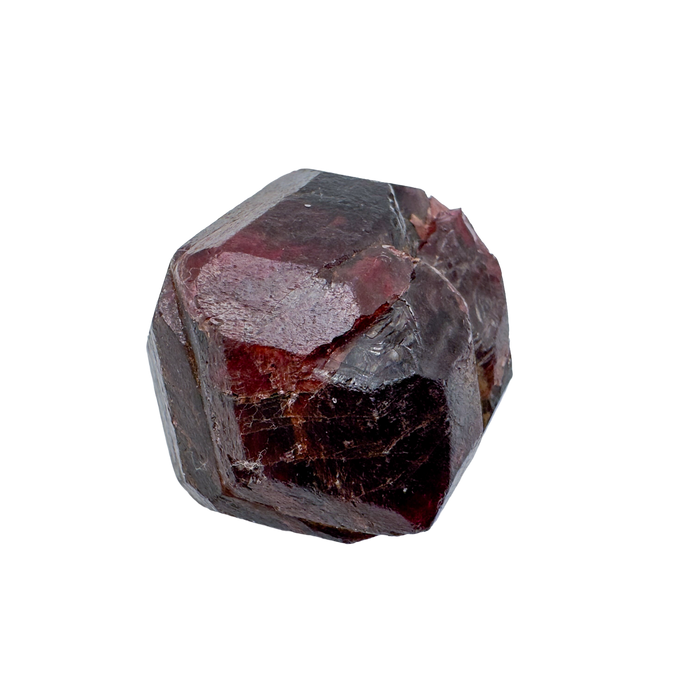
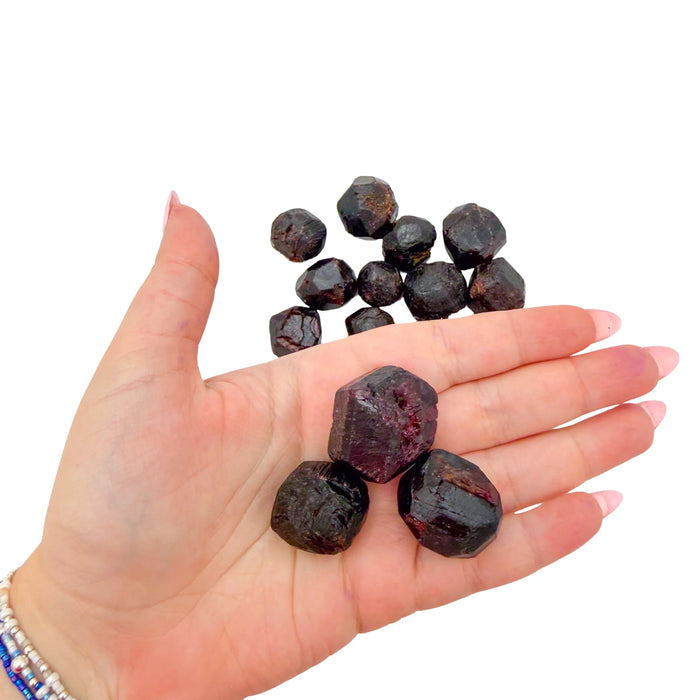
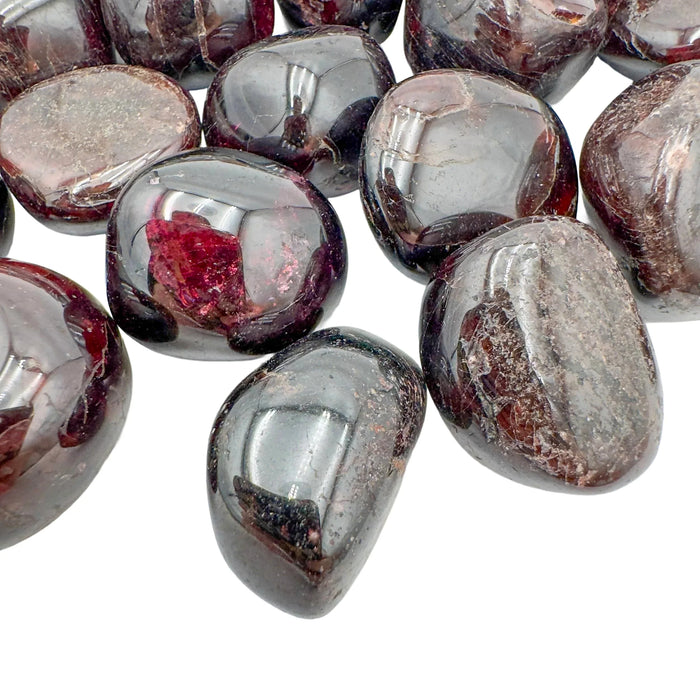
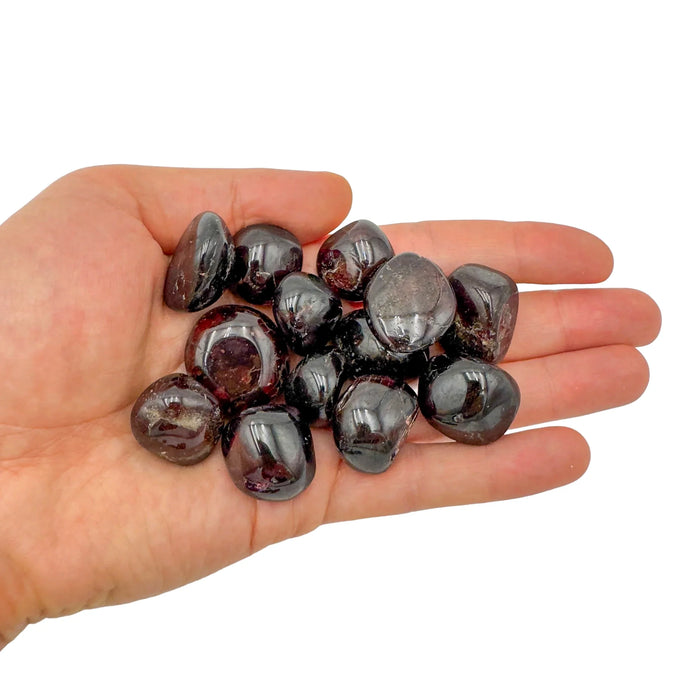
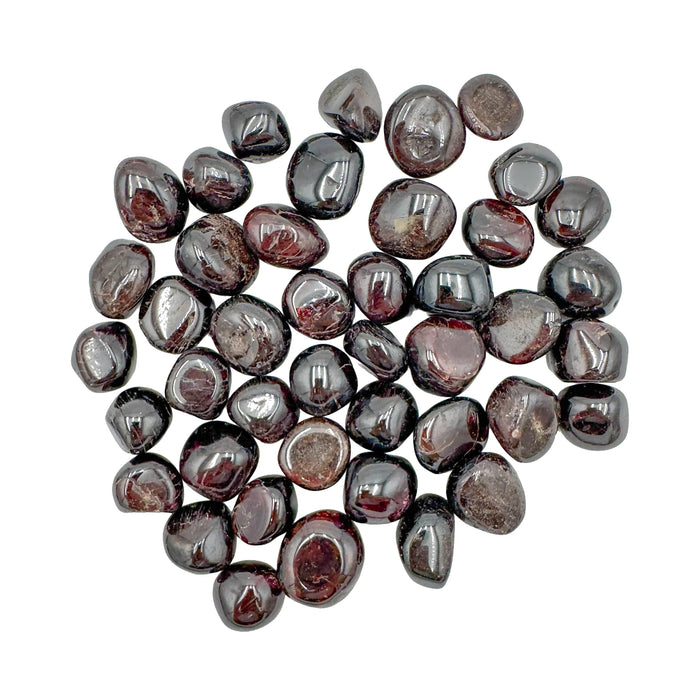
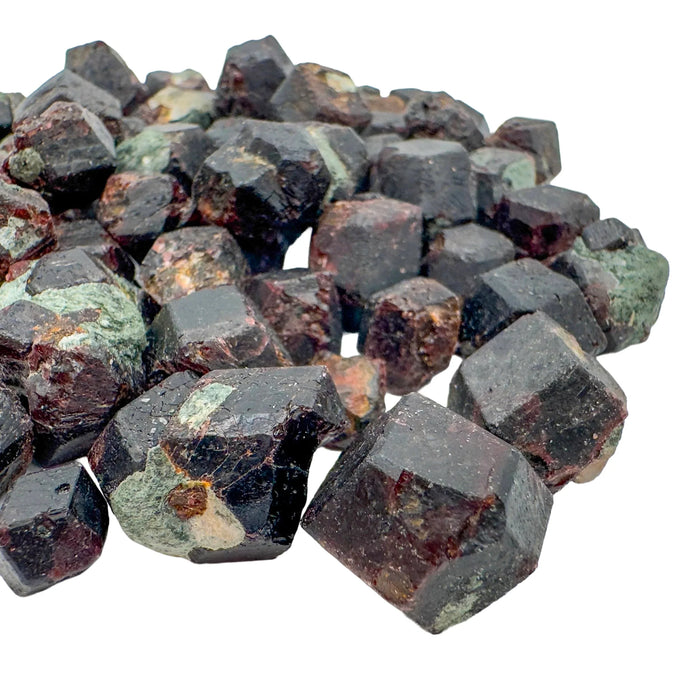
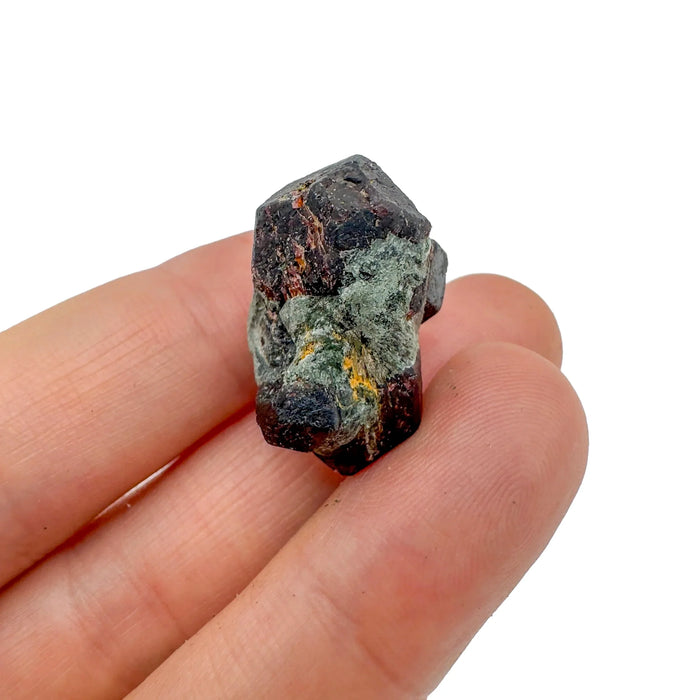
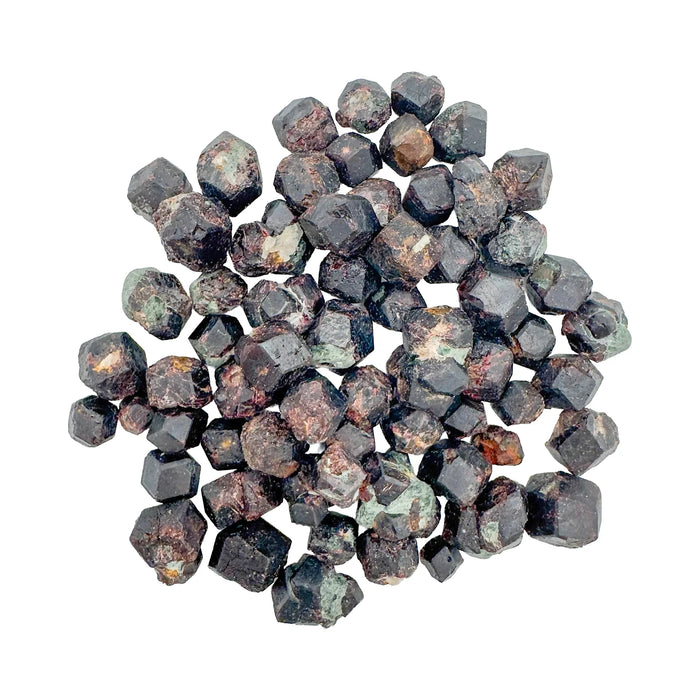
Explore the Crystal GuideThe closest match we carry: Garnet.
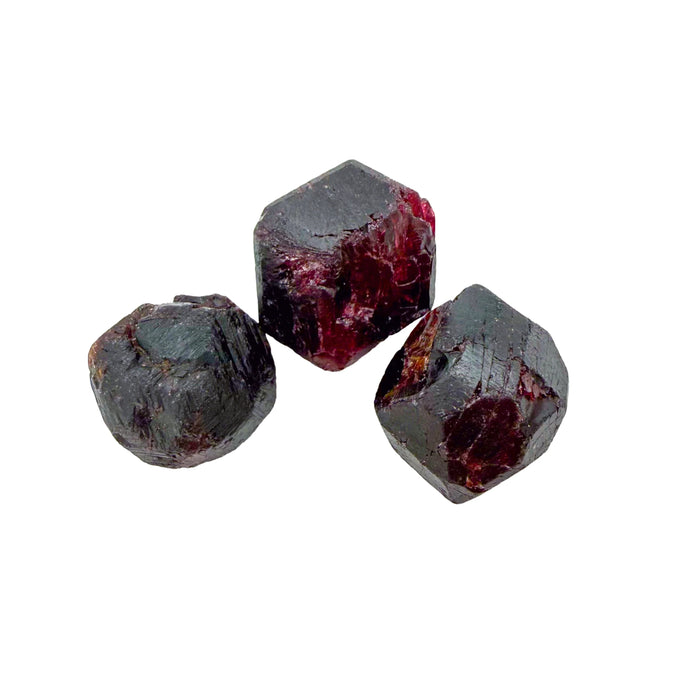
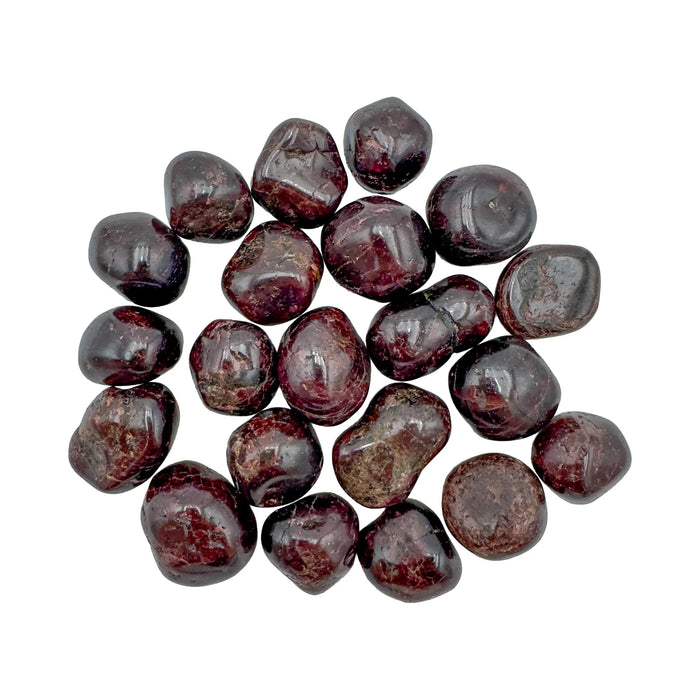
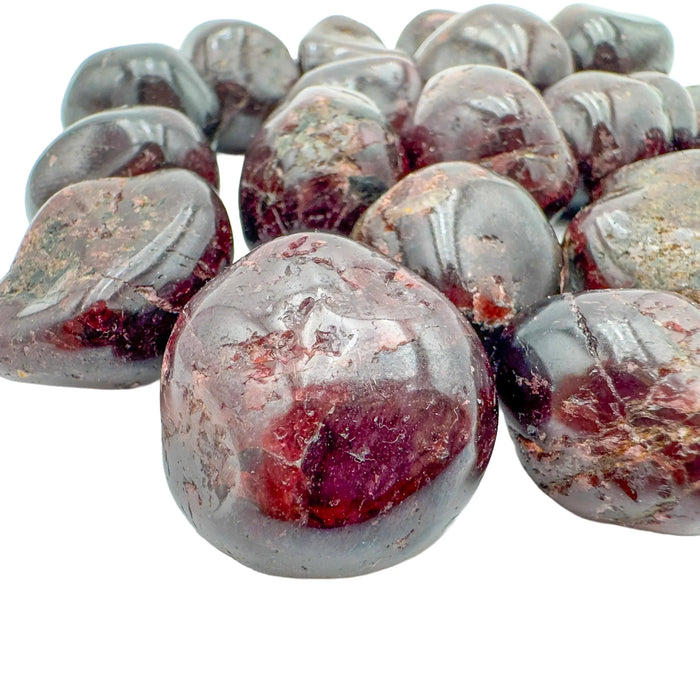
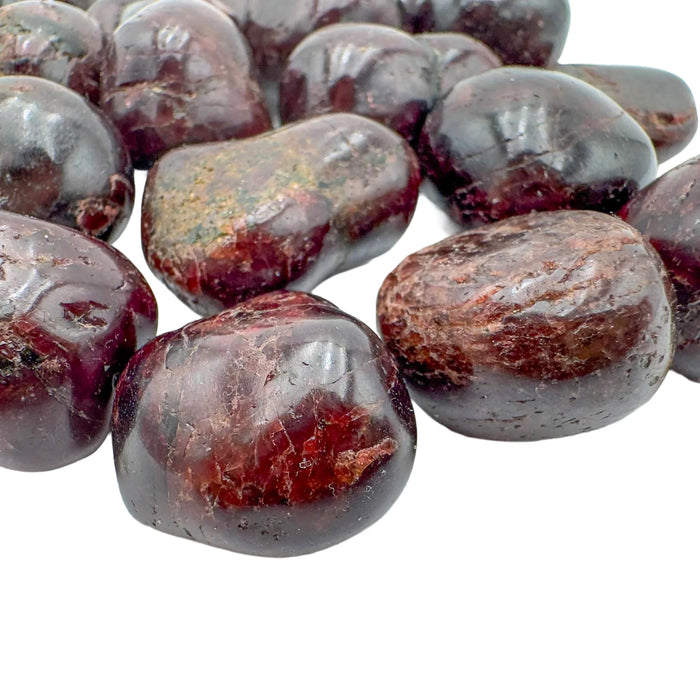
Flux-Grown Ruby is not something we carry. Garnet is the closest match in our collection, and every piece passes our sourcing standards: origin named, treatments disclosed.
- from 1,000+ reviews
- Ships within 72 hoursMonday to Friday, tracked
- 90 days to return itif you do not love it
- Free US shipping over $99$8.99 flat rate under
The Slow Note
New stones go to the list first.
No forwarding, no selling. Unsubscribe in one click. Privacy