


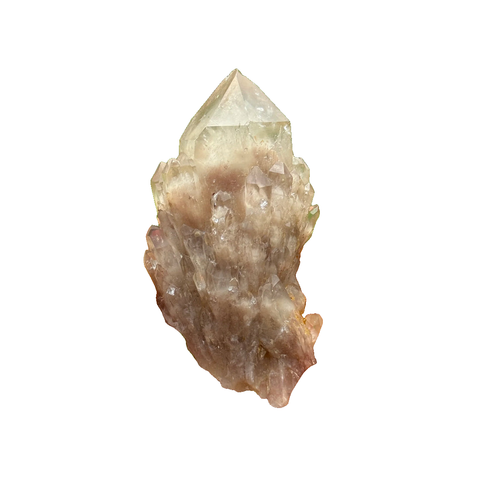
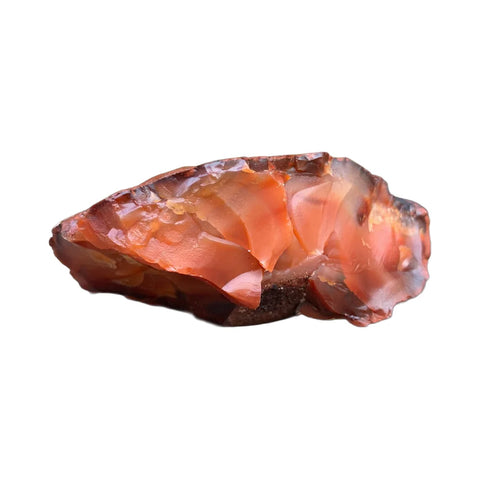
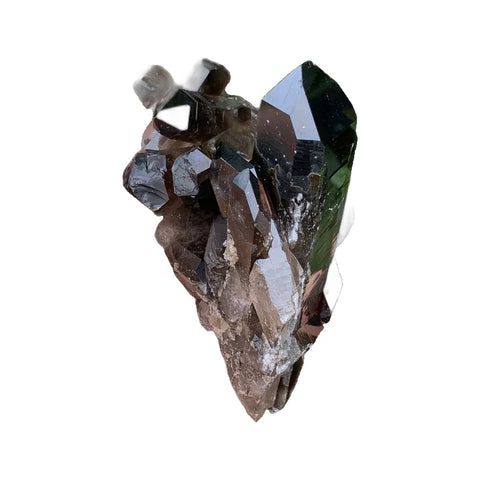
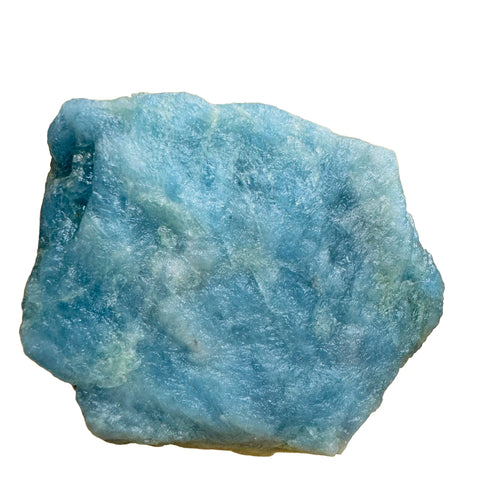















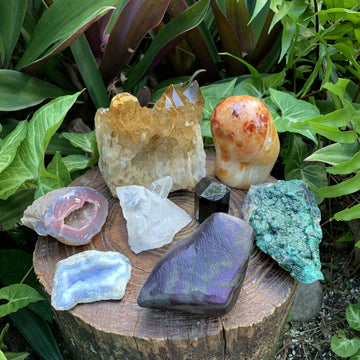
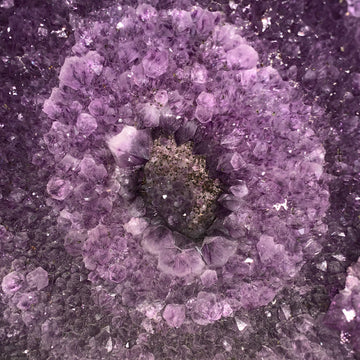







A, AA, and AAA crystal grades are not standardized. Here is what shops actually mean by them, what they should mean, and the questions to ask before you buy.
Crystal Grades Explained: What A, AA, and AAA Actually Mean

If you have shopped for crystals online for more than a few minutes, you have seen letters next to a price. A grade. AA grade. AAA grade. Sometimes AAA+. Sometimes “premium” or “extra fine” or “museum quality.” Each shop seems to use the labels with confidence, and the prices climb as the letters multiply.
Here is what nobody tells you up front. Crystal grading letters are not a standardized industry system. There is no governing body. There is no certification process. There is no published rubric the way there is for, say, diamonds (the four Cs) or coffee (the Specialty Coffee Association cupping scale). What you see on a crystal product page is each shop’s internal rubric, applied by that shop, with no third party checking the work.
That does not make grading useless. It makes it a question worth asking.
This is how the letters actually work, what they should mean, and the questions to ask any seller before you spend on a stone where the grade is doing real work in the price.
Where the letters come from
Crystal and mineral grading borrowed its alphabet shorthand from the gemstone trade. In the cut-gem world, dealers have used letter and number combinations for decades to mark stones that are exceptional, average, or commercial. The grade was always informal in gemstones too, but it was tightened up by repeated use among the same buyers and sellers, and by the four Cs system that came in alongside it.
When the spiritual and decorative crystal market grew through the late 2000s and 2010s, sellers reached for the same letters because they were familiar to buyers. The problem is that the cut-gem rubric did not transfer cleanly. A faceted ruby and a raw amethyst cluster are not graded on the same things. The letters came along anyway, applied to specimens, raw clusters, tumbled stones, palm stones, towers, and points, with each seller filling in their own definition.
Today, when you see “AAA” on a tumbled stone, you are reading a marketing label, not a measurement.
What grading is usually trying to capture
When a careful shop applies a grade, they are usually rating a combination of:
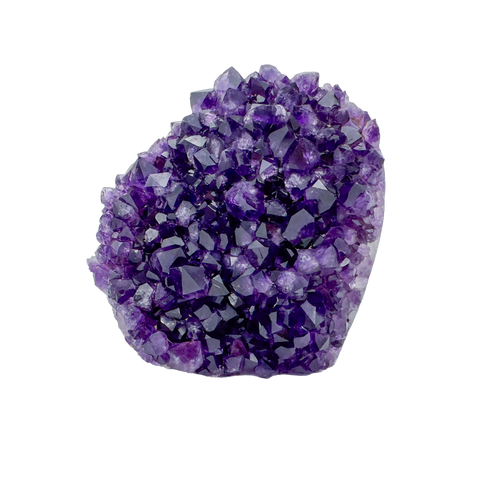
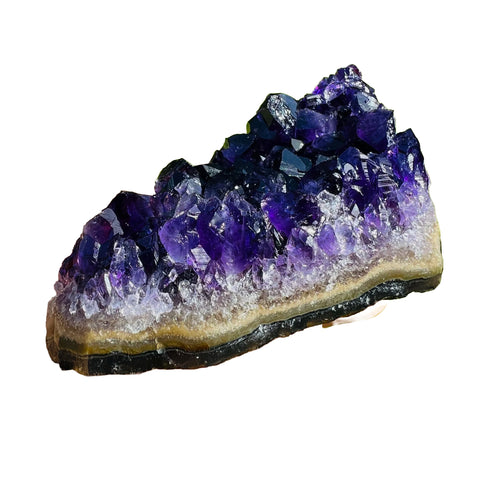
- Color. Saturation, depth, evenness across the piece. A pale, washed-out amethyst is graded lower than a deep purple specimen of the same size.
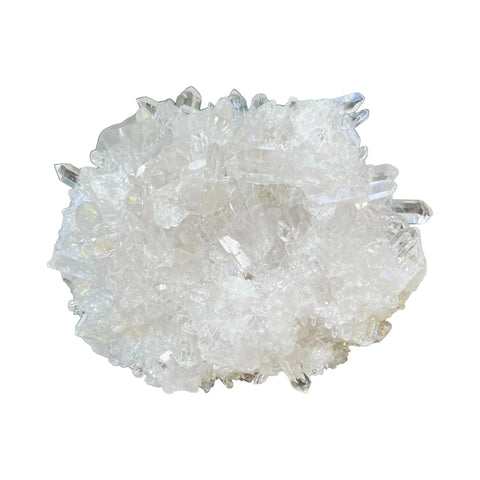
- Clarity. How clean the stone is internally. Visible inclusions, fractures, or matrix can pull the grade down. Note that some inclusions actually make a stone more interesting (phantom quartz, lodolite, dendritic agate). Grading does not always know what to do with them.
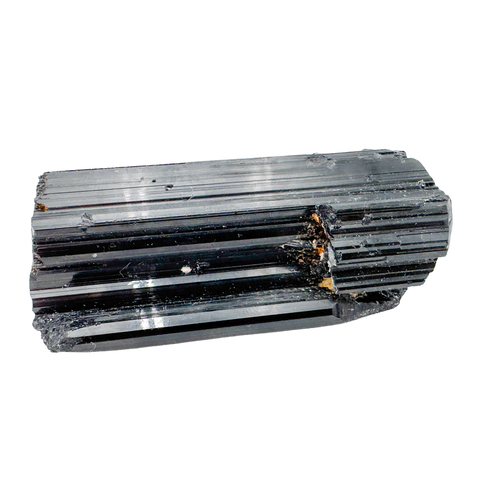
- Form. The shape of the piece. For raw crystals, this means termination quality, point geometry, and how complete the natural form is. For tumbled stones, it means how cleanly polished and how rounded.
- Size and weight. Larger pieces are not always higher grade, but in some categories (palm stones, towers, geodes), size affects the grade because larger pieces are rarer at the same quality.
- Surface condition. Cracks, chips, dings, micro-fractures, dull spots from poor polishing, machine marks. A small visible chip can drop a grade.
- Origin and treatment. Some shops factor origin and treatment status into grade (a natural untreated specimen graded higher than a heat-treated one of similar appearance). Many shops do not factor these in at all and treat them as separate disclosures.
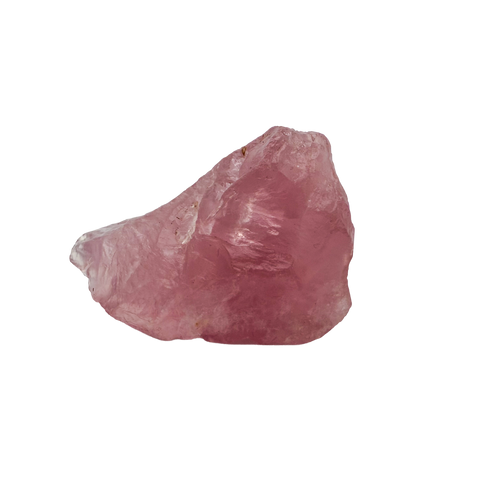
So when you see “AA grade rose quartz tumbled stone,” the seller is telling you something about how this lot scored on the combination of those criteria, in their judgment, against the rest of the lots they handle. They are not telling you it scored against any other shop’s lots.
Raw versus polished changes everything
A raw stone can be “high grade” for its natural formation even if it is not smooth or uniform. It is graded on geological merit: clarity, color, and formation quality. A polished stone is often graded on consistency and craftsmanship, which tends to favor more uniform material.
They are being evaluated by different standards, even though they are the same mineral. A raw amethyst cluster and a tumbled amethyst from the same batch will sit on different rubrics. The AAA on one is not the AAA on the other. Knowing which form you are looking at, and what grading priorities make sense for that form, helps you compare prices fairly.
Why the letters cannot be compared shop to shop
Two shops can both sell “AAA grade amethyst tumbled stones” and the actual stones can look meaningfully different. This is not because either shop is dishonest. It is because each one anchored their grading scale to their own catalog.
A specialty shop that handles only the cleanest hand-selected pieces may grade conservatively, where their AAA is what most other shops would call a once-in-a-batch unicorn. A volume shop that runs huge lots through a tumbler may grade generously, where their AAA is what a stricter seller would call AA or even A at best. Both can be working honestly. Their scales are just different yardsticks.
The takeaway is simple. Use grading to compare lots within the same shop, not across shops. If a single seller offers A, AA, and AAA tumbled rose quartz, you can trust that their AAA is meaningfully different from their A. Across sellers, the letters are decorative.
Crystal grades at a glance
| Grade | Typical meaning | What to expect |
|---|---|---|
| A | Standard commercial | Visible inclusions, varied color, honest character |
| AA | Above average | Cleaner clarity, more consistent color, fewer surface flaws |
| AAA | High end | Clear or richly saturated, minimal inclusions, best photographic quality |
| Specimen / collector | Display-quality | Rare formation, exceptional clarity or color, often single-source |
Important caveat: these are trade shorthand, not universal standards. One seller’s AAA can look like another seller’s A. Always compare side by side, never trust a label alone.
The five questions to ask any seller
Because the letters are not standardized, the work has to come from somewhere. Ask the seller. A good shop should be able to answer all of these without hesitation.
- What does your AA grade mean for this specific stone? Color, clarity, form, surface? Make them describe it in plain terms. If the answer is “it is just our AA,” that is the answer.
- What is the grade range you offer for this stone? A shop that sells only AAA on every single SKU has no real range. Either everything is genuinely top-tier (rare and expensive across the catalog) or the grade is decorative.
- What does this lot look like in person versus the photo? Lighting tricks are real. A reputable seller will tell you whether the photo represents the brightest piece, an average piece, or a pulled hero.
- Are there any treatments? Heating, dyeing, irradiation, coating, stabilization, and resin filling are all common in the crystal market. Treatments are not unethical when disclosed. Hidden treatments are. The grade letter alone does not tell you anything about treatment status.
- What is the country of origin? A specific country answer (Brazil, Madagascar, Zambia, Uruguay) means the shop is tracking their supply chain. “Various” or “we don’t disclose” means they are not.
If a seller cannot answer any one of those five, the grade letter on the price is doing more work than it should. Adjust your expectation accordingly.
How we use grading at Beyond Bohemian
We use A, AA, and AAA on most of our crystals. The grade letter on a Beyond Bohemian product page is our internal rating, applied by us, against our own catalog. Here is how we calibrate it.
A grade. Solid color, average clarity, normal surface condition for the stone type, well-formed but not exceptional. These pieces are good representatives of the species. They are the value-tier choice for someone who wants the stone without paying extra for a hero piece.
AA grade. Better color saturation or evenness, cleaner internal clarity, a more complete natural form for raw pieces, or a tighter and brighter polish for tumbled. AA pieces are noticeably nicer in person than A pieces of the same stone. Most of our catalog sits here. The ideal balance between quality and price.
AAA grade. The top tier of what we offer in a given lot. Strong color, high clarity for the species, well-formed termination or geometry, clean surface, no significant visible flaws. AAA pieces are the ones we would keep if we were keeping anything for ourselves. We do not stock AAA across every crystal simply because of the rarity of it, a lot of the highest quality material gets put in the jewelry trade pipeline.
We disclose treatments separately on every product where they apply. The grade is a quality rating, not a treatment disclosure. Both pieces of information should be on a product page if they exist, and both are on ours when they apply.
You can read more about our standards on our Ethical Sourcing Criteria page, and how we think about disclosure in general on the Beyond Ethical Sourcing page. Our full Crystal Guide covers individual stones with their grading patterns. The catalog itself is at our full collection, and you can browse raw specimens or tumbled stones separately.
Frequently asked questions
What does A, AA, and AAA grade mean for crystals?
These are trade shorthand for quality, not universal standards. A typically means standard, AA means above-average clarity or color, and AAA means high-end. Different sellers use the labels differently.
Is AAA grade always better?
It depends on what you are looking for. AAA stones tend to have stronger color and fewer visible inclusions, but they cost more and the difference is not always meaningful for daily use.
How do I know if a grade is honest?
Compare across sellers. If a seller’s AAA looks like another seller’s A, you have got a marketing-first grading system. Honest sellers grade conservatively and explain their criteria.
Should I pay more for higher grades?
Pay more when the difference matters to you visually or for a specific purpose. Pay less when natural variation works just as well for what you are doing.
Keep reading
If you want to go deeper from here, you can read the case for natural variation, natural vs treated, what ethical pricing looks like, or the Beyond Ethical standard.
What to take with you
Grading letters are a useful shortcut when used inside one shop’s catalog. They are decorative when read across shops. They tell you nothing on their own about country, treatments, or how the stone was sourced. The five questions above are the ones that protect you, and any seller who answers all five plainly is one worth paying attention to.
If you ever want to know how we graded a specific piece, ask. We will tell you exactly why.