

















What does a "Certificate of Authenticity" actually prove about a crystal? Most are written by the seller. Here's what to ask for instead, plus five questions worth more than any certificate.
Certificates of Authenticity for Crystals: What They Mean, What They Don't

When a crystal arrives in the mail with a printed certificate inside the box, signed and stamped, it feels reassuring. It looks like proof. For a lot of buyers, that’s the moment they feel they’ve made a safe choice.
We get it. The crystal industry has very little outside oversight, and a piece of paper feels like a hand to hold. We want to be straight with you about what those certificates usually mean, because in most cases they mean less than they look like.
This isn’t a hit piece on any particular shop. The pattern is industry-wide, and once you can see it, you’ll never read a certificate the same way again.
What “authenticity” can actually mean for a crystal
The word authentic gets stretched in this market. Before any document is worth anything, you have to know which question it’s answering. There are usually three.
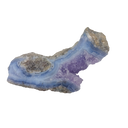
One: identity. Is the stone what the seller says it is, geologically. A piece sold as Aquamarine should actually be Aquamarine, not blue glass, not dyed quartz, not heat-treated colorless beryl with no disclosure. A piece sold as Larimar should be Larimar from the Dominican Republic, not blue calcite or dyed howlite from somewhere else.
Two: treatment. Has the stone been altered, and how. Heating, dyeing, irradiation, stabilization, and coating are all real and all common. None of them are inherently wrong. Hiding them is. Heat-treated citrine, for example, is an honest product if it’s labeled as heat-treated citrine. The same stone sold as “natural citrine” is misrepresentation, even if everything else about it is true.
Three: provenance. Where did the stone come from, and who handled it before it reached you. This is the hardest question to answer truthfully, and the one most authenticity claims quietly skip. A certificate that says “ethically sourced” without naming a country, a region, a supplier, or a cooperative is making a marketing claim, not a sourcing claim.
A certificate that doesn’t address all three isn’t really verifying authenticity. It’s confirming that someone wrote down a label.
Where most crystal certificates come from
Here’s the part that surprises people. Most “Certificates of Authenticity” you’ll see in the crystal world are written by the same business that’s selling you the stone. The owner signs it. Sometimes a staff member countersigns it. Sometimes there’s a stamp.
That isn’t third-party verification. It’s the seller saying, in nicer typography, what’s already on the product page.
There’s nothing illegal about it. There’s also nothing meaningful about it in a verification sense. A document gains weight when an independent party who doesn’t profit from the sale puts their name on it. A document signed by the people you bought from is a brand asset, not a proof.
You’ll sometimes see certificates that look more elaborate. Embossed paper. Gold seals. Wax. Serial numbers in a register the shop maintains itself. None of those features verify the stone. They verify the shop’s design budget.
The notary question, explained
A subset of crystal certificates take this further by adding a notary stamp. A notary stamp can make a document feel official in a way that’s hard to argue with. It’s worth knowing what a notary actually verifies.
A notary public confirms two things: that the person signing the document is who they say they are, and that they signed it in the notary’s presence. That’s the entire scope of the notary’s role. A notary does not verify what the document says is true. A notary does not test the stone, contact the supplier, examine the supply chain, or do any geological evaluation.
A notarized statement that a crystal is “ethically sourced from Madagascar” tells you the seller really did sign that statement. It tells you nothing about whether the stone is from Madagascar, and nothing about how it was sourced. The signature is real. What was signed is unverified.
This is not a critique of any specific shop using this approach. It’s a description of how notarization works in any context, including real estate, contracts, and powers of attorney. The notary verifies the signing, never the substance.
What independent verification actually exists
We’ll be straight with you. There’s no governing body for ethical crystal sourcing. There’s no equivalent of the Kimberley Process for diamonds, no organic-style certification, no third-party audit standard that crystal sellers can submit themselves to and earn a stamp from.
Some materials have partial frameworks worth knowing about.
For finished gemstones intended for jewelry, like cut faceted sapphires or polished diamonds, there are gemological laboratories such as GIA, AGS, and IGI that test stones for identity, treatments, and quality. Their reports are real third-party verification. They cost money, they take time, and they’re priced into the gem economy. Most rough specimens, tumbled stones, palm stones, and decorative pieces sold in the crystal world don’t go through these labs because the cost of the report exceeds the cost of the stone.
For lab-grown crystals, third-party certification of origin (lab vs natural) exists and is meaningful.
For ethical sourcing specifically, no such third-party program exists at scale in the crystal industry. There are individual cooperatives, fair-trade initiatives in specific countries, and a few traceability programs for higher-value stones. None of them apply to the average tumbled rose quartz on the market.
That doesn’t mean nothing is verifiable. It means real verification looks like documentation, not certificates. A real chain of custody includes things like:
The country and, where it’s safe to share, the region of origin. The name of the supplier or cooperative. Treatment disclosure on every stone, even the boring ones like wax-stabilized turquoise or heat-enhanced citrine. Photographs of the actual inventory, not stock photography. Notes on what the seller will and won’t carry, and why.
None of that requires a notary. Most of it lives on the website, on the product page, in the policies. If a shop hides their sourcing decisions but hands you a beautifully designed certificate with the order, the certificate is doing the work the policies should be doing.
Five questions worth more than any certificate
If you’re considering a piece from a shop, these five questions are worth more than the document in the box. They work because they’re hard to fake on the spot.
1. What country is this stone from, and how do you know?
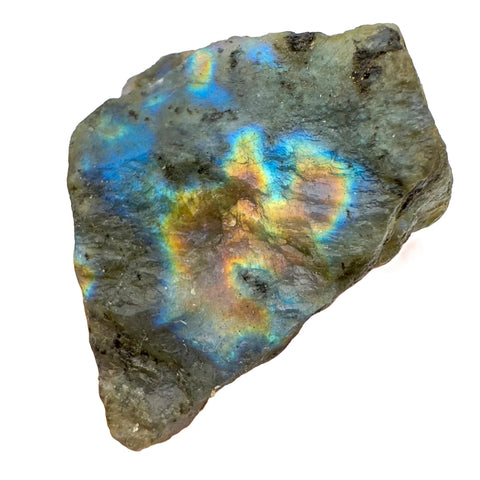
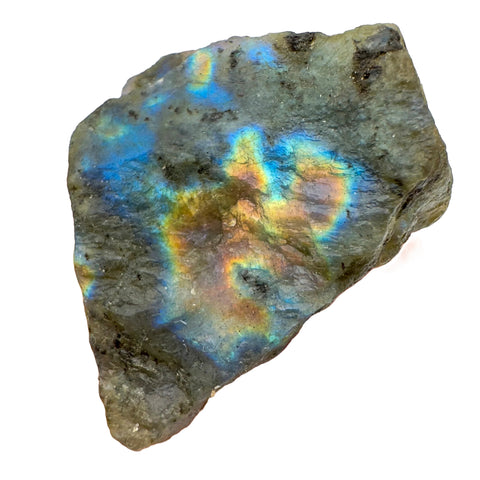
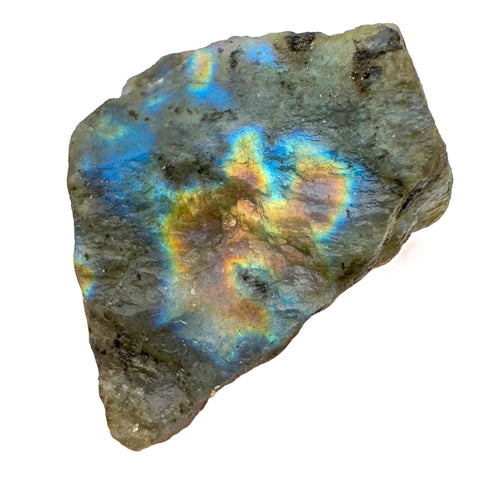
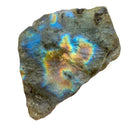
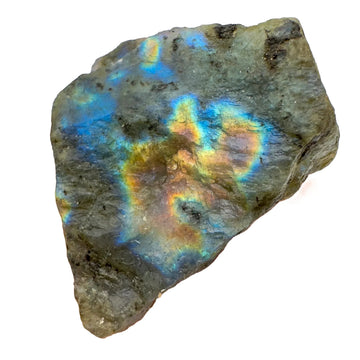
A real answer includes a region or city, not just “Africa” or “South America.” If a shop selling labradorite can’t tell you that the bulk of commercial labradorite comes from Madagascar (and increasingly from Russia, Finland, or Canada), they likely bought wholesale from a middleman and are guessing. A confident answer cites the supplier or trading hub, even if the exact mine is held back for safety reasons.
2. Has this stone been treated? If yes, how?
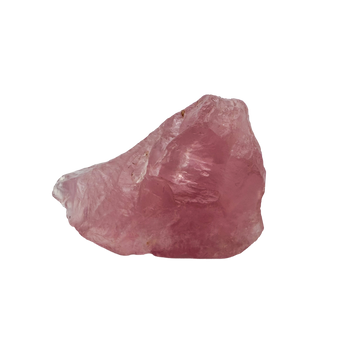
A confident answer comes back fast and specific. A defensive answer (“all our stones are 100% natural”) is a tell, because almost no commercial stone supply is 100% untreated. Most blue topaz on the market has been irradiated. Most citrine started as amethyst that was heated. Most red coral has been dyed. Most turquoise has been stabilized. Pretending otherwise isn’t honest. The treatment isn’t the problem. Hiding it is.
3. Who handled this before it reached you?
Mine, lapidary, exporter, importer, wholesaler. The fewer hops a shop can name, the closer they probably are to the source. The more they can name, the more likely they actually traced it. “Direct from the mine” is a phrase worth a follow-up question, because it’s a marketing line as often as it’s a fact.
4. What do you not carry, and why?
This is the question that separates a sourcing standard from a sourcing claim. Real standards involve stones a shop has chosen to walk away from. Maybe a material from a region where the labor practices haven’t been verifiable. Maybe a color that only exists through a treatment they don’t agree with. Maybe a supplier they refuse to work with after a quality or ethics issue. If a shop carries everything in the catalog, they don’t have standards. They have inventory.
5. Can you tell me about a time you returned or refused a shipment?
This is the test. Anyone who actually vets suppliers has stories. The story might be about color quality, treatment disclosure, paperwork mismatches, or worker conditions. The point isn’t the specific incident. The point is that vetting produces stories, and stories are harder to fake than certificates. A shop that has never refused a shipment in years of trading is either very lucky, very new, or not vetting.
You don’t need to ask all five at once. Pick one. Listen to the shape of the answer. The answer tells you almost everything.
How we approach this at Beyond Bohemian
We don’t issue Certificates of Authenticity. We thought about it. We decided a one-page document signed by us would do exactly what we just described above, which is reassure you without verifying anything. It would look great. It would mean little.
Instead, we do this. Every product page lists the country and region of origin where we can share it safely. Every page discloses the treatments that exist in the market for that material, and which we accept. Our Crystal Guide pages go deeper, with the geology, the supply chain context, and the materials we’ve chosen to walk away from.
You don’t need a login to read any of it. There’s no email gate. No serial number to enter. The information lives where it can be checked.
If you ever want the deeper context on a specific stone you’re considering, write to us. We’ll tell you what we know, what we don’t, and where the uncertainty sits. That’s the document we can actually stand behind.
Ready to start? Take a look at our Crystal Guide for stone-by-stone sourcing notes, or browse the collection.