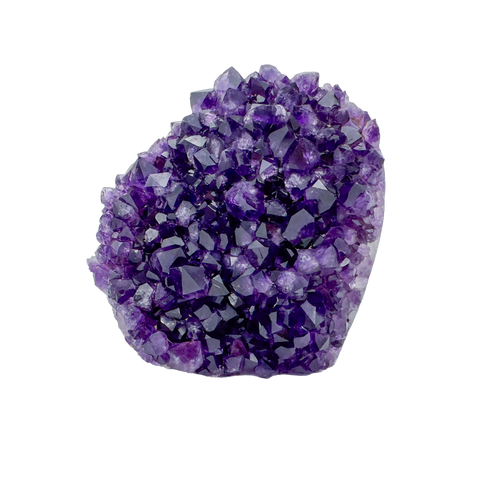
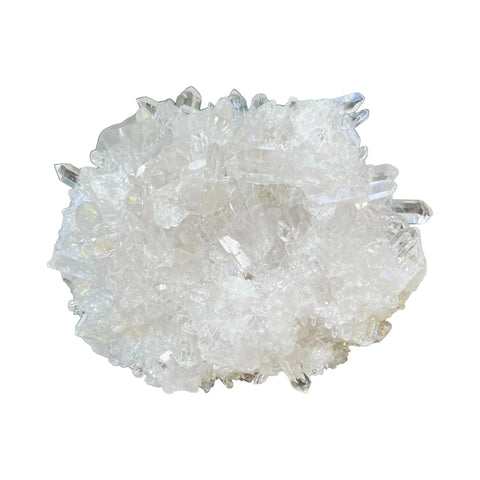
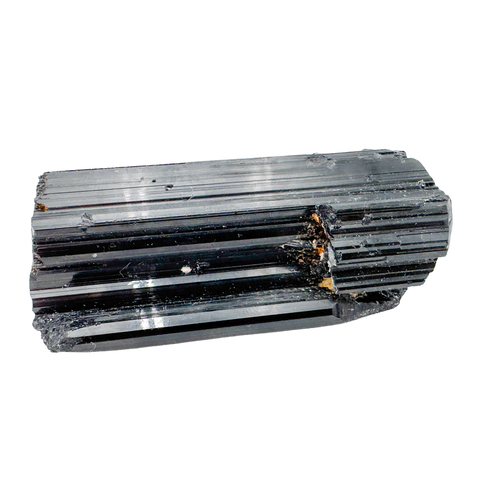
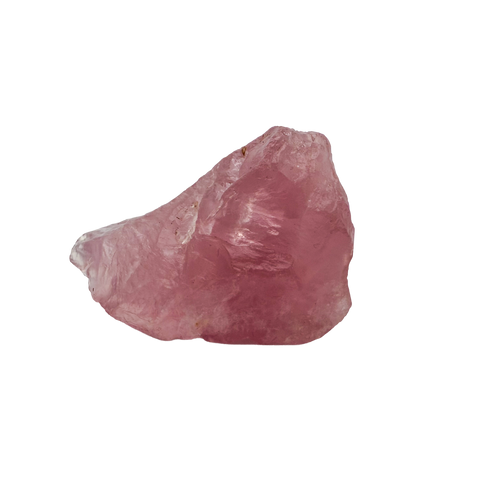
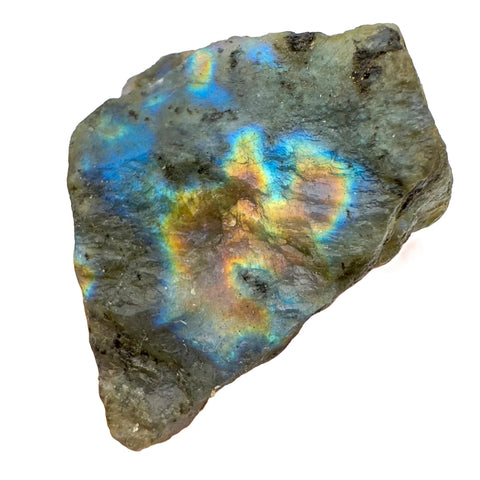
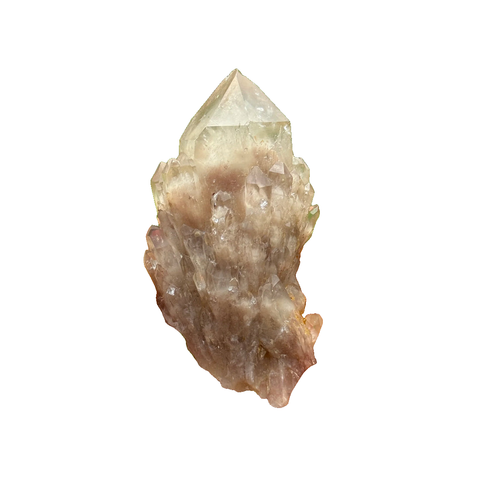
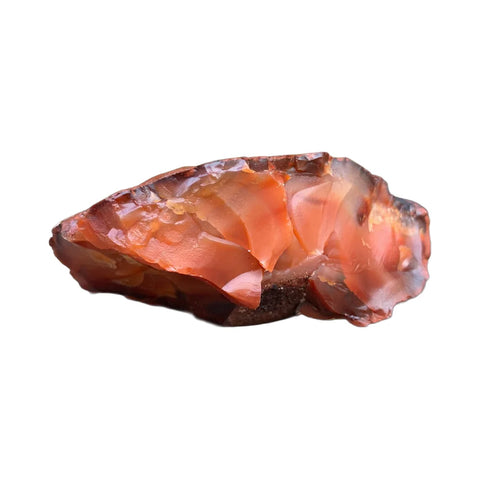
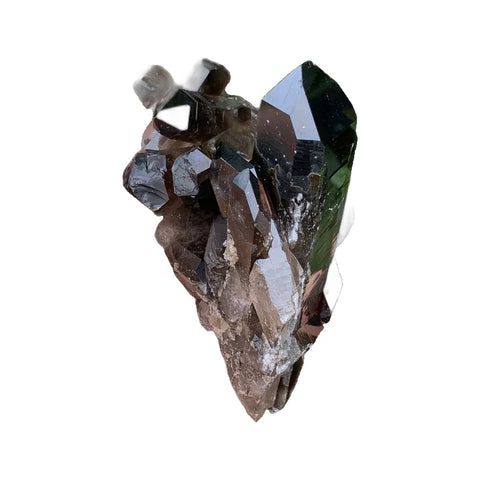






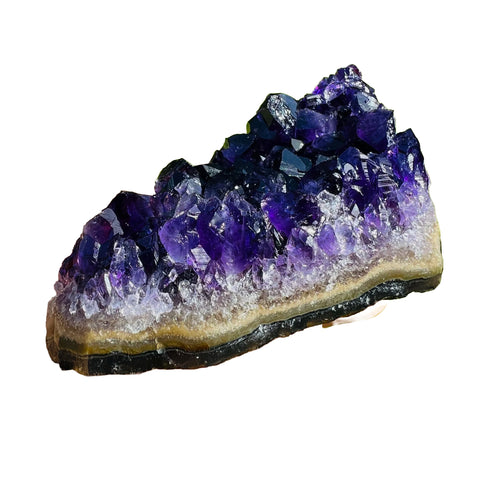





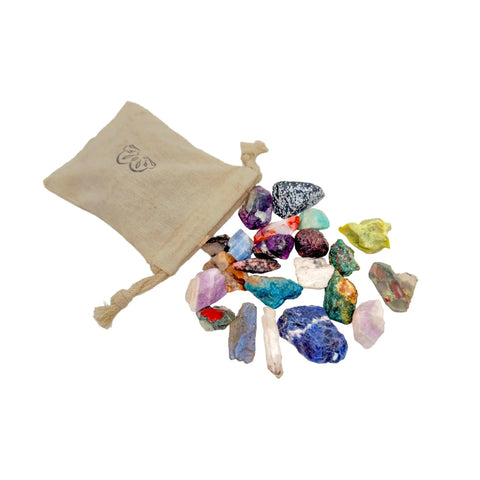
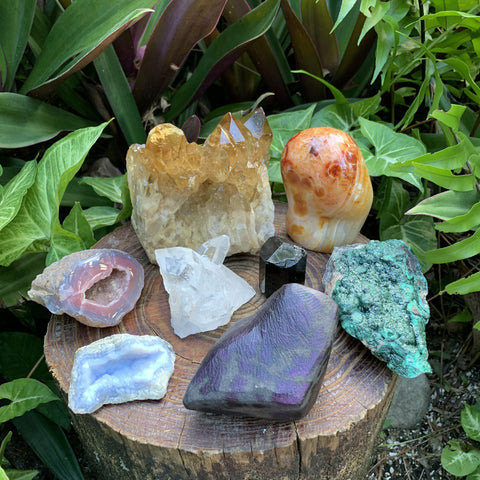




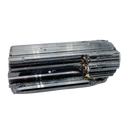
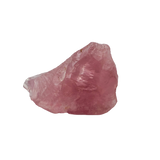
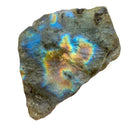
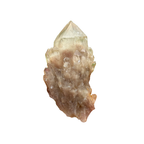


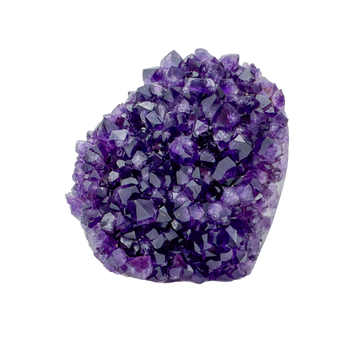
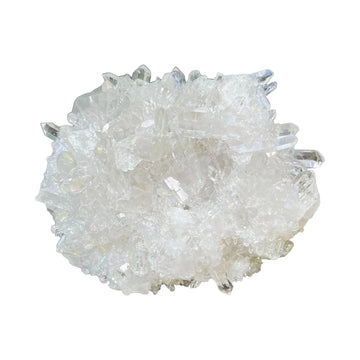
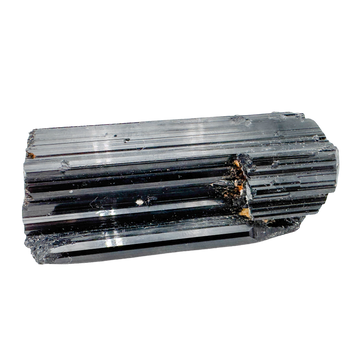
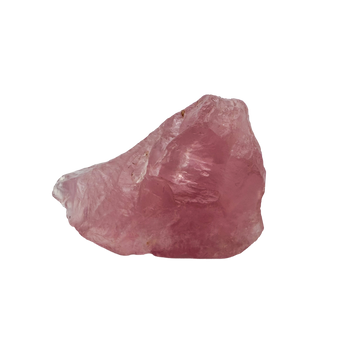






The questions that separate a piece worth owning from a shelf decoration. Origin, treatment, grade, and price logic, in plain language.
What to Know Before You Buy a Crystal: A Buyer's Field Guide

If you’ve ever added a crystal to your cart and felt a small pause, a quiet second of wondering whether you’re really doing something good, you’re not alone.
Most people feel that pause at some point. You want the piece. You like what it represents. And underneath all of that, a quieter question: where did this actually come from, who handled it before it reached you, and is any of what the seller wrote about it true?
That question deserves a real answer. This guide is our attempt to give you one.
We’ve been sourcing crystals for over a decade. We’ve traveled to origin countries, built direct relationships with small-scale producers, and walked away from more deals than we’ve closed. We’ve also read the honest journalism about this industry, and we think the story that reaches most shoppers is either too glossy or too bleak to be useful. The truth is somewhere in between, and it’s actually navigable once you know what to look for.
So here’s what we want to do. We’re going to walk through five realities of how crystals reach you, and for each one we’ll show you what’s actually happening, what to look for as a buyer, and what we’re doing about it inside our own sourcing work. No shame. No perfection theater. Just a clearer picture and a set of tools you can use the next time you shop.
This will take about fifteen minutes to read. If you want the short version, scroll to the checklist at the end. If you want to understand the industry well enough to shop it with confidence, stick with us.
A quick reframe before we start
Here’s a metaphor that helps. Think of the mine as a farm. The stone grew there, the people there tend it, and what reaches you is a harvest. Like food, some of it is grown with care and some is grown in ways that strain the land and the people. Like food, you can ask where it came from, who grew it, what was added to it, and how it traveled to your table.
The difference is that with food, you have labels, regulators, and decades of public pressure forcing transparency. With crystals, you mostly have the seller’s word.
That’s not a tragedy. It’s an opportunity to develop your own eye, ask better questions, and find the small number of sellers who treat transparency like a daily practice instead of a marketing claim.
Let’s get into it.
1. Crystals went from niche to mainstream, and the supply chain is still catching up
It’s worth starting with the context most people skip.
A decade ago, crystals were a niche product. You found them at rock and mineral shows, small metaphysical shops, and a handful of online sellers who knew their customers by name. Today, they’re mainstream wellness products sold on Amazon, TikTok Shop, Etsy, Instagram, and in chain retailers. Industry analysts put the global healing crystal market in the low billions, and the broader wellness market it sits inside is measured in the trillions. The exact numbers vary, but the direction doesn’t. Demand has climbed sharply, and it’s still climbing.
When demand for a lightly regulated natural resource grows this fast, three things tend to happen.
First, mining accelerates in places that can’t fully absorb it. Small operations scale up, and larger operations push into new deposits, sometimes faster than local governance can keep track.
Second, the supply chain gets longer. More middlemen, more countries involved, more hands between the miner and the shopper. Every new hand is another place where information about origin and handling quietly disappears.
Third, treatments and imitations proliferate. When honest material can’t meet demand, the dishonest material fills the gap. That’s how dyed howlite ends up sold as turquoise, and heated citrine ends up sold as the rare natural form. The stones themselves didn’t change. The market around them did.
None of this means crystals are bad or that buying one makes you complicit in something. It means the industry grew faster than its own practices could catch up, and that the responsibility for honest sourcing has fallen largely on a small number of sellers who choose to do the work.
What to look for as a buyer
Notice when you’re buying on impulse and when you’re buying on trust. Impulse buying on the open marketplaces funds the shortest, least accountable corners of the industry. Trust-based buying, where you looked at a specific seller and decided based on what they told and showed you, funds the sellers who are trying to do it well.
Neither choice is morally wrong. But they support very different parts of the market.
What we’re doing about it
We treat every intake decision as a filter, not a shortcut. We don’t take on new material unless we can answer three questions for ourselves first: where it comes from, who we’re buying it from, and what we know about the conditions at origin. If any of those three come back unclear, we pass on the lot.
That discipline is why our catalog is smaller than some. It’s also why, when you ask us about a piece, we have an answer.
2. Your stone’s journey is usually anonymous. It doesn’t have to be.
Here’s the typical path a crystal takes to reach an online shop.
A small-scale miner or a mid-sized mining operation in Brazil, Madagascar, Peru, India, Pakistan, China, or one of a dozen other producer countries pulls the rough material from the ground. The miner sells it to a local buyer. The local buyer sells it to a consolidator. The consolidator sells it to an exporter. The exporter ships it to an importer, sometimes passing through a lapidary (the workshop that cuts and polishes rough material) along the way. The importer sells it to a wholesaler. The wholesaler sells it to a retailer. The retailer sells it to you.
That’s seven hands, minimum. Often more.
At each step, information gets lost. The miner might know exactly which pocket the amethyst came from. By the time it reaches the retailer, it’s labeled “Brazil.” By the time you see it, sometimes not even that.
This is why the phrase “ethically sourced” on a product page, by itself, tells you almost nothing. It’s not always a lie. Often the retailer genuinely believes it. They just don’t have the information to back it up, because nobody up the chain gave it to them.
The supply chain is a game of telephone. The more hands between the miner and you, the more the story changes.
What to look for as a buyer
Before you buy, ask the seller two questions.
First: what country and region is this stone from? If the answer is just the country with no region, or “we’re not sure,” that’s useful information. It tells you the chain is long.
Second: how do you know? The answer you’re looking for is a story. A supplier relationship, a mineral show, a trip, a document. Not “our sourcing is ethical.” The story is the evidence. The slogan is the absence of evidence.
Green light: the seller answers with a specific person, place, or relationship.
Yellow light: the seller answers with a vague ethical claim and moves on.
Red light: the seller doesn’t answer at all.
What we’re doing about it
We work across five different kinds of sourcing relationships. We call them Sourcing Pathways, and every country we buy from is mapped to one of them. Here’s the framework, because you should be able to see it.
Direct Source. We buy from the miner or mine-adjacent family operation with no consolidator in between. This is the shortest possible chain.
Artisan Network. We buy from small-scale artisan groups and single-family lapidaries where we know who runs the operation and can verify conditions through direct communication and photographic documentation.
Community Partnership. We buy from cooperatives or community mining groups where the economic value stays local, built over multiple years of repeat purchasing.
Verified Trade Partner. For countries where direct or artisan relationships aren’t feasible, we work with specialist mineral suppliers who document their own upstream sources, and whom we’ve vetted against our own criteria.
Curated Acquisition. Occasionally we acquire one-of-a-kind specimens from private collections, estate sales, or trusted dealers at mineral shows, with full provenance disclosed.
Every product page on our site tells you which Pathway applies to that country of origin. You don’t get a vague claim. You get a specific, nameable kind of relationship, with a defined level of verification behind it.
We also want to be honest about what this framework doesn’t do. It doesn’t mean we’ve visited every mine. It doesn’t mean we’ve audited every lapidary. The crystal industry is global, opaque, and largely unregulated, and any seller who tells you they have perfect visibility is not telling you the full truth. What we can tell you is the relationship behind each piece and the standards we apply before we buy. That’s the honest version. We think it beats the alternative.
3. Treatments aren’t the problem. Silence about them is.
This is the point that surprises people most, so we’ll say it plainly. A treated stone is not automatically a dishonest stone. Treatments have existed in the gem and mineral world for centuries. Some are gentle, traditional, and fully accepted in the trade. Others are aggressive and change the nature of the material. The issue isn’t the treatment itself. It’s whether the seller tells you.
Here’s a quick map of the most common treatments you’ll encounter.
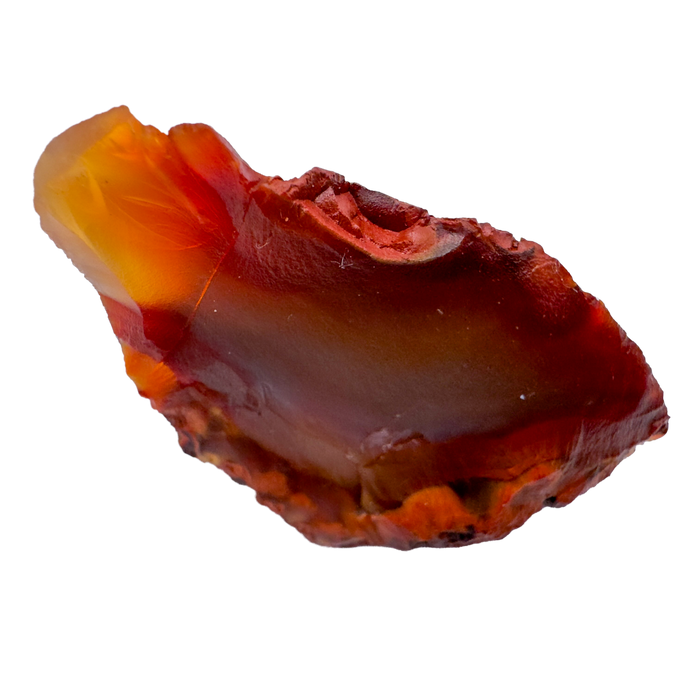
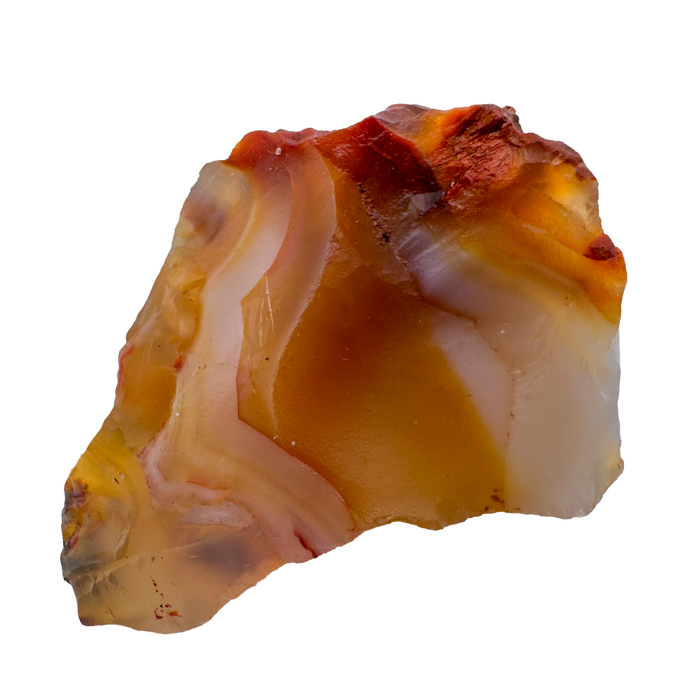
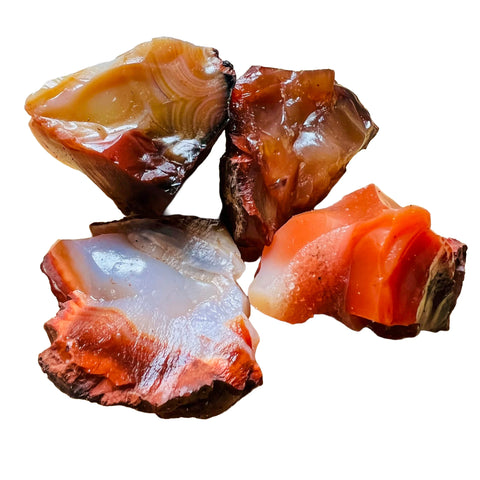
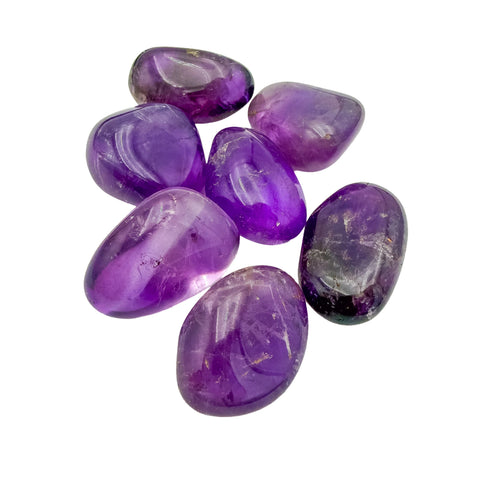
Heating. Heating is one of the oldest treatments, used to deepen or shift color. Most “citrine” on the market is heated amethyst. Some carnelian is heated agate. When disclosed, this is a perfectly reasonable product. When sold as “natural citrine” at a premium, it isn’t.
Irradiation. Some stones are exposed to controlled radiation to change color, most commonly with smoky quartz and blue topaz. The resulting material is safe to handle. The practice itself is widespread and rarely disclosed at the retail level.
Dyeing. Porous stones like howlite, magnesite, and lower-grade agates are dyed to produce cheap substitutes for turquoise, lapis, and other high-demand materials. This is where most consumer deception happens. The stone is real. The color is not.
Coating. Quartz crystals are sometimes vapor-coated with metals to create rainbow finishes sold as “aura quartz,” “angel aura,” “flame aura,” and similar names. These are manufactured decorative products, not natural phenomena.
Stabilization. Softer or fragile materials like turquoise and chrysocolla are often impregnated with resin to make them durable enough to be cut and set. Stabilization is standard practice in jewelry, and most turquoise on the market is stabilized. It’s a problem only when it’s sold as untreated.
None of these treatments are inherently wrong. All of them become wrong the moment the seller hides them to charge a higher price or pretend the material is something it isn’t.
What to look for as a buyer
For a small number of stones, you can almost assume a treatment is present unless proven otherwise. Citrine is the classic case. Natural citrine exists, but it’s rare and expensive, and almost everything sold under that name is heat-treated amethyst. Bright turquoise at a low price is almost always dyed howlite or magnesite. Rainbow-plated quartz is always coated.
For everything else, the question to ask is simple: has this stone been treated in any way, and if so, how?
Green light: the seller names the treatment (or confirms there isn’t one) without prompting.
Yellow light: the seller gives a soft answer like “as far as we know” without checking.
Red light: the seller insists “all natural” on a stone where treatment is industry standard.
What we’re doing about it
We disclose treatments. Every time.
If a stone is heated, we say it’s heated. If it’s stabilized, we say it’s stabilized. If it’s dyed, which is rare for us because dyed material rarely meets our intake standards in the first place, we would say it’s dyed. We also tell you when a stone is fully natural, because that’s the other half of the same honesty.
We try not to moralize about the practice of treatment. Some of our most beautiful pieces are gently heated. The issue has never been the technique. It’s been the pattern of omission that lets a treated stone masquerade as something it isn’t, and lets a buyer pay for something they didn’t agree to.
Think of treatments like seasoning. Some are honest. Some are hiding something. The seasoning isn’t the problem. The hiding is.
4. Crystals are finite, and how they’re mined matters more than the label
Crystals are a non-renewable resource. Every piece you see took millions of years to form under specific geological conditions, and once a pocket or vein is mined out, it’s gone. That’s not a criticism. It’s geology. But it does mean that how a mine operates, how much land it disturbs, how much waste it produces, and whether it restores what it disturbs, really does matter.
Here’s where the industry reality is more nuanced than the loudest coverage suggests.
There are two broad categories of mining behind almost every crystal on the market. Industrial mining uses heavy equipment, explosives, and large-scale earth moving. It produces massive volumes. It can also contaminate water, destabilize terrain, and leave landscapes that take decades to recover. Many of the stones sold at the bottom of the wellness market trace back to operations like these, sometimes as byproducts of copper, iron, or lead mining.
Artisanal and small-scale mining, by contrast, uses hand tools, small teams, and minimal machinery. The ecological footprint per site is much smaller. Pockets are worked by hand, waste is often reused locally, and the land disturbance is recoverable. Much of the world’s finest crystal material, the pieces that actually make it into serious collections and lapidary work, comes from operations like these. The same artisanal methods that produce the best material also tend to produce the lowest environmental impact, because the two are linked.
This doesn’t mean small-scale mining is perfect. Informal operations can still cause local deforestation, stream sedimentation, and soil erosion, especially where they scale without oversight. But the scale of harm is orders of magnitude different from industrial extraction, and the path to better practices is much shorter when the operation is small and the relationships are direct.
What to look for as a buyer
Favor sellers who talk about their sources in terms of small-scale or artisan production. Be more skeptical of sellers whose inventory mirrors big-box volume without any sourcing detail. If a shop has hundreds of tumbled stones, all cheap, all identical, that’s usually a signal that the material came out of industrial-scale processing, not artisan hands.
You can also look for specificity about form. Artisan material tends to be inconsistent in size, slightly varied in color, and sometimes imperfect in finish. Those imperfections are actually quality signals. They mean the stone was selected and handled by humans, not graded by machine.
What we’re doing about it
The large majority of our catalog comes from artisanal and small-scale sources. This isn’t a coincidence or a marketing choice. It’s because our grading standards, what we call our Select Standard, can only be met by material that was selected and handled carefully at origin. Machine-sorted industrial volume doesn’t pass.
We also work deliberately with community-scale operations in Brazil, Madagascar, Peru, and other producer countries where small-scale mining is the dominant form of extraction. When we buy from a cooperative or artisan network, more of the economic value stays in the community that did the work. That’s not philanthropy. It’s how the healthiest parts of this industry actually function.
Finally, we’re honest about what we don’t do. We don’t carry some popular stones because we haven’t found sources for them that meet our criteria. That’s a choice that costs us revenue. We think the right kind of customer will understand why we made it.
5. The people behind your stone deserve to be seen
This is the truth that’s hardest to write about, because the realities vary enormously by country, material, and operation, and any generalization will be wrong somewhere.
What we can say honestly is this. A meaningful portion of the world’s mineral material is pulled from the ground by people working in conditions that wouldn’t be legal or acceptable in the countries where most of the stones are eventually sold. Low wages, unsafe sites, and in some regions child labor, have been documented by credible investigators in specific supply chains, particularly in regions where large mining operations or informal economies have outpaced local oversight.
That’s the hard truth. Here’s the nuanced one. In many other supply chains, especially the small-scale and artisanal ones, mining is skilled, dignified work done by people who are proud of it, paid fairly by local standards, and part of multi-generational traditions. Lapidary work in particular is a craft. The person polishing the stone you eventually hold has often apprenticed for years to do it well.
The problem is that from the outside, these two very different realities can look identical. A tumbled rose quartz from an exploitative supply chain and a tumbled rose quartz from a healthy one look the same in a photo. That’s why the supplier relationship matters so much. It’s the only way to tell the difference.
What to look for as a buyer
Ask the seller how they know the people upstream of them. You’re not looking for a certification, because a meaningful universal certification for this industry doesn’t really exist yet. You’re looking for relationship language.
Green light: the seller talks about suppliers by relationship, how long they’ve worked together, how they met, what they’ve seen.
Yellow light: the seller references ethics in general but not any specific source.
Red light: the seller claims full traceability for the whole catalog without detail. Nobody has that, and claiming it is a sign they haven’t actually tried.
What we’re doing about it
Our Artisan Network and Community Partnership pathways exist because we believe the people upstream deserve to be known by the people downstream, at least in principle.
Some of our relationships go back more than a decade. We’ve worked with the same small cooperative in Madagascar since 2014. We’ve bought from the same Bahia amethyst family operation since 2017. We’ve visited mineral shows for over a decade, which is where many of these relationships start, with a handshake and a conversation and then a trip to see the work.
We don’t publish the names or exact locations of our suppliers, and we want to explain why. Naming specific mines in some regions can create safety and competitive risks for the people who run them. In parts of Madagascar, Brazil, and Myanmar, being publicly identified as a successful mineral supplier can attract exactly the wrong kind of attention. The ethical choice isn’t always full public transparency. Sometimes it’s protecting the people you work with while still being accountable to the people who buy from you.
What we do instead is share the relationship at the level of country, region, type of operation, and length of partnership. On our Sourcing Standards page, we publish our criteria: what we ask of every source, what would cause us to walk away, and what we cannot yet verify. We’d rather tell you our process honestly than claim a level of transparency we can’t actually deliver.
We call this Beyond Ethical. Not because we’ve achieved perfection. Because we’re committed to going beyond the bare minimum this industry has normalized.
The short version: a 60-second checklist
If you take nothing else from this piece, take these five questions. Ask them before your next crystal purchase.
1. Where is it from? Country and region is the minimum. Country alone means the chain is long.
2. How does the seller know? Look for a story, a relationship, or documentation. Not a slogan.
3. Has it been treated? Assume yes for citrine, bright turquoise, and rainbow-plated quartz. Ask about anything else.
4. What kind of operation produced it? Small-scale and artisan sources tend to mean better material and lower ecological impact.
5. What’s the seller’s standard? A published sourcing framework, with honest limits, tells you more than any “ethically sourced” tag.
If a seller can answer all five, you’re probably in good hands. If they can’t answer any, that’s useful information too.
A final note
We don’t think the crystal industry is broken beyond fixing. We think it’s a young market, growing fast, with most of the transparency work still ahead of it. The fact that you care enough to read a guide like this one is part of how the industry improves. Demand for honest sourcing is what makes honest sourcing a viable business.
If you want to see what we mean by all of this, our Sourcing Standards page walks through the full Beyond Ethical framework, our Sourcing Pathways, and the criteria we apply to every piece in our catalog. It’s not a marketing page. It’s the actual document we work from.
Good sourcing is a practice, not a claim. We’d rather show you how we practice it than tell you to take our word for it.
Read our Sourcing Standards, or browse our ethically sourced crystals.