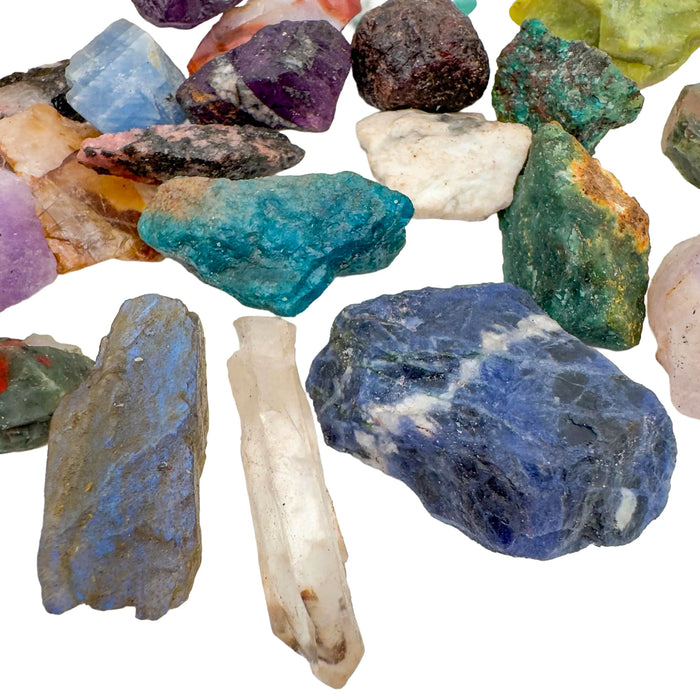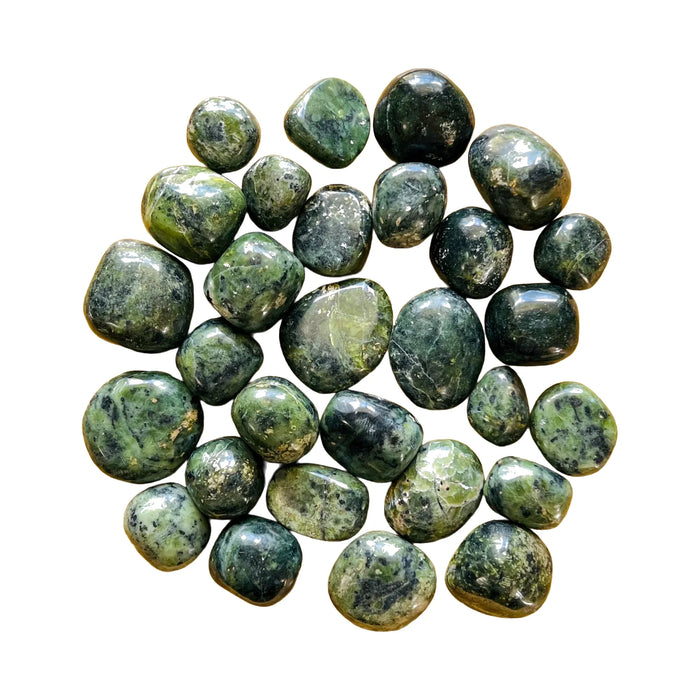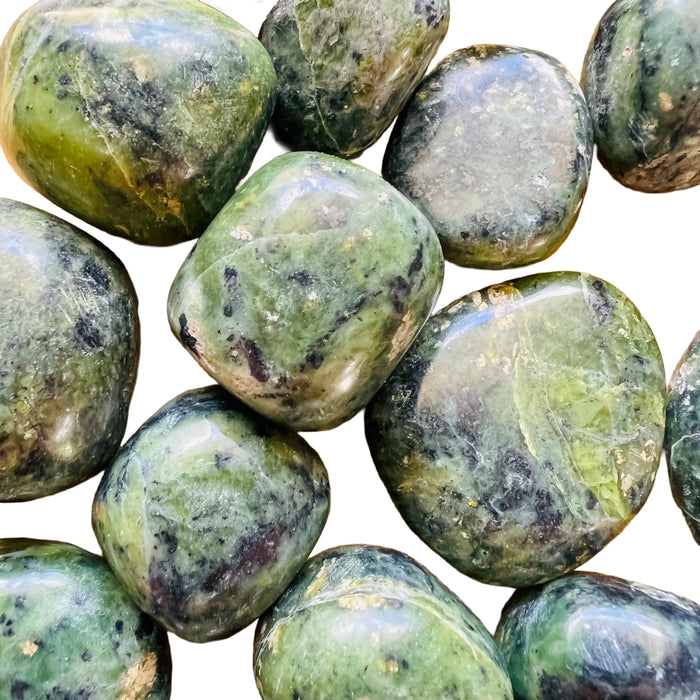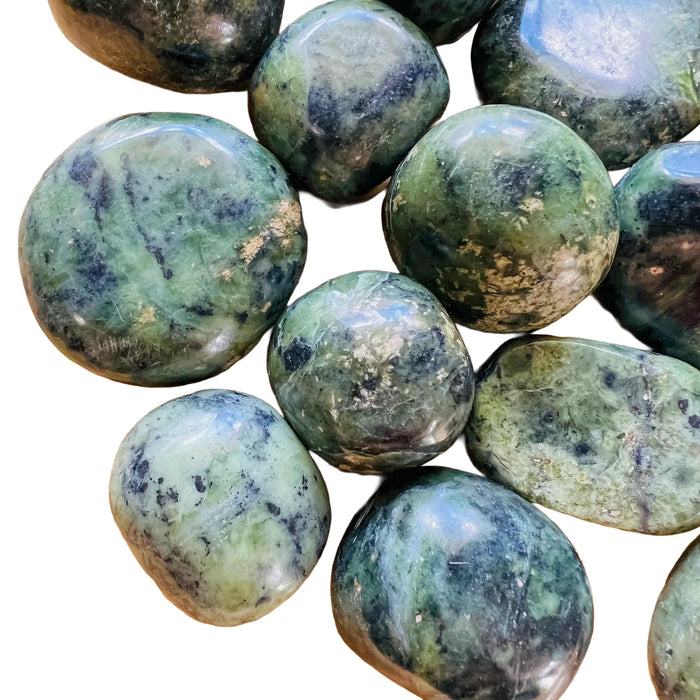
































The pricing logic behind Beyond Bohemian, and what site-wide sales actually cost the people behind the stones.
Why We Don't Run Sales (and Never Will)

If you came here looking for a Beyond Bohemian discount code, coupon code, or promo code, the honest answer is up front: we don’t issue them, never have, and don’t plan to. If you want the short version with our complete answer to every coupon question we get, our discount codes page covers it. The rest of this post is the long version of why, and the patterns to watch for elsewhere in the crystal industry.
Walk into almost any crystal shop online during the last week of November and you’ll see the same thing. Big banners. 20% off. 30% off. Then again at Christmas. Then again for Valentine’s Day. Then a spring sale, a summer clearance, a fall refresh. The calendar fills up with reasons to mark prices down.
We don’t do that. We never have, and we don’t plan to. No Black Friday discounts. No holiday codes. No flash sales. No “subscribe and save 15%.” Our retail prices are the same on April 30 as they are on December 24.
People ask us why. Sometimes politely. Sometimes they push back, because the rest of the market has trained them to expect a discount. Yet the answer is simple, and we think it’s worth saying out loud: a sale isn’t free money for you. It comes from somewhere. We just don’t want it to come from the people who got the stone out of the ground.
The discounts that should make you suspicious
Modest sales aren’t the problem we’re really talking about. A small seasonal markdown on a slow-moving piece is normal retail behavior, and we don’t love it but we understand it. The pattern that’s harder to defend is the one you see splashed across the homepages of certain crystal shops year-round: 50% off everything. 60% off site-wide. “Summer crystal sale, save 55%.” A single discount that applies to every stone in the store, running for weeks, sometimes months, sometimes permanently with the banner just rotating in new copy.
If you’ve seen a few of these and felt something off about it, your instinct is right. There’s no version of an honest crystal supply chain that supports that kind of discount level on a sustained, catalog-wide basis. The math doesn’t work.
What 50, 60, or 70 percent off actually signals
Stones aren’t made by the seller. They’re bought from miners, lapidaries, cooperatives, and wholesalers, and the cost of getting them to the warehouse is real money: the quarry, the cutting, the freight, the customs, the photography, the storage. A reputable retailer’s landed cost on a typical piece is rarely less than 30 to 40% of a fair retail price, and often higher. That leaves room for staff, packaging, returns, ad spend, and a margin to keep the business alive.
Now imagine a shop running 60% off across every product, every week. For that to be sustainable, one of three things has to be true:
1. The shop is losing money on most sales and burning down to zero. This happens occasionally with a closing business. It’s rarely a real strategy.
2. The shop is buying so cheaply upstream that 60% off still leaves a margin. That means stones from supply chains where someone is getting paid very little, and the buyer is taking advantage of it.
3. The “original price” was inflated to begin with so the “sale price” is the actual price. The retail tag was set to look discount-able, not to reflect what the stone is worth. The customer thinks they’re saving 60%. They’re really paying full price for a stone the seller knew all along would only ever sell at a markdown.
Option three is the most common, and it’s the most dishonest. It trains buyers to believe a $60 stone is normally worth $150. It pressures every other shop in the category to play the same game. And once a market learns that game, the people who actually source carefully and price honestly start to look expensive by comparison.
That last sentence is the part most buyers don’t see. The deep-discount pattern doesn’t just affect the shop running it. It distorts the entire field, including how customers value any other shop’s stones. We’ve been on the receiving end of that. We’d rather explain the math than chase it.
Why a global catalog and “we travel to the source” don’t fit together
Here’s another pattern worth knowing about. A shop will say something like “we travel to the source” or “we hand-select directly from the mines.” That sounds reassuring. The problem comes when you look at the same shop’s catalog and see fifty or more stone types from a dozen different countries. Madagascar, Brazil, Peru, Namibia, China, India, Russia, Madagascar, Zimbabwe, Mexico, Afghanistan, Pakistan, the United States. All of it.
It is physically and economically impossible for a small business to personally visit even a fraction of those origins. Crystal mining is geographically scattered. The lapidary work happens in different countries from the mining. The wholesale shows where most retailers actually buy from happen in Tucson, Denver, Munich, and Hong Kong. “Direct from the source” on a fifty-stone catalog is, in nearly every case, “we go to gem shows.” That’s fine. Going to gem shows is how almost everyone in this industry buys. What isn’t fine is calling a wholesale-show purchase a direct-from-mine relationship.
If you want to know whether a shop’s sourcing claim holds up, look at catalog breadth as a sanity check. Real direct-from-mine relationships tend to look narrow. A shop that sources directly will usually have a deep specialty in two or three regions, not a buffet covering every continent. Breadth and personal sourcing don’t coexist at small-business scale.
The honest version of our own answer: we work with a focused set of suppliers, some of whom we’ve known for years, and we’re upfront about which links in the chain we’ve built ourselves and which links we trust through our partners. Our ethical sourcing criteria page lays the standards out, and the Beyond Ethical page explains why we built our own framework instead of borrowing a label.
The two-channel price tell
One more pattern. Some shops run their own website and an Etsy storefront at the same time, and the same stone shows up at different prices on the two channels, sometimes with a 30% gap or larger. There are real reasons a price might differ between platforms (Etsy fees, listing economics, Etsy promo windows), but a wide and persistent gap on an identical SKU usually tells you the seller is testing how much the market will bear and pricing whichever lever is moving best that week.
That’s a tell. It says the price on the page isn’t anchored to the cost of the stone. It’s anchored to whatever marketing position the seller needs that day. If you find a stone you like, search for it across that seller’s other channels. If the prices don’t line up, you’ve learned something.
What a sale actually pays for
Set aside the inflated baseline games for a second. Even at honest pricing, a discount has to come from somewhere. Sales feel like a gift to the buyer. The math underneath is less generous.
The miner doesn’t get a Black Friday bonus
The person digging a stone out of a hillside in Madagascar, Brazil, or Zambia is paid for that stone once. They’re paid before it ever reaches a website. They have no idea whether the stone is going to be listed at full price, sold during a flash sale, or marked down at the end of a slow quarter. Their rate doesn’t move when the retail tag does.
So when a shop runs “30% off everything,” that 30% is being absorbed by the seller’s margin in the short term, or it’s being clawed back by paying less upstream the next time around. The miner sees the second version eventually. They almost never see the first one as a benefit. Run that pattern at 60% off site-wide and the upstream pressure is several times worse, because the only way to keep doing it is to push harder on the people with the least leverage.
The polisher doesn’t get a holiday rate
The same goes for the artisan who hand-finishes a piece. Lapidary work is slow. A palm stone is held against a wheel for a real number of minutes, by a real person, with a real day rate. Discounting the finished retail price by 25% doesn’t make their hand move faster. It just compresses what gets paid further down the line when the next batch is ordered.
If we want a supply chain to stay healthy, the people inside it have to be paid the same in November as they are in May. The way we keep that promise is by not running sales.
How our pricing works
When we list a stone, we set the price based on three things: what we paid for it, what it cost to bring in (freight, customs, storage, photography, the time to write an honest description), and a margin that lets us reorder from the same supplier next year at a fair rate. That’s it. There’s no “original price” hidden behind the listed one.
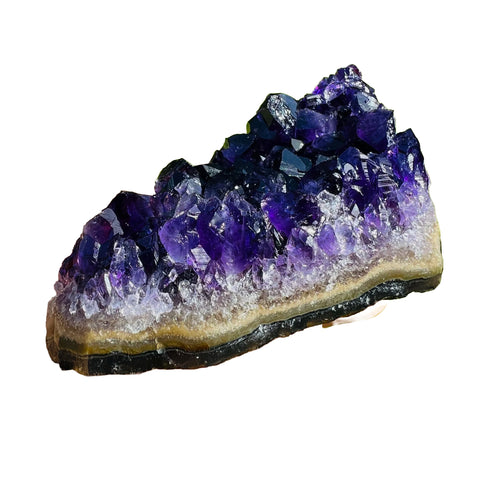
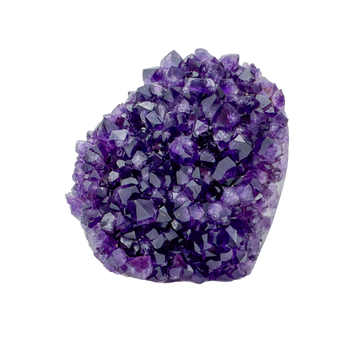
If a piece is rare, the price reflects that. If a piece is common, the price reflects that too. Two amethyst points from the same region can have different prices because the quality is different, the size is different, or the supplier rate was different that month. We’d rather explain that on the product page than smooth it over with a discount banner.
This also means we don’t inflate prices to discount them later. The price you see is the price the stone is worth in our system. A few customers have asked over the years whether we’ll “match” another shop’s sale price. The honest answer is no, because that other shop’s sale price is often what their stones are actually worth. Ours don’t need a holiday to look fair.
What this means for you as a buyer
You don’t need to wait for the right week. The price on April 30 is the price on November 30. You can buy a piece the day you find it, without checking back six times to see if it dropped.
You also know what you’re paying for. The number on the page is the number that funded the chain that produced the stone, the work that listed it accurately, and the operation that ships it to you. If you’d like to see the stones rather than read the policy, the full collection is open to you any time. Same prices, same standards, every week of the year.
And if you’re shopping anywhere else, here are five quick things to look at:
1. Is the headline discount over 30% off, site-wide, running constantly? That’s a yellow light.
2. Does the catalog cover dozens of stones from many countries, while the marketing claims direct-from-source? That’s a yellow light.
3. Are origins listed at country level only, or not at all? That’s a yellow light.
4. Is treatment disclosure (heating, dyeing, irradiation, coating) clearly stated on the product page? Missing disclosure is a yellow light.
5. If the seller runs a website and an Etsy or third-party storefront, do prices line up? Big gaps are a yellow light.
None of these are proof a shop is dishonest. Two or three together tell you something worth knowing.
The honest exception (wholesale)
One place we do offer a different price: wholesale. Approved retail buyers who order at minimum case quantities pay a wholesale rate, because the work of a wholesale order is different from the work of a single retail order. That’s a structural discount tied to volume and process, not a calendar promotion. It applies year-round and it’s only available to vetted partners. If you run a shop and want to carry our line, that conversation is open.
What we’d rather invest in instead
The money we don’t spend running sale promotions, paying ad platforms to amplify them, building landing pages around them, and re-pricing inventory four times a year goes into things you can see on the page. Better sourcing notes. Honest photography of the exact piece you receive when the listing is for a single specimen. Slow education content like the Crystal Guide. Clearer treatment disclosure. Real time spent answering customer questions instead of running a discount engine.
That’s the trade we’ve made. We’re comfortable with it. We think it works in your favor too, even if the absence of a sale banner takes some getting used to.
Frequently asked questions
Does Beyond Bohemian have a discount code?
No. We don’t issue discount codes for any reason. The price on the page is the price you pay.
Is there a Beyond Bohemian coupon code?
No. If you saw a coupon code listed on a third-party coupon site like RetailMeNot, Honey, or Knoji, it wasn’t issued by us, and it won’t work at checkout.
Does Beyond Bohemian offer a first-time-buyer or new-customer discount?
No. We don’t run new-customer codes, email-signup discounts, or referral codes.
Does Beyond Bohemian run Black Friday or Cyber Monday sales?
No. Our retail prices are the same every day of the year, including during the Black Friday, Cyber Monday, and December holiday windows.
Will Beyond Bohemian honor a discount code from a third-party site?
We can’t honor codes we didn’t issue. If a third-party site is showing a code with our name on it, that code wasn’t created by Beyond Bohemian and won’t work at checkout.
For our complete answer to every coupon and discount question we get, including the wholesale exception, see our discount codes page.
If you’ve been waiting for a code before placing an order, this is the post that says you can stop waiting. The price on the page is the price. Take a look around when you’re ready.