

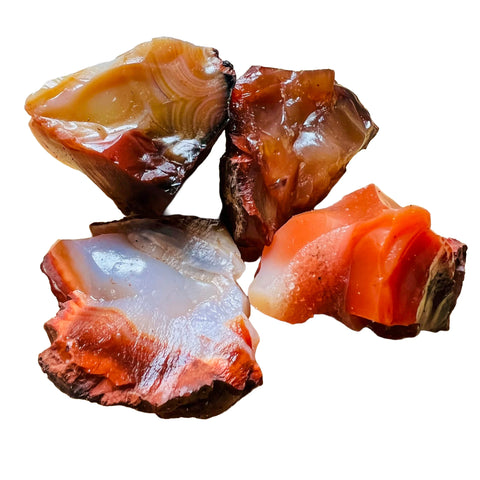
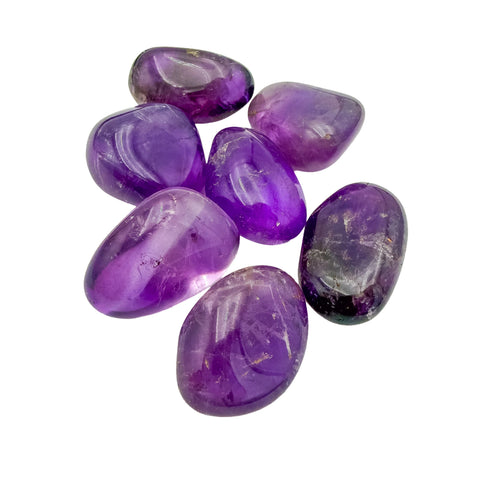

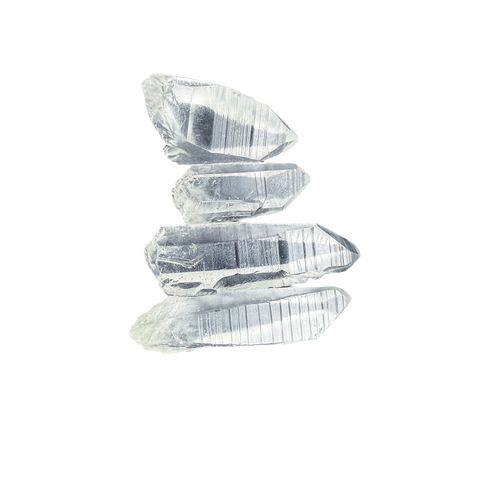
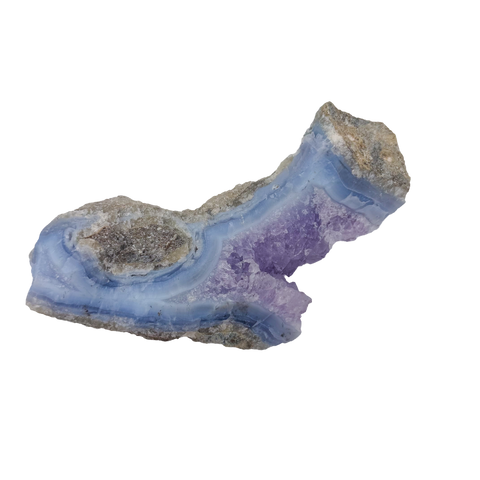







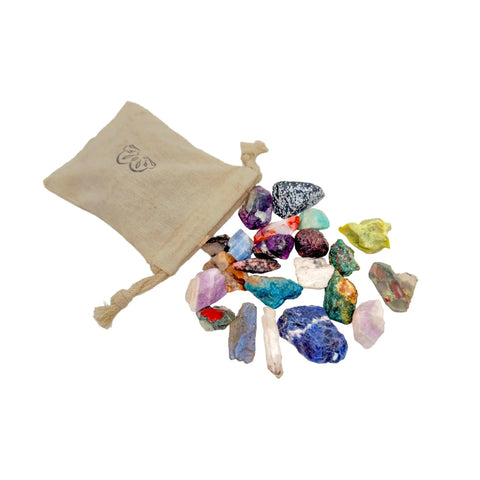
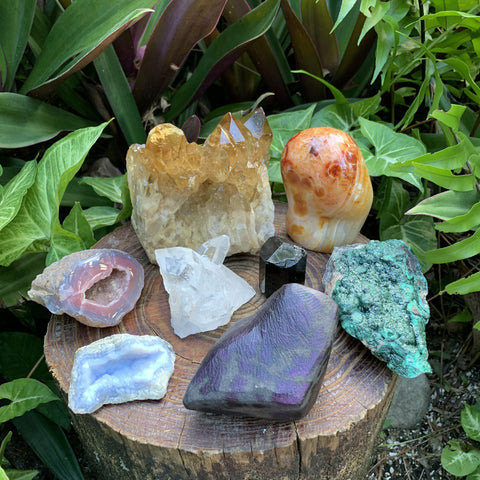






A two-word badge on a product page proves nothing. Here is what real ethical disclosure looks like, the four-part pattern that actually carries weight, and five questions to ask any crystal shop before you buy.
The "Ethically Sourced" Badge Problem

You have seen it on a hundred product pages. A small line under the title that reads ethically sourced or sustainably sourced, sometimes with a little leaf icon. No country named. No supplier story. No treatment notes. No standard cited.
Two words. That is the whole claim.
If you are trying to shop your values, that badge is not enough. It might be true. It might also be marketing. From a product page alone, you cannot tell the difference, and the brands using it that way are counting on it.
This is what we call the badge problem. And it is everywhere right now.
Why the badge became a label without a method
The crystal market is in a strange spot. Buyers care more about sourcing than they did five years ago. Search interest in “ethical crystals” has climbed every year. Press coverage has put pressure on the worst practices. That is good.
Yet demand without standards creates a vacuum, and labels rush in.
There is no formal certification body for crystals. No equivalent to fair-trade coffee, GIA for gemstones, or Forest Stewardship Council for timber. The Responsible Jewellery Council exists for jewelry-grade gemstones and precious metals, but it does not cover specimen-grade tumbled stones, raw clusters, or most of what crystal shops sell. That gap matters. It means anyone can put “ethically sourced” on a product page and there is no third party checking.
When the word costs nothing to use, it stops carrying weight.
We see three patterns repeatedly:
1. The badge with no page behind it. A product card says ethically sourced. You click looking for the methodology. There is no methodology page, no sourcing page, or the page that should explain it returns a 404.
2. The page with no specifics. There is a sourcing page. It uses words like family-run, small-scale, trusted partners, fair. It names no countries, no suppliers, no treatments, no edge cases. You finish reading and know nothing concrete you did not know before.
3. The story that overshadows the standard. A founder narrative about Tucson booths, Sainte-Marie shows, or visits to a single mine, framed as if presence at the source equals verified sourcing. Show-floor sourcing is a sales channel, not an ethics standard.
None of those patterns are a lie, exactly. They are just claims wearing the costume of evidence.
What a real ethical claim looks like
Real disclosure is specific, named, and structured. You should be able to walk through a shop’s catalog and answer four questions on every product, or at least see the brand wrestling with them publicly.
Country, and ideally region. Not “South America” or “Africa.” Brazil, and if possible, the state (Rio Grande do Sul, Bahia, Minas Gerais). Madagascar, and where on the island. Country level is the floor. Region is honest. Mine-level is sometimes appropriate and sometimes unsafe to publish, and a thoughtful brand will tell you why they do or do not name a specific mine.
Treatment. If the stone has been heated, dyed, irradiated, stabilized, coated, or reconstituted, that needs to appear on the product page. Treatment is not the problem. Hidden treatment is. Heated citrine is fine. Calling heat-treated amethyst “natural citrine” without disclosure is not.
Supplier context. You do not need a name. You do need to know whether the brand has a relationship with this supplier or pulled the lot from a wholesaler at a show. “Direct from a family-run lapidary in Madagascar we have worked with for several years” is different from “purchased at the Tucson show.” Both can be ethical. They are not the same level of accountability.
Their own standard, written down. Where do they draw the line? What would disqualify a supplier? What do they do if a stone is suspected to come from a labor-violating mine? A real ethical brand has an answer on a public page, not just in a marketing email.
If a brand is doing the work, the page proves it. If they are not, there is no page that can hide that.
Five questions to ask before you buy
Use these next time you are on a crystal shop’s site and want to test whether the badge has weight.
1. Where is the sourcing page? It should be reachable from the footer or the about menu. Open it. If it does not exist, or if it is a paragraph of feel-good language with no concrete claims, the badge on the product page is decoration.
2. Does the product page name the country? Look at the actual product page, not the homepage. Country of origin should always be visible. If a brand can put a leaf icon on the listing but not the country, that tells you what they are prioritizing.
3. Does the listing disclose treatments? Especially for citrine, blue topaz, smoky quartz, turquoise, and aura-coated pieces. If a stone is naturally rare in saturated color (like deep golden citrine) and the listing says nothing about treatment, ask before buying.
4. What is their standard, in their own words? Read the about or sourcing page out loud. Does it use specific verbs (we visit, we audit, we ask, we walked away from) or vague ones (we believe, we strive, we are committed)? Specific verbs are signals. Vague ones are filler.
5. Will they answer a direct question? Email them. Ask where a particular stone came from and what treatments it has. A real ethical brand will answer plainly, even if the answer is “we cannot verify the mine, but we can tell you the supplier and country.” A brand that goes silent or sends a templated reply is telling you something.
You do not need all five answers to be perfect. You need to see the shop trying to answer them honestly.
What we do, briefly
We publish our standards on our ethical sourcing page, and the longer version on our Beyond Ethical page. Country of origin is on every product listing in our catalog. When a stone is treated, we say so on the product page. When we cannot verify something, we say that too.
We do not always name the specific mine. There are reasons for that, including the safety of small-scale miners and the privacy of supplier relationships, and we wrote a separate piece explaining when we will and will not. The point of all of this is not to sound clean. It is to give you something you can actually verify, and to make our claims expensive enough to use that we have to mean them.
That is what an ethical claim should cost. A page, not a badge.
A short close
If a brand wants you to trust their sourcing, they should be willing to put work behind the words. A two-word badge is not work. A page that names countries, treatments, suppliers, and standards is.
Take a look at the crystal guide if you want to read more about how we describe origin and treatment in plain language. And the next time you see a leaf icon on a product page somewhere else, click around. The shops doing the work will not mind you looking or asking questions.