














Selenite vs Satin Spar: What You're Actually Buying
The distinction between selenite and satin spar is one of the most misunderstood in the crystal world. Here's the truth: both are gypsum (CaSO₄·2H₂O). The only difference is crystal habit—the shape the crystals form. Most "selenite" sold in shops is actually satin spar. Neither is "fake." The difference is purely visual and has nothing to do with chemical composition, durability, or metaphysical properties. Understanding this prevents confusion and helps you identify what you're actually purchasing.
| Property | Selenite | Satin Spar | Alabaster |
|---|---|---|---|
| Chemical Composition | CaSO₄·2H₂O (gypsum) | CaSO₄·2H₂O (gypsum) | CaSO₄·2H₂O (gypsum) |
| Crystal Habit | Large, transparent, plate-like crystals | Fibrous; interlocking fine fibers | Microcrystalline; very fine-grained |
| Appearance | Clear to translucent sheets | Opaque, silky or pearly luster | Opaque; smooth, waxy appearance |
| Transparency | Transparent to translucent; light passes through | Opaque; light doesn't pass through | Opaque |
| Luster | Vitreous to pearly | Silky to pearly | Waxy to dull |
| Mohs Hardness | 2 | 2 | 2 |
| Water Solubility | Soluble in hot water; slowly in cold water | Soluble in hot water; slowly in cold water | Soluble in hot water; slowly in cold water |
| Cost | Generally similar to satin spar; no significant difference | Generally similar to selenite; no significant difference | Similar price to both |
The Same Mineral, Different Forms
Selenite, satin spar, and alabaster are three varieties of gypsum that form under different conditions. The gypsum mineral itself is identical—CaSO₄·2H₂O (calcium sulfate dihydrate). What changes is how the crystals grow:
Crystal Habit: Shape Determines Appearance
"Crystal habit" refers to the shape that a mineral naturally adopts when it crystallizes. For gypsum, depending on temperature, pressure, and the presence of impurities during formation, calcium sulfate can form either large transparent crystals (selenite), interlocking fibrous crystals (satin spar), or microcrystalline aggregates (alabaster). The chemistry is identical. Only the physical structure differs. This is similar to how carbon forms as diamond (cubic crystal system) or graphite (hexagonal crystal system)—same element, different structure.
Selenite: Transparent Plate Crystals
How Selenite Forms
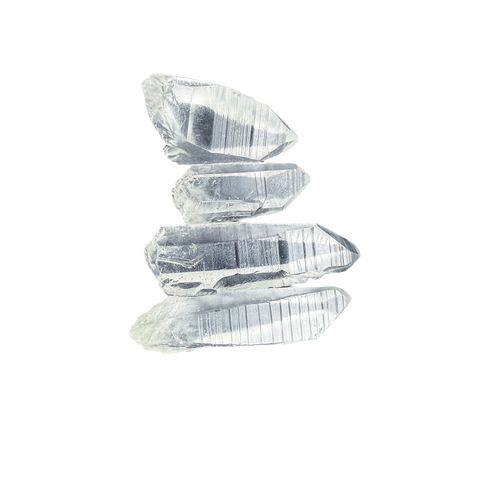
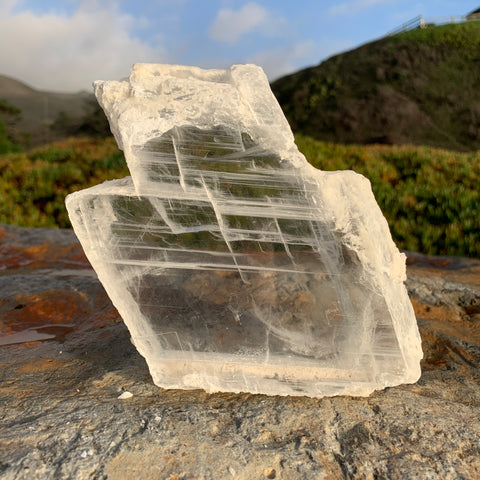
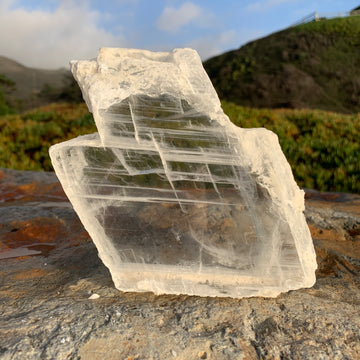
Selenite forms as large, transparent crystals with a plate-like or tabular shape. This occurs in evaporite deposits (where saltwater evaporates and deposits minerals), typically in arid climates or ancient sea basins. The slow evaporation allows large transparent crystals to grow uninterrupted.
Characteristics
- Appearance: Clear to translucent; can be colorless, white, or pale yellow/brown
- Structure: Individual plate-like crystals that can be separated or split into thin sheets
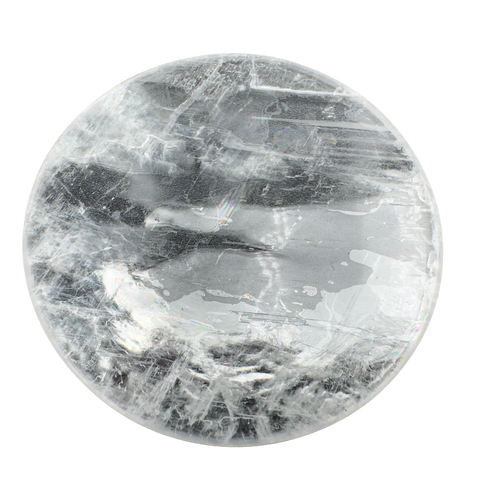
- Transparency: Light passes through; you can see through it
- Luster: Vitreous (glassy) to pearly
- Size: Forms large single crystals, sometimes 30cm or larger
Famous Selenite Sources
- Naica, Mexico: Known for giant selenite crystals, some exceeding 1 meter in length
- Brazil: Produces large transparent selenite specimens
- Morocco: Supplies large selenite crystals to the market
- Poland: Selenite from ancient salt deposits
Selenite forms primarily in arid and salt-rich environments. Specimens marketed as "clear selenite" or "selenite windows" are typically the transparent plate form.
Satin Spar: Fibrous Gypsum
How Satin Spar Forms
Satin spar forms as fine interlocking fiber bundles of gypsum crystals. This occurs when gypsum crystallizes more rapidly or under conditions with more impurities, preventing large transparent crystals from forming. Instead, many thin fibers grow together, creating an opaque, pearly appearance.
Characteristics
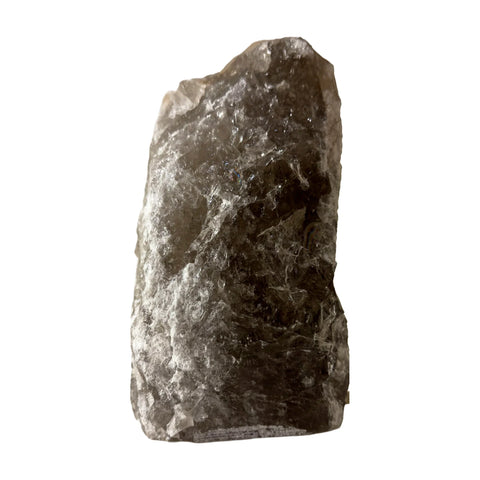
- Appearance: Opaque white, cream, or pale colored; looks silky or pearly
- Structure: Composed of fine interlocking fibers; cannot be split into transparent sheets
- Transparency: Opaque; light does not pass through
- Luster: Silky to pearly (the fibers reflect light in a distinctive way)
- Form: Often occurs as chunks, wands, or raw specimens
Why It's Called "Satin Spar"
The name comes from its appearance: the silky luster combined with the pearl-like sheen resembles satin fabric. "Spar" is a mineralogical term for crystalline minerals with good cleavage (breaking patterns).
Market Reality
Most "selenite wands" and "selenite stones" sold in shops are actually satin spar. Polished satin spar chunks, natural wands, and rough specimens dominate the market because they're more abundant and form more readily under typical geological conditions. Transparent selenite is rarer and typically more expensive (when it actually is true selenite).
This isn't deception—it's just how the market works. Sellers may use "selenite" as a catch-all term for all gypsum specimens, not distinguishing between the transparent and fibrous forms.
The Mislabeling Problem
Most items marketed as "selenite" in mass-market shops are actually satin spar. Sellers don't always distinguish, and buyers assume they're getting the transparent form. There's nothing wrong with satin spar—it's beautiful and durable—but understanding what you're buying helps set expectations for appearance and properties.
Alabaster: Microcrystalline Gypsum
Alabaster is the third gypsum form. It's microcrystalline (made of crystals so small they're barely visible without magnification) rather than fibrous. Alabaster is smooth, dense, and often carved into sculpture. It's the same mineral as selenite and satin spar but with the finest grain size.
Alabaster characteristics: Very fine-grained, opaque, smooth to touch, waxy appearance, easily carved, used historically for sculpture and decorative objects.
How to Identify What You Have
Visual Test: The Transparency Test
Hold it to light: Can you see light passing through? If yes, it's selenite (transparent or translucent). If no light passes through, it's satin spar or alabaster.
Texture Test: The Fiber Test
Look closely: Do you see visible fibers or a silky sheen? If yes, it's satin spar. Selenite looks glassy and smooth. Alabaster looks extremely smooth with no visible texture.
Splitting Test: The Cleavage Test
Can it be split? True selenite has perfect cleavage and can be split into thin transparent sheets. Satin spar and alabaster resist this—they're tougher due to their fibrous or microcrystalline structure. Don't forcefully test on valuable specimens, but selenite naturally splits along cleavage planes.
Water Solubility: A Key Property
Gypsum's Weakness
All forms of gypsum are soluble in water, though slowly in cold water. Hot water dissolves it faster. This is a critical property for care: never leave selenite, satin spar, or alabaster submerged in water, and avoid extended water contact. A brief rinse under lukewarm water is okay, but don't soak them. This vulnerability is why gypsum specimens are more delicate than other crystals.
Care Requirements: They're Identical
Whether you own selenite, satin spar, or alabaster, care requirements are the same because they're all gypsum:
- Avoid water: Don't submerge. Brief rinsing is okay; soaking is not.
- Avoid moisture: Store in dry environments. Don't place in bathrooms or near water sources.
- Keep away from heat: Heat can cause cracking. Don't place near radiators or in direct sunlight for long periods.
- Handle gently: Mohs hardness 2 means it scratches easily. Avoid dropping or rough handling.
- Don't clean with harsh methods: Avoid ultrasonic cleaners, steam cleaners, or abrasive scrubbing.
- Clean with dry methods: Soft dry cloth or gentle brushing with soft-bristled brush.
Price: No Significant Difference
Selenite and satin spar are typically priced similarly. Transparent selenite specimens may command slightly higher prices if they're high-quality and large, but the difference isn't dramatic. Both are inexpensive compared to harder gemstones. Alabaster carved pieces may be priced higher due to the artistry of carving, not the mineral itself.
Red Flag: Price Claims
If a seller charges significantly more for "true selenite" vs "satin spar" without clear distinction, they may be misleading you. The price should reflect size, quality, and artistry—not the distinction between selenite and satin spar alone. Both are gypsum and should be priced comparably.
Metaphysical Properties: The Confusion
Online sources often attribute different metaphysical properties to selenite versus satin spar, suggesting they have different "energy" or spiritual qualities. Scientifically, since they're the same mineral with identical chemical composition, this distinction has no chemical basis. If someone claims different properties based purely on crystal habit, that's unsupported by the mineral structure itself.
That said, some practitioners believe form and appearance affect energetic properties. This is a belief system, not scientific fact. Do your own research and decide what resonates with you.
What to Ask Your Seller
- "Is this selenite (transparent) or satin spar (opaque)?" (or ask them to describe the appearance)
- "Can you hold it to light so I can see the transparency?"
- "Where is this from?"
- "Has it been treated or processed in any way?"
- "What are the care requirements? Should I avoid water?"
- "If I need to clean it, what method do you recommend?"
Related Crystal Guides
Shop Authentic Selenite and Satin Spar
We clearly label whether each specimen is transparent selenite or fibrous satin spar, so you know exactly what you're purchasing.
Browse Our Gypsum Collection